[Abdominoplasty]M-Type Full Abdominoplasty for Correction of Upper Abdominal Wrinkling and Abdominal Wall Protrusion: 5-Month Follow-Up
Hello, I am Dr. Gukhan Lee
from Lesarts Plastic Surgery.
Childbirth is a precious journey
that welcomes a new family member.
However,
the physical changes that occur
during pregnancy and childbirth
often become a lasting concern
for many women.
One of the most common issues is that,
even after successfully losing weight
following childbirth,
Abdominal Skin Laxity
and abdominal protrusion
may persist.
These changes are often not simply
the result of weight gain.
Rather,
they are frequently caused by
a combination of factors,
including skin stretching,
Rectus Diastasis,
and structural changes
within the soft tissues.
As a result,
exercise and dietary management alone
may have limitations
in achieving meaningful improvement.
The patient presented in this case
also experienced persistent
abdominal laxity and protrusion
despite consistent weight management
after childbirth,
which ultimately led her
to consider Abdominoplasty.
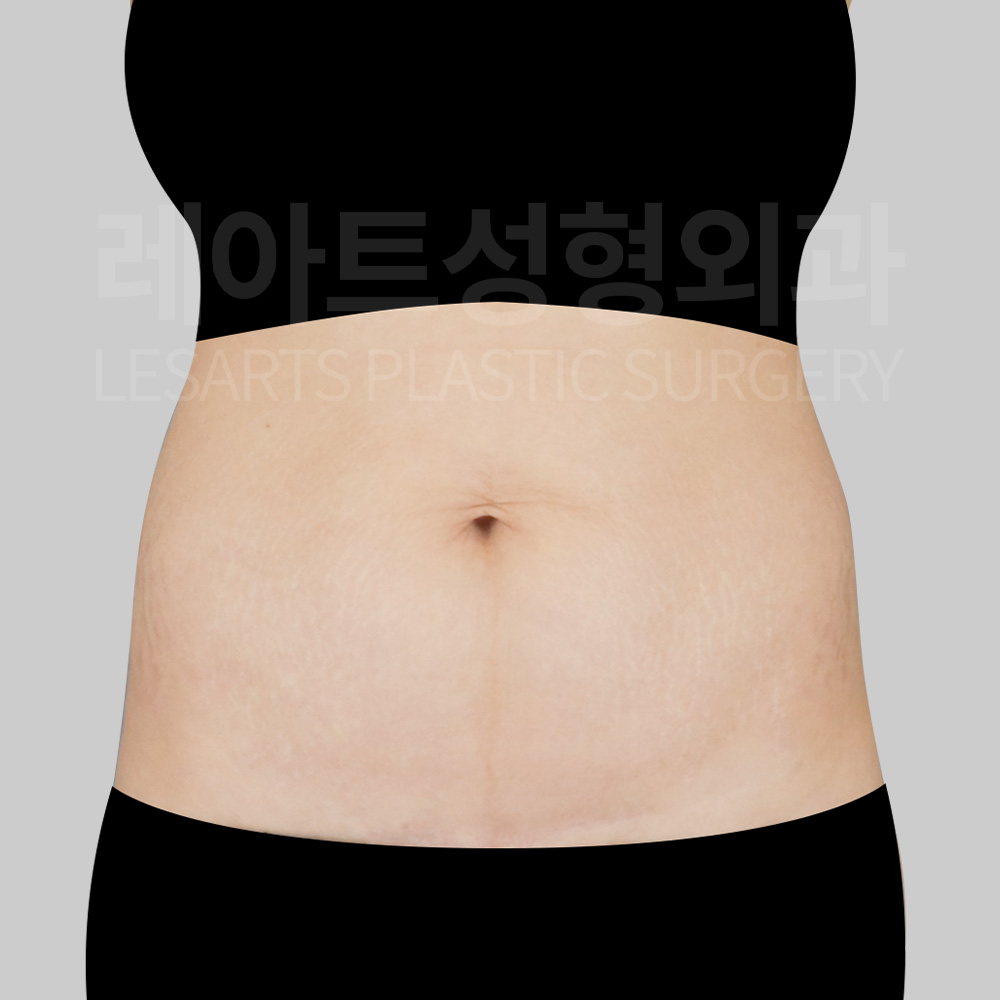
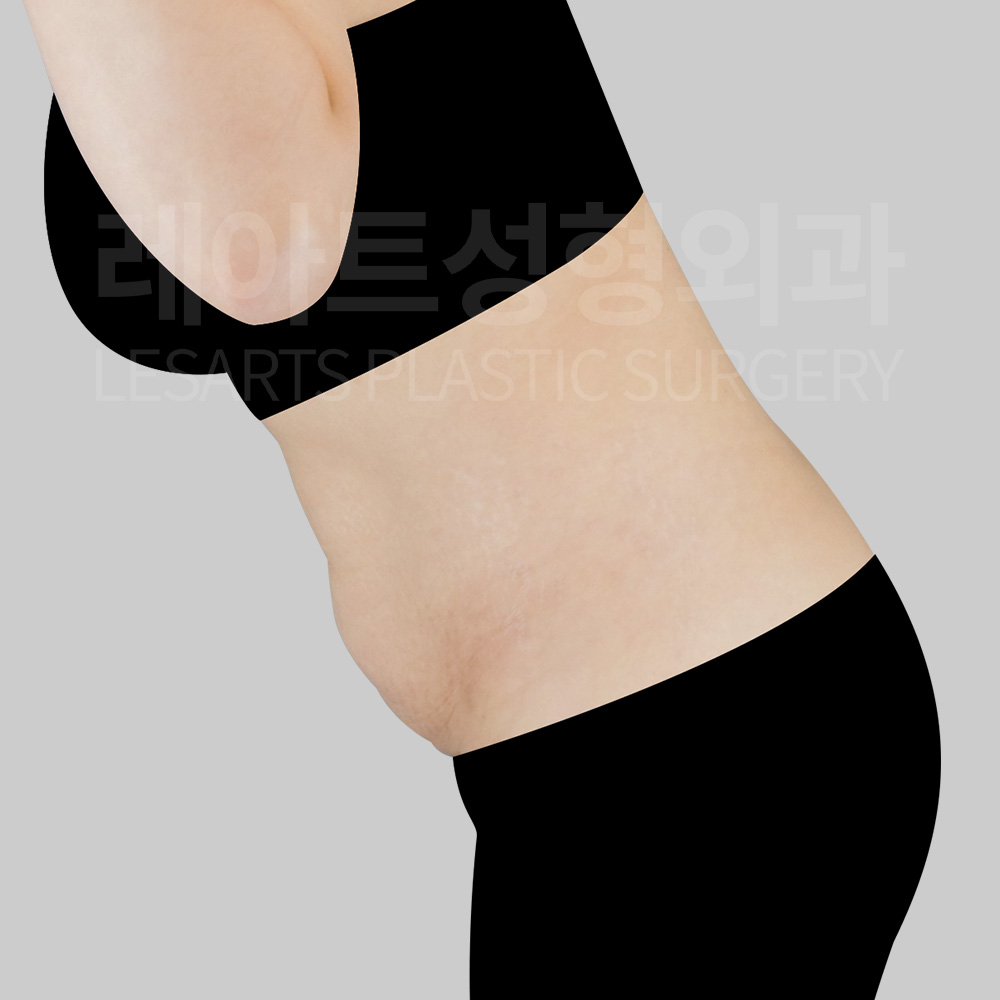
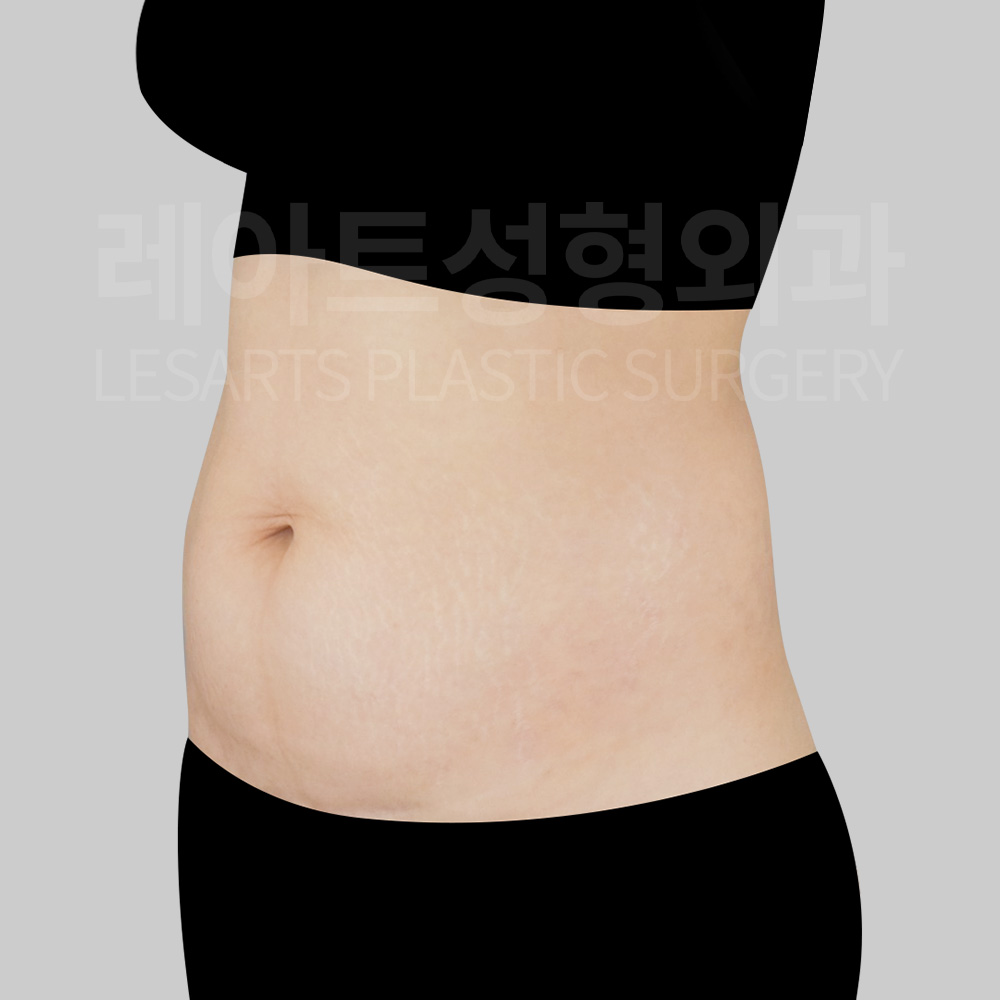
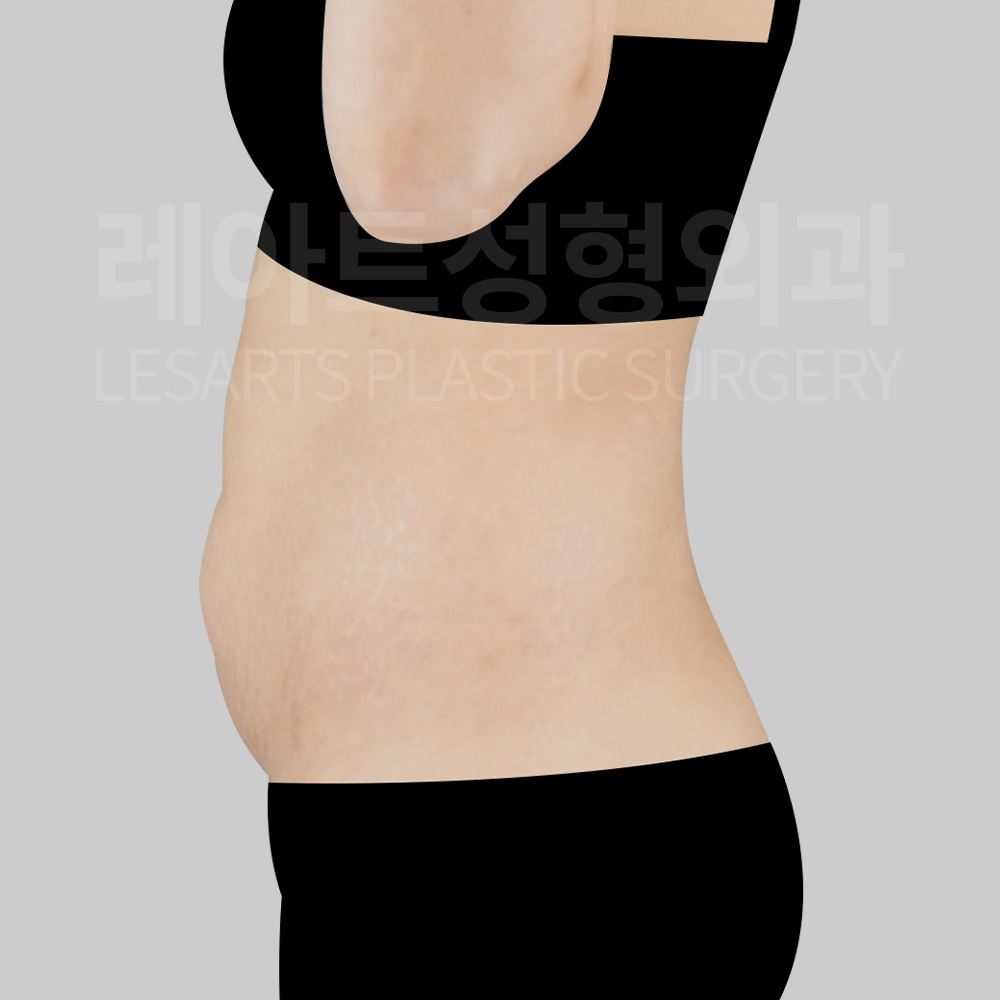
Preoperative Assessment for Abdominoplasty
The patient was a woman
in her 30s,
with a height of 164 cm
and a weight of 58 kg,
representing a relatively
normal body habitus.
She had undergone
two Cesarean Sections,
and her weight had increased
to 78 kg during pregnancy.
In particular,
her first child weighed 4.6 kg
at birth.
Following childbirth,
she had maintained
a stable weight
through consistent dieting
and exercise.
However,
she reported that
the changes in her abdominal contour
had persisted.
Her primary concerns were
the laxity of the lower abdominal skin,
which folded when bending forward
or sitting,
and the deep wrinkles
that had formed
above the Umbilicus.
She was also dissatisfied
with the fact that
her abdomen appeared excessively
protruded,
despite not having
a large food intake.
The patient hoped to restore
a smoother and more natural
abdominal contour,
similar to what she had experienced
before pregnancy,
particularly when wearing
lightweight clothing.
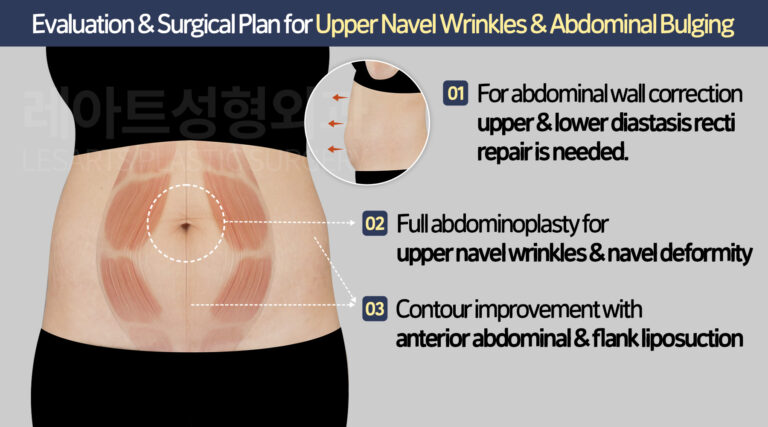
Preoperative Physical Examination for Abdominoplasty
On physical examination,
prominent wrinkling above
the Umbilicus was observed,
caused by laxity
of the upper abdominal skin.
The Umbilicus
was positioned relatively high,
and sagging of the upper abdominal skin
partially covered its upper portion,
resulting in a horizontally compressed
appearance.
Although the amount of
Subcutaneous Fat
was not excessive,
it was determined that
Liposuction
would be beneficial
for reducing the overall volume
of the abdomen.
In particular,
combining Flank Liposuction
was expected to create
a more natural
Waistline Contour.
In addition,
the Stretch Marks
distributed throughout the abdomen
and the wrinkling above
the Umbilicus
suggested significant expansion
of the abdominal wall
during pregnancy.
Physical examination also confirmed
the presence of
Rectus Diastasis
throughout both
the upper and lower abdomen.
Rectus Diastasis
is a condition in which
the abdominal muscles separate,
causing the abdomen
to appear rounded
and protruded,
regardless of body weight.
This patient also demonstrated
a relatively prominent abdomen
compared to her overall physique,
and it was determined that
Liposuction alone
would have limitations
in correcting this concern.
The existing
Cesarean Section Scar
was located relatively low,
while the Umbilicus
was positioned comparatively high.
To adequately improve
the upper abdominal wrinkling,
which was the patient’s
primary concern,
an M-Type Full Abdominoplasty
was considered
the most appropriate approach,
as it would allow
effective correction
of the upper abdominal skin.
An S-Type Abdominoplasty
using Umbilical Floating
was also considered.
However,
the patient did not wish
for the Umbilicus
to be repositioned lower,
and it was anticipated that
this technique alone
would not sufficiently improve
the wrinkling above
the Umbilicus.
In addition,
the existing
Cesarean Section Scar
had matured well
and was already
relatively inconspicuous.
The patient also expressed
that improving
the wrinkling above
the Umbilicus
was a greater priority
than minimizing scarring.
Therefore,
an M-Type Full Abdominoplasty
combined with
comprehensive Abdominal Liposuction
was planned.
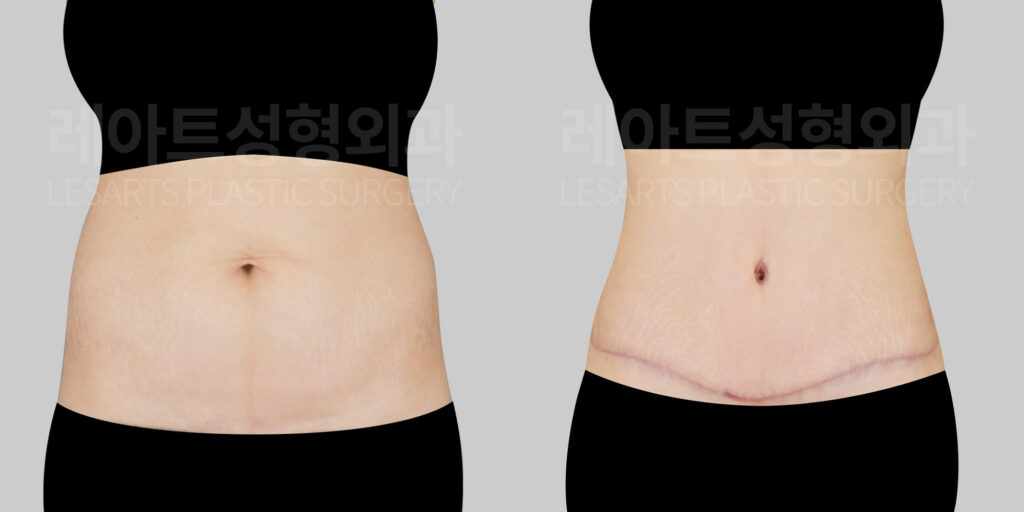
Improvement of Upper Umbilical Wrinkling Through Abdominoplasty – Dr. Gukhan Lee | Lesarts Plastic Surgery
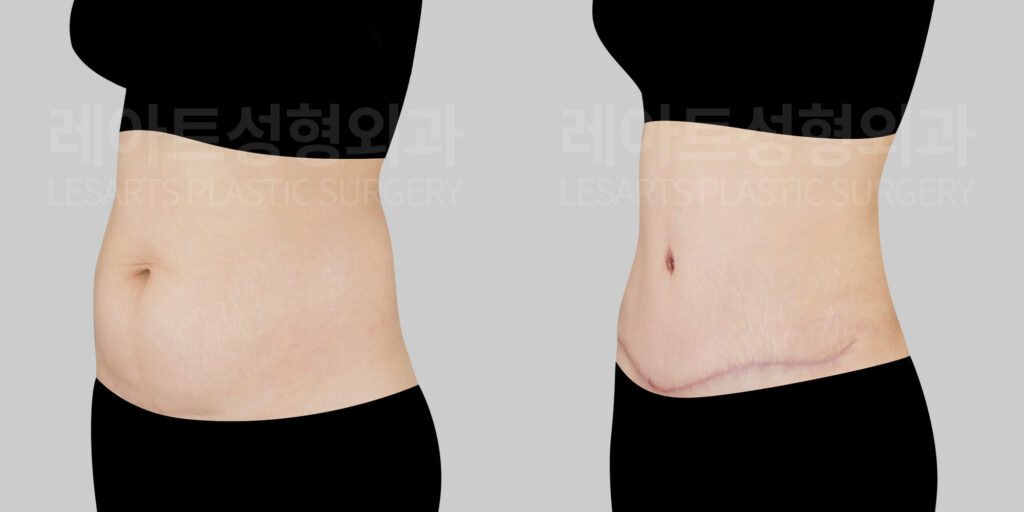
The Effects of Abdominoplasty Combined with Abdominal Liposuction – Dr. Gukhan Lee | Lesarts Plastic Surgery
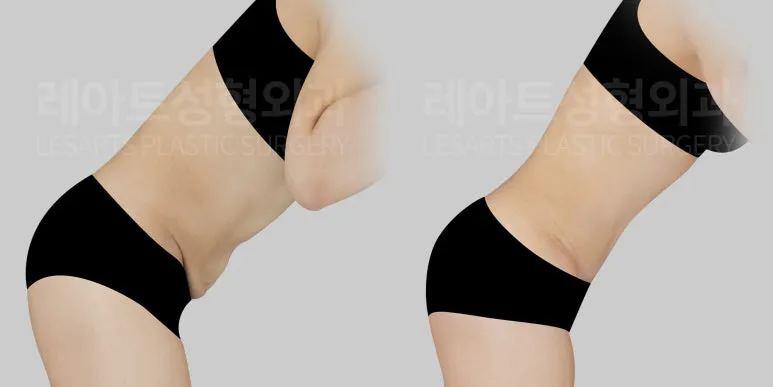
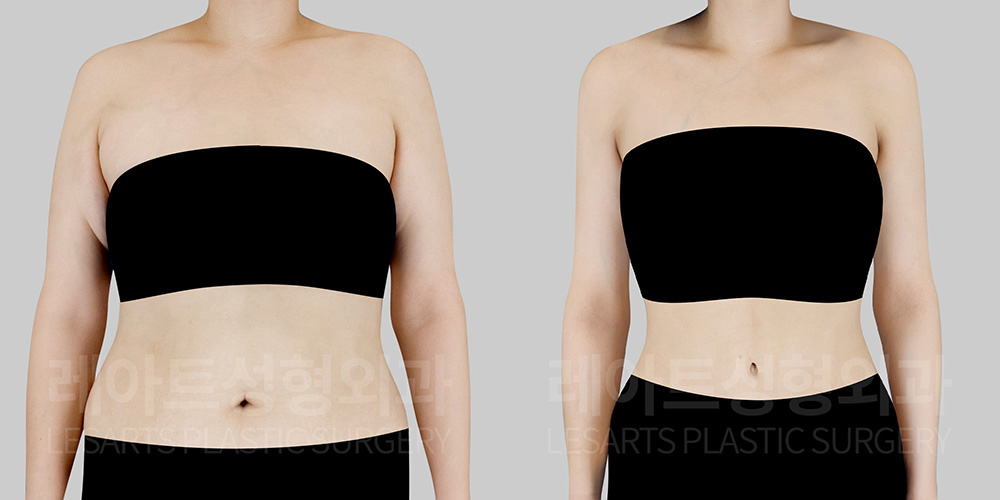
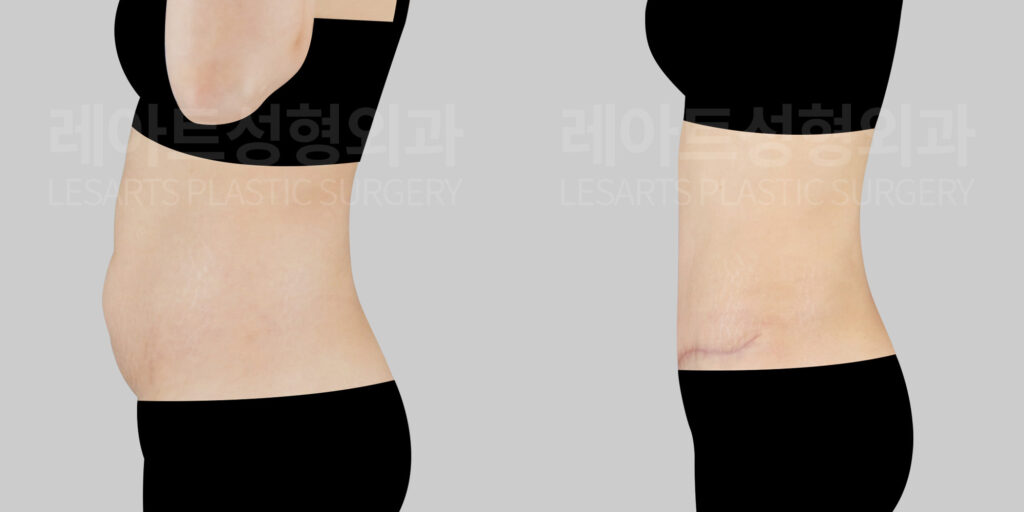
Five Months After Abdominoplasty
At five months postoperatively,
the photographs demonstrate
a noticeable improvement
in the overall
Body Contour.
By combining
Abdominal Liposuction,
the prominence of the flanks
was reduced,
and the Waistline
became more naturally defined,
creating a slimmer appearance
of the abdomen.
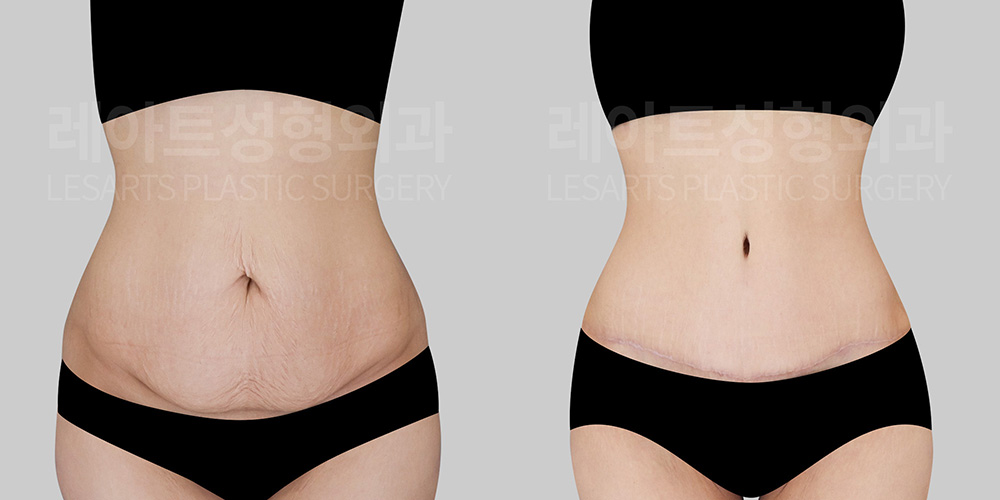
Because an
M-Type Full Abdominoplasty
was performed,
the upper abdominal laxity
and wrinkling above the Umbilicus,
which had been the patient’s
primary concern,
were effectively corrected.
As the upper abdominal skin
became tighter,
the shape of the Umbilicus
was also restored
to a more natural appearance.
In addition,
the incision sites
have been healing well,
with no evidence of
Dog-Ear Deformity.
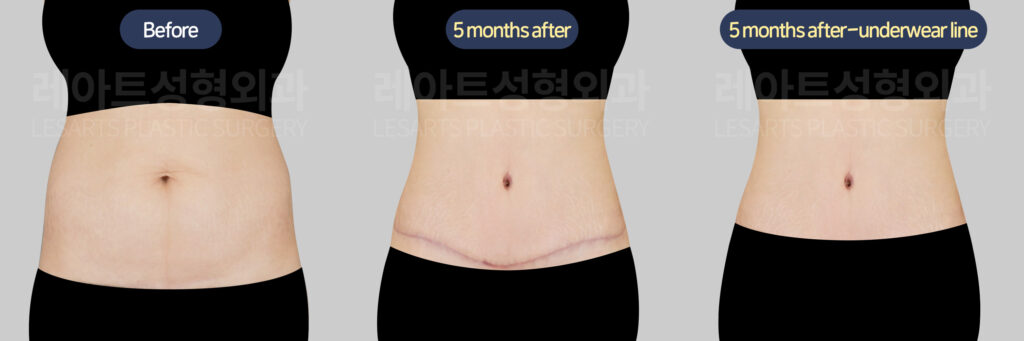
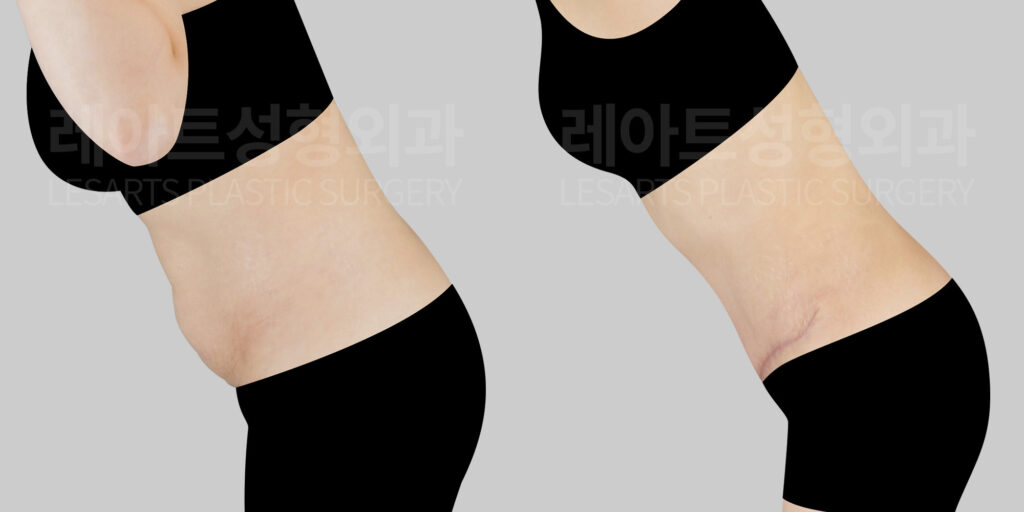
Abdominoplasty Incision Placement and Scar Management – Dr. Gukhan Lee | Lesarts Plastic Surgery
One of the concerns
prior to Abdominoplasty
was the relationship between
the existing Cesarean Section Scar
and the new surgical scar
that would be created.
Fortunately,
sufficient skin mobilization
was achieved during surgery,
allowing the previous
Cesarean Section Scar
to be removed simultaneously.
As a result,
the scars could be consolidated
into a single incision line.
Before-and-After Comparison of Abdominal Wall Repair (Rectus Muscle Plication) – Lesarts Plastic Surgery
Comparison of Skin Laxity Before and After Abdominoplasty – Dr. Gukhan Lee | Lesarts Plastic Surgery
Correction of Rectus Diastasis
also played an important role
in improving the abdominal contour.
The abdomen,
which had appeared rounded
and protruded anteriorly
before surgery,
became flatter,
firmer,
and more structurally supported.
Improvement in
Lower Abdominal Skin Laxity
was also observed,
resulting in a smoother
and more natural contour.
However,
as the patient was only
five months postoperative,
portions of the
Abdominoplasty Scar
still demonstrated
residual redness.
Areas showing mild
Hypertrophic Scar Changes
are currently being managed
with scar treatments
and close follow-up.
In general,
surgical scars continue
to mature and fade gradually
over a period ranging from
several months
to several years.
With ongoing care
and appropriate treatment,
further stabilization
and improvement are expected.
Even after successful
postpartum weight loss,
structural changes such as
stretched skin,
Rectus Diastasis,
and abdominal laxity
can be difficult to improve
through exercise
or dietary management alone.
Many patients undergo
repetitive nonsurgical treatments
in an attempt to address
these concerns,
yet some are unable
to achieve the level of improvement
they had hoped for.
If the shape of your abdomen
limits your clothing choices
or leaves you dissatisfied
with your appearance
in the mirror,
it is important to determine
whether the concern is related
simply to body weight,
or whether it stems from
structural changes involving
the skin and abdominal wall.
Through a comprehensive evaluation
and thorough consultation,
selecting the most appropriate
treatment approach
can lead to more satisfying
and meaningful improvements.