[Abdominoplasty]Male M-Type Abdominoplasty 3-Month Abdominoplasty Results
Hello, I am Dr. Kukhan Lee
from Lesarts Plastic Surgery.
Successful weight loss often brings
one major goal for many men:
a more defined and athletic physique.
Through consistent exercise and diet,
significant weight reduction can improve
not only overall health,
but also appearance and body proportion.
However, even after reaching
their target weight,
many patients continue to struggle with
one persistent concern.
The issue is not excess fat,
but loose abdominal skin
that has lost its elasticity.
Despite impressive weight-loss results,
sagging skin around the abdomen
can remain as a reminder
of the body’s previous condition.
For many patients,
this becomes the final obstacle
to achieving the body contour
they worked so hard to create.
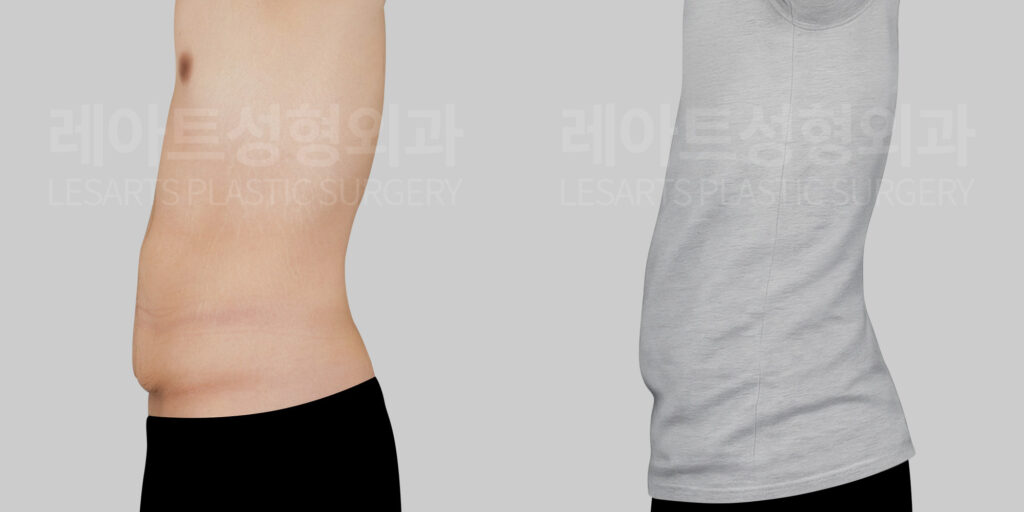
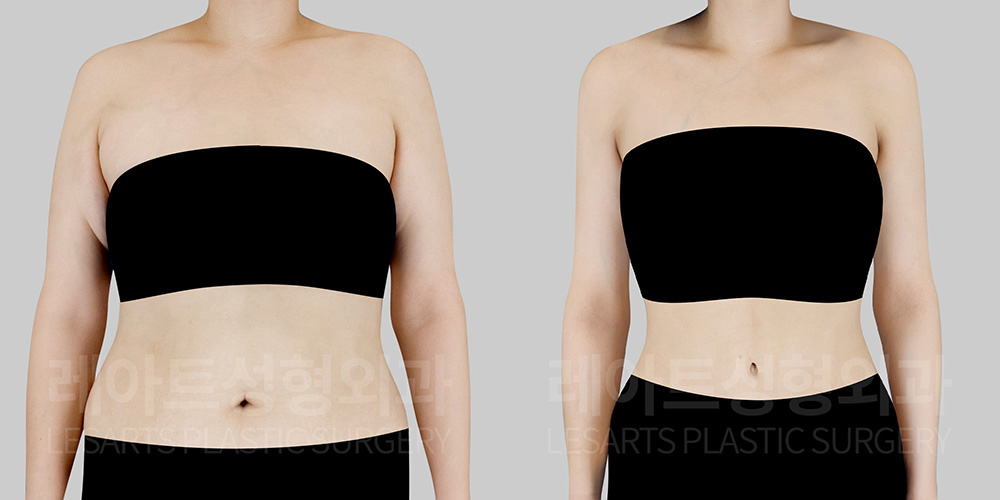
Abdominoplasty Before Surgery – Clothing Fit at Lesarts Plastic Surgery
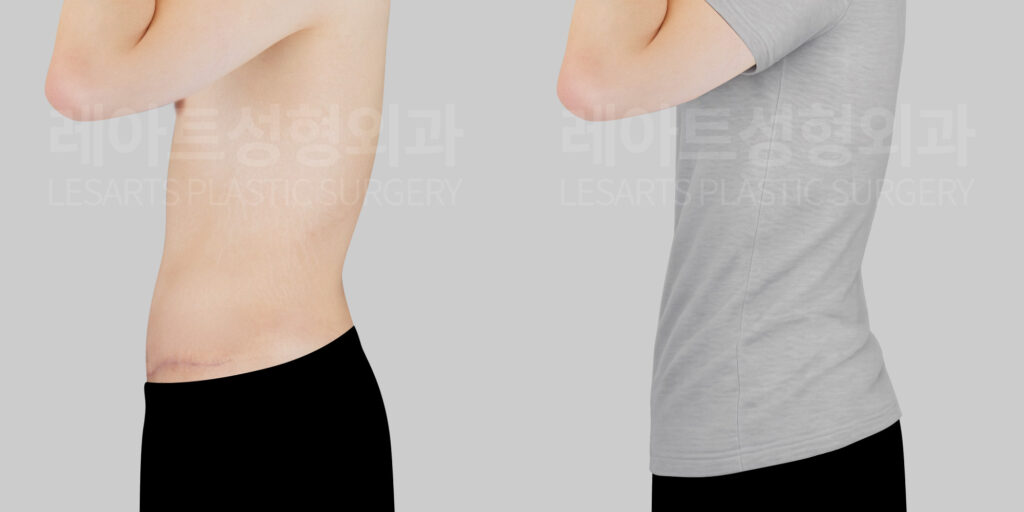
Abdominoplasty After Surgery Changes in Clothing Fit – Lesarts Plastic Surgery
For patients who experienced
significant weight gain during adolescence
or early adulthood,
weight loss alone is often not enough
to restore the abdominal contour.
Even after fat reduction,
the stretched skin may not contract fully,
resulting in persistent skin folds
or a protruding lower abdomen.
In many cases, these concerns
remain despite consistent exercise
and ongoing weight management.
As a result, more male patients
are seeking consultation for
Abdominoplasty to address
the excess skin that cannot be improved
through lifestyle changes alone.
In today’s case review,
we will examine the
3-month postoperative results
of a male patient who underwent
M-Type Abdominoplasty
combined with abdominal liposuction
to improve abdominal sagging
following significant weight loss.

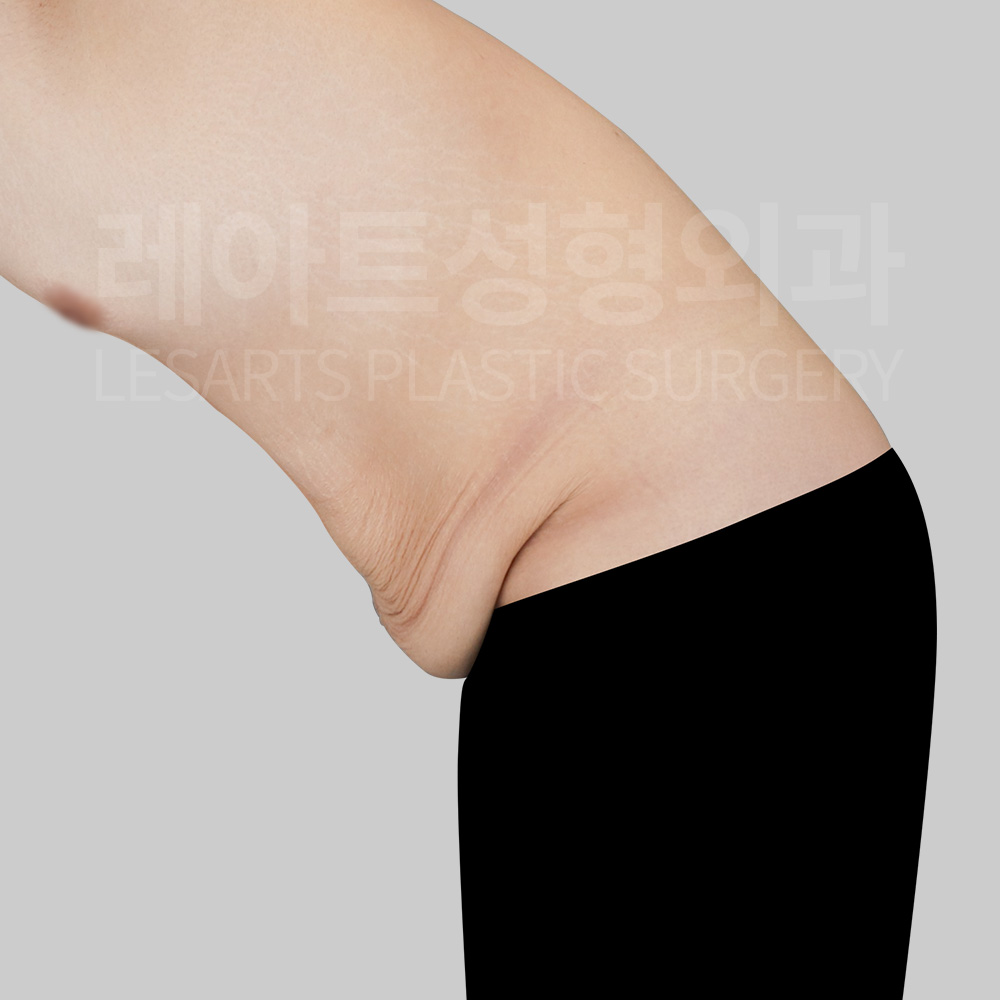
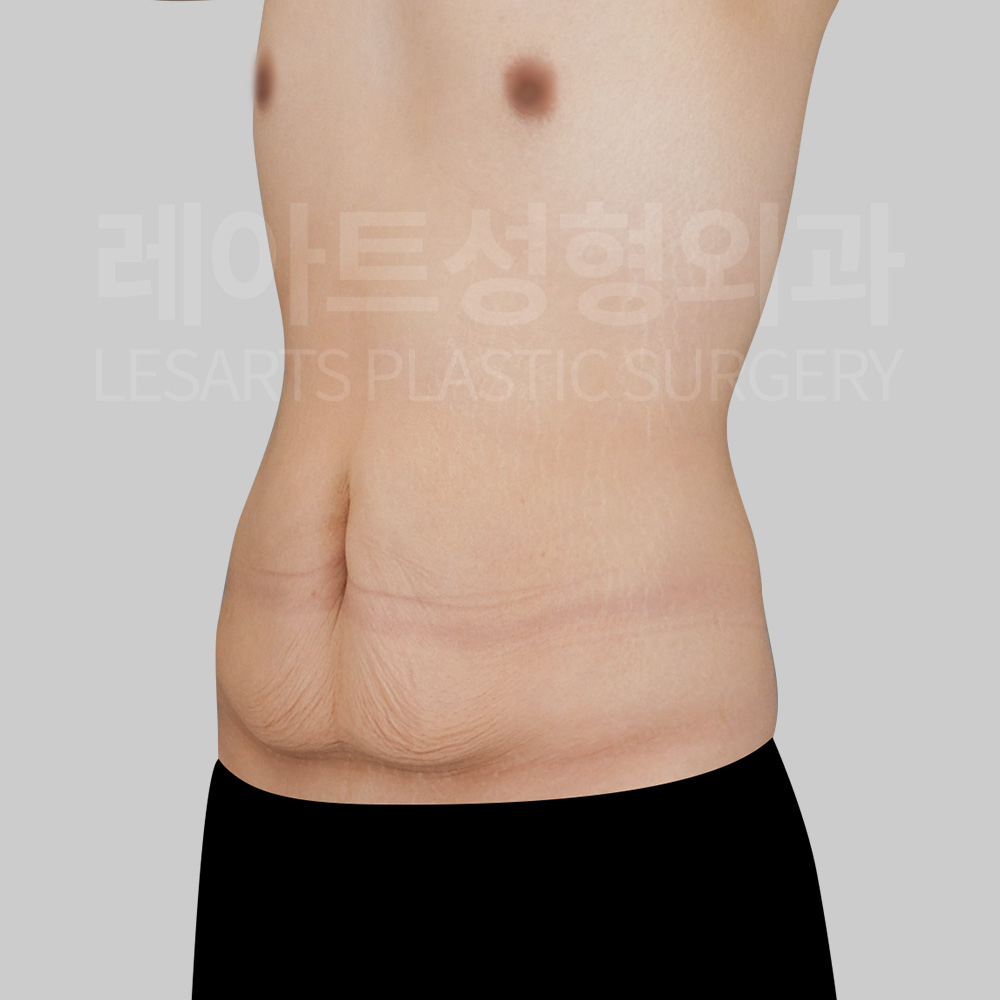
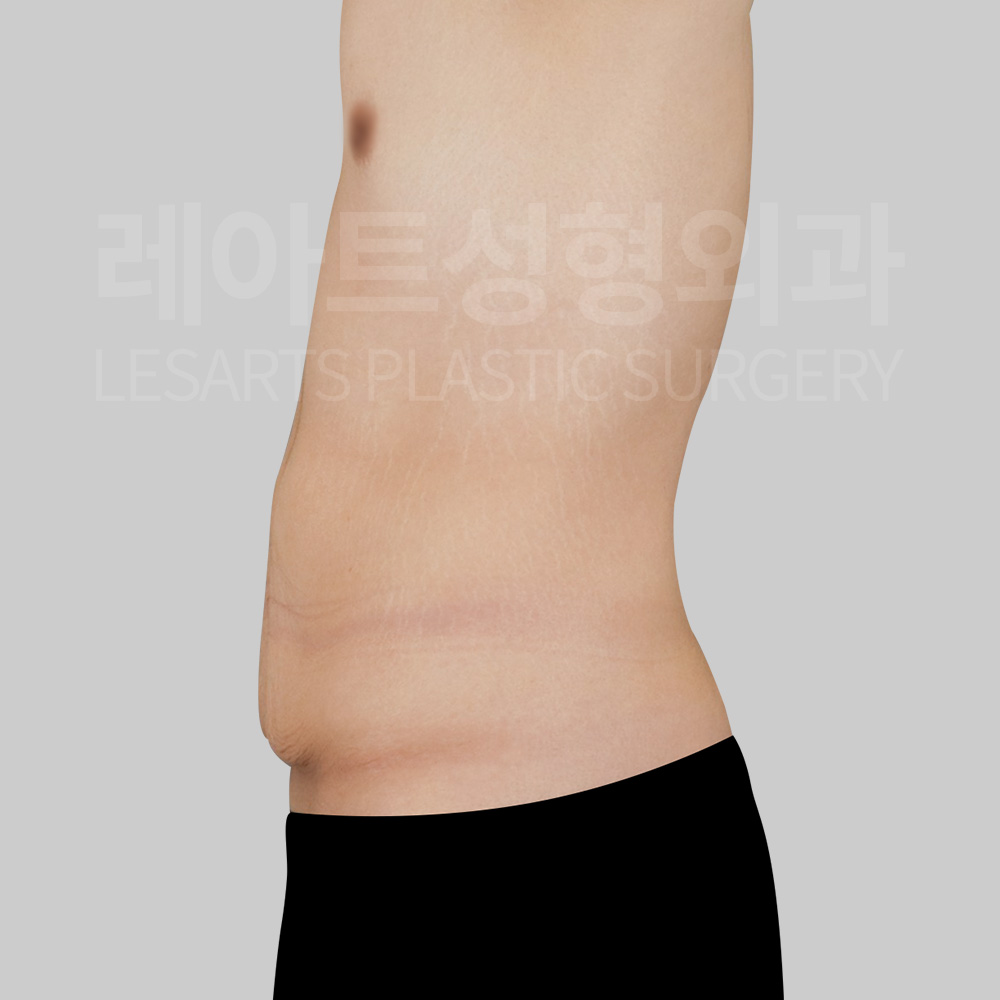
Male Abdominoplasty Consultation Preoperative Physical Examination
The patient was a male in his 20s
with a height of 186 cm
and a weight of 85 kg.
During adolescence, he had experienced
a peak weight exceeding 120 kg,
but successfully reduced his weight
through long-term effort and maintained
a stable body weight thereafter.
Despite his successful weight loss,
the most significant concern remained
the excess abdominal skin
and persistent lower abdominal protrusion
caused by the dramatic change
in body weight over time.
These issues continued to affect
both his appearance and confidence.
During the physical examination,
skin laxity was observed
throughout the entire abdomen.
Although the skin sagging
was not severe enough
to completely cover the navel,
it caused noticeable discomfort
when bending forward
or performing exercises
that required a prone position.
The lower abdomen showed
more pronounced skin laxity,
with excess skin overlapping
above the belt line.
This created the appearance
of a more prominent lower abdomen,
making the abdominal contour
appear larger than the patient’s
actual body shape.
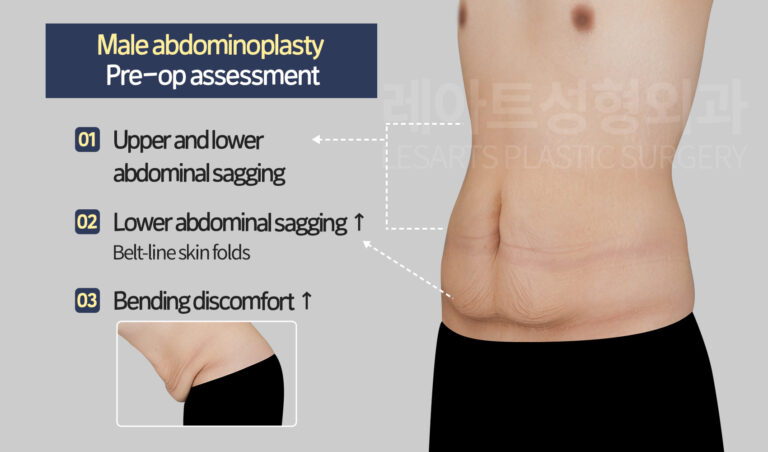
Male Abdominoplasty Preoperative Assessment and Surgical Planning
Although the patient did not have
a large amount of subcutaneous fat,
some residual fullness remained
in the upper abdomen
and love handle areas
following significant weight loss.
To create a smoother and more balanced
abdominal contour, we determined that
combining Abdominoplasty
with abdominal liposuction
would provide the most natural result.
The most important part
of the surgical planning process
was determining the appropriate extent
of the Abdominoplasty procedure.
Because the degree of
upper abdominal skin laxity
was not severe,
careful consideration was required
between an M-Type Abdominoplasty
and an S-Type Mini Abdominoplasty.
The primary advantage of
M-Type Abdominoplasty
is its ability to address
both upper and lower abdominal laxity.
However, this technique requires
a longer incision
and repositioning of the navel,
which may result in
additional scarring around
the umbilical area.
We explained that,
depending on the healing process,
the appearance of the navel
may occasionally look less natural,
and the surrounding scar
could become noticeable.
These possibilities were discussed
with the patient in detail
before making a decision.
By comparison,
S-Type Mini Abdominoplasty
allows the original navel shape
to be preserved without
an incision around the navel.
However, in cases such as this,
where the lower abdominal sagging
extends broadly across the abdomen
and toward both iliac regions,
the reduction in scar length
may be less significant than expected.
In addition, the ability to correct
upper abdominal skin laxity
is inherently more limited
with a mini abdominoplasty approach.
After thoroughly reviewing
the advantages and limitations
of each procedure,
the patient ultimately chose
to undergo M-Type Abdominoplasty
combined with abdominal liposuction
to achieve the most comprehensive correction.
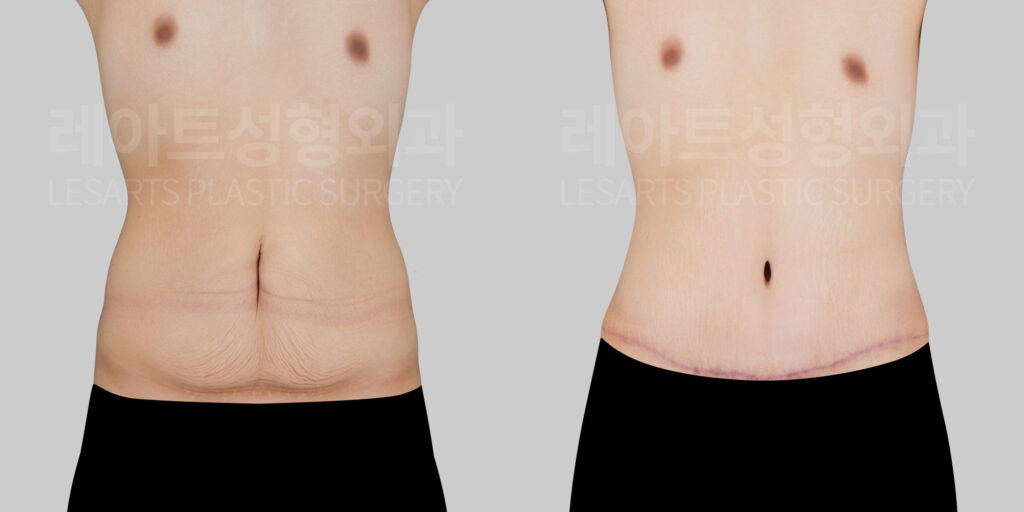
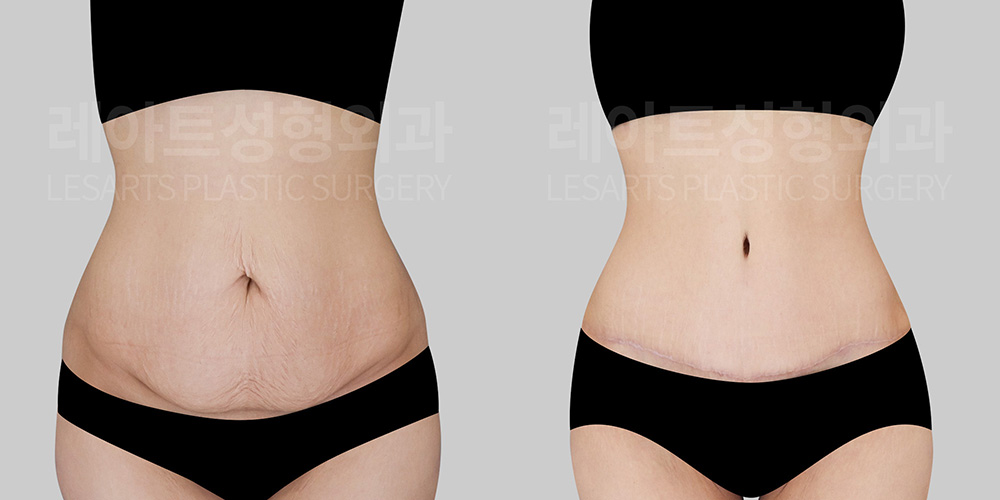
Male Abdominoplasty Before and After – Kukhan Lee | Lesarts Plastic Surgery
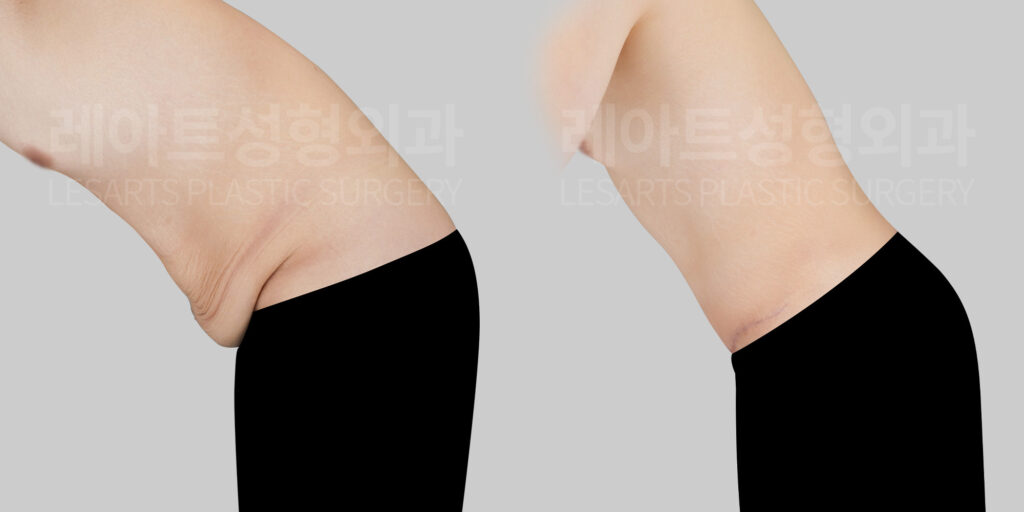
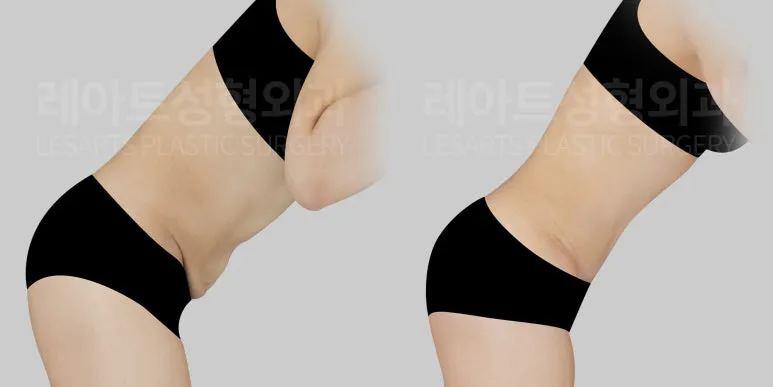
Lower Abdominal Sagging Improvement After Abdominoplasty – Lesarts Plastic Surgery
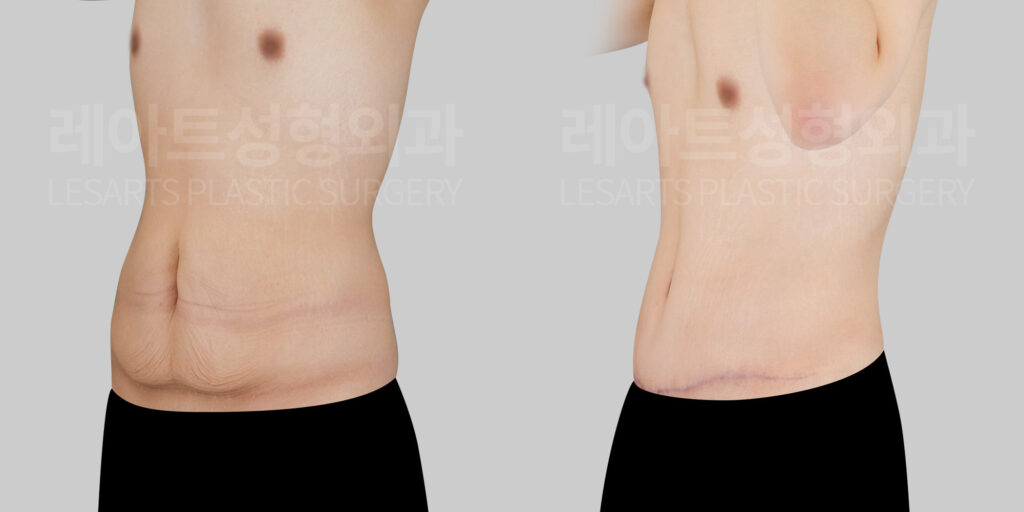
This patient is shown
at approximately 3 months after
M-Type Abdominoplasty.
The protruding appearance caused by
lower abdominal skin laxity
improved significantly as
the excess skin was removed,
resulting in a flatter and smoother
abdominal contour.
The improvement is noticeable
even from the front view,
but the most remarkable change
can be seen when bending forward.
The excess skin folds that previously formed
during movement have been greatly reduced,
creating a more comfortable
and natural abdominal profile.
The incision site is also healing
in a stable and predictable manner.
No significant step-off deformity
is observed along the scar,
and both sides remain smooth
without visible dog-ear deformities.
Overall, the abdominal contour
appears balanced and naturally refined.
Male Sagging Belly Surgery – Kukhan Lee | Lesarts Plastic Surgery
Abdominoplasty Before and After – Kukhan Lee | Lesarts Plastic Surgery
The umbilical contour
has also remained relatively natural
throughout the recovery process.
Because abdominal liposuction
was performed together with
M-Type Abdominoplasty,
the overall waistline
and abdominal contour appear
more refined and balanced.
In addition, the procedure helped
smooth the transition between
the abdomen and flanks,
creating a more harmonious silhouette.
The abdominal profile now appears
cleaner and more proportionate
than before surgery.
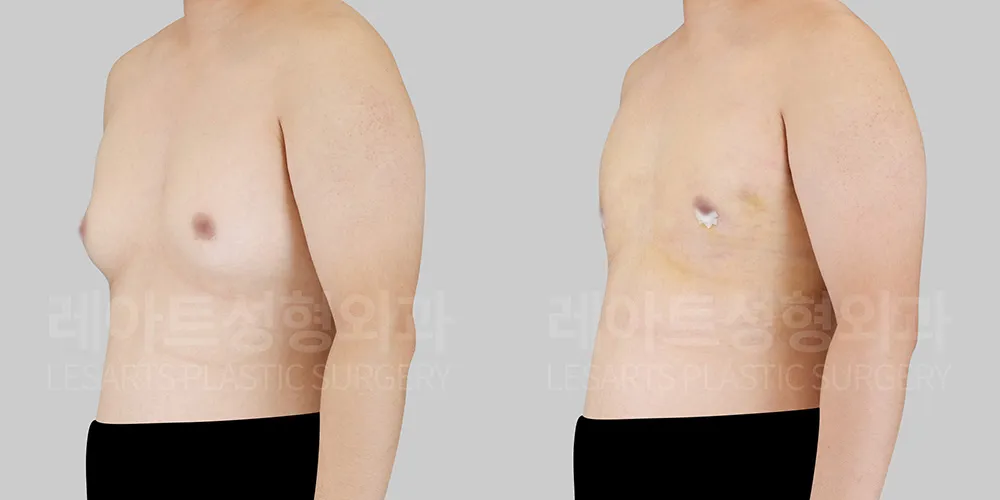
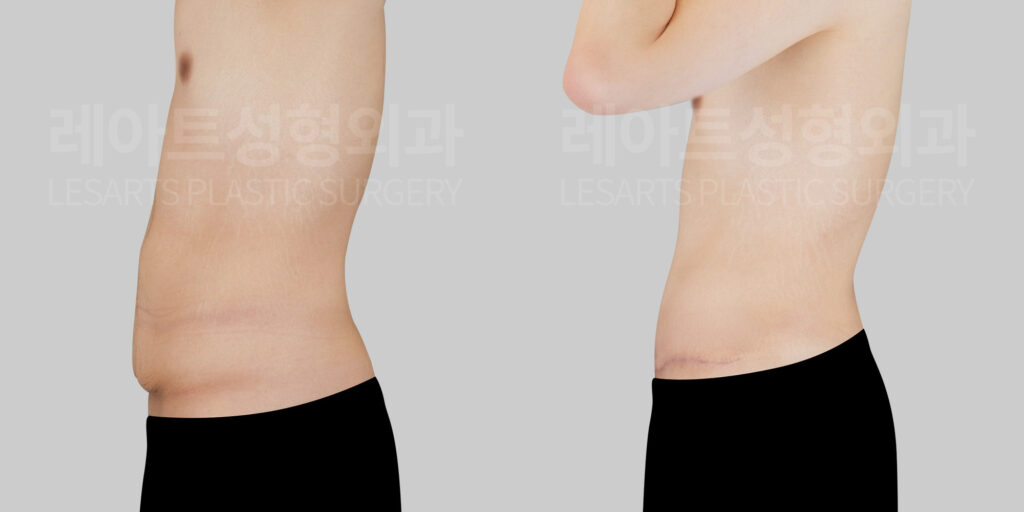
Another notable improvement
can be seen from the side view.
The uneven and irregular contour
that was visible preoperatively
has become significantly smoother,
resulting in a more natural-looking
abdominal contour and body line.
Abdominoplasty Scar Placement – Kukhan Lee | Lesarts Plastic Surgery
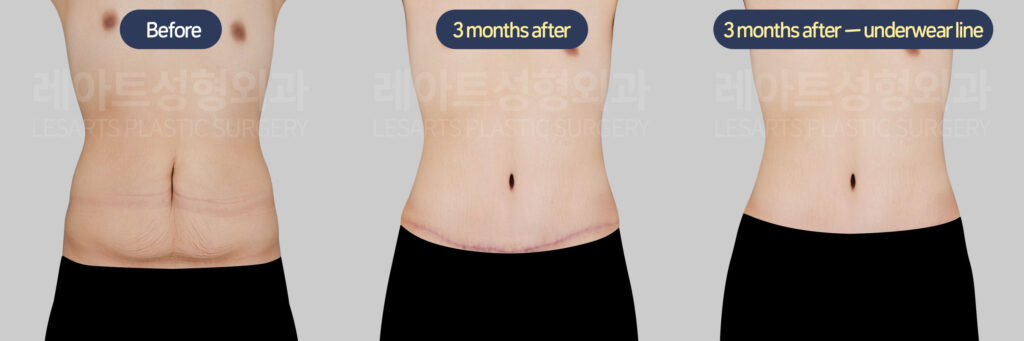
The patient is currently
approximately 3 months after
M-Type Abdominoplasty.
At this stage of recovery,
the scar remains somewhat red
and more visible than it will be
during the later stages of healing.
In general, male patients
often experience a slightly slower
scar maturation process
than female patients.
However, in this particular case,
the scar has been stabilizing
relatively quickly and progressing
through recovery as expected.
With continued scar management
and regular postoperative treatments,
further improvement is anticipated
over the coming months.
As scar maturation continues,
the redness and visibility
are expected to decrease gradually.
When consulting male patients
about Abdominoplasty,
one of the most important discussions
involves understanding the scar.
While the procedure effectively removes
excess abdominal skin,
it inevitably requires
a surgical incision
and the resulting scar.
This consideration can be especially important
for younger male patients
who frequently participate in activities
such as exercise, swimming,
or sauna visits,
where the upper body
is more commonly exposed.
Understanding how a scar may affect
daily life and personal comfort
is an essential part
of the decision-making process.
Even so, for patients who have struggled
for years with abdominal skin laxity
that could not be corrected
through exercise or weight loss alone,
Abdominoplasty can be
a highly meaningful procedure.
Beyond improving body contour,
it can also significantly enhance
confidence and overall quality of life.
For men seeking the final step
of a successful weight-loss journey
and the beginning of long-term
body contour management,
we hope this case provides
helpful insight and guidance.