
Arm Lift – Sagging Upper Arms After Significant Weight Changes: 7-Month Results After Brachioplasty
Is a full-length arm lift always necessary for sagging upper arms after significant weight loss?
No. If skin laxity is concentrated in a specific area,
a limited arm lift combined with liposuction may be considered.
The surgical range should be determined by the location of sagging, fat distribution,
desired correction, and the expected scar length and visibility.
Written by Dr.Kukhan Lee, Lesarts Plastic Surgery
This article was written directly by the attending surgeon.
※Unauthorized reproduction, editing, or redistribution is prohibited.※
When body weight increases rapidly and then decreases,
the changes are not limited to a reduction in weight and body fat.
The skin that was stretched during weight gain
may not fully contract afterward,
leaving loose or sagging skin in various areas.
This is particularly common after significant weight loss,
when excess skin may remain despite consistent exercise
and dietary management.
The upper arms are one of the areas
where these changes can be especially noticeable.
When the skin of the upper arms begins to sag,
it can affect not only the appearance of the arms
but also the choice of clothing.
During warmer seasons, overlapping skin may also lead
to sweating, friction, or skin irritation,
causing additional discomfort.
Because the arms move frequently in daily life
and are relatively exposed compared with other areas,
patients may become particularly concerned
about sagging skin in this region.
However, sagging upper arms do not always require
an extensive arm lift with a long incision.
It is important to evaluate where the skin laxity is concentrated,
how fat is distributed, and the condition of the skin
around the armpit and elbow.
Based on these factors, only the areas
that actually require correction should be treated.
In this case, we will look at a patient
who developed localized upper arm skin laxity
during the process of significant weight loss.
The condition was treated with a combination
of liposuction and a limited arm lift
to address the areas requiring correction.
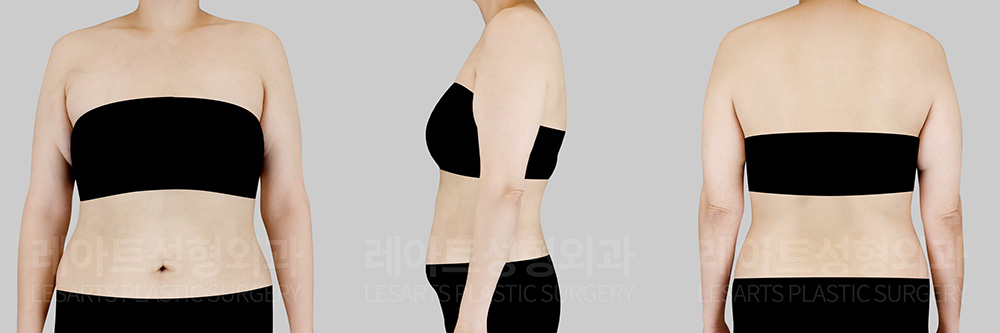
The patient was a woman in her 40s
who had given birth to three children.
At the time of her consultation,
she was 168 cm tall and weighed 71 kg.
She had previously experienced significant weight gain,
reaching a maximum weight of 98 kg.
After finding it difficult to achieve sufficient weight loss
through exercise and dietary management alone,
she underwent gastric bypass surgery approximately two months
before visiting our clinic.
She was still in the process of losing weight
and visited us to address the sagging upper arm skin
that had become more noticeable with weight loss.
On physical examination,
the overall degree of upper arm skin laxity was not severe.
However, sagging was more prominent in certain areas,
making the entire upper arm appear looser
than it actually was.
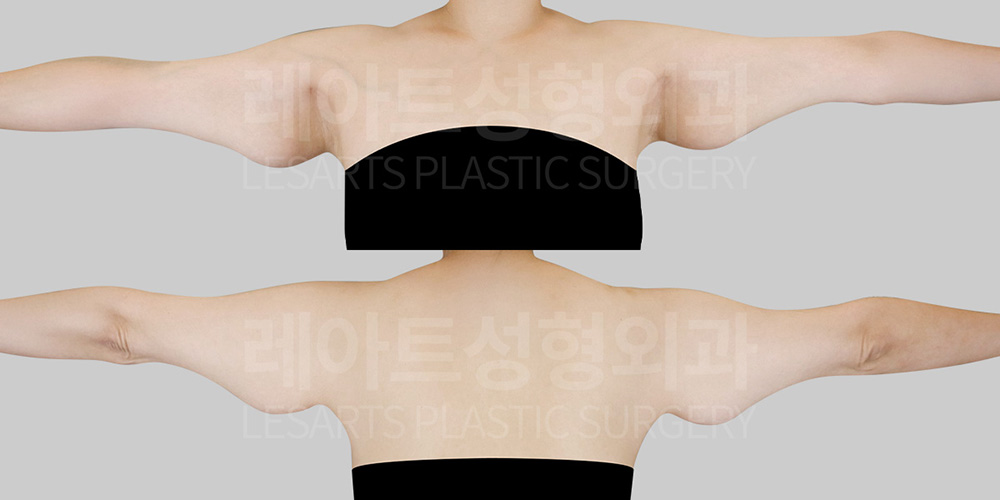
In particular, the main concern was bulging and sagging
of the skin and soft tissue in the proximal inner upper arm,
near the armpit.
The overall amount of fat was relatively low,
and there was no significant sagging
around the accessory breast or axillary area.
Therefore, rather than extensively removing skin
along the entire upper arm,
we determined that a more limited approach
focused on the areas where sagging was concentrated
would be more appropriate.
The patient prioritized improvement of the sagging
rather than minimizing the length of the scar.
However, in arm lift surgery,
it is important to consider not only
how much loose skin can be removed,
but also the location and length of the scar
and how visible it may be in daily life.
A longer incision can correct skin laxity
across a wider area.
However, this also results in a longer scar,
and if the incision extends toward the elbow,
the scar may become visible even with slightly shorter sleeves.
In addition, the area near the elbow
is exposed to frequent movement and repeated tension.
Therefore, the possibility of scar-related concerns,
such as hypertrophic scarring,
should also be taken into consideration.
In this case, liposuction was used
to reduce the volume and sagging appearance
around the elbow as much as possible.
A limited arm lift was then performed
in the area where skin laxity was most concentrated.
This approach was designed to achieve
the necessary degree of correction
while minimizing the extent of the scar.
7 Months After Arm Lift Surgery
This shows the patient’s condition 7 months after surgery.
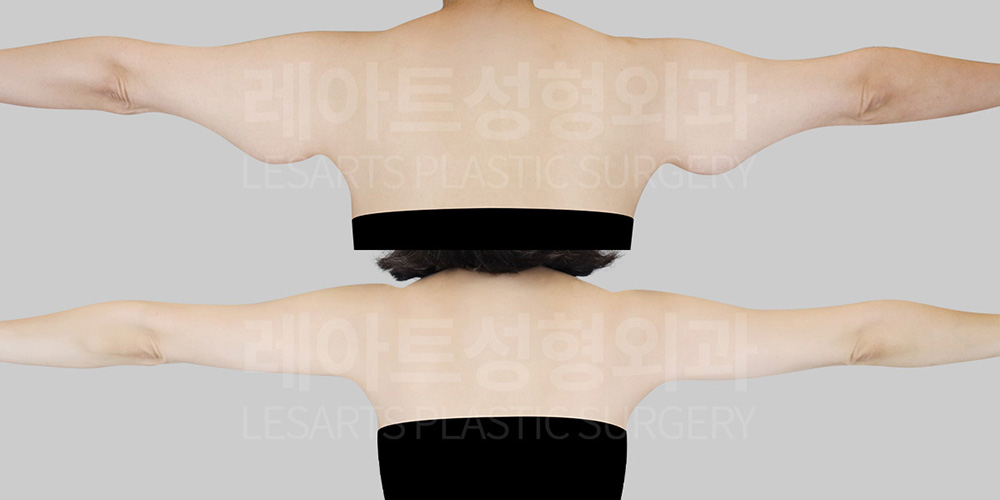
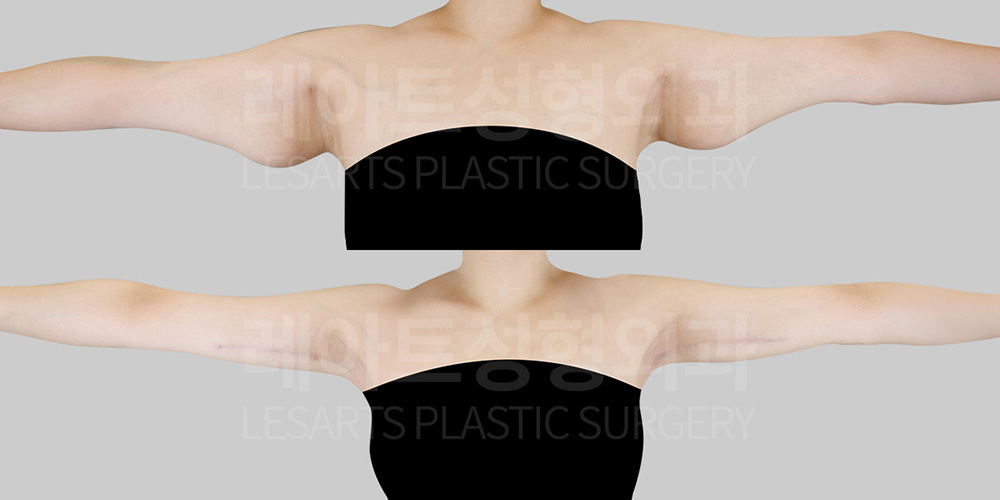
When the patient raises her arms,
the bulging and sagging skin and soft tissue
previously visible along the proximal inner upper arms
show clear improvement.
Because the incision and skin excision were planned
according to the degree of skin laxity,
the resulting scar was somewhat longer.
However, the overall contour of the upper arms
became smoother, more refined,
and more natural in appearance.
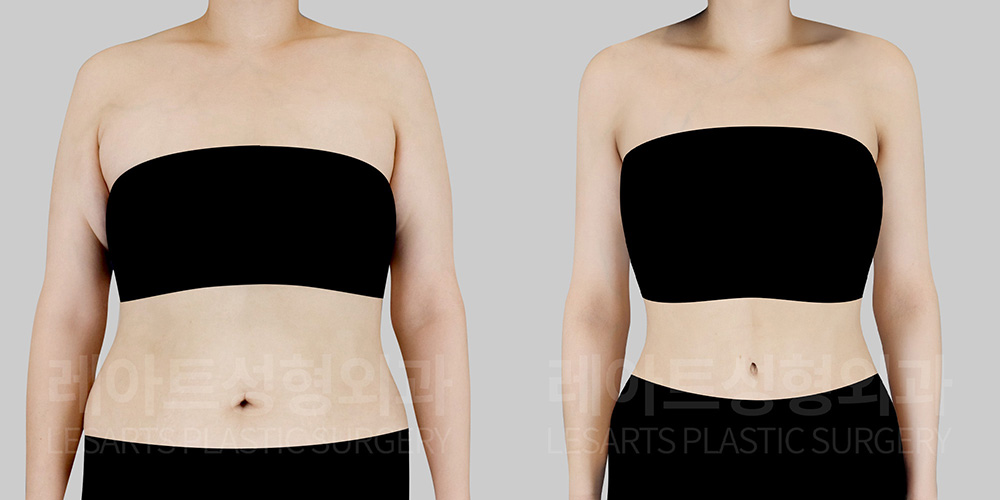
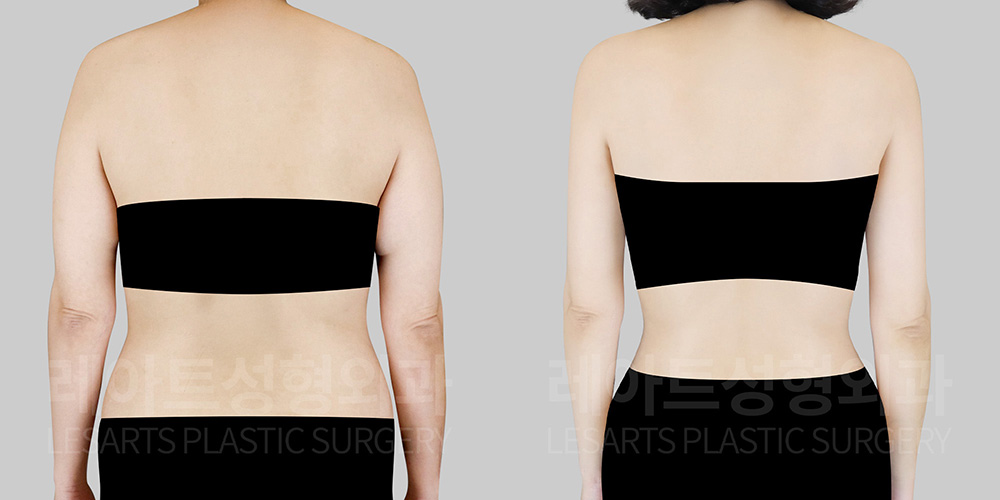
The improvement is noticeable not only
when the arms are extended out to the sides,
but also when the arms are lowered
and viewed from the front and back.
The previously prominent bulging appearance
of the upper arms has been significantly reduced,
creating a smoother overall contour.
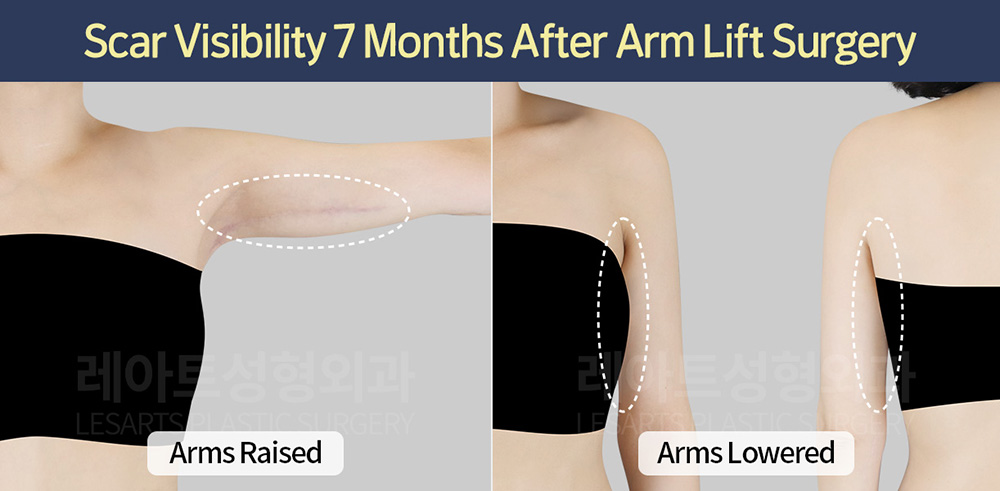
In this procedure,
the location of the scar was also
an important consideration.
The incision was positioned along the bicipital groove.
Although the scar may be visible
when the arms are extended,
it is less noticeable from the front and back
when the arms are resting naturally
at the sides.
Because the incision follows the natural depression
between the biceps and triceps muscles,
the scar can also be positioned more discreetly
while taking the natural contour
of the upper arm into consideration.
At 7 months after surgery,
the scar is progressing through
the expected maturation process.
A surgical scar does not reach its final appearance
immediately after surgery.
Over time, its color and texture gradually change,
and the scar typically becomes softer.
With continued scar care,
the color may continue to fade
and the border between the scar and surrounding skin
may become more natural and less noticeable over time.
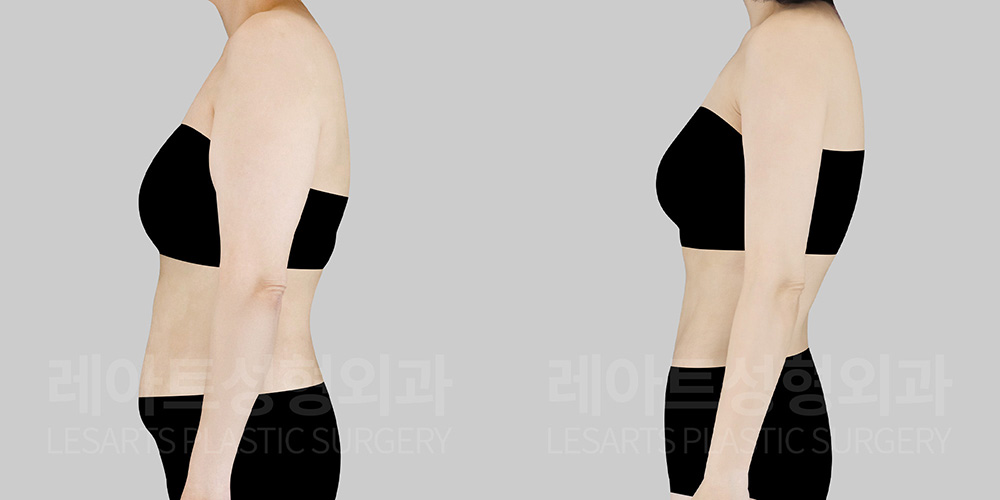
Above all, this outcome reflects not only
the arm lift procedure itself,
but also the patient’s consistent postoperative scar care
and continued efforts with additional weight loss
and body contour management after surgery.
Loose skin remaining after significant weight loss
cannot always be improved simply
by losing additional weight.
At the same time, extensively removing skin
without carefully considering the degree
and location of the laxity
is not necessarily the best approach.
Therefore, when considering an arm lift,
it is important to evaluate the overall condition
of the upper arm skin, fat distribution,
where the sagging is concentrated,
and the desired degree of correction.
The location and extent of the postoperative scar
should also be carefully considered
when determining the appropriate surgical range.
In this case, the patient did not have
severe sagging throughout the entire upper arm.
Instead, localized skin laxity in specific areas
was affecting the overall appearance
and contour of the arms.
In such cases, focusing correction
on the areas where sagging is concentrated
may help achieve the desired improvement
while avoiding unnecessarily long incisions.
If you are concerned about sagging upper arms,
visit Lesarts Plastic Surgery for a detailed consultation
to determine the most appropriate treatment approach.
FAQ
Q1. Why can sagging upper arm skin remain after significant weight loss?
After major weight loss, previously stretched skin may not fully contract even when body fat decreases.
This can leave loose or sagging skin that may be difficult to improve through additional weight loss or exercise alone.
Q2. Is a full arm lift always necessary for sagging upper arms?
No. If skin laxity is localized rather than severe throughout the entire upper arm, correction may be focused on the affected area.
A limited arm lift can also be combined with liposuction when appropriate.
Q3. Why can liposuction be combined with an arm lift?
Liposuction can help reduce localized volume in areas such as around the elbow while
an arm lift removes excess skin where laxity is concentrated.
Combining the procedures can help create a smoother overall arm contour.
Q4. Where can the arm lift scar be positioned?
In this case, the incision was positioned along the bicipital groove between the biceps and triceps.
Although the scar may be visible when the arms are extended,
it can be less noticeable from the front and back when the arms are resting naturally.
Q5. How does an arm lift scar change 7 months after surgery?
At 7 months, the scar is still undergoing maturation. With continued healing and scar care,
its color may gradually fade, the texture may soften,
and the border with the surrounding skin may become less noticeable over time.
▼ Visit Lesarts Plastic Surgery in Gangnam, Seoul, Korea ▼