[Abdominoplasty]Male S-Type Mini Abdominoplasty 4-Month Mini Abdominoplasty Results
Hello, I am Dr. Kukhan Lee
from Lesarts Plastic Surgery.
As the weather becomes warmer
and clothing becomes lighter,
concerns about body shape
naturally become more noticeable.
For many patients,
the greatest disappointment comes when
the expected silhouette does not appear
even after successful weight loss.
Excess skin and persistent sagging
around the abdomen are concerns
that often cannot be resolved
through weight loss alone.
As a result, many patients continue
to experience frustration despite maintaining
regular exercise and dietary control,
eventually seeking professional consultation.
In the past, Abdominoplasty
was often considered a procedure
primarily for female patients.
Today, however, an increasing number
of male patients are pursuing treatment
to improve loose abdominal skin
after major weight loss and achieve
a firmer, more athletic body contour.
In today’s case review,
we will look at the
4-month postoperative results
of a male patient who underwent
S-Type Mini Abdominoplasty
to address persistent
lower abdominal skin laxity
following significant weight reduction.
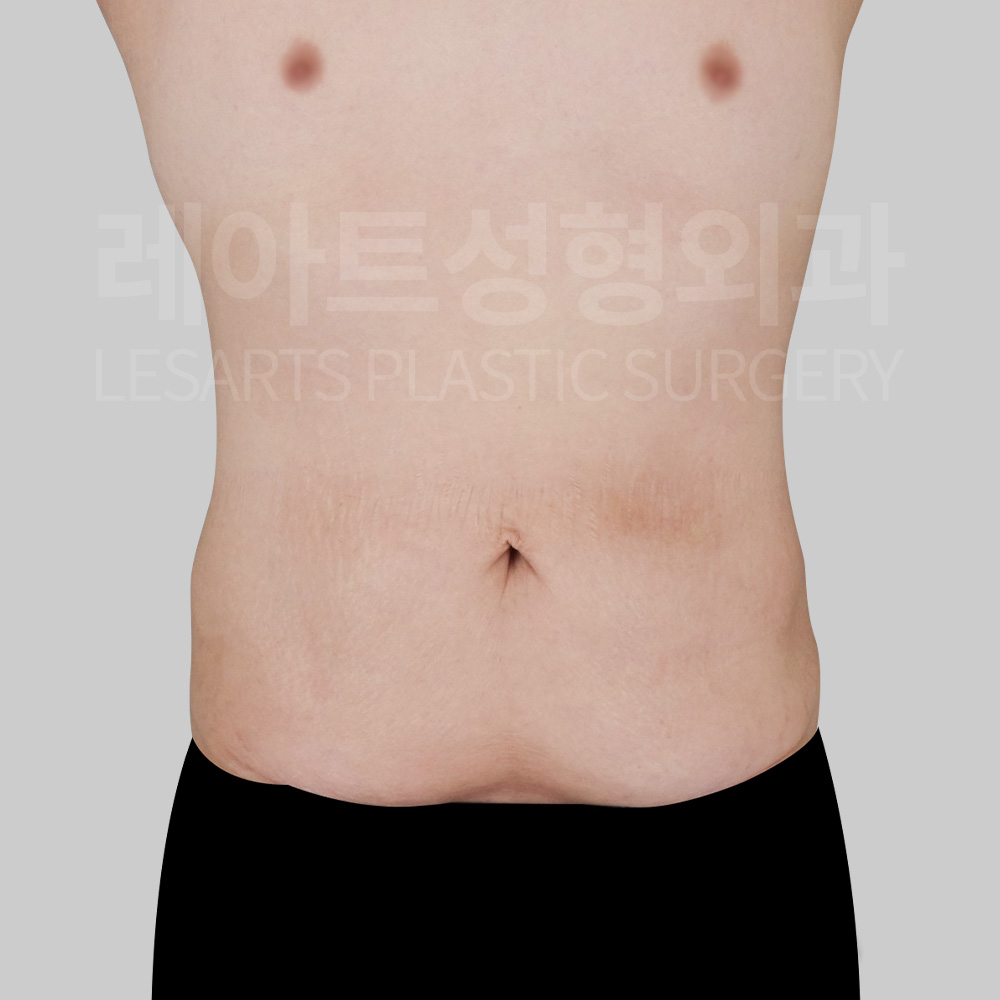
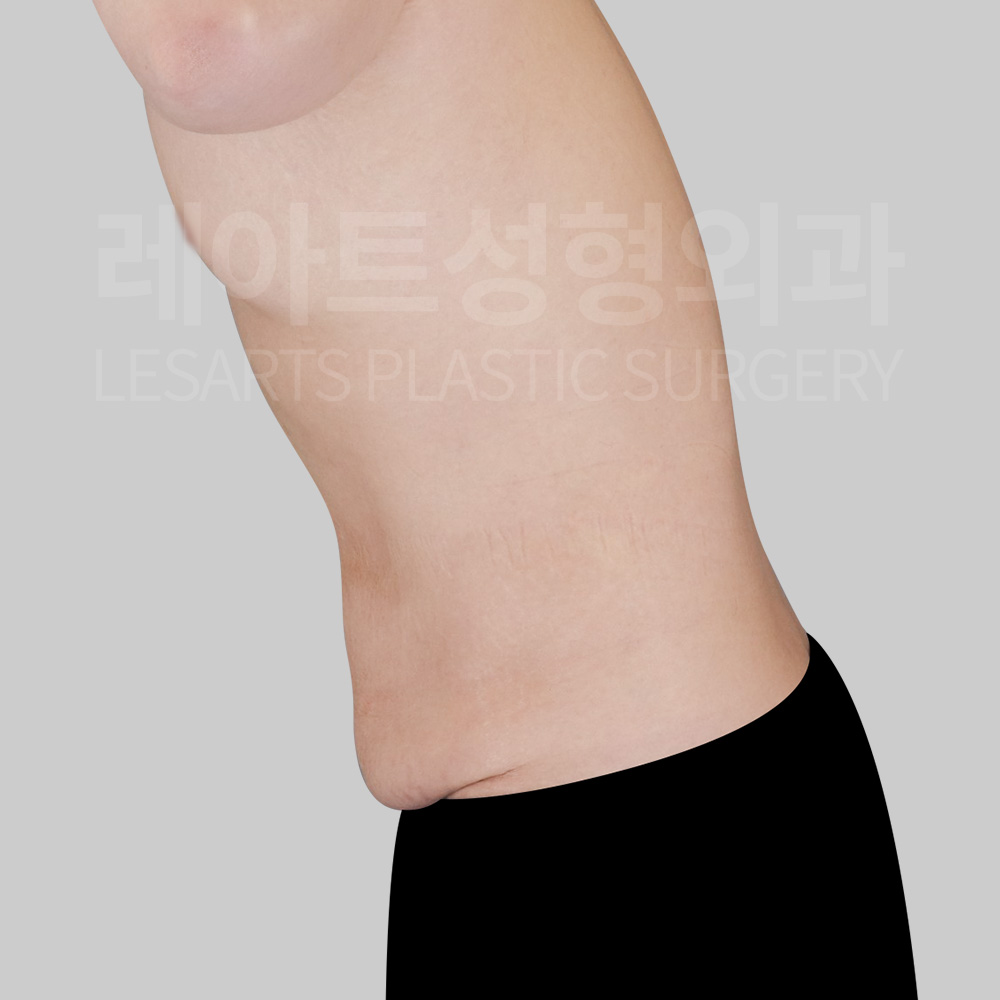
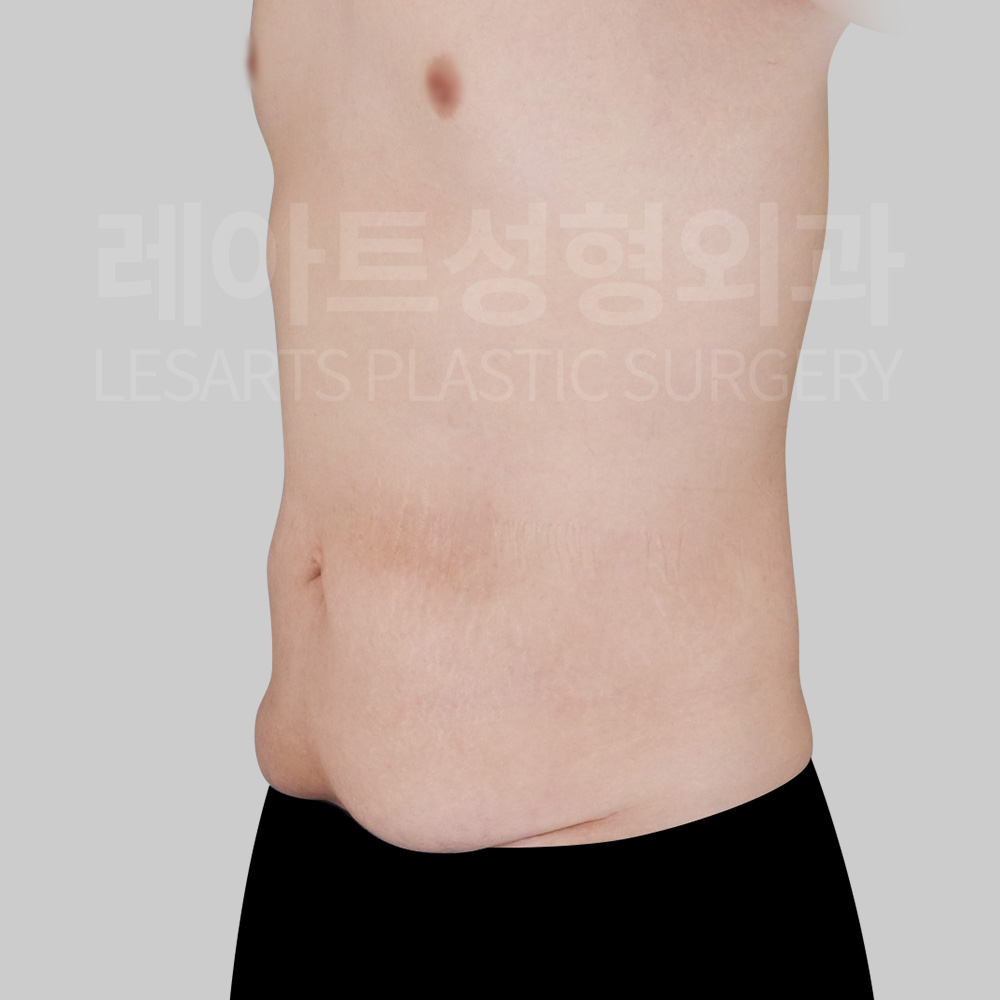
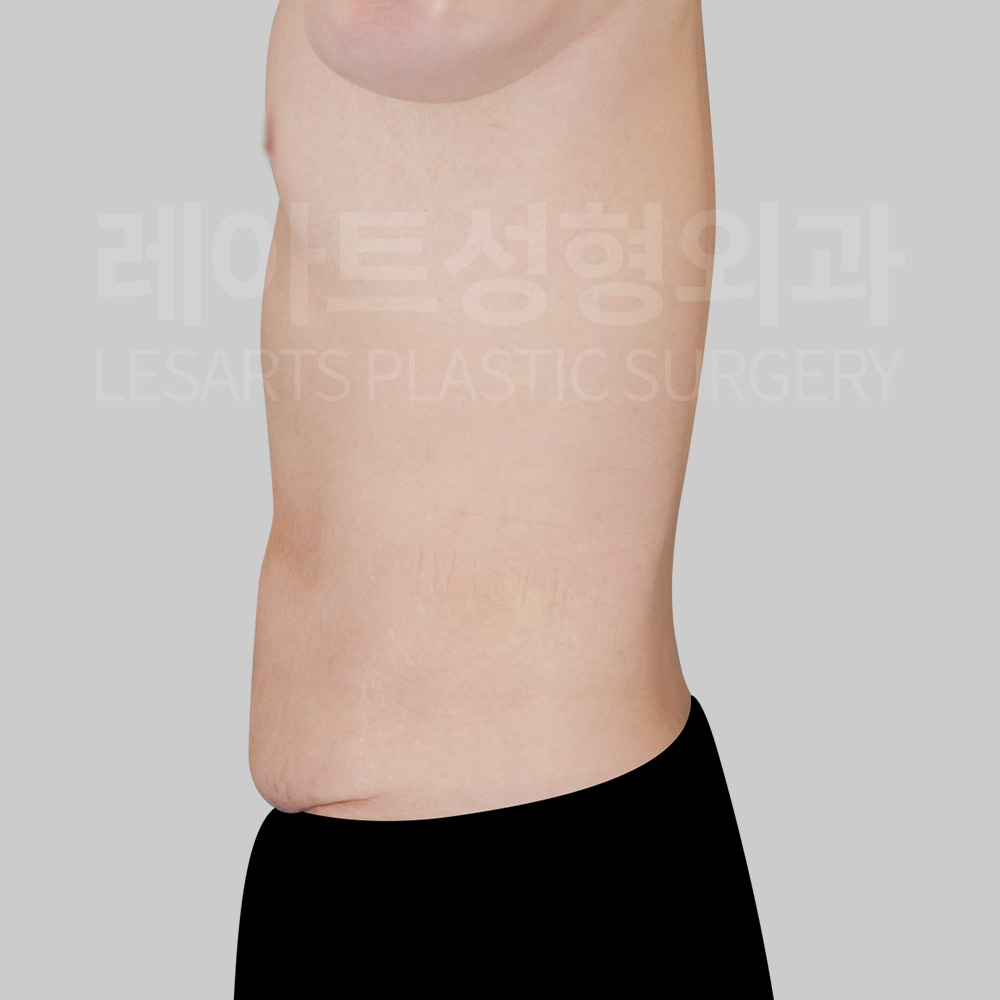
Male Abdominoplasty Preoperative Assessment
The patient was a male
in his 30s with a height
of 170 cm and a weight
of 76 kg. He had a history
of childhood obesity and had successfully
reduced his weight through
long-term effort and lifestyle changes.
Although he had maintained
his current weight consistently,
the excess skin in the
lower abdomen remained unchanged
despite continued exercise
and dietary management.
As a result, the persistent
skin laxity became one of
his greatest concerns.
The loose abdominal skin created
a protruding appearance in
the lower abdomen,
making the area appear larger
than it actually was.
This caused discomfort even when
wearing everyday clothing
and became particularly noticeable
when wearing fitted garments
such as athletic wear.
Because tight-fitting clothing
accentuated the lower abdominal area,
the patient experienced ongoing stress
and dissatisfaction with his body contour.
For this reason, he sought consultation
to address the excess skin
that could not be improved
through weight loss alone.
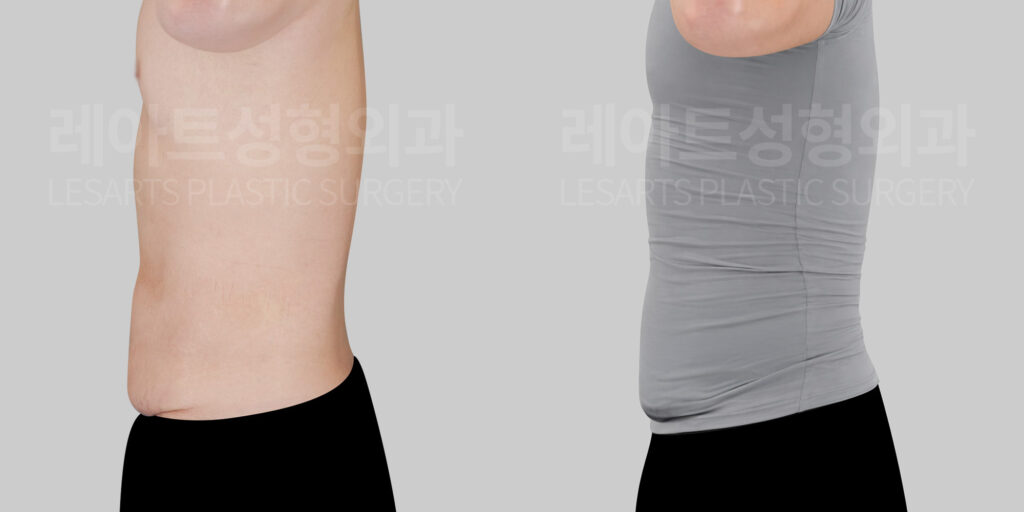
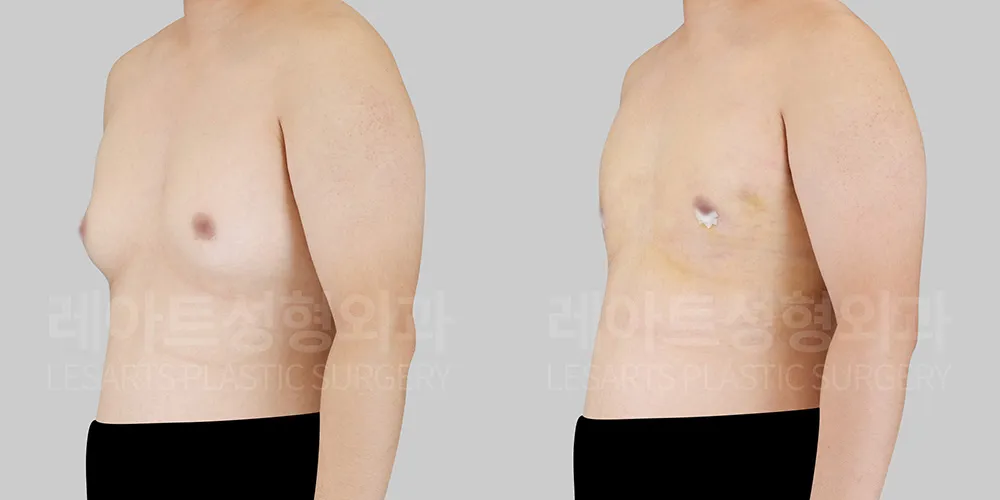
T-Shirt Fit Before Male Abdominoplasty – Lesarts Plastic Surgery
Physical examination revealed
that excessive abdominal fat accumulation
was not a major concern.
Instead, the most prominent finding
was the lower abdominal skin laxity,
which appeared as visible
wave-like folds and sagging skin.
A mild degree of
upper abdominal skin looseness
was also present.
In addition, excess skin above
the navel created a hooding effect,
causing the umbilical position
to appear lower than normal.
When considering both
the correction of abdominal sagging
and improvement of navel position,
an M-Type Abdominoplasty
would generally have been
the more comprehensive option.
However, the patient reported
minimal discomfort regarding
the upper abdominal laxity
or the position of the navel itself.
His primary concern involved
the additional scar around the navel
that is typically unavoidable with
M-Type Abdominoplasty.
In particular, the possibility
that a newly reconstructed navel
might appear unnatural
was the factor that caused
the greatest hesitation
when deciding on surgery.
For this reason,
an S-Type Mini Abdominoplasty
was considered as an alternative approach.
We explained that the patient’s
main concern, the lower abdominal sagging,
could be improved effectively
through a mini abdominoplasty procedure.
At the same time,
we thoroughly discussed
the limitations of the operation
and the realistic expectations
for postoperative improvement.
Because the area of skin laxity
extended broadly toward both flanks,
creating a smooth contour
without noticeable dog-ear deformities
or step-off irregularities
would require a somewhat longer scar.
We also explained that,
because the procedure does not involve
an incision around the navel,
the umbilical shape
would remain natural,
although its position could appear
slightly lower in comparison.
After careful discussion,
the patient elected to undergo
S-Type Mini Abdominoplasty
combined with abdominal liposuction
to improve contour definition
and facilitate the surgical dissection process,
resulting in a smoother
and more refined abdominal profile.
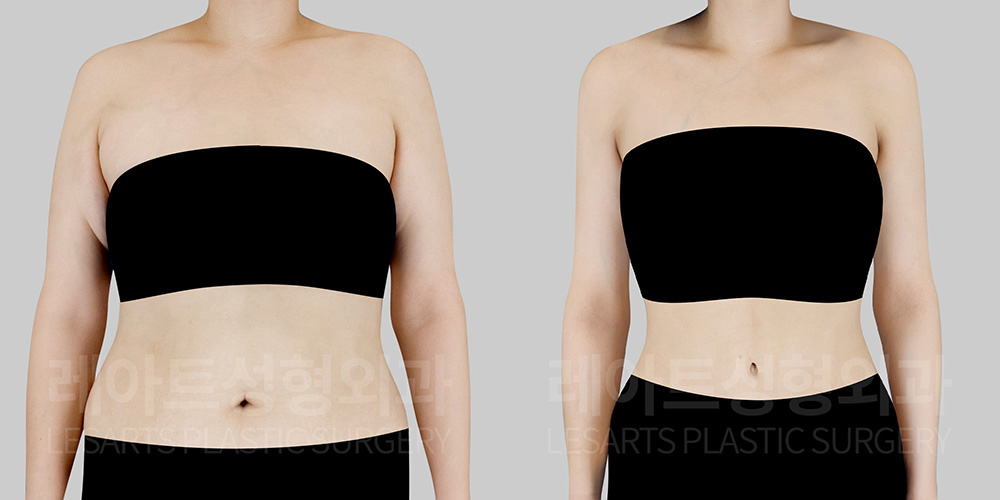
“Male Mini Abdominoplasty 4-Month Follow-Up”
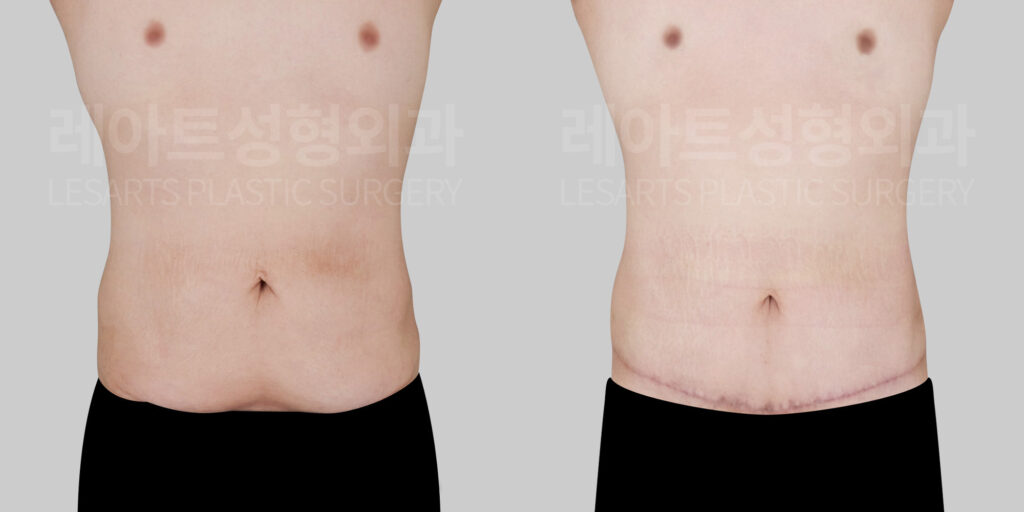
Male Mini Abdominoplasty Before and After – Kukhan Lee | Lesarts Plastic Surgery
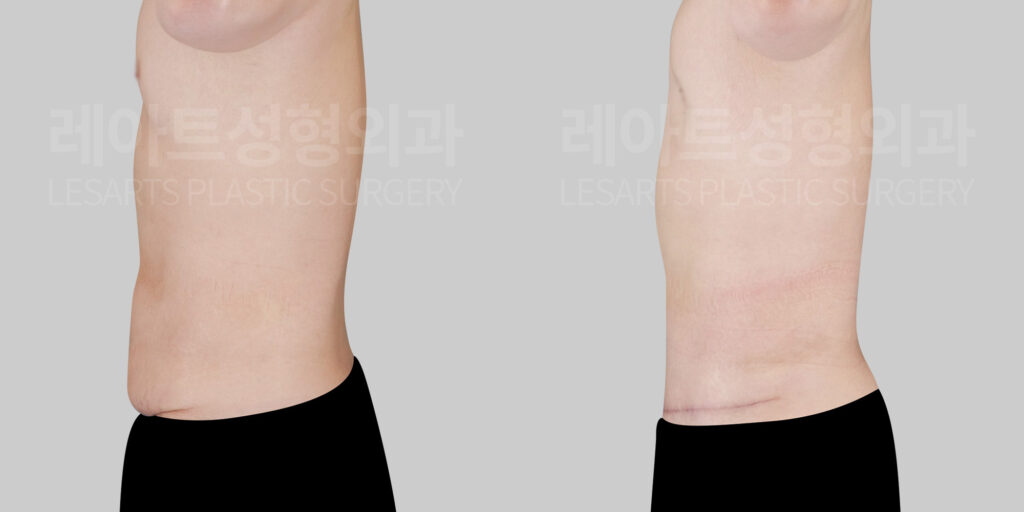
Abdominoplasty Results – Kukhan Lee | Lesarts Plastic Surgery
This was not a case
that required a large-volume
abdominal liposuction procedure.
As a result, the overall reduction
in abdominal circumference
and the change in silhouette
were relatively modest.
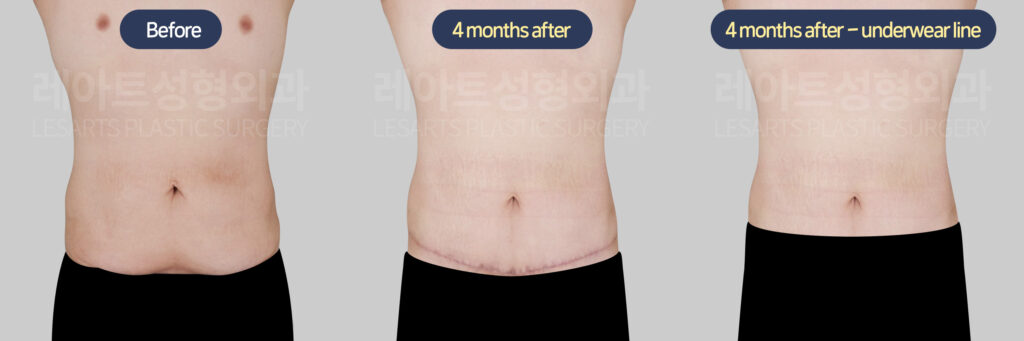
However, the most significant improvement
can be seen in the lower abdomen.
The wave-like folds and sagging skin
that were previously visible
have been substantially reduced,
creating a smoother and more refined
lower abdominal contour.
Rather than focusing on
dramatic size reduction,
the primary goal of surgery
was to address the excess skin
that remained after weight loss.
By removing the loose tissue,
the lower abdomen now appears
flatter, cleaner, and more balanced
with the surrounding body contour.
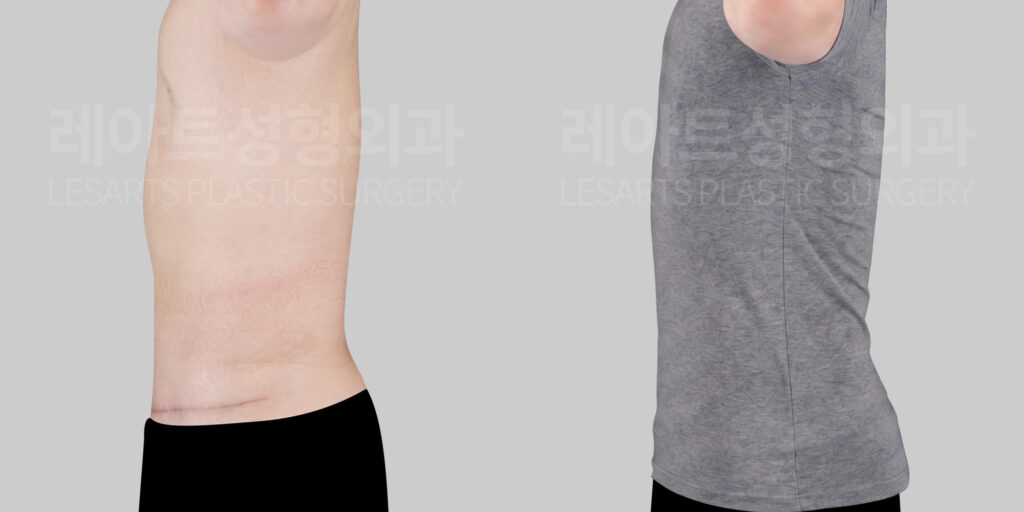
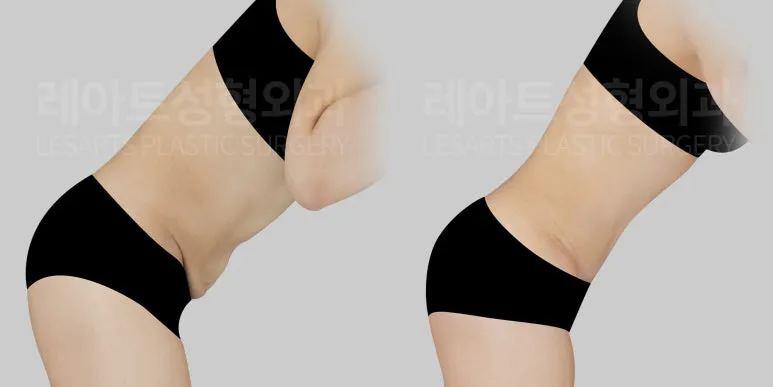
T-Shirt Fit After Male Mini Abdominoplasty – Lesarts Plastic Surgery
Male Lower Abdominal Abdominoplasty Before and After – Kukhan Lee | Lesarts Plastic Surgery
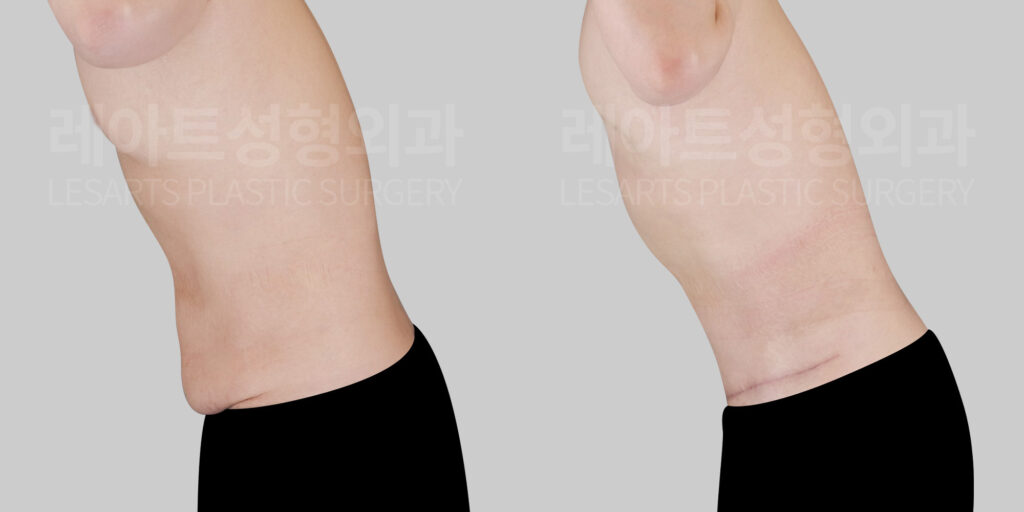
One of the most meaningful improvements
was observed during everyday activities.
The excess lower abdominal skin
that previously folded when
bending forward or sitting down
was significantly reduced after surgery,
creating a smoother and more natural
abdominal contour.
As the loose skin was corrected,
the lower abdomen appeared flatter
and less prominent beneath clothing.
This improvement was noticeable
not only in appearance,
but also in daily comfort,
allowing the patient to move
with greater ease and confidence.
The reduction in skin folding
helped minimize the discomfort
that had persisted despite
successful weight loss,
making the overall outcome beneficial
from both a functional
and aesthetic perspective.
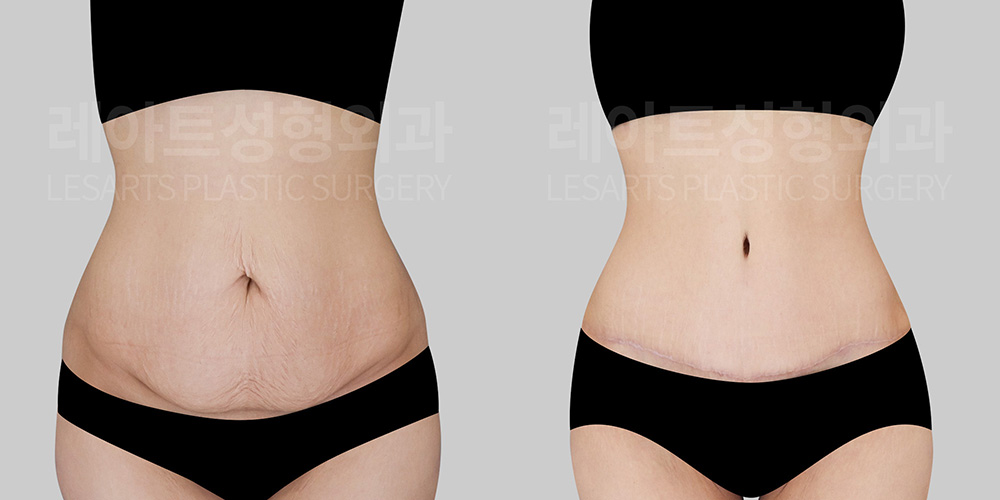
Male Mini Abdominoplasty Scar Placement – Board-Certified Plastic Surgeon Kukhan Lee
The scar length in this case
extended to a range comparable
to that seen in some
extended L-Type Abdominoplasty procedures.
However, this was a necessary trade-off
to create a smoother contour
and minimize the risk of
dog-ear deformities or noticeable
step-off irregularities at both ends
of the incision.
By extending the scar appropriately,
it was possible to achieve
a more natural transition
along the lower abdominal contour
while maintaining better symmetry.
This approach allowed the excess skin
to be removed more effectively,
resulting in a cleaner
and more balanced outcome.
It is also important to note
that the umbilical position
appears slightly lower than before surgery.
This finding is considered one of
the structural limitations of
S-Type Mini Abdominoplasty.
Because the procedure does not involve
repositioning the navel,
the surrounding abdominal skin
is tightened downward,
which can make the navel appear
relatively lower after surgery.
Despite these limitations,
the procedure successfully addressed
the patient’s primary concern:
significant lower abdominal skin laxity
following weight loss,
while preserving a natural-looking
umbilical shape and abdominal contour.
Male Sagging Belly Lift Surgery – Kukhan Lee | Lesarts Plastic Surgery
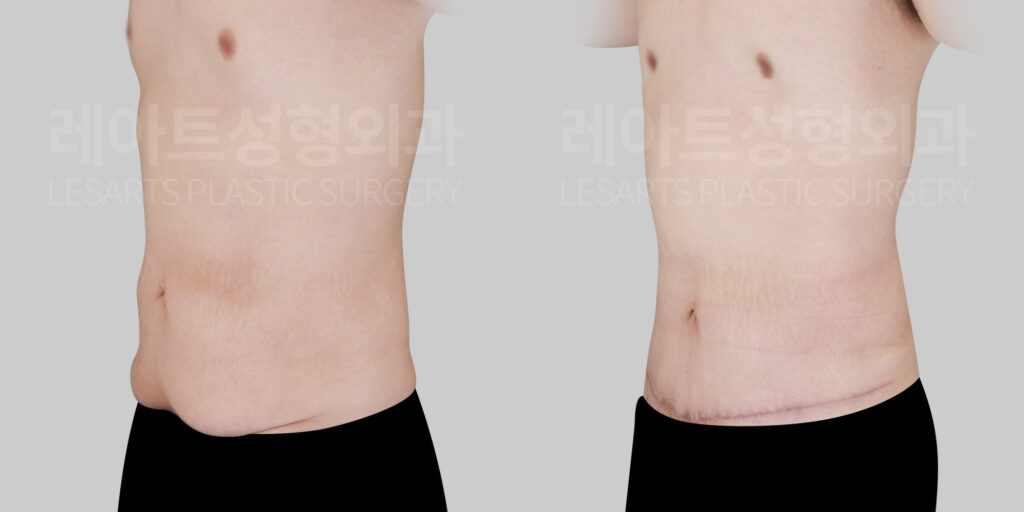
The patient is currently
more than 4 months after
Mini Abdominoplasty surgery.
At this stage of recovery,
the scar still shows
some residual redness
and mild post-inflammatory pigmentation,
which is a normal part
of the healing process.
Scar maturation requires time,
and gradual improvement is expected
over the coming months.
With consistent scar management
and regular postoperative treatments,
the scar has a strong possibility
of becoming less noticeable
and blending more naturally
with the surrounding skin.
Even after successful weight loss,
excess skin and tissue laxity
often remain difficult to improve
through exercise and dietary control alone.
Once skin elasticity has significantly decreased,
non-surgical treatments frequently provide
only limited improvement,
making satisfactory correction
more challenging to achieve.
When skin laxity itself
is the primary cause of the problem,
surgical treatment may offer
the most predictable solution.
By directly removing excess skin
and reshaping the abdominal contour,
Abdominoplasty can effectively address
the underlying cause
rather than simply masking it.
Of course, the most appropriate
Abdominoplasty technique varies
depending on each patient’s
skin quality, fat distribution,
degree of sagging,
and tolerance for surgical scars.
For this reason,
the decision should not focus solely
on whether surgery is necessary.
Instead, it is important to determine
which procedure is most suitable
for the individual’s condition,
what improvements can realistically
be expected,
and what limitations may remain.
A thorough consultation is essential
for making an informed decision
and achieving the best possible outcome.