[Abdominoplasty]Will the Results of Abdominoplasty After Pregnancy and Childbirth Last? A 6-Month vs. 1-Year Comparison
Hello, I am Dr. Kukhan Lee,
a board-certified plastic surgeon at Lesarts Plastic Surgery.
Pregnancy and childbirth are precious milestones,
but they can also leave lasting physical changes
that many women do not expect.
In the clinic, I often meet women
who have successfully returned to their pre-pregnancy weight
through exercise and diet,
yet still struggle because
their abdomen has not regained
its smooth, youthful contour.
Following pregnancy and significant weight gain,
stretched skin, Rectus Diastasis,
and the loss of soft tissue elasticity
often do not fully recover,
even after childbirth.
Because these structural changes
cannot always be corrected
through exercise and diet alone,
Abdominoplasty is often
the most effective solution.
In this case,
we will look at how a patient
who lost confidence after pregnancy and childbirth
changed over the course of one year
following M-Type Full Abdominoplasty.
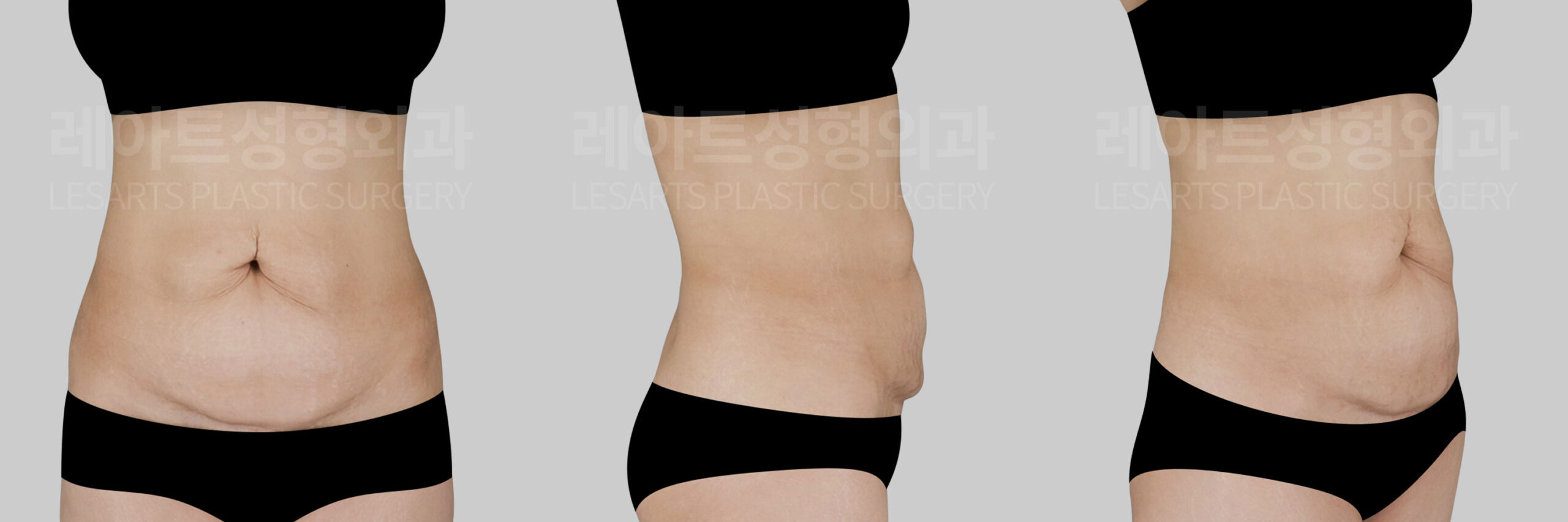
Preoperative Assessment for Abdominoplasty – Lesarts Plastic Surgery
The patient was a woman in her 40s,
measuring 158 cm in height
and weighing 52 kg.
She had delivered both children
by Cesarean Section,
and had no history of abdominal surgery
other than a previous laparoscopic procedure.
During pregnancy,
her weight increased to approximately 70 kg,
and after childbirth she successfully maintained
her current weight through consistent self-care.
However,
her greatest concern was not her weight,
but the appearance of her abdomen.
She explained that
her abdominal contour did not appear smooth
when wearing fitted clothing,
and that the stretch marks
and uneven skin texture
had caused her to lose confidence.
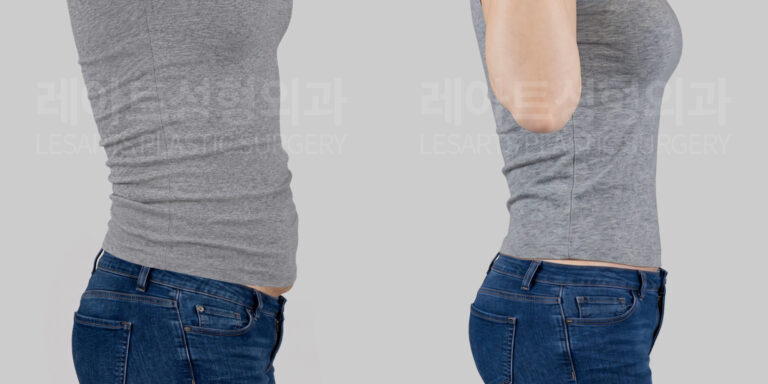
Results of Abdominoplasty After Childbirth – Dr. Kukhan Lee | Lesarts Plastic Surgery
The patient’s greatest concern
was the irregular contour around the umbilicus
and the bulging lower abdomen
that protruded above her Cesarean Section Scar.
Physical examination revealed
generalized skin laxity involving
both the upper and lower abdomen.
Around the umbilicus,
localized Subcutaneous Fat, postoperative adhesions
from a previous laparoscopic procedure, and scar tissue
combined to create an uneven abdominal contour.
In addition,
fat accumulation above the Cesarean Section Scar
had created a noticeable step-off deformity,
making the contour
of the lower abdomen
appear even more prominent.
Although the overall amount of fat
was not excessive,
localized fat deposits and skin laxity together
resulted in an uneven abdominal contour.
Because the fat layer
around the umbilicus was relatively thick,
it was difficult to accurately assess
the degree of Rectus Diastasis
through palpation alone.
However,
the widespread Stretch Marks
and pregnancy-related skin changes
indicated that the abdominal wall
had been subjected to significant tension,
strongly suggesting the presence
of Rectus Diastasis.
Based on these findings,
sufficient skin excision was required
for both the upper and lower abdomen,
making M-Type Full Abdominoplasty
the most appropriate treatment.
During surgery,
Rectus Diastasis of both
the upper and lower abdomen
was repaired to restore abdominal firmness,
and Abdominal Liposuction
was performed simultaneously
to achieve a smoother body contour.
Next,
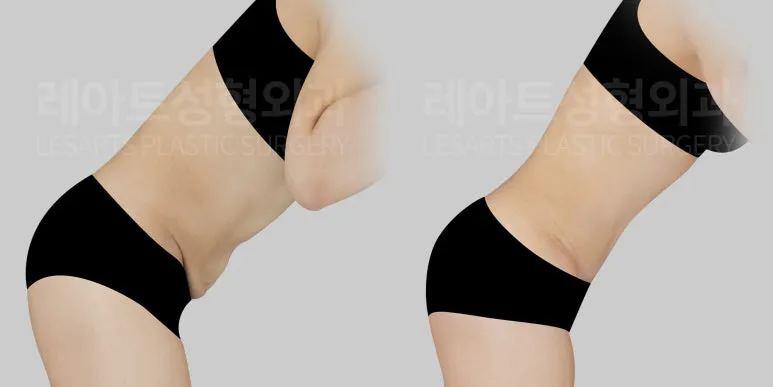
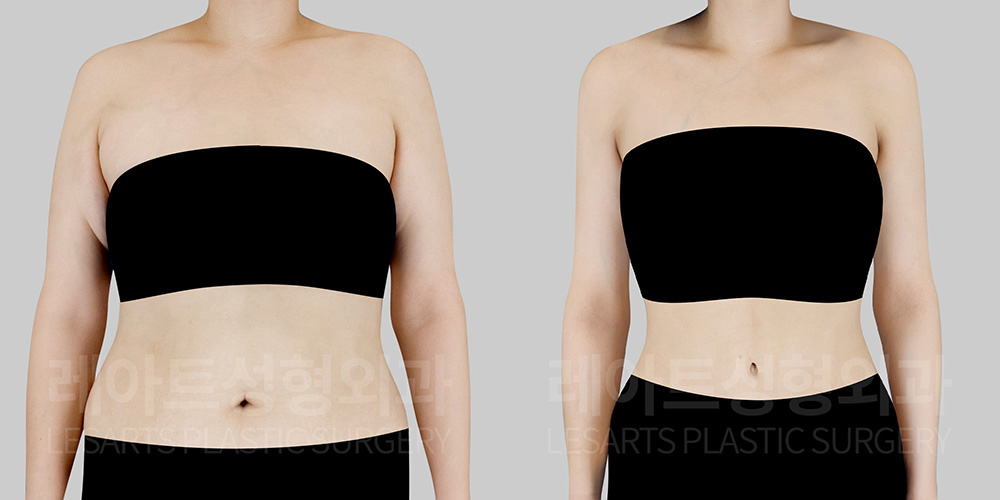
let’s compare the results
at 6 months and 1 year
after Abdominoplasty.
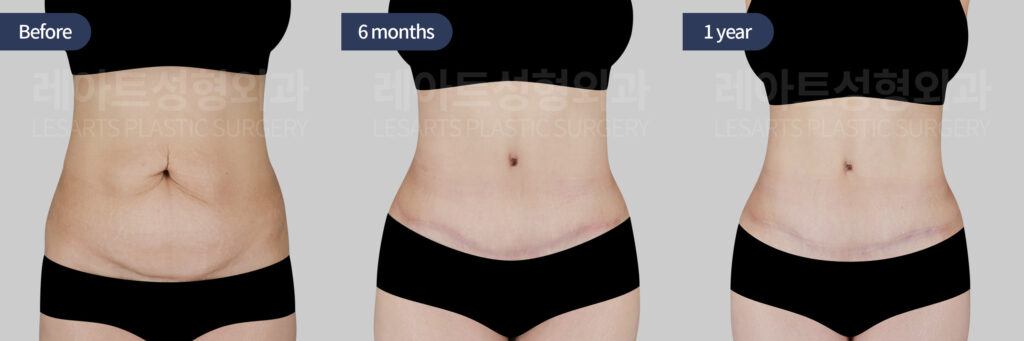
Abdominoplasty Recovery Process – Dr. Kukhan Lee | Lesarts Plastic Surgery
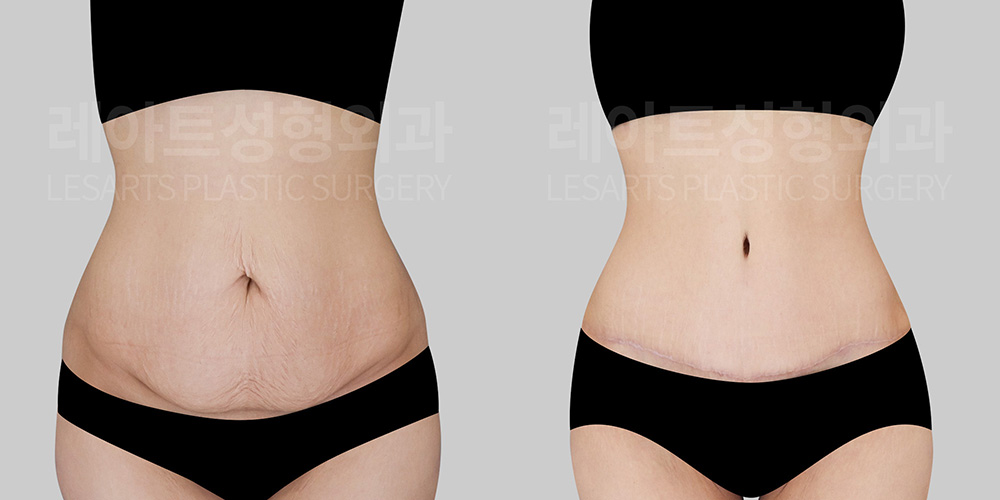
The previously lax abdominal skin
was transformed into
a smoother, more natural contour.
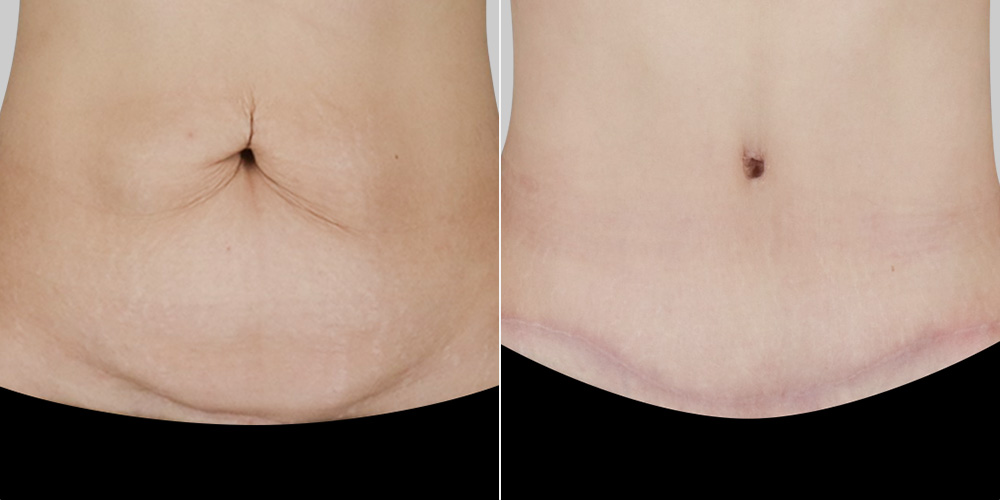
Before-and-After Comparison of Abdominal Wrinkles – Dr. Kukhan Lee | Lesarts Plastic Surgery
In particular,
the previously irregular contour
around the umbilicus,
and the bulging area
above the Cesarean Section Scar,
were refined into
a smoother abdominal contour
through Liposuction,
meticulous tissue release,
and adequate skin excision.

Abdominoplasty Techniques and Results – Dr. Kukhan Lee | Lesarts Plastic Surgery
The abdomen, which had appeared
rounded and protruding before surgery,
became firmer
and noticeably flatter
through the simultaneous repair
of Rectus Diastasis.
Rather than simply
removing excess skin,
the procedure also addressed
the underlying structural changes
of the abdominal wall,
resulting in
a more balanced
and naturally contoured physique.
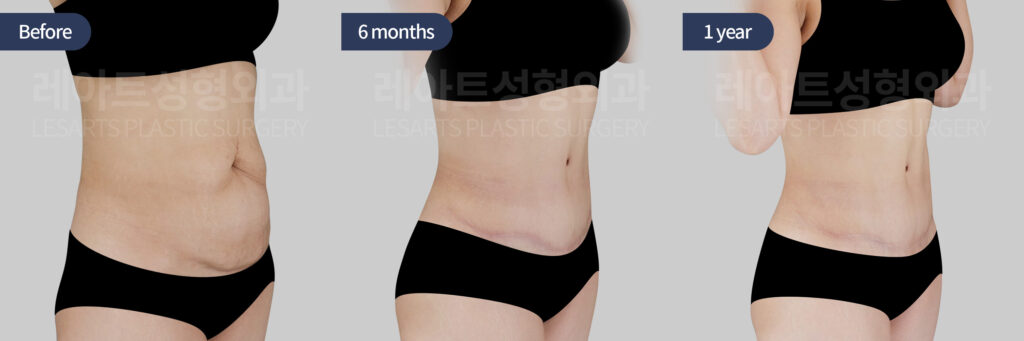
Abdominoplasty for Loose Abdominal Skin After Childbirth – Lesarts Plastic Surgery
Comparing the results
at 6 months and 1 year,
the patient’s weight
remained stable,
and the repaired
Rectus Diastasis
continued to maintain
excellent long-term support.
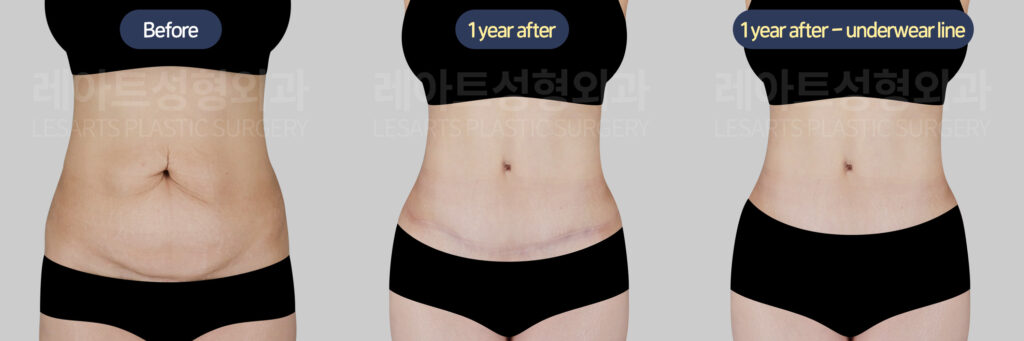
Abdominoplasty Incision Length and Scar Placement – Dr. Kukhan Lee | Lesarts Plastic Surgery
The redness of the scar
has gradually faded over time,
and it is expected
to become even less noticeable
as the natural scar maturation process
continues.
Abdominal changes after childbirth
often cannot be corrected
through weight loss alone.
Excess skin, Rectus Diastasis,
step-off deformities around surgical scars,
and localized fat deposits
should each be carefully evaluated
so that an appropriate treatment plan
can be established.
Because the abdomen
forms the center of the body,
even subtle improvements
can make a significant difference
to the overall silhouette
and the way clothing fits.
If you are still concerned
about loose abdominal skin
or changes in your body contour
despite your continued efforts,
we encourage you
to receive a thorough evaluation
rather than struggling
with these concerns alone.
We hope this surgical case
has been helpful
for anyone facing
similar concerns.