[Abdominoplasty]Postpartum Abdominal Sagging and Periumbilical Wrinkles7 Months After M-Type Full Abdominoplasty
Hello, I am Dr. Gukhan Lee
from Lesarts Plastic Surgery.
Pregnancy and childbirth are precious experiences
that welcome a new member into the family,
but the physical changes that occur during pregnancy
often remain much longer than expected,
becoming a source of ongoing concern
in daily life.
Even after body weight has returned to normal,
issues such as abdominal protrusion,
excess skin laxity,
wrinkling around the abdomen,
and rectus diastasis
are often difficult to improve
through exercise and dietary management alone.
This case involves a patient
who had maintained her weight consistently
and undergone various treatments,
yet remained dissatisfied
with the appearance of her abdomen,
eventually considering
surgical correction.
We hope this case will provide
helpful insight for women
who are experiencing
postpartum abdominal changes.
Preoperative Evaluation Before Abdominoplasty Surgery
The patient was a woman
in her 30s,
with a height of 160 cm
and a weight of 52 kg.
She had undergone
two Cesarean Sections.
During pregnancy,
her weight had increased
to approximately 65 kg,
and she reported that
her abdomen became
particularly enlarged.
Following childbirth,
she maintained a consistent routine
of exercise and dietary management,
but was unable to achieve
the degree of improvement
she had hoped for.
She had also previously undergone
approximately six sessions of
Fat-Dissolving Injections
to the abdomen,
yet remained dissatisfied
with the results.
As a result,
she visited our clinic
in search of a more definitive
and fundamental solution.
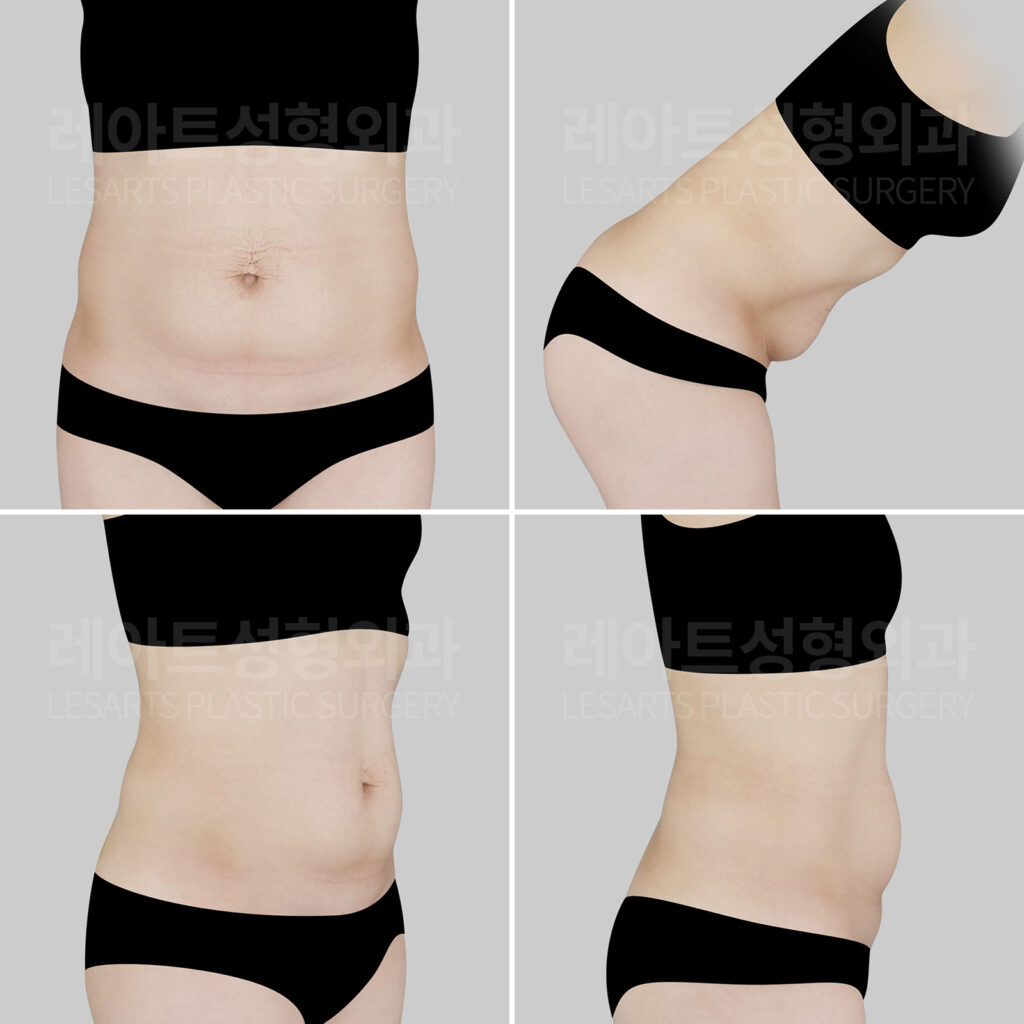
At the time of consultation,
her primary concerns were
Lower Abdominal Protrusion,
wrinkling around the Umbilicus,
a distorted Umbilical Shape,
and improvement of the overall
Abdominal Contour,
including the Waistline.
Surgical Planning for M-Type Full Abdominoplasty
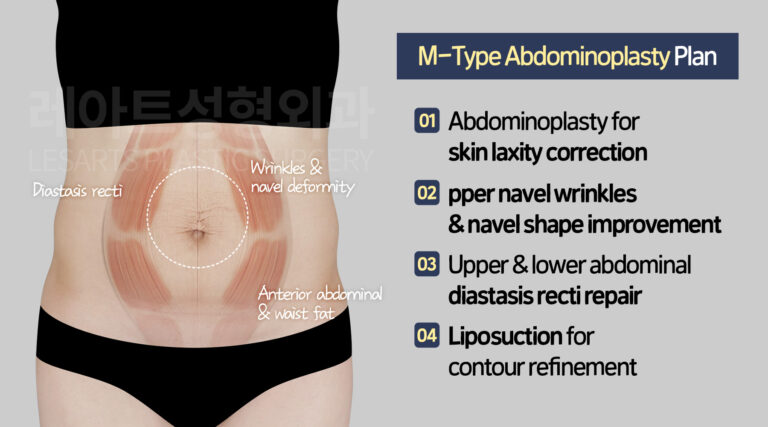
On physical examination,
significant Rectus Diastasis
was observed throughout the abdomen,
with the separation being particularly pronounced
above the Umbilicus.
This finding suggested that
the abdominal wall had undergone
substantial expansion during pregnancy.
The skin was generally thin,
and in addition to pregnancy-related
Stretch Marks,
fine wrinkles were present
primarily in the upper abdomen.
These wrinkles appeared to be caused
not simply by excess skin,
but by decreased skin elasticity
and structural changes within the skin itself.
The depth of the Umbilicus
also appeared relatively shallow
due to the Rectus Diastasis,
and its shape had become distorted.
Although there were a considerable number
of wrinkles in the upper abdomen,
the amount of excess skin itself
was not abundant,
which required careful consideration
during surgical planning.
In addition,
a previous piercing scar
was present above the Umbilicus,
and the existing Cesarean Section Scar
was located somewhat lower
than is typically seen.
Fortunately,
the Cesarean scar itself
had healed well
and remained stable.
Although the patient did not have
a particularly high amount of body fat,
some contouring of the fat
around the Umbilicus
and anterior abdomen
appeared necessary.
In addition,
the patient’s waist framework
was relatively broad,
making it unrealistic to expect
a dramatic improvement
in the Waistline
through Liposuction alone.
However,
contouring the fat
of the abdomen and waist region
was expected to contribute
to overall improvement
of the Body Contour.
Considering all findings,
an M-Type Full Abdominoplasty
was determined to be
the most appropriate procedure
for improving both
the upper abdominal wrinkles
and the distorted
Umbilical Shape.
However,
because there was limited excess skin
in the upper abdomen,
and because removal
of the piercing scar
could further reduce
the available skin,
these factors required
thorough preoperative discussion.
It was also important to explain that,
due to the unusually low position
of the existing Cesarean Section Scar,
the new surgical scar
could ultimately be positioned
slightly higher than expected.
In addition,
the surgical plan included
Liposuction of the upper abdomen
and waist region,
correction of the Rectus Diastasis,
and Triple-Lock Suturing
to improve central abdominal stability
and assist in creating
a more defined Waistline.
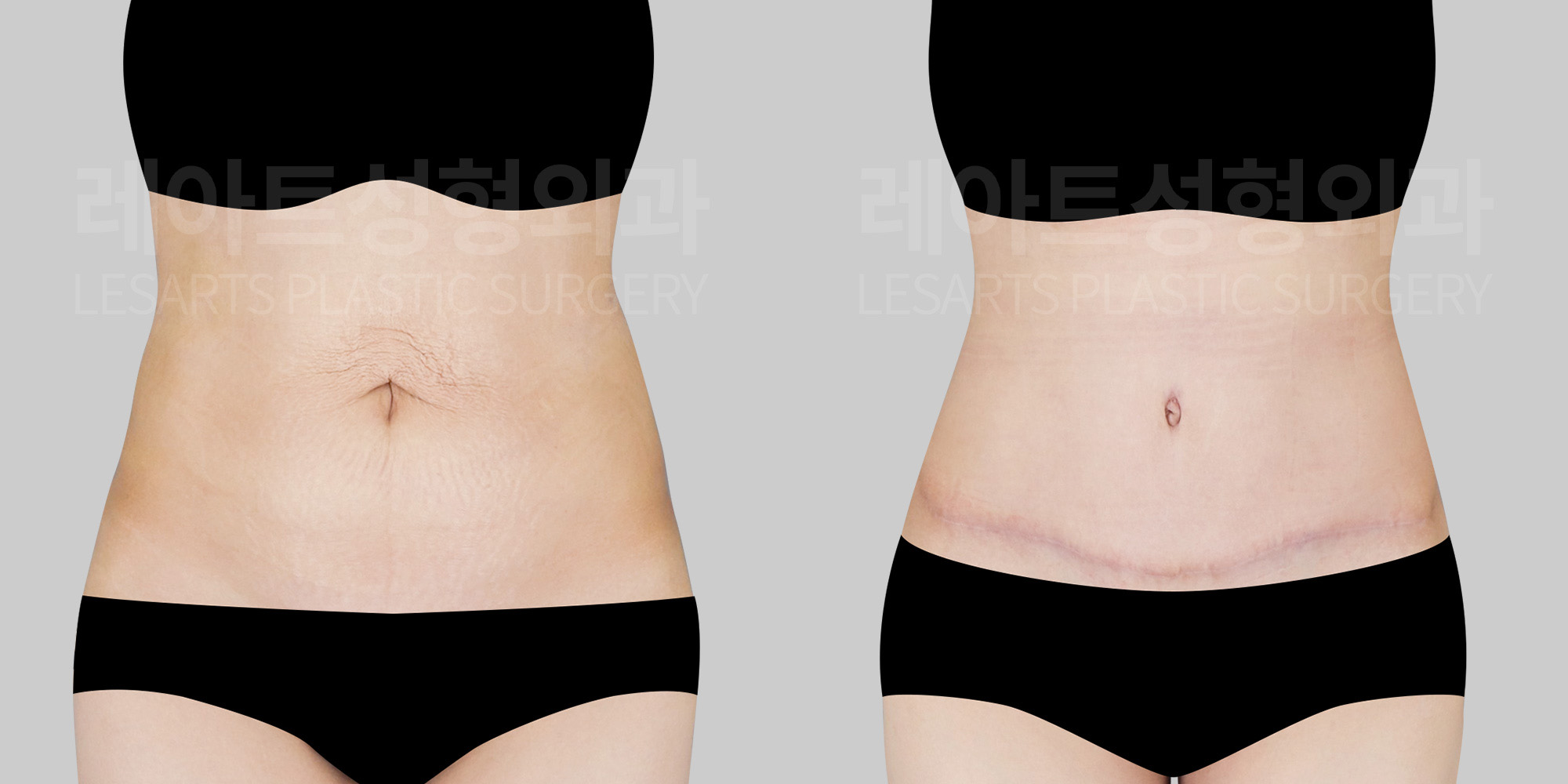
Changes in the Waistline After Abdominoplasty – Dr. Gukhan Lee | Lesarts Plastic Surgery
7 Months After Abdominoplasty
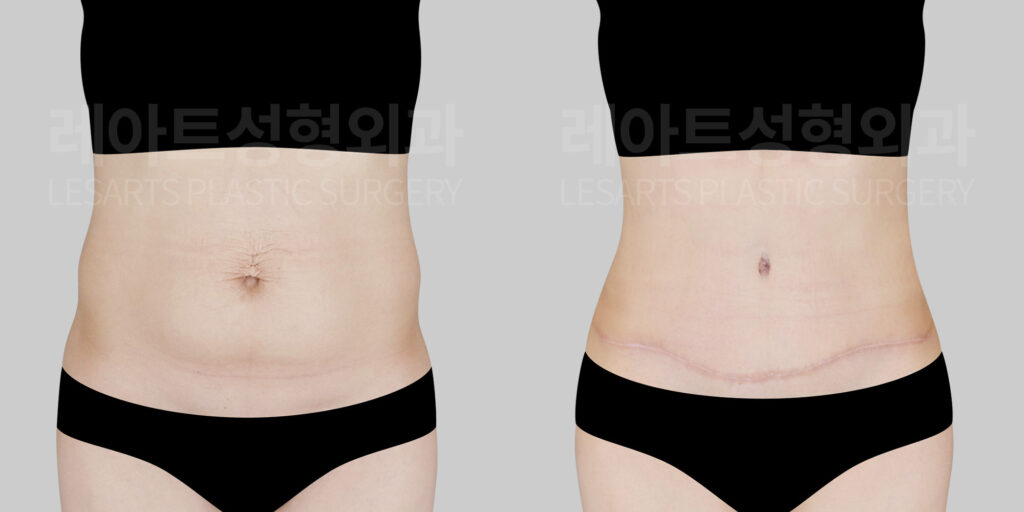
The most noticeable change
in the frontal view
was the significant improvement
in the skin wrinkling
that had previously been present
around the Umbilicus
and upper abdomen.
As the Rectus Diastasis
was corrected,
the contour of the abdominal wall
became flatter and more stable,
and the overall Waistline
also appeared more refined.
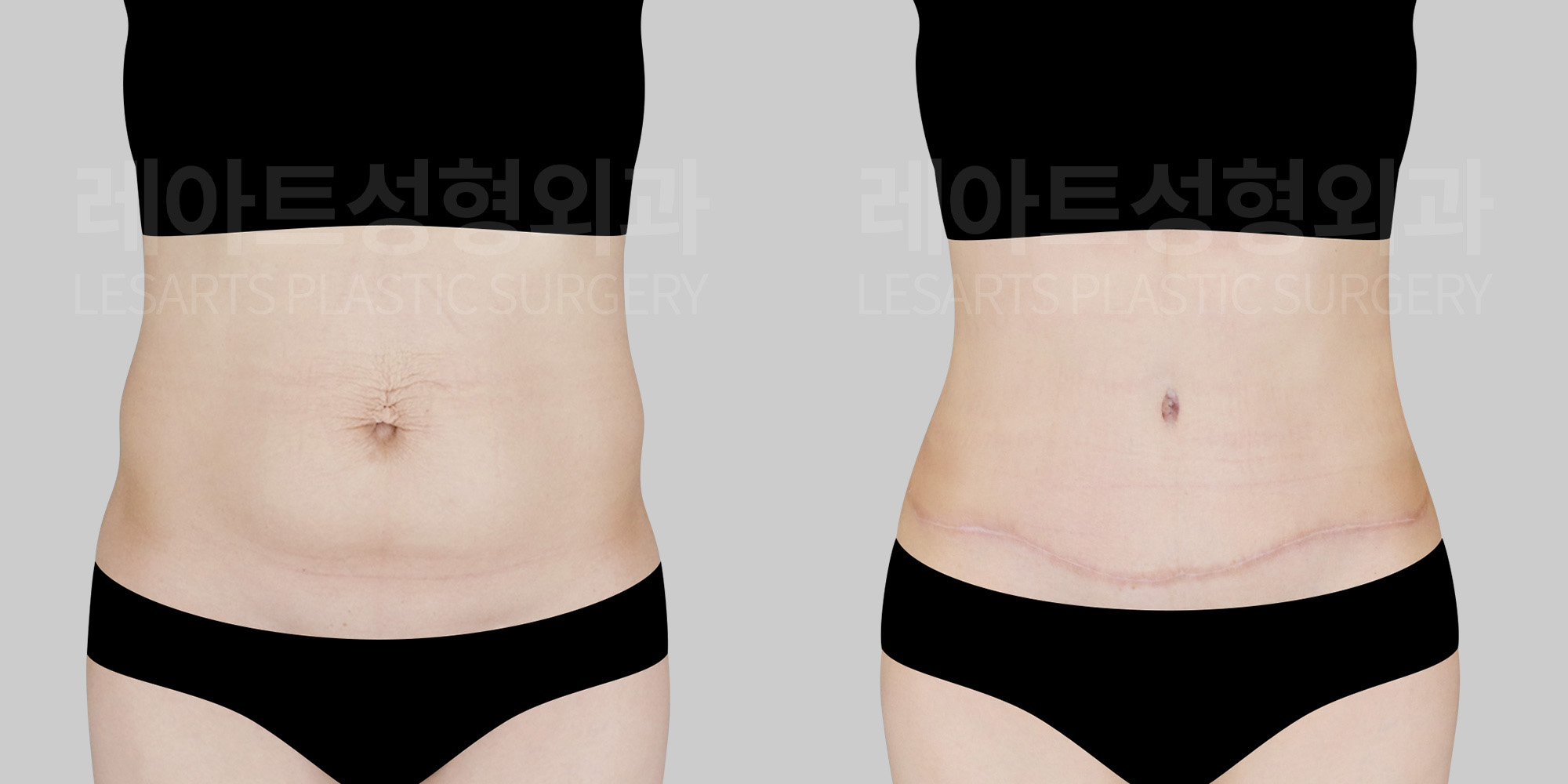
In particular,
prior to surgery,
the shape of the Umbilicus
had been noticeably distorted
due to the Rectus Diastasis.
By combining
Rectus Diastasis Repair
with Umbilicoplasty,
the umbilicus was restored
to a more natural
and three-dimensional appearance.
However,
despite performing
Triple-Lock Suturing,
there were limitations
in achieving a dramatically narrower
Waistline
because of the patient’s
underlying skeletal structure.
This had been thoroughly discussed
during the preoperative consultation,
and the outcome was considered
a satisfactory improvement
within realistic anatomical limits.
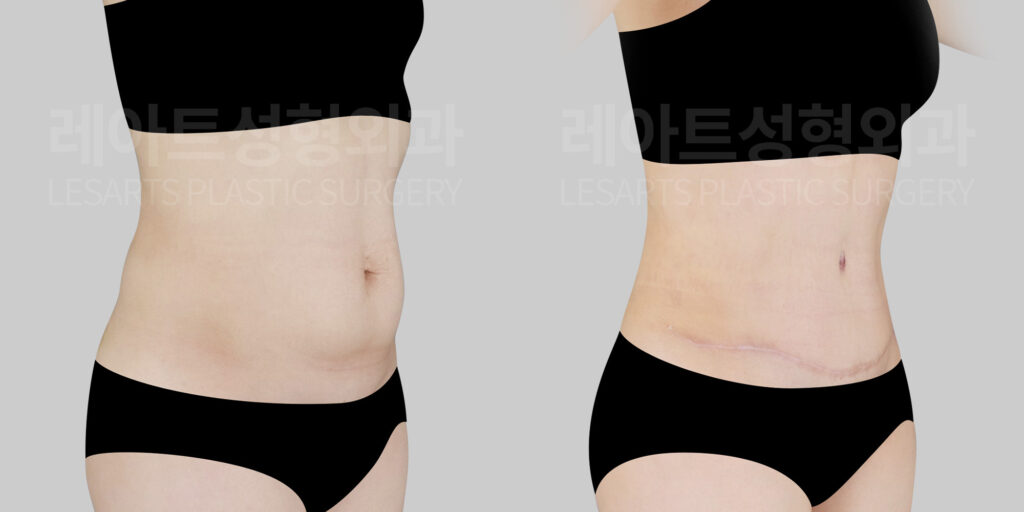
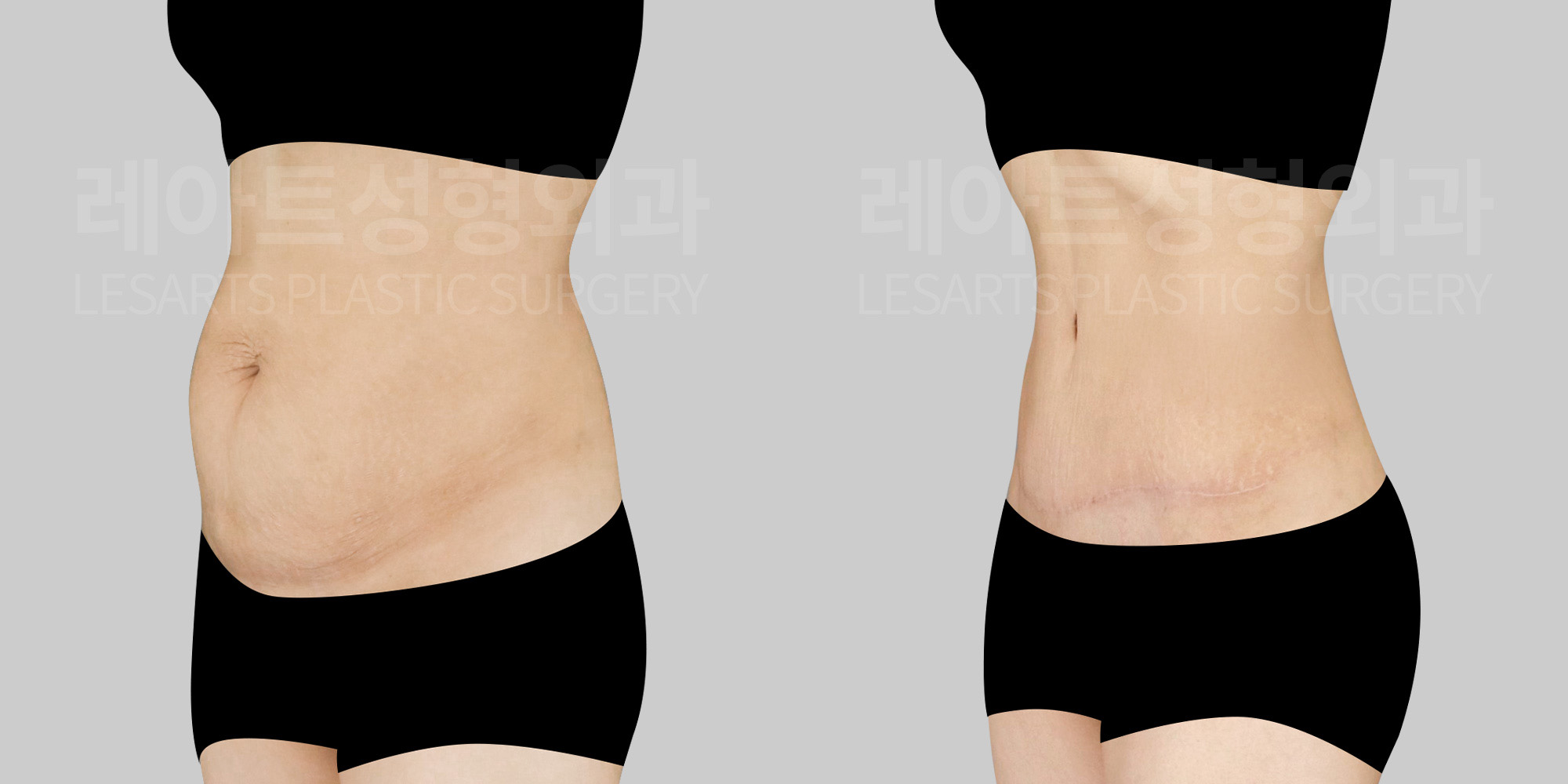
Anterior Abdominal Contour Comparison Before and After Full Abdominoplasty – Dr. Gukhan Lee | Lesarts Plastic Surgery
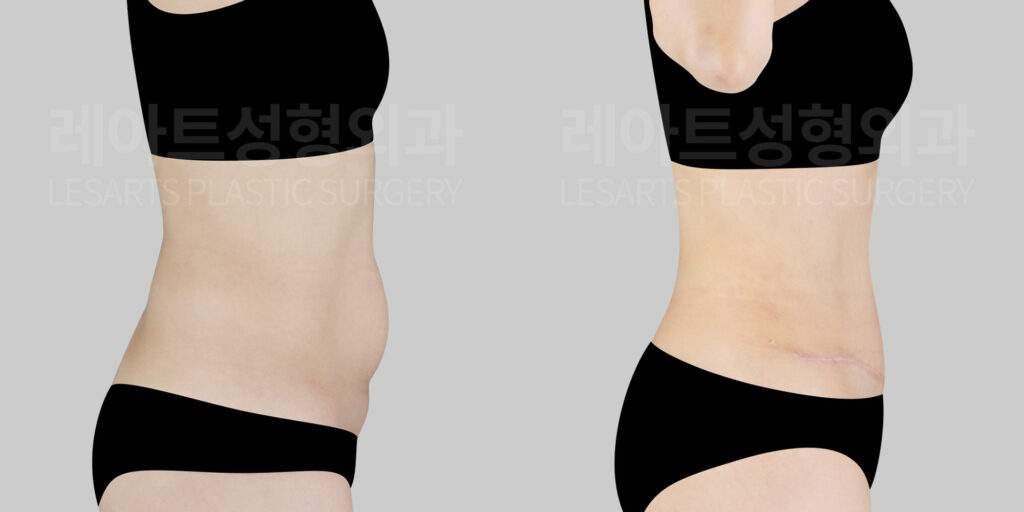
7 Months After Abdominoplasty and Abdominal Liposuction – Dr. Kukhan Lee, Lesarts Plastic Surgery
The changes become even more apparent
in the oblique and lateral views.
Through Abdominoplasty,
the forward projection
of the anterior abdomen
that was visible before surgery
was significantly reduced.
In addition,
the Rectus Diastasis
was corrected and stabilized,
allowing the abdomen
to develop a firmer
and more natural
abdominal contour.
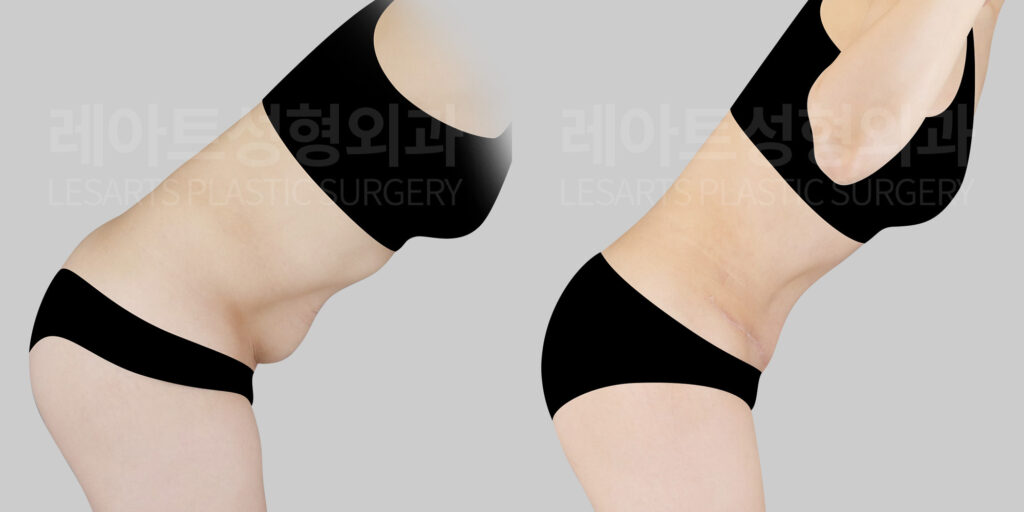
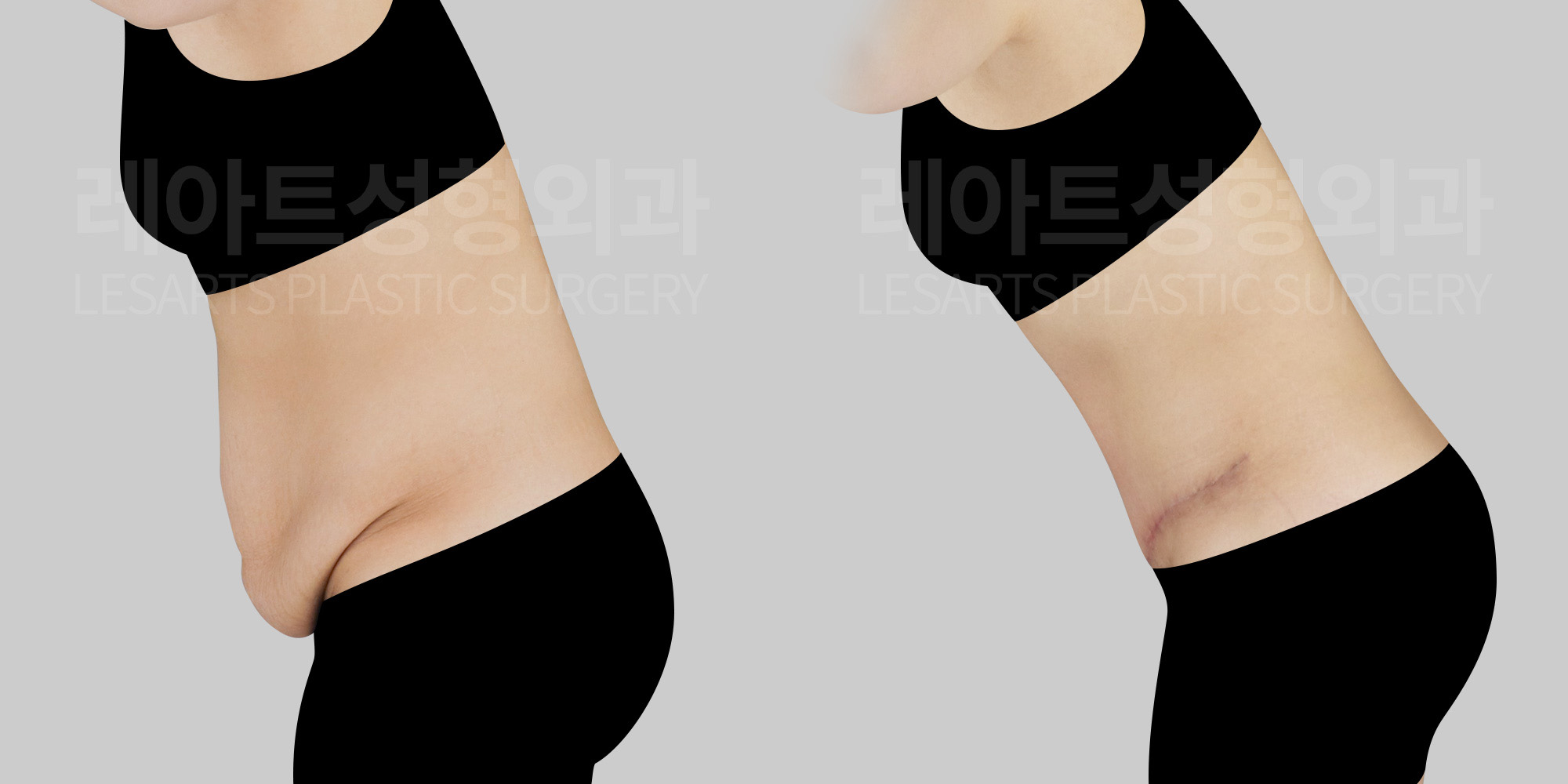
Before-and-After Abdominoplasty Photos at Lesarts Plastic Surgery – Skin Laxity During Forward Bending
Even when bending forward,
the skin folds that had been visible
prior to surgery
were significantly reduced.
This improvement demonstrates that
the excess skin laxity
was effectively addressed through
Abdominoplasty,
allowing the abdomen to maintain
a smoother contour
even in positions
where skin folding would normally
be more noticeable.
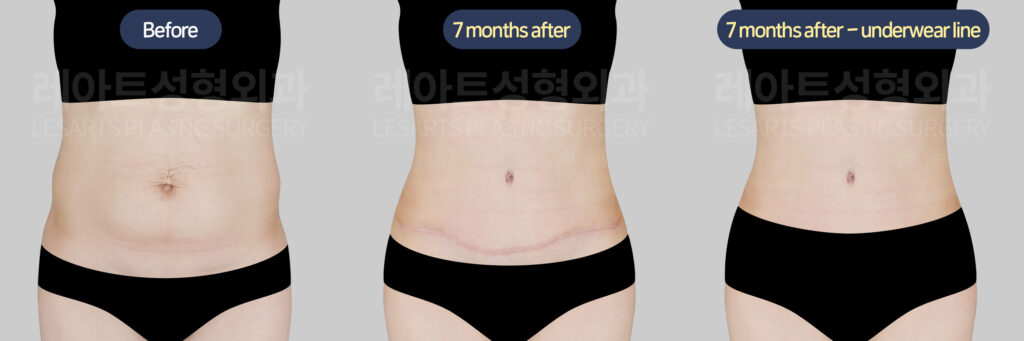
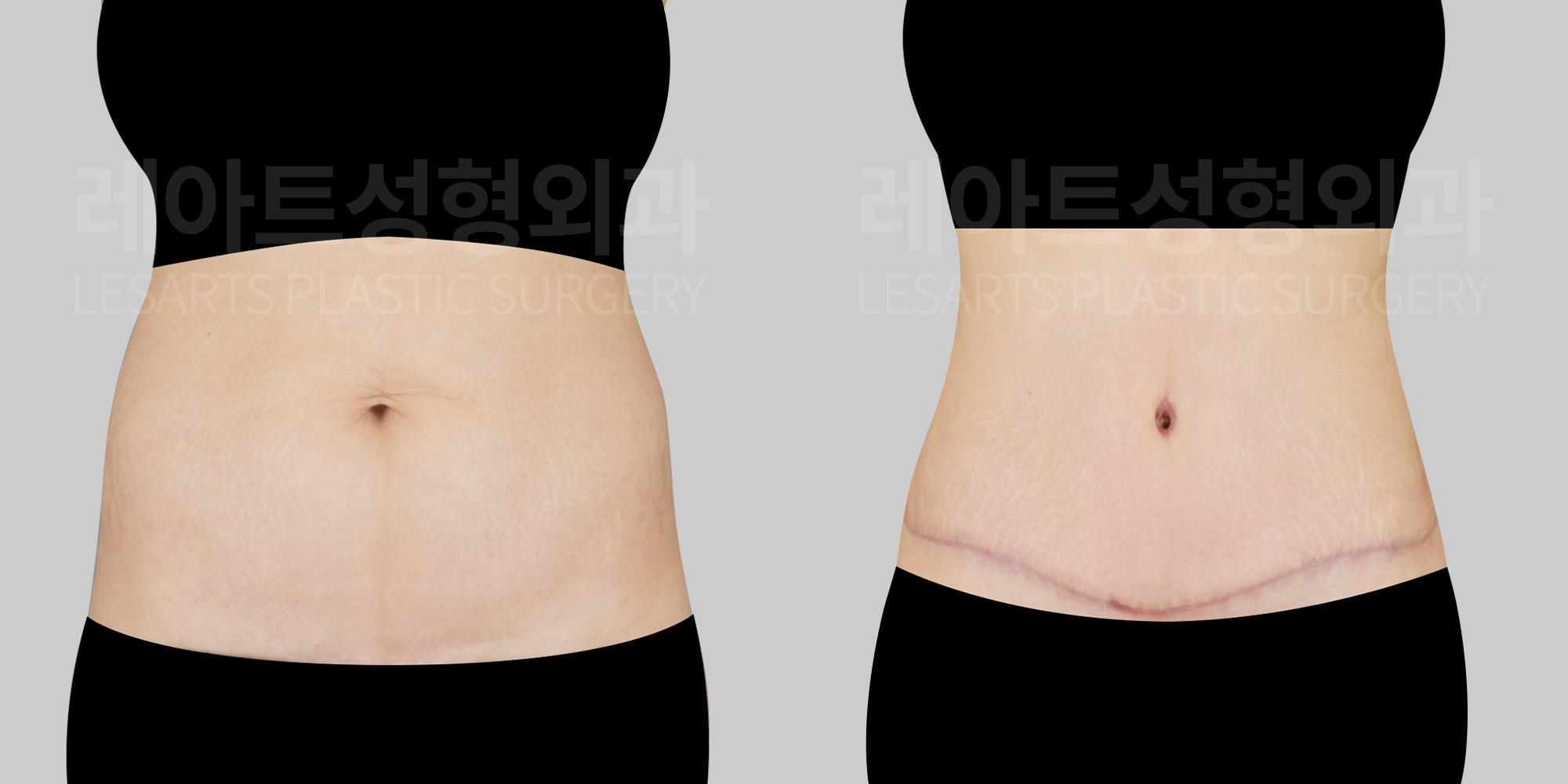
Abdominoplasty Scar Position – Lesarts Plastic Surgery
One of the patient’s primary concerns
before undergoing Abdominoplasty
was the possibility that
the final scar position
could be higher than desired,
due to the limited amount of excess skin
in the upper abdomen.
In comparison with a typical
M-Type Full Abdominoplasty,
the scar was ultimately positioned
slightly higher.
However,
it remains well within an area
that can be easily concealed
by underwear or swimwear,
and is therefore considered
a favorable outcome.
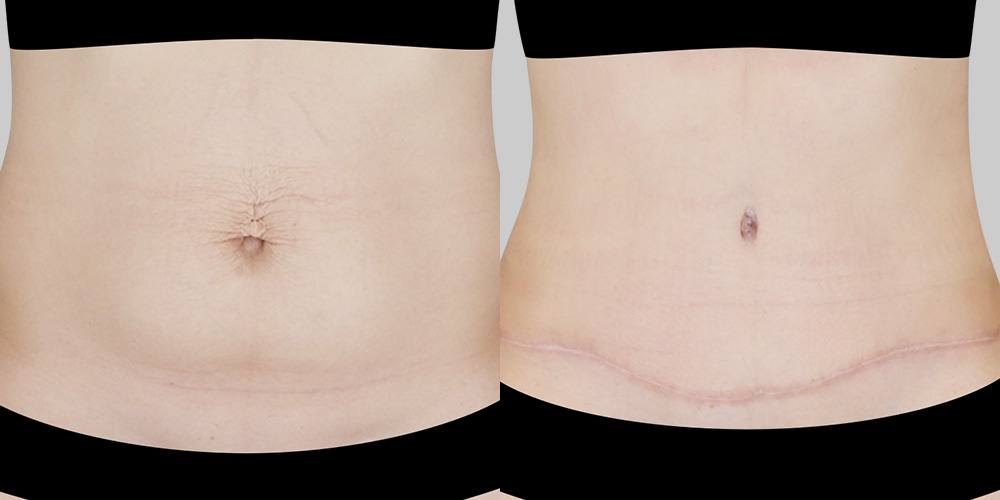
Correction of Umbilical Deformity and Wrinkling Through Abdominoplasty – Dr. Gukhan Lee | Lesarts Plastic Surgery
The piercing scar
above the Umbilicus
was removed during surgery,
and the surgical scar itself
has shown a stable recovery course overall.
Although some residual
Hyperpigmentation
remains,
further improvement can be expected
through continued scar treatment
and ongoing postoperative care.
By seven months after Abdominoplasty,
much of the internal adhesion
and residual Bio-Bond Formation
has softened and improved,
and the diminished sensation
that is commonly experienced
in the lower abdomen after surgery
gradually begins to return.
As time passes,
the firmness of the tissues
continues to soften,
while the surgical scar
progressively matures
and stabilizes.
However,
Abdominoplasty
is not a procedure
that ends with surgery alone.
To maintain the results achieved
through surgery over the long term,
consistent exercise
and proper weight management
must continue to be part
of the patient’s lifestyle.
Considering the commitment involved
in undergoing a major procedure
and accepting a surgical scar,
surgery should be viewed
not as the end of the journey,
but as the beginning
of a new one.
The abdominal changes
that remain after childbirth
can affect far more than appearance alone,
often influencing confidence
and daily life as well.
In particular,
skin laxity,
Rectus Diastasis,
and abdominal protrusion
that persist despite significant effort
are often difficult to resolve
through willpower alone.
The most important step
is obtaining an accurate diagnosis
of your current condition
and selecting the treatment option
that is most appropriate for you.
Abdominoplasty
is not necessary for everyone,
but for properly selected candidates,
it can provide meaningful improvements
both functionally and aesthetically.
If you continue to struggle
with the changes left behind
after childbirth,
we encourage you to seek
a thorough consultation
to better understand
your current condition
and explore the possibilities
for improvement.