Abdominoplasty : Is revision surgery possible after abdominoplasty?
Hello, I am Dr. Kukhan Lee,
a board-certified plastic surgeon at Lesarts,
specializing in abdominoplasty.
During abdominoplasty consultations,
I am often asked the following question.
“After undergoing abdominoplasty,
if sagging occurs again over time,
is revision surgery possible?”
To give you the conclusion first,
revision surgery is possible in some cases,
and difficult in others.
This depends on the current degree of sagging,
the type and extent of the previous surgery,
and how much excess skin remains.
When can revision surgery be considered?
After abdominoplasty, some patients consider revision
for the following reasons.
• Insufficient improvement in the main concern area
before the initial surgery
• Unexpected scar position after surgery
• Development of dog ears
• Asymmetry or step-off irregularities
• Keloid or hypertrophic scar formation
Some of these issues can be corrected
relatively safely through revision surgery.
I will explain this based on real clinical cases.
The patient was in her mid-forties,
with a height of 160 cm
and a weight of 56.4 kg.
She had a history of cesarean delivery,
and two years ago,
she underwent a mini abdominoplasty
and liposuction at another clinic.
Due to dissatisfaction with the first surgery,
she had already consulted multiple hospitals.
She also emphasized that,
for her final decision,
professional expertise and trust
were the most important factors.
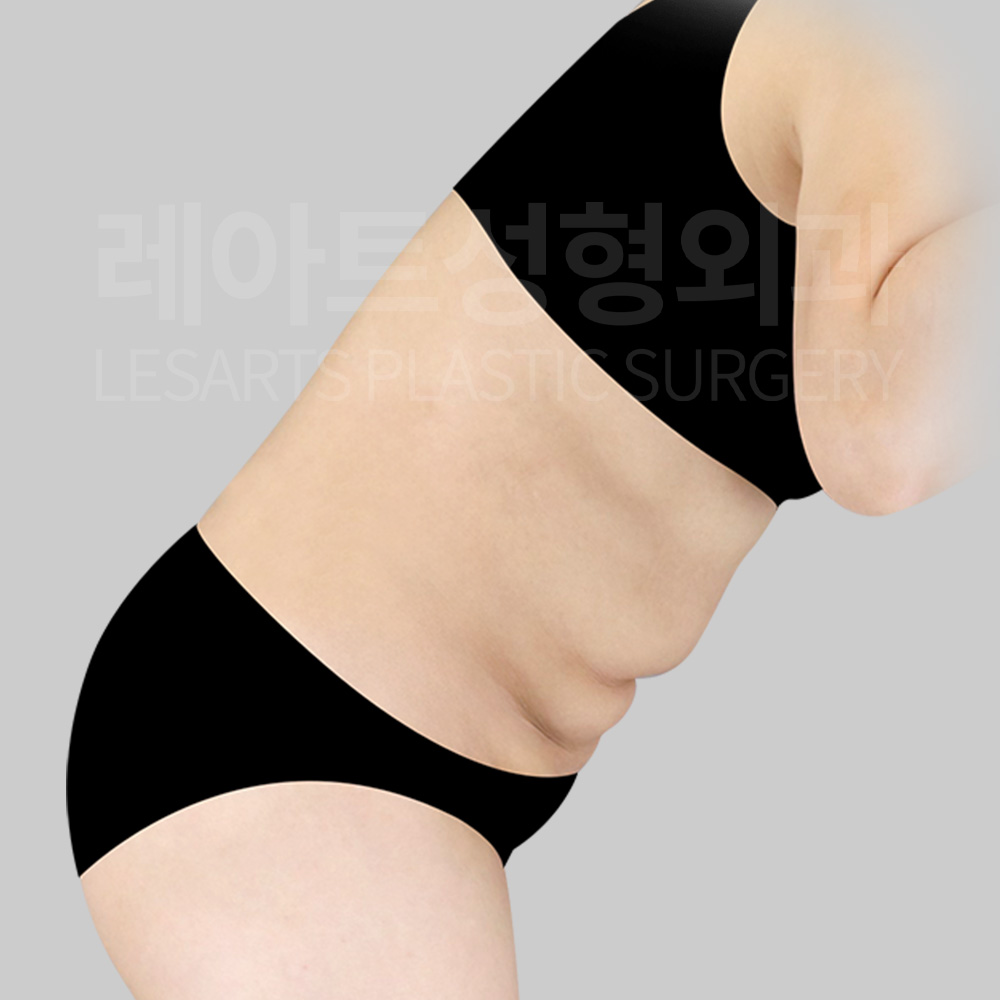

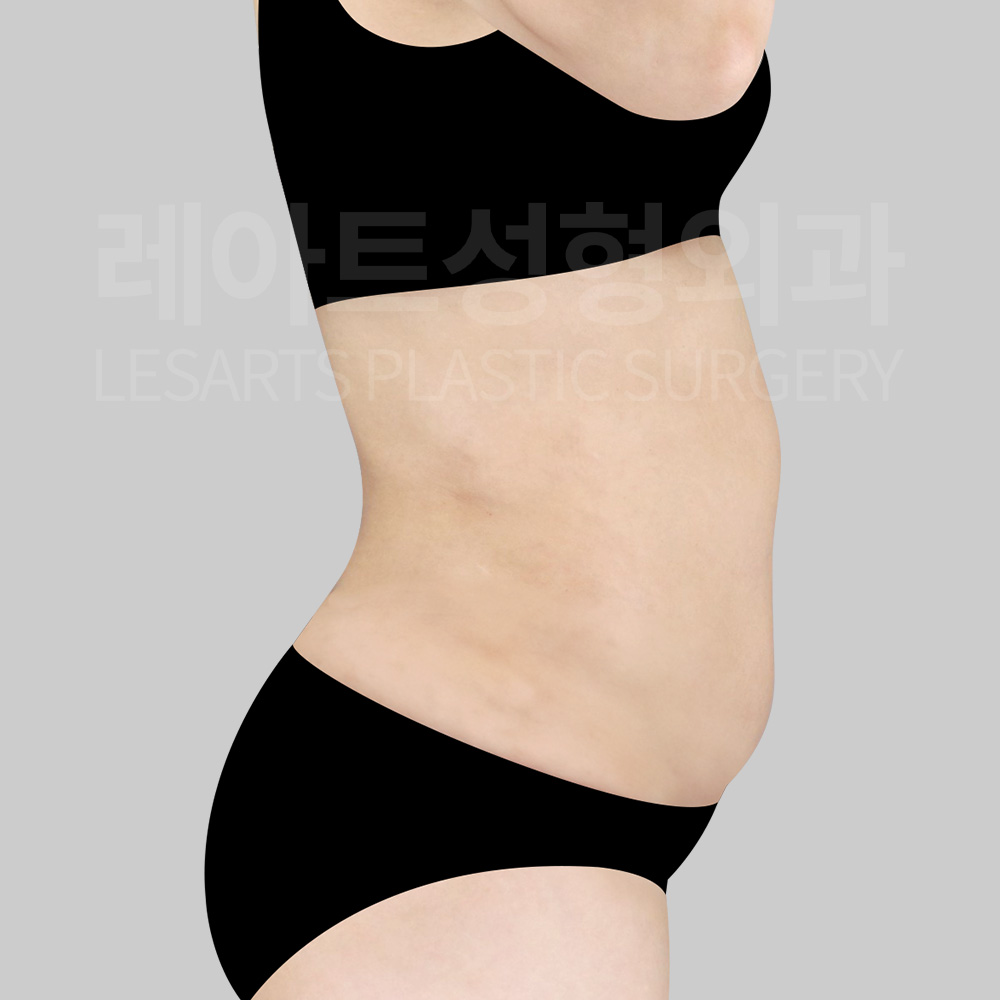
At the time of consultation,
the main concerns were as follows:
• Insufficient correction of the upper abdomen
• Different texture between upper and lower abdomen
• Hard, uneven adhesion tissue
Overall, skin elasticity was relatively good.
Key considerations for revision surgery:
In this patient’s case,
rectus muscle repair and skin lifting
had not been performed in the upper abdomen,
and the existing scar
had not been properly managed
and was widened.
In addition,
there was a high possibility
that recurrent seroma after the first surgery
had remained in a capsular form,
and a considerable amount
of adhesion tissue was present.
To improve the uncorrected condition
and create a smooth abdominal contour,
1 .Wide dissection extending to the upper abdomen
to move the skin downward
2. Correction of the separated upper rectus muscles
3. Complete removal of the existing scar
and creation of a new, lower-positioned scar
At the same time,
adhesion release was required
to resolve the uneven surface irregularities.
This process is more complex
than the initial surgery
and may require longer operative time.
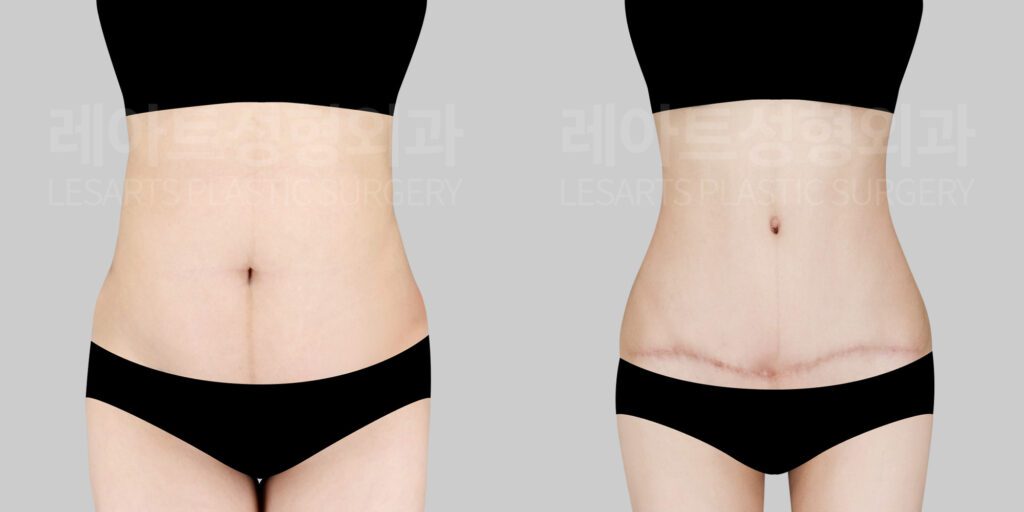
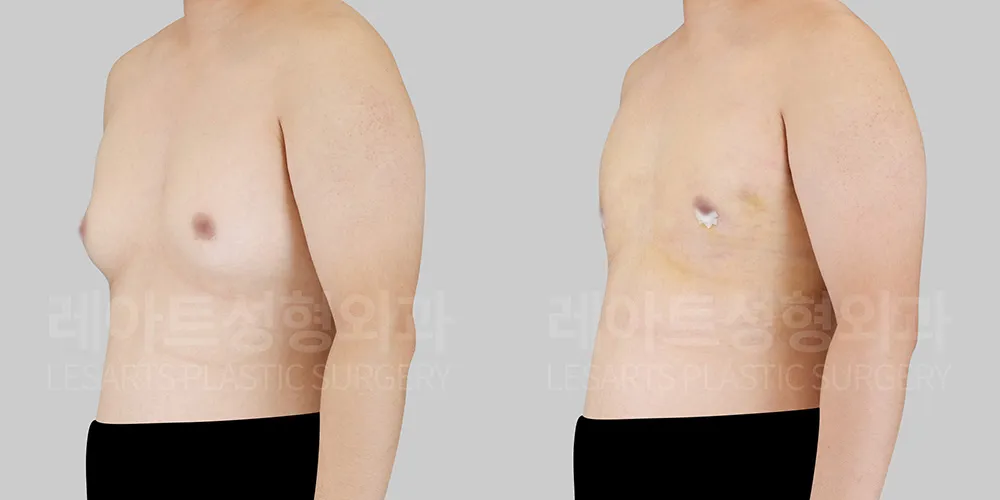
Lesarts Gynecomastia Surgery – 2 Weeks Postoperative
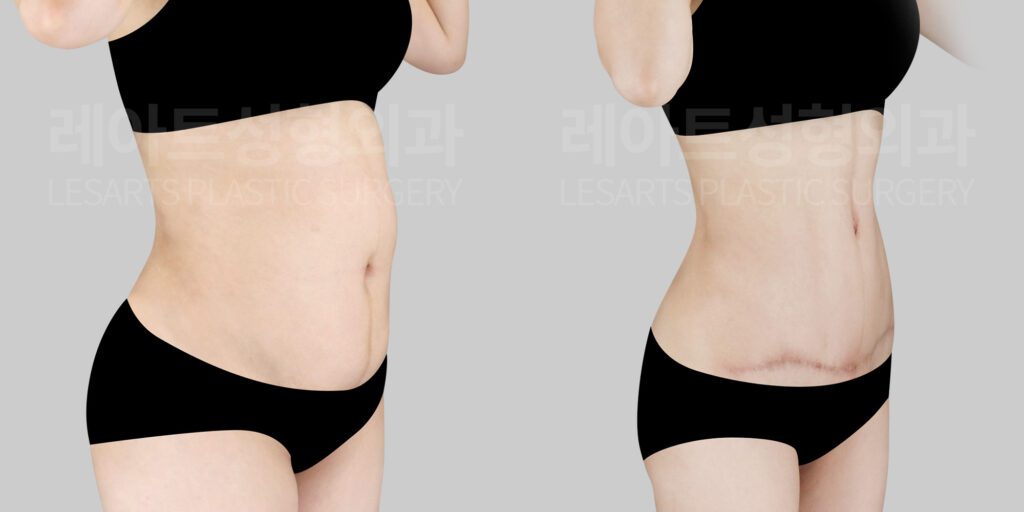
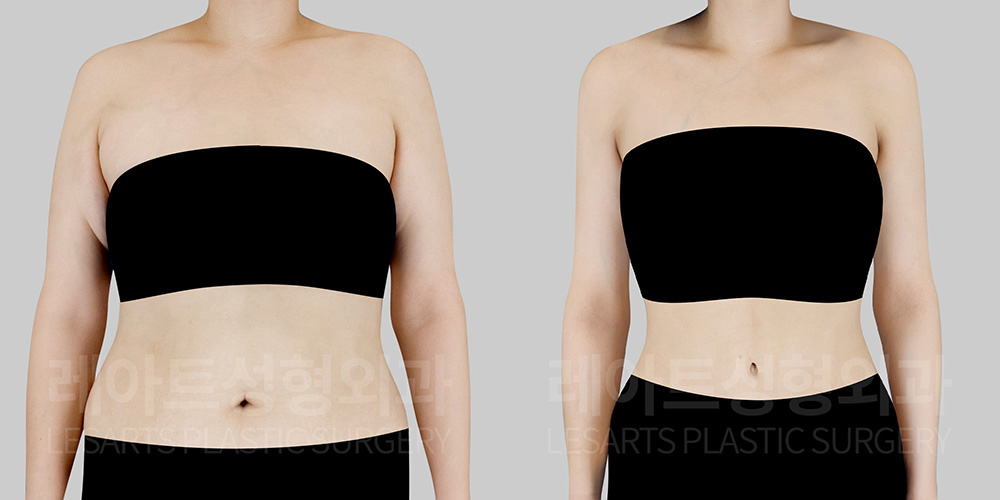
Revision abdominoplasty results – Lesarts Plastic Surgery – Dr. Kukhan Lee
Revision abdominoplasty results and recovery
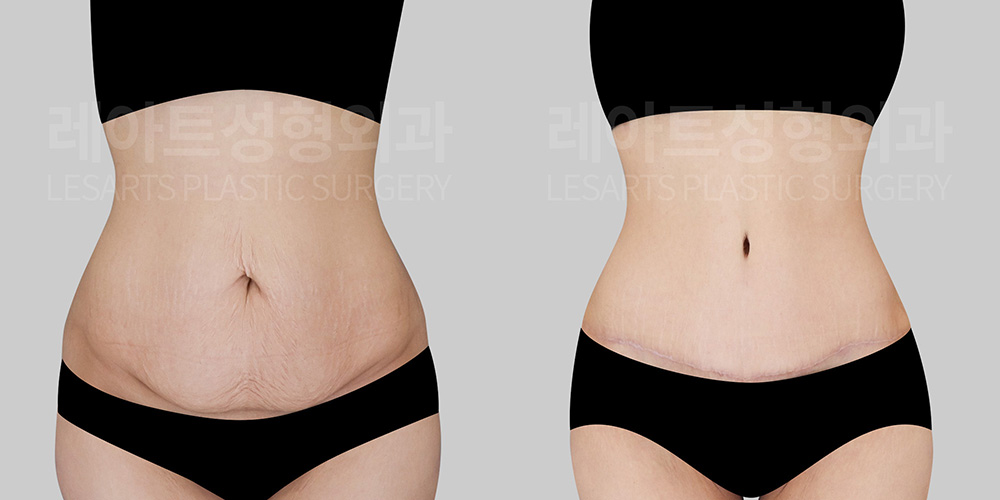
Fortunately, this patient had good skin elasticity,
which allowed the previously uncorrected areas to be properly improved.
Through a full abdominoplasty,
all existing scars were completely removed,
and the navel was newly reconstructed.
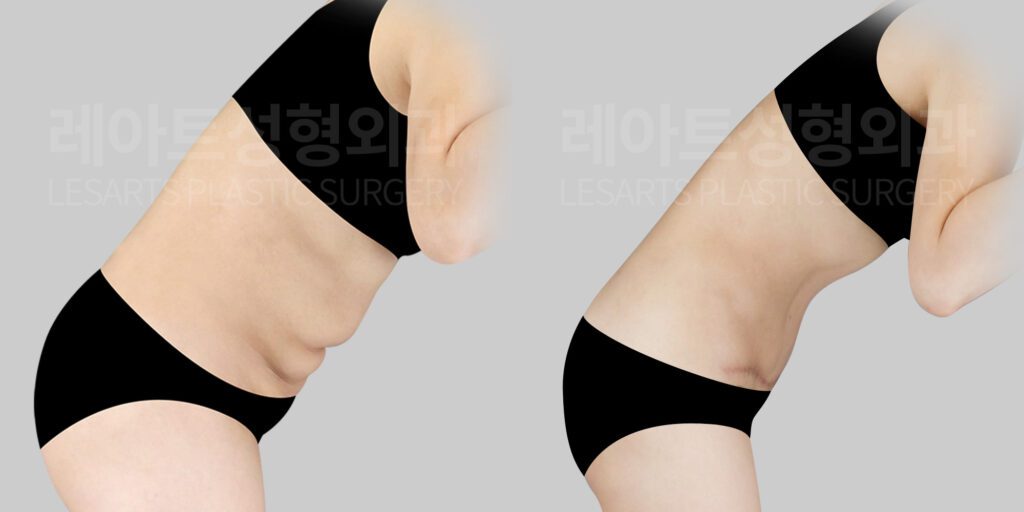
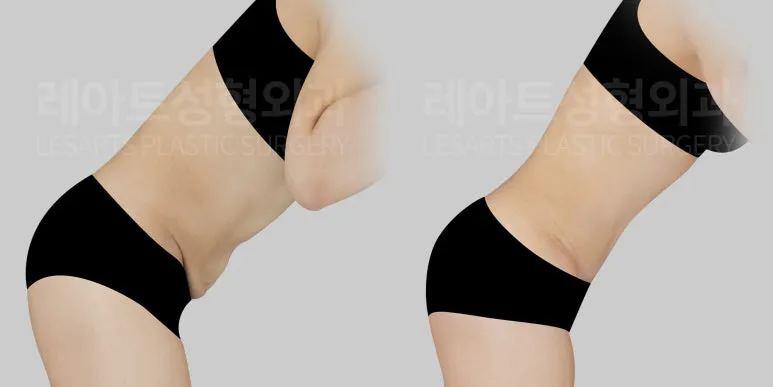
Under-corrected abdominoplasty revision – Lesarts plastic surgery – Dr. Kukhan Lee
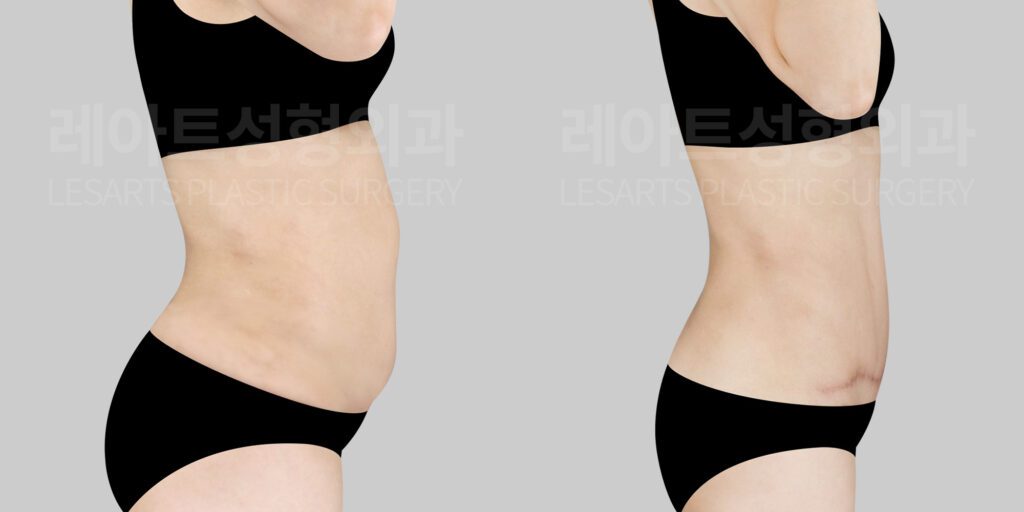
Under-corrected abdominoplasty revision – Lesarts plastic surgery – Dr. Kukhan Lee
Differences in correction between
the upper and lower abdomen
Overall line imbalance
Adhesions and seroma capsule issues
were addressed through revision surgery,
And although this was a reoperation,
the previous scars were removed,
So with proper care of
the newly created scar only,
A stable and satisfactory outcome
is expected.
However, as the patient has
a keloid-prone skin type,
We explained that continuous
follow-up and monitoring are important.
When is revision abdominoplasty possible,
and when is it difficult?
• Cases where revision is relatively straightforward
o Poor scarring due to keloid or hypertrophic scars
o Correction of bilateral dog ears
o Additional correction of lower abdominal sagging
→ These procedures usually stay within the original incision range,
so the surgical burden is relatively low.
• Cases that require careful consideration
o Additional correction of upper abdominal sagging
o Revision surgery to lower the scar position
→ Depending on the previous surgical method and the amount of remaining skin laxity,
it may be possible in some cases and difficult in others.
In closing
If you are dissatisfied with the results after abdominoplasty
and are feeling concerned,
it is most important to accurately evaluate your current condition
and previous surgical history to determine
whether revision surgery is possible.
Because the approach varies depending on
each individual’s condition,
a precise examination and consultation will allow us
to provide a more detailed and personalized explanation.