[Hyperhidrosis]How much can axillary hyperhidrosis be reduced?-A combined approach with minimal incision, energy-based sweat gland destruction, and liposuction
Hello, this is Dr. Jihoon Moon
from Lesarts Plastic Surgery.
The most common question
from patients with hyperhidrosis
is quite simple.
Hyperhidrosis surgery – Dr. Jihoon Moon, Lesarts Plastic Surgery
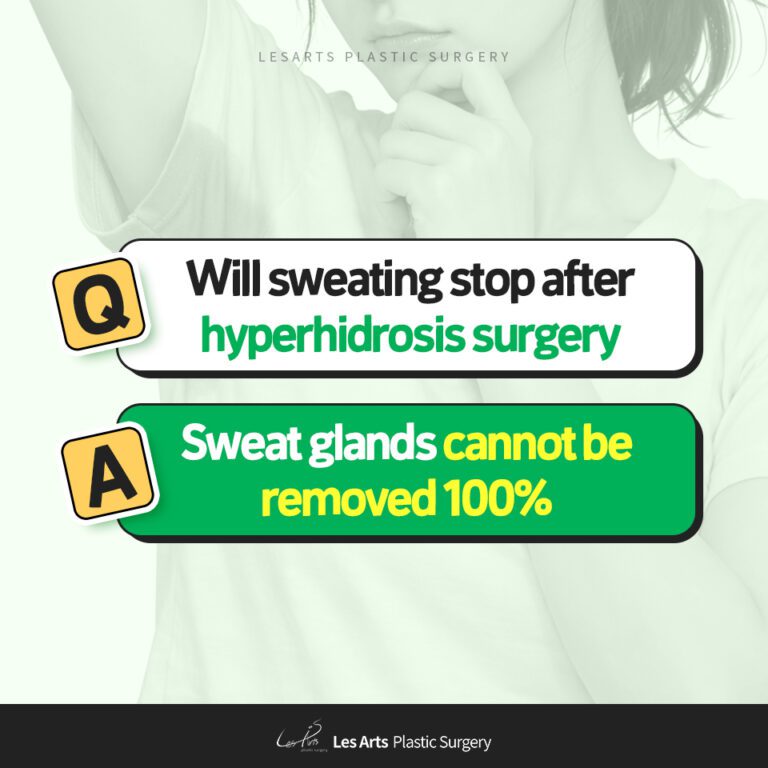
“Can surgery completely stop sweating?”
“Will the underarms stay completely dry even in summer?”
The answer is clear.
“It is not possible to remove 100%
of the sweat glands.”
However,
there is also
an important fact.
Surgical approaches for hyperhidrosis – Lesarts Plastic Surgery
Current surgical treatment
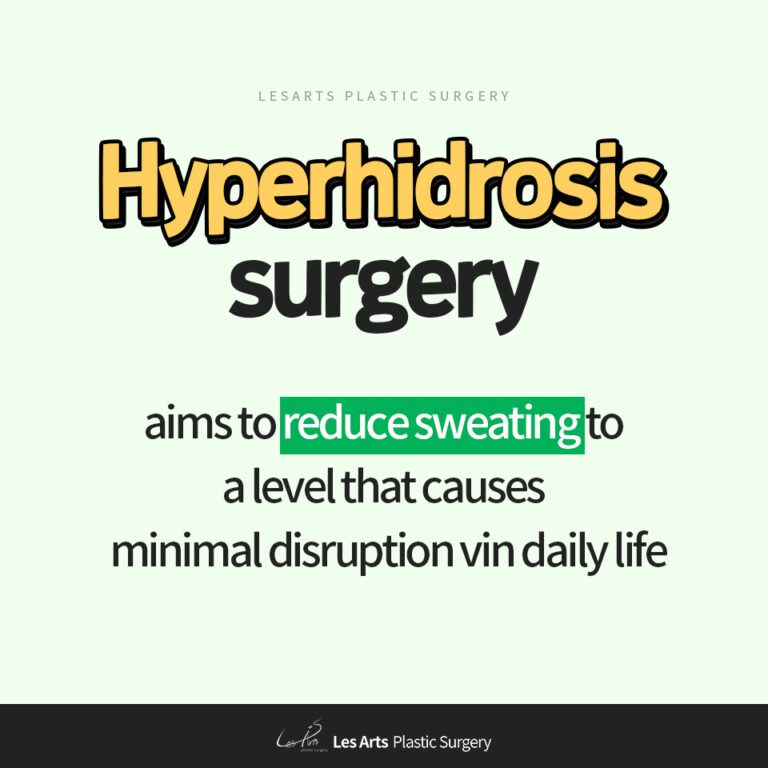
aims to reduce sweating
to a level
where daily life
is no longer
significantly affected.
In practice,
results can be achieved
very close to this goal.
The starting point
of surgery is understanding
where the sweat glands are located.
Treatment of axillary hyperhidrosis – Lesarts Plastic Surgery
Surgery for hyperhidrosis
does not begin
with technique,
but with anatomy.
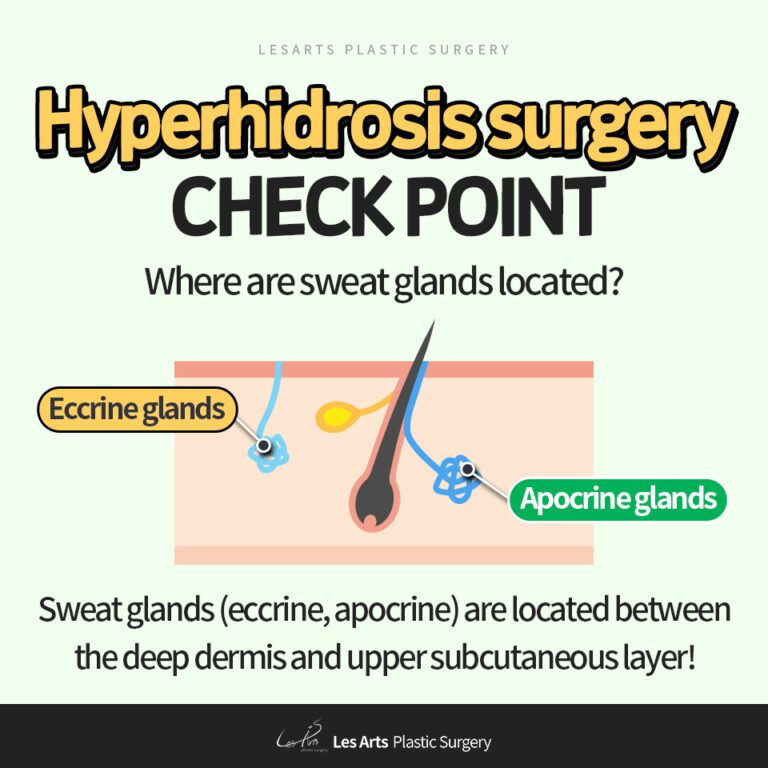
Sweat glands
(eccrine and apocrine)
are distributed
at the boundary
between the lower dermis
and upper subcutaneous layer.
This thin layer
is the exact
target of surgery.
Methods for axillary sweat surgery – Lesarts Plastic Surgery
If the approach
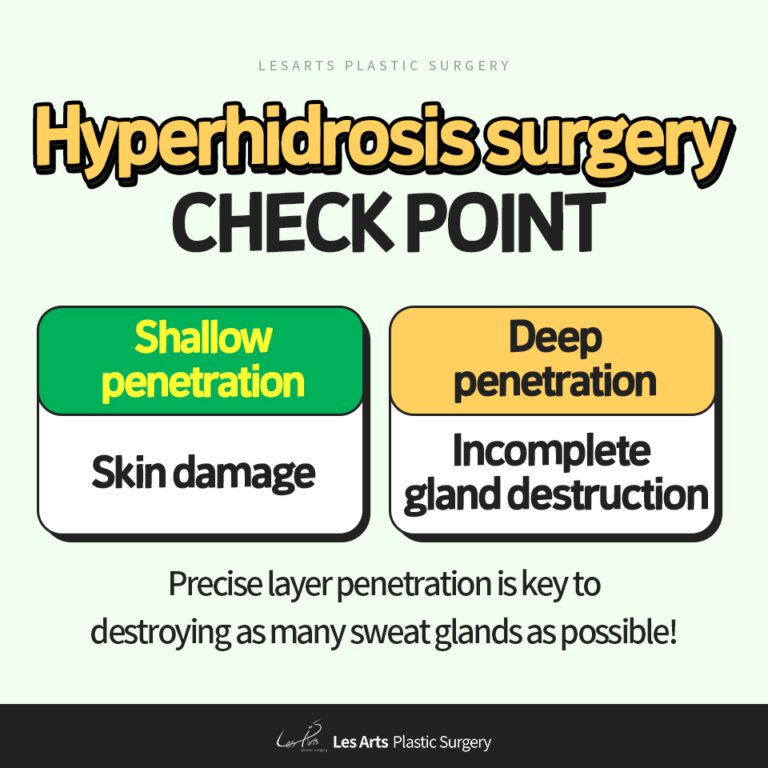
is too superficial,
skin damage may occur.
If it is too deep,
the sweat glands
cannot be effectively targeted.
Ultimately,
the essence of surgery
is one thing.
“To precisely follow
this thin layer
and destroy as many
sweat glands
as possible.”
Effects of hyperhidrosis surgery – Dr. Jihoon Moon, Lesarts Plastic Surgery
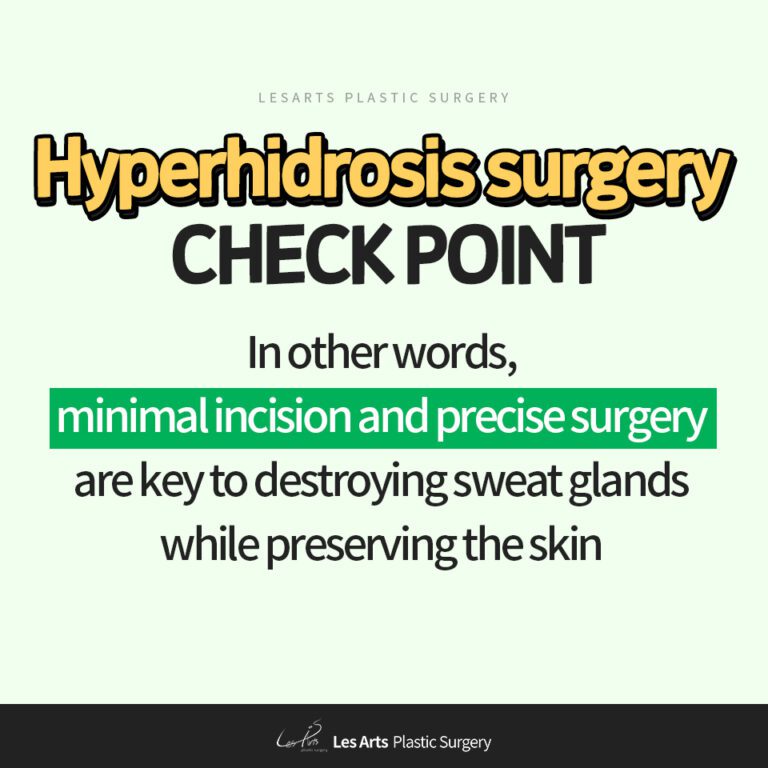
1. Minimal incision approach
open small, treat precisely
Current procedures
are performed
through small incisions.
Only a few millimeters
are required
to access the target layer.
Through this approach,
subcutaneous dissection,
energy delivery,
and liposuction
are all performed
within a limited space.
Although it appears simple,
it requires precise control
to preserve the skin
while treating
only the target layer
evenly and accurately.
A small incision
does not only mean
a smaller scar.
It also means
maintaining precision
within a restricted field.
Effects of axillary sweat surgery – Lesarts Plastic Surgery
2. Energy-based sweat gland destruction
precisely targeting the layer
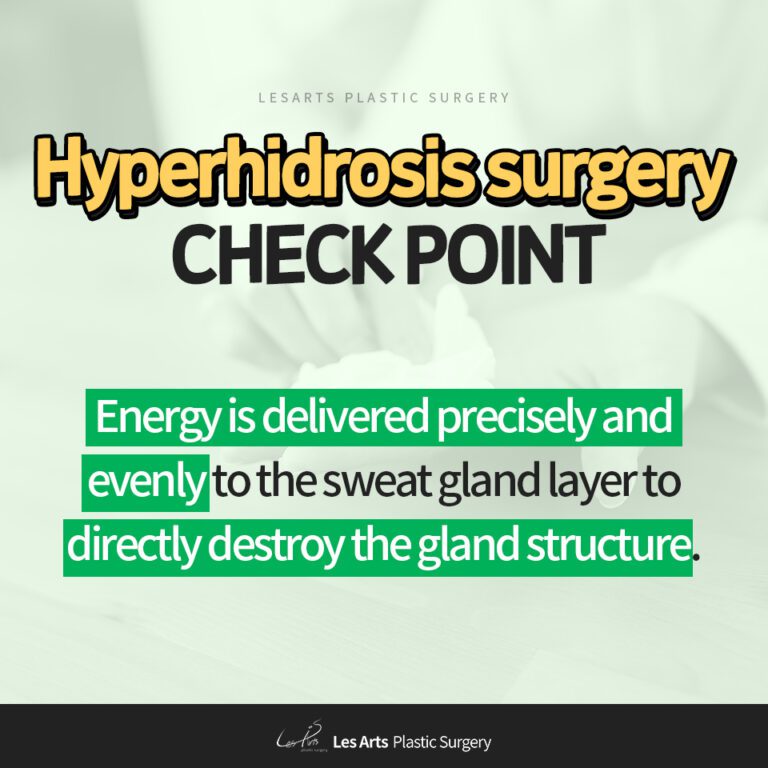
Energy devices
deliver ultrasound, heat,
or laser energy
to the layer
where sweat glands
are located.
This directly
destroys
the gland structure.
The key factor
is not intensity,
but precision.
Accurate depth
and uniform delivery
are essential.
If the layer
is not properly targeted,
effectiveness decreases.
If excessive,
it may lead
to skin damage.
Treatment methods for axillary hyperhidrosis – Dr. Jihoon Moon, Lesarts Plastic Surgery
3. Liposuction
the step that completes the process
After destroying
as many sweat glands
as possible with energy,
leaving the tissue
as it is
is not sufficient.
Liposuction
is not simply
fat removal.
It physically removes
damaged sweat glands
and surrounding tissue,
and evens out
the subcutaneous layer
to reduce irregularities.
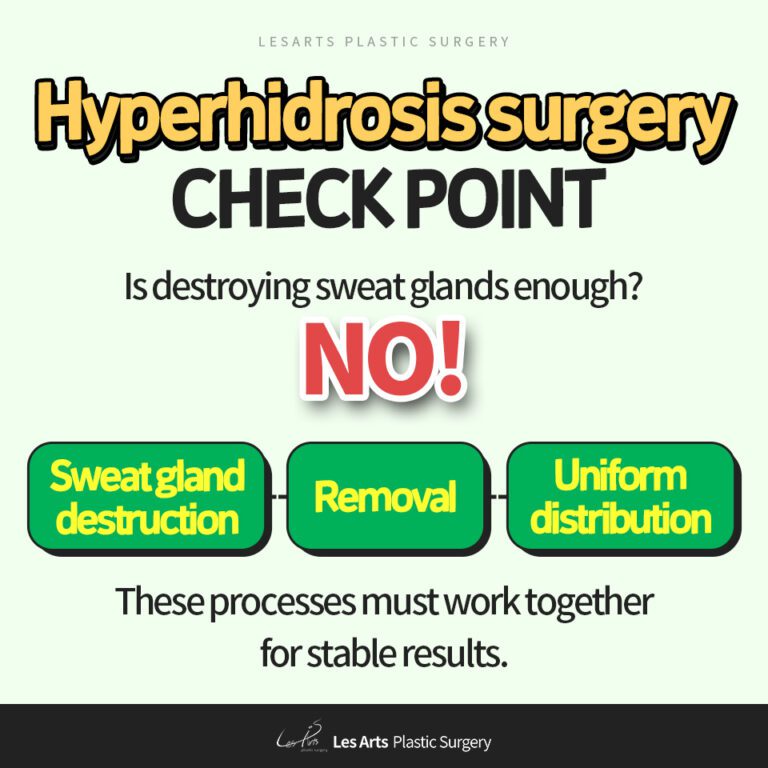
In other words,
destruction → removal → uniformity
must work together
to ensure both
stability and consistency
of surgical results.
Quick note,
what about recurrence?
Most cases
of recurrence
occur when
sweat glands
are not sufficiently
removed during the first surgery.
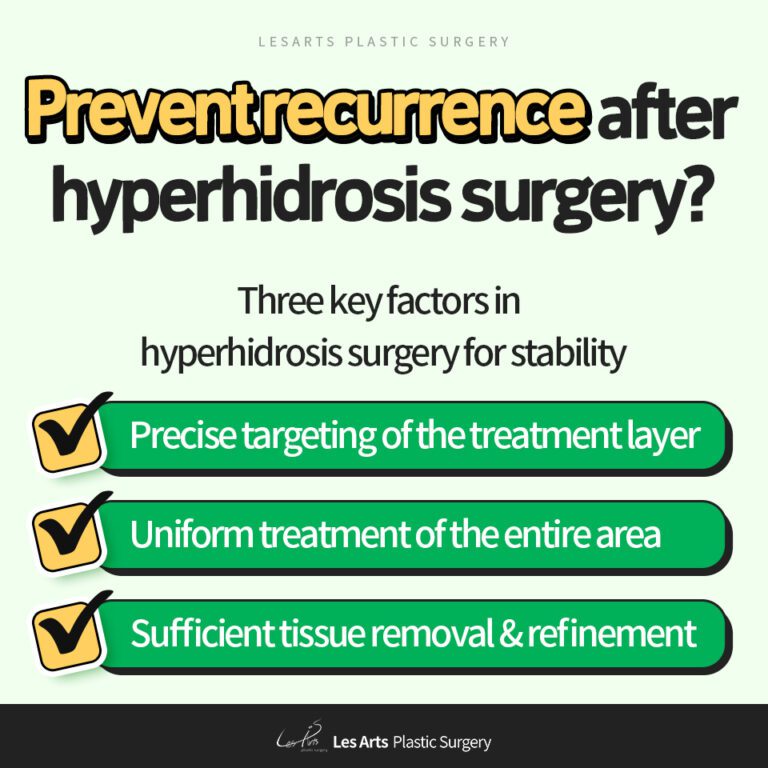
The outcome
of hyperhidrosis surgery
depends on three key factors.
Recurrence after axillary hyperhidrosis surgery – Lesarts Plastic Surgery
First,
accuracy of
the target layer
Second,
uniform treatment
across the entire area
Third,
sufficient removal
and refinement
If these three
are not properly achieved,
sweating may appear
to return
even after surgery.
Therefore,
choosing an experienced
medical professional
is extremely important
for achieving
reliable results.