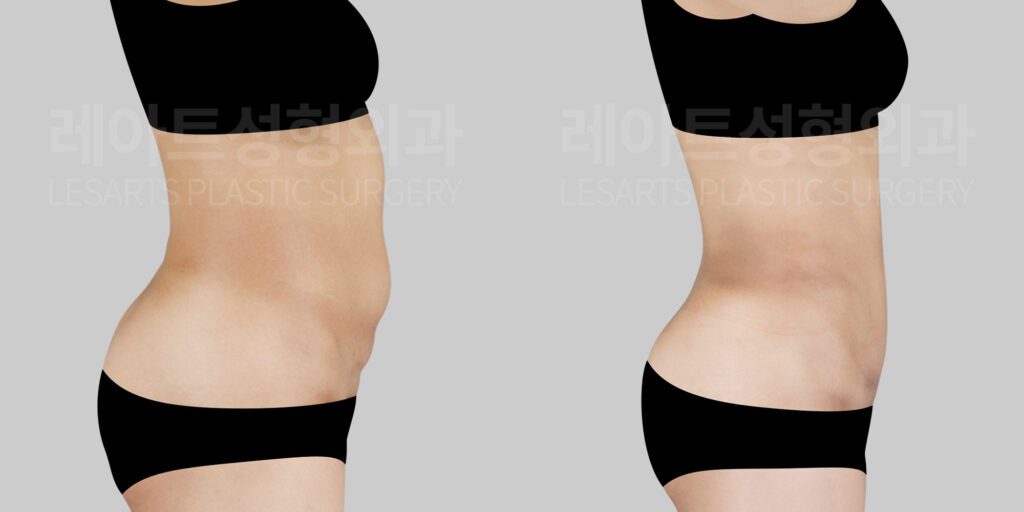
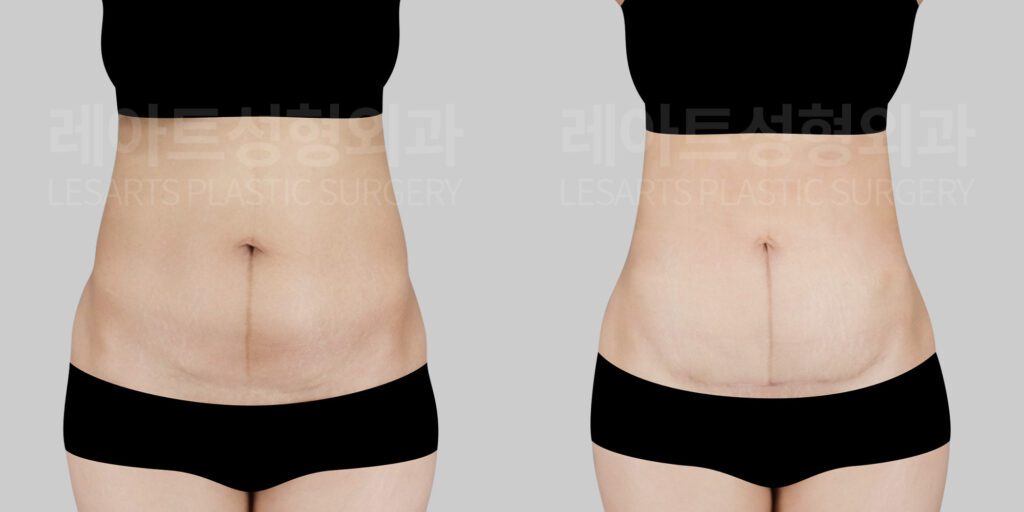
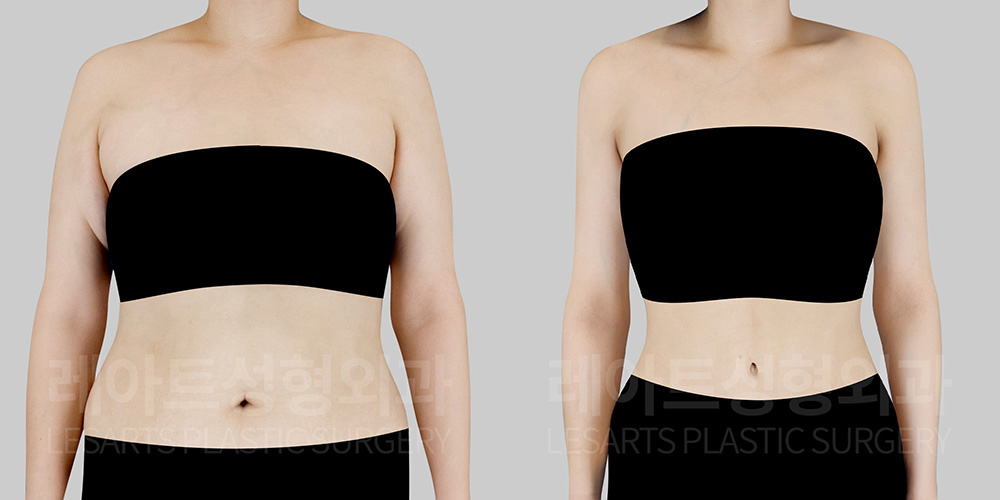
[Abdominoplsaty] 1 year 2 months
after umbilical floating abdominoplasty
Hello, this is Dr. Kukhan Lee
from Lesarts Plastic Surgery.
Abdominal laxity
can occur
for various reasons.
In women,
the most common causes
are pregnancy and childbirth.
Even with
consistent exercise
and weight management,
many patients find
that their abdominal shape
does not fully recover.
As a result,
they visit the clinic
with ongoing concerns.
Today’s case
involves a patient
with persistent
abdominal protrusion
and contour changes,
despite proper management.
She underwent
umbilical floating abdominoplasty,
and we observed
the long-term outcome.
The patient,
a woman in her 40s,
had two cesarean sections.
She maintained
a body profile of
158 cm / 51 kg.
With regular exercise,
her overall body balance
was well maintained.
However,
the unresolved issue
was a protruding
lower abdomen
and a rounded
abdominal contour.
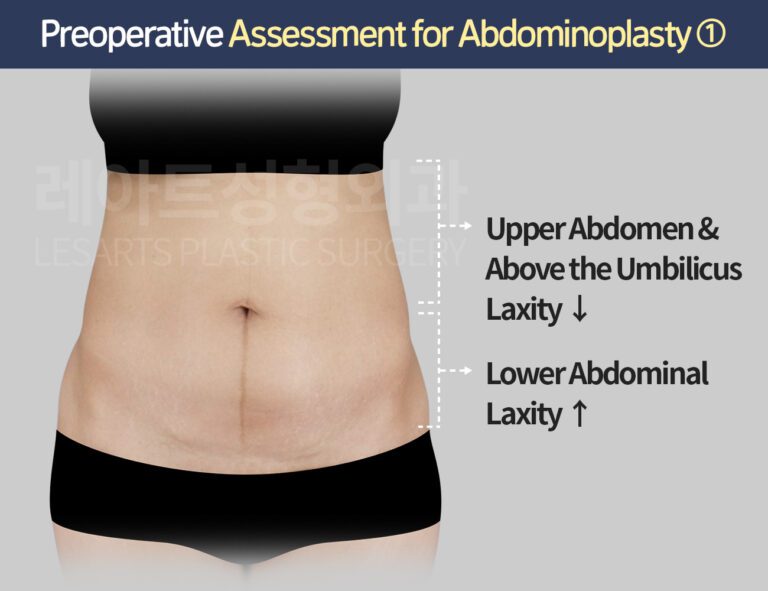
Preoperative assessment for abdominoplasty – Lesarts Plastic Surgery
Overall,
skin laxity
was not severe.
In particular,
the upper abdomen
showed minimal sagging.
Skin laxity
above the umbilicus
was also mild.
The patient
did not consider
this area
a major concern.
Preoperative assessment for abdominoplasty – Lesarts Plastic Surgery
In contrast,
the lower abdomen
showed more noticeable
skin laxity.
However,
the sagging
was not severe enough
to create a step-off
above the
cesarean scar.
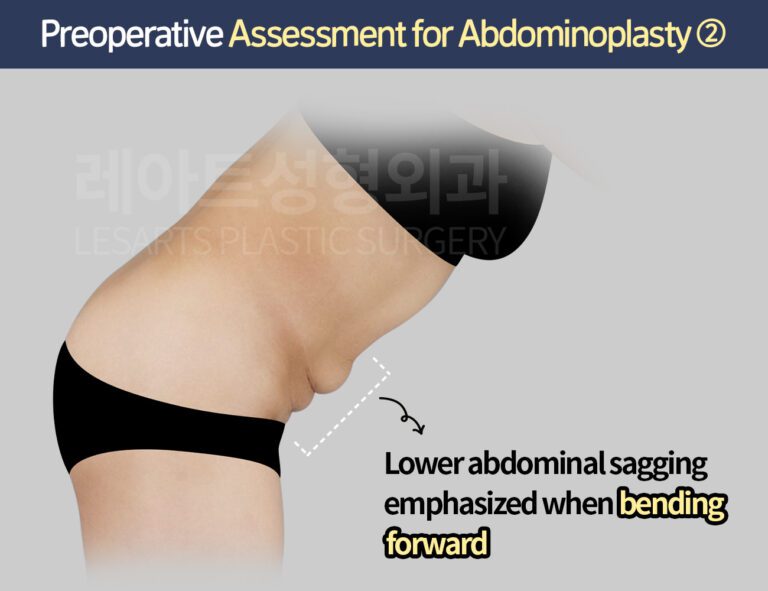
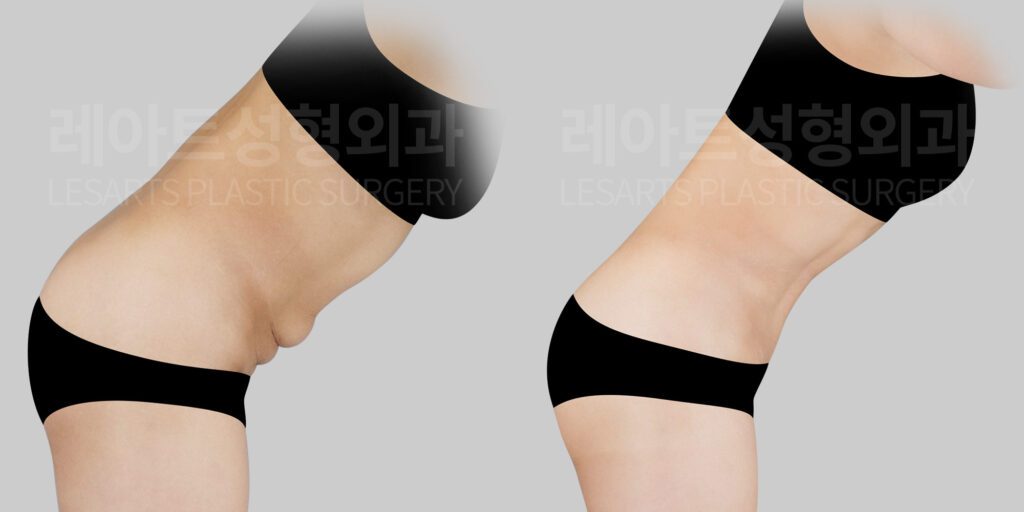
When bending forward,
the lower abdominal bulge
became more prominent.
Preoperative assessment for abdominoplasty – Lesarts Plastic Surgery
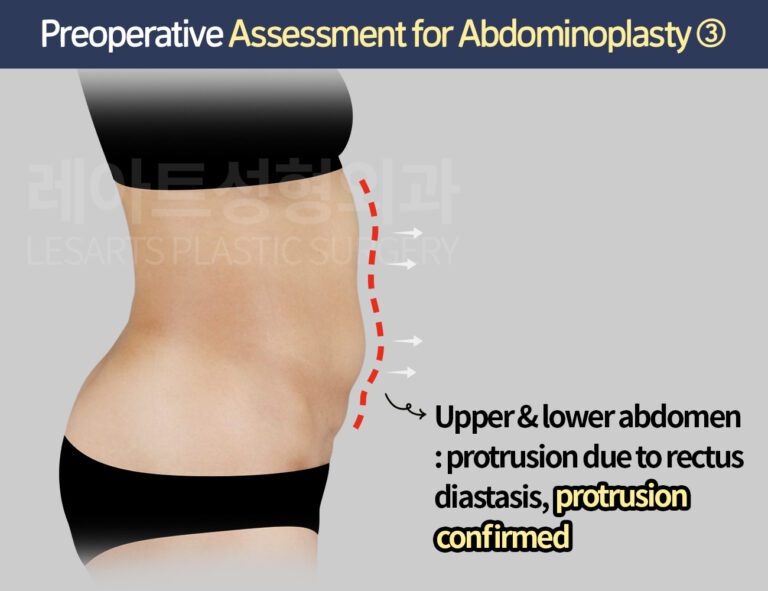
Rectus diastasis
was observed
in both
the upper
and lower abdomen,
and was
clearly palpable
on examination.
From the side view
and when bending forward,
the abdominal contour
appeared protruded
due to laxity
of the fascial layer.
The cesarean scar
was generally well healed,
but positioned slightly higher
with a diagonal shape.
Overall,
while rectus diastasis
was present throughout,
the degree
of skin laxity
was not severe.
Sagging above
the umbilicus
was also minimal.
Therefore,
an M-type
full abdominoplasty
was considered
too extensive
for this case.
However,
correction of
upper abdominal diastasis
was still necessary,
making a standard
S-type approach insufficient.
As a result,
umbilical floating abdominoplasty
was planned.
In addition,
abdominal liposuction
was performed
to refine
residual fat
unresponsive
to exercise
and body management.
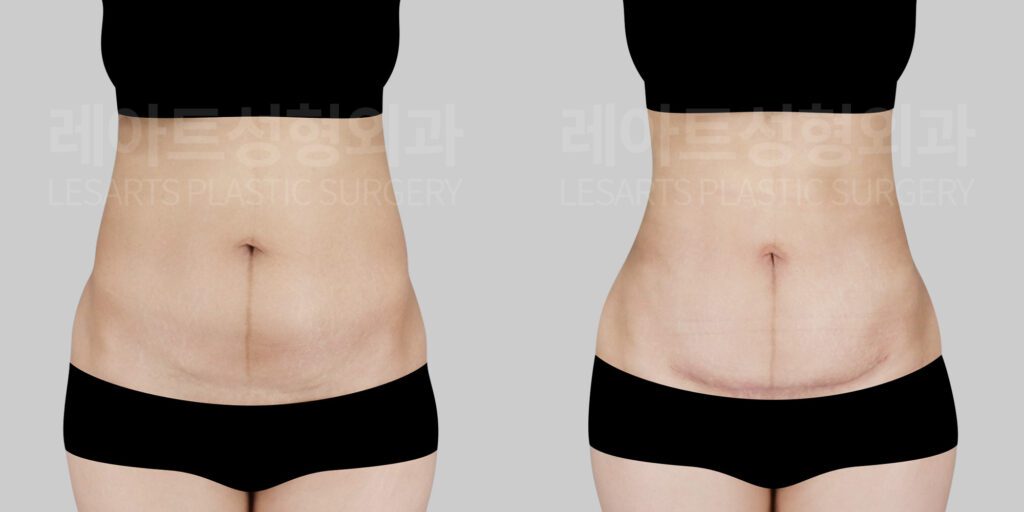
These are the results
after umbilical floating abdominoplasty.
2 months after umbilical floating abdominoplasty – Dr. Kukhan Lee, Lesarts Plastic Surgery
Changes in abdominal contour after rectus muscle repair – Dr. Kukhan Lee, Lesarts Plastic Surgery
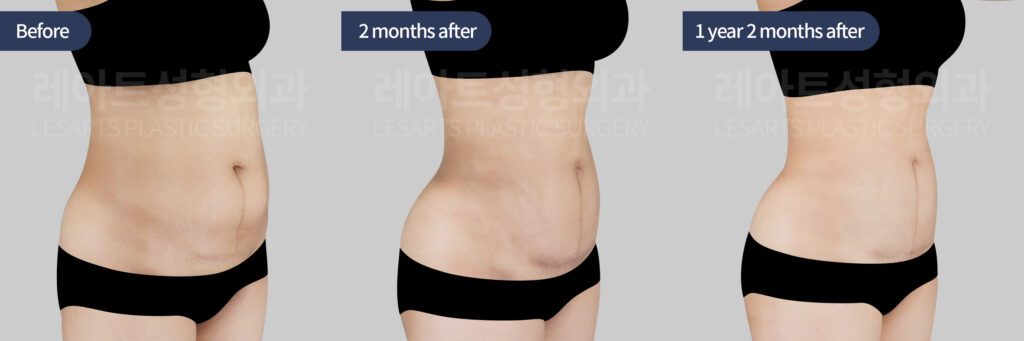
At 2 months post-op,
swelling has not
fully resolved,
and bio-bond
effects are still present.
Despite this,
the central abdominal bulge,
which was the main concern,
has been
significantly improved.
At this stage,
the scar may appear
more noticeable,
but it remains stable
without hypertrophy
or widening.
At 2 months post-op,
swelling has not
fully resolved,
and bio-bond
effects are still present.
Despite this,
the central abdominal bulge,
which was the main concern,
has been
significantly improved.
At this stage,
the scar may appear
more noticeable,
but it remains stable
without hypertrophy
or widening.
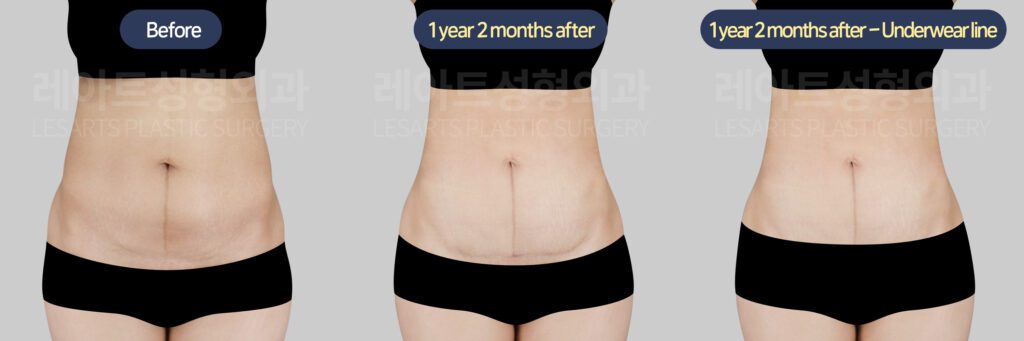
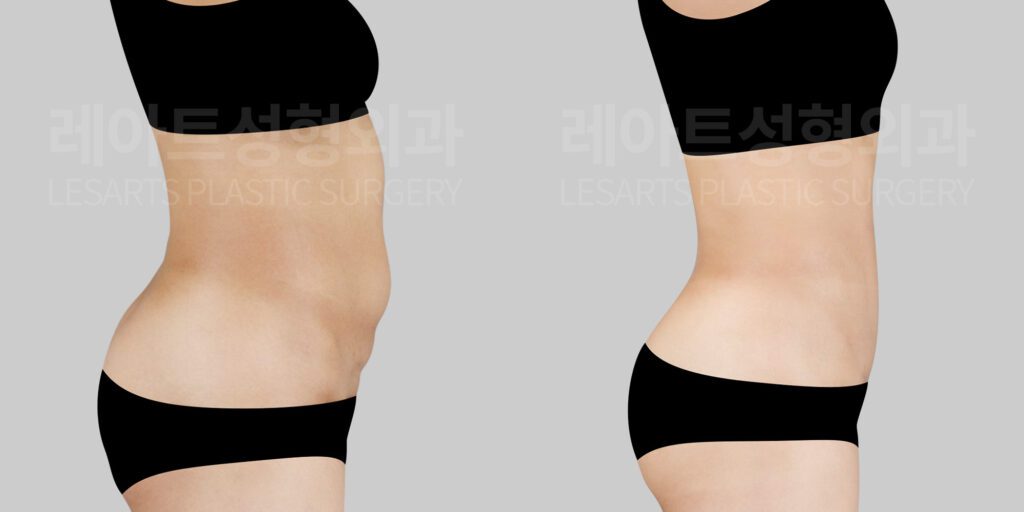
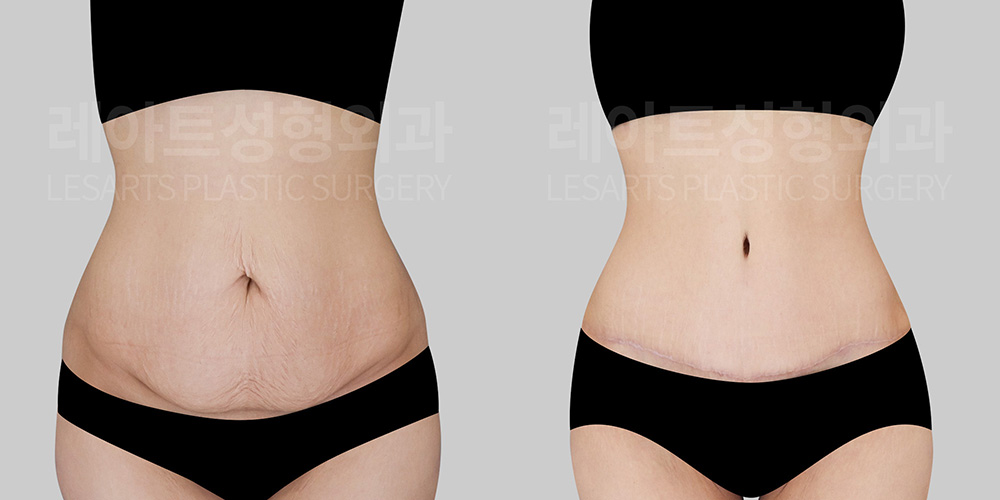
1 year 2 months after abdominoplasty – Dr. Kukhan Lee, Lesarts Plastic Surgery
At this stage,
significant improvements
can be observed.
The scar
still shows
mild pigmentation,
but overall color
has noticeably
faded.
With more time,
further stabilization
is expected.
Scar length and position after abdominoplasty – Dr. Kukhan Lee, Lesarts Plastic Surgery
The scar length
is longer
than the previous
cesarean scar,
which can be
a disadvantage.
However,
the incision
was placed low enough
to significantly reduce
visibility
in daily life.
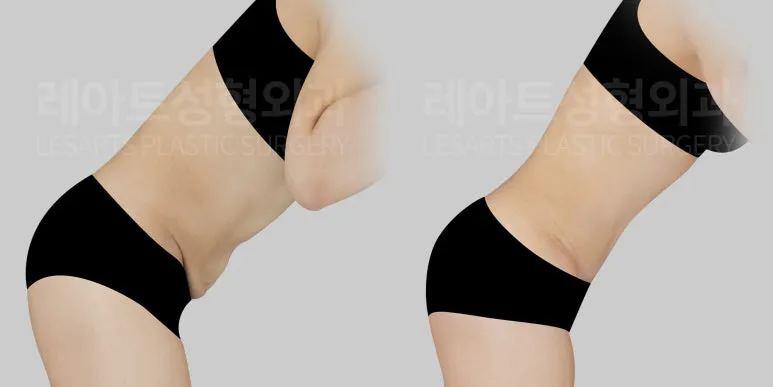
Rectus muscle plication and abdominal lifting before-and-after difference – Dr. Kukhan Lee, Lesarts Plastic Surgery
Umbilical floating abdominoplasty – Dr. Kukhan Lee, Lesarts Plastic Surgery
The overall
abdominal contour
has become
more firm
and refined.
The appearance
of the rectus muscle contour,
visible from the side
or when bending forward,
has also improved
into a more
natural
and toned shape.
1 year after abdominoplasty – Lesarts Plastic Surgery
Most of the
bio-bond
has resolved,
allowing
comfortable
daily activities
without tightness
or discomfort.
Although
tissue remodeling
is not fully complete,
further improvement
in scar
and contour
can still be expected.
Consistent
exercise,
body management,
and scar care
played an important role
in maintaining results.
Surgery is not
the end of care,
but the beginning
of a new phase
of management.
Many patients
hesitate due to concerns
about hidden scars.
However,
if body concerns
affect daily life,
proper evaluation
and consultation
can provide solutions.
Since treatment
varies depending on
skin laxity,
muscle condition,
and overall anatomy,
a personalized approach
is essential.
If you are considering
abdominoplasty,
a consultation
can help determine
the most suitable
treatment plan.