Is removing saddlebags enough? Overlooked design points in thigh liposuction
Hello, this is Dr. Choi Pyongrim from Lesarts Plastic Surgery.
Even at the same height and weight,
why do some people’s thighs look slim,
while others appear noticeably heavy?
The thigh line is not simply about
how much fat there is or isn’t.
It is determined by where fat accumulates,
the shape of the muscles,
and the flow of curves connecting
the pelvis and the knees.
This is why, even after losing weight through dieting,
the thigh line often does not change
as much as expected.
In this article, we will explain
what creates the ideal female thigh line
and why “line design” is so important
in thigh liposuction,
through an anatomical perspective
and real surgical cases.
1. Key factors that define the ideal thigh line
The female thigh line
is largely influenced by three main factors.
Fat “location” matters more than fat “amount”
1) Thigh fat is distributed across:
– The inner thigh
– The front of the thigh
– The outer thigh (commonly known as saddlebags)
– The back of the thigh
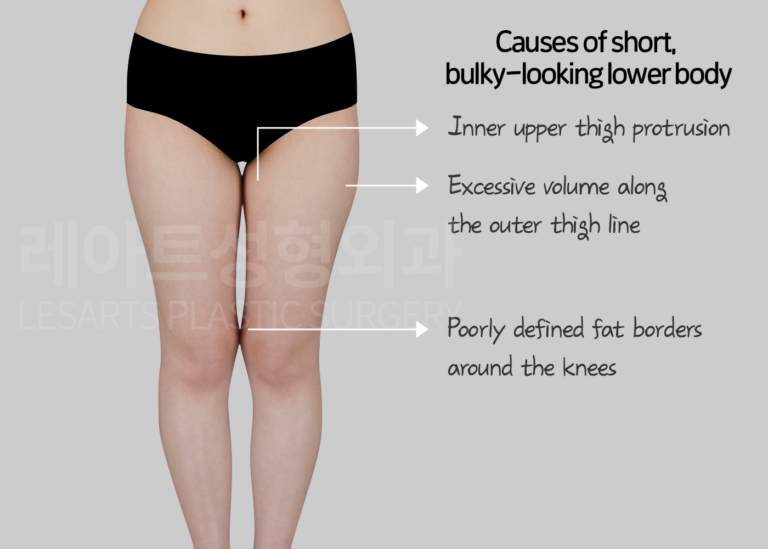
In particular,
– Protrusion of the upper inner thighs
– Excessive volume along the outer thigh line
– Poorly defined fat borders around the knees
When these three issues overlap,
the lower body can appear much shorter
and bulkier than the actual body weight suggests.
In other words,
the problem is not the total amount of fat,
but where it remains.
2)The influence of thigh muscle structure and skeletal anatomy
The thighs are not simply masses of fat,
but a structure in which fat overlies
large muscle groups, including:
– Quadriceps (front)
– Adductors (inner)
– Hamstrings (back)
In women especially,
– The pelvis is wider
– The femoral angle is larger
This makes it easy for an O-shaped leg line to form,
where the upper inner thighs touch
while the legs separate below the knees.
If fat is reduced without considering
this anatomical structure,
the leg line may appear unnatural
or even look more bowed.
3)The “connection line” linking the pelvis, thighs, and knees
The core of an ideal thigh line
is not the cross-section of the thigh,
but the flow of the overall silhouette.
– A smooth curve flowing down from below the pelvis
– Removal of excessive bulging in the central thigh
– A slim, refined transition above the knee
When these three elements connect seamlessly,
the legs appear much longer
and slimmer than their actual length.
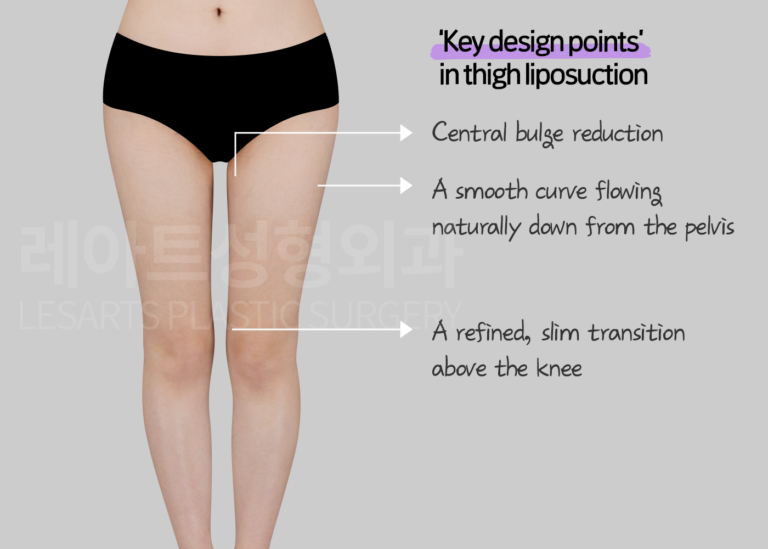
2.The most important “design points” in thigh liposuction
Thigh liposuction
is not simply a procedure
that removes a large amount of fat.
What determines the final result
is deciding where to preserve volume
and where to refine.
1) Inner thigh line: separating the thighs without overdoing it
The inner thighs are an area where
results are highly visible,
but excessive removal
can make the legs look thin and unnatural.
The key design goal is to create
a slim curve that follows the muscle contour,
allowing a natural gap when standing,
while preventing the thighs
from looking hollow when walking.
2)Outer thigh (saddlebags): contour refinement over volume reduction
If too much fat is removed
from the outer thighs,
the hip line may appear sunken
or the pelvis may look smaller.
For this reason, professional thigh design focuses on:
– Gently smoothing only the protruding borders
– Preserving the natural curve from the hips to the thighs
3) Area around the knees: a hidden key to leg length
Even a small amount of refinement
around the knees can make:
– The legs appear much longer
– The boundary between the thighs and calves look more defined
When performing full thigh liposuction,
including the knee area in the design
is essential for a refined, complete result.
3. Changes seen through an actual thigh liposuction case
[Patient case]
Female, late 20s
Height: 155 cm
Weight: 46.1 kg
BMI: 19.2
Desired outcome:
A visible thigh gap and a fuller pelvic silhouette
Priority:
Not just removing fat,
but creating a beautifully contoured thigh line
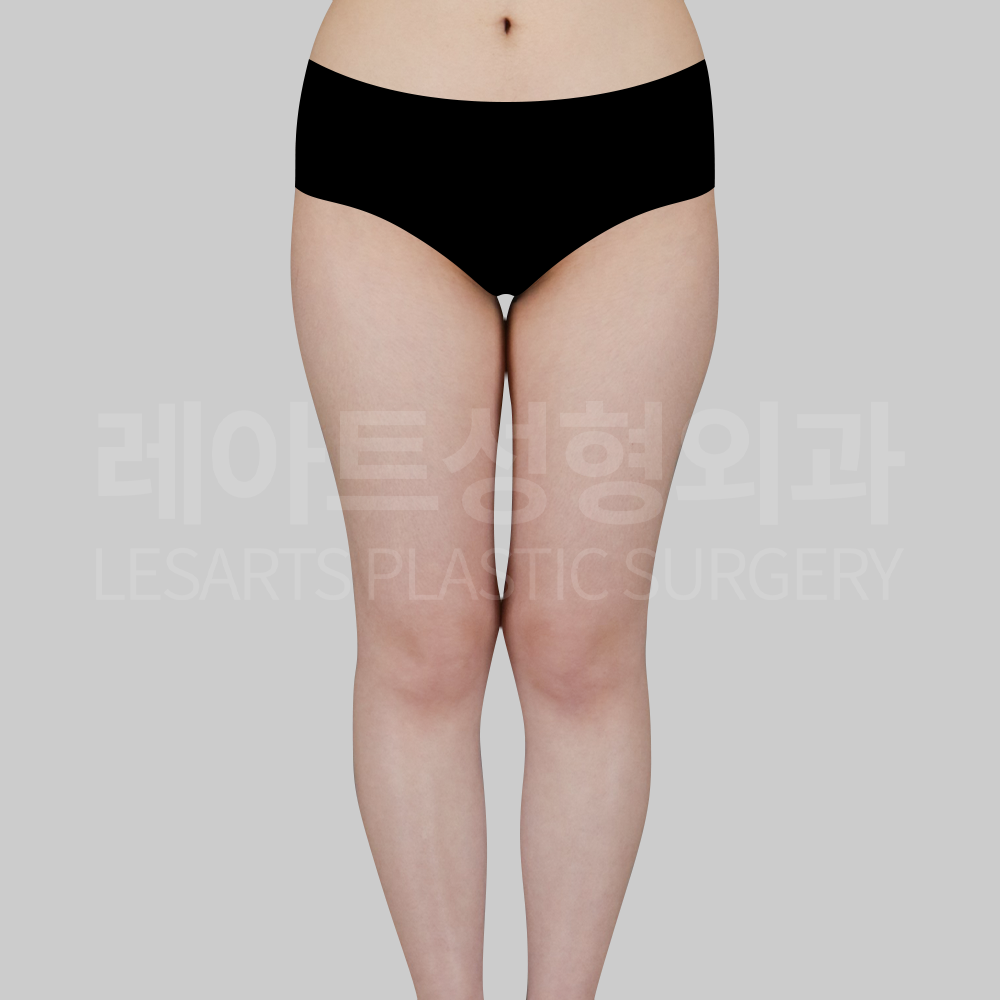
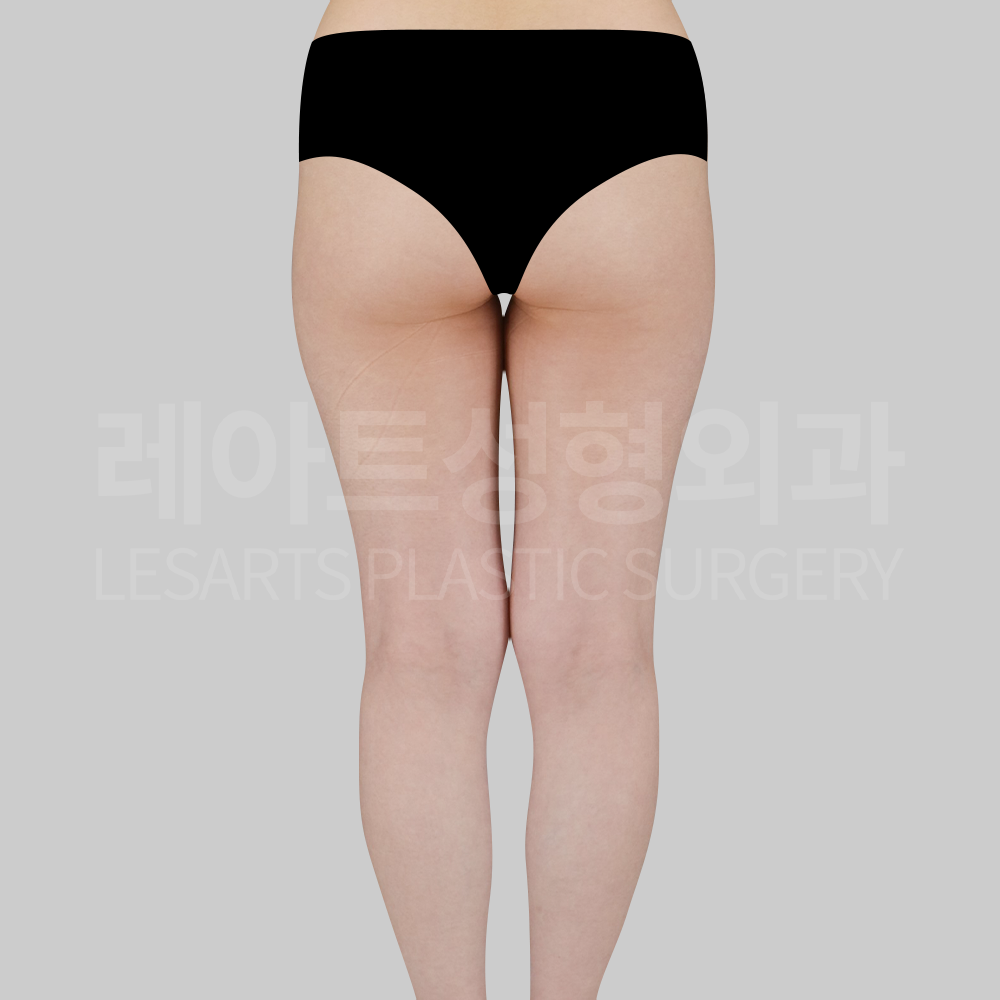
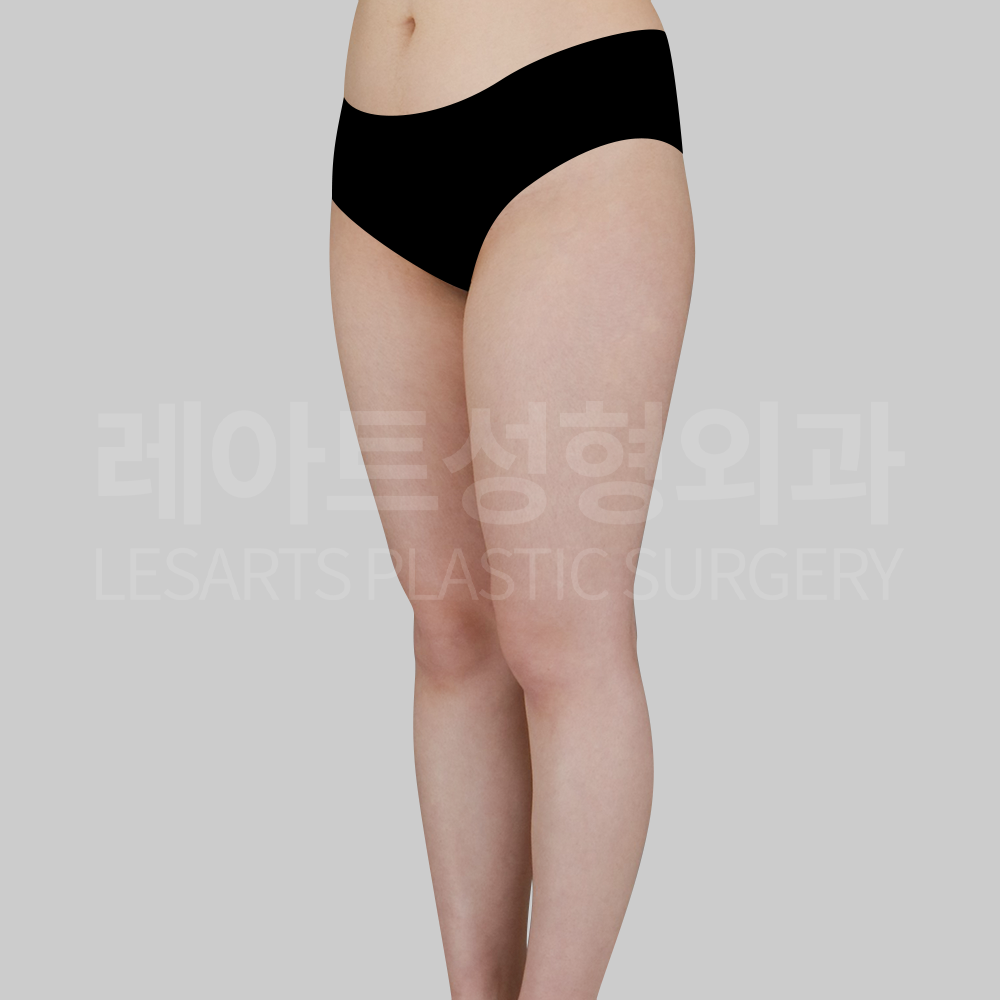
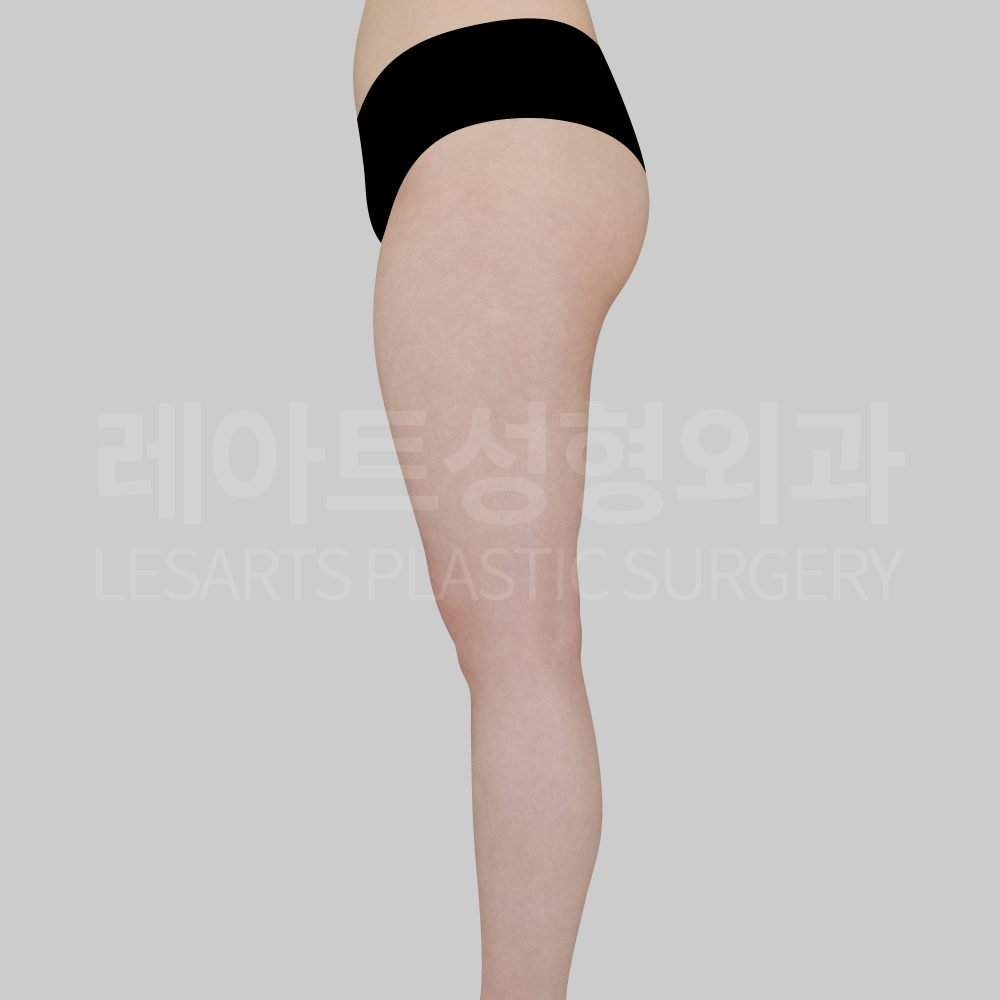
Lesarts thigh liposuction before surgery
*Current assessment and surgical approach*
Upper inner thighs touching
Prominent saddlebags making the legs appear shorter
Irregular contour along the pelvic line and hip area
Recommended full thigh liposuction with hip fat grafting
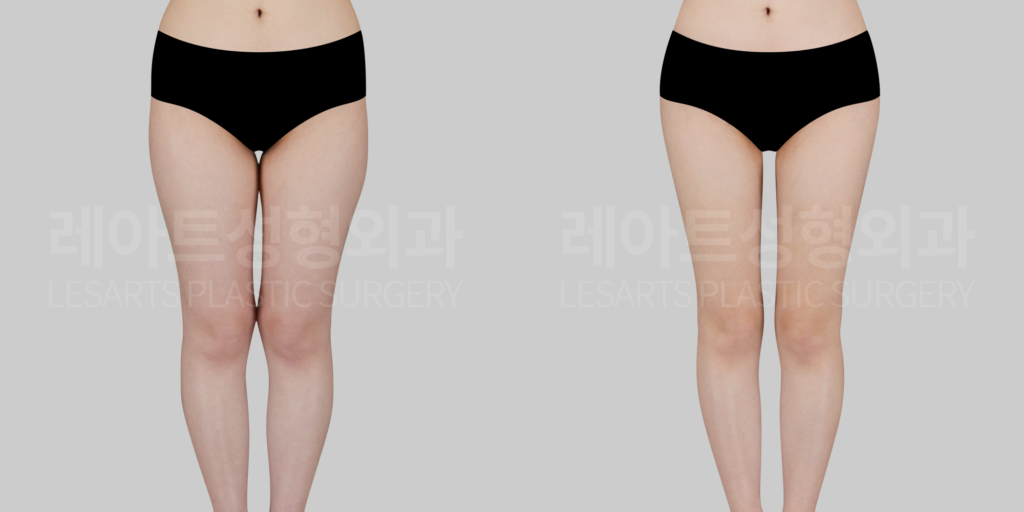
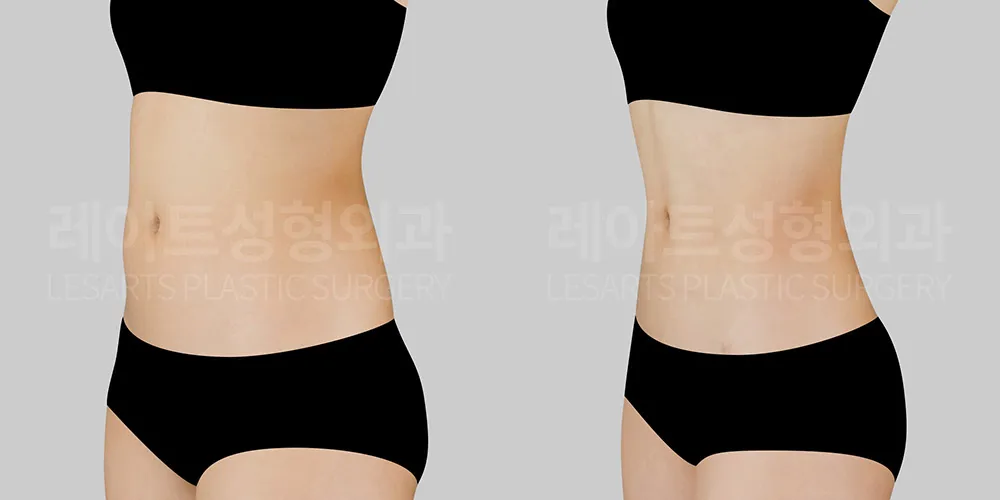
Lesarts thigh liposuction front view before-and-after difference – Dr. Pyongrim Choi
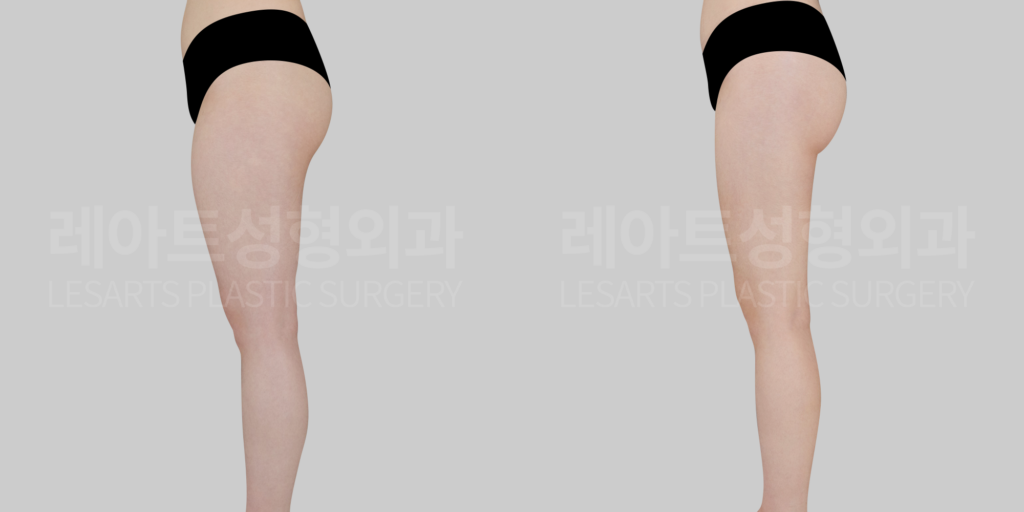
Lesarts thigh liposuction side view before-and-after difference – Dr. Pyongrim Choi
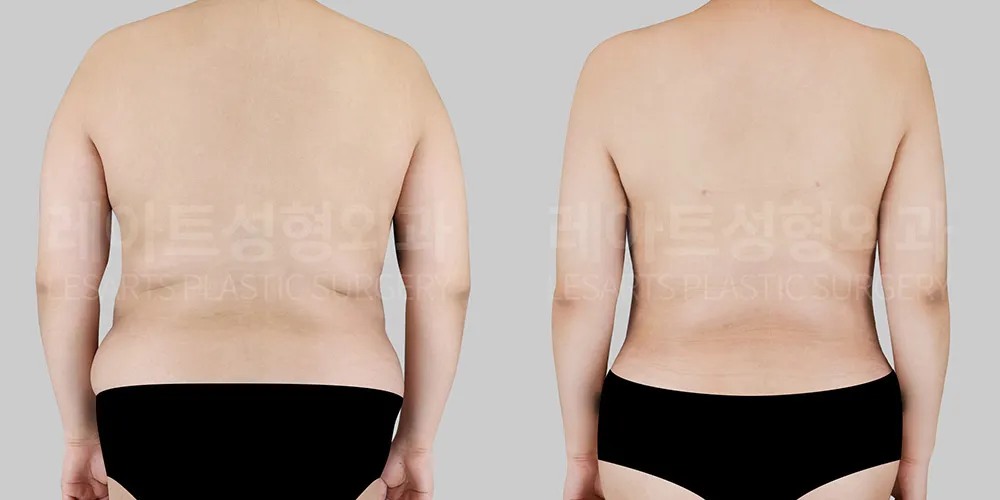
*thigh liposuction before surgery / 3-month postoperative changes*
Front / side / back views
Despite minimal change in body weight,
The previously touching inner thigh line became separated
The uneven outer thigh contours were refined
The area around the knees was smoothed
As a result, the overall lower-body proportion
showed a noticeable improvement.
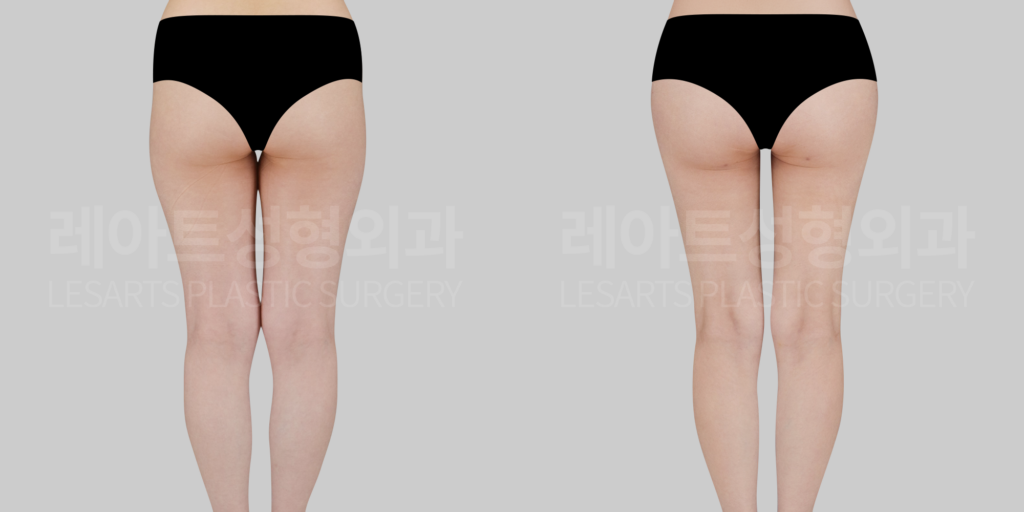
Lesarts thigh liposuction back view before-and-after difference – Dr. Pyongrim Choi
In particular, with the formation of a newly defined pelvic line
and the elimination of saddlebags,
the legs appeared longer
and the overall contour became more feminine.
After thigh liposuction, the patient commented,
“It doesn’t feel like i just lost weight—
it feels like the shape of my legs has changed.”
This perfectly reflects the effect of thigh liposuction
focused on proportion improvement
and line design.
The ideal female thigh line
is not defined by specific numbers or circumferences,
but by a harmonious curve
that flows from the pelvis to the knees.
For this reason, thigh liposuction
is not a simple body contouring procedure,
but a high-level line-focused surgery
that requires anatomical understanding
and extensive design experience.
If you are concerned about unflattering thigh contours,
consider not how much fat to remove first,
but how the line should be designed.
Thigh liposuction and fat grafting
should be decided after a thorough consultation,
based on a careful assessment
of each individual’s body shape and skeletal structure,
to ensure the safest
and most effective outcome.