[Upper body Liposuction] How Much Can Sagging Arms and Belly Be Improvedwith Liposuction Alone?
Hello, this is Dr. Pyongrim Choi
from Lesarts Plastic Surgery.
Many patients successfully lose weight,
yet still find themselves asking,
“Why do certain areas
still look thick and saggy?”
One of the most common patterns
seen in women in their 20s and 30s
is persistent fullness
along the back of the arms,
combined with stubborn fat deposits
around the flanks
and love handle areas.
Even after becoming noticeably slimmer,
the overall body contour
may still appear unfinished,
making it difficult to achieve
the refined silhouette
patients were hoping for.
This is not simply
a problem of excess fat.
Rather, it is the result of
multiple factors working together,
including fat distribution,
skin elasticity,
and the structure of
the underlying fibrous tissues.
1.Typical Upper-Body Changes
After Weight Loss
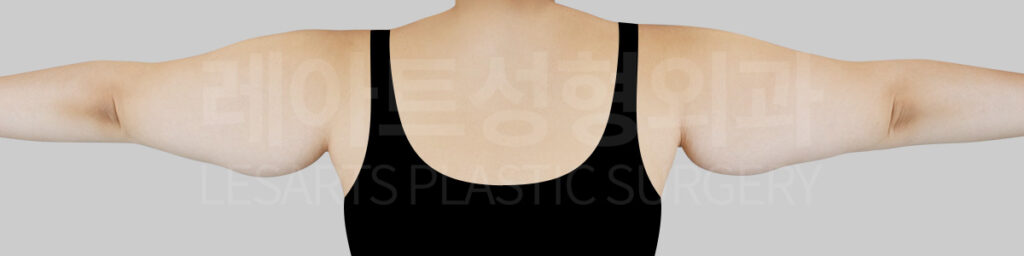
Unresolved Arm Fullness After Weight Loss
1)Arms (Posterior and Lateral Upper Arm)
Although the overall amount
of body fat decreases after weight loss,
it does not disappear completely.
Residual fat commonly remains
along the posterior and lateral
upper arm regions,
often referred to as
the back-of-arm fullness area.
As skin elasticity declines,
the remaining fat and skin
tend to sag together,
creating the appearance of
soft, hanging fullness
rather than a firm contour.
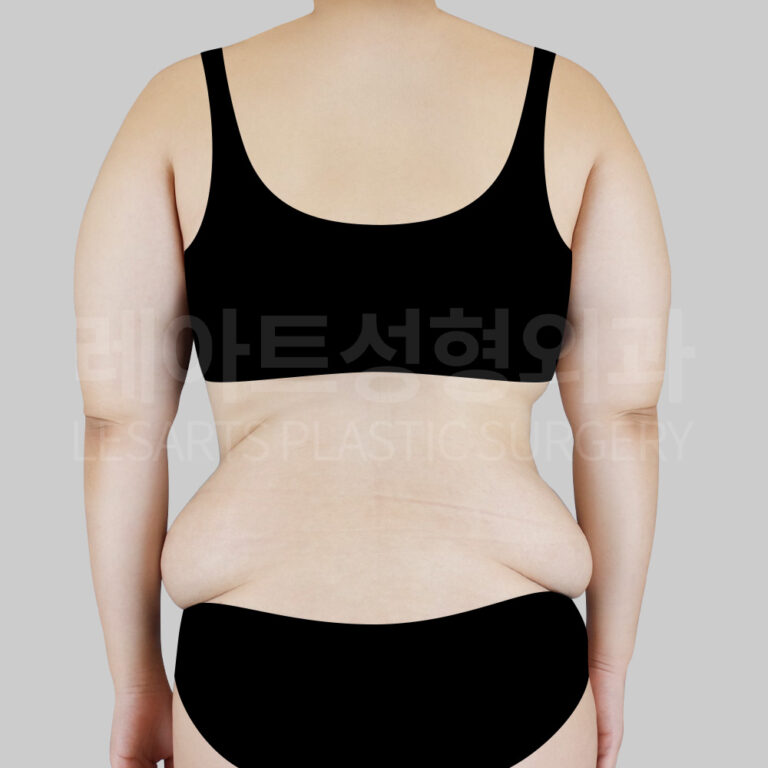
Persistent Flank and Love Handle Fat After Weight Loss
2)Abdomen and Flanks (Love Handle Area)
Even after significant weight loss,
the overall abdominal volume
often decreases considerably.
However, the flanks
and love handle areas
are among the most common regions
where stubborn fat remains.
In many patients,
these fat deposits persist
despite continued exercise
and dietary management.
As a result,
the waistline may fail to develop
the smooth contour
that patients expect
after successful weight reduction.
From the back view,
the remaining fat frequently appears
as a protruding mass
rather than a defined waistline.
Instead of creating
a gradual transition,
the contour can appear
interrupted and bulky.
A characteristic feature
of this area is that
reduced skin elasticity
often causes the remaining fat
to not only project outward
but also descend slightly downward.
Unlike simple abdominal obesity,
the concern is not merely volume.
The combination of residual fat
and mild skin laxity
can create the impression
that the body contour
is disconnected or unfinished,
even after substantial weight loss.
2.Why Do These Areas
Remain Until the End?
1)Anatomical Reasons
Differences in Fat Layer Structure
The posterior upper arms
and flank areas
contain dense fibrous tissue,
which anchors fat more firmly
than in many other regions
of the body.
During weight loss,
fat reduction typically occurs
first in the central abdomen,
followed by the face
and then the extremities.
However, love handles
and back-of-arm fullness
tend to have greater resistance
to fat breakdown,
which is why they often remain
even after substantial weight loss.
Reduced Skin Elasticity
These regions are also areas
where the skin frequently fails
to contract completely
after weight reduction.
As a result,
even a relatively small amount
of residual fat
can appear more prominent
because the overlying skin
has become lax.
This combination of
remaining fat deposits
and decreased skin elasticity
often makes the area appear
more saggy than bulky.
3.Surgical Strategy
When Treating Without a Lift Procedure
In cases such as this,
the most important consideration
is not simply
“how much fat is removed,”
but rather
“how the remaining tissue
is shaped and supported.”
1)Key Principles of Arm Liposuction
For improving
back-of-arm fullness,
the goal is not merely
aggressive fat removal.
Instead,
both the superficial
and intermediate fat layers
must be reduced evenly.
This approach encourages
uniform skin adherence
during healing,
allowing simultaneous improvement
in arm thickness
and skin retraction.
2)Key Principles
of Abdominal and Flank Liposuction
For many unmarried female patients,
if the anterior abdominal skin
does not exhibit severe laxity,
an Abdominoplasty
may not be necessary.
The primary treatment targets
are often the flanks
and love handle areas.
By removing fat evenly
through both the deeper
and superficial layers
of the flank region,
the skin can adhere
more uniformly to
the underlying muscle layer.
This helps maintain
a smoother body contour
while minimizing the appearance
of residual sagging.
[Patient Case]
Female, 30 Years Old
167 cm / 68 kg
Goal: To improve the appearance
of sagging back-of-arm fullness
and reduce the prominent fat deposits
along the flanks and love handle areas.
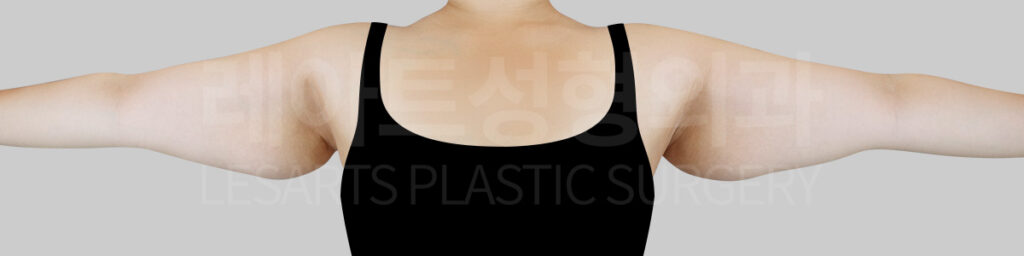
Back-of-Arm Fullness Before Arm Liposuction – Front View
Back-of-Arm Fullness Before Arm Liposuction – Rear View
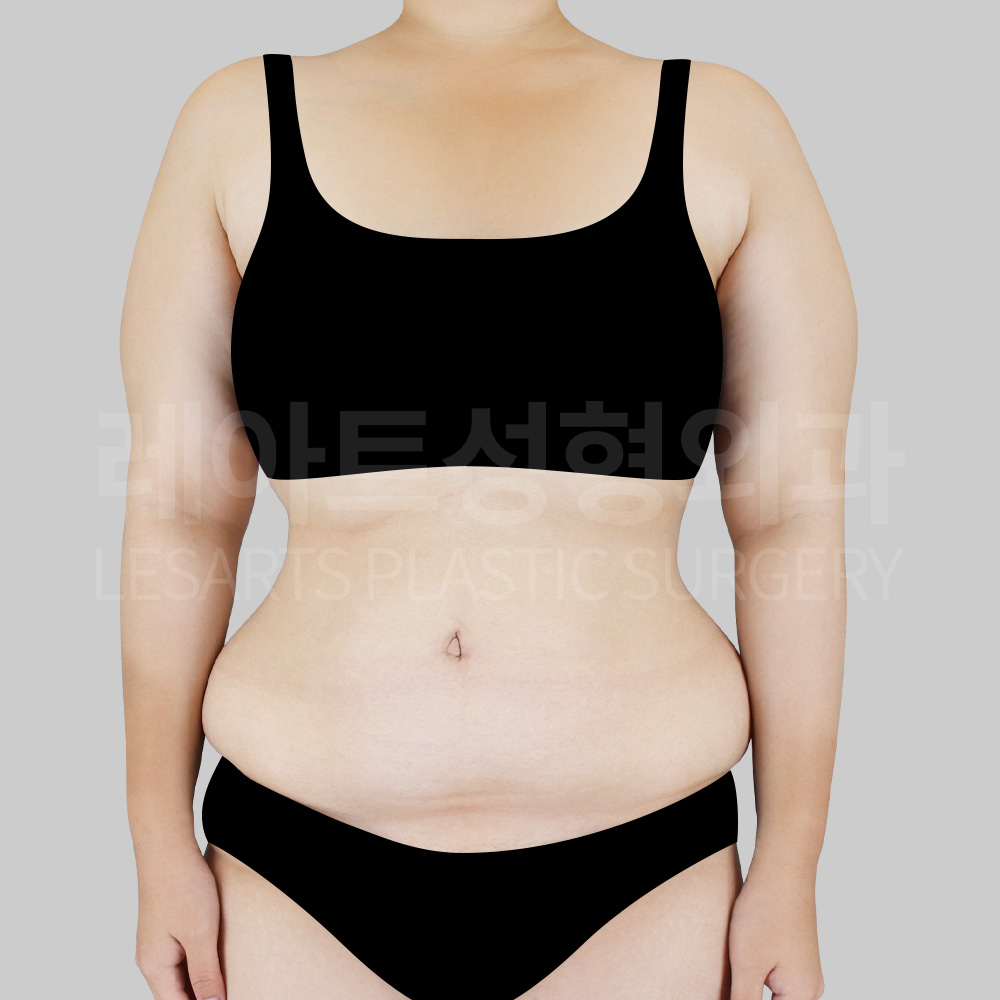
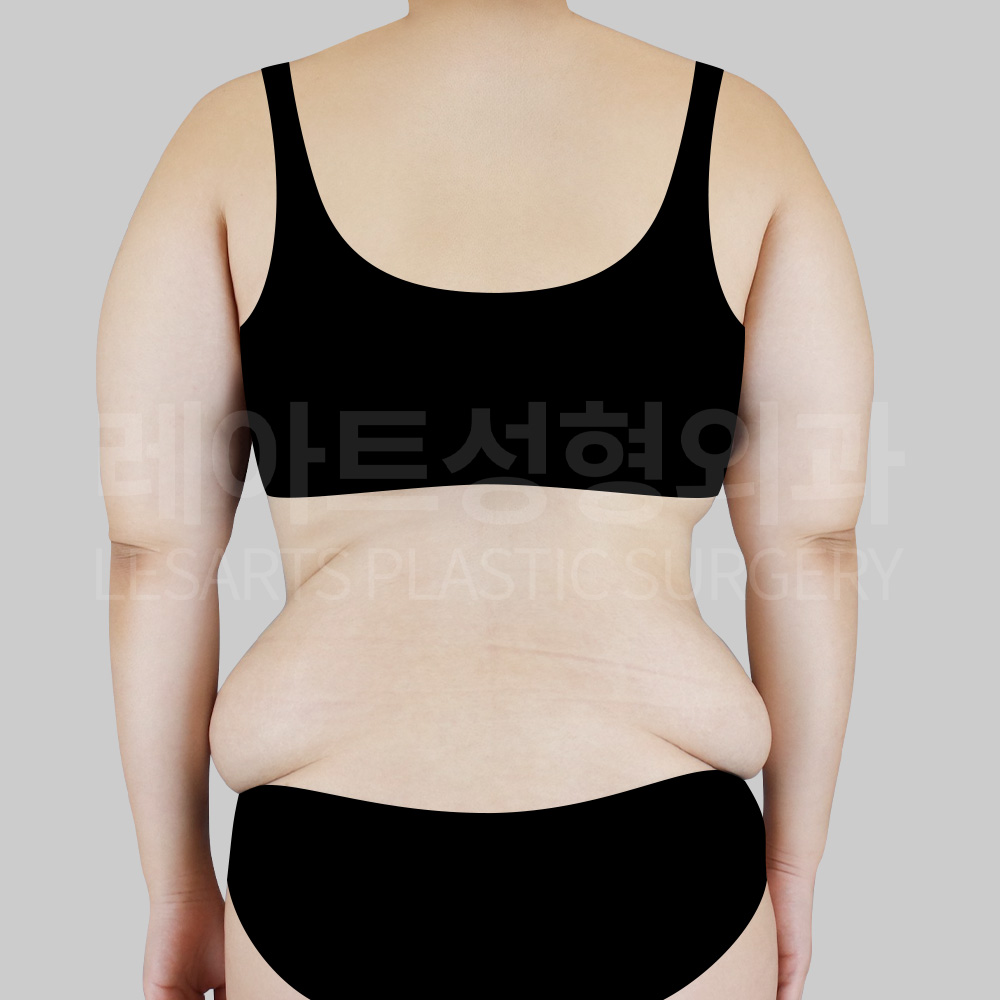
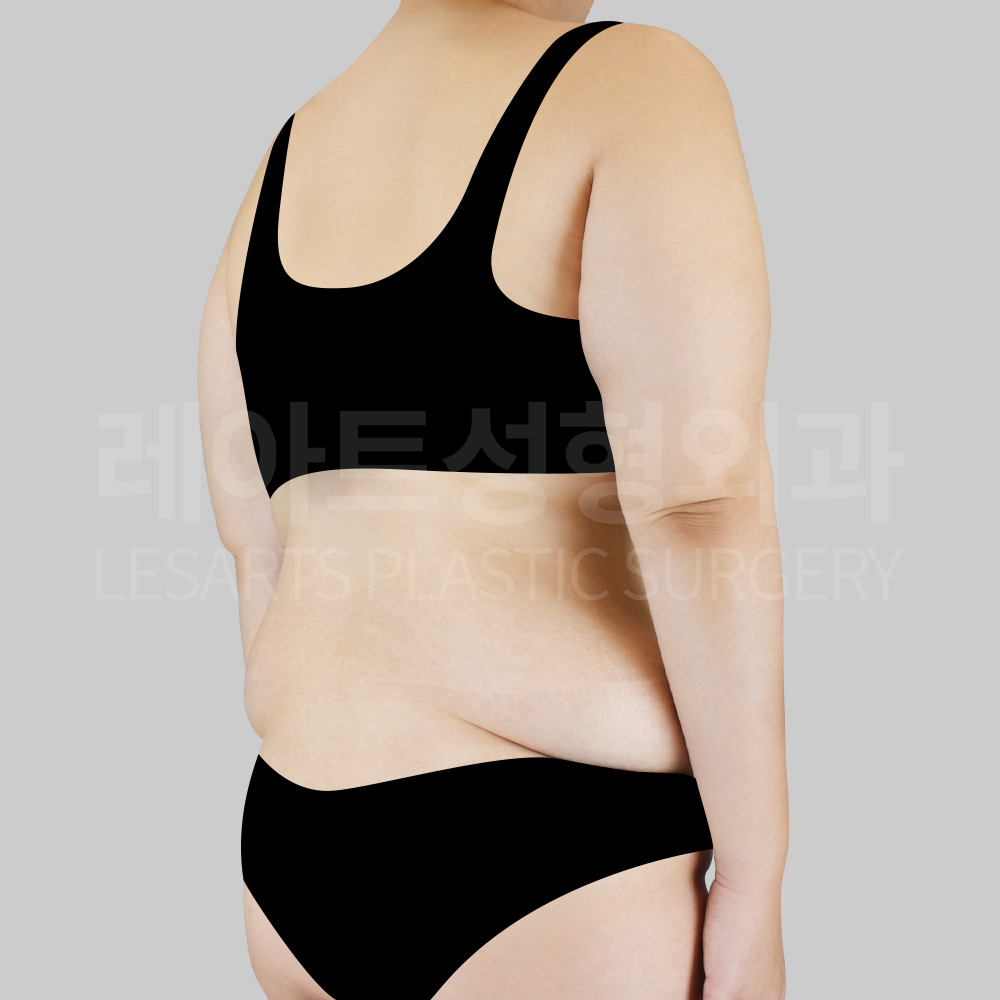
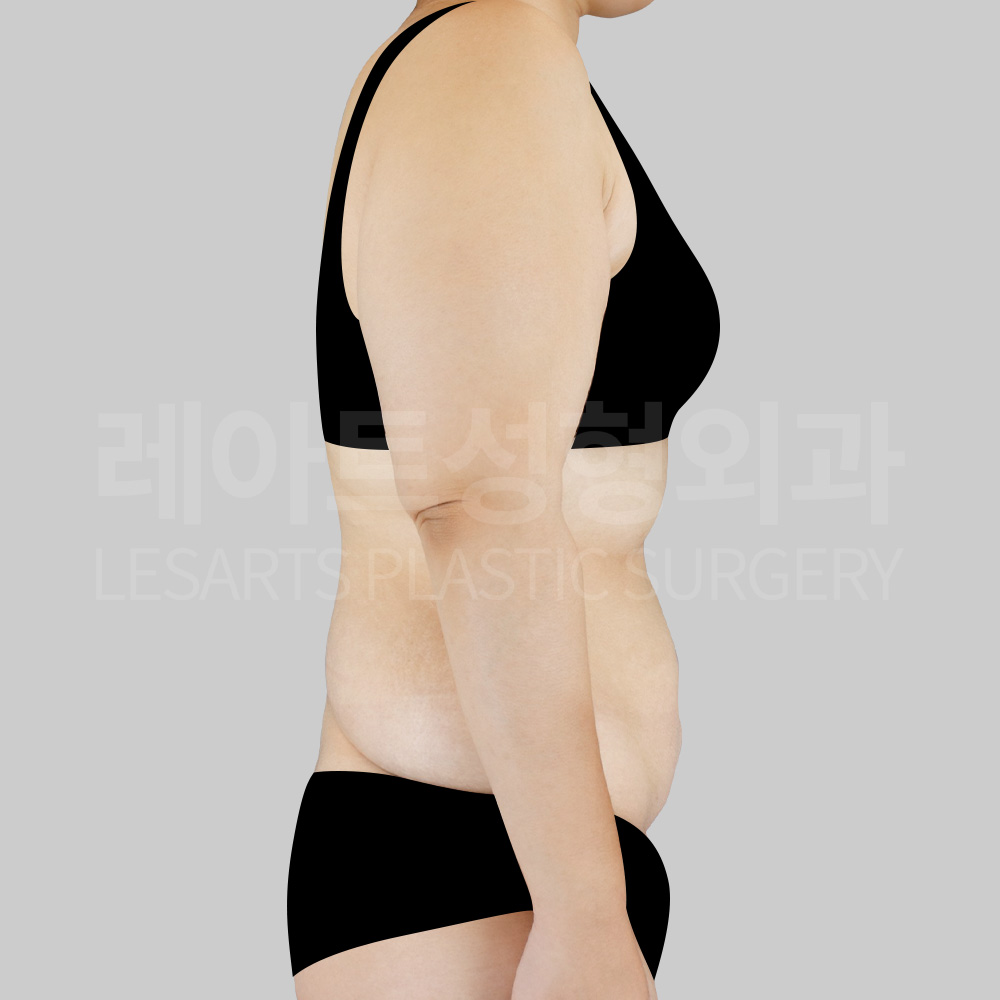
Arm and Abdominal Liposuction Preoperative Assessment
Patient History
90 kg → 60 kg Weight Loss
2 Years Ago → Regained to 68 kg
Arm Findings
Mixed pattern of
back-of-arm fullness
and mild skin laxity
Abdominal Findings
The primary concern
was not the central abdomen,
but the lateral contour.
Prominent flank fat deposits
combined with mild
skin looseness created
an uneven body contour,
particularly along the sides
of the waistline.
Liposuction Treatment Areas
First Procedure :
-Entire upper arm
-Underarm area
-Scapular region
-Accessory breast area
Second Procedure :
-Entire abdomen
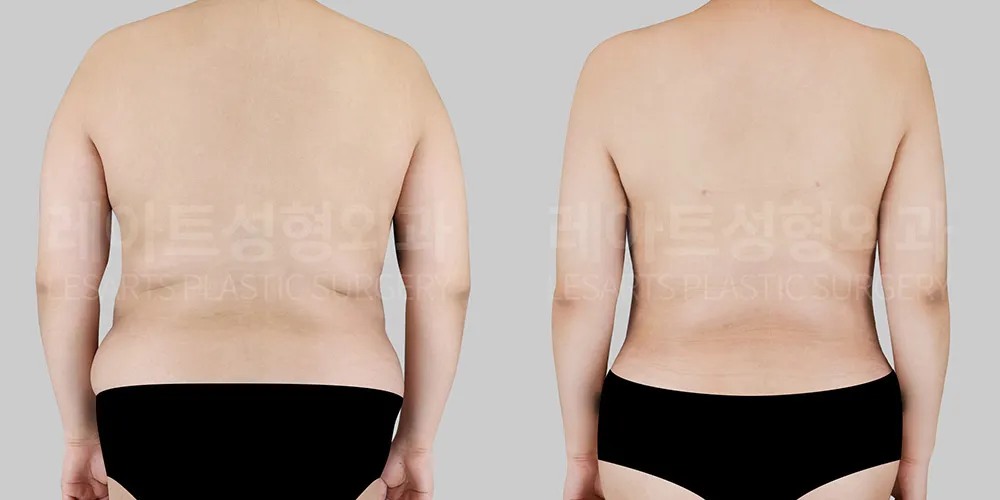
[10-Month Postoperative Results – Arm and Abdominal Liposuction]
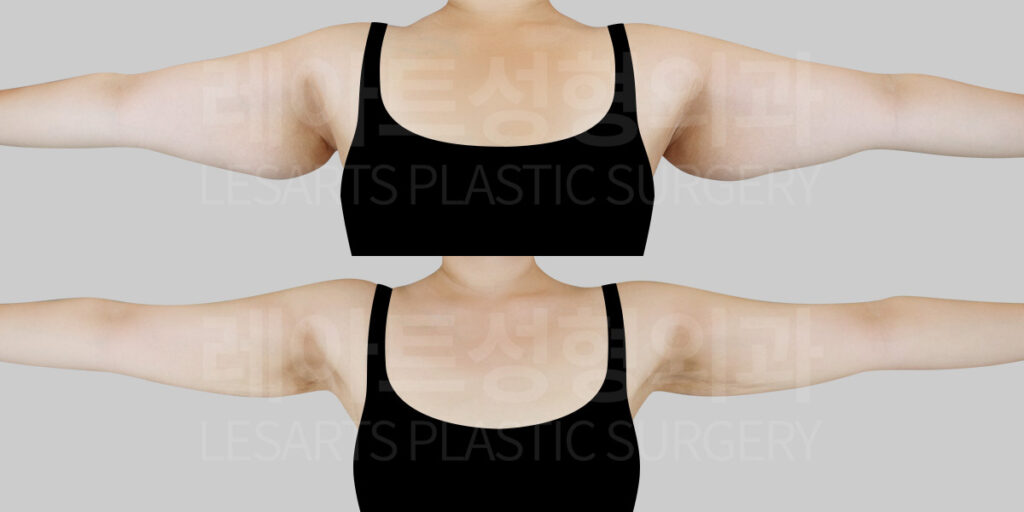
Lesarts Arm Liposuction Before and After Back-of-Arm Fullness Improvement
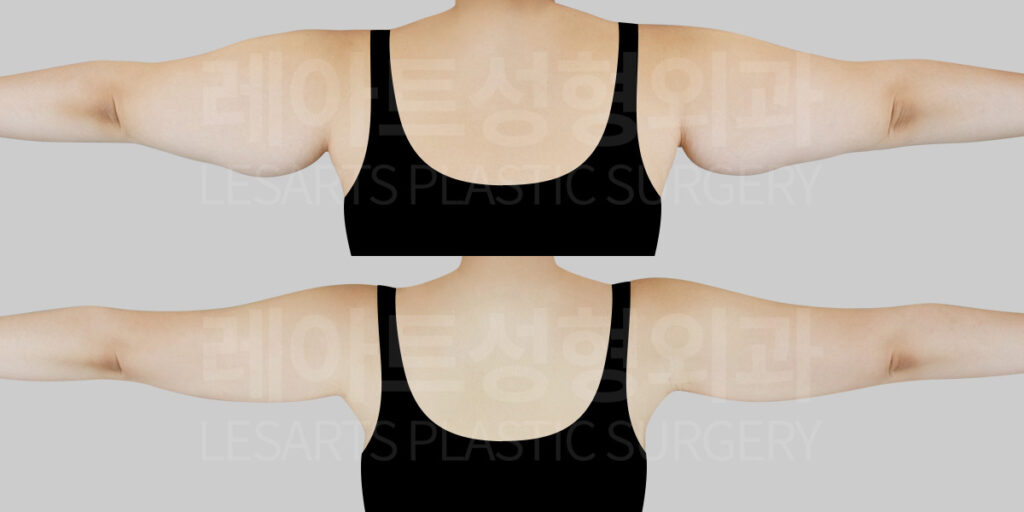
Improvement of Sagging Arm Fat Through Liposuction – Pyongrim Choi | Lesarts Plastic Surgery
In the arms,
both circumference reduction
and improvement of
skin laxity appearance
can be observed simultaneously.
Rather than simply appearing smaller,
the arms demonstrate a smoother
and more refined contour,
with the previously loose
back-of-arm fullness
appearing significantly improved.
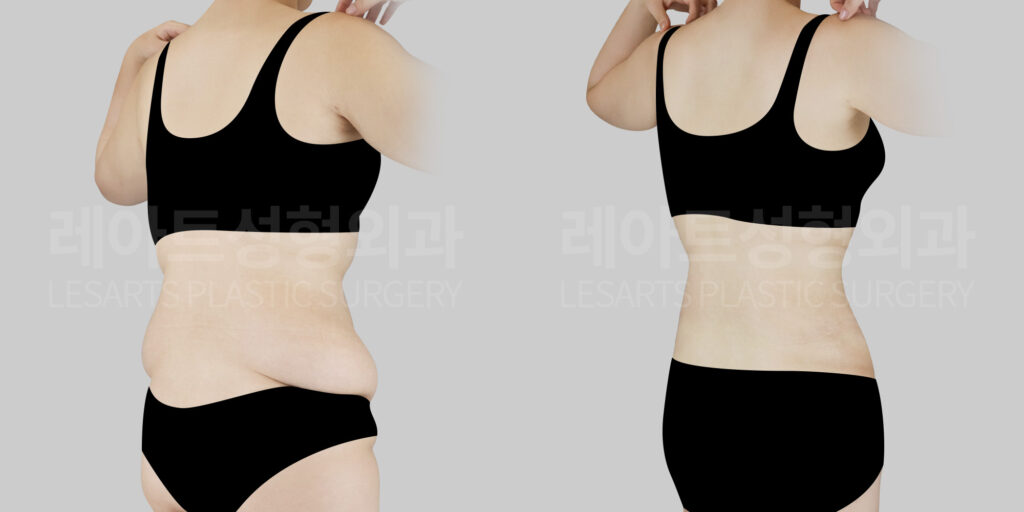
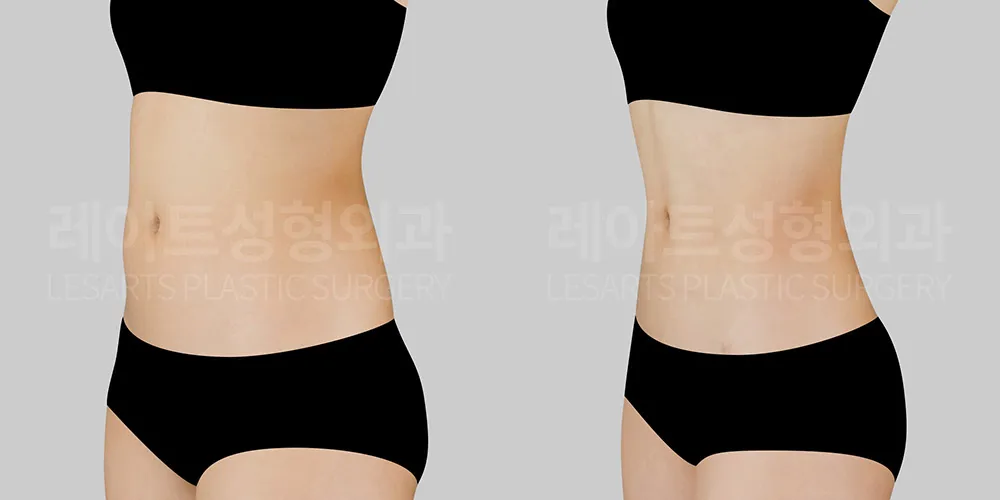
Improvement of Flank and Love Handle Sagging with Abdominal Liposuction – Lesarts Plastic Surgery
In the abdomen,
patients often notice
two changes simultaneously:
“It looks like I lost weight,”
and
“I finally have a waistline.”
By refining the flanks
and love handle areas,
the bulky contour that previously
disrupted the body silhouette
is significantly reduced.
Rather than simply decreasing volume,
the procedure helps create
a smoother transition
between the waist and torso,
resulting in a more defined
and balanced waist contour.
This combination of
volume reduction
and contour refinement
often creates the visual impression
of a slimmer body shape,
even when the actual weight change
is relatively modest.
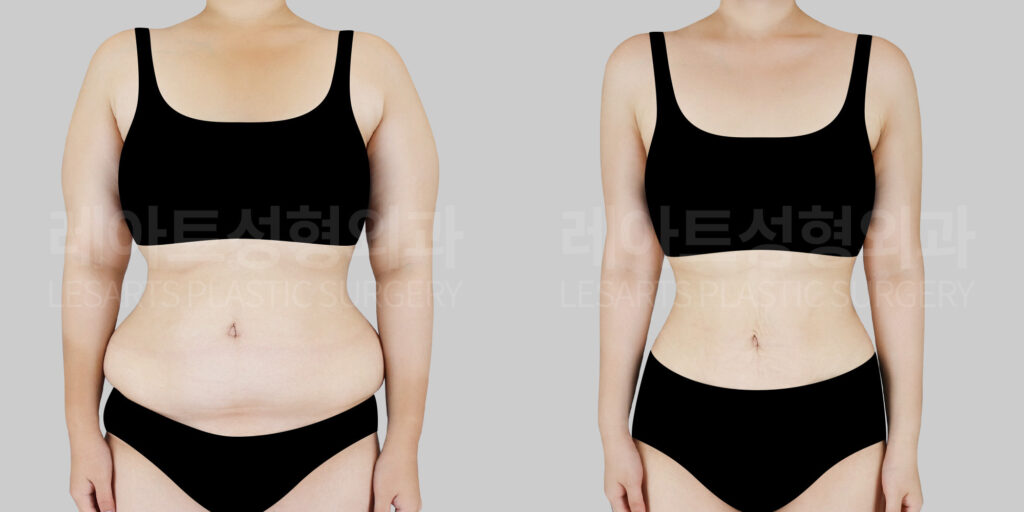
Contour Changes After Arm and Abdominal Liposuction – Lesarts Plastic Surgery
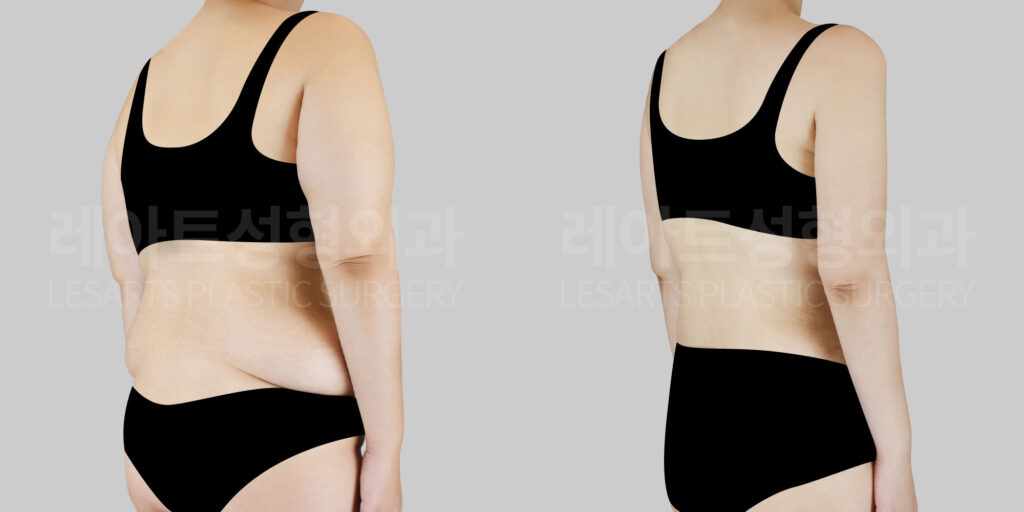
Back-of-Arm Fullness Before and After Liposuction – Pyongrim Choi | Lesarts Plastic Surgery
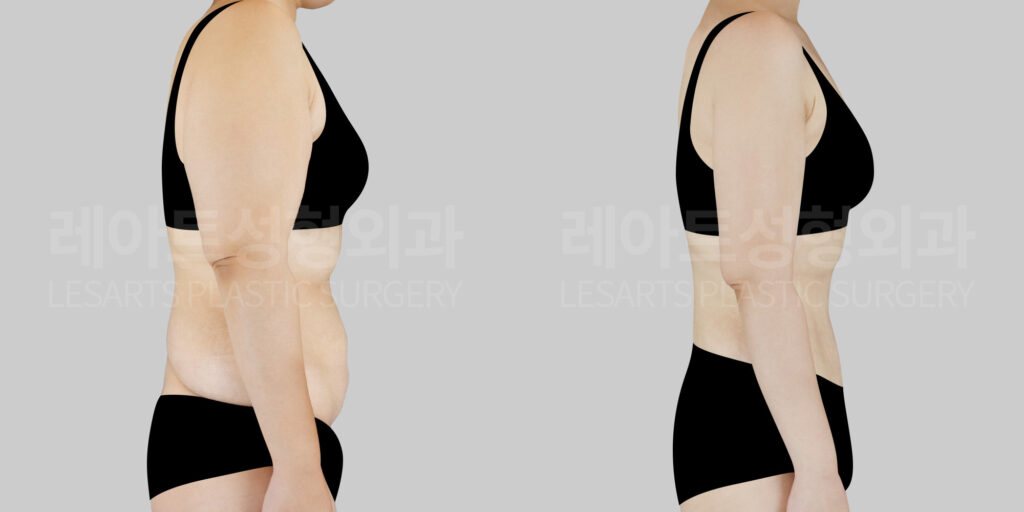
Circumference Reduction Results Before and After Liposuction – Pyongrim Choi | Lesarts Plastic Surgery
Even when evaluating
the overall body silhouette,
the patient appears
more than one clothing size smaller
despite experiencing
relatively minimal weight change.
This highlights one of
the most important principles
of liposuction surgery:
body contour improvement
often creates a greater visual impact
than weight reduction alone.
The most significant technical aspect
of this case was the ability
to refine the superficial fat layer
evenly while encouraging
uniform skin adherence
throughout the healing process.
Achieving this outcome required
precise cannula control
and careful contour management,
allowing the remaining tissue
to heal smoothly
without creating irregularities.
As a result,
both the arms and abdomen
demonstrate a slimmer appearance,
while maintaining natural transitions
between adjacent body regions.
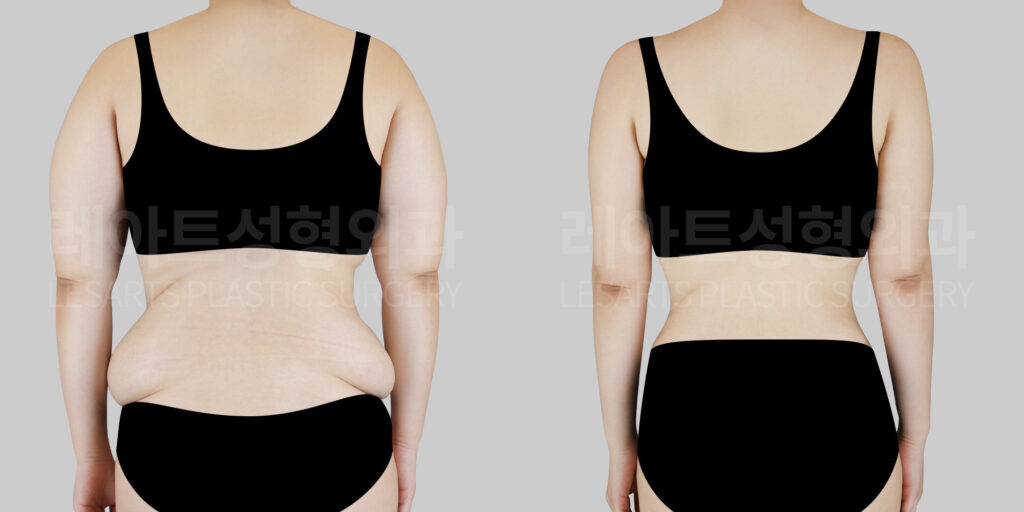
Arm Liposuction Before and After – Pyongrim Choi | Lesarts Plastic Surgery
A continuous contour design
connecting the arms,
underarms, back,
flanks, waistline,
and pelvic contour
allowed the body silhouette
to flow naturally as one line.
By treating these connected areas
as a single contour unit,
skin laxity was minimized
while creating a more noticeable
and harmonious volume change
throughout the body.
There are certain contour concerns
that cannot be resolved
through weight loss alone.
In particular,
back-of-arm fullness
and flank fat deposits
often remain visible
not simply because fat persists,
but because both fat
and loose skin remain together
in an incomplete transitional state.
This combination frequently makes
the area appear more prominent
than expected,
even after significant weight reduction.
In these situations,
liposuction is not merely
a fat removal procedure.
It is a process of
redesigning the body contour,
encouraging skin adherence,
and refining the silhouette
to create a more balanced shape.
To achieve meaningful improvement
without requiring a lifting procedure,
the key factor is not
how much tissue is removed.
Rather,
success depends on
how precisely the contour
is refined and sculpted.
That level of precision
is what transforms
simple fat reduction
into true body contouring.