[Thigh liposuction]Worried About Wrinkles & Sagging After Thigh Liposuction? — A Real 165cm/84kg Case
Hello, this is Dr. Pyongrim Choi
from Lesarts Plastic Surgery.
Today’s case features
a female patient
in her 20s who was attending university.
She had struggled
with childhood obesity
from a young age,
and compared to other body areas,
fat accumulation in the lower body
was her biggest concern.
In particular,
the inner thighs rubbed together,
causing skin irritation
and discomfort while walking.
After entering university,
her interest in appearance
and body management increased,
and she began pursuing
a healthier lifestyle and diet.
However,
the thighs and surrounding hip area
remained especially resistant to change,
so she decided
to use thigh liposuction surgery
as a starting point
while continuing
consistent body-shape management afterward.
In this case,
liposuction became
a form of motivation
during her weight-loss journey.
So then,
for a patient with a body profile
of 165 cm / 84 kg,
planning both
large-volume thigh liposuction
and significant weight reduction,
what should surgeons focus on most carefully?
The answer is
preventing skin sagging
and wrinkling.
1. How can sagging and wrinkles
be minimized?
— An anatomical approach
When rapid weight loss
is combined with
large-volume liposuction,
the skin may not contract quickly enough
to match the volume reduction,
which can lead
to skin laxity and sagging.
In addition,
the remaining skin
may form irregular adhesions,
increasing the possibility
of wrinkling.
However,
there are clear methods
to help minimize these issues.
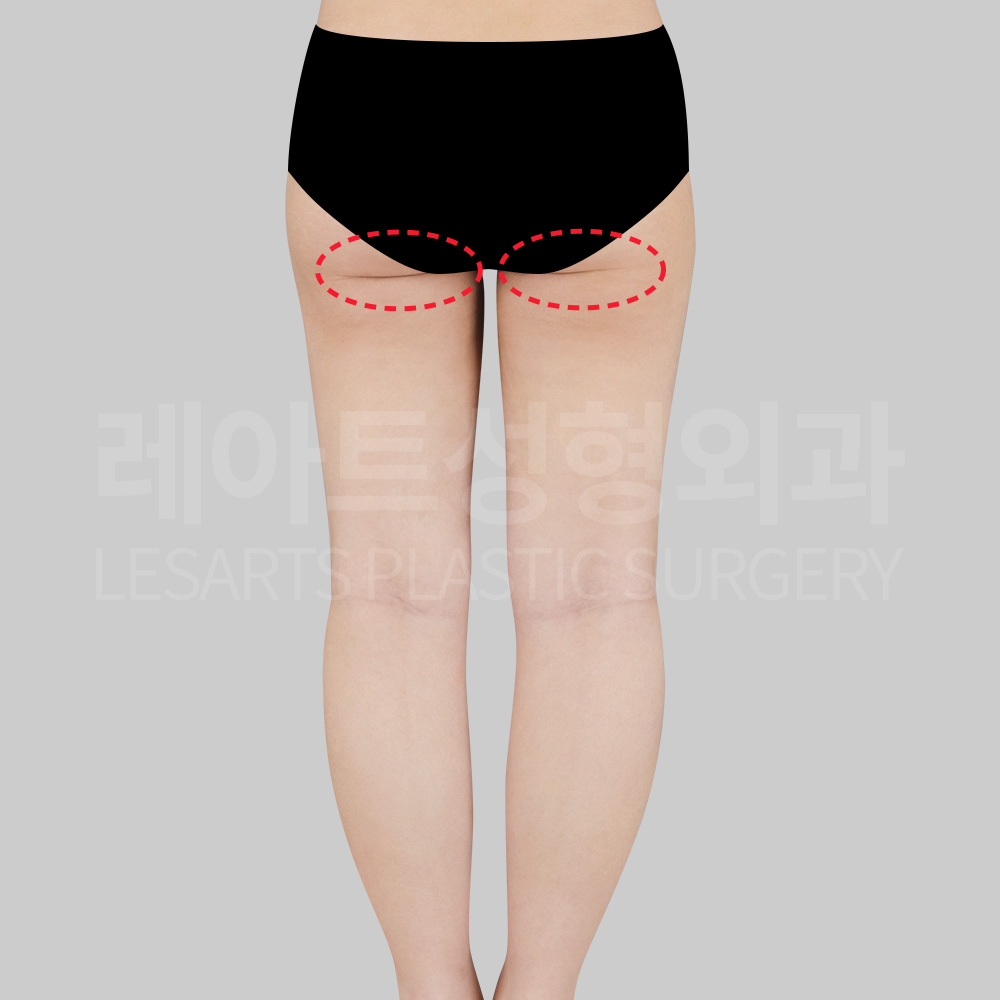
1) High-risk areas
for sagging and wrinkling
Upper inner thigh
and the area surrounding the hips
– Upper inner thigh:
This is one of the thinnest
and most delicate skin areas.
If fat is removed
too aggressively here,
the skin may wrinkle
like thin paper
or begin sagging downward.
– Area around the hips:
Because this region often contains
a large amount of fat,
aggressive fat removal
may leave excess skin behind,
causing overlapping folds,
sagging, and wrinkling.
2) Prevention strategies
for sagging and wrinkling
– Upper inner thigh:
A controlled thickness
of superficial fat
should be intentionally preserved
to support skin elasticity.
In addition,
delicate cannula techniques
that encourage natural skin adhesion
during surgery are essential.
– Saddlebags and outer hip connection area:
Rather than excessive superficial liposuction,
greater reduction
of the deeper fat layer
should be prioritized.
This helps prevent wrinkling
caused by uneven skin contraction,
while also smoothing
the transition line
between the hips
and the thighs
without visible contour step-offs.
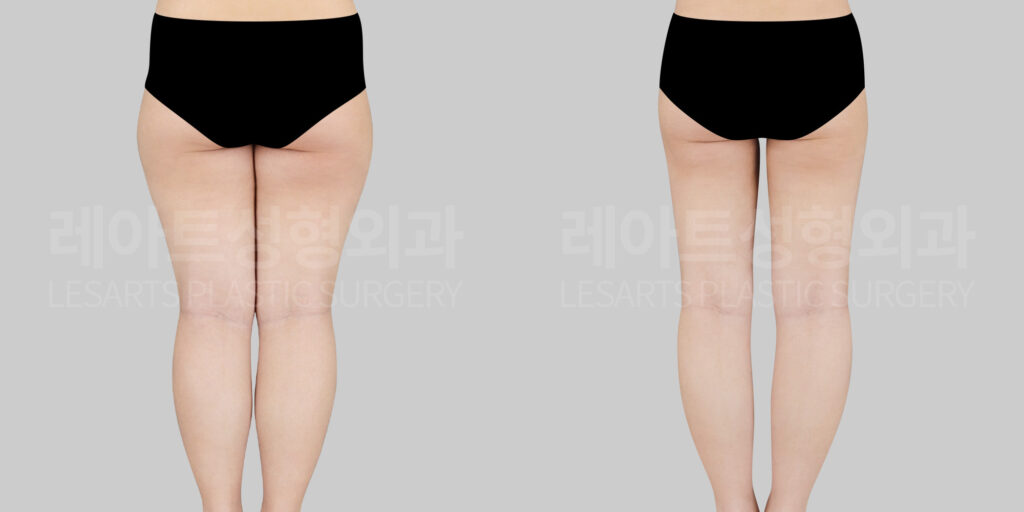
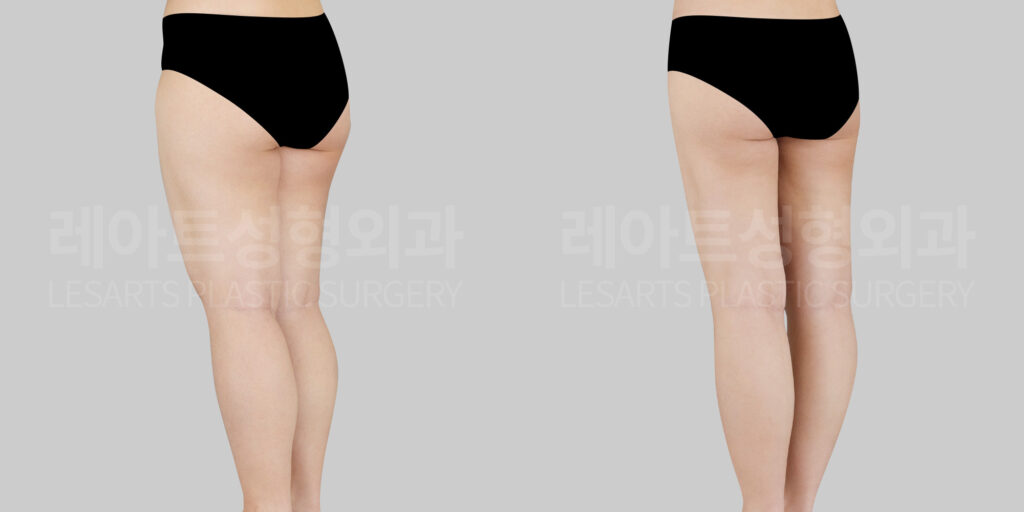
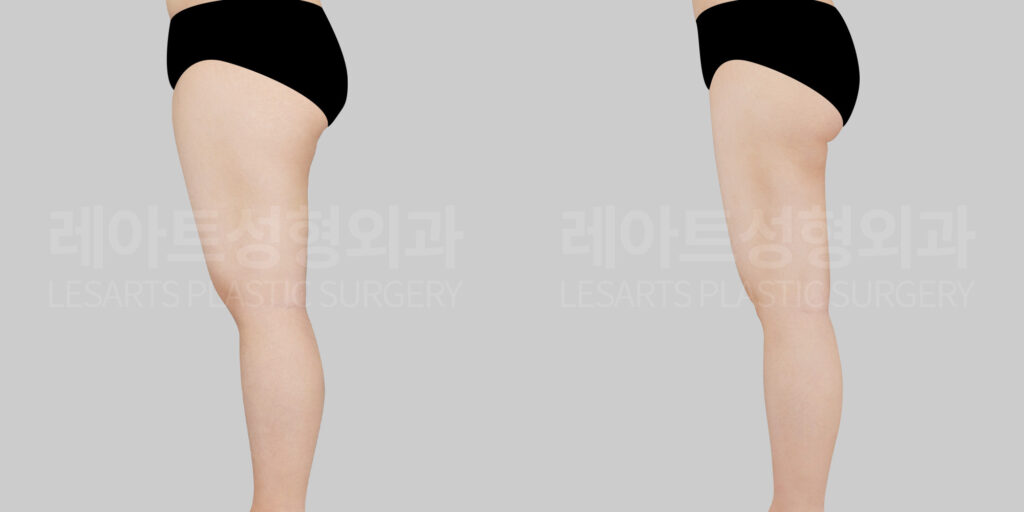
2. A real patient case:
5 months of transformation
through an 18 kg weight-loss journey
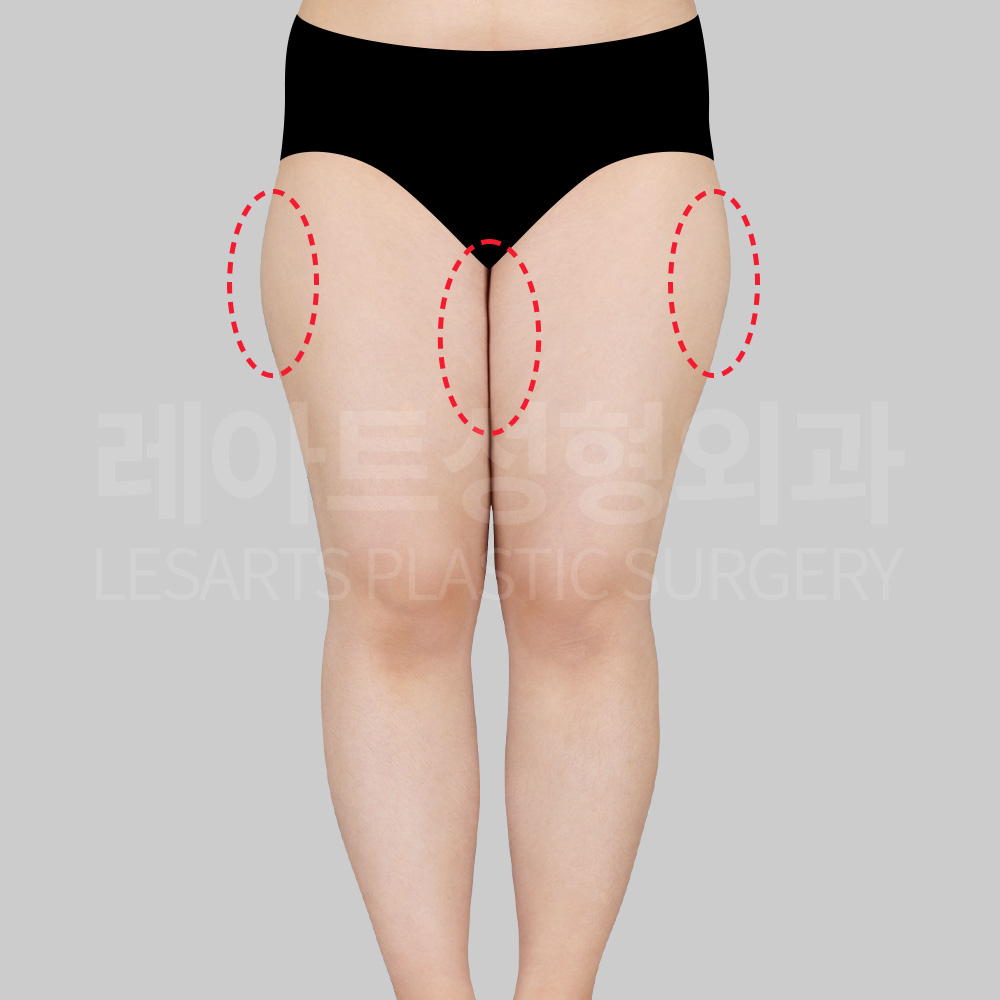
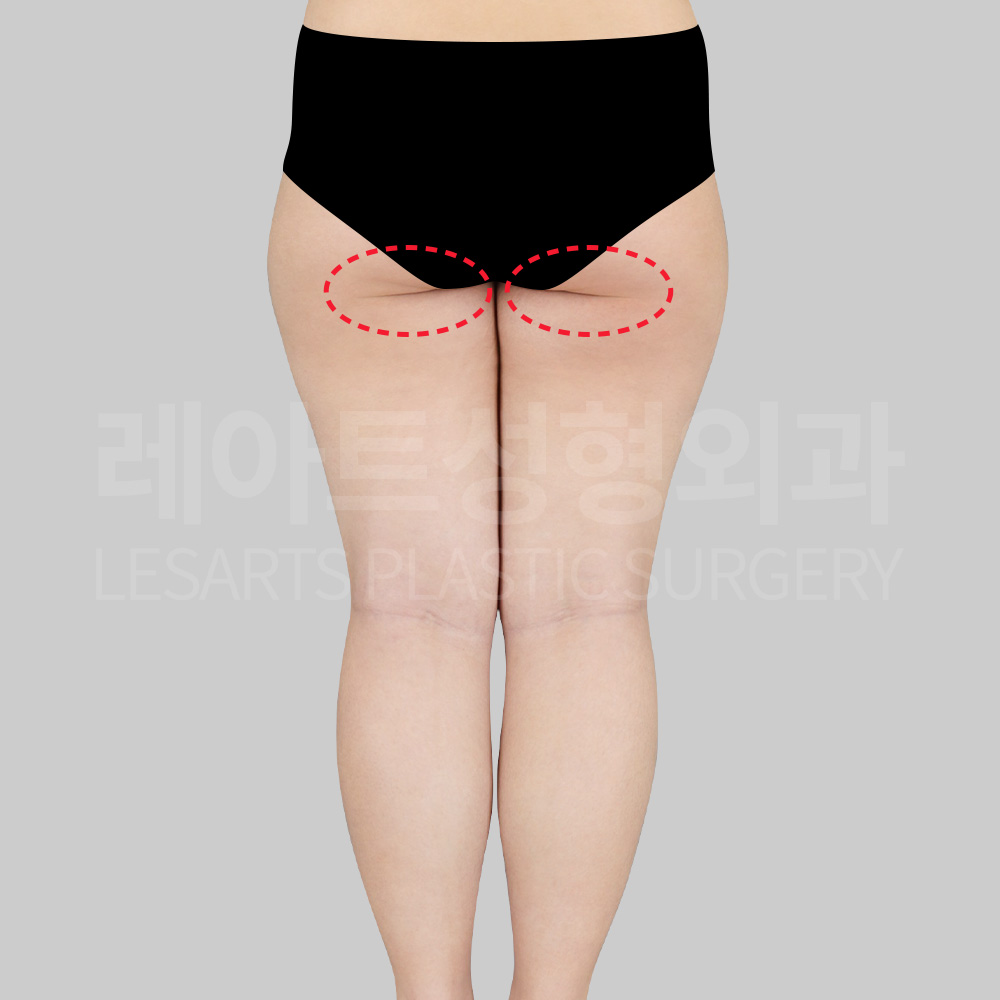
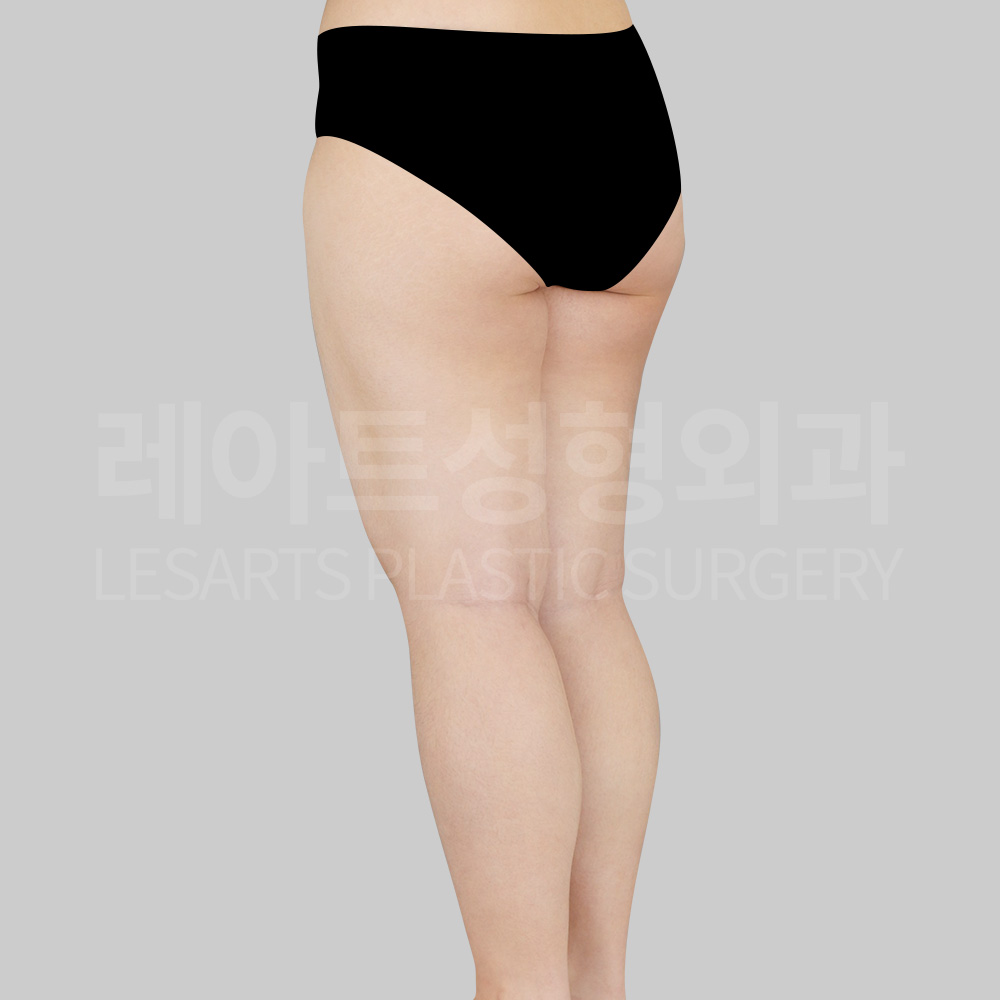
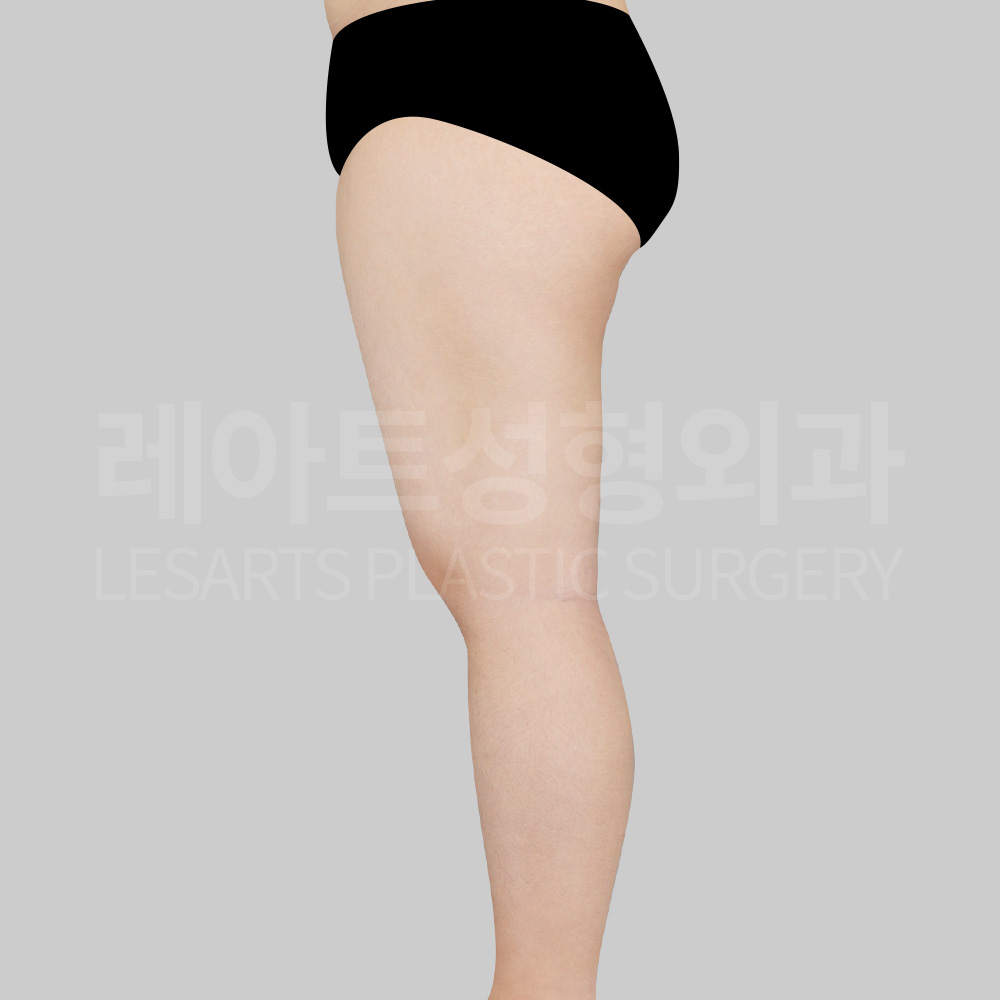
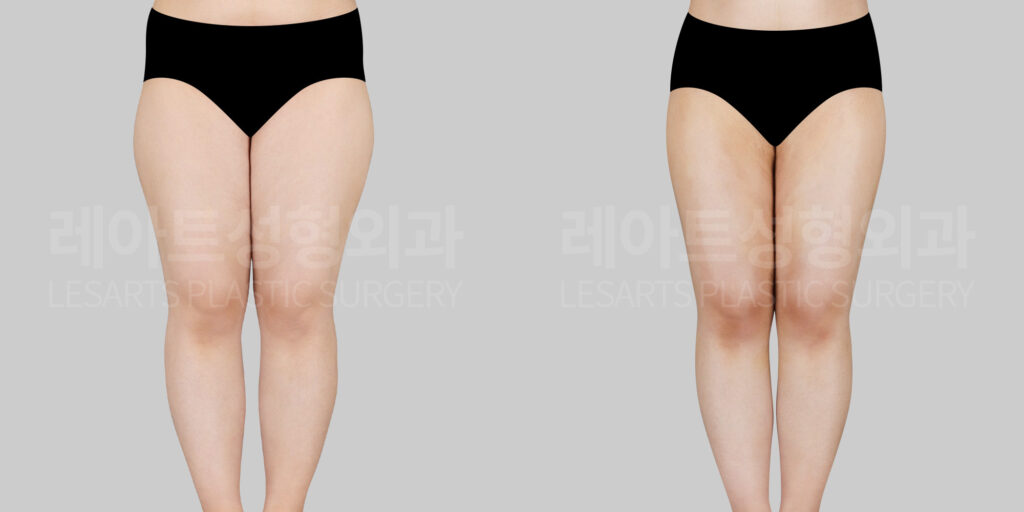
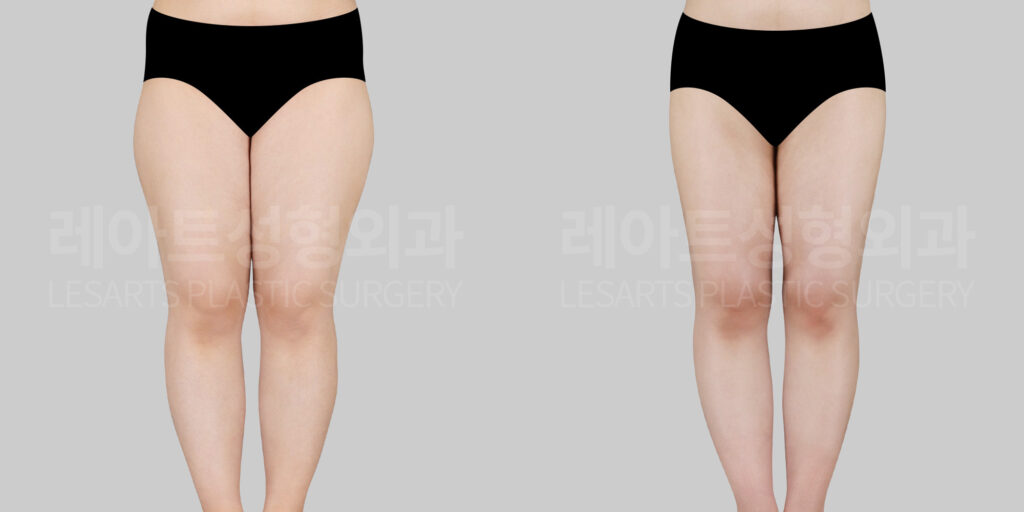
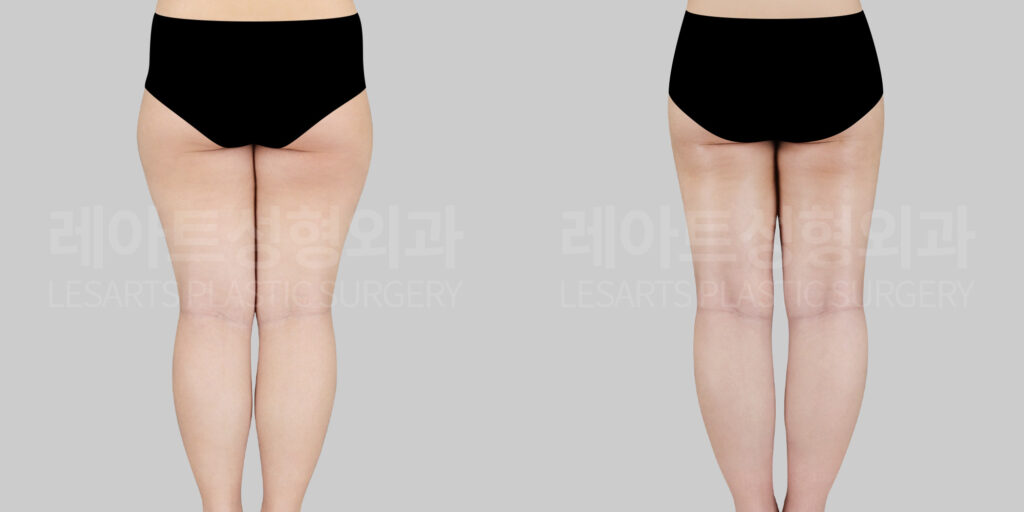
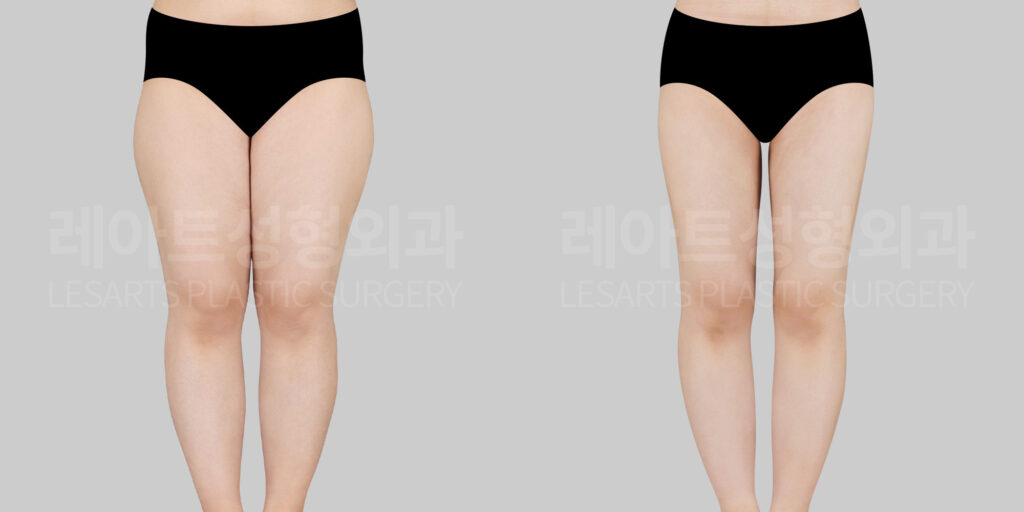
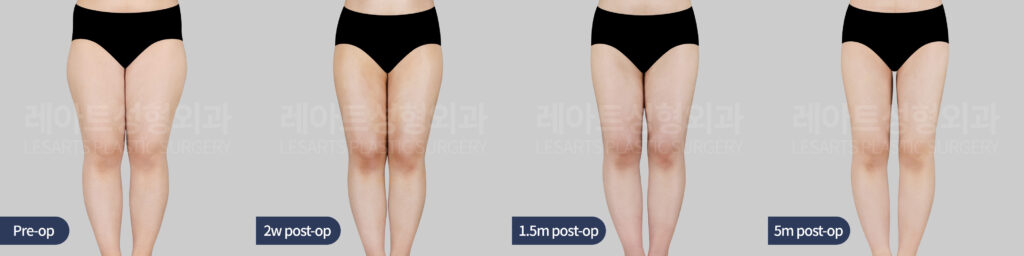
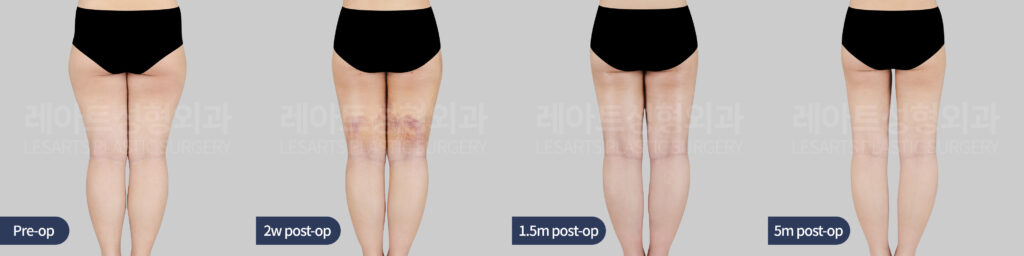
Age: Early 20s / 165 cm / 84 kg / BMI 30
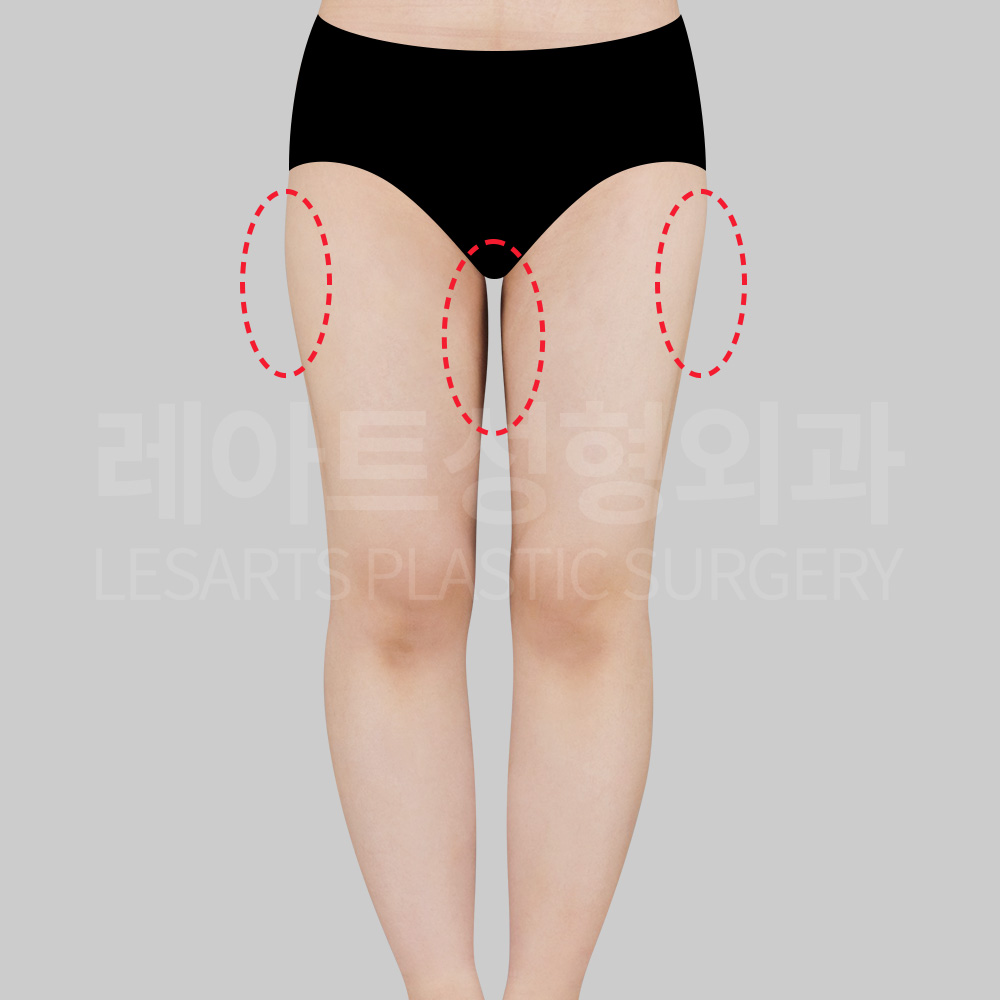
Pre-operative condition before thigh liposuction
Overall,
there was a significant amount
of fat distribution throughout the thighs.
In particular,
fat accumulation was concentrated
along the inner thighs,
as well as around the hips,
including the saddlebags area.
*Important considerations during
thigh liposuction surgery*
– Minimizing skin sagging
and wrinkling
in the upper inner thigh area
– Minimizing contour step-offs
and wrinkling
around the saddlebags area
2 Weeks After Thigh Liposuction for Lower Body Obesity — Lesarts Plastic Surgery
Large-volume thigh liposuction — Dr. Pyongrim Choi at Lesarts
2 weeks after thigh liposuction surgery
Although swelling and bruising
were still present at this stage,
it was already possible to confirm
that the friction
between the inner thighs
had significantly improved.
In addition,
the excessive volume
around the hip area
had become noticeably more refined.
Slimming the legs through thigh liposuction — Lesarts Plastic Surgery
Dieting after liposuction — Lesarts Plastic Surgery
1.5 months after thigh liposuction surgery
(5 kg weight loss)
As the swelling gradually decreases,
the thigh contour
begins to become more visible.
At this stage,
light cardio exercise
was introduced alongside recovery,
while carefully monitoring
the condition
of the skin elasticity.
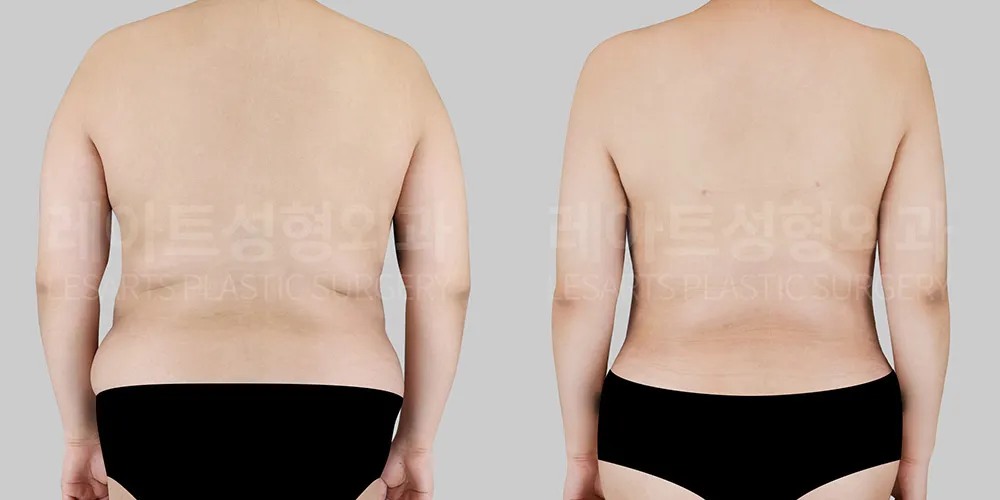
5-Month Before & After Comparison of thigh liposuction — Dr. Pyongrim Choi
Diet after liposuction — Dr. Pyongrim Choi