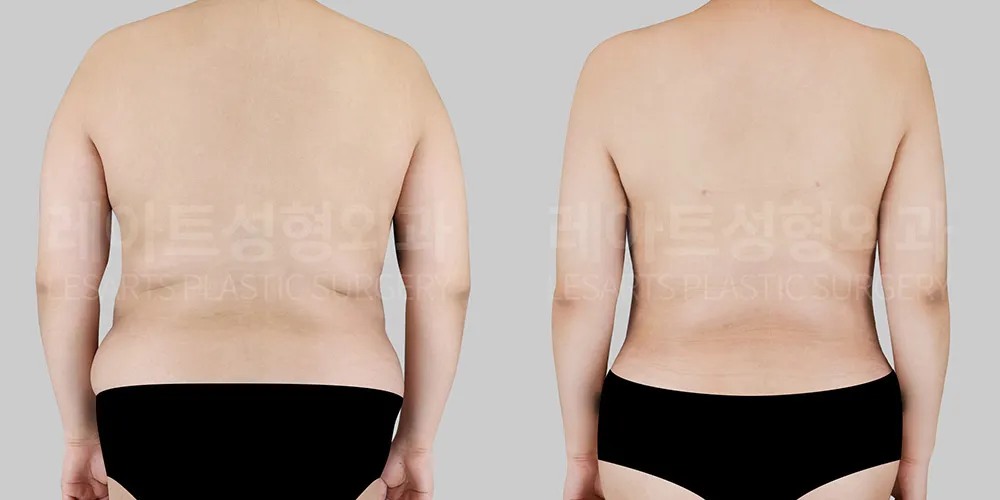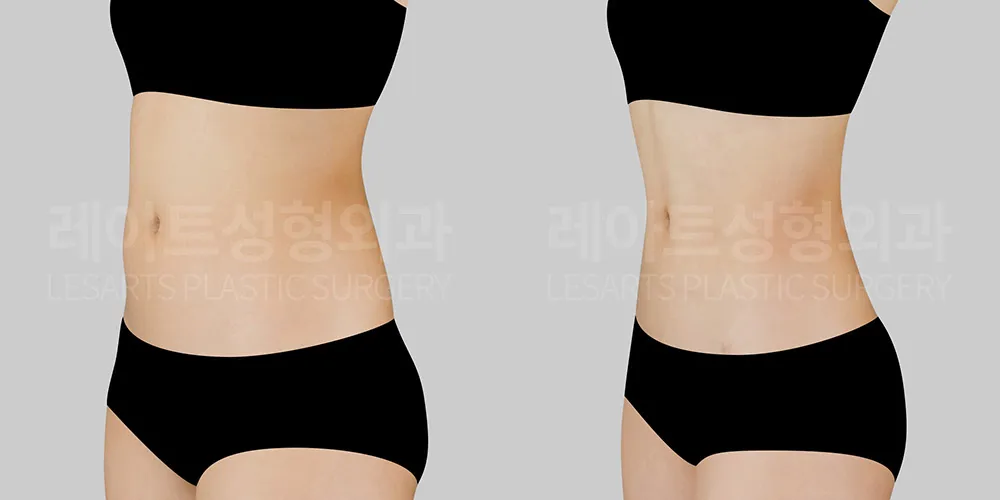
Thigh Liposuction: “It’s Only Been 2 Weeks?” Surprising Changes Just 2 Weeks After Surgery
Can you see noticeable changes just 2 weeks after thigh liposuction?
Yes. Although swelling is still present and the final result has not yet developed,
changes in the inner thigh gap, outer thigh contour,and overall thigh thickness may already be visible at 2 weeks.
Final results continue to refine as swelling decreases and the tissues stabilize over the following months.
One of the most common questions among people considering liposuction is,
“When will I start to notice a difference in my body shape after surgery?”
Patients planning thigh liposuction often expect
their legs to look slimmer immediately after surgery.
However, significant swelling and bruising can occur,
so the thighs may initially appear even thicker than before surgery.
After large-volume liposuction, major swelling may last
for 2–3 weeks or longer, while bruising can remain for about a month.
Even after that, residual swelling, firm areas known as bio-bond,
tissue adhesion, and the healing process continue.
It may take around 3 months,
and in some cases up to 6 months,
for the final contour to fully settle.
However, when following the recovery of actual liposuction patients,
noticeable changes in the thigh contour can sometimes be seen
as early as 2 weeks after surgery.
So, why can the new thigh line already become visible
just 2 weeks after liposuction?
1. Why Can Thigh Contour Changes Be Visible After Just 2 Weeks?
The outcome of liposuction is not determined simply by
“how much fat was removed.”
What matters more is which areas were treated,
at what tissue depth, how extensively fat was removed,
and how smoothly the treated areas transition into the surrounding contours.
The thighs have different fat distributions, skin thicknesses,
and amounts of fibrous tissue depending on the area.
Rather than simply removing as much fat as possible,
it is important to carefully design the areas that require reduction
and remove fat while minimizing unnecessary tissue damage.
Careful liposuction that minimizes unnecessary tissue trauma
while considering blood vessels and lymphatic circulation
between the skin and subcutaneous tissues
may help reduce postoperative swelling and recovery burden.
Ultimately, creating a natural contour is less about
“removing more fat” and more about
“removing fat precisely where it is needed.”
2. Postoperative Care Can Also Affect Swelling
Swelling and bruising are common during the early recovery period
after liposuction.
As the tissues continue to heal,
temporary firmness or unevenness may also develop.
Following the medical team’s instructions regarding compression garments,
appropriate movement and walking, and avoiding behaviors or foods
that may worsen swelling is therefore important during recovery.
However, swelling does not decrease
at the same rate for every patient.
Recovery can vary depending on the amount of fat, skin elasticity,
tissue condition, surgical extent, and individual healing speed.
For this reason, there is no need to directly compare
your own 2-week recovery with another patient’s results.
3. Changes 2 Weeks After Liposuction: An Actual Case
This case shows the before-and-after thigh appearance
of a woman in her early 20s
who is 160 cm tall and weighs 56 kg.
[Before Thigh Liposuction]


Before Thigh Liposuction
[Thigh Liposuction Before and After – 2 Weeks]
Since only 2 weeks have passed since surgery,
this cannot yet be considered the final result.
Nevertheless, a closer comparison of the photos
shows noticeable changes in the overall thigh contour.

Changes 2 Weeks After Thigh Liposuction – Lesarts Plastic Surgery

Thigh Liposuction Before and After (Immediately After Suture Removal) – Lesarts Plastic Surgery
1) A New Thigh Gap After Just 2 Weeks
Before surgery, excess fat on the inner thighs
created a wide area of contact when the legs were brought together.
However, just 2 weeks after surgery,
the reduced inner thigh volume has created
a noticeable new gap between the thighs.
It is important to consider the natural anatomical contours of the thighs
and selectively reduce volume in the necessary areas
to create a smooth and natural-looking thigh gap.

Changes Immediately After Thigh Liposuction – Dr. Pyeongrim Choi, Lesarts Plastic Surgery

Inner Thigh and Saddlebag Fat Reduction: 2-Week Comparison – Dr. Pyeongrim Choi, Lesarts Plastic Surgery
2) Smoother Saddlebag Line from the Hips to the Thighs
The second area to focus on is the saddlebag line,
which extends from below the hips to the outer thighs.
Before thigh liposuction, excess fat between the hips and thighs
protruded outward, making the lower body appear wider and heavier.
At 2 weeks after surgery, the protruding volume has decreased,
creating a smoother transition from the hips to the thighs.
Because the goal is to reduce unnecessary outer thigh fat
while preserving natural hip volume,
careful surgical planning is important when determining how much fat to remove and where.

Changes in Thigh Circumference After Thigh Liposuction – Dr. Pyeongrim Choi, Lesarts Plastic Surgery
3) Changes in the Anterior Thigh from the Side View
Finally, the side-view photos show
a noticeable reduction in anterior thigh volume.
The thighs appear slimmer not only from the front,
but also from the side, as the forward-projecting volume has decreased,
reducing the overall thickness of the thighs.
The contour seen at 2 weeks is not the final result.
As residual swelling gradually subsides
and the tissues continue to stabilize,
the current contour may become smoother and more natural over time.
Ultimately, a good liposuction result is not simply about
how much slimmer the thighs look immediately after surgery.
What matters is creating a natural, balanced contour
that continues to improve throughout the recovery process.
Lesarts Plastic Surgery Thigh Liposuction
See More Before-and-After Case Analyses
▼▼▼
At 2 weeks after liposuction,
swelling has not completely subsided,
and it is still too early to evaluate the final result.
However, with precise preoperative planning,
careful removal of the necessary fat,
and minimal unnecessary trauma to the surrounding tissues,
the direction of the new contour may already be visible within just 2 weeks.
Recovery speed varies from person to person,
so there is no need to directly compare your progress with someone else’s.
Seeing a visible change at 2 weeks is encouraging,
but what matters more is how the contour continues to become
smoother and more natural over time.
That is the true result to consider when evaluating liposuction.
FAQ
Q1. Is 2 weeks enough to see results after thigh liposuction?
Yes. Some patients may already notice visible contour changes at 2 weeks, although swelling and tissue firmness are still present.
The final result usually takes several months to develop.
Q2. Why can the thighs look thicker immediately after liposuction?
Postoperative swelling and bruising can temporarily make the thighs appear thicker than before surgery.
Major swelling may persist for 2–3 weeks or longer before gradually decreasing.
Q3. Can an inner thigh gap appear within 2 weeks after thigh liposuction?
Yes. When excess inner thigh fat is reduced, a visible gap may begin to appear even at 2 weeks.
The result depends on the patient’s anatomy, fat distribution, and surgical design.
Q4. Why is surgical design important in thigh liposuction?
Natural thigh contour depends on removing fat from the appropriate areas
while maintaining smooth transitions between the hips, outer thighs, inner thighs, and surrounding tissues.
Simply removing as much fat as possible does not necessarily create the best result.
Q5. When can the final results of thigh liposuction be evaluated?
The thigh contour usually continues to change as swelling decreases and the tissues heal.
Final results may take around 3 months, and in some cases up to 6 months, to become fully established.
▼ Visit Lesarts Plastic Surgery in Gangnam, Seoul, Korea ▼