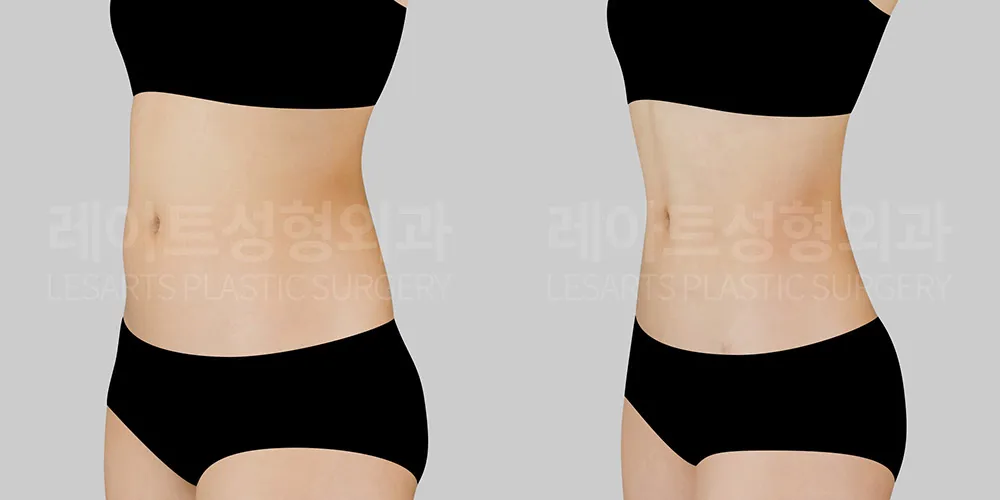
Liposuction for Severe Obesity – Can It Improve Upper-to-Lower Body Proportions?
Can liposuction improve body proportions in patients with severe obesity?
Liposuction can selectively reduce areas with significant subcutaneous fat accumulation,
helping decrease upper-body volume and improve the balance between the upper and lower body.
However, the degree of change varies depending on visceral fat, skin elasticity, muscle mass, and skin laxity.
When consulting with women with severe obesity,
many describe their main concern simply as having gained a significant amount of weight overall.
However, a closer evaluation of the body shape often reveals another issue
beyond the number on the scale.
The balance between the upper and lower body may be noticeably disproportionate.
In some patients, excessive volume in the upper body, arms, back, and abdomen
can make the pelvis and lower body appear relatively narrow.
In others, fat may be concentrated more heavily in the lower body,
creating a more bottom-heavy body shape compared with the upper body.
In particular, when the upper body carries significantly more volume,
the overall body can appear larger and heavier than the actual weight might suggest.
In these cases, the goal of liposuction is not simply to reduce upper-body volume.
It is also important to improve the proportions between the upper and lower body
and create a smoother, more continuous overall silhouette.
Today, we will look at the case of a woman in her late 20s
who was 167 cm tall and weighed 95 kg.
Through this case, we will explain how upper-body liposuction was planned for a patient with severe obesity
and how the overall balance between the upper and lower body was addressed.
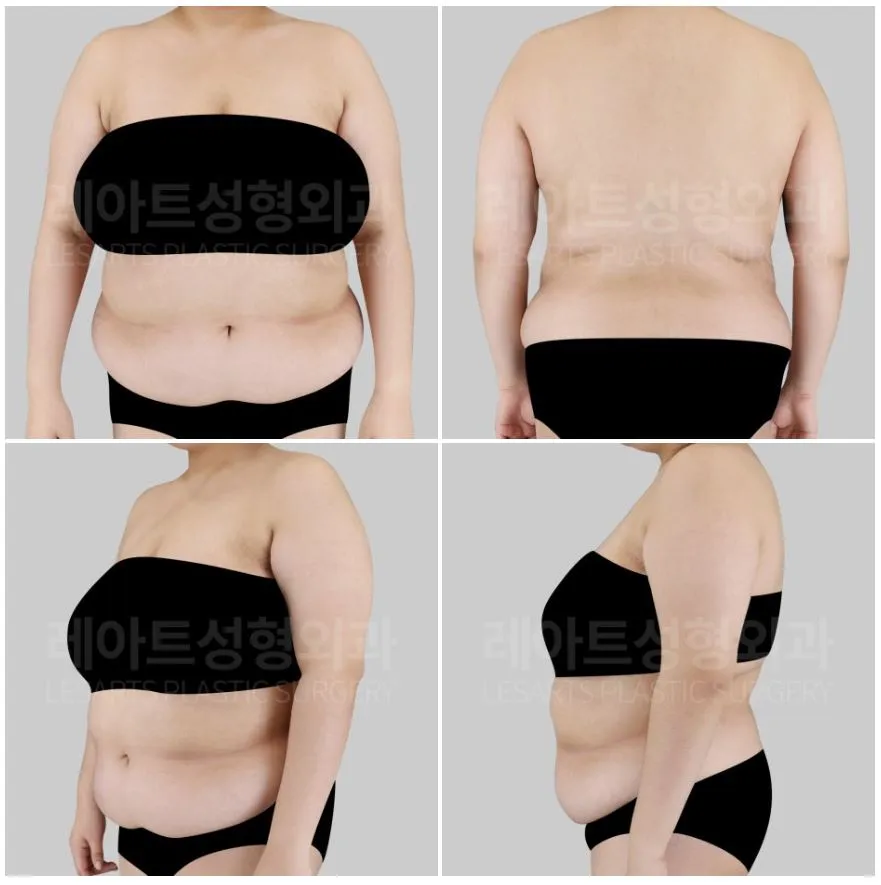
1. The Main Concern: An Upper Body That Appeared Larger Than Her Weight Suggested
The patient was 167 cm tall and weighed 95 kg,
with severe obesity and a relatively high amount of overall body fat.
However, her main concern during consultation
was not simply reducing her body weight.
Considering her overall body proportions, the abdomen and upper body appeared particularly large,
so the primary goal was to make the upper body appear as compact as possible
while creating a natural transition into the lower body.
2. Stage One: Treating the Entire Arms, Surrounding Areas, and Back
For the arms, it is important to evaluate the overall contour
rather than simply removing fat from the inner upper arms.
Improving the outer arm contour and reducing sagging fullness were important within the arms themselves,
while liposuction of the accessory breast area, underarms, and scapular region
helped reduce volume around the arms.
The back and upper-back hump were also treated
to reduce the overall upper-body volume when viewed from behind.
In liposuction for patients with severe obesity,
the areas that are treated together can be just as important
as the amount of fat removed.
3. Two Weeks Later: Full Abdominal Liposuction to Reduce Central Upper-Body Volume
Two weeks after the arm and back procedures,
the patient underwent full abdominal liposuction.
The abdominal procedure focused on three main goals:
✔ Reducing the forward projection of the abdomen
✔ Contouring the flanks and waistline
✔ Improving the transition from the upper body to the pelvis
In patients with a higher body weight, abdominal projection
should not be assumed to result entirely from subcutaneous fat.
Several factors can contribute, including visceral fat, abdominal wall structure, posture,
abdominal muscles, and the condition of the skin.
Liposuction primarily removes subcutaneous fat beneath the skin.
Therefore, it cannot completely correct abdominal projection
caused by visceral fat pushing outward from within the abdomen.
This limitation should be clearly explained before surgery.
However, when a significant amount of subcutaneous fat is present,
appropriately reducing fat from the front abdomen and flanks
can still noticeably improve abdominal volume and the width of the torso.
Fat grafting was also performed
to add volume to the relatively narrow-looking pelvic area.
Along with reducing upper-body volume, creating a natural transition between the upper and lower body
was an important part of the overall surgical plan.
In other words, the design focused on reducing upper-body volume, smoothing the waistline,
supplementing deficient pelvic volume, and creating a more natural transition into the lower body.
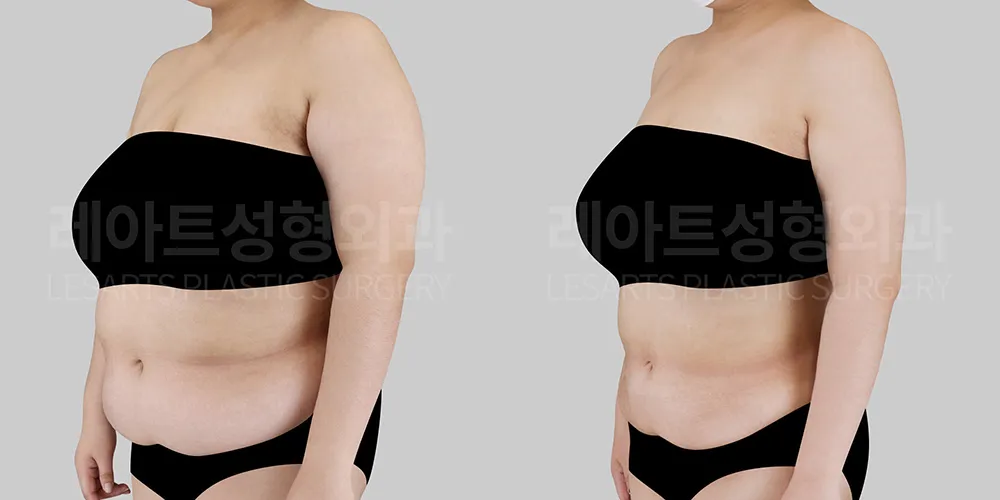
[8 Months After Arm and Abdominal Liposuction]
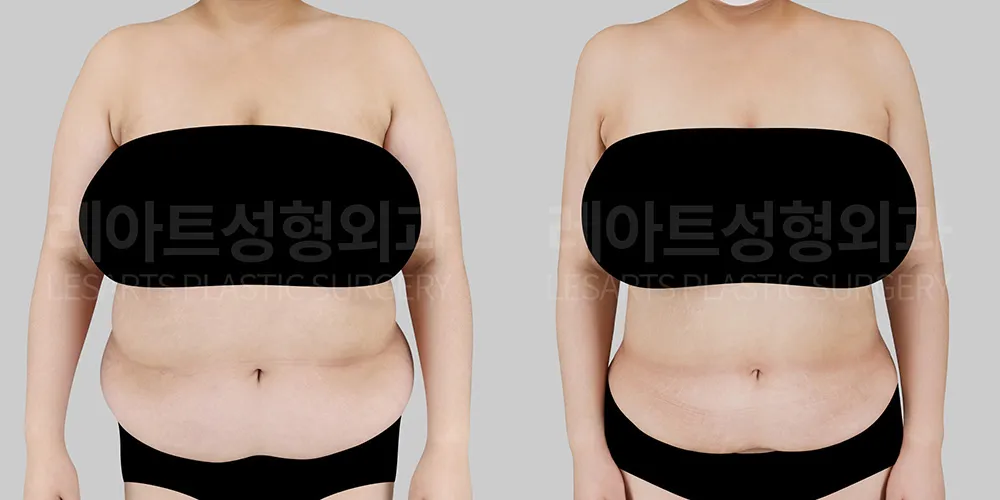
Upper-Body Liposuction Before and After in a Patient with Severe Obesity – Dr. Pyeongrim Choi, Lesarts
1. Arms
After surgery, the outward bulging contour of the upper arms was reduced,
and the surrounding areas were also treated to create a smoother overall line.
As a result, not only did the arms appear narrower,
but the overall volume of the upper body was also noticeably reduced.
In this case, rather than aggressively thinning the subcutaneous fat layer,
the procedure focused on improving the contour within a safe range
without excessively emphasizing skin sagging or wrinkles.
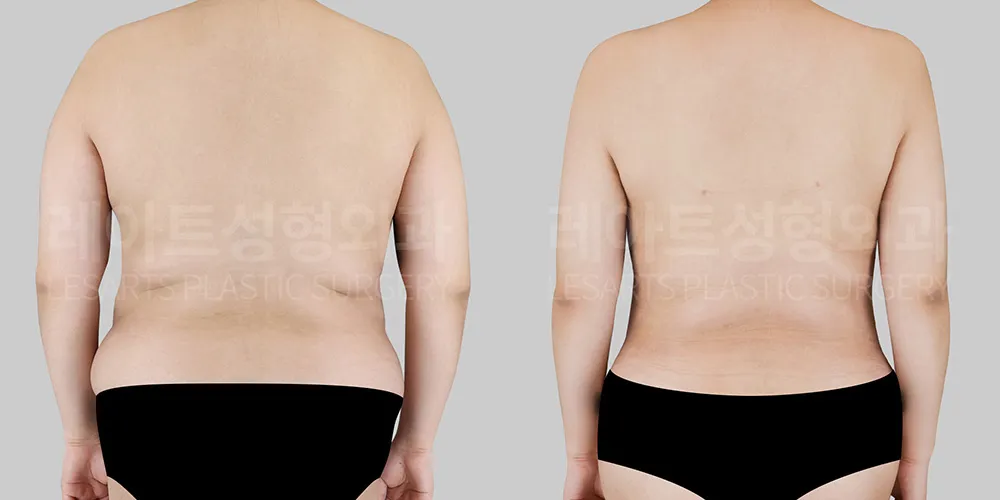
Before and After Arm, Abdominal, and Back Liposuction in a Patient with Severe Obesity – Dr. Pyeongrim Choi, Lesarts
2. Back
The back is also an important area
that contributes significantly to the overall size of the upper body.
By contouring the entire back along with the upper-back hump,
the volume of the upper body was reduced when viewed from behind,
while the transition between the arms and back became smoother.
As a result, the overall body appeared more compact
not only from the front but also from the back.
Effects of Upper-Body Liposuction in a Patient with Severe Obesity – Dr. Pyeongrim Choi, Lesarts Plastic Surgery
Before and After Arm and Abdominal Liposuction – Dr. Pyeongrim Choi, Lesarts Plastic Surgery
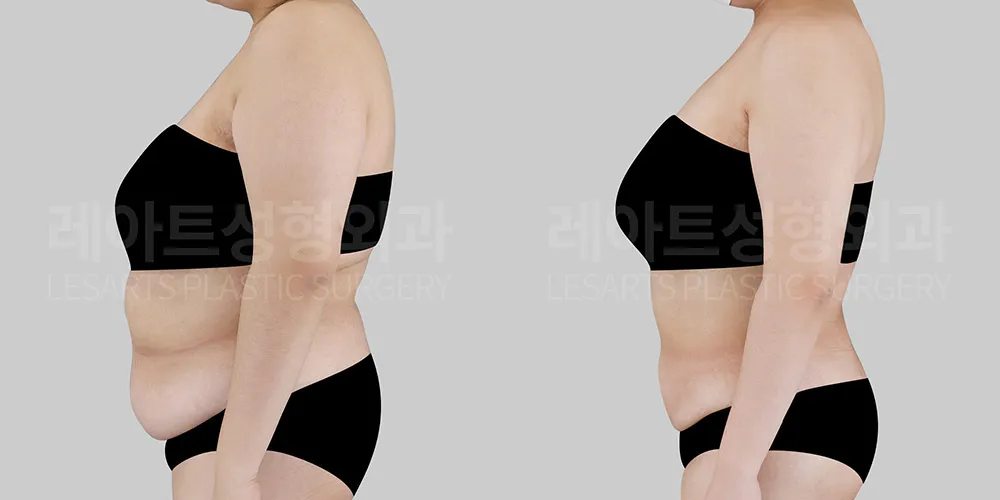
3. Abdomen
For the abdomen, it is important to evaluate the changes
not only from the front but also from the side.
Before liposuction, the combination of a protruding abdomen and excess flank volume
made the entire upper body appear thicker.
After surgery, the abdominal volume was reduced and the flanks became more defined,
resulting in a noticeable reduction in the front-to-back width of the torso
when viewed from the side.
Because liposuction cannot remove abdominal projection caused by visceral fat,
achieving a completely flat abdomen may not be a realistic goal for patients with severe obesity.
Instead, the goal is to reduce the external volume created by subcutaneous fat
and improve the overall abdominal contour and body silhouette.
Changes in Thigh Circumference After Thigh Liposuction – Dr. Pyeongrim Choi, Lesarts Plastic Surgery
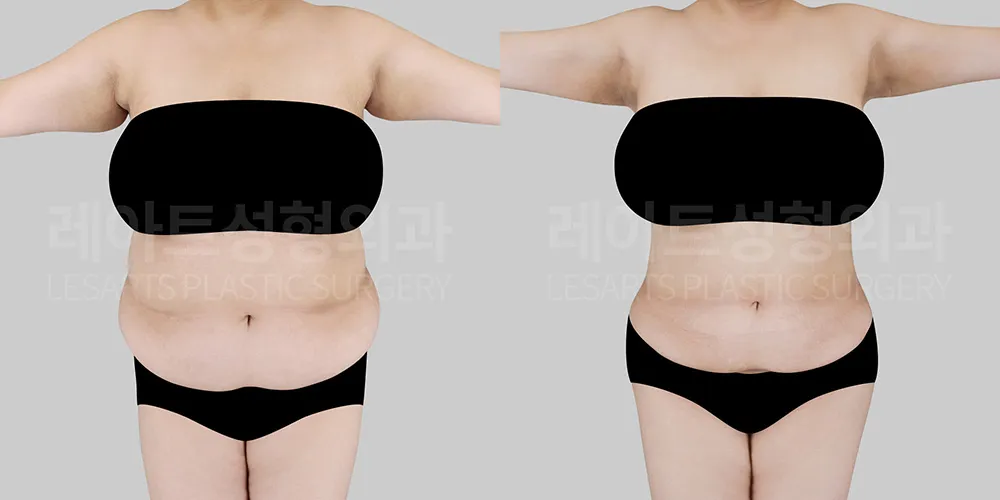
4. Waist and Pelvis
From the front, reducing the volume of the abdomen and flanks
created a smoother transition from the waist to the pelvis.
The goal is not simply to make the waist as narrow as possible,
but to reduce the width of the upper body and create balanced proportions
that transition naturally into the pelvis and lower body.
In this case, the entire arms, surrounding arm areas, back, and abdomen were treated in stages,
while fat grafting was used to supplement areas of deficient pelvic volume.
This created a change focused on improving overall body proportions and silhouette,
rather than simply reducing body weight.
Ultimately, liposuction is not a procedure intended simply to change the number on the scale.
Rather, it selectively reduces areas where excess fat is concentrated
to reshape overall body proportions and improve the silhouette.
For patients with severe obesity in particular,
the goal may be to make the overall body appear noticeably less bulky
and create a more compact-looking physique relative to the actual body weight.
However, the degree of change achievable with liposuction varies from person to person
depending on factors such as skin elasticity, the proportion of subcutaneous and visceral fat,
muscle mass, and the degree of skin laxity.
The appropriate surgical areas and timing should therefore be determined
through an individualized consultation and evaluation.
FAQ
Q1. What was the main goal of liposuction in this case?
The goal was not simply to reduce body weight,
but to decrease excessive upper-body volume and create a smoother transition
between the upper body, waist, pelvis, and lower body.
Q2. Which areas were treated with liposuction?
The patient underwent staged liposuction of the arms, surrounding arm areas, back, and abdomen.
These areas were treated together to reduce overall upper-body volume
and create a more balanced silhouette.
Q3. Can abdominal liposuction remove visceral fat?
No. Liposuction primarily removes subcutaneous fat beneath the skin.
Abdominal projection caused by visceral fat cannot be completely corrected with liposuction,
so this limitation should be considered when planning surgery.
Q4. Why was fat grafting performed on the pelvis?
The pelvis appeared relatively narrow compared with the upper body.
Fat grafting was used to supplement deficient pelvic volume
and create a smoother transition from the waist to the lower body.
Q5. Can liposuction make the abdomen completely flat in patients with severe obesity?
Not necessarily. Abdominal shape can also be influenced by visceral fat, the abdominal wall, posture, muscles, and skin condition.
The realistic goal is to reduce volume caused by subcutaneous fat
and improve the overall abdominal contour and body proportions.
▼ Visit Lesarts Plastic Surgery in Gangnam, Seoul, Korea ▼