Gynecomastia surgery in Seoul: is June a good time for surgery? 2-week recovery results
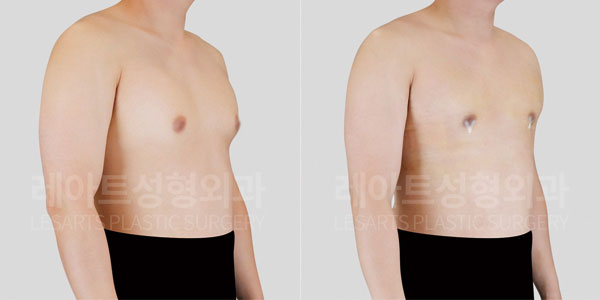
Patient Registration Info
| Age | Weight | Height | BMI |
|---|---|---|---|
|
30s |
83kg |
177cm |
26 |
Surgical site
Surgical area: Gynecomastia | Grade 2-A
Even when experiencing
chest protrusion suggestive of gynecomastia,
some patients spend years debating
the timing of surgery
rather than seeking
an accurate diagnosis.
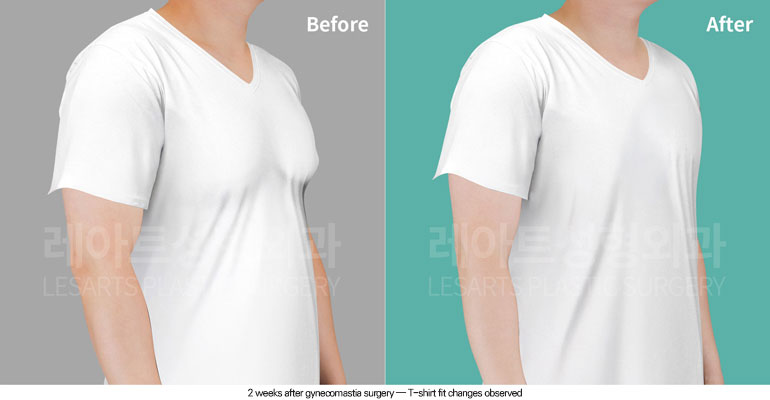
As the weather becomes warmer,
the prominence of the chest
often becomes more noticeable
whenever wearing short-sleeved shirts
or thin T-shirts.
However, concerns regarding
the need to wear a compression garment
and the post-operative recovery process
can make patients hesitant
to proceed with treatment,
leading many to postpone surgery.
In this post,
we will review the early changes
that become visible immediately after
gynecomastia surgery,
as well as the expected recovery process,
which may help patients establish
an appropriate consultation
and treatment plan.
[Gynecomastia Surgery Patient Information]
Age: Mid-30s
Height / Weight: 177 cm / 83 kg
Diagnosis: Mixed Gynecomastia, Simon Grade 2A
The patient presented in this case
was in his mid-30s
and visited Lesarts Plastic Surgery
to seek treatment for
gynecomastia symptoms
that had first developed
during adolescence.
He had experienced persistent stress
in daily life due to
the enlarged appearance of the chest,
along with the presence of
a firm palpable mass
beneath the areola.
Because these concerns
continued to affect his confidence
and quality of life,
the patient ultimately decided
to undergo surgical treatment.
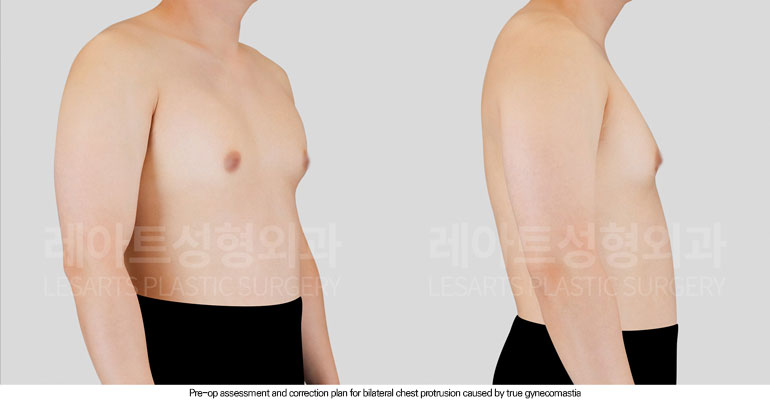
On physical examination,
the patient demonstrated
a visibly enlarged and protruding chest contour,
which was readily apparent
even on visual inspection.
Based on the Simon Classification,
the condition was assessed as
Simon Grade 2A gynecomastia.
Ultrasound evaluation confirmed
the presence of hypertrophied glandular tissue
beneath both areolae,
supporting the diagnosis of
true glandular overgrowth.
In addition,
fat deposits along
the lower chest
and lateral chest regions
were also contributing to
the overall chest volume
and contour irregularity.
For this reason,
the patient was diagnosed with
mixed gynecomastia,
in which both glandular proliferation
and excess fatty tissue
play a role in the chest deformity.
Accordingly,
it was explained that
optimal correction would require
a combination of gland excision,
chest liposuction,
and tissue repositioning
to achieve a flatter,
more masculine,
and naturally contoured chest appearance.
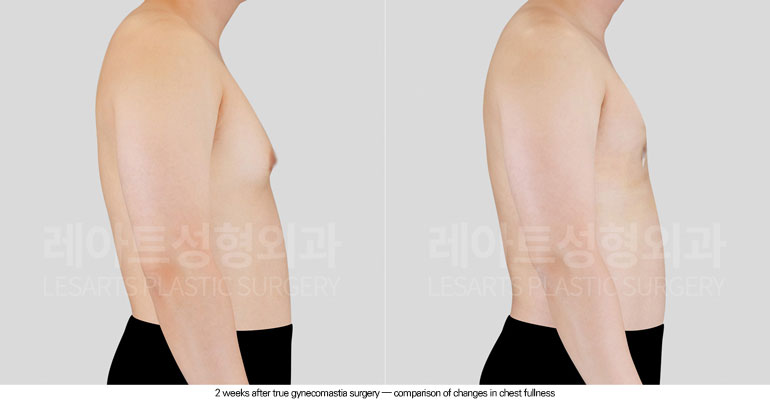
Let us now review
the 2-week post-operative photographs
to evaluate the early surgical outcome
and assess the patient’s initial stage of recovery.
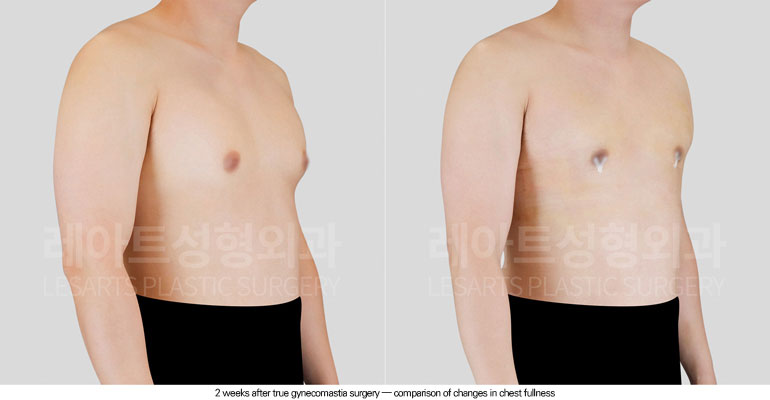
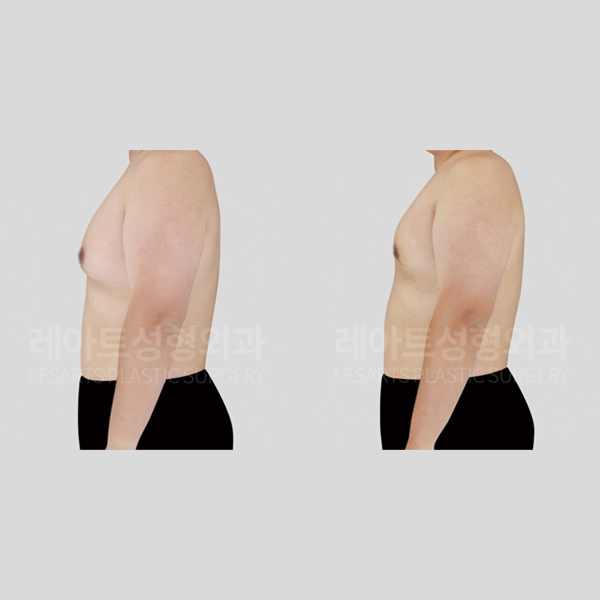
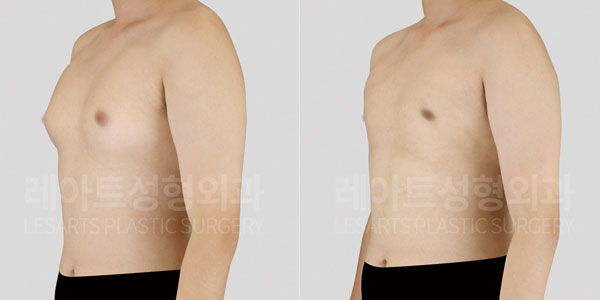
At 2 weeks after gynecomastia surgery,
patients typically return to the clinic
for suture removal.
Because the glandular tissue
and excess fat that were physically contributing
to the enlarged chest volume
have already been removed,
a reduction in chest size
can usually be appreciated immediately
at this stage of recovery.
However,
bruising, swelling,
and BioBond-related tissue firmness
still require additional time to resolve,
and stabilization of the skin
and sensory changes also occurs gradually
over the following weeks and months.
Overall,
the previously enlarged and protruding
central chest contour,
as well as the prominence of
the nipples and areolar region,
has been significantly improved,
creating a flatter,
more balanced,
and masculine chest appearance
even during this early phase of recovery.
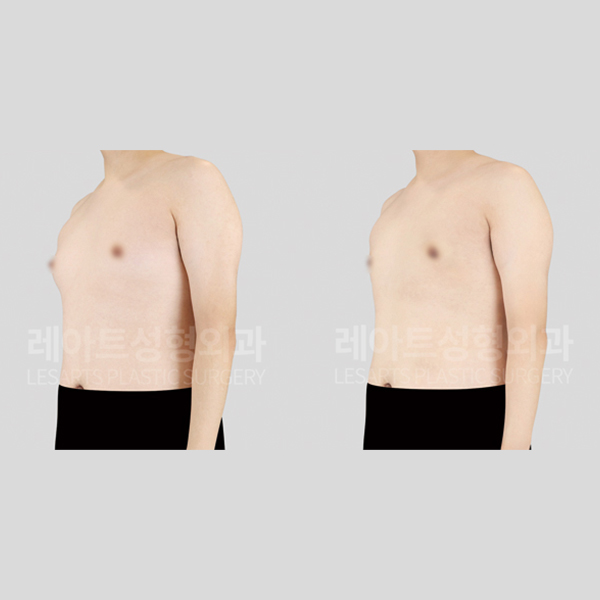
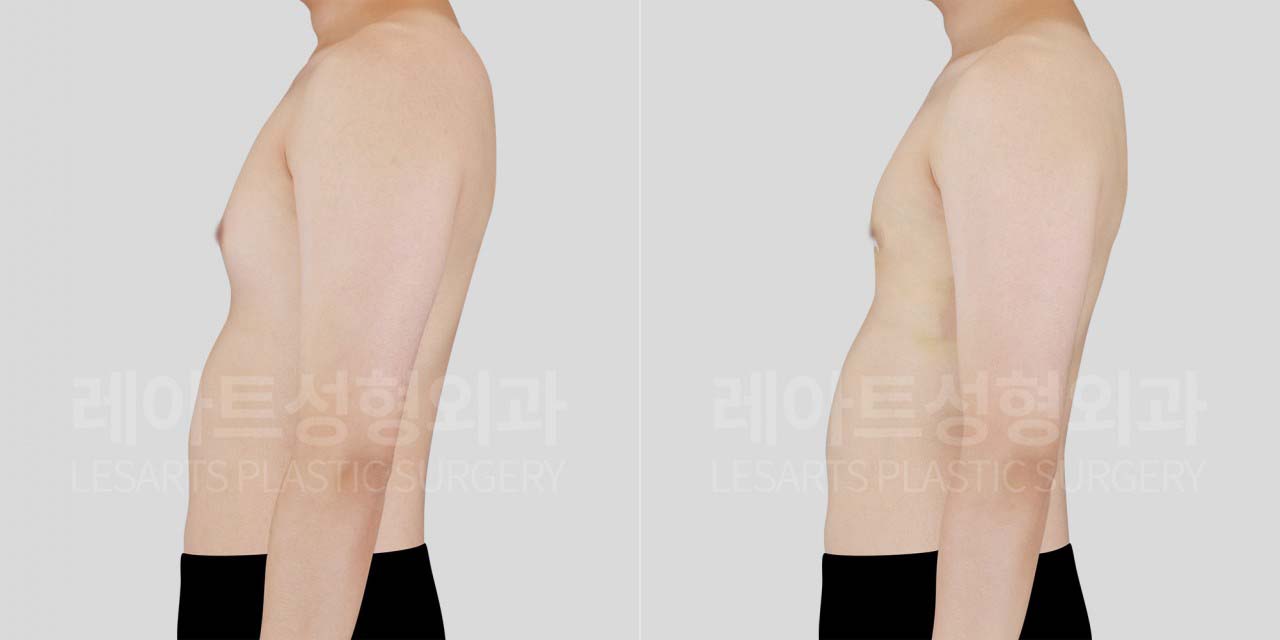
The degree of improvement
is equally impressive
when viewed from the side profile.
Following gynecomastia surgery,
the previously protruding chest contour
and prominent nipples
have been naturally refined,
creating a flatter,
more masculine upper body appearance.
In particular,
correction of the previously puffy
areolar contour
has also resulted in
a noticeable reduction in
the apparent size of the areolae.
Even when taking into consideration
the expected swelling
and BioBond-related tissue firmness
present during the early recovery period,
the improvement in gynecomastia symptoms
is already clearly appreciable
at this stage of healing.
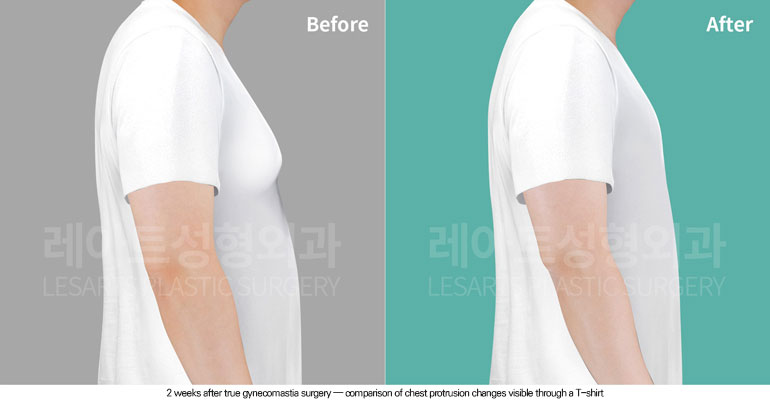
The patient also shared that
the disappearance of the enlarged chest appearance
and protruding nipples,
which had been a constant concern
whenever getting dressed,
resulted in a high level of satisfaction
from the very early post-operative period.
In particular,
the patient reported that
the fit of short-sleeved shirts
and thin T-shirts,
which had been a major source of stress
for many years,
improved naturally following surgery,
leading to a noticeable increase
in self-confidence.
After gynecomastia surgery,
patients are generally advised
to wear a compression garment
continuously for the first 2 weeks,
followed by approximately half-day wear
for an additional period of recovery.
Because most individuals spend
a significant portion of their day
indoors, in private vehicles,
or using public transportation,
many patients find that
the compression garment causes
far less inconvenience
than they had initially anticipated.
In fact,
because the improvement in chest contour
is often immediately noticeable,
many patients comment that
the recovery period seemed to pass
much more quickly than expected.
For those who are concerned about
undergoing surgery during the summer months,
we believe that seeking consultation sooner
rather than continuing to worry
can be beneficial.
A thorough discussion regarding
treatment options,
the expected recovery process,
and appropriate timing for surgery
can help patients make a more informed decision
and proceed with greater confidence.
#Gynecomastia
#GynecomastiaSurgery
#GynecomastiaBeforeAfter
#MixedGynecomastia
#SimonGrade2A
#GlandExcision
#ChestLiposuction
#GynecomastiaRecovery
#MaleChestContouring
#LesartsPlasticSurgery
#BestGynecomastiaClinicInKorea
#BestMaleChestContouringClinicInKorea