Gynecomastia surgery in Seoul: from hiding the chest to standing confidently after surgery
Patient Registration Info
| Age | Weight | Height | BMI |
|---|---|---|---|
|
20s |
77kg |
179cm |
27 |
Surgical site
Surgical area: Gynecomastia | Grade 2-A
Gynecomastia symptoms can generally be classified
into three categories depending on
the underlying cause of chest enlargement.
The first is pseudogynecomastia, caused primarily
by fat accumulation around the chest
associated with weight gain.
The second is true gynecomastia, in which
hypertrophied glandular tissue beneath the nipples
and areolae becomes the main cause
of increased chest volume.
The third is mixed gynecomastia, which represents
a combination of glandular proliferation
and excess fatty tissue within the chest.
Although these conditions often share
the appearance of a large, protruding chest,
the optimal surgical approach can vary
depending on the underlying cause.
For this reason, obtaining an accurate diagnosis
through a comprehensive evaluation
is an essential part of treatment planning.
It is also important to evaluate
not only glandular tissue and body fat,
but also medications, underlying diseases,
and skin elasticity before surgery.
These factors may significantly influence
both surgical planning and post-operative management,
making thorough assessment extremely important.
The patient discussed in this post
had experienced gynecomastia symptoms
since middle school and adolescence.
He also reported a period
of significant weight gain in the past,
which further increased his concerns
about chest enlargement.
Although he later lost weight
and maintained a regular exercise routine,
the enlarged chest appearance and puffiness
around the nipples remained unchanged.
Because these symptoms persisted despite
weight loss and strength training,
the patient ultimately visited our clinic
to pursue surgical treatment.
In the following sections,
we will review the changes observed
after gynecomastia surgery, along with
the patient’s recovery process and outcomes.
[Gynecomastia Surgery Patient Information]
Age: Late 20s
Height / Weight: 173 cm / 79 kg
Diagnosis: Simon Grade 2A Gynecomastia
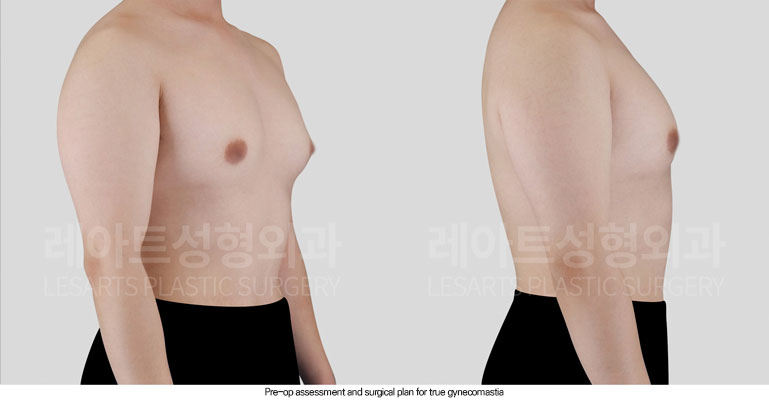
During the consultation,
the patient’s chest demonstrated
prominent protrusion centered around
the nipples and areolae.
Overall chest volume was also enlarged,
and the condition was diagnosed as
true gynecomastia, corresponding to
Simon Grade 2A classification.
Ultrasound examination confirmed
the presence of hypertrophied
glandular tissue beneath
both nipples and areolae.
Fortunately, the patient’s skin elasticity
was well preserved,
and there was no evidence
of chest ptosis.
Surgery was performed using
a combination of gland excision,
chest liposuction, and
tissue repositioning techniques.
The procedure was designed
to remove the primary cause
of gynecomastia symptoms while
creating a natural chest contour.
Through the following
before-and-after gynecomastia photographs,
let us take a closer look at
how the upper body has changed.
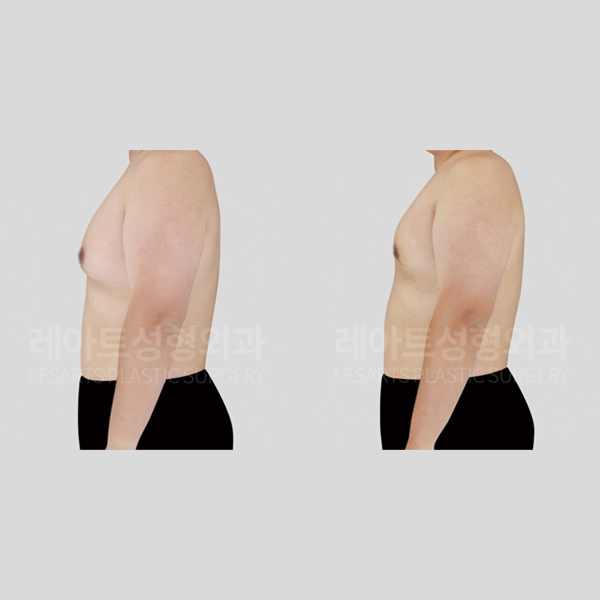
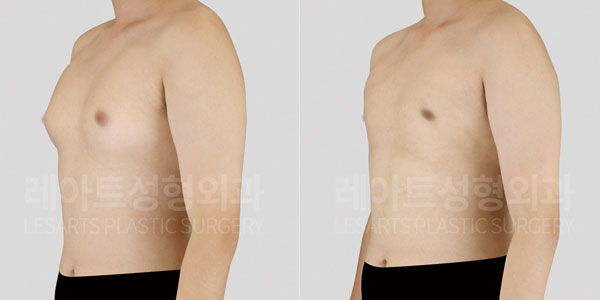
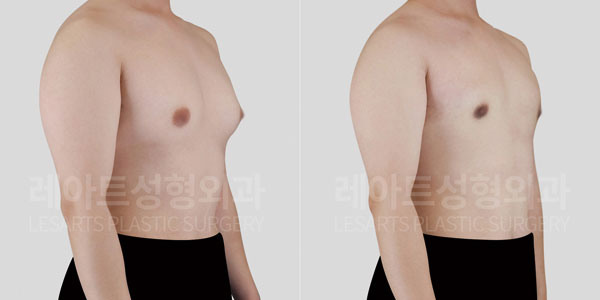
When comparing the
before-and-after gynecomastia photographs,
a clear improvement can be appreciated.
Before surgery, the areolae appeared
significantly enlarged and protruded outward,
whereas at 2 months post-operatively,
the excess fullness has noticeably decreased.
As a result,
the contour of the anterior chest
appears smoother, more balanced,
and naturally masculine.
The previously puffy appearance
of the areolar region
has also improved considerably,
creating a flatter chest silhouette.
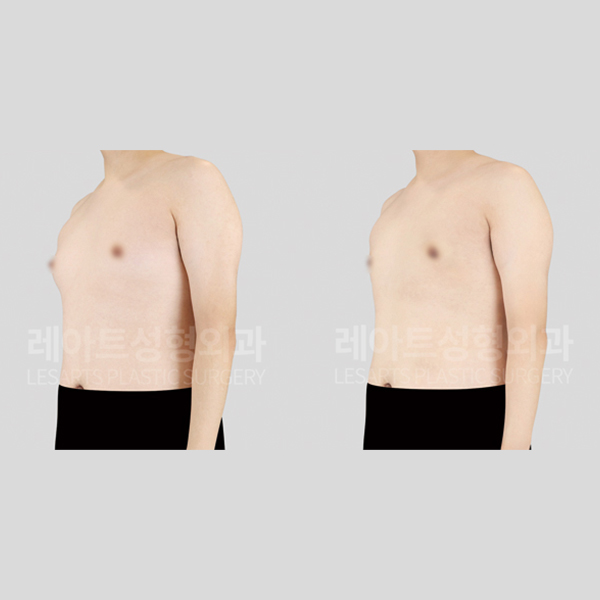
Although the patient had
an otherwise average physique,
the enlarged chest projection
had drawn unwanted attention
and obscured his body proportions.
Following gynecomastia surgery,
a more masculine upper body contour
and a firmer chest wall appearance,
similar to that seen with regular exercise,
have been successfully achieved.
In addition, despite being only
2 months after surgery,
when mild swelling and tissue firmness
may still remain, the skin has already
redraped naturally over the chest.
As a result,
the chest now demonstrates
a smooth and harmonious contour,
with little indication that the patient
had previously experienced
gynecomastia symptoms.
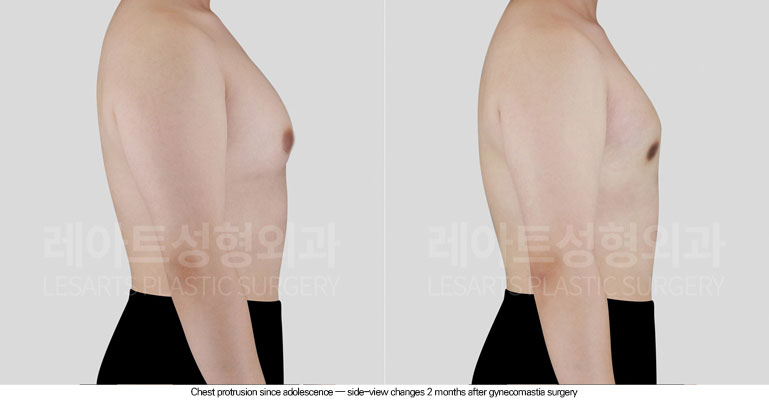

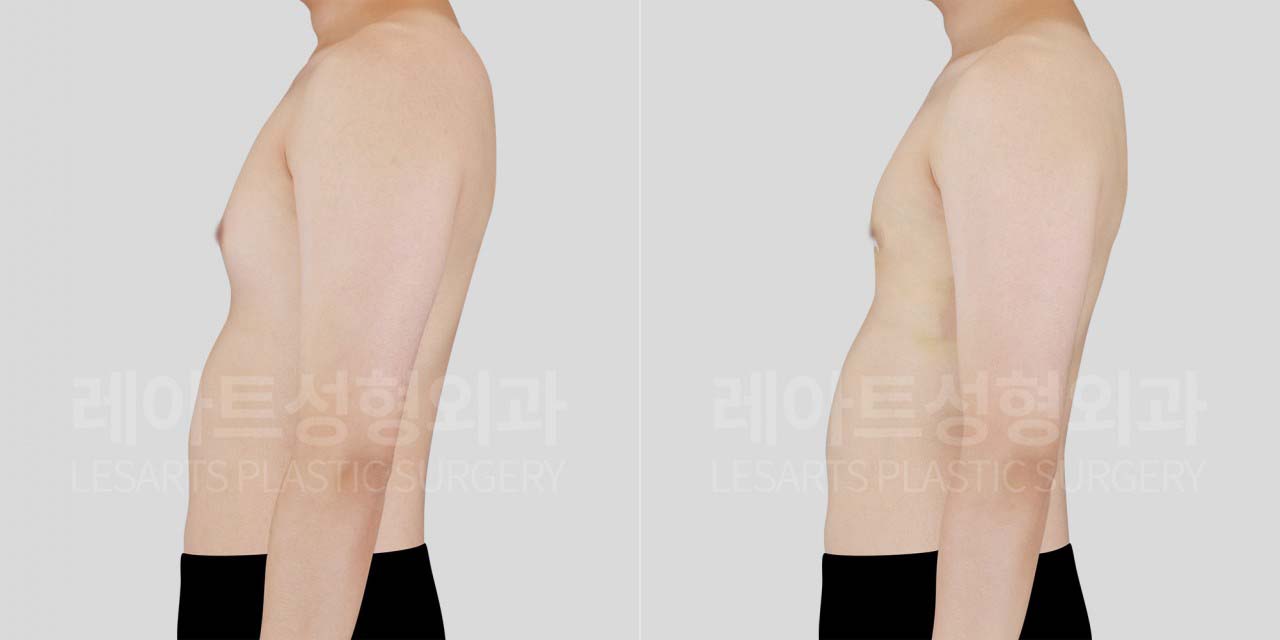
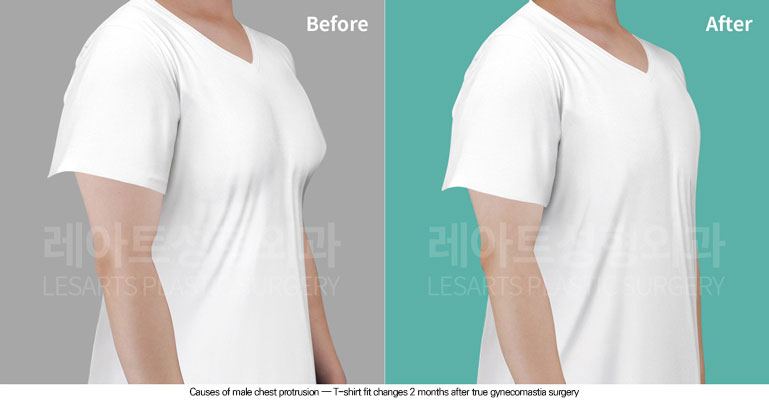
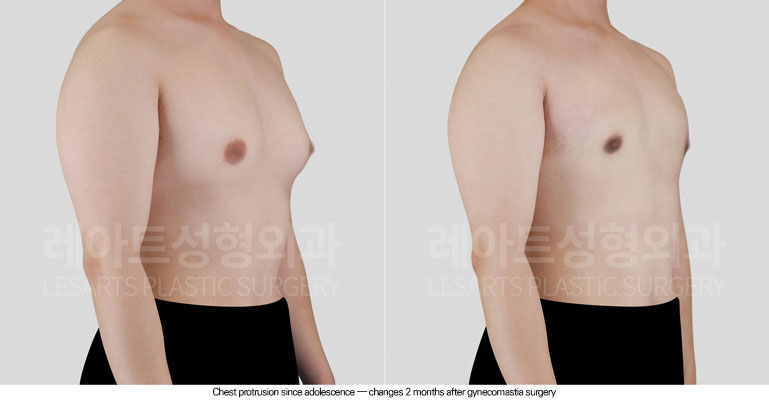
At 2 months after gynecomastia surgery,
the side profile demonstrates
a significant improvement in
the chest contour.
The prominence that had previously
caused the nipples and areolae
to project noticeably forward
has been substantially reduced.
As a result,
the anterior chest contour
appears smoother, more natural,
and better balanced overall.
In particular,
the upper body now demonstrates
a more stable and masculine appearance,
allowing T-shirts to fit naturally
without creating an awkward silhouette.
Because the patient had experienced
gynecomastia symptoms since middle school,
he shared that concealing
his chest contour had gradually become
a long-standing habit.
However, the improvement in chest shape
was already apparent immediately
after gynecomastia surgery,
leading to a high level of satisfaction
with the early results.
The patient also reported that
the recovery process has progressed smoothly,
allowing him to maintain
his usual daily activities
without experiencing significant discomfort.
Despite previous efforts involving
weight loss and regular exercise,
the protruding chest contour
had remained largely unchanged.
Following gland excision and
chest liposuction, however,
the enlargement has been noticeably reduced,
creating a flatter and more masculine chest.
For individuals who, like this patient,
have struggled with chest protrusion
for many years,
we encourage seeking an accurate evaluation
at Lesarts Plastic Surgery
to determine the most appropriate
gynecomastia treatment plan
for their individual condition.
#Gynecomastia
#GynecomastiaSurgery
#GynecomastiaBeforeAfter
#TrueGynecomastia
#SimonGrade2A
#GlandExcision
#ChestLiposuction
#MaleChestContouring
#GynecomastiaRecovery
#LesartsPlasticSurgery
#BestGynecomastiaClinicInKorea
#BestMaleChestContouringClinicInKorea