Gynecomastia surgery in Korea: diagnosis for male breast pain and nipple protrusion with early postoperative results
Patient Registration Info
| Age | Weight | Height | BMI |
|---|---|---|---|
|
30s |
85kg |
171cm |
29 |
Surgical site
Surgical area: Gynecomastia | Grade 2-A
Among men who suspect they may have
gynecomastia, some experience not only
progressive enlargement of the chest,
but also intermittent breast pain or
tenderness involving the nipple
and areolar region.
In addition, when the areola becomes enlarged and puffy,
causing the nipple to project outward
and creating a noticeable bulge beneath clothing,
the condition can become a significant source
of discomfort, self-consciousness,
and daily stress.
Through the following case,
we will review the diagnostic findings
and surgical treatment of a patient with
mixed gynecomastia, illustrating how
appropriate evaluation and treatment
can improve both physical symptoms
and chest contour.
[Patient Information and Diagnostic Findings]
Age: 30s
Height / Weight: 171 cm / 85 kg
Diagnosis: Mixed Gynecomastia, Simon Grade 2A
Glandular Thickness: More than 35 mm bilaterally
Associated Symptoms: Breast pain (mastalgia), tenderness
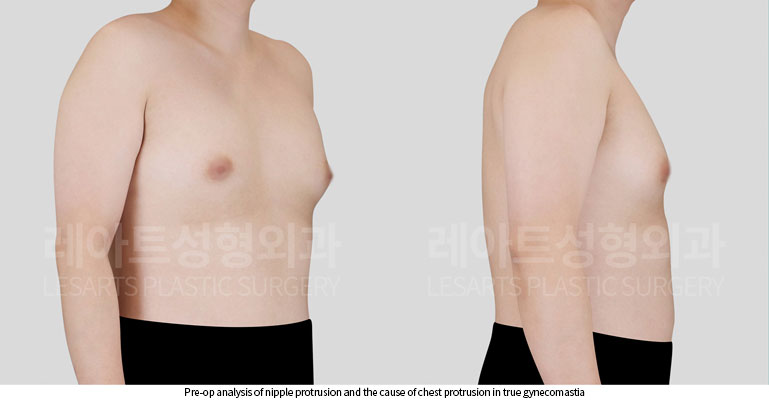
Before gynecomastia surgery,
the patient demonstrated a clearly
enlarged chest with noticeable
fullness centered around the nipple–areolar complex,
which was readily apparent on visual examination.
Most notably,
the sharply projected contour surrounding
the nipples caused the chest prominence
to remain visible even when wearing
a simple T-shirt, becoming one of
the patient’s greatest sources of
self-consciousness and daily stress.
On physical examination,
firm glandular tissue was palpated
beneath both areolae, and the patient
experienced tenderness upon compression,
consistent with symptomatic gynecomastia.
Ultrasound evaluation confirmed
extensive glandular hypertrophy distributed
throughout the chest. In addition,
a significant amount of subcutaneous fat
was also contributing to the enlarged
chest contour.
Based on these findings,
the patient was diagnosed with
mixed gynecomastia (glandular and fatty type),
Simon Grade 2A.
Accordingly, it was explained that
optimal treatment would require a combination of
gland excision, chest liposuction,
and tissue repositioning to remove
the underlying cause of the enlargement
while restoring a smooth, natural,
and masculine chest contour.
Let us now review the patient’s
early post-operative photographs (2 weeks)
to evaluate the initial surgical outcome
and the improvement in chest contour.
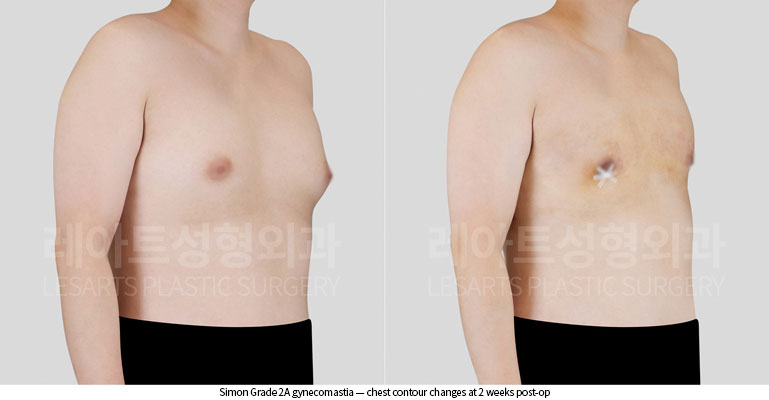
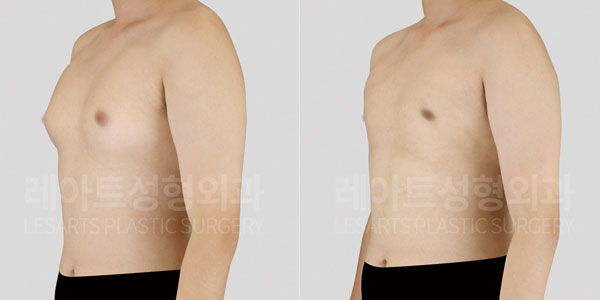
The chest contour that had previously
demonstrated noticeable projection
centered around the nipple–areolar complex
due to gynecomastia has been
successfully corrected, resulting in
a flatter and more gradual
chest contour following surgery.
Although these photographs were obtained
only 2 weeks after surgery—a period
during which postoperative swelling and
BioBond-related tissue firmness are typically
most pronounced—the reduction in
overall chest volume, along with
the improvement in nipple and areolar projection,
is already clearly evident.
The contour of the upper body
also appears smoother and more balanced,
creating a naturally masculine silhouette.
In addition,
during the final stage of
gynecomastia surgery, tissue repositioning
was performed to optimize
the postoperative chest shape.
This technique helps prevent
localized depressions or contour irregularities
following gland excision, allowing
the chest to settle into
a firmer, more athletic, and
naturally masculine thoracic contour
without an operated appearance.
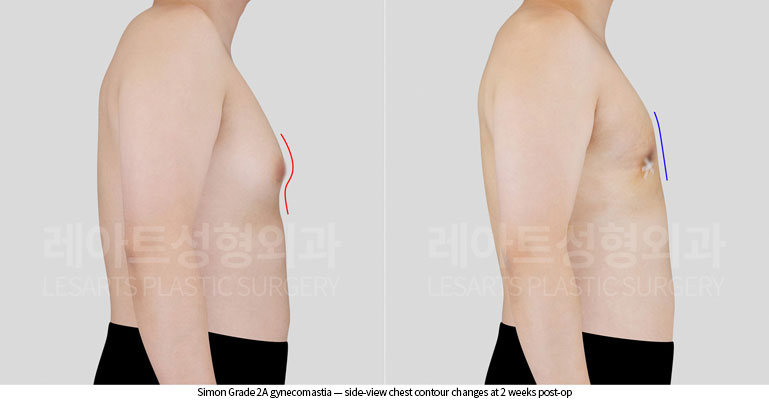
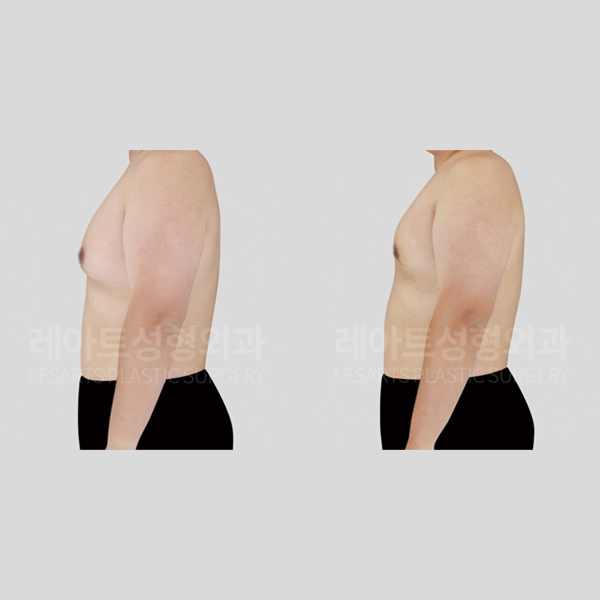
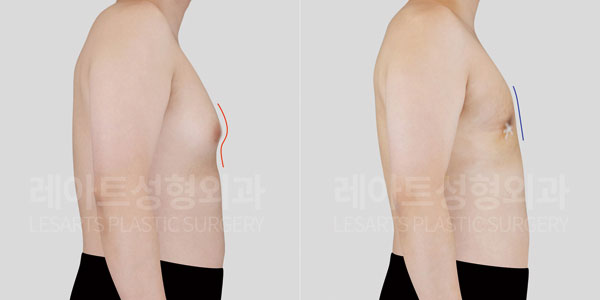
From the side profile,
the previously prominent chest contour,
along with the enlarged and protruding
nipple–areolar complex, has been
effectively corrected through
gynecomastia surgery.
As the excessive anterior projection
of the chest has been reduced,
a much smoother transition is now seen
from the upper chest to the
lower chest and upper abdomen,
creating a more natural masculine silhouette.
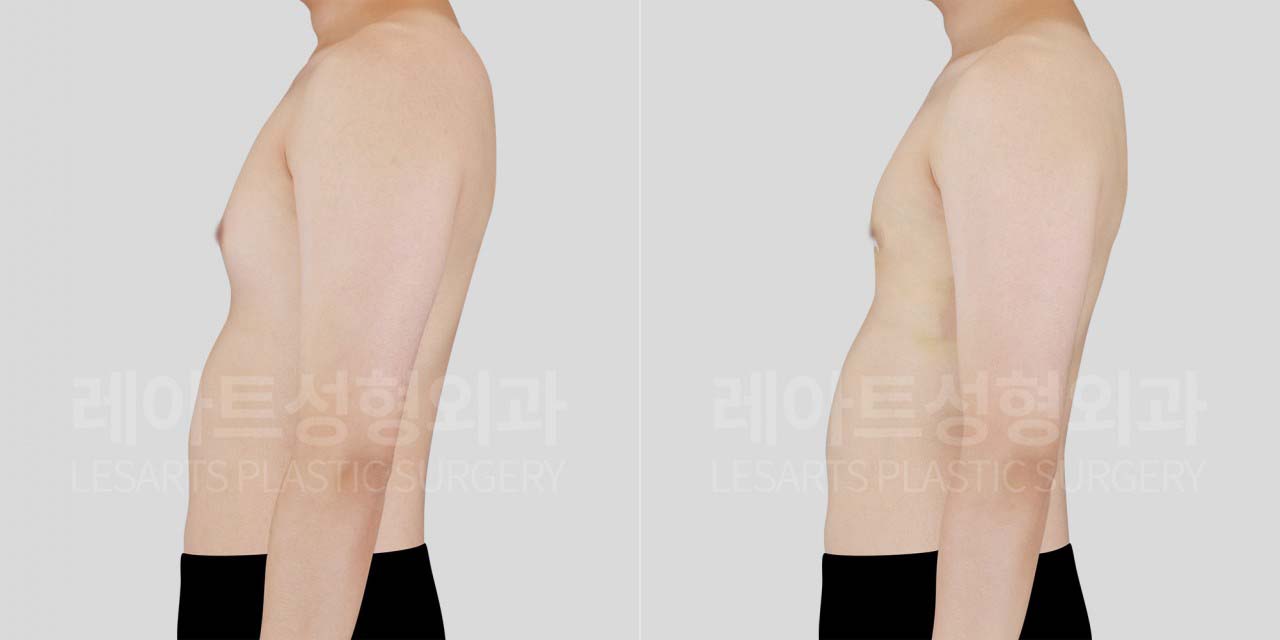
Most notably,
the distinct angle that had previously
formed between the lower chest
and upper abdomen has been eliminated,
allowing the thoracic contour to appear
continuous, balanced, and anatomically natural.
As a result,
whether wearing fitted clothing
or changing body position during
daily activities, the chest no longer
demonstrates the unnatural prominence
that had previously drawn attention.
Instead, the patient is able to maintain
a smooth, well-defined, and naturally
masculine thoracic contour, even during
movement and changes in posture.
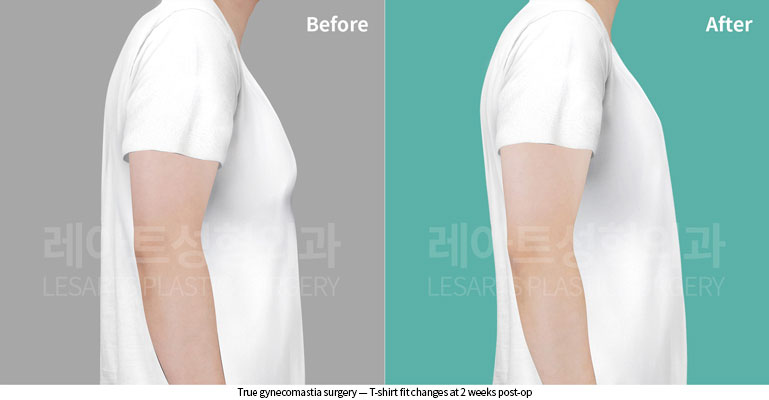
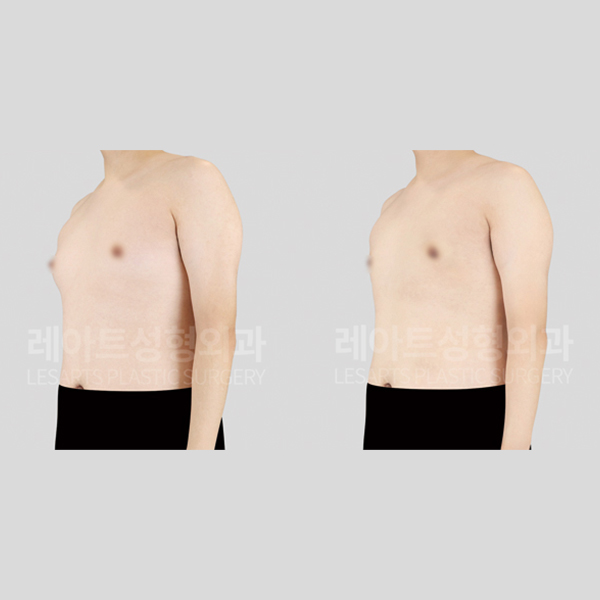
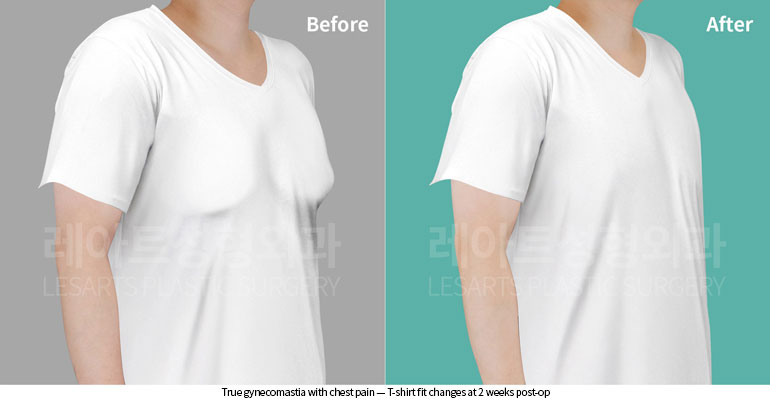
The difference becomes even more
apparent when comparing the patient
wearing a T-shirt before and after
gynecomastia surgery.
Before surgery,
not only was the chest noticeably enlarged,
but the projection of the nipple–areolar complex
also caused the front of the T-shirt
to protrude prominently, making the chest
contour highly visible through clothing.
However, at 2 weeks after surgery,
the excessive projection of the chest
has already been effectively corrected,
revealing a firmer, flatter, and more
naturally masculine upper body contour.
For most patients with gynecomastia,
the most significant source of discomfort
is the visible prominence of the chest
when wearing everyday clothing.
Beyond the cosmetic concern, however,
many patients also experience associated symptoms
such as intermittent breast pain,
tenderness, and, in some cases,
nipple discharge, all of which can
negatively affect daily quality of life.
Gynecomastia surgery addresses
the underlying cause of chest enlargement
by removing the hypertrophied glandular tissue,
while simultaneously restoring
a natural and masculine chest contour.
Because the causative glandular tissue
is eliminated, associated symptoms often
improve alongside the aesthetic correction,
providing both functional and cosmetic benefits.
As a result, many patients experience
not only improved confidence in
their appearance, but also relief from
the daily stress and discomfort that
had accompanied their condition for years.
If you have concerns about
gynecomastia symptoms, it is important
not to rely solely on self-assessment.
A comprehensive examination and accurate diagnosis
can determine the current condition of
your chest and help establish
the most appropriate treatment plan.
If you are considering gynecomastia surgery,
we encourage you to consult with
Lesarts Plastic Surgery to receive
a personalized evaluation and surgical plan
tailored to your individual anatomy and goals.
#GynecomastiaSurgery
#GynecomastiaTreatment
#MixedGynecomastia
#MaleBreastReduction
#GlandExcision
#ChestLiposuction
#ChestContouring
#GynecomastiaBeforeAfter
#MaleChestSculpting
#SimonGrade2A
#LesartsPlasticSurgery
#BestGynecomastiaClinicGangnam