[Abdominoplasty] 4-Month Results of M-type Abdominoplasty for Upper Navel Wrinkles and Lower Abdominal Protrusion
Hello, I am Dr. Kukhan Lee
from Lesarts Plastic Surgery.
During consultations
with patients considering tummy tuck surgery,
many express concerns
beyond just lower abdominal sagging.
In particular,
wrinkles and skin folds
in the upper abdomen above the navel
are also a common source of stress.
When upper abdominal skin
forms folds or wrinkles,
it is often difficult
to improve through
liposuction or exercise alone.
In such cases,
surgical correction
becomes a more
effective and
realistic option.
One of the
surgical methods available
for these concerns
is the M-type tummy tuck.
This technique
is especially effective
when upper abdominal sagging
is present together
with lower abdominal issues.
By sufficiently releasing
the upper abdominal skin
and pulling it downward,
overall skin tension
can be improved.
This approach helps
enhance the firmness
and contour
of the entire
abdominal area.
The patient introduced
in this case
was 160 cm tall
and weighed 51.4 kg.
She had no history
of childbirth,
but previously reached
a weight of
approximately 70 kg.
Through consistent exercise
and weight management,
she maintained
her current
body condition.
However, after
weight gain
and subsequent loss,
wrinkles remained
above the navel.
Skin folding
in the upper abdomen
persisted despite
ongoing exercise
and lifestyle management.
As a result,
she visited the clinic
to seek consultation
for further
treatment options.
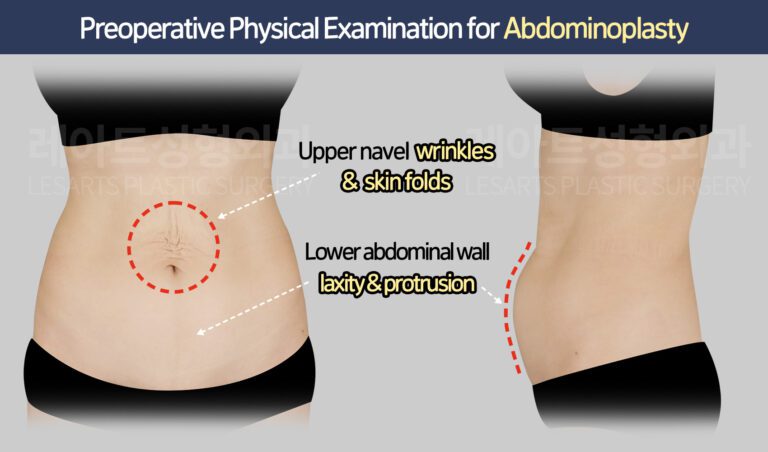
Preoperative Physical Examination for Tummy Tuck
On physical examination,
there was no history
of previous abdominal
surgery or procedures.
As the patient
had no childbirth history,
rectus diastasis
was not considered
severe in this case.
However, due to
prior weight gain,
mild rectus diastasis
was observed
along with abdominal laxity.
This resulted in
a slightly protruded
appearance of
the lower abdomen
in overall contour.
The patient’s
primary concern
was the noticeable
wrinkling above
the navel area.
To address this,
an M-type tummy tuck
was selected
as the most
appropriate approach.
Although skin elasticity
was relatively well maintained,
the degree of
overall skin laxity
was not severe.
Therefore, it was explained
that scar placement
might not be positioned
as low as desired
after surgery.
After thorough explanation,
the surgical plan
was finalized
and the procedure
was carried out.
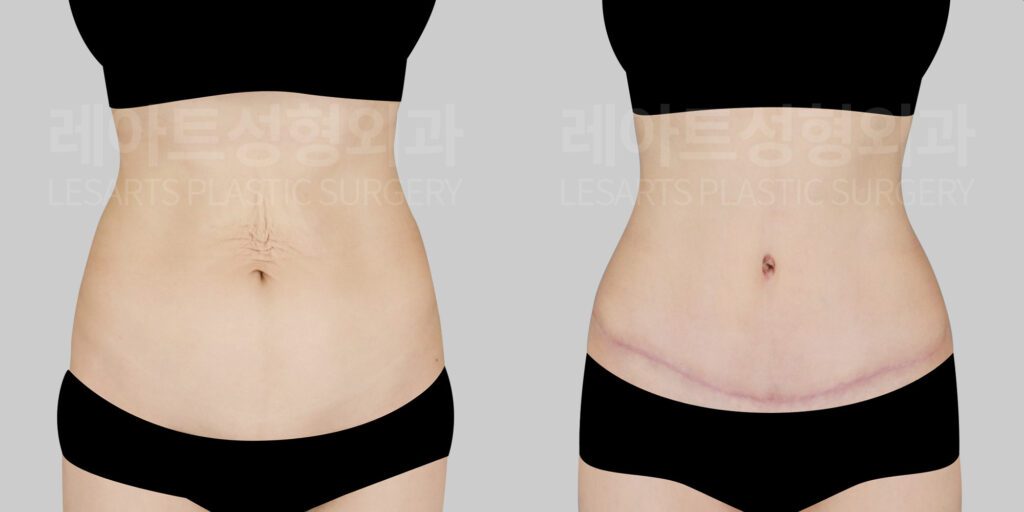
Tummy Tuck for Upper Navel Wrinkle Improvement – Lesarts Plastic Surgery – Dr. Kukhan Lee
4 Months After Tummy Tuck Surgery
At four months
postoperative follow-up,
the abdominal contour
shows clear improvement
compared to before surgery.
After removing
excess lower abdominal skin,
the upper abdominal skin
was sufficiently released
and repositioned downward.
This technique
allowed the entire abdomen
to appear firmer,
more tightened,
and structurally improved.
Overall, the abdomen
now presents
a more defined and stable contour
with enhanced
skin tension and support.
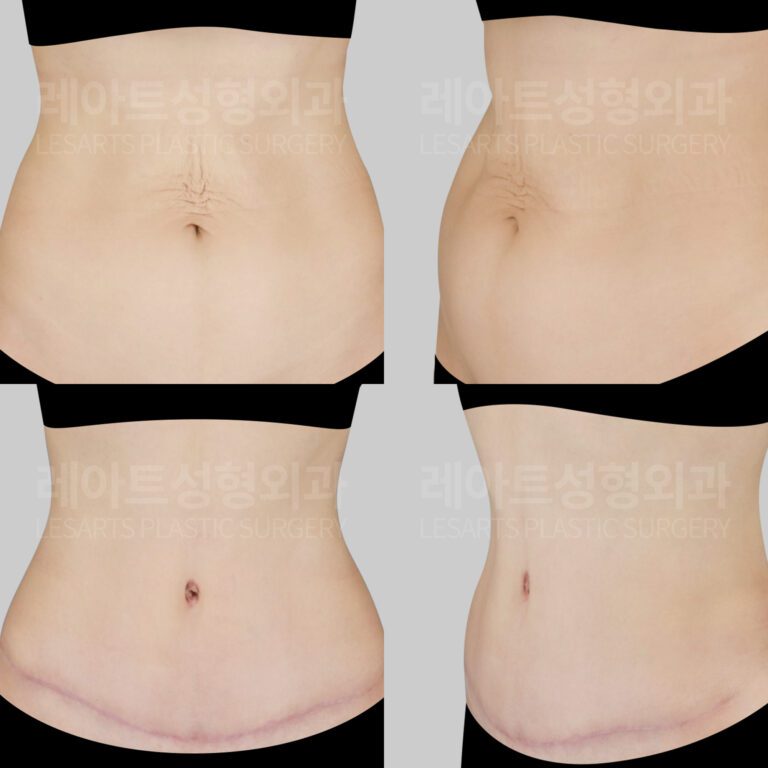
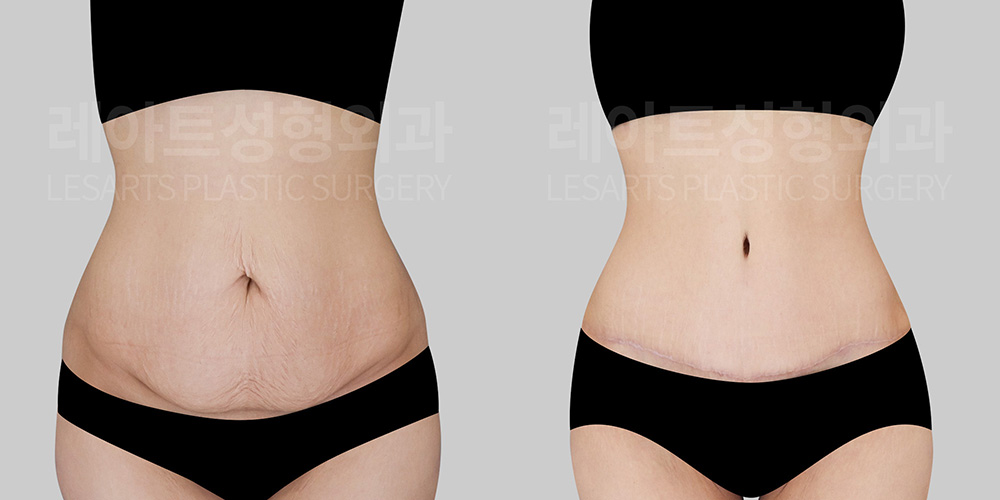
Upper Navel Wrinkle Improvement Before and After Tummy Tuck – Lesarts Plastic Surgery – Dr. Kukhan Lee
The area
that concerned
the patient most
was the wrinkles
above the navel.
These wrinkles
have naturally
smoothed out
after the procedure
and healing process.
As a result,
the abdomen now
appears more even
with a smoother
overall contour line.
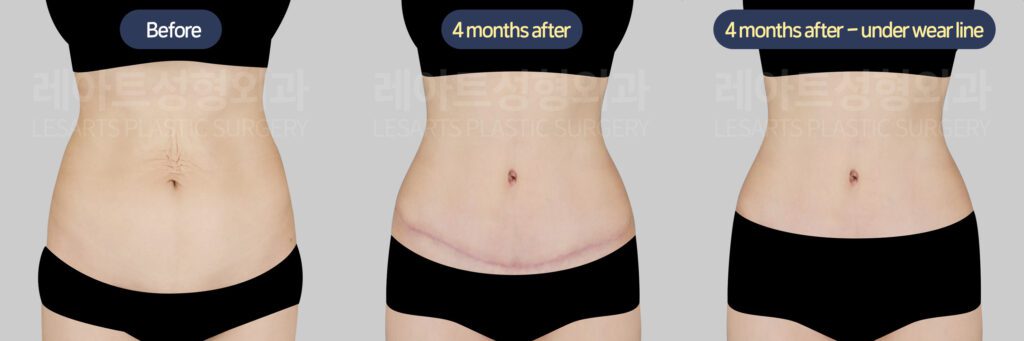
Tummy Tuck Incision Placement – Lesarts Plastic Surgery – Dr. Kukhan Lee
By maximizing
downward skin traction
during closure,
the incision line
was positioned lower.
As a result,
the scar location
was placed
within a relatively
low and discreet area.
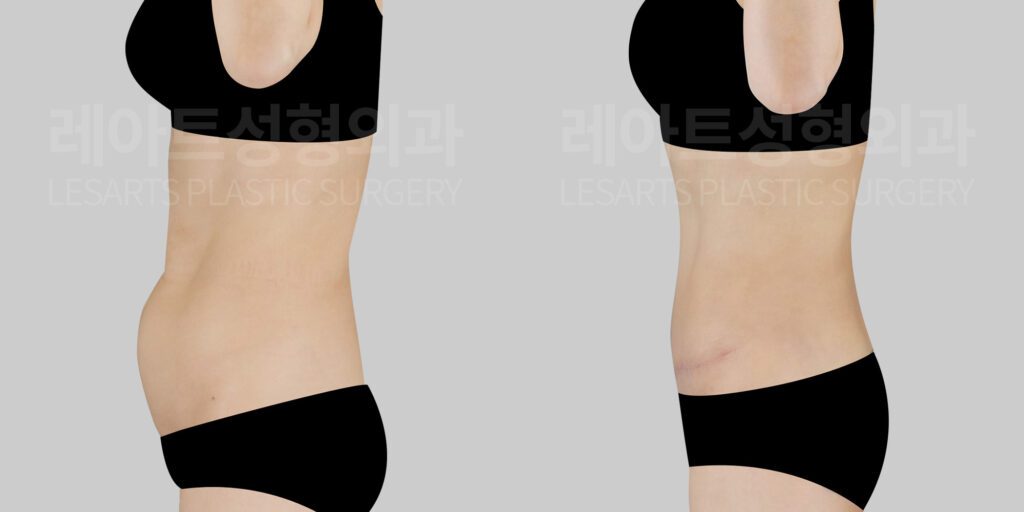
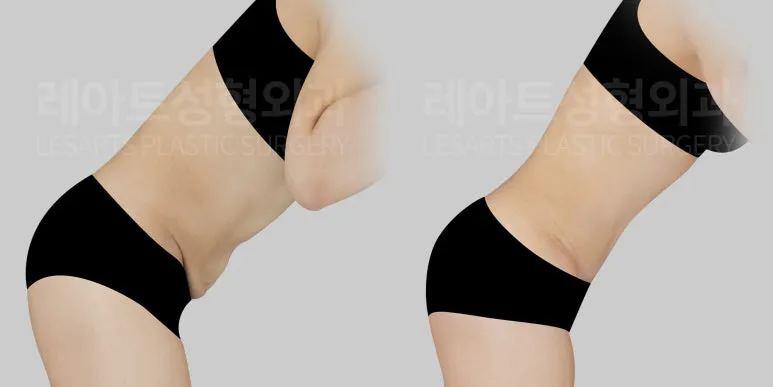
Lower Abdominal Protrusion Improvement After Tummy Tuck – Lesarts Plastic Surgery – Dr. Kukhan Lee
When comparing
the side profile,
the lower abdomen
appeared slightly protruded
before surgery.
This was due to
abdominal wall laxity
and mild rectus diastasis,
despite no
childbirth history.
After the procedure,
the lower abdominal
protrusion was corrected
and the contour
became noticeably flatter.
The abdominal wall
now appears firmer
along the natural line
of the rectus muscles
with improved support.
At four months,
the scar may still
show slight redness,
which is
a normal stage.
However, there are
no signs of
hypertrophic scarring
or widening,
and healing remains stable.
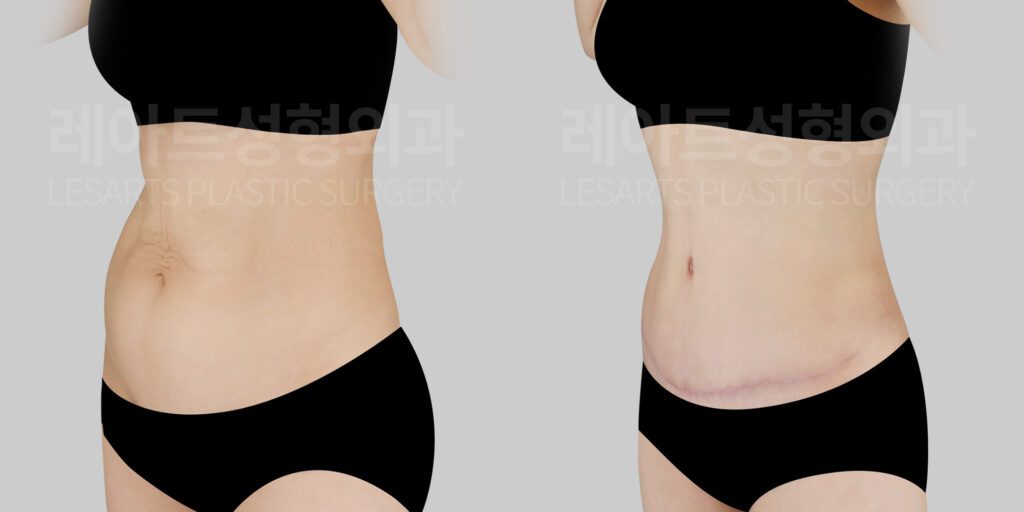
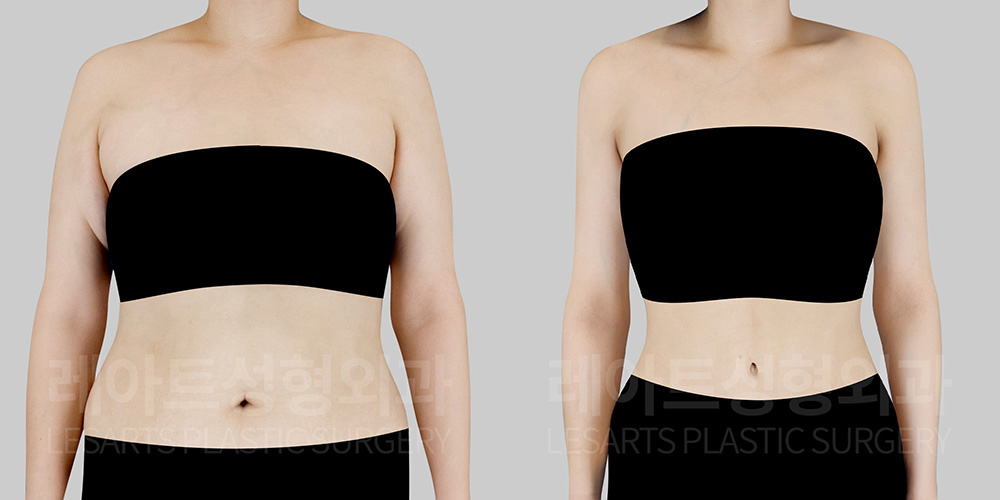
Tummy Tuck Before and After Comparison (4 Months) – Lesarts Plastic Surgery – Dr. Kukhan Lee
Along with
the tummy tuck procedure,
abdominal liposuction
was performed
to refine overall volume.
As a result,
the entire abdomen
appears more
contoured and balanced
from multiple angles.
The side profile
also shows
a slimmer line
with improved
waist definition.
A tummy tuck
is not just
about removing
excess loose skin
from the abdomen.
It involves
evaluating the abdominal wall,
skin elasticity,
and fat distribution
to reshape the contour.
Around four months
after surgery,
the abdominal shape
begins to stabilize
into its new form.
From this stage,
consistent weight management
and regular exercise
help enhance
long-term results.
If you are
concerned about
upper abdominal wrinkles
or overall skin laxity,
it is important
to determine
the most suitable
treatment approach
for your condition.
Through consultation
with an experienced specialist,
a personalized plan
can be established
for optimal outcomes.
By selecting
the appropriate method,
more satisfying
and natural-looking
results can be achieved.