Tummy tuck in Gangnam: causes and treatment of lower abdominal sagging after childbirth
Patient Registration Info
| Age | Weight | Height | BMI |
|---|---|---|---|
|
50s |
63kg |
160cm |
25 |
Surgical site
Surgical site : Abdomen, Hip Dips, M-Type, Rectus Muscle Repair, Umbilicoplasty| liposuction aspirate volume : 3,300cc
Fat Grafting: Hip Dips (Right: 130 cc / Left: 130 cc)
Why Does Lower Abdominal Sagging Remain Even After Losing Weight After Pregnancy?
Post-pregnancy lower abdominal sagging may be caused not only by subcutaneous fat,
but also by stretched skin and laxity of the rectus abdominis muscles and fascia.
If the skin folds below the navel or the abdomen protrudes forward due to weakened support,
liposuction alone may have limitations.
The appropriate surgical approach should be determined based on the current abdominal structure.
Post-pregnancy lower abdominal sagging should be evaluated differently
from abdominal fullness caused simply by weight gain or excess subcutaneous fat.
During pregnancy, the growing uterus stretches the abdominal skin
and muscles over an extended period.
Even after losing weight following childbirth,
the stretched skin may not fully contract.
If laxity of the rectus abdominis muscles and fascia remains,
the lower abdomen may continue to fold or protrude forward.
Therefore, if abdominal sagging does not improve
despite regular exercise and weight loss,
it is important to evaluate not only the amount of fat
but also skin elasticity and the presence of Rectus Diastasis.
If you are wondering about the difference between
abdominal liposuction and Abdominoplasty,
please refer to the information below.
The patient featured in this case had also been concerned
about skin sagging concentrated below the navel
after giving birth to three children.
Rather than simply reducing abdominal volume,
she visited Lesarts Plastic Surgery to address both
the stretched skin after pregnancy and the weakened abdominal wall
that was causing the abdomen to protrude forward.
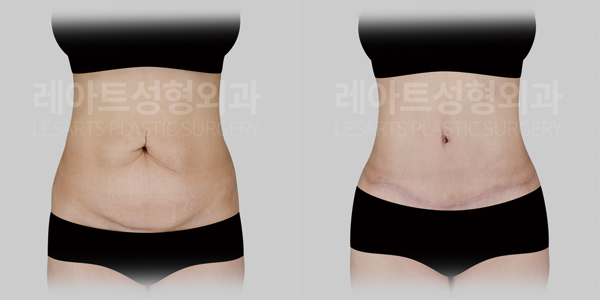
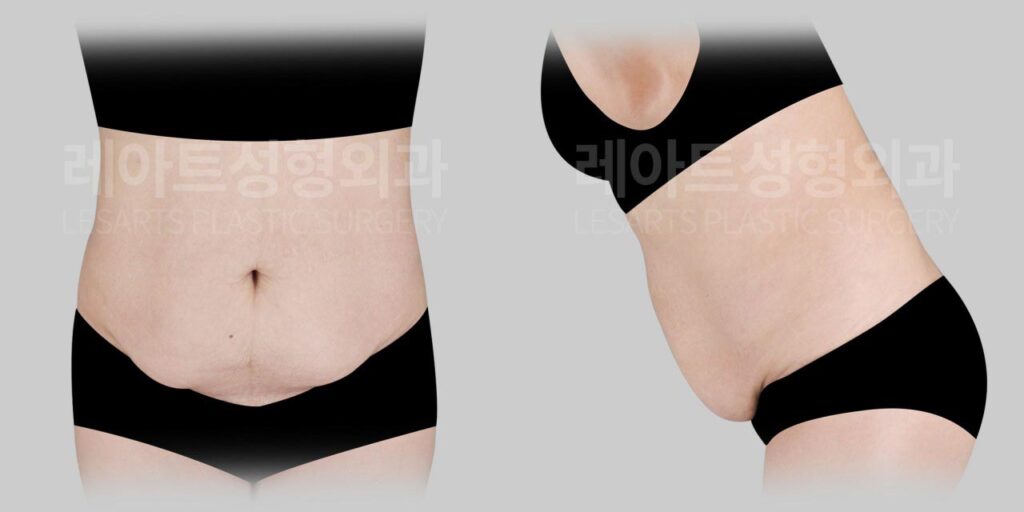
[Preoperative Abdominoplasty Assessment: Skin Around the Navel and Abdominal Wall Protrusion]
Preoperative Abdominal Skin and Abdominal Wall Condition
Before surgery, the patient showed an overall loss of skin elasticity
extending from the upper abdomen.
The loose skin had descended below the navel
and folded over the lower abdomen.
The navel also appeared compressed and pulled downward
due to the sagging skin,
while stretch marks from pregnancy remained
across several areas of the abdomen.
In addition to the skin laxity,
the rectus abdominis muscles and fascia had also stretched,
causing the abdominal wall to protrude forward
when the abdomen was relaxed.
The lower abdominal folds became even more pronounced
when bending forward or sitting,
as the loose skin gathered downward.
This made the lower abdomen appear heavier
and created a less defined contour
from the upper to the lower abdomen.
Abdominal Liposuction, which primarily reduces fat,
cannot directly correct already stretched skin
or Rectus Diastasis.
Therefore, this patient required not only fat reduction
but also surgical correction of the loose skin
and weakened abdominal wall.
[Preoperative Abdominoplasty Planning Based on Loose Skin and Abdominal Contour]
Surgical Plan Based on Loose Skin and Abdominal Structure
After evaluating the overall condition of the abdomen,
it was determined that removing only the loose skin
below the navel would not be sufficient.
The sagging extending from the upper abdomen
also needed to be corrected.
For this reason, an M-Type Full Abdominoplasty was planned,
with dissection extending to the upper abdomen
and the loose skin pulled downward and removed.
M-Type Full Abdominoplasty
An M-Type Abdominoplasty is designed to correct
extensive skin laxity from the upper
to the lower abdomen.
The loose skin is pulled downward sufficiently,
and the excess portion is removed.
Because the original navel is included
within the area of skin removal,
umbilicoplasty is also performed to create
and position a new navel appropriately.
In this patient, the navel had shifted downward
along with the sagging abdominal skin.
After removing the excess skin,
a new vertically shaped navel was planned
at a position that would better complement the waistline.
Correction of the separated rectus abdominis muscles
and stretched fascia was also planned
to tighten the abdominal wall
that had been protruding forward.
Subcutaneous fat distributed throughout the abdomen
was reduced with Abdominal Liposuction
to decrease overall trunk thickness
and help define the waistline after abdominoplasty.
Why Hip Fat Grafting Was Performed
Along with abdominal skin laxity,
the patient had a relatively straight contour
from the waist to the pelvis.
Reducing abdominal thickness alone
might not sufficiently enhance
the proportion between the waist and hips.
Therefore, some of the fat harvested
from the abdomen was grafted
to the hip and hip-dip areas.
This approach was intended to create
a more defined waistline while providing
a smoother, more balanced transition
from the waist to the hips.
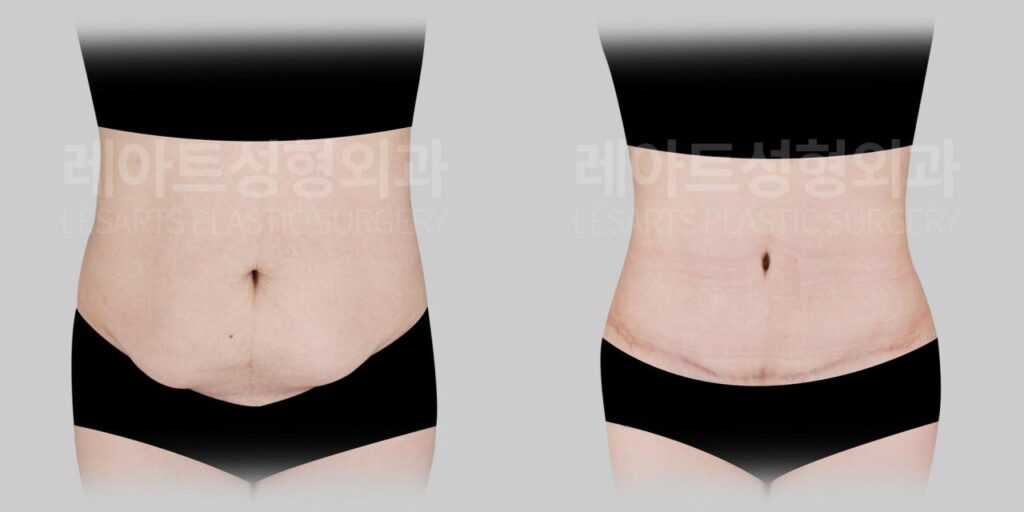
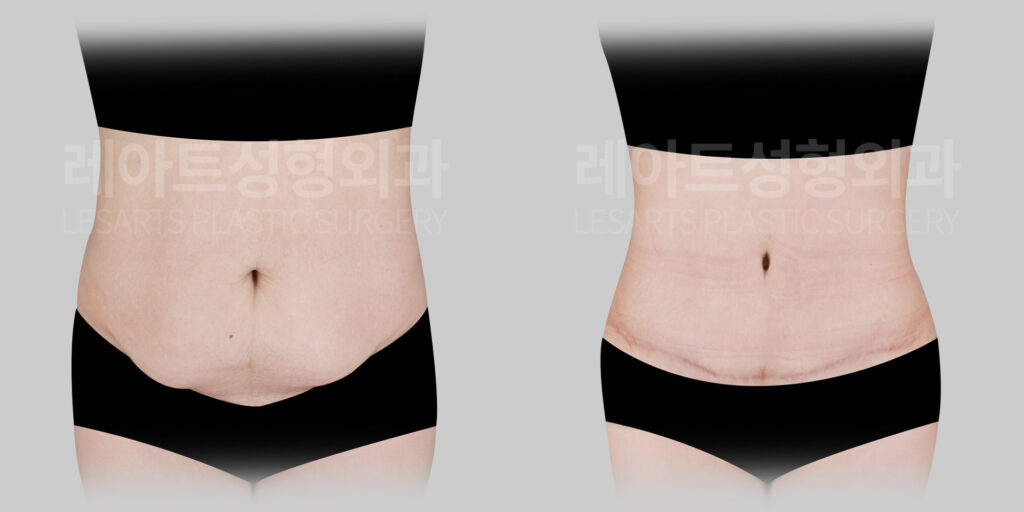
Abdominoplasty Before and 7.5 Months After Surgery
The following photos compare the abdomen
before surgery and 7.5 months after surgery
to show the postoperative changes.
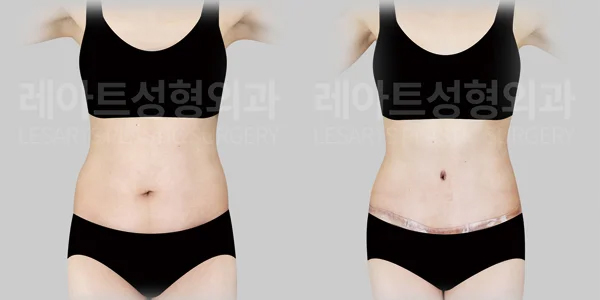
[Abdominoplasty 7.5 Months After Surgery: Front View of Lower Abdominal Skin Sagging and Waistline Changes]
Before surgery, loose skin extended below the navel
and folded over the lower abdomen,
creating folds and unevenness above the underwear line.
At 7.5 months after surgery,
the sagging skin had been removed,
leaving the lower abdomen flatter and smoother.
The navel, which had previously been pulled downward
along with the loose skin, was repositioned
into a vertical shape that better aligned with the waistline.
As the central abdominal skin became tighter
and the waistline on both sides became more defined,
the abdomen also appeared narrower
when viewed from the front.
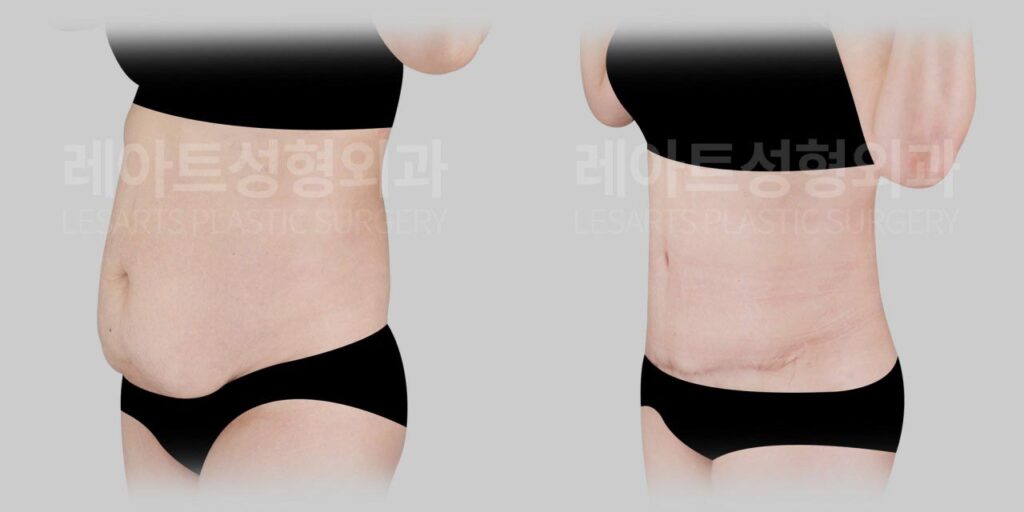
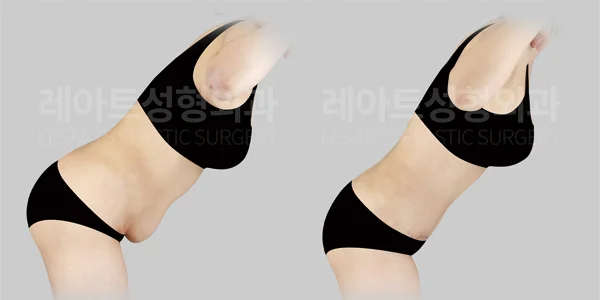
[Abdominoplasty 7.5 Months After Surgery: Oblique View of Abdominal Protrusion and Lower Abdominal Contour Changes]
From the oblique view, changes in both
abdominal protrusion and lower abdominal sagging
can be clearly observed.
Before surgery, the abdomen protruded in a rounded shape
from the upper to the lower abdomen,
while loose skin below the navel extended forward
and added heaviness to the abdominal contour.
After surgery, Abdominal Liposuction reduced
the overall thickness of the torso,
while the loose skin and weakened abdominal wall
were corrected together.
This created a smoother contour
from the upper to the lower abdomen.
Correction of the Rectus Diastasis helped flatten
the abdominal wall that had previously protruded forward,
while hip fat grafting created a more natural transition
from the waist to the hips.
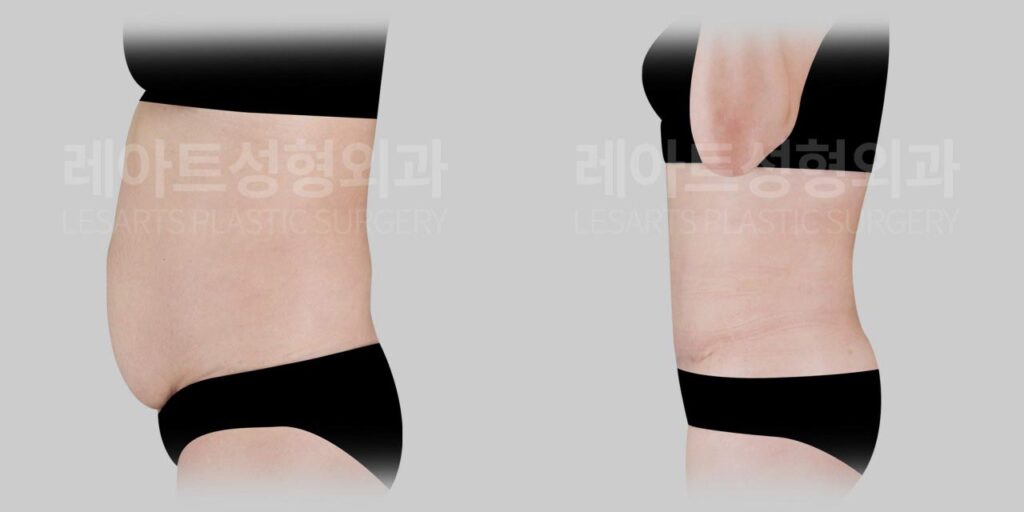
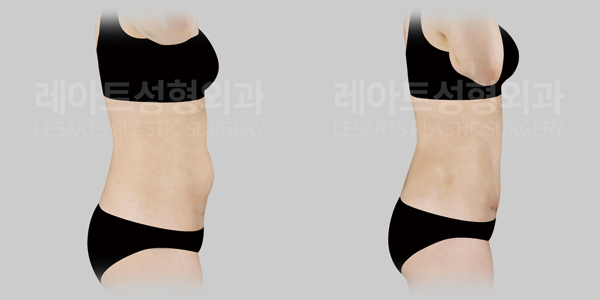
[Abdominoplasty 7.5 Months After Surgery: Side View of Lower Abdominal Protrusion and Abdominal Thickness Changes]
From the side view, both the forward abdominal protrusion
and the sagging lower abdomen seen before surgery
have been noticeably reduced.
By correcting not only the skin and fat
but also the rectus abdominis muscles and fascia,
the contour from the upper to the lower abdomen
became smoother and more stable.
Before surgery, the protruding lower abdomen
created a less defined transition between
the abdomen and lower body.
After surgery, the overall thickness of the torso decreased,
and the contour below the waist
became more clearly defined.
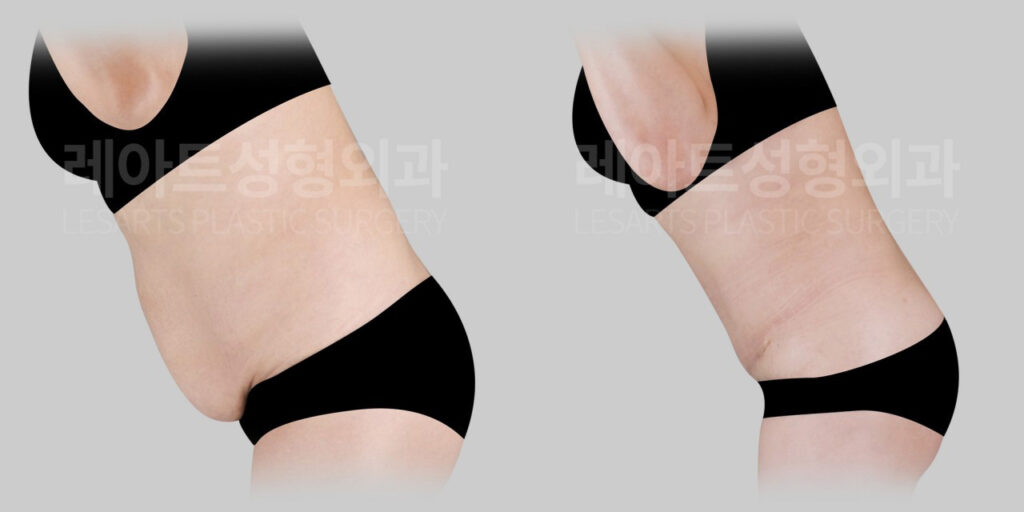
[Abdominoplasty 7.5 Months After Surgery: Changes in Lower Abdominal Skin Folding When Bending Forward]
After pregnancy, loose abdominal skin may cause
greater discomfort not only while standing,
but also when sitting or bending forward.
Before surgery, changing position caused the upper abdominal skin
to shift downward and overlap the lower abdomen,
creating deep folds and excessive skin movement.
At 7.5 months after surgery, the excess loose skin
had been removed, allowing the lower abdomen
to maintain a relatively firm contour even when bending forward.
However, Abdominoplasty removes excess stretched skin
and is not intended to eliminate every skin fold
that appears with changes in posture.
The remaining normal skin may naturally fold
when sitting or bending forward.
The goal of surgery is to reduce the amount of excessively loose skin
that sags and overlaps, rather than eliminate
all natural skin folds.
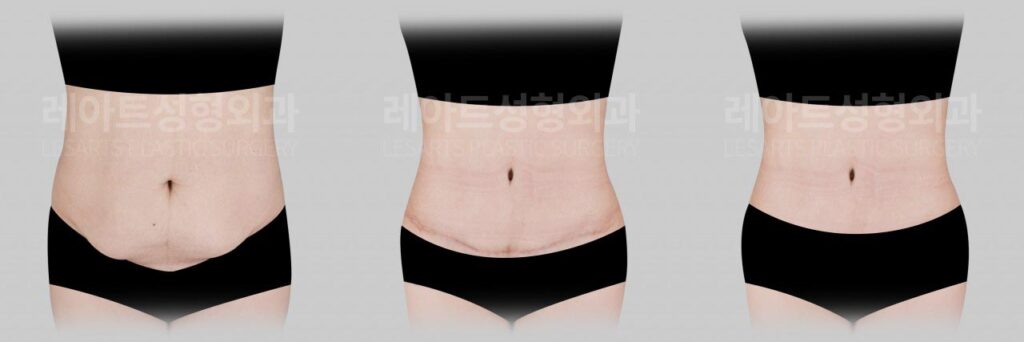
Abdominoplasty requires a relatively long incision
in the lower abdomen to pull down
and remove excess loose skin.
The length of the incision may vary depending
on the amount of skin that needs to be removed
and the extent of the sagging.
After evaluating the patient’s skin elasticity
and the planned amount of skin removal,
the incision was positioned low within the underwear line
so that it could remain concealed when wearing underwear.
These photos were taken 7.5 months after surgery,
after a total of four scar laser treatments.
A slight reddish tone still remains along the incision,
but it is gradually fading as the scar continues to mature.
Continued scar care, including sun protection, moisturizing,
and taping as instructed, is recommended
throughout the healing process.
Is Abdominal Liposuction Alone Enough for Post-Pregnancy Abdominal Sagging?
Abdominal Liposuction reduces subcutaneous fat
to improve abdominal volume and overall torso thickness.
In contrast, Abdominoplasty removes excess loose skin
and, when necessary, corrects the rectus abdominis muscles
and fascia to address structural changes after pregnancy.
Therefore, if excess fat is the main concern
and skin elasticity remains relatively good,
liposuction may be considered.
However, Abdominoplasty may be necessary
when the following changes are present:
– Lower abdominal skin still folds after weight loss
– Skin laxity extends from above the navel
– Skin overlaps above a C-section scar
– Loose skin shifts significantly downward when bending forward
– Rectus Diastasis causes the abdomen to protrude
– The navel has shifted downward along with sagging skin
Even among patients with post-pregnancy abdominal changes,
the location and extent of skin laxity, amount of fat,
and condition of the abdominal wall can vary.
Rather than choosing an M-Type or Mini Abdominoplasty
based only on another patient’s surgical case,
it is important to evaluate your current abdominal condition
and determine the appropriate surgical extent accordingly.
#Abdominoplasty
#PostPregnancyAbdomen
#MTypeAbdominoplasty
#RectusDiastasis
#AbdominalLiposuction
#TummyTuck
#LesartsPlasticSurgery
Abdominoplasty FAQ
Q1. Can post-pregnancy lower abdominal sagging be improved with exercise?
If increased body fat or reduced muscle strength is the main cause,
exercise and weight management may help improve the abdomen.
However, already stretched skin or Rectus Diastasis
may be difficult to correct sufficiently with exercise alone.
Q2. What is the difference between abdominal liposuction and abdominoplasty?
Abdominal Liposuction reduces the amount of subcutaneous fat,
while Abdominoplasty removes excess loose skin
and may include rectus muscle repair when necessary.
If skin laxity and abdominal wall weakness are both present,
liposuction alone may have limitations.
Q3. When is an M-Type Abdominoplasty recommended?
It may be considered when skin elasticity has decreased
not only in the lower abdomen but also above the navel,
with overall abdominal sagging and Rectus Diastasis.
The surgical approach is determined by
the extent of skin that needs to be removed.
Q4. Is the navel recreated during abdominoplasty?
In an M-Type Full Abdominoplasty, the original navel
remains attached to the abdominal wall while the skin is repositioned.
A new opening is then created in the repositioned skin
to adjust the appearance and position of the navel.
Whether umbilicoplasty is required
depends on the extent of surgery.
Q5. When does an abdominoplasty scar begin to fade?
In the early stages, the incision may appear red or feel firm.
The scar generally becomes softer and lighter
over several months to a year or longer.
The healing process varies depending on individual skin characteristics,
the extent of the incision, and postoperative scar care.
▼ Visit Lesarts Plastic Surgery in Gangnam, Seoul, Korea ▼