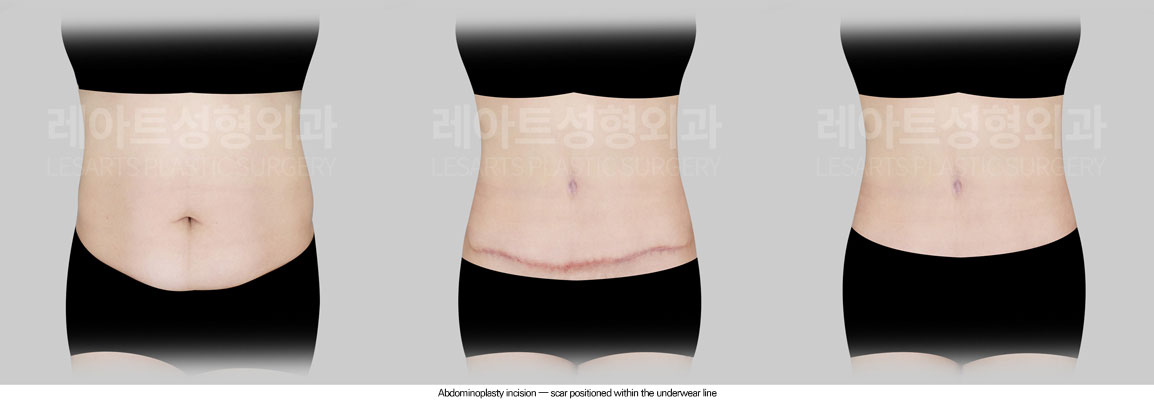
Tummy tuck in Seoul: before and after comparison of postpartum lower abdominal sagging

tummy tuck before and after - lesarts plastic surgery

Patient Registration Info

Age Weight Height BMI
40s
61kg
152cm
26

Surgical site

Surgical site : Abdomen, M-type, rectus plication,umbilical correction| liposuction aspirate volume : 2,300cc

Can abdominoplasty improve loose lower abdominal skin
and C-section scar deformity after childbirth?

Yes. When excess lower abdominal skin, rectus diastasis, and C-section scar deformity are present after pregnancy,
M-Type Abdominoplasty can address these concerns simultaneously.

By removing redundant skin, repairing the rectus muscles, eliminating the previous C-section scar,
and combining abdominal liposuction, the procedure can create a firmer abdominal contour,
restore waist definition, and reposition the new scar so it is typically concealed beneath underwear.

[Learn More About Lesarts Abdominoplasty]


In this case, we present a patient who underwent
M-Type Abdominoplasty and abdominal liposuction
at Lesarts Plastic Surgery to improve
loose lower abdominal skin following a C-section
and changes in abdominal contour after weight fluctuations.

For many years, the patient had been concerned that
the lower abdominal skin would wrinkle and fold
whenever she sat down or bent forward,
causing both functional discomfort
and aesthetic concerns.

tummy-tuck-02-01-260702

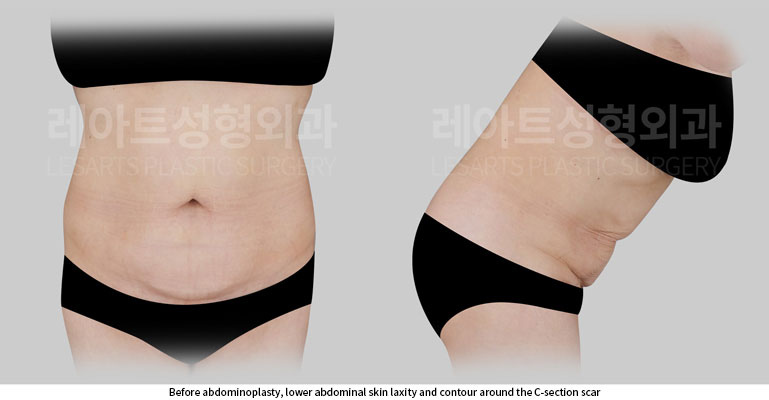
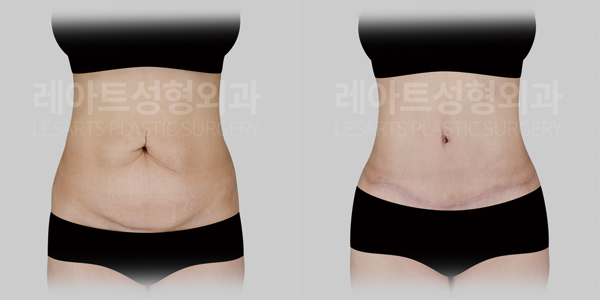
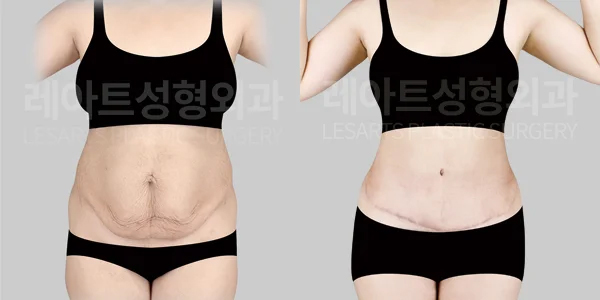
As shown in the preoperative photographs,
the lower abdominal skin had descended significantly,
creating a heavy abdominal contour.

The uneven contour around the previous
C-section scar further emphasized
the overall appearance of abdominal sagging.

The patient also had stretch marks
and fine skin wrinkling below the navel.

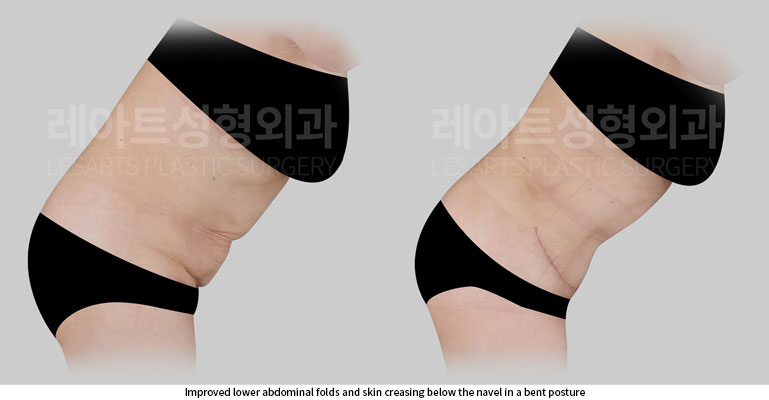
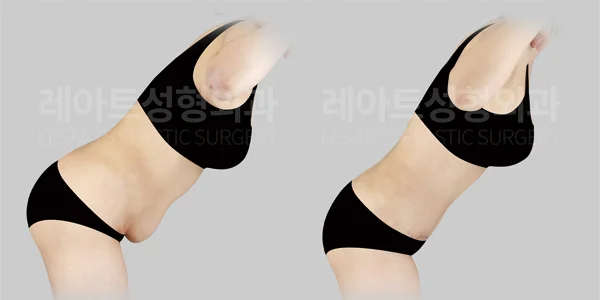
When bending forward,
the loose skin not only sagged
but also formed multiple visible folds.

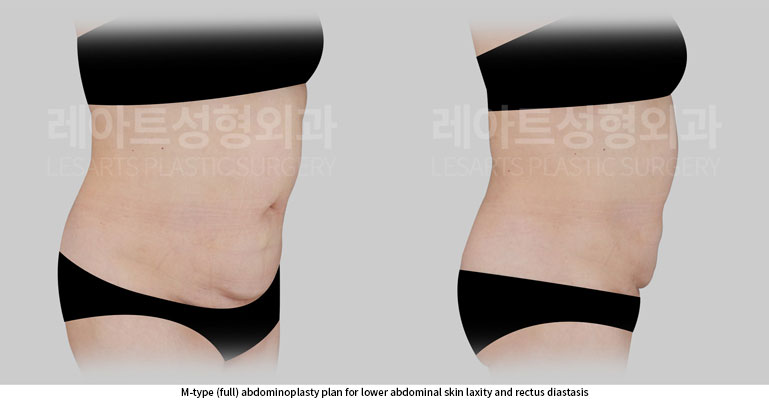
In addition, the patient was diagnosed with
rectus diastasis, which prevented
the abdominal wall from providing
adequate structural support.

As a result, the anterior abdominal wall
appeared bluntly protruded forward,
making rectus muscle repair
an important part of the surgical plan.

tummy-tuck-02-02-260702

The surgical plan included M-Type Abdominoplasty
to remove the excess skin that had lost elasticity
and descended from the upper abdomen.

At the same time, rectus muscle repair
was planned to correct the patient’s
rectus diastasis and restore
better abdominal wall support.

During surgery, the existing C-section scar
was removed so that only
the new abdominoplasty scar would remain.

The incision was carefully designed
to replace the previous scar
with a single, lower scar.

In addition, abdominal liposuction
was performed to reduce abdominal thickness
while refining the body contour,
creating a slimmer and more balanced
abdominal profile.

tummy-tuck-02-03-260702
tummy-tuck-02-04-260702

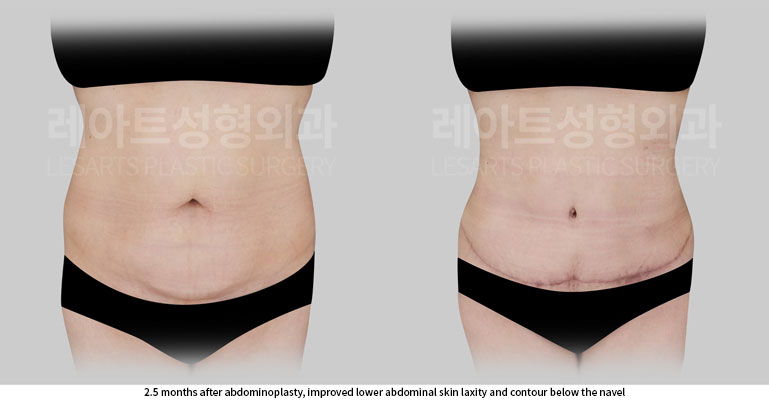
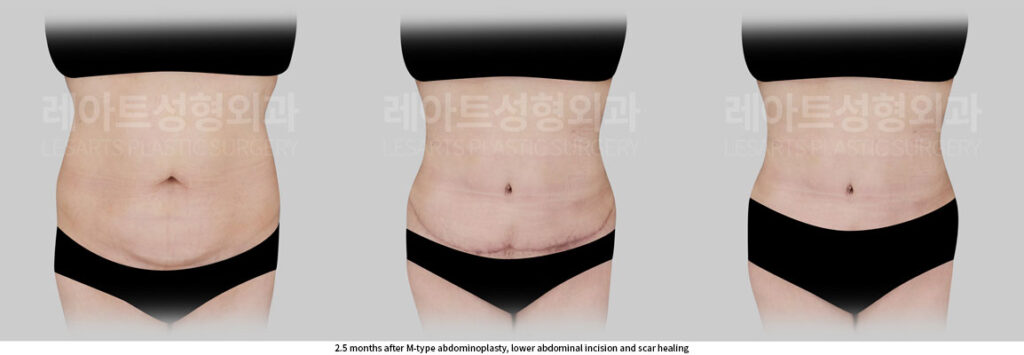
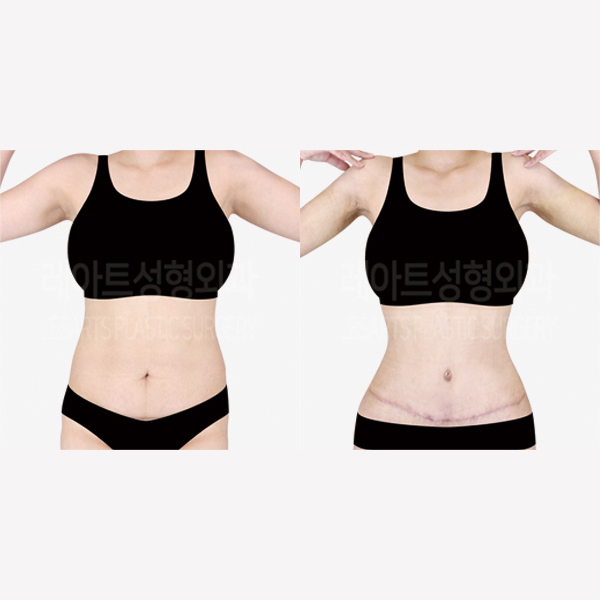
The following photographs compare
the patient’s appearance before surgery
and 2.5 months after abdominoplasty.

By removing the excess skin
that had been hanging below the navel,
the anterior abdominal contour became
smoother, firmer, and more refined.

The contour irregularity surrounding
the previous C-section scar was eliminated,
and the heavy appearance of
the lower abdomen was noticeably reduced.

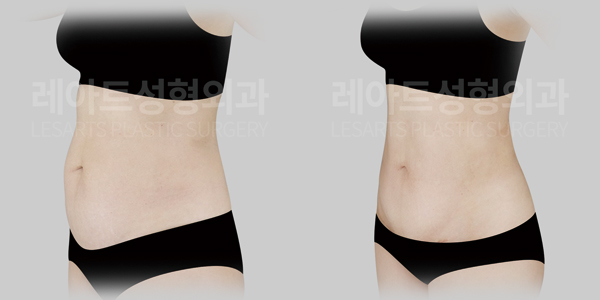
The fullness that had weighed down
the lower abdomen also improved,
revealing better waist definition
and creating a more natural
upper body silhouette.

With both rectus diastasis
and excess skin successfully corrected,
the blunt lower abdominal protrusion
became significantly less noticeable.

Because these photographs were taken
only 2.5 months after surgery,
some redness along the incision
and postoperative tissue firmness remained.

Even so, the patient was very satisfied
that the lower abdominal sagging
and multiple skin folds,
which had been her primary concerns,
had already improved considerably.

tummy-tuck-02-05-260702
tummy-tuck-02-06-260702

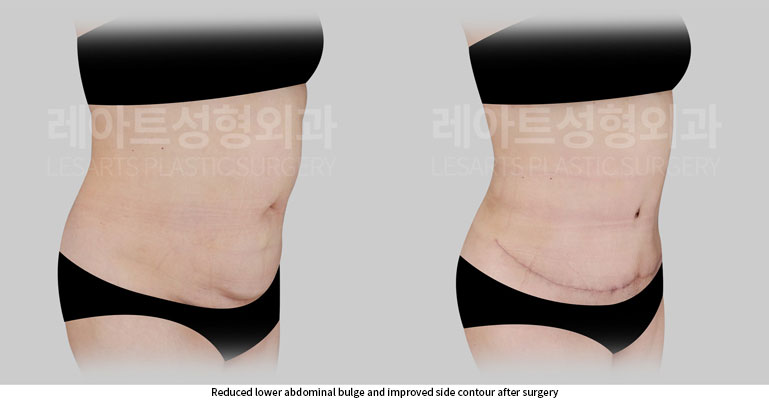
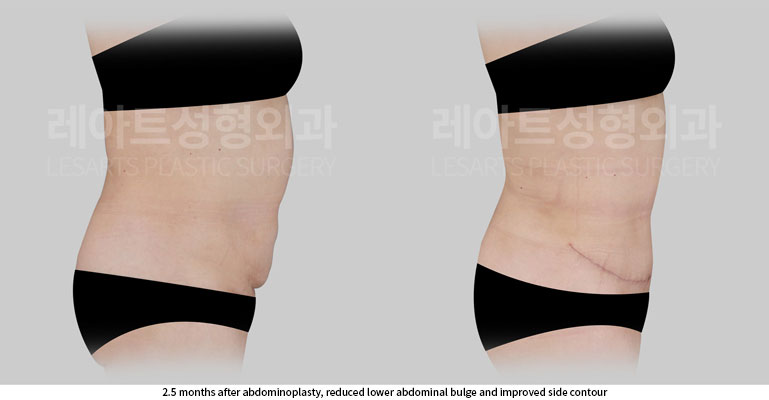
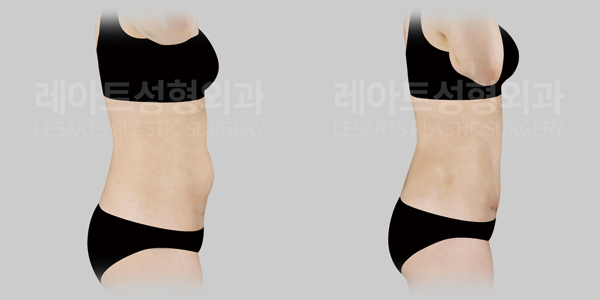
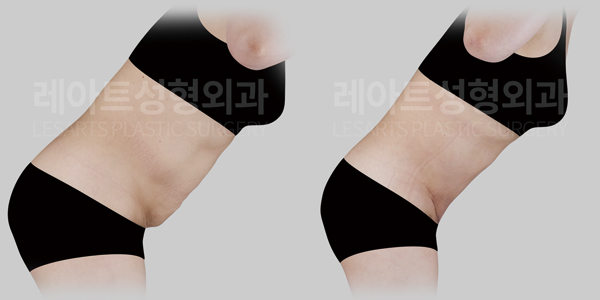
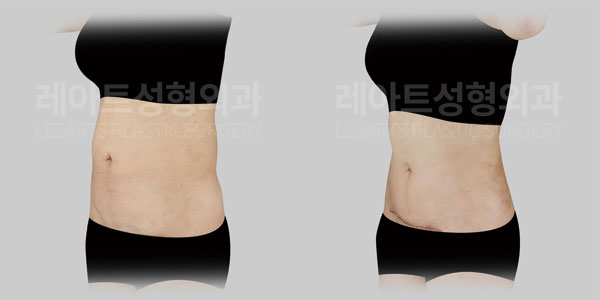
The side-view comparison demonstrates
that the previously protruding
upper and lower abdomen
became noticeably smoother after
abdominoplasty.

The outward bulging of
the abdominal wall was corrected,
creating a flatter and more natural
abdominal profile.

The multiple skin folds that had formed
when bending forward were eliminated,
along with the overlapping skin
and contour irregularity above
the previous C-section scar.

tummy-tuck-02-07-260702

One of the most common concerns
among patients considering abdominoplasty
is the location of the incision,
the recovery period, and
how visible the scar will be.

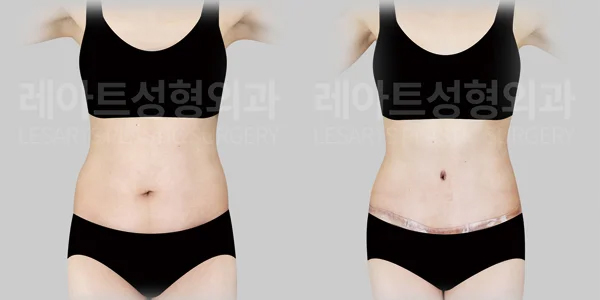
For this patient, the incision was designed
low on the lower abdomen,
allowing the previous C-section scar
to be removed during surgery.

The new abdominoplasty scar
was positioned so that it would be
naturally concealed beneath
most underwear and swimwear.

At 2.5 months after surgery,
the scar remains in the early stage
of maturation, so some redness
is still visible.

However, this is a normal part
of the healing process and
gradually fades over time.

With scar laser treatment
and appropriate postoperative care,
the scar is expected to continue
improving as healing progresses.

The patient was also informed that
temporary numbness and
postoperative tissue firmness
inside the abdomen are common findings
during recovery after abdominoplasty.

These symptoms also improve gradually
as the healing process continues.

#BestAbdominoplastyClinicSeoul

#AbdominoplastyKorea

#MTummyTuck

#PostPregnancyAbdominoplasty

#RectusDiastasisRepair

#CSectionScarRevision

#LesartsPlasticSurgery

FAQ

Q1. Who is a good candidate for M-Type Abdominoplasty?
Patients with loose lower abdominal skin, rectus diastasis, and abdominal contour changes
after pregnancy or weight loss may benefit from M-Type Abdominoplasty.

Q2. Can M-Type Abdominoplasty remove a previous C-section scar?
Yes. In many cases, the previous C-section scar can be removed during surgery,
leaving a single lower abdominoplasty scar that is typically concealed beneath underwear.

Q3. Is abdominal liposuction performed together with abdominoplasty?
Yes. When appropriate, abdominal liposuction is combined with abdominoplasty
to reduce abdominal thickness, improve waist definition, and create a smoother body contour.

Q4. How long does it take to recover after abdominoplasty?
Recovery continues over several months.
While improvement is visible early, swelling, scar redness, tissue firmness,
and temporary numbness gradually resolve as healing progresses.

Q5. Will the abdominoplasty scar become less noticeable over time?
Yes. Scar redness is expected during the early healing phase. With proper scar care,
laser treatment when indicated, and adequate time, the scar typically continues to mature and fade.

▼ Lesarts Plastic Surgery Quick Cost Consultation ▼

▼ Visit Lesarts Plastic Surgery in Gangnam, Seoul, Korea ▼

Scroll to Top