Gynecomastia surgery in Korea: can weight gain cause gynecomastia? 2-week results
Patient Registration Info
| Age | Weight | Height | BMI |
|---|---|---|---|
|
20s |
85kg |
175cm |
28 |
Surgical site
Surgical area: Gynecomastia | Grade 2-A
Many men who are concerned about gynecomastia
visit our clinic because they want to determine
whether their enlarged chest is simply the result
of excess body fat or true glandular enlargement.
In particular, many patients first notice
changes in their chest during puberty,
when weight gain occurs throughout adolescence,
yet continue to struggle with the same concern
well into their 20s and 30s.
If you have been assuming that
your chest enlargement is “just fat,”
blaming yourself for a lack of exercise, or
believing that it will disappear once
you lose enough weight, we encourage you
to read Dr. Moon Ji-hoon’s Doctor’s Column,
which explains the causes and diagnosis of gynecomastia.
The patient presented in this case
shared a very similar history.
He had experienced gynecomastia symptoms
since adolescence, and despite consistent
exercise and weight loss efforts,
he noticed no meaningful improvement.
After entering his 20s, he decided to seek
a definitive solution and visited Lesarts Plastic Surgery
to undergo surgical treatment for gynecomastia.
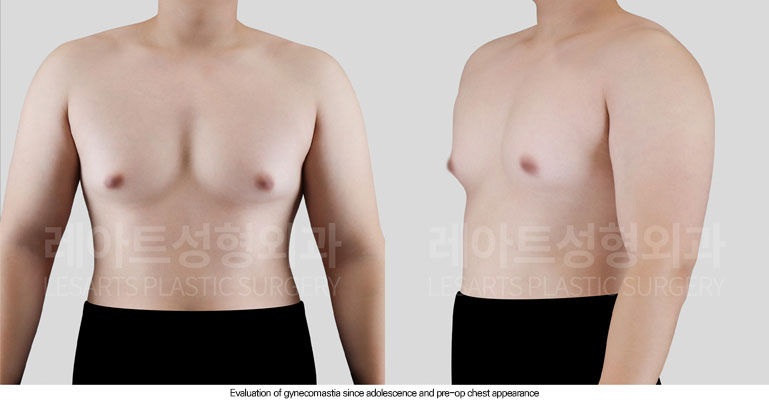
[Patient Information and Diagnostic Findings]
Age: Late 20s
Height / Weight: 175 cm / 85 kg
Diagnosis: Mixed Gynecomastia (Glandular + Fatty Type), Simon Grade 2A
Skin Elasticity: Moderate
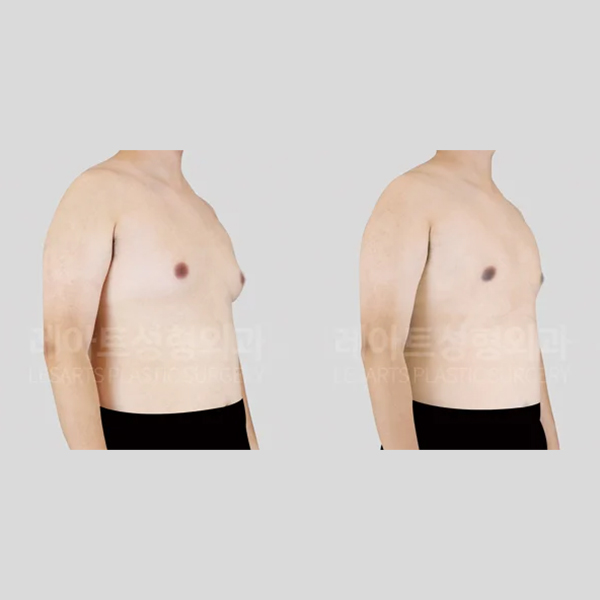
On visual examination,
the patient demonstrated bilateral breast enlargement
with a noticeably protruding chest contour.
The nipple–areolar complex also appeared
enlarged and puffy, making the chest prominence
more apparent.
Based on the physical findings,
the condition was classified as Simon Grade 2A.
Ultrasound examination confirmed the presence of
hypertrophied glandular tissue, demonstrating that
true glandular enlargement was a major contributor
to the patient’s gynecomastia.
On palpation,
a firm glandular mass was clearly palpable
beneath the affected area.
This finding distinguished the condition from
pseudogynecomastia, in which the enlarged chest
is caused primarily by soft adipose tissue
without significant glandular proliferation.
However, glandular enlargement was not
the only factor contributing to the patient’s appearance.
Excess subcutaneous fat extending from
the lateral chest to the lower chest also
increased overall chest volume and created
deeper contour shadows, making the chest projection
appear even more pronounced.
Accordingly, the surgical plan included
gland excision, chest liposuction, and
tissue repositioning to eliminate the underlying cause
of gynecomastia while restoring a natural, masculine chest contour.
This comprehensive contouring approach—commonly
referred to by patients as the “armor chest” effect—was designed to create
a firmer, flatter, and more athletic appearance while minimizing
postoperative contour irregularities.
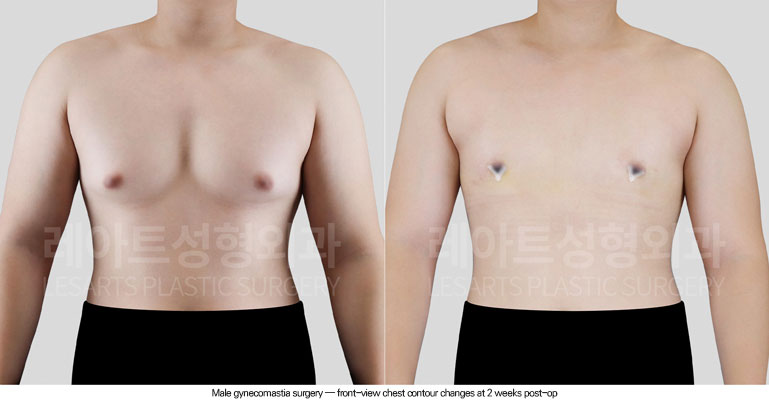
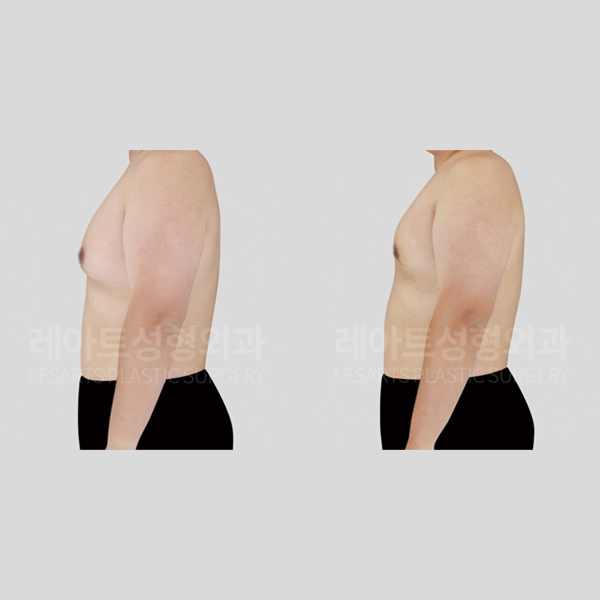
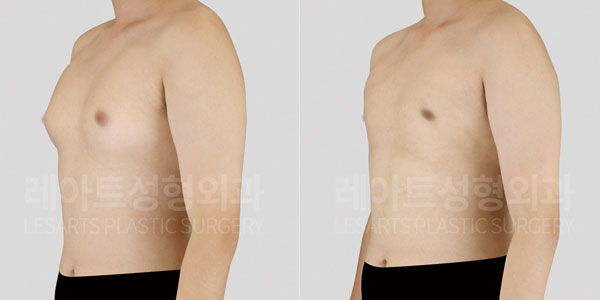
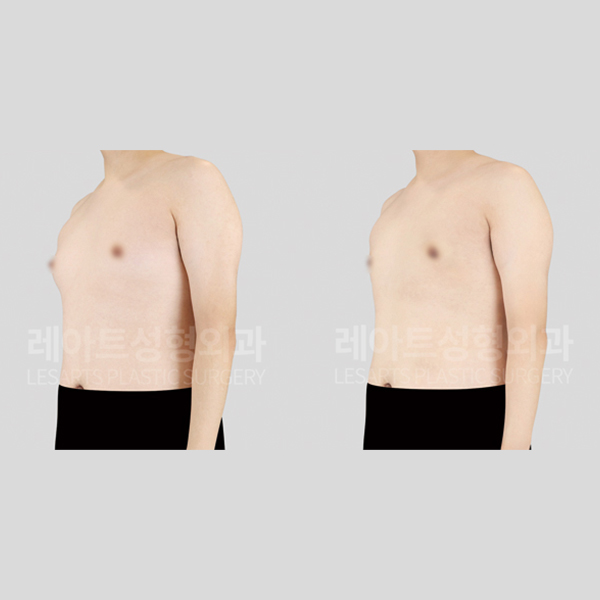
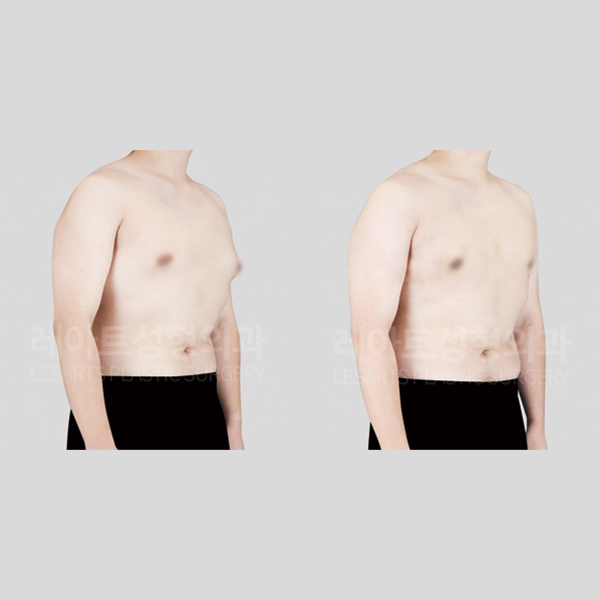
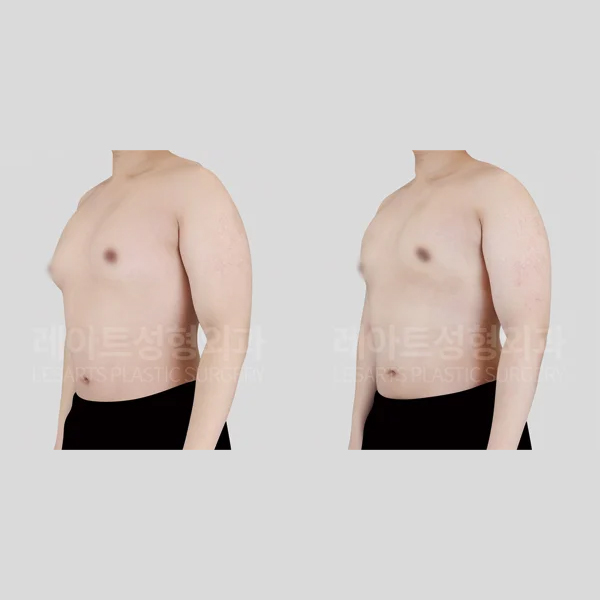
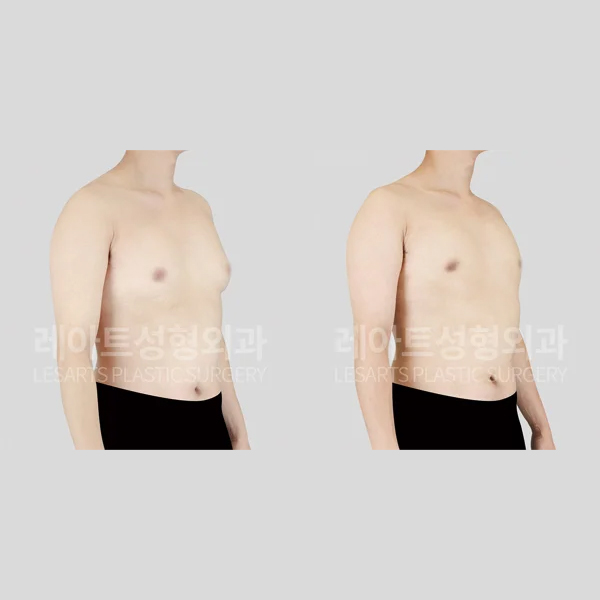
The following photographs were obtained
2 weeks after gynecomastia surgery,
demonstrating the patient’s early postoperative progress
following suture removal.
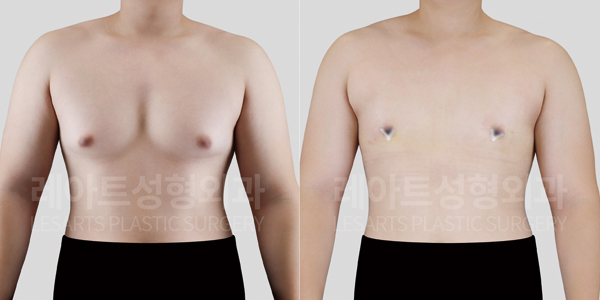
Even during this initial stage of recovery,
the previously prominent anterior chest projection
has been noticeably reduced.
The unnatural shadowing that had been visible
across the chest from the frontal view
has also been eliminated, resulting in
a flatter, smoother, and more natural masculine chest contour.
In addition,
the puffiness of the nipple–areolar complex
has improved substantially, with the previously
projecting appearance resolving into a much
more natural contour.
Because these photographs were obtained
only 2 weeks after surgery,
the patient was still within the period
when postoperative swelling, bruising, and BioBond-related tissue firmness
are commonly present.
For this reason,
the chest contour had not yet reached
its final appearance.
Nevertheless, the correction of the patient’s
primary concerns—including excess chest volume
and prominent nipple projection—was already clearly evident.
The patient expressed a high level of satisfaction
with these early postoperative changes, noting that
the improvement was apparent even before
the final healing process had been completed.
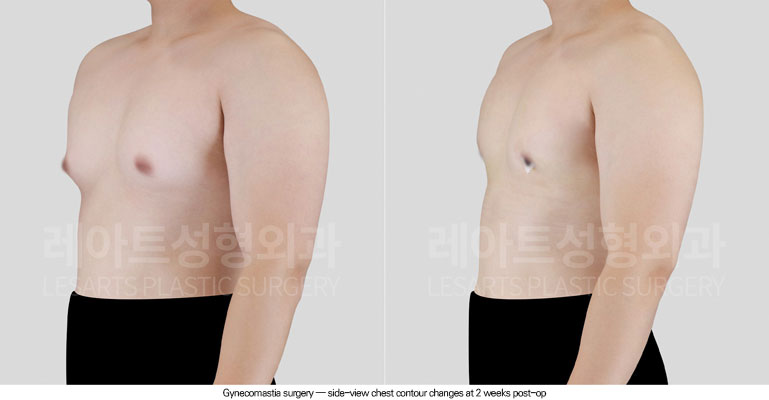
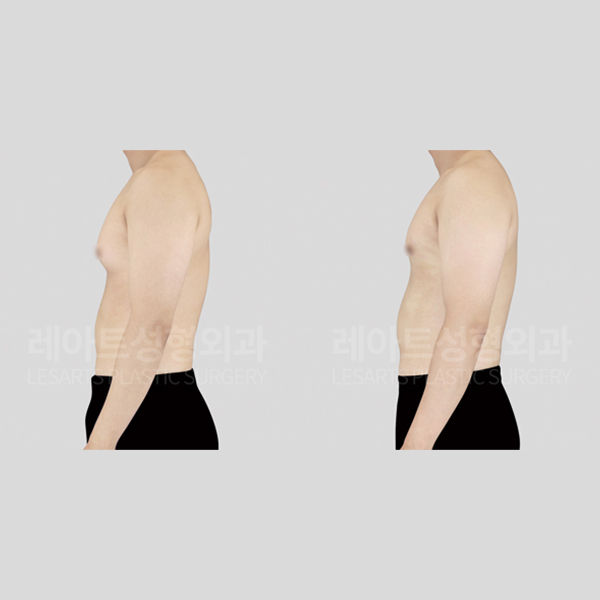
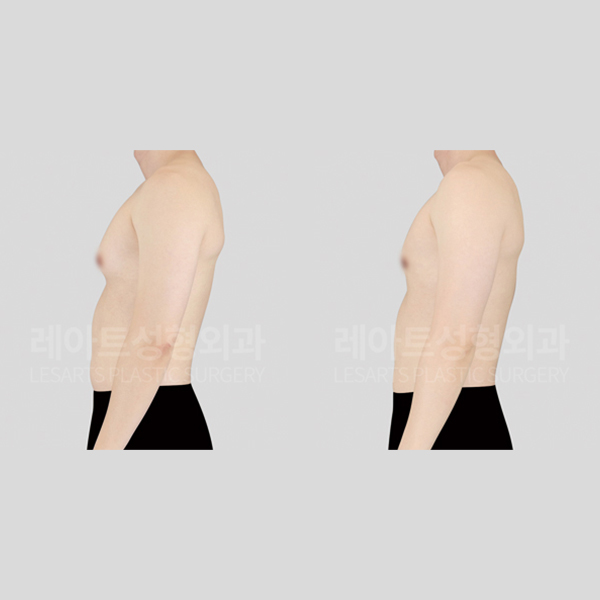
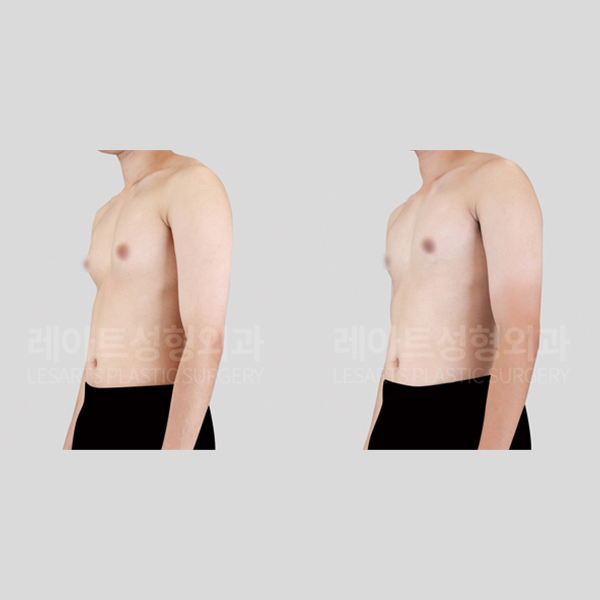
The lateral view also demonstrates
a significant improvement following
gynecomastia surgery.
The previously pronounced anterior chest projection
has been effectively reduced, creating
a much smoother transition from
the thoracic contour to the upper abdomen.
The excessive prominence of the
nipple–areolar complex has also
been naturally corrected, allowing
the chest profile to appear flatter,
more balanced, and distinctly masculine
without the awkward projection that
had previously been visible from the side.
In addition, chest liposuction was performed
along the lower and lateral chest,
further refining the overall contour.
As a result, the fullness that had created
a shadowed appearance between the
lateral chest and the rib cage has been eliminated,
producing a cleaner, more athletic transition
across the entire chest wall and enhancing
the natural masculine silhouette.
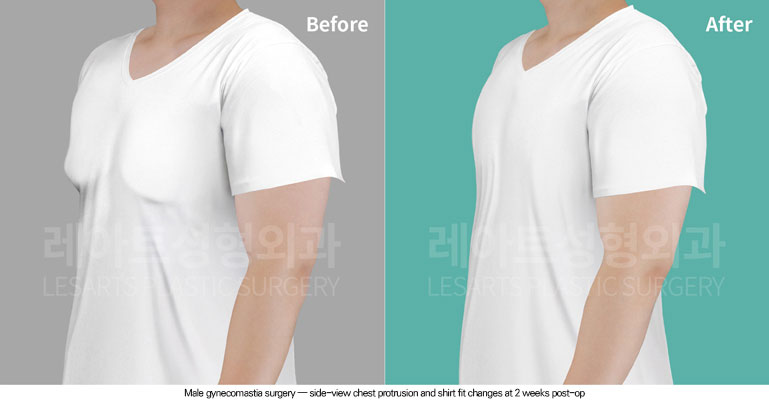
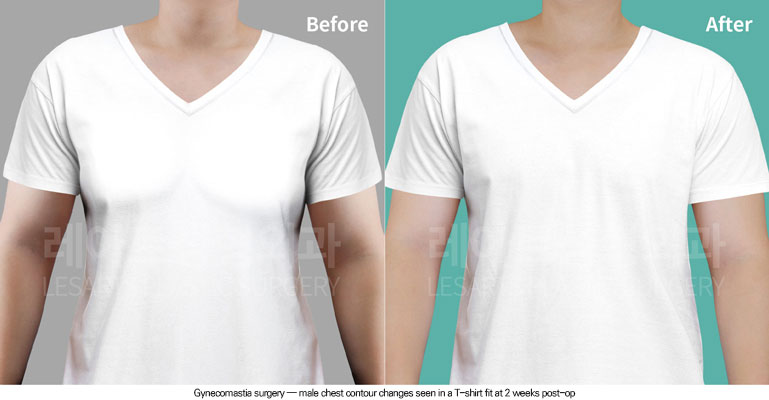
Most patients with gynecomastia
describe getting dressed as one of
the greatest sources of daily stress.
This patient was no exception.
However, immediately after gynecomastia surgery,
he reported that he was able to wear
a simple T-shirt with confidence,
without the prominent chest contour
that had previously caused him embarrassment.
As a result, he explained that
he felt much more comfortable and confident
in everyday life.
The patient was also advised that,
by carefully following the postoperative instructions,
the remaining swelling and BioBond-related tissue firmness
would continue to improve, allowing the chest
to develop an even more refined and
naturally masculine contour over time.
If your chest enlargement persists despite
consistent exercise and dieting,
it is important to undergo an ultrasound examination
to determine whether the underlying cause
is true gynecomastia rather than
simple fat accumulation.
At Lesarts Plastic Surgery,
we provide one-on-one private consultations
with experienced male surgeons, carefully evaluating
each patient’s symptoms, areas of concern,
and diagnostic findings before recommending
the most appropriate surgical approach.
Rather than continuing to worry alone,
we encourage you to undergo a comprehensive evaluation
and receive a personalized treatment plan
based on your individual condition and goals.
#GynecomastiaSurgery
#MaleBreastReduction
#MixedGynecomastia
#SimonGrade2A
#GlandExcision
#ChestLiposuction
#MaleChestContouring
#GynecomastiaBeforeAfter
#GynecomastiaKorea
#LesartsPlasticSurgery
#BestGynecomastiaClinicSeoul