
Abdominoplasty in Seoul: lower abdominal sagging after C-section and results at 2 and 14 months
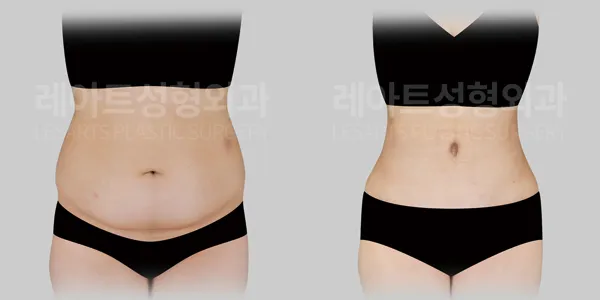
Patient Registration Info
| Age | Weight | Height | BMI |
|---|---|---|---|
|
40s |
56kg |
155cm |
23 |
Surgical site
Surgical site : Abdomen, Hip Dips, M-Type, Rectus Muscle Repair, Umbilicoplasty | Liposuction : 4,800cc
Fat Grafting: Hip Dips (Right: 180 cc / Left: 160 cc)
Is a Full Tummy Tuck Necessary for Sagging and Bulging Lower Abdomen After Childbirth?
Even if sagging appears concentrated in the lower abdomen,
the actual skin laxity may extend from the upper abdomen.
If rectus diastasis is also present,
correcting only the lower abdomen may not be sufficient
to achieve the desired improvement.
It is important to evaluate the extent of skin laxity,
belly button position, and abdominal wall condition
to determine the appropriate extent of tummy tuck surgery.
Pregnancy and childbirth can leave behind
abdominal changes that were not present before.
Skin stretched during pregnancy may not fully recover
after childbirth, resulting in sagging around the lower abdomen.
In some cases, the abdomen may continue to protrude forward
even when the abdominal muscles are tightened.
If these changes remain despite weight management
and regular exercise, it is important to determine
whether they are caused by remaining fat alone
or also involve changes in the skin and abdominal wall.
In this case, the patient’s main concerns after
a cesarean delivery were skin sagging concentrated
below the belly button and fullness in the lower abdomen.
Let’s compare the results after an M-type full tummy tuck
at 2 months, during the early recovery stage,
and at 1 year and 2 months after surgery.
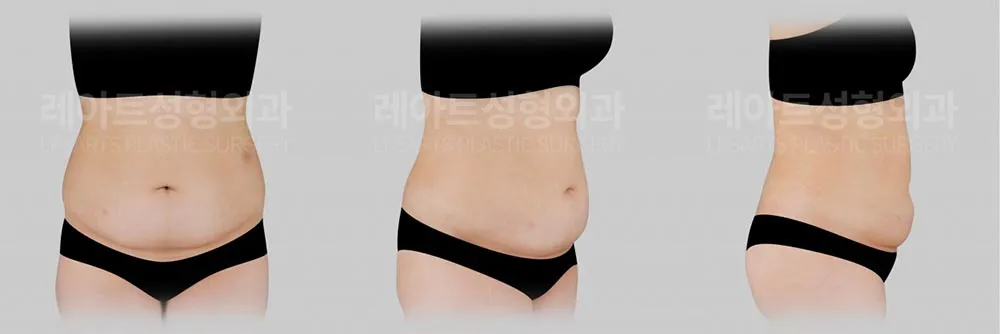
[Preoperative Lower Abdominal Skin Sagging and Fullness]
[Patient Information]
Age: 40s
Height: 155 cm
Weight: 56.2 kg
BMI: 23.4
The patient had undergone a cesarean delivery
and was most concerned about the sagging
lower abdomen below her belly button.
Before surgery, both excess fat and loose skin
were concentrated in the lower abdomen,
making the area appear larger and heavier.
Although the abdominal wall itself was not
severely protruding forward, rectus diastasis was present.
The skin laxity was also not limited to the lower abdomen
but extended downward from the upper abdomen.
Because the belly button was positioned relatively low,
we determined that correcting the entire abdomen
would be more appropriate than treating only
the visibly sagging lower abdominal area.
[Why a Full Tummy Tuck Was Chosen Despite Concerns Focused on the Lower Abdomen]
Although the patient’s main concern was the lower abdomen,
the examination showed that skin laxity
actually began in the upper abdomen.
Rectus diastasis was also present,
making it difficult to sufficiently improve
the overall abdominal contour by reducing
only lower abdominal fat and excess skin.
Therefore, an M-type full tummy tuck was planned
to correct the loose skin and abdominal wall.
Abdominal liposuction was also included
to reduce the remaining fat volume
and improve the overall abdominal contour.
When planning tummy tuck surgery,
it is important not to determine the surgical extent
based only on where the sagging appears most noticeable.
The evaluation should also consider
where the skin laxity begins, the condition
of the rectus muscles, and the position
of the belly button.
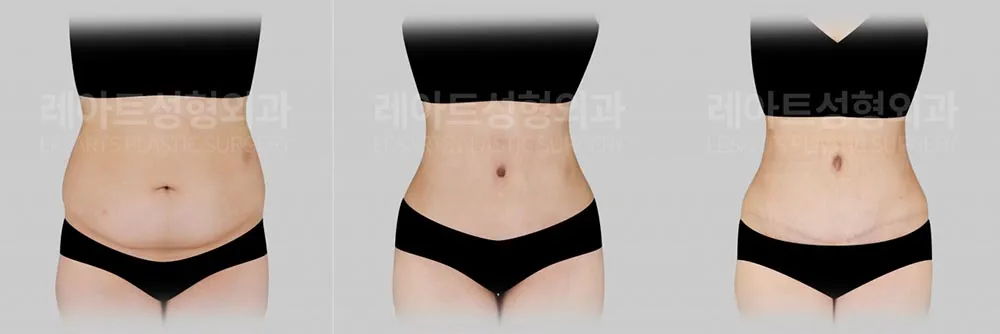
[Recovery After Tummy Tuck Surgery: Front View Comparison at 2 Months and 1 Year 2 Months]
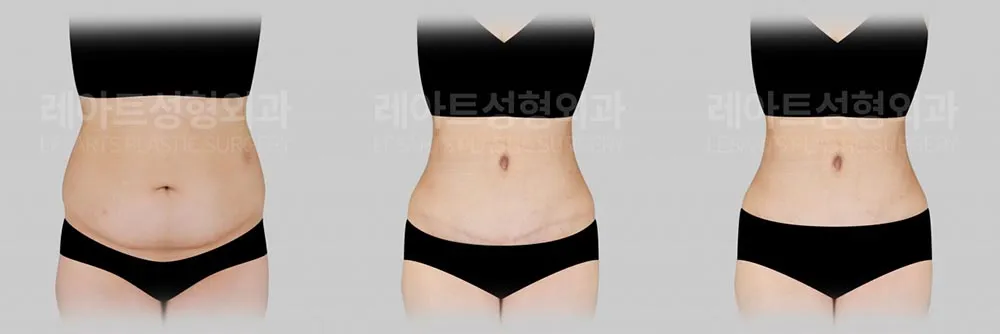
Let’s compare the front-view photos taken
before surgery, at 2 months, and at 1 year
and 2 months after surgery.
Before surgery, excess skin and volume
were concentrated below the belly button,
making the lower abdomen appear heavy.
At 2 months after surgery, the sagging skin
and lower abdominal volume had decreased significantly,
creating a smoother contour from above the belly button
down to the lower abdomen.
The volume on both sides of the waist had also decreased,
allowing the natural waistline curvature,
which had previously been less noticeable,
to become more defined.
In the photos taken 1 year and 2 months after surgery,
these improvements remained stable,
with the refined abdominal contour maintained over time.
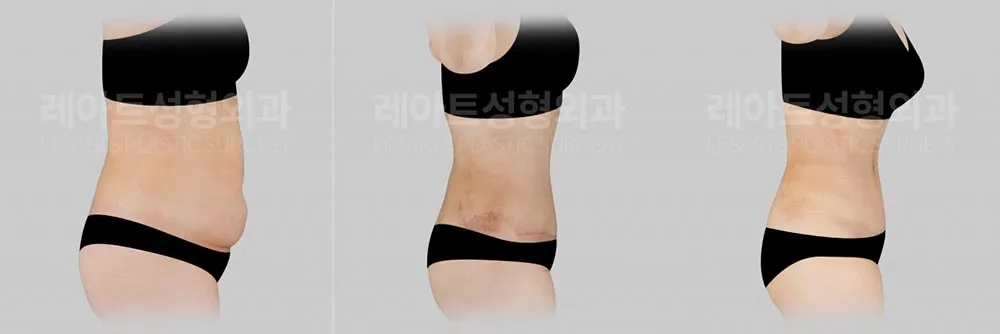
[Changes in the Lower Abdomen from the Side View at 2 Months and 1 Year 2 Months After Tummy Tuck Surgery]
From the side view, the changes in the lower abdomen,
which had been the patient’s main concern,
are even more noticeable.
Before surgery, the area below the belly button
had a rounded, forward-projecting appearance.
After removing the excess skin and performing
abdominal liposuction along with abdominal wall repair,
the thickness and projection of the lower abdomen
had noticeably decreased by 2 months after surgery.
Even during this early recovery stage,
the abdominal contour from the upper to lower abdomen
appeared firmer and smoother than before surgery.
At 1 year and 2 months after surgery,
this improved abdominal contour
remained well maintained.
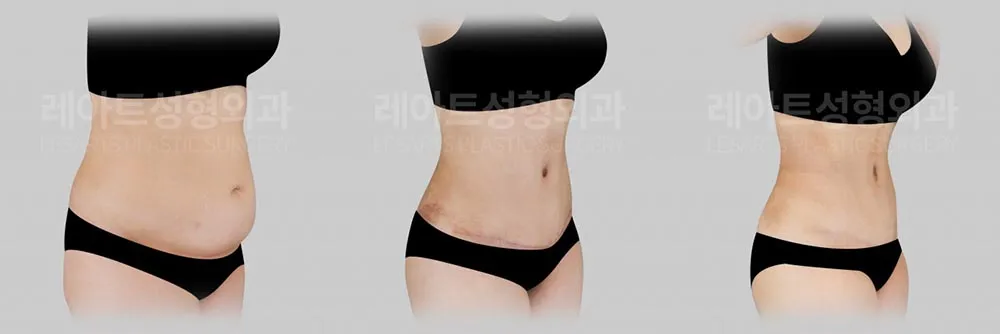
[Oblique View Comparison at 2 Months and 1 Year 2 Months After Tummy Tuck Surgery]
From the oblique view, the reduction in volume
previously concentrated in the lower abdomen
is also clearly visible.
The contour extending from the waist
to the lower abdomen appears more natural.
Although 2 months after surgery is still
an early stage of recovery, the areas that
previously protruded forward and sagged downward
had already improved significantly.
Even more than a year after surgery,
the flatter abdominal contour and natural waistline
remained stable and well maintained.
The patient also expressed satisfaction
with the improvement in her lower abdomen,
which had been her greatest concern.
She shared that she no longer experienced
the stress she previously felt when wearing clothes.
[Lower Abdominal Incision Scar at 1 Year 2 Months After Tummy Tuck Surgery: Position and Coverage by Underwear]
When considering tummy tuck surgery,
one of the biggest concerns, aside from the results,
is the appearance of the incision scar.
In this case, the patient also had an incision scar
along the lower abdomen after surgery.
However, the incision was positioned so that
it could be concealed beneath her underwear.
Although the incision line appeared reddish
during the early recovery period,
the photos taken 1 year and 2 months after surgery
show that its color had gradually faded,
starting from both ends of the scar.
The incision line had also become
more natural in appearance over time.
Scar changes do not necessarily stop
once a year has passed after surgery.
The scar may continue to undergo maturation
and gradually change in appearance
throughout the following recovery period.
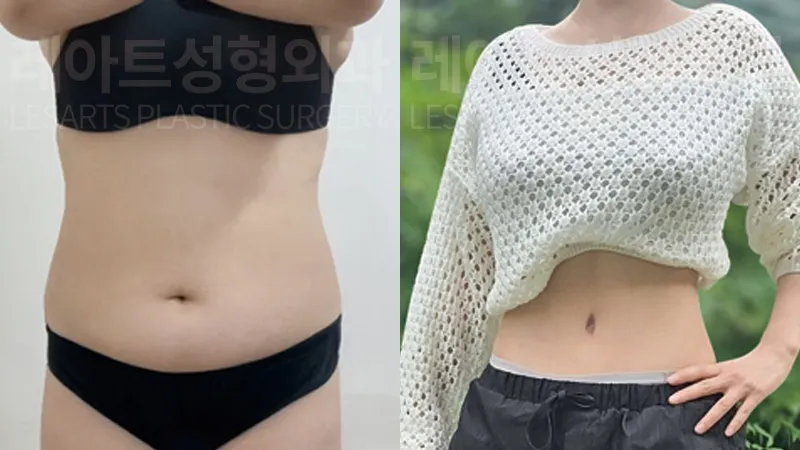
[Before-and-After Selfie Comparison: 6 Months After Tummy Tuck Surgery]
Changes in the abdomen can be seen
not only in standardized before-and-after photos
taken at the clinic but also in everyday photos
shared directly by the patient.
Before surgery, the lower abdomen projected forward,
with excess volume concentrated below the belly button.
At 6 months after surgery, the lower abdomen
appeared slimmer and more refined,
allowing the natural waistline to become more visible.
In particular, the selfie on page 4 shows
that even when wearing a cropped top,
the lower abdomen no longer protruded
as noticeably as it did before surgery.
The natural curvature of the waist
was also more clearly visible.
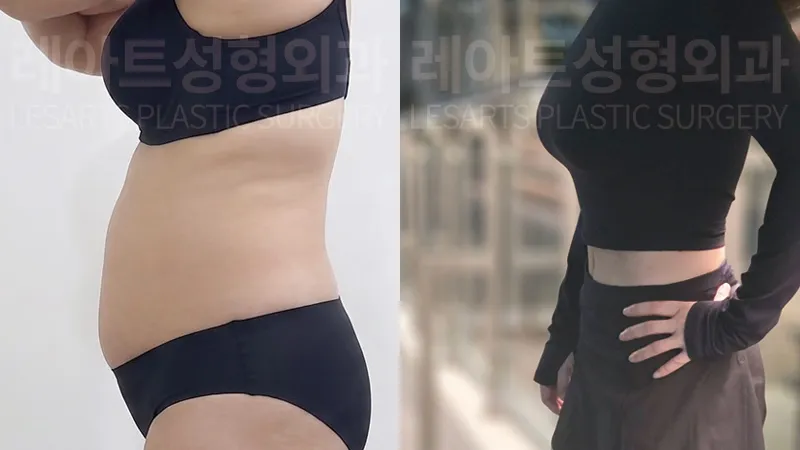
[Before-and-After Selfie Comparison: 9 Months After Tummy Tuck Surgery]
The patient’s everyday photos taken 9 months
after surgery also show that the improvements
in her abdominal contour remained stable.
Before surgery, the lower abdomen projected forward
from the side, making the entire abdomen appear heavier.
At 9 months after surgery, the contour from
the upper to lower abdomen appeared noticeably flatter
and smoother.
The patient shared that one of the most satisfying
changes was how naturally her waistline appeared
when wearing cropped tops or fitted clothing.
In this case, the patient’s main concern was
the sagging and protruding lower abdomen
that remained after a cesarean delivery.
Although the lower abdomen appeared to be
the primary concern, the examination revealed
that skin laxity extended from the upper abdomen.
Rectus diastasis and a relatively low belly button
position were also identified.
Therefore, an M-type full tummy tuck was performed
to correct the loose skin and abdominal wall,
along with abdominal liposuction.
By 2 months after surgery, the thickness
and forward projection of the lower abdomen
had decreased significantly, allowing
the natural waistline to become more visible.
At 1 year and 2 months after surgery,
the improved abdominal contour extending
from the upper to lower abdomen remained stable.
The patient also expressed satisfaction
with the reduction in lower abdominal fullness,
which had previously caused the most stress
when choosing and wearing clothes.
She was particularly pleased that her waistline
appeared more natural even when wearing
cropped tops or fitted clothing.
Tummy tuck surgery is not simply a procedure
that removes visibly sagging skin
from the lower abdomen.
The appropriate surgical extent should be determined
after evaluating where the skin laxity begins,
changes in the shape and position of the belly button,
and the condition of the rectus muscles.
This is why, as demonstrated in this case,
a full tummy tuck may be necessary
even when the patient’s main concern
is limited to the lower abdomen.
Therefore, if you are considering tummy tuck surgery,
it is important not to decide on the incision length
or extent of surgery in advance.
Instead, the condition of your abdominal skin
and abdominal wall should first be carefully evaluated
before discussing and choosing the surgical approach
most appropriate for your individual needs.
Tummy Tuck Surgery FAQ
Q1. Can a full tummy tuck be necessary even if only the lower abdomen appears saggy?
Yes. Even if visible sagging is concentrated
in the lower abdomen, skin laxity may actually
extend from the upper abdomen.
In such cases, more extensive skin repositioning
and correction may be necessary.
Q2. Can rectus diastasis be corrected during tummy tuck surgery?
If rectus diastasis is identified when planning
tummy tuck surgery, abdominal wall repair
may also be considered depending on
the current condition of the abdominal wall.
Q3. Are noticeable improvements visible 2 months after tummy tuck surgery?
In this case, a significant reduction
in lower abdominal projection and thickness
was already visible at 2 months after surgery.
However, this is still an early stage of recovery,
and the abdominal contour and incision scar
will continue to stabilize over time.
Q4. Can tummy tuck results be maintained for more than a year?
In this case, the patient’s abdominal contour
from the upper to lower abdomen remained stable
at 1 year and 2 months after surgery.
However, long-term maintenance of the results
may be influenced by weight changes
and lifestyle habits.
Q5. What does a tummy tuck scar look like after one year?
Scar healing varies from person to person.
In this case, the incision scar gradually faded
in color from both ends over 1 year and 2 months,
becoming more natural in appearance.
▼ Visit Lesarts Plastic Surgery in Gangnam, Seoul, Korea ▼