Patient Registration Info
Surgical site
Surgical site : Abdomen, M-type, rectus plication,umbilical correction| liposuction aspirate volume : 2,900cc
Even long after childbirth,
many women continue to struggle with
persistent lower abdominal skin laxity.
Following pregnancy and delivery,
the abdominal skin may become stretched,
allowing excess skin to descend below
the umbilicus and creating deep folds
within the lower abdomen.
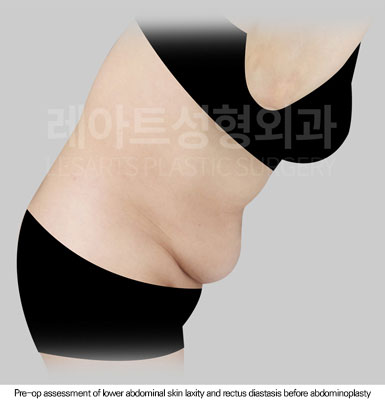
In this patient’s case,
skin laxity extending into the upper abdomen
and rectus diastasis were both identified,
making dissection up to the upper abdomen necessary.
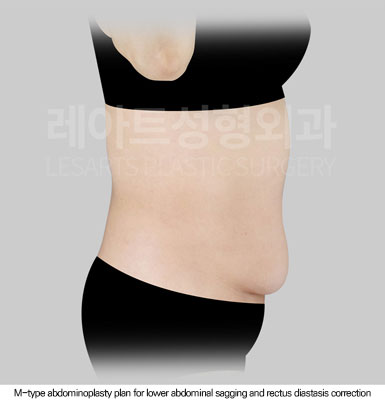
Accordingly, an M-Type Full Abdominoplasty
was recommended, together with rectus muscle plication
and fascial repair to restore the weakened
abdominal wall and correct the forward protrusion
caused by abdominal wall laxity.
However, the patient naturally had
a relatively straight waist, with a similar width
between the upper abdomen and pelvis.
For this reason, the goal of surgery
was not to create an excessively narrow waistline.
Instead, the surgical plan focused on
correcting the sagging lower abdomen and
eliminating the deep skin folds, while creating
a smoother and more natural transition from
the anterior abdomen to the lower abdominal contour.
In addition, abdominal liposuction was performed
in conjunction with abdominoplasty to refine
the blunt contour of the anterior abdomen
and further enhance the overall silhouette,
allowing a more harmonious and naturally
contoured abdominal profile.
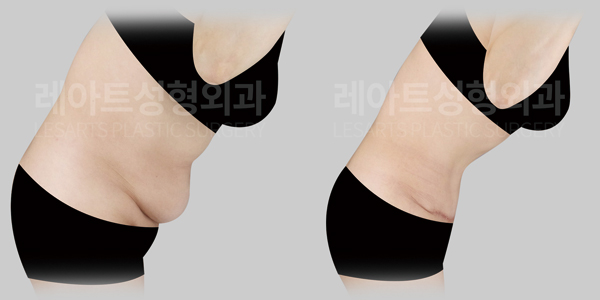
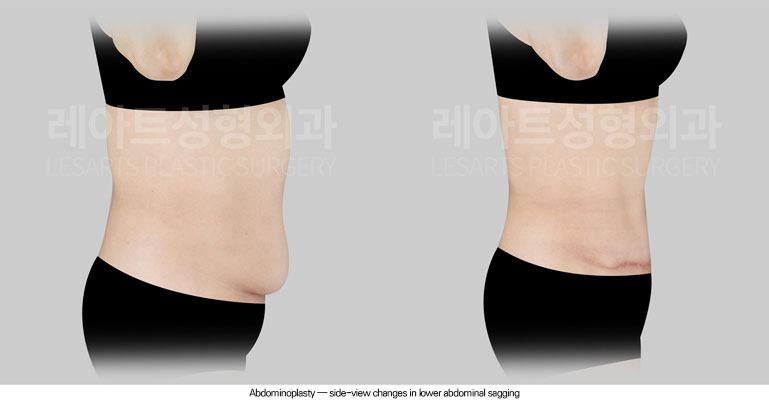
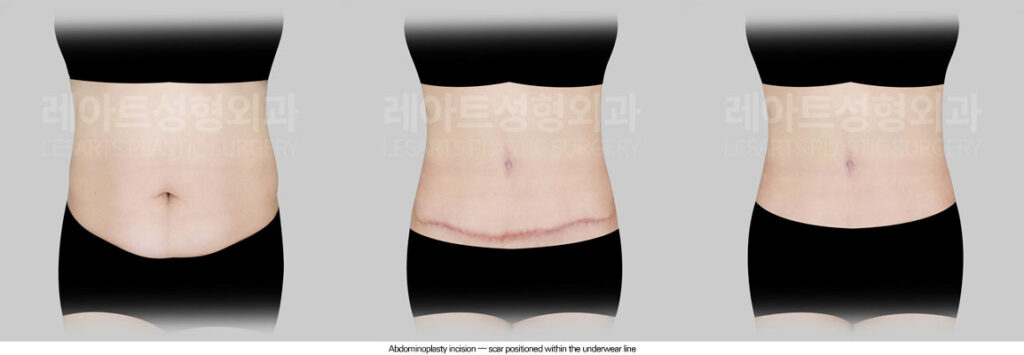
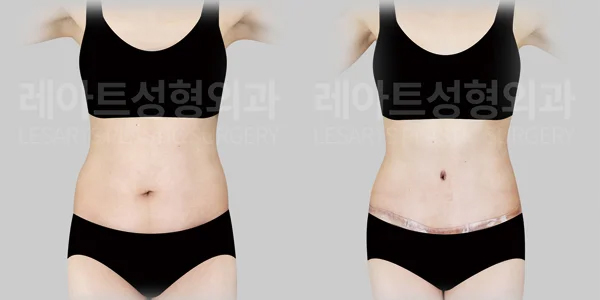
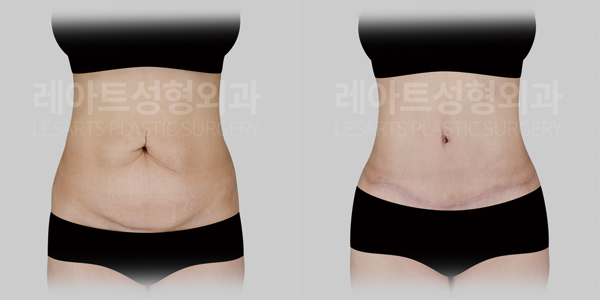
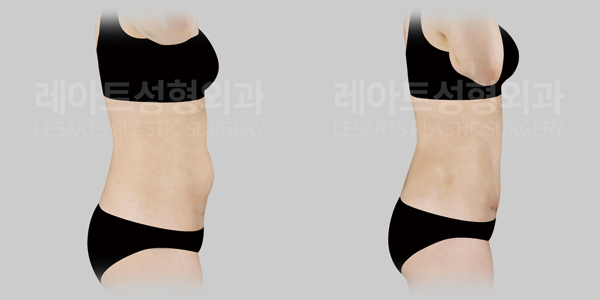
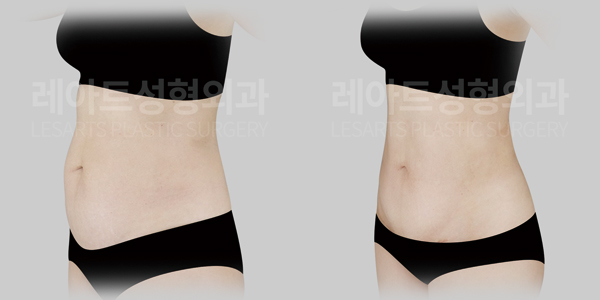
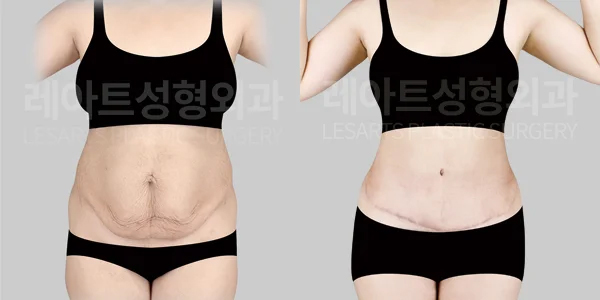
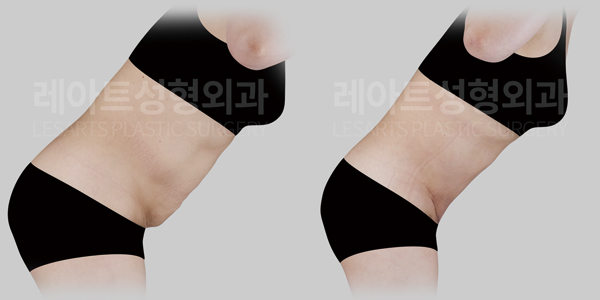
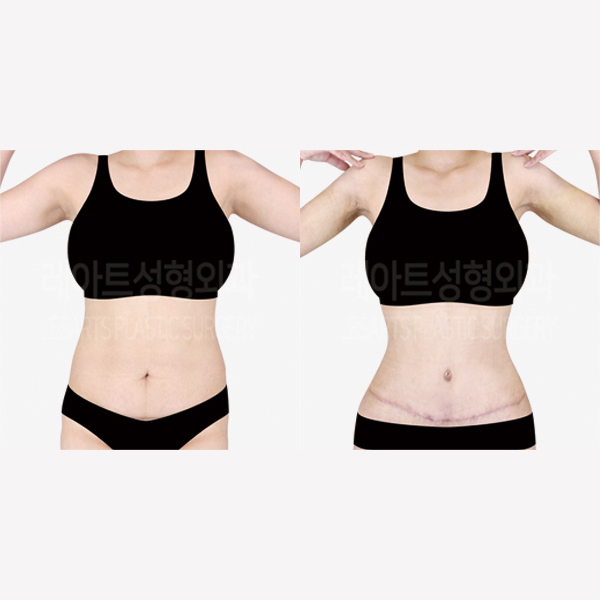
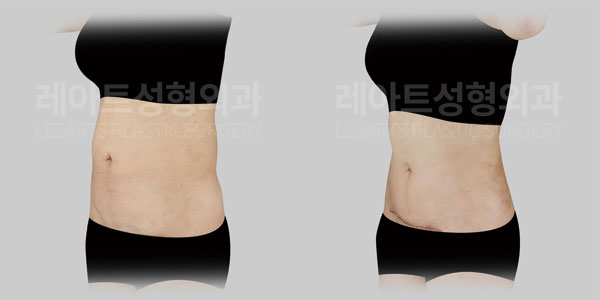
The following photographs compare
the patient’s appearance before and after abdominoplasty.
The previously protruding, three-lobed contour
of the abdomen has been effectively corrected,
creating a much smoother and more harmonious
anterior abdominal profile.
As the excess skin that had descended
from the upper abdomen was removed,
the redundant folds of the lower abdomen
were eliminated, significantly reducing
the heavy appearance of the lower abdominal region.
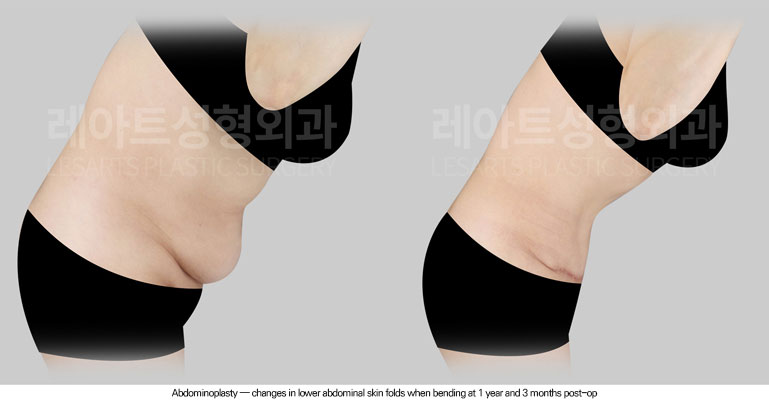
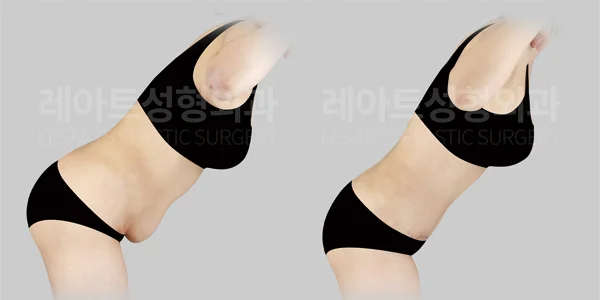
The improvement becomes even more apparent
when the patient bends forward at the waist.
Before abdominoplasty, bending forward caused
the lower abdominal skin to shift downward under gravity,
creating a pronounced fold that extended
over the underwear line.
After surgery, however, the same position
demonstrates a firmly supported anterior abdominal contour,
with the lower abdomen remaining smooth
and well maintained despite the change in posture.
This improvement is not simply the result of
removing excess skin.
It also reflects the restoration of
abdominal wall support through rectus diastasis repair,
which prevents the abdominal contents from
bulging forward due to weakened structural support.
As this case demonstrates,
abdominoplasty is a procedure designed not only
to improve the external appearance of the abdomen,
but also to restore abdominal wall function,
resulting in both aesthetic and functional improvement.
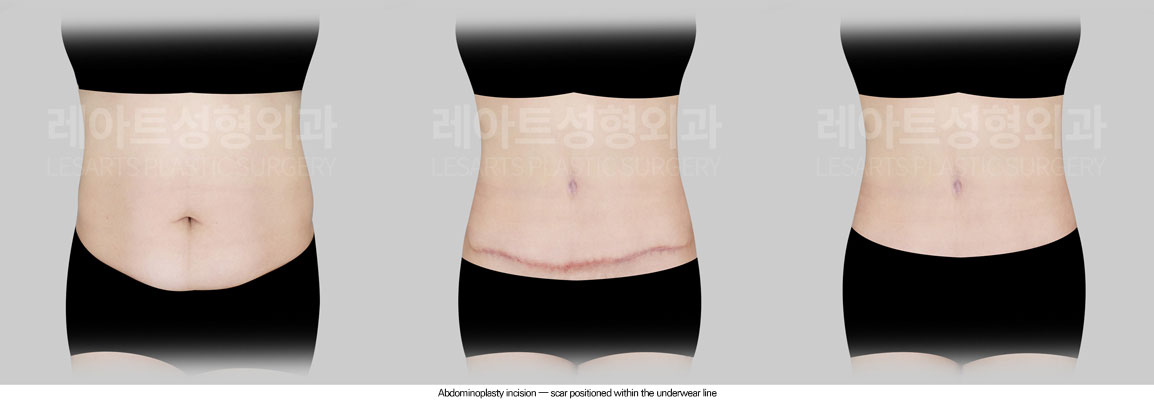
It is important to remember that
scar maturation varies from patient to patient,
depending on individual skin characteristics
and healing capacity.
For this reason, appropriate scar management
and regular postoperative follow-up are essential
to monitor healing and achieve the best possible outcome.
In this patient’s case,
the healing process has progressed
somewhat more slowly than average.