Gynecomastia surgery in Korea: visible changes 2 weeks after surgery for men concerned about chest appearance in thin clothing
Patient Registration Info
| Age | Weight | Height | BMI |
|---|---|---|---|
|
30s |
87kg |
170cm |
30 |
Surgical site
Surgical area: Gynecomastia | Grade 2-A
Many men who struggle with
gynecomastia symptoms
often find the warmer months
particularly stressful.
As clothing becomes lighter,
the contour of the chest,
along with prominence of the nipples
and areolar region,
can become much more noticeable
through thin fabrics.
This can make patients feel
increasingly self-conscious
about their upper body appearance.
In particular,
during activities such as weight training,
soccer, or running,
which involve significant upper body movement,
patients may become more aware of
their chest contour.
Some individuals also describe
an uncomfortable sensation
caused by the chest moving
or rubbing against clothing,
making the area difficult to ignore
not only during exercise
but also throughout daily activities.
However, despite ongoing concerns,
many patients hesitate to undergo
gynecomastia surgery
because of worries regarding
the recovery period
and uncertainty about the results.
In today’s post,
we will review the progress and
early outcomes of surgery
through photographs taken
at 2 weeks post-operatively,
which corresponds to the timing of
suture removal after gynecomastia surgery.
[Gynecomastia Surgery Patient Information]
Age: 30s
Height / Weight: 170 cm / 87 kg
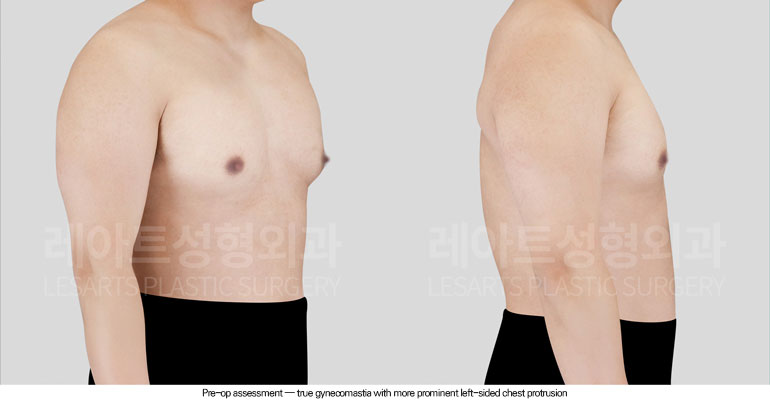
Diagnosis: True Gynecomastia,
Simon Grade 2A
The patient had been aware of
his gynecomastia symptoms
since adolescence.
However, upon entering his 30s,
he noticed that his chest
appeared to have increased in size,
accompanied by enlargement
and puffiness of the areolar region,
which ultimately led him to visit
Lesarts Plastic Surgery
for surgical treatment.
On physical examination,
firm glandular tissue
could be palpated beneath the chest,
resembling a palpable mass,
and the patient also reported
tenderness and discomfort
when pressure was applied.
These findings raised a strong suspicion of
true gynecomastia caused by glandular proliferation.
In addition,
the patient demonstrated
noticeable asymmetry
between the right and left sides
of the chest.
An ultrasound examination
confirmed the presence of
hypertrophied glandular tissue,
and it was explained that
meaningful improvement of the condition
would require surgical treatment.
At the same time,
it was determined that
liposuction of the surrounding chest fat
would also be beneficial
to refine the overall
upper body contour.
However,
the left chest was larger
and exhibited mild skin laxity
compared with the right side.
Therefore,
the patient was informed in advance
that there was a possibility of
developing mild wrinkling
on the left chest following surgery,
and that achieving
perfect bilateral symmetry
might not be entirely feasible.
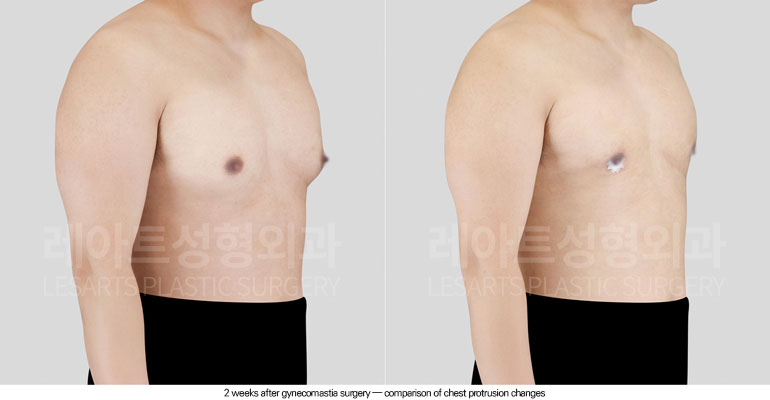
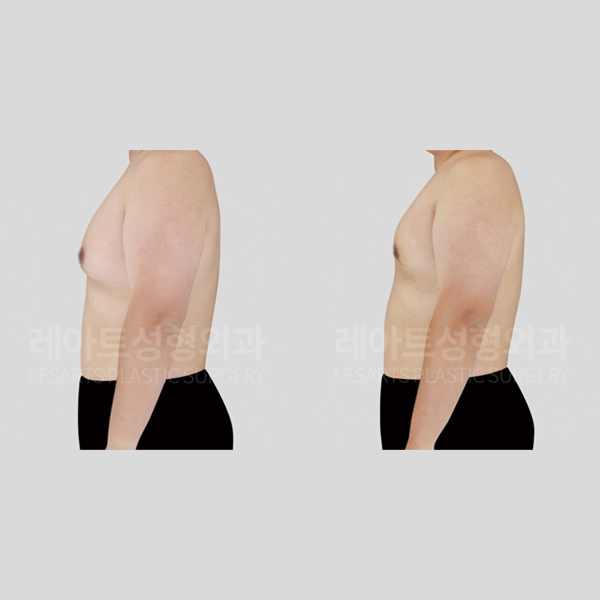
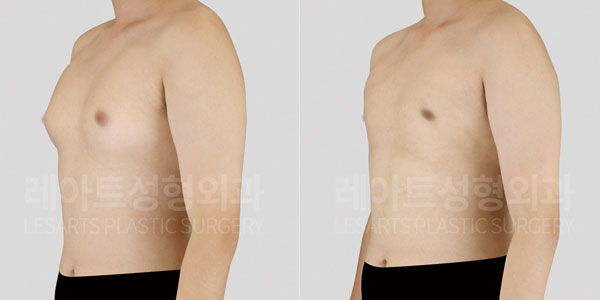
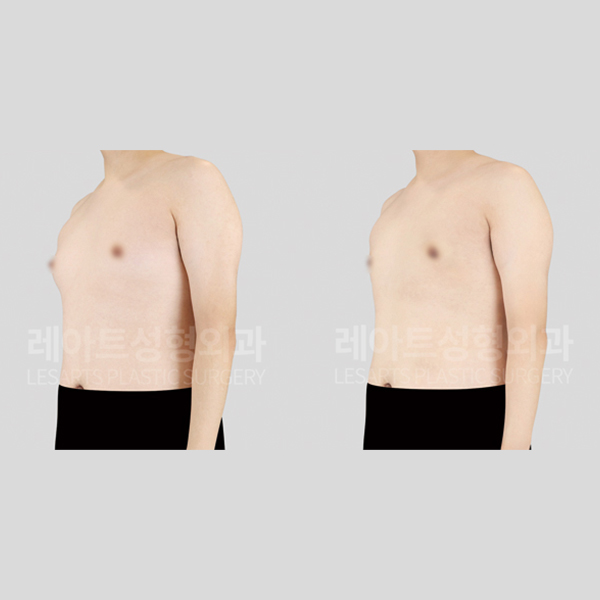
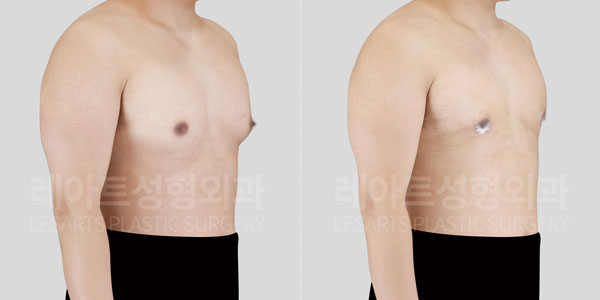
These photographs were taken
approximately 2 weeks after gynecomastia surgery.
The chest fullness that previously
projected outward before surgery
has been significantly reduced,
creating a flatter and more masculine appearance.
The prominence that was particularly noticeable
around the nipples and areolar region
has also been corrected,
allowing the anterior chest contour
to transition more smoothly
across the upper torso.
In addition,
the shadowing that had formed
along the inframammary area
due to excess chest volume
has largely disappeared,
improving the previously awkward
and self-conscious upper body silhouette.
Despite being only 2 weeks post-operatively,
when mild swelling and tissue firmness
are still expected to be present,
the overall reduction in chest volume
and improvement in contour
are already clearly visible.
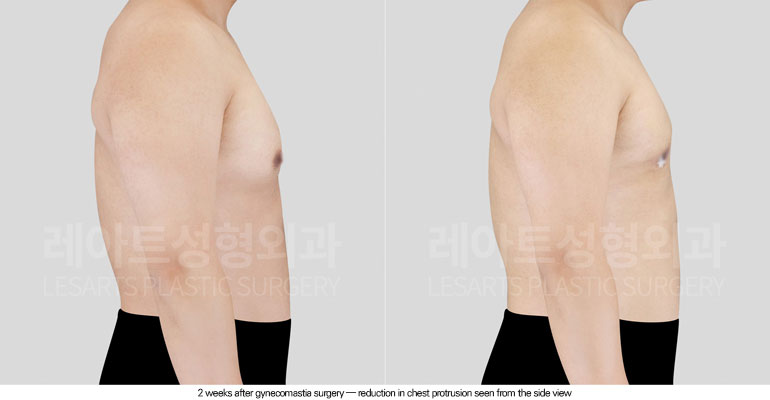
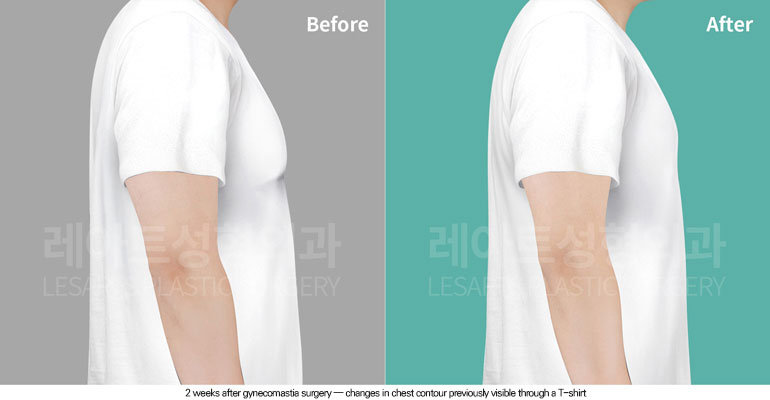
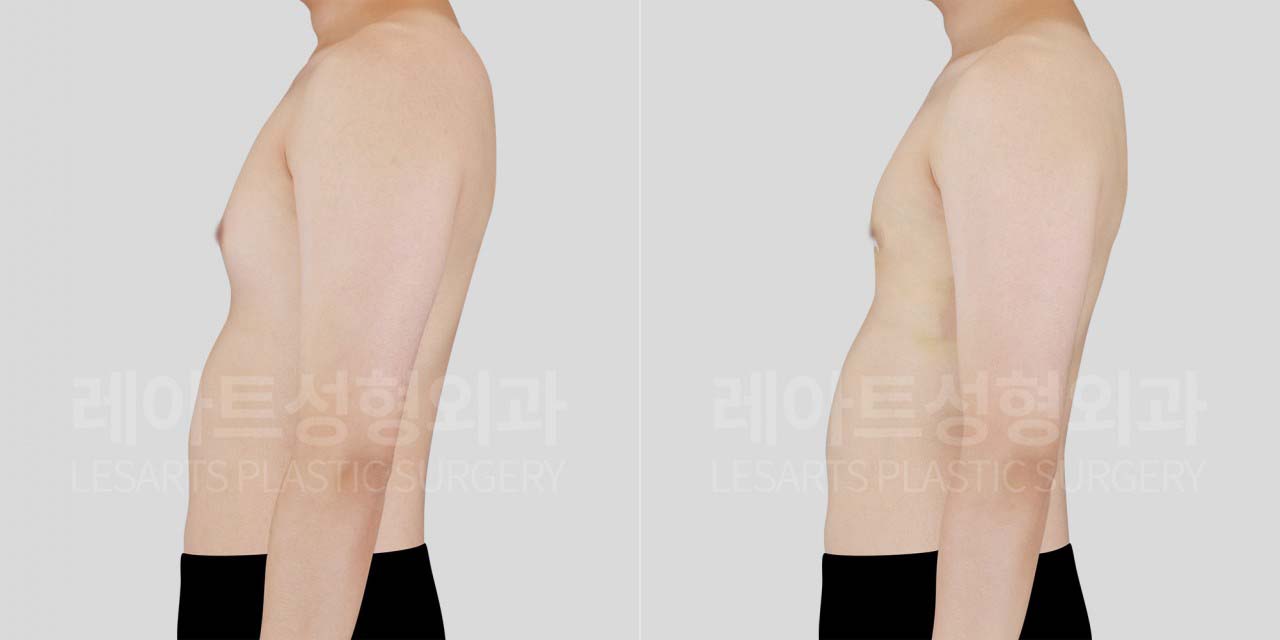
From the side profile,
the previously noticeable
chest projection
has been significantly reduced,
creating a more natural
and masculine chest contour.
The puffy appearance
that had been concentrated around
the nipples and areolar region
has also resolved.
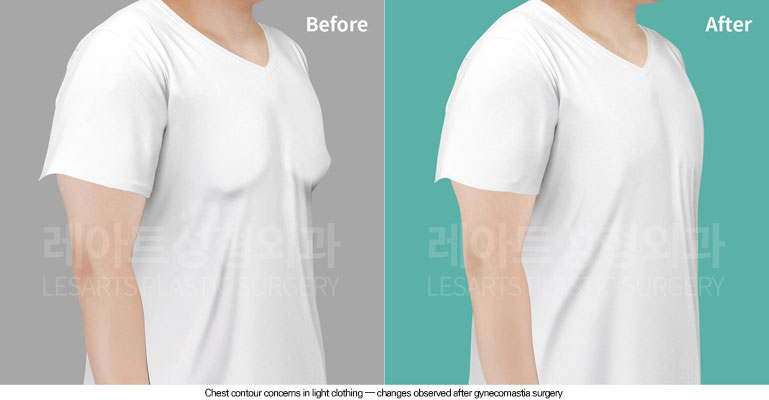
Even when wearing
a thin T-shirt,
attention is no longer drawn
primarily to the chest area,
allowing the entire upper body silhouette
to appear much more natural
and well-balanced.
The patient is someone who exercises regularly
and reported being highly satisfied
that he no longer needs to be concerned about
chest movement during activity
or the way clothing fits.
At 2 weeks post-operatively,
which corresponds to the early recovery period
and timing of suture removal,
the patient’s overall healing progress
was favorable.
It was explained that
if he continues to follow
the recommended post-operative care instructions
and activity precautions,
the chest contour is expected
to become even more refined
as swelling continues to subside.
Many individuals who develop
gynecomastia symptoms
initially assume that
the enlarged chest is simply related to
weight gain and therefore delay treatment.
However,
if increased chest volume persists
for a prolonged period,
the likelihood of developing
skin laxity, wrinkling,
and other secondary changes
may gradually increase.
For this reason,
obtaining an accurate diagnosis
and receiving appropriate treatment
at an earlier stage
can help patients achieve
more effective and predictable improvement.
#Gynecomastia
#GynecomastiaSurgery
#GynecomastiaBeforeAfter
#TrueGynecomastia
#SimonGrade2A
#MaleChestContouring
#GlandExcision
#ChestLiposuction
#GynecomastiaRecovery
#LesartsPlasticSurgery
#BestGynecomastiaClinicInKorea