
[Medical Column] Gynecomastia Surgery Recovery – When Can You Return to Daily Activities and Use Your Arms?
When can I return to daily activities and use my arms after gynecomastia surgery?
Most patients can resume light daily activities while taking precautions with arm movements.
During the first two weeks, avoid sudden, forceful arm movements and lifting objects weighing 20 kg or more.
Keeping your elbows close to your body can help reduce strain on the chest muscles.
Written by Dr. Jihoon Moon, Lesarts Plastic Surgery
This medical column was written directly by the attending surgeon.
※ Unauthorized reproduction, editing, or redistribution is prohibited. ※
Among patients who visit us for gynecomastia surgery consultations, we often meet those who hesitate to proceed,
not because of the surgery itself, but because of unexpected restrictions on their daily activities.
In particular, some patients become concerned when we explain:
For approximately two weeks after surgery, you should avoid sudden, large arm movements and lifting heavy objects weighing 20 kg or more.

Precautions After Gynecomastia Surgery – Lesarts Plastic Surgery
Patients are generally willing to take a break from activities
such as weight training or swimming for about four weeks,
as these are considered recreational activities.
However, when arm movements are essential for responsibilities
that cannot be put on hold, such as work or childcare,
they may seriously wonder,
“Is now really the right time to undergo this surgery?”
However, the important point is that
there is no need to postpone gynecomastia surgery
simply because your job or daily activities require frequent arm movements.
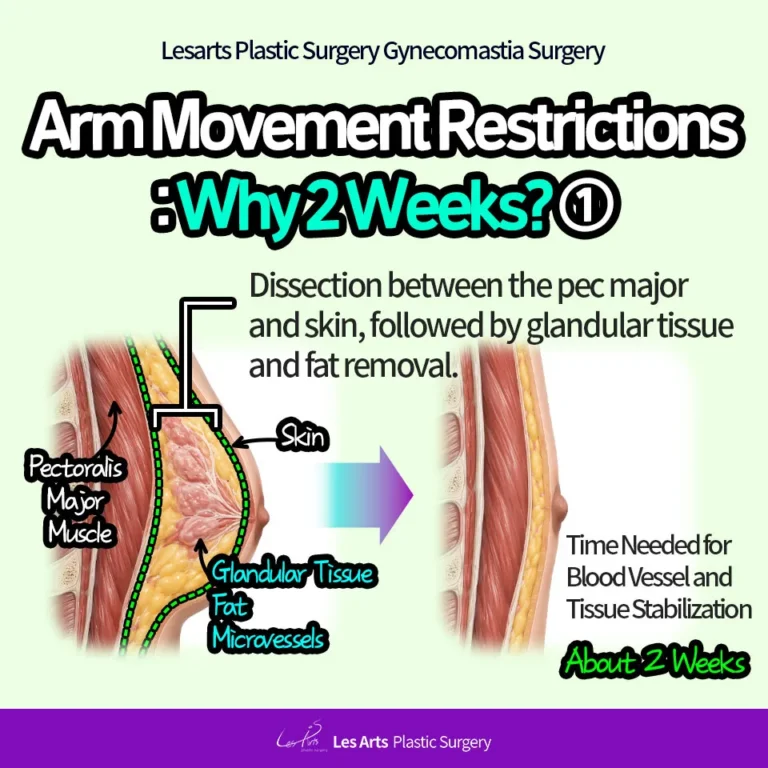
1. Why Are the First Two Weeks and Arm Movements So Important?
Gynecomastia surgery involves removing enlarged glandular breast tissue
and performing liposuction to remove surrounding fat.
During this process, extensive tissue dissection
(separation of the skin and underlying muscle)takes place in the area above the pectoralis major muscle.
The first one to two weeks after gynecomastia surgery
are the most critical period for recovery,
as the small blood vessels in the dissected area stabilize
and the separated tissues begin to adhere and heal.
Precautions After Gynecomastia Surgery – Dr. Jihoon Moon, Lesarts Plastic Surgery
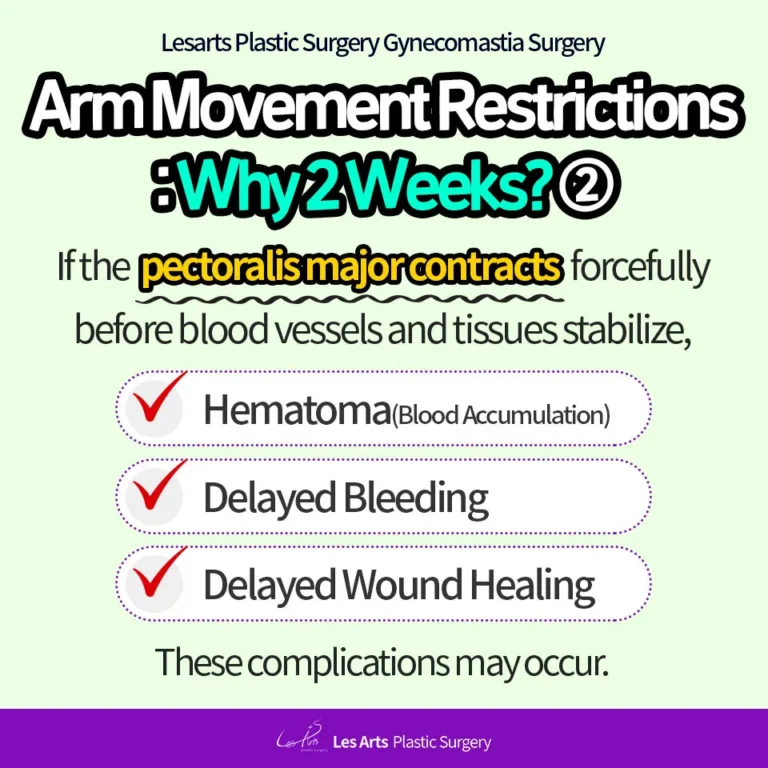
At this stage, suddenly swinging the arms in large movements
or placing a heavy load on the arms while they are extended away from the body
can cause strong contractions of the pectoralis major muscle.
This may place stress on the surgical area,
potentially leading to hematoma (blood accumulation),
delayed bleeding, or slower wound healing.
Therefore, the recommendation to “avoid using your arms”
does not mean stopping all everyday movements.
Rather, it is a medical precaution intended to prevent situations
that place sudden, excessive tension (stretching force)
on the pectoralis major muscle.
2. Practical Guidelines for Daily Activities: “Just Keep It in Mind”
During consultations, patients often share a wide range of circumstances,
including those working in delivery and logistics, hairstylists,
chefs, maintenance workers, and fathers who need to hold their children every day.
Telling these patients, “Do not use your arms at all for two weeks,”
is simply unrealistic.
Trying to follow such a restriction strictly
can also create an almost obsessive level of stress.
Arm Movements After Gynecomastia Surgery – Lesarts Plastic Surgery
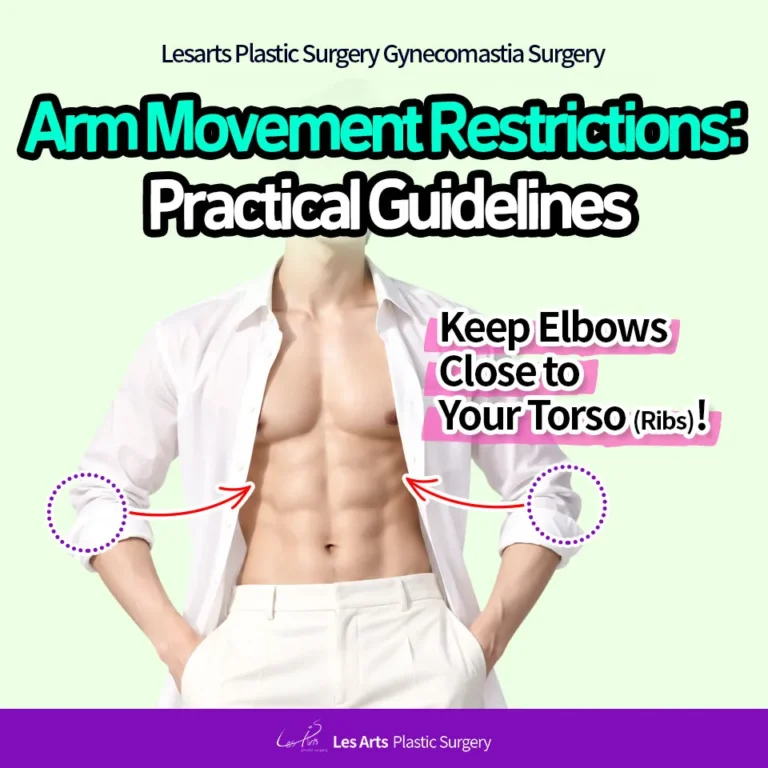
The practical advice I always give my patients is very simple.Just keep in mind,
“Try not to move your elbows too far away from your torso (rib cage).”
Although keeping your elbows close to your body at all times
would be quite uncomfortable,
simply being conscious of this principle
can help you instinctively avoid potentially risky movements.
When Lifting Objects
Extending your arms far away from your body
and lifting objects using only the strength of your hands
can place excessive strain on the pectoralis major muscle.
Instead, move your body close to the object,
keep your elbows near your torso,
and use both your lower and upper body strength when lifting
to minimize strain on the chest muscles.
When Caring for Children
Rather than lifting your child directly into your arms,
you can adjust the movement by sitting down,
placing your child on your lap, and holding them close.
This simple change in movement and angle
can make the activity safer.
By paying a little attention to the way you move
and the angles of your arm movements,
most patients can continue performing office work,
light daily activities, and many types of on-site work.
3. Jobs and Movements That Require Special Precautions
However, patients whose work involves sudden, forceful contractions
or stretching of the chest muscles
should take extra care when scheduling surgery
and adjusting their duties during the early recovery period.
Returning to Work After Gynecomastia Surgery – Lesarts Plastic Surgery
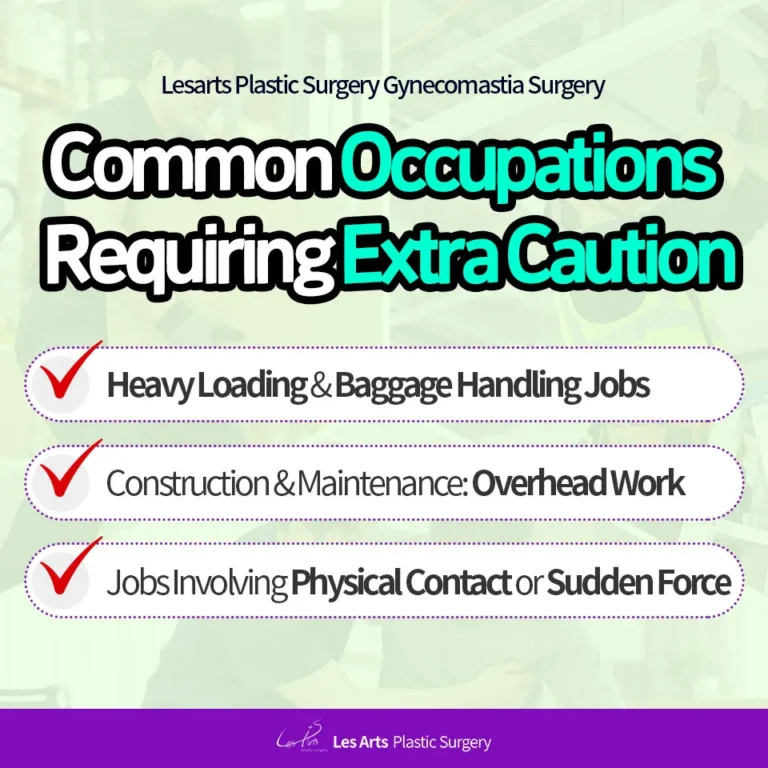
① Occupations That Require Special Precautions
• Heavy Lifting and Baggage Handling Jobs
Work environments that involve repeatedly pulling heavy loads
weighing 20 kg or more or lifting and throwing them overhead.
• Construction and Maintenance Jobs Involving Overhead Work
Tasks that require raising the arms high above the head
and applying force, such as wallpaper installation,
ceiling plumbing, or electrical work.
• Jobs Involving Physical Contact or Sudden Force
Occupations such as police officers or security personnel
who may need to physically restrain individuals,
or animal trainers who must control aggressive animals.
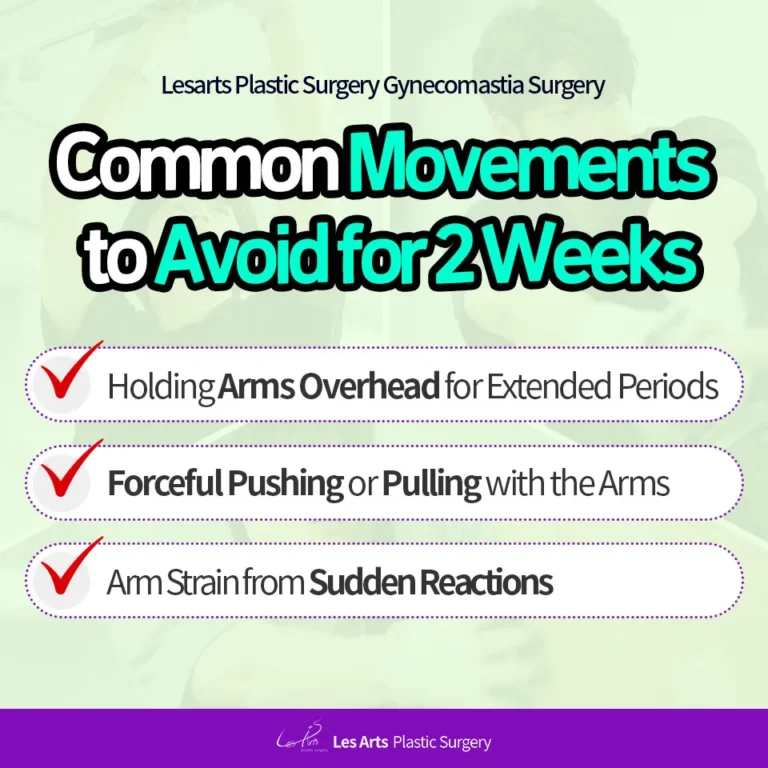
Arm Movements to Avoid After Gynecomastia Surgery – Dr. Jihoon Moon, Lesarts
② Common Arm Movements to Avoid During the First Two Weeks
• Raising Your Arms High Above Your Head and Holding Them Under Load
Examples: Holding an overhead handrail on a bus or subway
while supporting your body weight,
or taking heavy objects down from high shelves.
• Forcefully Pushing or Pulling With Your Arms Extended Behind Your Body
Examples: Moving a heavy cart
or suddenly pushing or pulling a door with excessive force.
• Movements That Suddenly Place Weight on Your Arms
Examples: Using your hands to break a fall,
which is why walking is encouraged but hiking should be avoided.
Sudden movements while walking a dog
may also place unexpected, excessive force on your arms.
4. Conclusion: With Proper Guidelines, There Is No Need to Postpone Surgery
The recovery process after gynecomastia surgery
is designed to be more stable and manageable than many patients expect.
A properly fitted compression garment provides firm support to the surgical area,
and simply keeping in mind the principle of
“keeping your elbows close to your body”
can help most patients carry out their everyday activities without major difficulties.
If you are concerned about recovery after gynecomastia surgery
because of your occupation or daily routine,
rather than postponing surgery while worrying on your own,
feel free to discuss your daily activities
and the arm movements required for your work
with your medical team during your preoperative consultation.
We will work with you to develop practical and safe guidelines
for daily movements tailored to your individual routine.
On your journey toward regaining confidence in your chest,
there is no need to hesitate
as long as you keep a few simple precautions in mind during daily activities.
View More Lesarts Gynecomastia Surgery Cases
FAQ
Q1. Why should I limit arm movements for two weeks after gynecomastia surgery?
The first one to two weeks are an important period for tissue healing after gynecomastia surgery.
Sudden or forceful arm movements can cause strong contractions of the pectoral muscles,
potentially increasing the risk of hematoma, delayed bleeding, or slower wound healing.
Q2. Can I return to work immediately after gynecomastia surgery?
Many patients can manage office work and light daily activities by modifying how they use their arms.
However, jobs involving heavy lifting, overhead work,
or sudden physical force may require additional precautions or temporary adjustments.
Q3. What is the safest way to use my arms after gynecomastia surgery?
Try to keep your elbows relatively close to your torso during daily activities.
When lifting permitted objects, move your body closer to the object and use your legs
and upper body together rather than reaching forward and placing excessive strain on your chest muscles.
Q4. Which arm movements should I avoid during the first two weeks after surgery?
Avoid holding your arms overhead under load, forcefully pushing or pulling with your arms extended backward,
and movements that suddenly place weight on your arms.
Examples include lifting heavy objects from high shelves, moving heavy carts, or controlling a dog that suddenly pulls on its leash.
Q5. When can I resume exercise after gynecomastia surgery?
Activities such as weight training and swimming may require approximately four weeks of rest, depending on your recovery.
Walking is generally encouraged, while activities involving unpredictable movements
or sudden arm loading should be avoided during early recovery. Follow your surgeon’s individualized instructions.
▼ Visit Lesarts Plastic Surgery in Gangnam, Seoul, Korea ▼