
Abdominal Liposuction – Why Lower Belly Fat Is Often the Last to Go Even After Dieting
Why can lower belly fat remain even after losing weight through diet and exercise?
Fat is not lost evenly from every area of the body, and the lower abdomen may be one of the last areas to decrease.
Its appearance can also be influenced by subcutaneous fat,
visceral fat, body fat percentage, skin condition, posture, and lifestyle habits.
Written by Dr. Yongseung Seo, Lesarts Plastic Surgery
This article was written directly by the attending surgeon.
※ Unauthorized reproduction, editing, or redistribution is prohibited. ※
Many people share a similar concern even after consistently following a healthy diet and exercise routine.
“When I lose weight, my face and breasts get smaller first, but my lower belly is always the last area to go.”
“Even if I gain just a little weight, it seems to show up in my lower belly first.”
This happens because fat is not lost or gained at the same rate throughout the body.
The order and rate of fat loss can vary from one area to another depending on the individual.
For some people, the lower abdomen may decrease relatively slowly during weight loss,
while becoming one of the first areas to protrude when weight is gained.
As a result, even when the number on the scale goes down through dieting,
the lower belly may not appear to change significantly in the mirror,
and it may continue to draw attention below the waist when wearing clothes.

Abdominal Liposuction Before and After Photos (Provided by the Patient)

Abdominal Liposuction Before and After Photos (Provided by the Patient)
The abdomen is not simply an area where fat accumulates.
Body fat percentage, visceral fat, skin condition, and everyday posture should all be evaluated together.
Today, we will look at a patient who visited Lesarts with concerns about her lower abdomen
and review how her condition was assessed, how the procedure was planned, and what changes were achieved.
[Patient Information]
Age: Early 30s
Height: 164 cm
Weight: 57.5 kg (62 kg seven years ago, later maintained 52 kg before gaining weight to her current weight)
BMI: 21.4 kg/m²
Body Fat Percentage: 36.0%
Visceral Fat Level: 9
※ Even patients with similar body measurements may experience different results from liposuction.
[Body Shape Assessment Before Abdominal Liposuction]
“I’m concerned about my lower belly,
and I want to slim down overall and look leaner.”
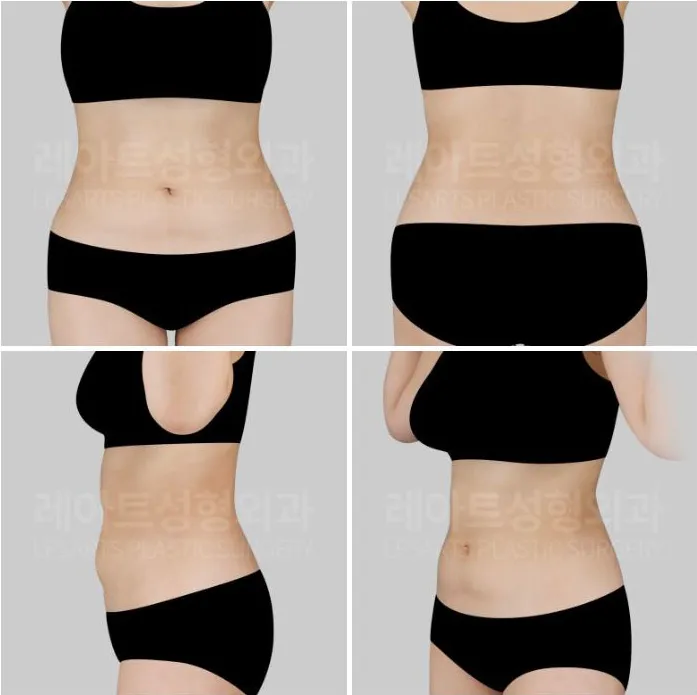
Assessment Before Abdominal Liposuction
On visual examination before surgery,
the lower abdomen below the belly button protruded forward,
making the lower abdomen appear more prominent than the upper abdomen
when viewed from the side.
As a result, the front contour of the torso
did not form a smooth line.
In particular, the waist definition was relatively subtle,
creating a gentle curve between the ribs and pelvis
when viewed from both the front and back.
The patient also had a relatively high visceral fat level of 9.
Visceral fat accumulates inside the abdominal wall around the internal organs
and can push the abdominal wall outward from within.
For this reason, the lower abdomen may continue to protrude
even when subcutaneous fat is reduced.
In this patient, the prominence of the lower abdomen was likely influenced
not only by subcutaneous fat but also by visceral fat.
Ultrasound Examination
Upper abdomen: 32 mm
Lower abdomen: 30 mm
Flanks: 12/12 mm
Love handles: 17/16 mm
The ultrasound examination showed
a significant amount of subcutaneous fat.
[Abdominal Liposuction Plan and Postoperative Care]
“There is a significant amount of subcutaneous fat throughout the treated areas,
so there is sufficient potential for reducing overall size
and improving the body contour.”
However, removing the maximum possible amount of fat indiscriminately
can increase the risk of complications.
Therefore, the plan was to remove as much fat as safely possible
from areas where more extensive removal could be performed safely,
while taking a more conservative approach in areas
with a relatively higher risk of complications.
Because visceral fat was also contributing to the abdominal contour,
abdominal liposuction alone would be unlikely
to completely eliminate the lower abdominal prominence.
We explained in detail that lifestyle management,
including diet and exercise,
would need to continue after liposuction.
The patient had previously lost weight and later regained some of it,
and her usual level of physical activity was relatively low.
For this reason, we emphasized that continued weight management
would be particularly important for maintaining the results.
There was also pre-existing asymmetry between the left and right flanks,
with differences in both contour and volume.
We explained that after liposuction,
the reduction of fat that had previously concealed this asymmetry
could make the difference between the two sides appear more noticeable.
Finally, a horizontal crease was already present above the belly button.
Immediately after liposuction, if the abdomen is folded or compressed,
fat around this area may shift upward and downward,
potentially creating a deeper horizontal indentation.
For this reason, we advised the patient
to avoid tightening the abdomen with belts or elastic waistbands
and to avoid sitting in a hunched position for prolonged periods
during the early postoperative period.
[Abdominal Liposuction Before and After Comparison]
(Photographed under the same lighting and conditions
three months after surgery)
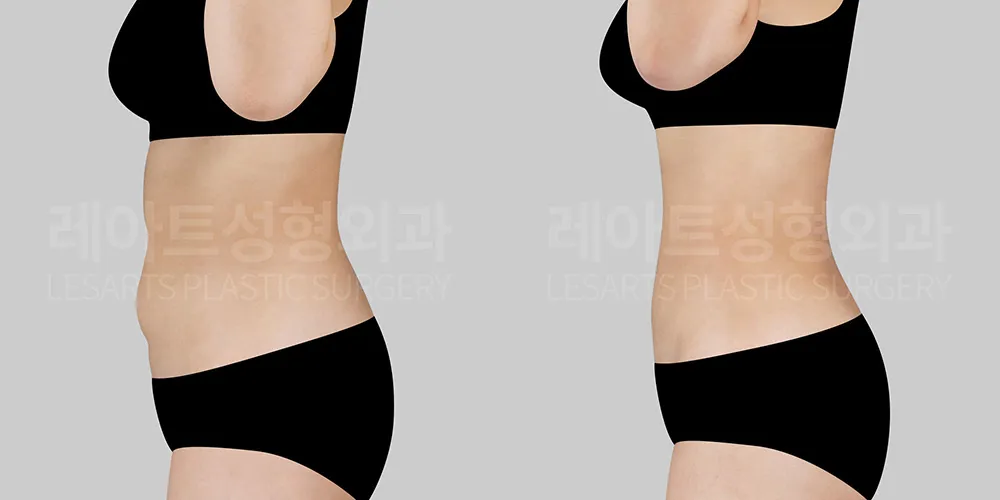
Lower Belly Liposuction – 3-Month Before and After Comparison – Dr. Yongseung Seo, Lesarts
The protruding lower abdomen, the patient’s main concern,
has become significantly less prominent following abdominal liposuction.
However, a natural curve remains in the lower abdomen,
rather than a completely flat contour. This is because
liposuction cannot reduce the visceral fat that pushes
the abdominal wall outward, beyond the subcutaneous fat.
Even so, this result was possible because the patient
worked hard to manage their weight after liposuction
and reduced visceral fat through those continued efforts.
I encouraged the patient to continue managing their weight
as they have been doing.
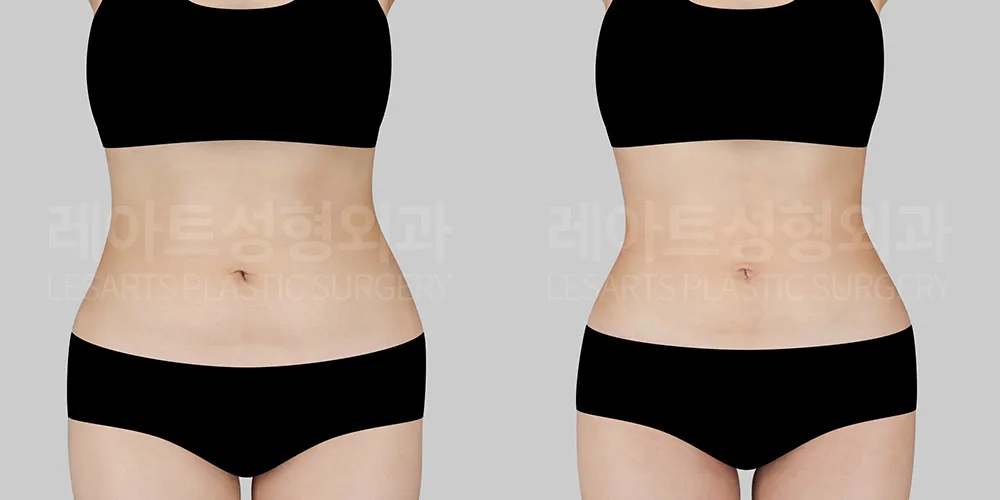
Abdominal liposuction before-and-after comparison – Dr. Yongseung Seo, Lesarts Plastic Surgery
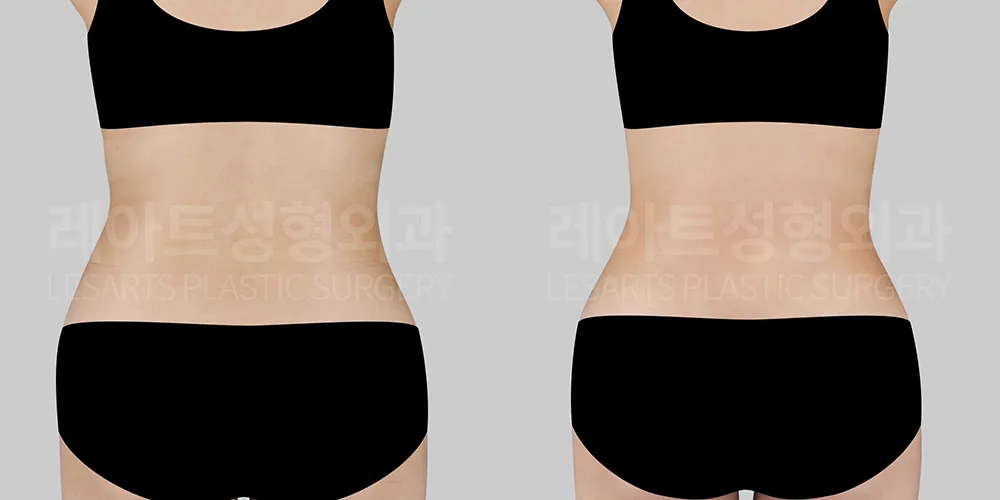
Before surgery, the waist had a gentle curve.
After abdominal liposuction, it curved noticeably inward,
creating a much more defined S-shaped body contour.
⠀
As anticipated, the pre-existing asymmetry between the flanks
became more noticeable after the fat was reduced.
However, the patient was not particularly concerned about it.

Changes in the Waist and Lower Abdomen After Abdominal Liposuction – Dr. Yongseung Seo, Lesarts
liposuction can significantly reduce this width when viewed from the side,
creating a much slimmer overall silhouette.
The line from the waist to the buttocks also became more defined,
resulting in a slimmer figure while maintaining natural curves.
As in this case, many patients visit us with concerns such as,
“Why is my lower belly still there even after dieting?”
However, it would be premature to assume that liposuction alone
can immediately resolve every concern related to the lower abdomen.
There are many reasons why the lower abdomen may appear prominent,
including not only subcutaneous fat but also body fat percentage,
visceral fat, skin condition, posture, and lifestyle habits.
In particular, when visceral fat is relatively high,
even after subcutaneous fat is reduced through liposuction,
diet and exercise should be managed together
to further improve the lower abdominal contour and maintain the results over time.
For this reason, it is important to carefully identify the contributing factors before surgery
and understand both what liposuction can achieve and its limitations
when planning the procedure.
FAQ
Q1. Why does lower belly fat tend to remain even after dieting?
Fat loss does not occur at the same rate in every area of the body.
For some people, the lower abdomen decreases more slowly than other areas and may also become noticeable earlier when weight is regained.
Q2. Can abdominal liposuction completely flatten the lower belly?
Not always. Liposuction removes subcutaneous fat but cannot remove visceral fat located inside the abdominal wall.
If visceral fat contributes to abdominal protrusion, some natural curvature may remain after liposuction.
Q3. Why is visceral fat important when planning abdominal liposuction?
Visceral fat surrounds the internal organs and can push the abdominal wall outward from inside.
Therefore, patients with higher visceral fat may still have some abdominal protrusion even after subcutaneous fat is reduced.
Q4. Why are diet and exercise still important after abdominal liposuction?
Diet and exercise can help manage body weight and visceral fat, which liposuction cannot directly remove.
Continued lifestyle management is therefore important for improving and maintaining the abdominal contour after surgery.
Q5. Can pre-existing asymmetry become more noticeable after abdominal liposuction?
Yes. If the waist or flanks are already asymmetrical before surgery, reducing the surrounding fat may make the difference between the two sides more noticeable.
For this reason, existing asymmetry should be evaluated and discussed before surgery.
▼ Visit Lesarts Plastic Surgery in Gangnam, Seoul, Korea ▼