Abdominoplasty in Korea: scar healing progress and aftercare at 4 months
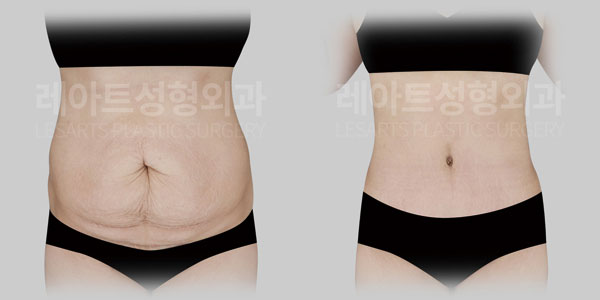
Patient Registration Info
| Age | Weight | Height | BMI |
|---|---|---|---|
|
40s |
68kg |
161cm |
26 |
Surgical site
Surgical site : Abdomen, L-type, muscle repair, umbilicus correction| liposuction aspirate volume : 3,400cc
The patient featured in this case
underwent abdominoplasty
to improve severe lower abdominal skin sagging
and wrinkles around the navel area
that developed after
two previous C-section deliveries.
Following pregnancy and childbirth,
the skin laxity became concentrated
in the lower abdomen,
creating a heavy, folded appearance
and causing noticeable changes
in the overall abdominal contour.
In addition,
wrinkling around the navel area
and loss of skin elasticity
made it difficult for the abdomen
to return to its pre-pregnancy shape,
leading the patient
to seek surgical correction.
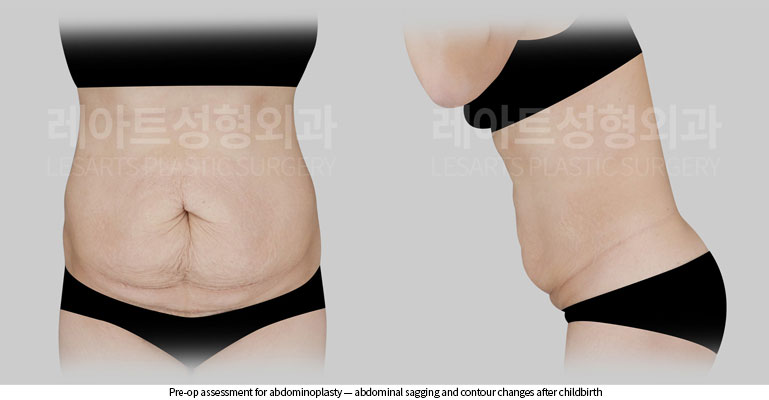
During the abdominoplasty consultation,
the patient was found to have
a relatively moderate amount of
abdominal fat.
However, due to significant
skin laxity throughout the abdomen
and rectus diastasis,
the stretched and folded skin
created the visual impression
of increased abdominal volume
and heaviness.
This combination of
skin and fascial laxity
disrupted the smooth contour
of the anterior abdomen,
resulting not only in
an uneven abdominal appearance
but also in functional concerns
that contributed to
daily discomfort and stress.
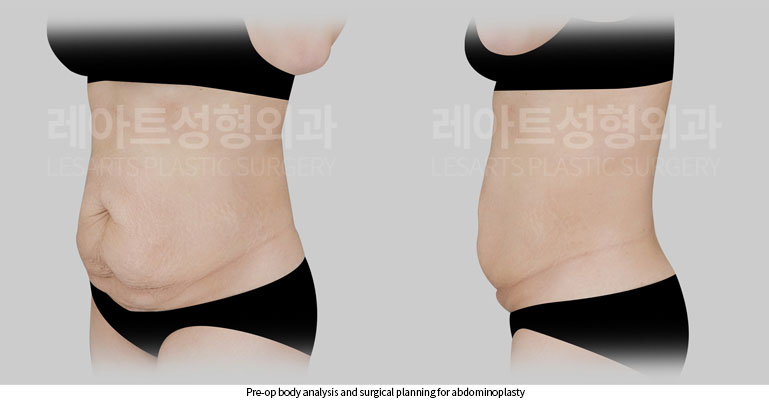
Based on the patient’s current degree of
abdominal skin laxity
and the extent of correction required,
the recommended procedure was explained as
L-type extended abdominoplasty.
The patient was also informed that
the incision length is determined
by the vertical amount of skin
that must be removed.
A detailed consultation was conducted
to ensure a full understanding of
the surgical plan before proceeding.
In addition,
because rectus diastasis had reduced
the functional support of the abdominal wall,
the abdomen had developed
a protruding and widened appearance.
For this reason,
rectus muscle repair
was considered an essential part
of the procedure
to restore abdominal wall support
and improve the overall contour.
As for abdominal liposuction,
the patient did not have
an excessive amount of abdominal fat.
Therefore,
rather than performing
aggressive large-volume liposuction,
the plan focused on combining
liposuction with abdominoplasty
within the necessary treatment areas
to create a smoother abdominal surface
and allow the waistline contour
to appear more naturally defined.
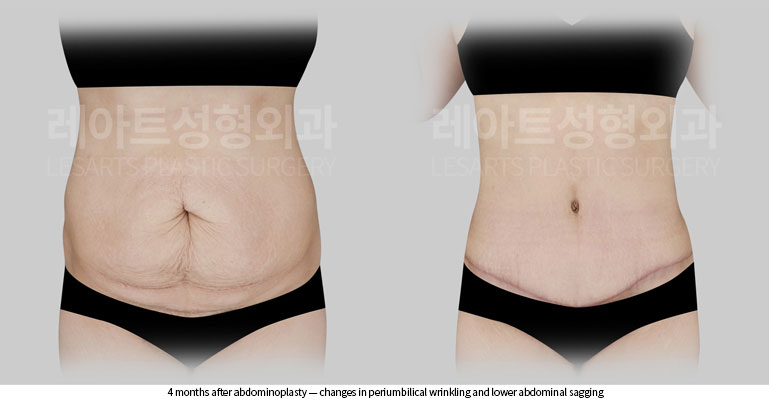
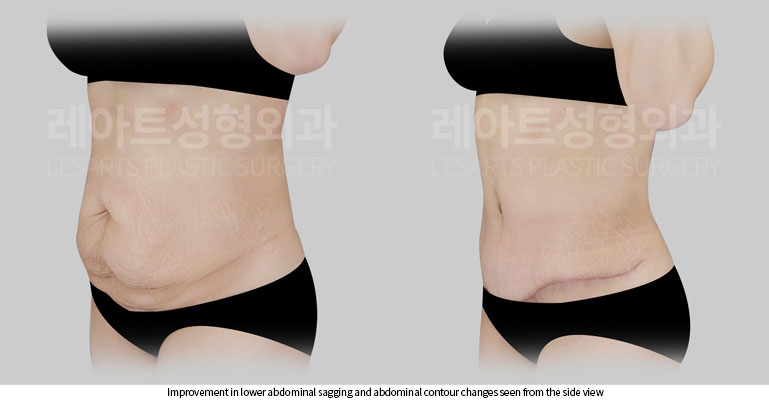
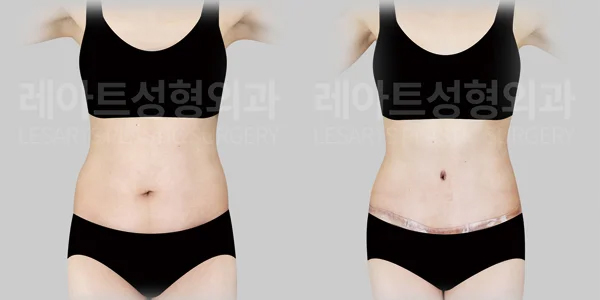
These are the before and after photos
following abdominoplasty surgery.
Before surgery,
extensive abdominal skin laxity
had shifted downward
and accumulated in the lower abdomen,
creating a noticeably uneven,
bulging, and irregular contour.
Following abdominoplasty,
the stretched skin was removed,
and the transition from
the upper abdomen
to the lower abdomen
became significantly smoother,
creating a more refined contour
without visible irregularities.
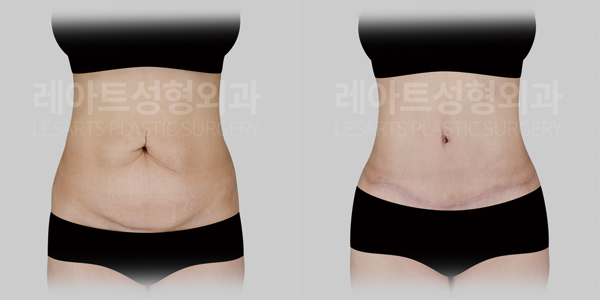
In addition,
loss of skin elasticity
had caused sagging around the navel,
resulting in deep wrinkles
and distortion of its shape.
Through the procedure,
the navel was reconstructed
into a balanced vertical oval shape
and repositioned naturally
to harmonize with the overall
abdominal contour.
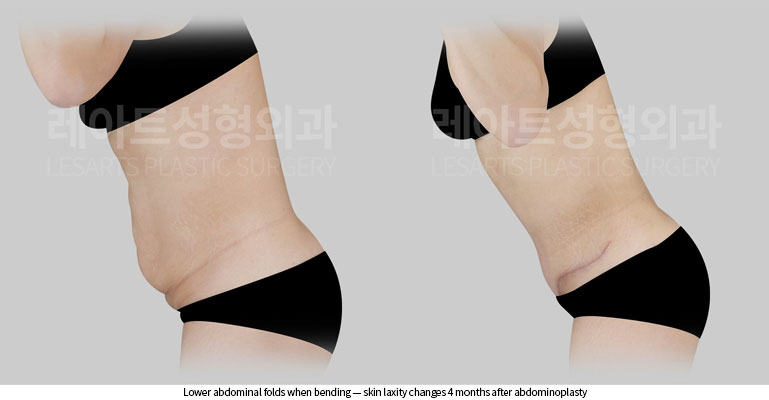
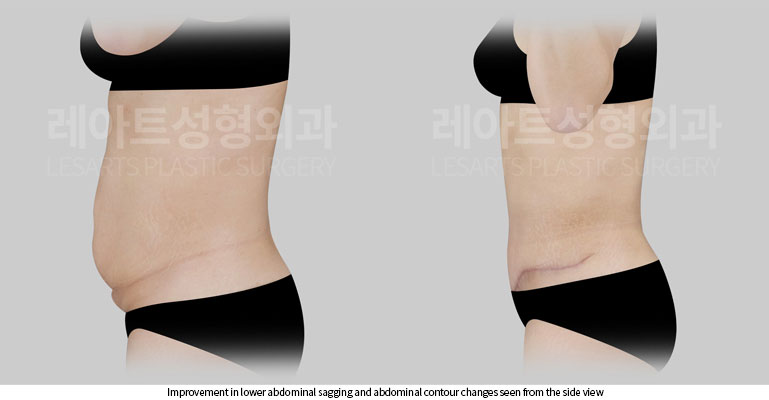
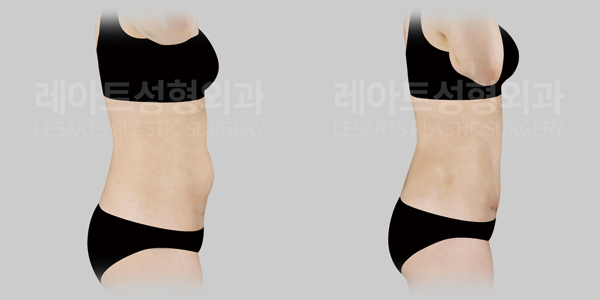
From the side view,
the correction of the previously
protruding abdominal contour
and the functional restoration of the
abdominal wall
can be appreciated more clearly.
Following two C-section deliveries,
the stretched abdominal wall
and overlying skin
had failed to recover adequately,
resulting in an uneven,
forward-projecting appearance.
In addition,
skin that had folded over
the previous C-section scar
was effectively removed
and refined through surgery.
As a result,
the abdomen now demonstrates
not only a smoother contour,
but also stronger structural support.
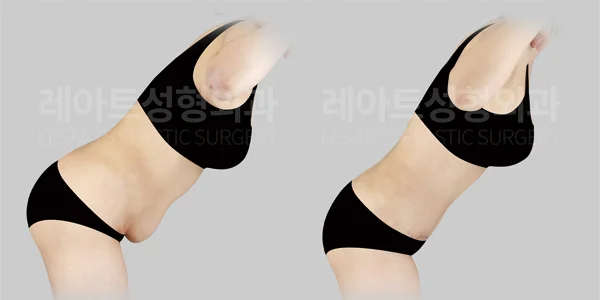
Even when bending forward,
the skin and abdominal wall
maintain their position
without bulging or collapsing,
showing improved firmness
and stability.
The previous C-section scar
was completely removed,
and the step-off deformity
that had existed along
the original incision line
was also fully corrected.
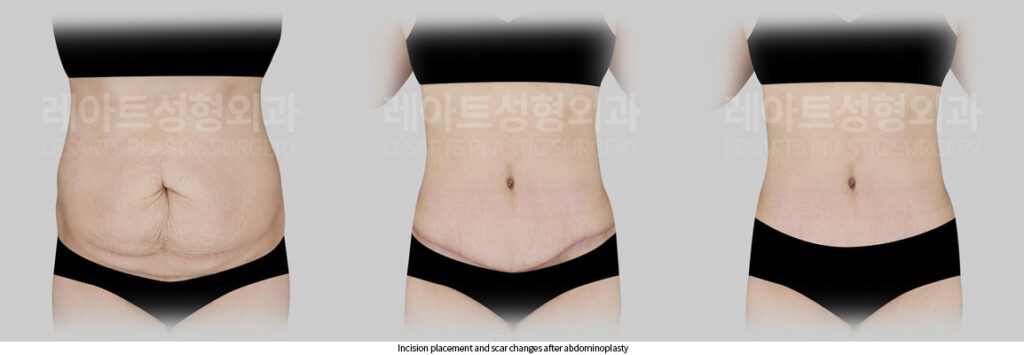
In abdominoplasty,
the surgery itself is important,
but post-operative recovery and care
are equally essential parts
of achieving a successful result.
In the patient’s
4-month post-operative photos,
residual swelling and scars
were still visible.
However, these findings
are a normal part of
the recovery process.
The patient was informed that,
with appropriate aftercare,
the scars would gradually fade,
while swelling and areas of firmness
would continue to improve steadily.
In addition,
the abdominoplasty incision
was designed as low as possible
along the lower abdomen,
allowing it to be naturally concealed
within the underwear line.
As a result,
the patient was able to continue
daily activities comfortably
without significant concern
about the scar location.
Abdominoplasty is a procedure
that not only removes
excess stretched skin
and restores abdominal wall function,
but also often provides
psychological recovery
and renewed confidence
through the visible physical transformation.
However, because
abdominoplasty is a complex procedure,
achieving a highly satisfying outcome
requires more than surgery alone.
Comprehensive care—including
an accurate diagnosis,
an experienced surgical approach,
and reliable post-operative management—
is essential for obtaining
the best possible result.
#Abdominoplasty
#ExtendedAbdominoplasty
#LTypeAbdominoplasty
#TummyTuck
#PostPregnancyBody
#RectusDiastasisRepair
#AbdominalWallRepair
#CSectionScarRevision
#LowerAbdominalSagging
#AbdominoplastyBeforeAfter
#WaistlineContour
#LesartsPlasticSurgery
#BestAbdominoplastyClinicInKorea