[Abdominoplasty] Belly button floating abdominoplasty – 3-month post-surgery follow-up
Umbilical float method mini abdominoplasty – 3-month post-surgery follow-up
Hello, this is Dr. Kukhan Lee
from Lesarts Plastic Surgery, specializing in
body contouring and abdominoplasty surgery.
When patients visit for loose abdominal skin,
before starting any physical examination,
I always ask one important question first.
If we divide the abdomen
into upper and lower sections,
based on the belly button,
which side bothers you more?
The method of abdominoplasty surgery
varies depending on the severity
of skin laxity and sagging.
More important than fitting the body
to a predetermined surgical technique
is choosing surgery suited to
the patient’s individual body condition.
We decide the surgical approach
based on the actual degree of laxity
and the area causing
the greatest daily discomfort.
During abdominoplasty consultations,
the biggest concern
appears when sagging exists
in both upper and lower abdomen.
If upper abdominal laxity is mild,
a full M-type abdominoplasty may
feel excessive and unnecessary.
However, a limited mini abdominoplasty
often provides insufficient correction
and may not create
the desired contour improvement.
In these borderline situations,
choosing the right surgical method
can be surprisingly difficult
for both patient and surgeon.
One practical alternative to consider
is the umbilical float technique,
a modified mini abdominoplasty approach.
This method improves lower tightening
while preserving the natural position
and appearance of the belly button.
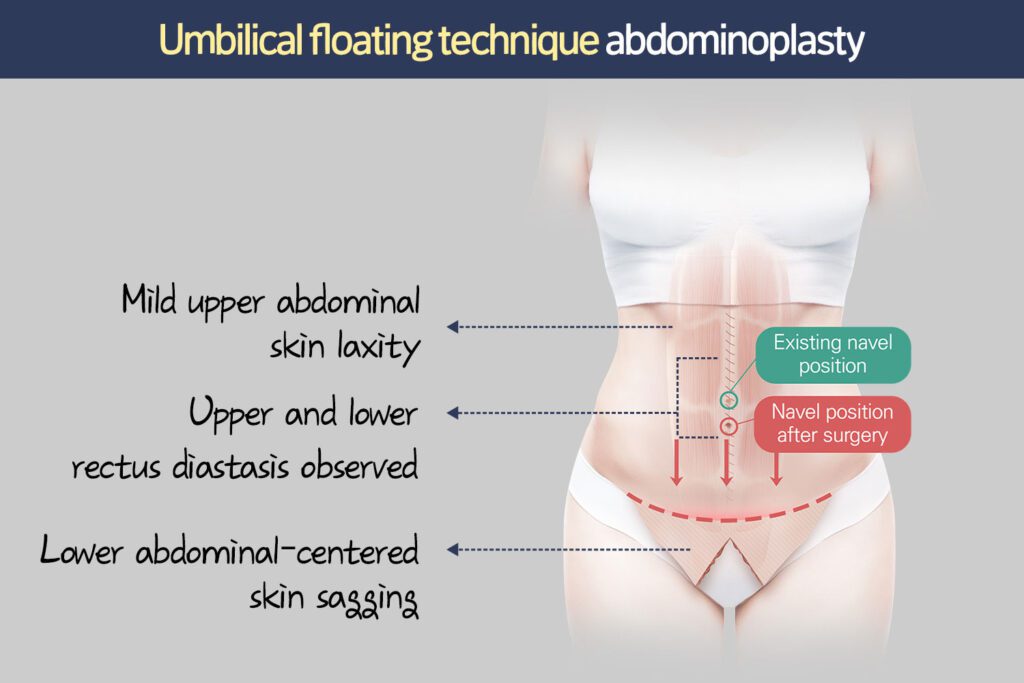
Umbilical float method abdominoplasty
What is the umbilical float technique?
The umbilical float technique
is a modified abdominoplasty method
that corrects rectus muscle separation
in both upper and lower abdomen.
At the same time,
the belly button position
is slightly adjusted upward
to compensate for mild upper laxity.
This allows improvement
of subtle sagging above the navel
without performing
a full extended abdominoplasty.
It is especially effective
when rectus diastasis appears
in both upper and lower abdomen.
But the upper skin laxity
remains relatively mild
and does not require
a full extensive excision.
In these selective cases,
the technique provides balanced tightening
with less burden
and a faster recovery.
Let me explain further
through an actual surgical case
and detailed follow-up results.
Pre-surgery consultation for abdominoplasty
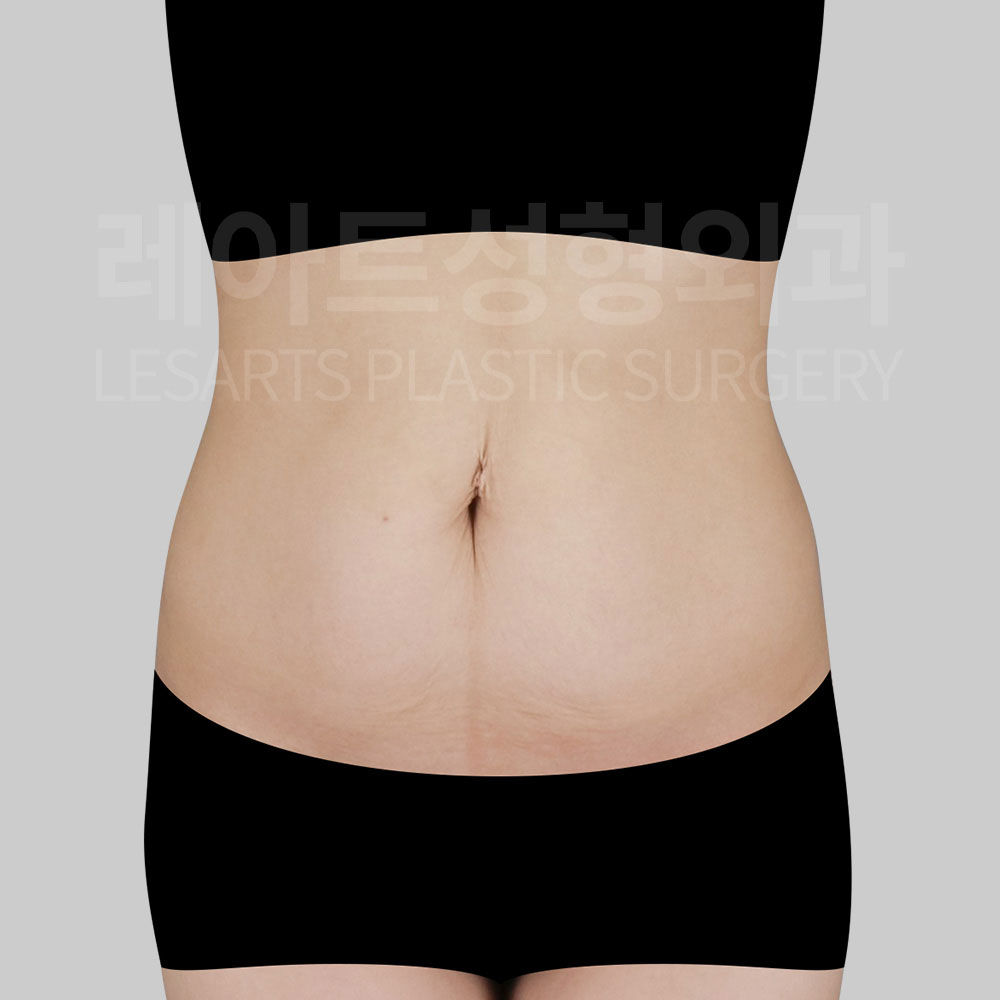
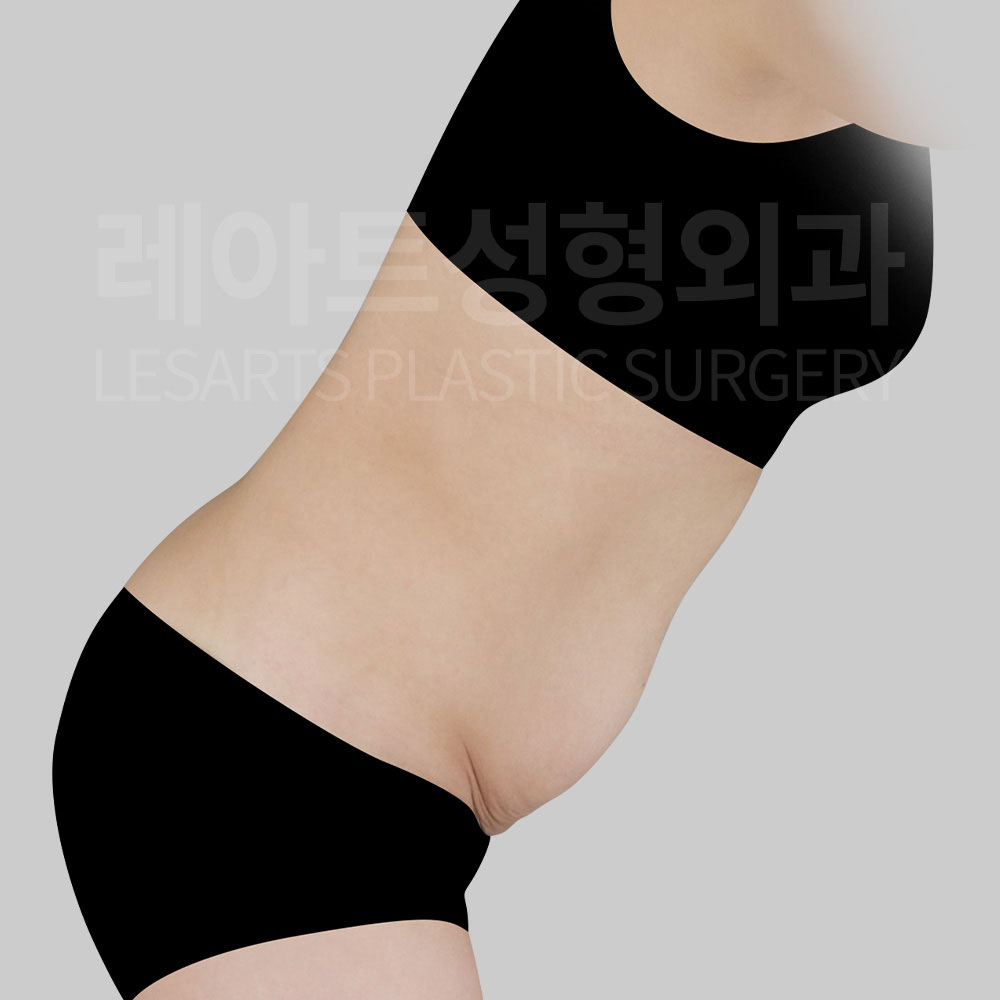
This patient visited for
a pre-operative abdominoplasty consultation
after delivering two children
by cesarean section surgery.
She presented with
overall lower abdominal skin laxity
along with visible looseness
across the entire lower abdomen.
Among all concerns,
wrinkling and folding
of the skin around
the belly button area
was described as
the most noticeable
and uncomfortable issue
in daily life.
Notable findings included
a small piercing scar
located above the navel.
After childbirth, the surrounding skin
including the scar area
became uneven and crumpled,
creating a wrinkled appearance.
She felt particularly uncomfortable
with this texture change
around the belly button
both visually and physically.
Gynecomastia examination, consultation, and diagnosis – Simon grade IIa – Lesarts Plastic Surgery
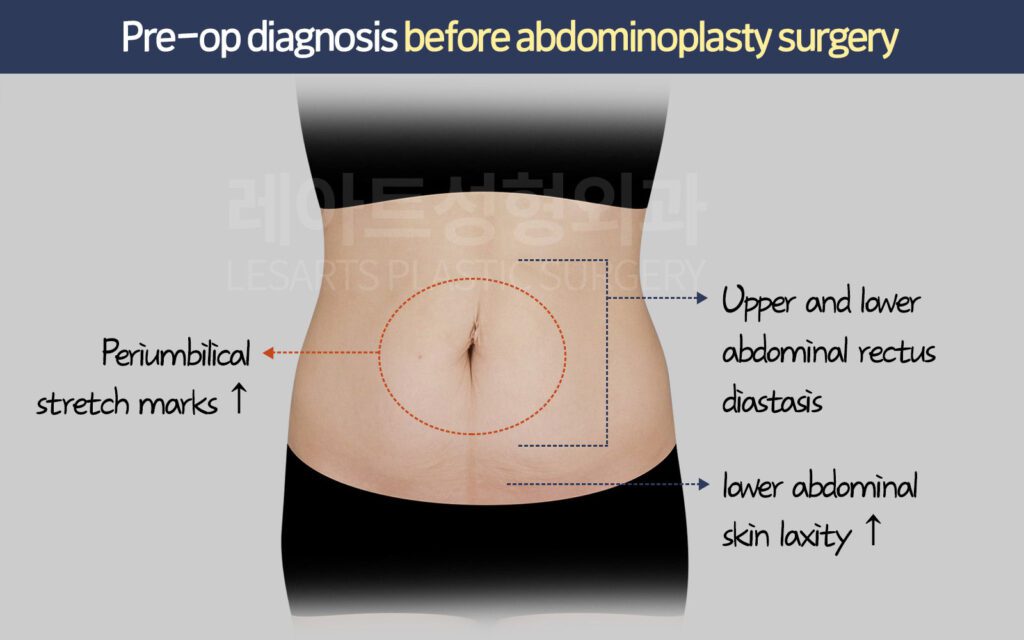
Examination findings
Multiple stretch marks were observed
around the belly button area
with decreased overall skin elasticity.
Rectus diastasis was confirmed
across both upper and lower abdomen,
indicating generalized muscle separation.
The cesarean section scar itself
was relatively well healed
and cosmetically acceptable.
However, noticeable lower abdominal sagging
was clearly present
above the previous scar line.
Why not a full abdominoplasty?
Considering upper abdominal laxity
and the degree of rectus diastasis,
a full M-type abdominoplasty
could be one surgical option.
However, several concerns
needed careful consideration
before deciding
on this more extensive approach.
First, the upper laxity
was not severe enough
to fully justify
a large extended excision.
This could leave
the old cesarean scar intact
while creating an additional
new abdominoplasty scar above.
Second, removing the piercing scar
might require moving
the incision line higher,
making the scar more visible.
Third, if we attempted
to keep the scar lower,
the piercing scar would remain
above the incision line.
Fourth, rectus muscle separation
was present in both
upper and lower abdomen,
so muscle repair was essential.
For these combined reasons,
we selected the umbilical float technique
as a more balanced
abdominoplasty alternative.
Advantages and limitations of the umbilical float technique
[Advantages]
First, the previous cesarean scar
can be removed simultaneously
while placing the incision
much lower on the abdomen.
Second, rectus muscle separation
in both upper and lower abdomen
can be corrected together
through one surgical approach.
Third, the incision length
is relatively shorter
compared with a full
traditional abdominoplasty.
Fourth, lifting the navel position
provides additional tightening
with visible improvement
of mild upper abdominal laxity.
[Limitations]
First, there are limitations
in correcting severe laxity
across the entire
upper abdominal skin area.
Second, the belly button position
may sit slightly lower
compared with the
original natural location.
After fully explaining
these advantages and limitations,
we proceeded with the
umbilical float abdominoplasty.
At the same time,
abdominal liposuction was combined
to enhance contour definition
and create smoother body lines.
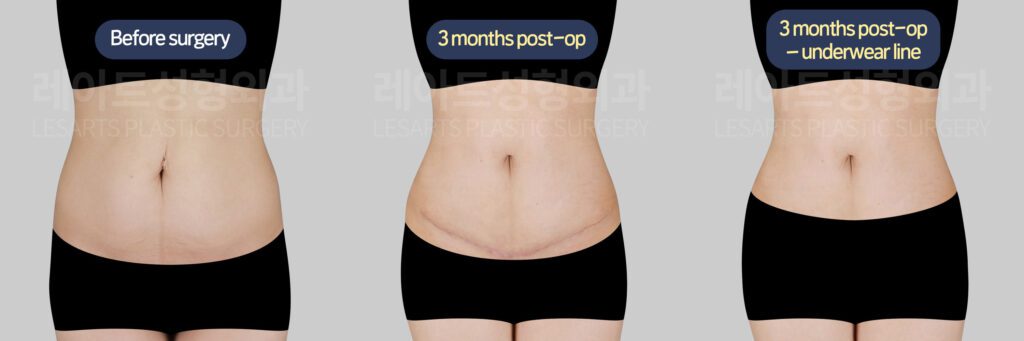
Abdominoplasty before and after comparison, scar location, underwear line – Lesarts – Dr. Kukhan Lee
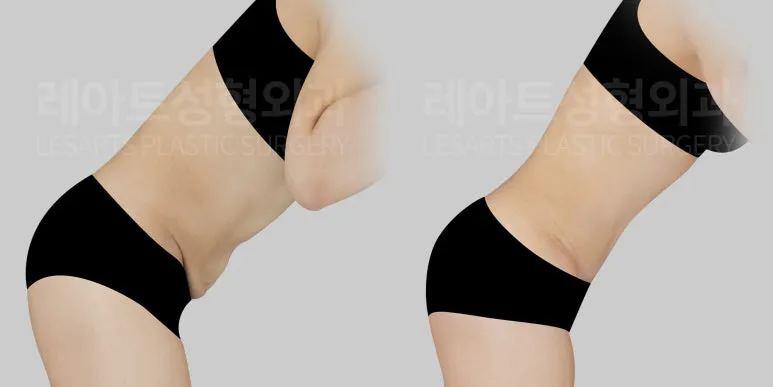
3-month post-surgery follow-up
These photos were taken
at 3 months after surgery,
showing the early recovery
and contour stabilization stage.
Wrinkles previously caused
by sagging lower abdominal skin
were significantly smoothed out
with improved overall tightness.
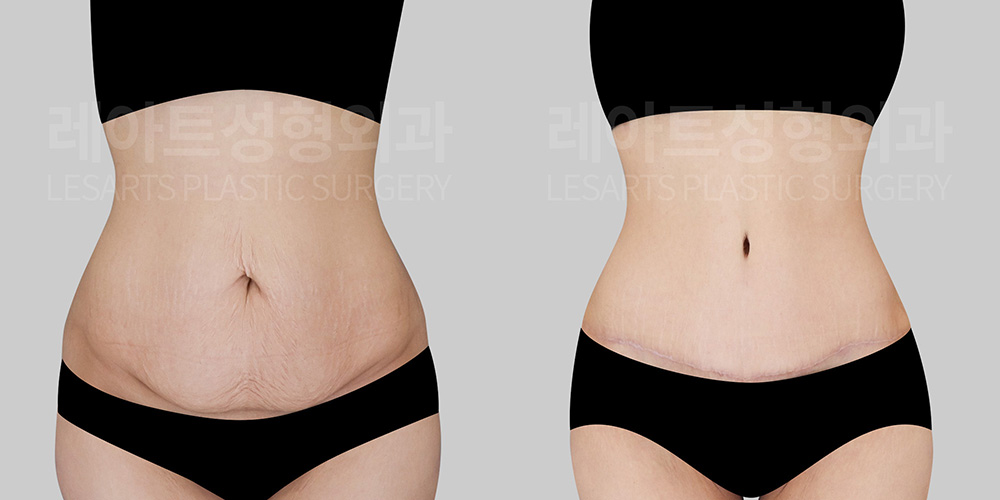
The previous cesarean scar
was completely removed during surgery,
and a new scar
was carefully repositioned lower.
As a result, the incision line
naturally sits inside
the underwear line,
making the scar less visible.
When the correction range is large,
it is difficult to
overly shorten the horizontal
abdominoplasty incision length.
Some extension of the incision
is inevitably required
to achieve sufficient tightening
and balanced contour improvement.
However, based on experience,
the scars near both ends
tend to fade relatively quickly
as time passes.
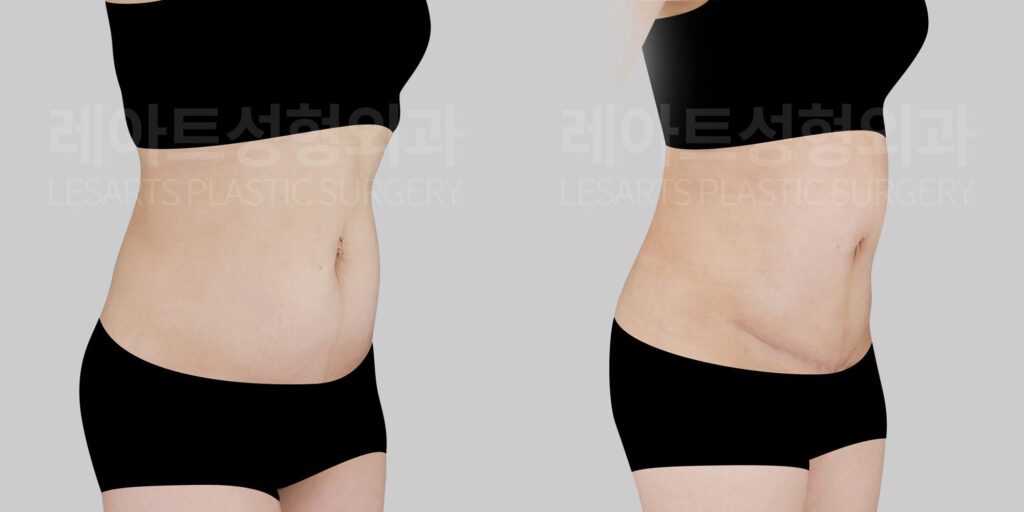
Umbilical float abdominoplasty before and after – Lesarts – Dr. Kukhan Lee
During surgery,
the belly button position
was slightly repositioned upward
for improved lower tension.
At the same time,
the surrounding abdominal skin
became noticeably flatter
and more evenly contoured.
The previously wrinkled skin
around the piercing scar area
also appeared firmer
and smoother after correction.
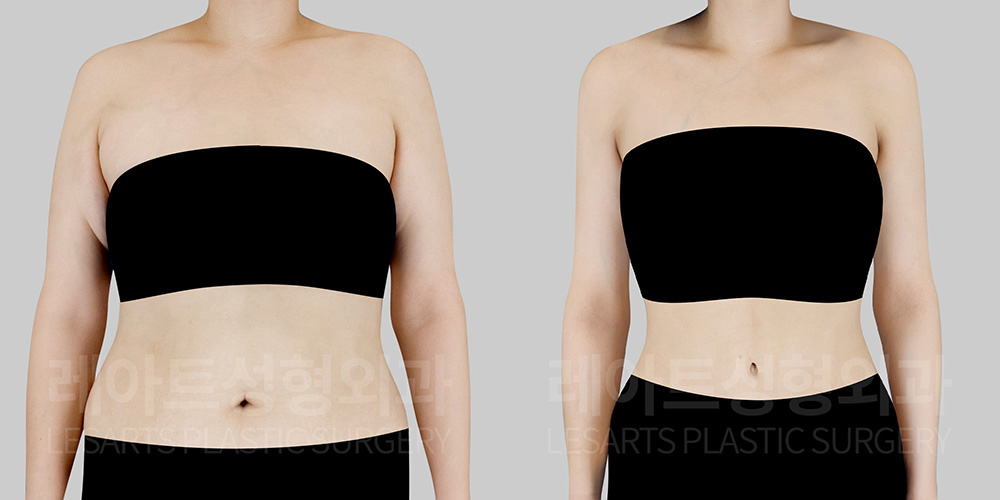
Overall, the lower abdomen
showed a tighter appearance
with improved skin elasticity
and a more balanced contour.
Recovery process and aftercare
At 3 months after abdominoplasty,
mild residual swelling
may still remain
during the healing phase.
As time gradually passes,
the abdominal line
becomes more natural,
firmer, and well defined.
With proper aftercare,
the final contour result
continues to refine
over the following months.
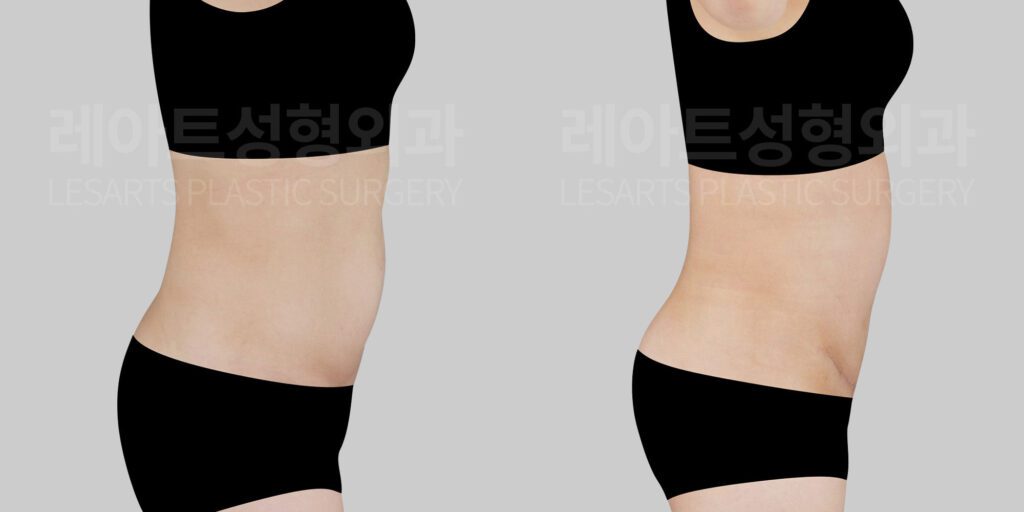
3-month before and after abdominoplasty – Lesarts Plastic Surgery – Dr. Kukhan Lee
In conclusion
Abdominoplasty surgery is not
a one-method-fits-all procedure
that works the same
for every individual.
Finding the right technique
that truly matches
your body condition
is the most important step.
Understanding the advantages and limitations
of each surgical option
before making a decision
helps achieve safer outcomes.
If you have concerns,
please visit us for consultation
to determine whether surgery
is truly necessary.
We will carefully explain
which method suits you best,
along with the benefits
and realistic considerations.