How much swelling will have gone down one month after arm liposuction?
One month after arm liposuction
is the stage when changes become the most noticeable,
but it’s also the time
when people have the most questions
about swelling.
“I thought the line would be finished by now…
why does it still look swollen?”
“Is this a normal recovery speed,
or is something wrong?”
Among arm liposuction patients,
one of the most common questions after surgery
is exactly this—
“swelling at one month.”
Arm liposuction is a body-contouring procedure
that selectively removes unnecessary fat
from the upper arms,
making the arm line smoother and slimmer.
Arms are shaped not only by the amount of fat,
but also by the line itself, the fat-layer distribution,
muscle volume, skin elasticity,
and even the structure of the bones.
All of these play an important role
in determining surgical results.
Therefore, the key points of arm liposuction are:
balancing the arm shape through precise fat-layer control,
preserving natural muscle lines such as the deltoid, biceps, and triceps,
and removing surrounding fat together
to create overall harmony.
In today’s post,
based on the fact that liposuction is not simply “removing fat and finishing,”
but a complex procedure where fat-layer rearrangement,
skin contraction and adhesion,
and soft-tissue recovery happen at the same time,
we will accurately understand the recovery pattern
and take time to learn
how to maximize results, speed up recovery,
and minimize swelling after surgery.
[Patient Information]
Age: late 20s
Height: 154 cm
Weight: 52 kg
BMI: 22
This patient originally had a slim body type,
but gained about 7 kg over the past year
due to less consistent self-management.
She was most concerned about
the Upper Arm Bulge area,
and wanted to see clear effects
through maximum possible suction.
Because she had a schedule one month later,
she also needed a fast recovery,
which made this case especially memorable.
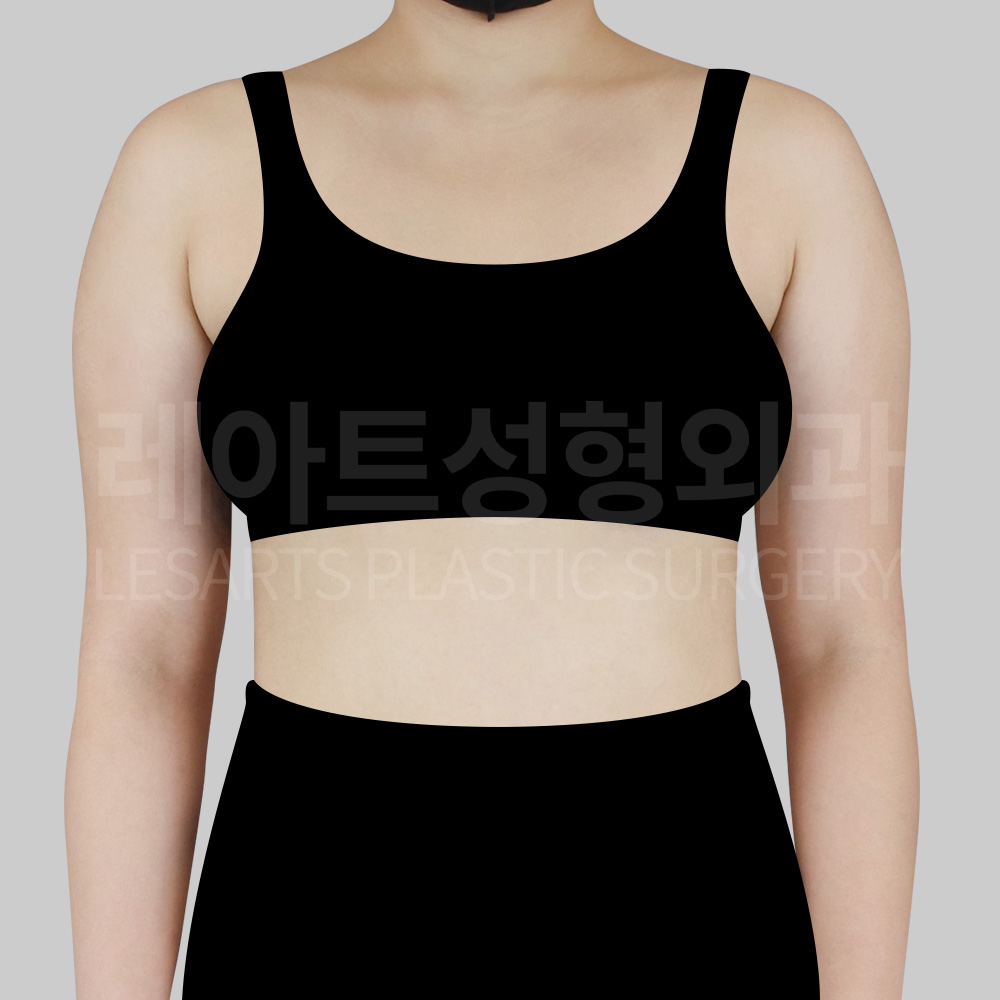
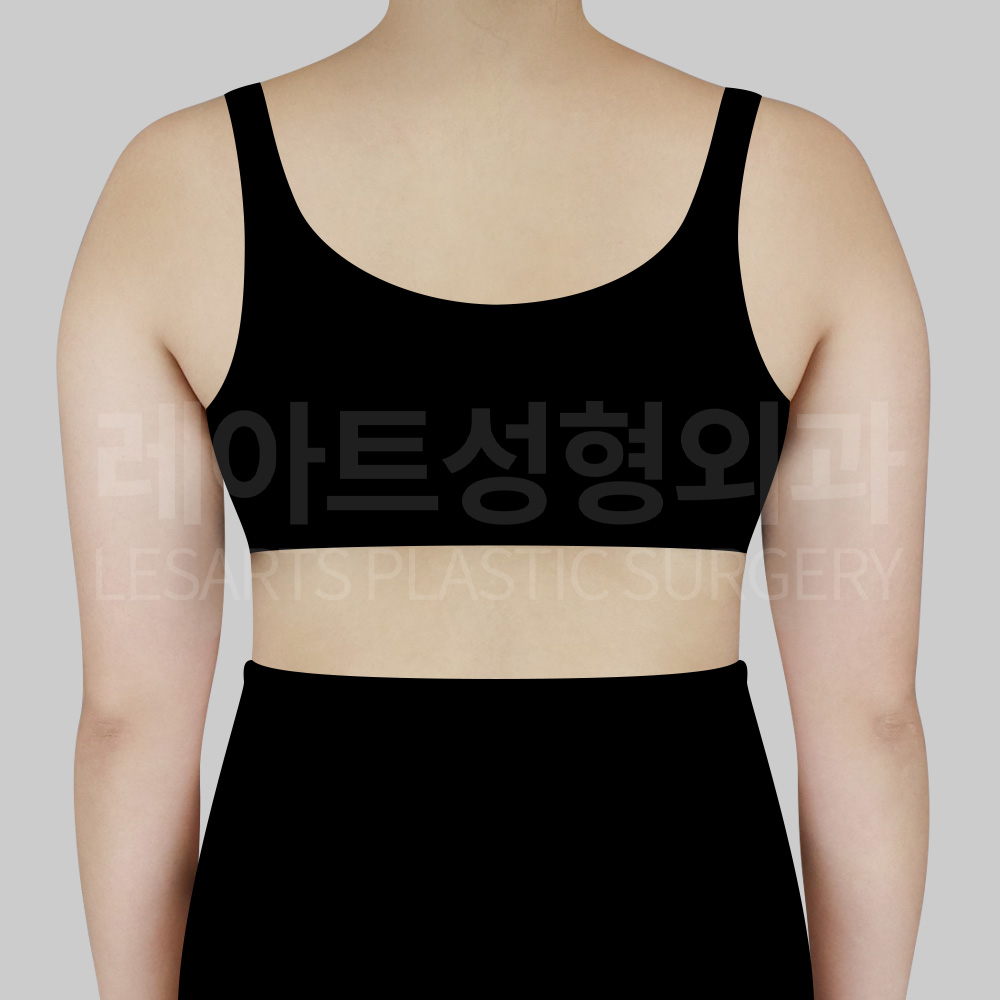
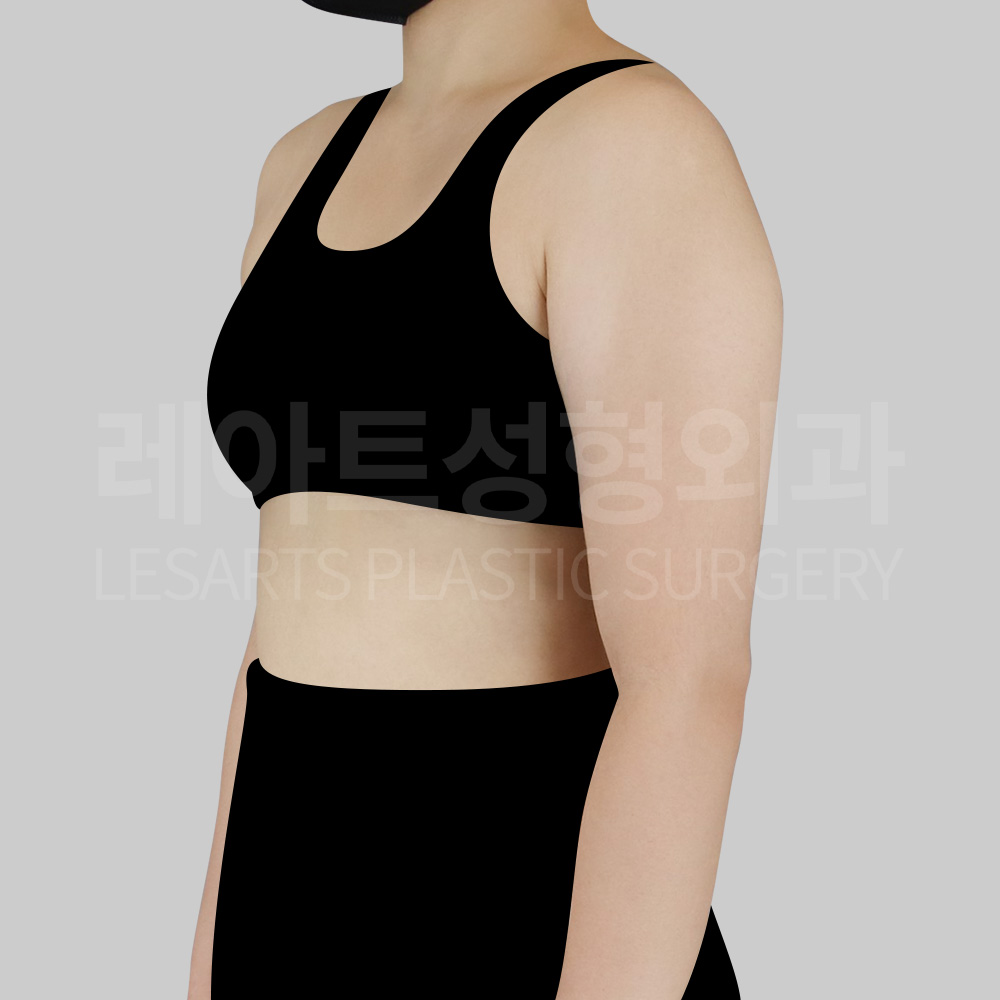
[Lesarts Plastic Surgery] Before arm liposuction surgery
[Pre-surgery condition assessment]
-Fat distribution mainly around the outer Upper Arm Bulge area
-Muscle volume is moderate
-Skin elasticity is average
-Accessory breast and underarm crease present
-Fat present in the accessory breast, underarm, and scapular areas
[Surgical scope and direction]
-Full-arm liposuction and surrounding-area suction
-Create a natural line without making muscle contours stand out
-Manual (handmade) suction to minimize tissue damage
-Precise education on wearing compression garments
and early high-frequency care (3 sessions)
plus swelling-management guidance are required
[Post-surgery progress]
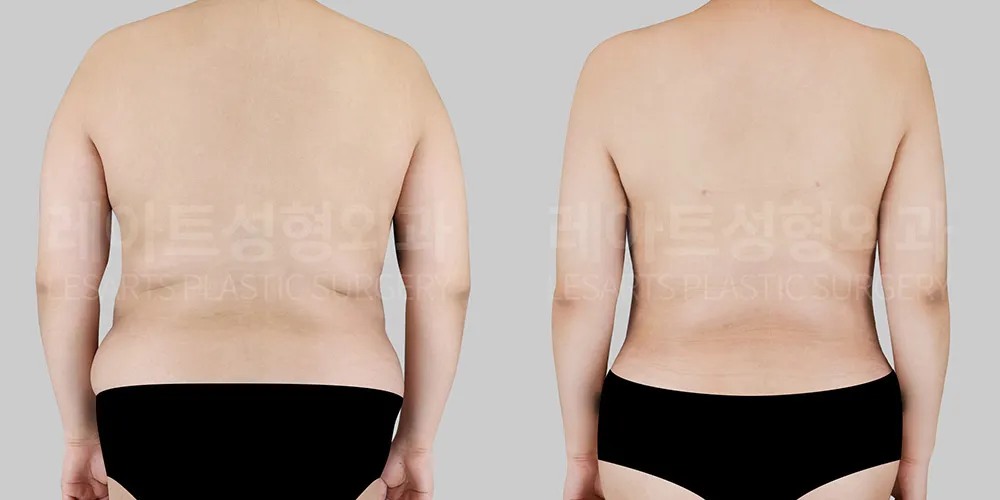
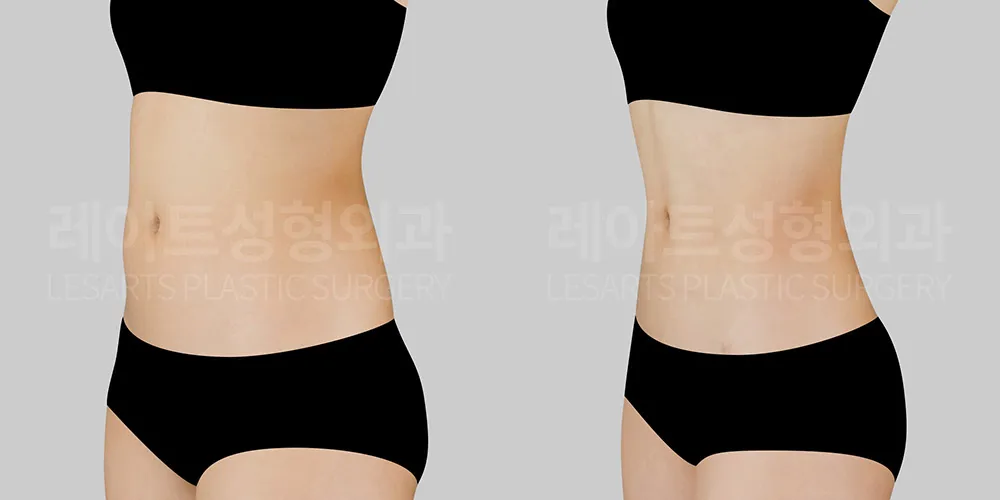
Comparison of before surgery – 2 weeks after surgery – 1 month after surg
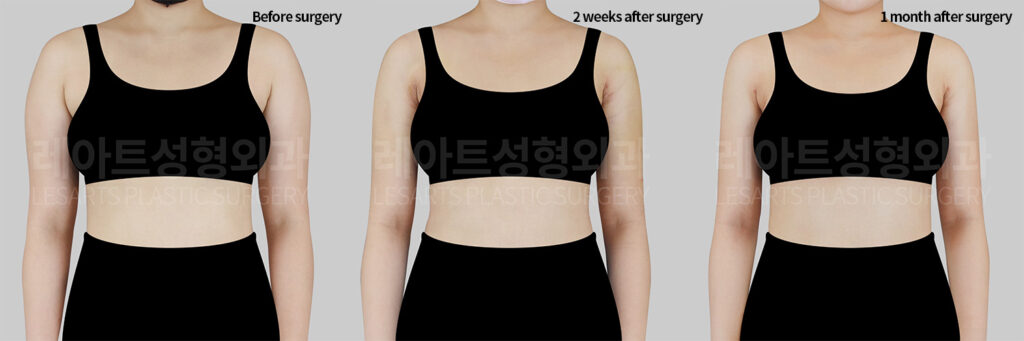
Swelling changes after arm liposuction at Lesarts – front
[Front view, standing at attention]
The outward bulging area has been refined,
and the swelling at one month looks more reduced
compared to the two-week stage.
In the accessory breast area,
compared to the two-week swelling,
the area looks more settled at one month,
with only slight creasing remaining.

Swelling changes after arm liposuction at Lesarts – back
[Back view, standing at attention]
At two weeks, some bruising is still visible,
but the Upper Arm Bulge area looks refined.
By one month, most bruising has disappeared,
and swelling is also almost gone.
Swelling in the underarm and scapular areas
has likewise nearly disappeared at one month
compared to the two-week stage.
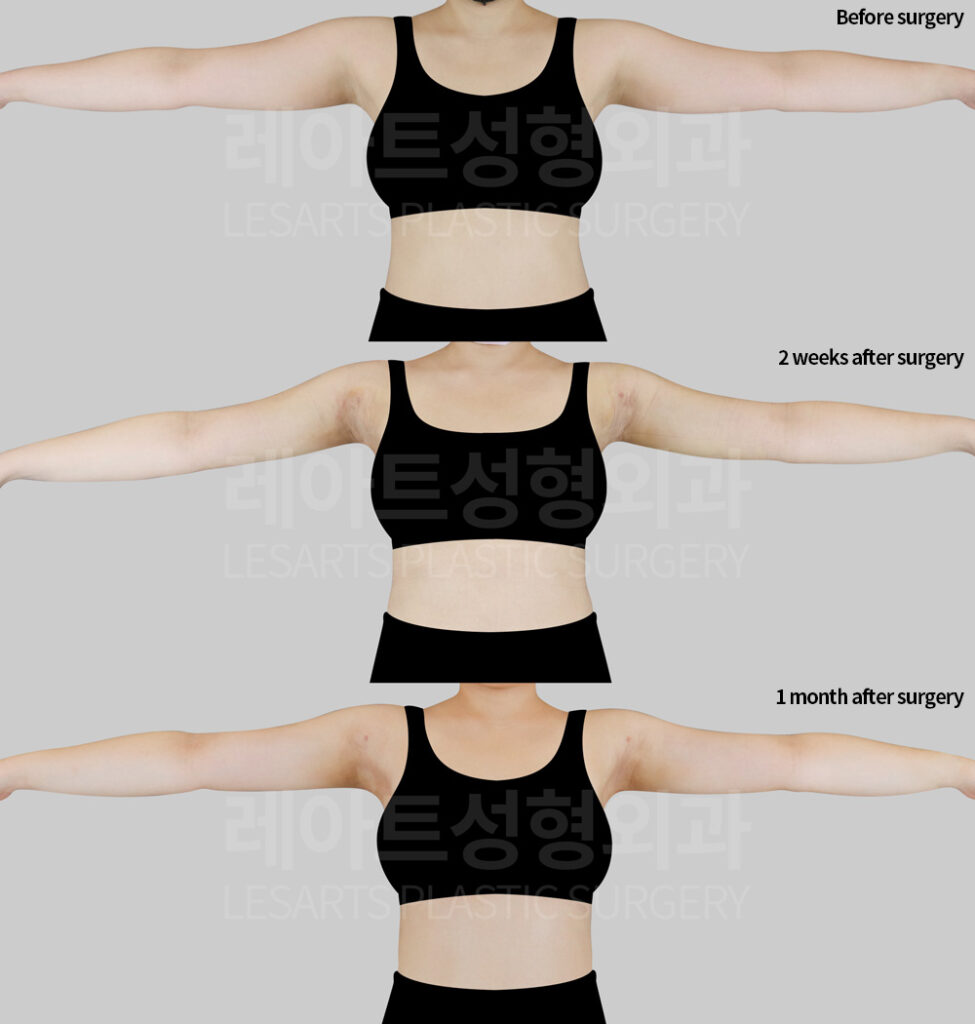
Swelling changes after arm liposuction at Lesarts
[Front view with arms spread]
The area has been evenly refined overall
without making the muscle lines stand out too much.
Bruising around the underarm area,
compared to two weeks after surgery,
has almost disappeared by one month,
with only slight pigmentation remaining.
Most patients want to achieve
the maximum effect after liposuction
with the shortest possible recovery period.
However, how long swelling and bruising last
varies depending on individual body characteristics,
as well as the amount of fat removed
and the scope of surgery.
For arm liposuction,
it is important to minimize tissue damage
during the procedure,
and postoperative management
during recovery is also a key factor.
At our hospital,
we systematically monitor
the recovery process after surgery,
and through personal care
tailored to each patient’s body type
and tissue characteristics,
we minimize swelling and bruising
and help the final line
settle in beautifully.
We will support
everyone who has undergone liposuction
to achieve clear results
and a fast recovery.