Tummy tuck in Seoul: 3-month recovery for postpartum upper abdominal wrinkles and lower belly sagging
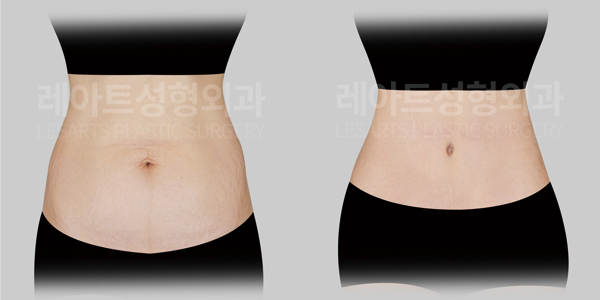
Patient Registration Info
| Age | Weight | Height | BMI |
|---|---|---|---|
|
50s |
52kg |
163cm |
20 |
Surgical site
Surgical site : Abdomen, hips, M-type, rectus plication, umbilicoplasty| liposuction aspirate volume : 2,300cc
Fat Grafting: Hips (Right: 170 cc, Left: 170 cc)
bring about a variety of changes
to a woman’s body,
many of which can persist
long after delivery.
Among these changes,
alterations in abdominal appearance
are often some of
the most noticeable and distressing.
As the fetus grows during pregnancy,
the abdominal skin,
rectus muscles, and
abdominal fascia gradually stretch
and become weakened.
When skin elasticity does not
fully recover after childbirth,
unwanted changes such as
wrinkling, skin laxity,
and stretch marks may remain.
In addition, separation of
the rectus muscles (rectus diastasis)
can compromise the supportive function of
the abdominal wall,
allowing the abdominal contents
to protrude forward.
As a result,
the abdomen may continue to appear
prominent and distended,
even in individuals with
relatively little subcutaneous fat.
In these situations,
abdominoplasty surgery may become
an appropriate option to address
the underlying structural changes
and restore a firmer,
more balanced abdominal contour.
The patient discussed in this post
presented with concerns regarding
generalized skin laxity affecting
both the upper and lower abdomen
following childbirth, including
wrinkling around the umbilicus
and sagging skin of the lower abdomen.
In addition,
weakening of the abdominal wall
had contributed to a protruding contour,
preventing the abdomen from appearing
smooth and well-defined.
Because of these concerns,
the patient visited
Lesarts Plastic Surgery
to explore treatment options
aimed at restoring a firmer,
more balanced abdominal silhouette.
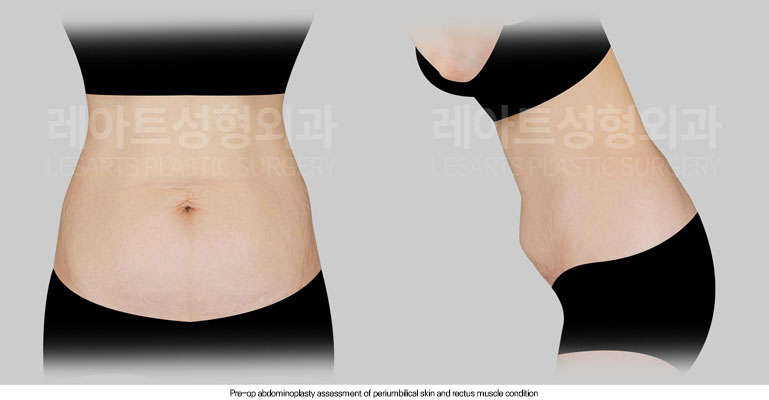
Before abdominoplasty surgery,
the patient demonstrated
generalized skin laxity involving
both the upper and lower abdomen,
along with stretch marks,
wrinkling around the umbilicus,
and a noticeable protrusion of
redundant skin that had descended
toward the lower abdomen.
In addition,
rectus diastasis was identified
throughout both the upper
and lower abdomen.
As a result,
the abdominal wall lacked
adequate structural support,
making it difficult for the patient
to actively engage the core muscles.
This weakening of the abdominal wall
caused the central abdominal contour
to appear widened and separated,
while abdominal protrusion became
more pronounced following meals
or during daily activities and movement.
These findings indicated that
the patient’s concerns extended beyond
simple skin redundancy and reflected
a combination of skin laxity,
musculo-fascial weakening, and
abdominal wall protrusion,
making abdominoplasty with rectus muscle repair
an important component of treatment planning.
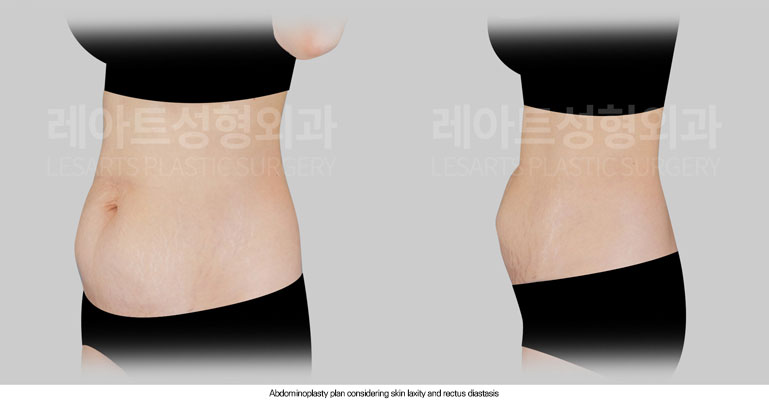
Accordingly, an M-Type Full Abdominoplasty
was planned to address
the excess skin that had descended
from the upper abdomen and accumulated
within the lower abdomen, while simultaneously
correcting the rectus diastasis involving
both the upper and lower abdomen.
An M-Type Full Abdominoplasty
involves elevating the abdominal flap
through upper abdominal dissection,
advancing the stretched skin downward,
and excising the redundant tissue
within the lower abdomen.
During this process,
the wrinkling around the umbilicus,
which represented one of
the patient’s primary concerns,
was expected to be effectively removed.
It was also explained that
the umbilicus, which is repositioned
during the procedure,
would be newly designed and placed
in a stable position along
the midline and waist contour,
helping to create a more balanced
and aesthetically pleasing abdomen.
In addition,
to further enhance the lifting effect
achieved through abdominoplasty surgery
and provide greater definition to
the anterior abdominal contour
and waistline,
abdominal liposuction was incorporated
into the surgical plan
as a synergistic contouring procedure.
fat grafting was planned for
areas of volume deficiency
along the pelvic contour and
hip junction extending toward the thighs,
with the goal of restoring balance,
softening transitions,
and creating a more harmonious
overall body silhouette.
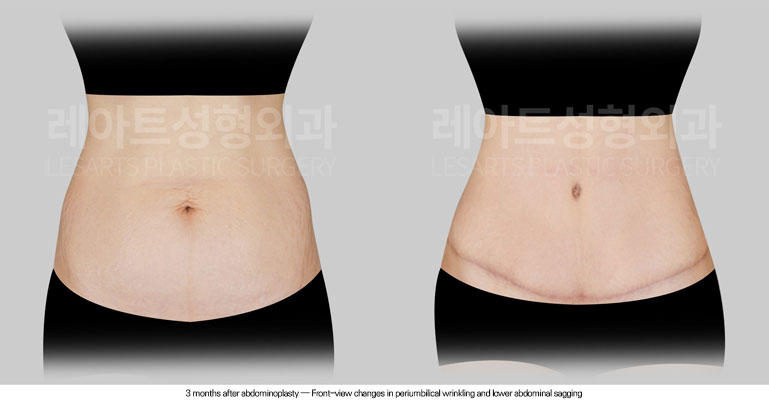
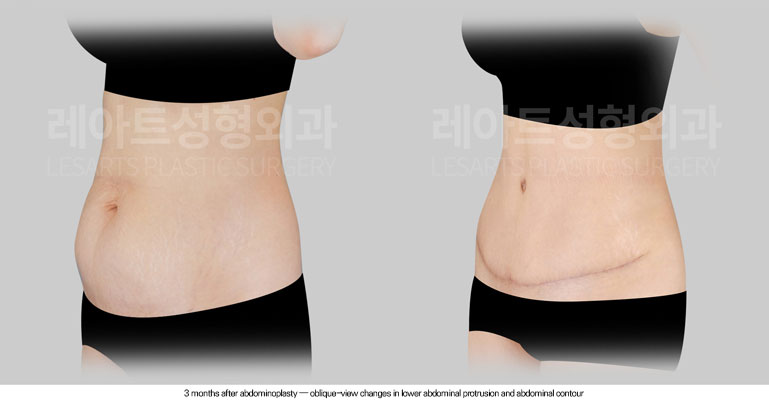
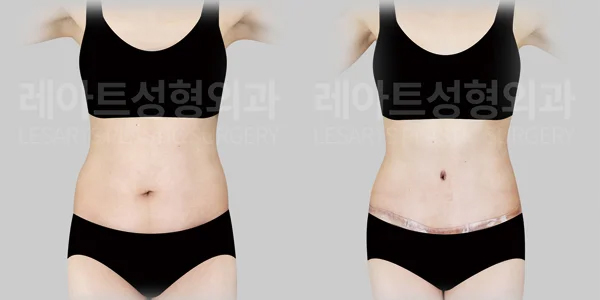
Let us compare the patient’s appearance
before abdominoplasty surgery
and at 3 months post-operatively.
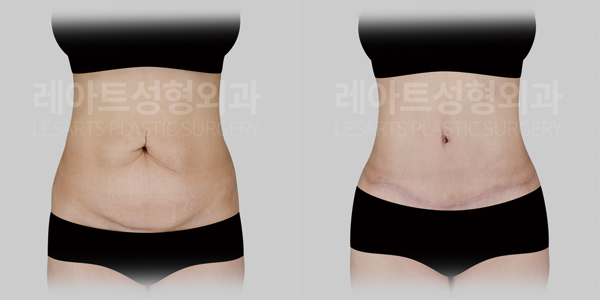
The fine wrinkles that had remained
around the umbilicus prior to surgery
have been effectively eliminated,
while the redundant skin that had
sagged and protruded into
the lower abdomen has been removed,
creating a smoother and more refined
abdominal contour overall.
Stretch marks located within
the excision zone were also removed,
while the remaining stretch marks
became less noticeable as
the skin was tightened
and redistributed.
In addition,
rectus muscle plication restored
support to the previously separated
abdominal fascia, correcting
the protruded and widened appearance
of the abdomen and creating
a firmer, more toned contour.
The umbilicus had also undergone
distortion and inferior displacement
secondary to upper abdominal skin laxity.
Through umbilicoplasty performed
in conjunction with abdominoplasty,
the navel was redesigned and positioned
vertically at the narrowest point
of the waistline, helping the waist
appear slimmer while simultaneously
enhancing the visual impression
of longer legs and improved proportions.
The combination of abdominal liposuction
and hip fat grafting also contributed
positively to contour refinement
and overall body balance.
By reducing the blunted appearance
of the flanks and anterior abdomen,
and restoring a smooth S-shaped transition
from the waist to the pelvis,
the procedure created a softer,
more feminine silhouette with
a youthful and harmonious appearance.
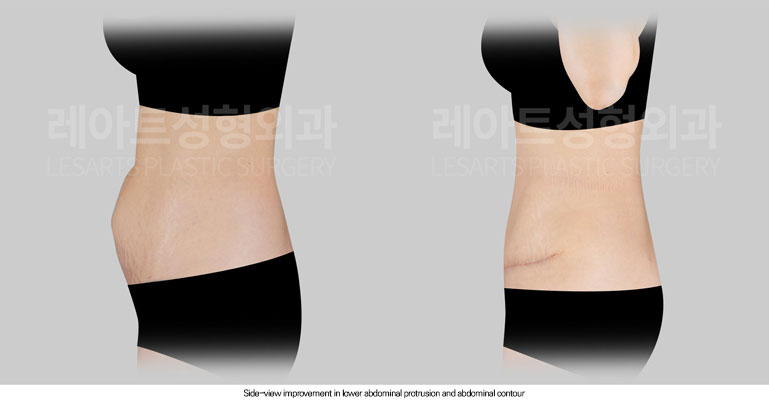
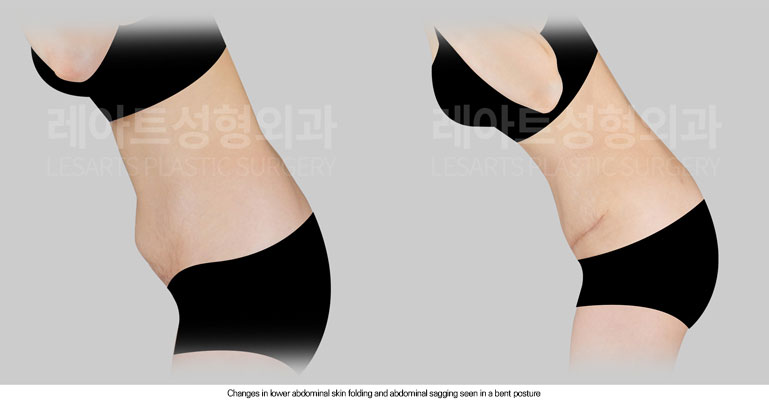
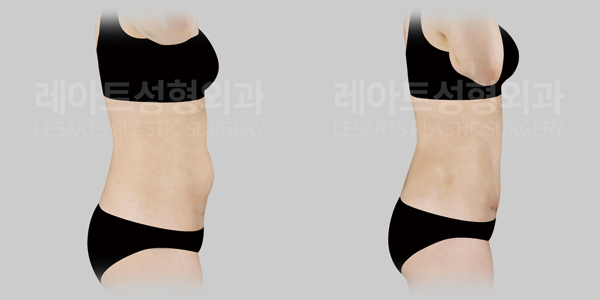
From the side profile,
the improvement in the previously
protruding abdominal wall
and the reduction in
abdominal contour distortion
associated with changes in posture
can be appreciated more clearly.
The stretched and irregular
abdominal skin, along with
many of the visible stretch marks,
has also been effectively improved,
resulting in a smoother and
more refined appearance.
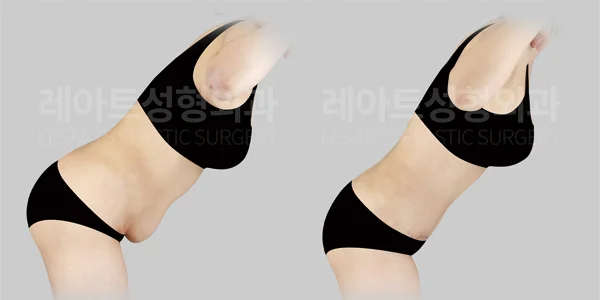
Even when bending forward,
the patient no longer demonstrates
the previously noticeable tendency
for the lower abdomen to hang downward
or for the skin to wrinkle
and bunch excessively.
Instead, the anterior abdominal contour
maintains a firm, smooth,
and well-supported appearance,
reflecting the combined benefits of
abdominoplasty surgery,
rectus muscle plication,
and restoration of
the abdominal wall support system.
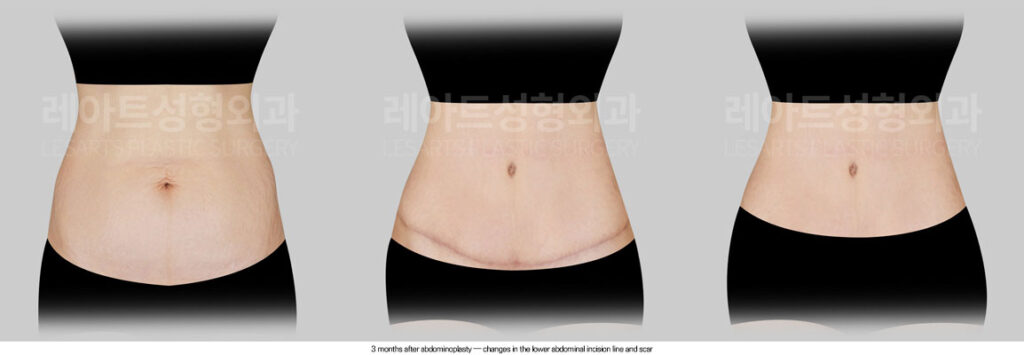
Because abdominoplasty surgery involves
the excision of redundant skin,
a lower abdominal incision scar
is an unavoidable part
of the procedure.
For this reason,
it is important to evaluate
not only changes in
the abdominal contour,
but also how the incision
is healing and how
scar management progresses
throughout recovery.
At approximately 3 months post-operatively,
the scar remains in
the early phase of maturation,
during which residual redness
along the incision line
is commonly observed.
However, in this patient,
the incision was strategically positioned
low along the lower abdomen,
allowing it to be naturally concealed
within the underwear line.
As a result,
the patient reported experiencing
little concern regarding
the appearance of the scar
during daily activities.
Overall, the surgical outcome
and recovery process were found
to be progressing in
a stable and favorable manner,
without any notable complications
or unexpected findings.
In addition,
because scar laser treatments
had recently been initiated
at the 3-month post-operative stage,
further improvement in scar quality
and continued maturation of
the incision line are expected,
suggesting an even more favorable
long-term aesthetic result.
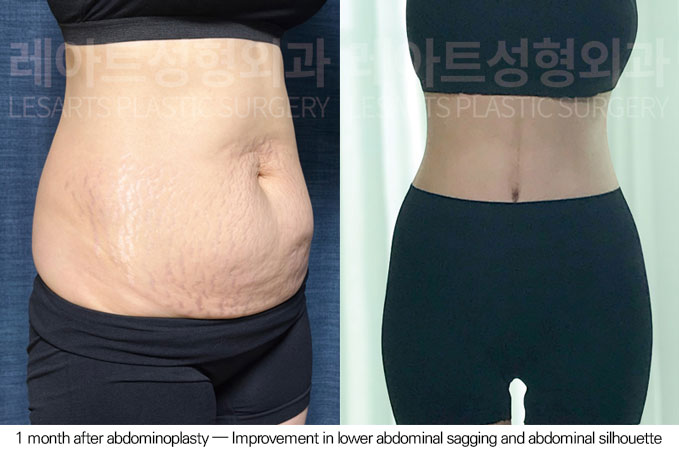
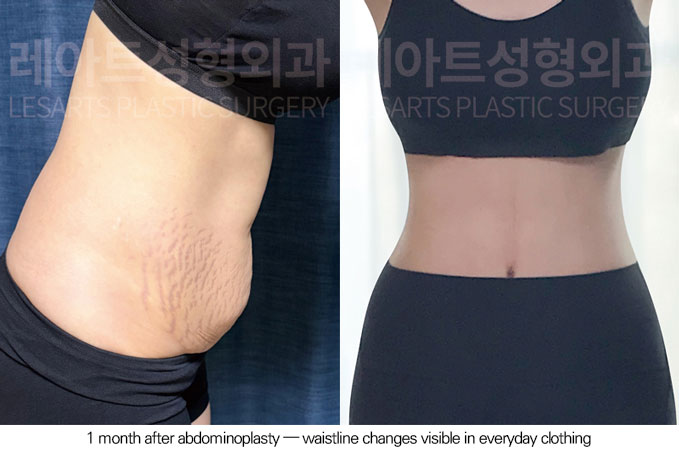
The patient’s 1-month post-operative selfies
and personal review also demonstrate
a dramatic transformation and
a high level of satisfaction
with the surgical outcome.
The previously sagging lower abdomen
has been effectively refined,
while many of the stretch marks
within the excision range
have also been removed.
The anterior abdomen and
waistline now demonstrate
a firmer, more toned appearance,
and the skin itself appears
smoother and more rejuvenated.
In her 1-month post-operative review,
the patient shared that
her satisfaction with daily life
had already increased significantly,
while the discomfort associated with
the recovery process was
gradually subsiding.
She also mentioned that
the improvements achieved thus far
have made her feel excited
and optimistic about
the continued changes expected
over the coming months.
For many women,
abdominal skin laxity,
stretch marks, and
wrinkling around the umbilicus
that persist after childbirth
can be difficult to improve
through lifestyle modifications
or conservative treatments alone.
Moreover, when these concerns
are accompanied by structural problems
such as rectus diastasis,
surgical correction may represent
the most predictable and effective
solution for achieving
meaningful improvement.
Through a thorough consultation,
precise evaluation of the
abdominal condition,
meticulous surgical planning,
and attentive post-operative care,
patients can often achieve
highly satisfying outcomes and
regain confidence in their bodies
after years of frustration.
#Abdominoplasty
#TummyTuck
#FullAbdominoplasty
#MTypeAbdominoplasty
#RectusDiastasisRepair
#Umbilicoplasty
#AbdominalLiposuction
#HipFatGrafting
#MommyMakeover
#PostpartumBodyContour
#AbdominoplastyBeforeAfter
#StretchMarkRemoval
#WaistContouring
#LesartsPlasticSurgery
#BestAbdominoplastyClinicInKorea
#BestMommyMakeoverClinicInKorea