Patient Registration Info
Surgical site
Interest in body lifting
is increasing steadily,
much like facial lifting procedures.
A firm, toned body line
not only creates a younger look
but also boosts confidence.
Especially after pregnancy
and childbirth, many patients
experience reduced abdominal elasticity
with functional and structural changes
in the skin and muscles.
Because of this, interest in
body lifting procedures is high,
especially among those
with significant contour discomfort.
These issues cannot be resolved
with simple dieting
or abdominal exercises alone.
They often require professional
consultation and a surgical approach.
In this case, the patient had
a history of childbirth, C-section,
and previous abdominal surgery,
resulting in thin skin,
reduced elasticity,
and tissue adhesion,
creating an uneven abdominal contour.
[Patient Information]
Age: Early 50s
Height: 159 cm
Weight: 46 kg
BMI: 18
History: 1 vaginal delivery,
1 C-section, 1 abdominal surgery
Even with similar body characteristics,
surgical results may vary individually.
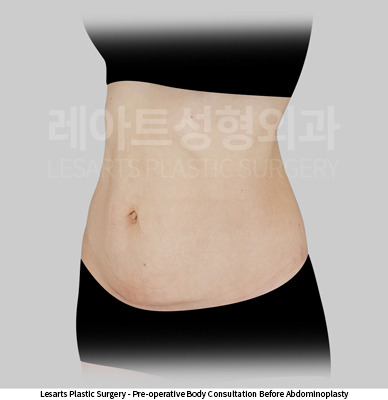
This patient showed reduced abdominal elasticity
after childbirth, and noticeable skin sagging
above the C-section scar.
In addition, abdominal adhesions caused by
the previous C-section and abdominal surgery
created an overall uneven abdominal contour.
The patient wished to improve
the sagging abdomen, the irregular adhesions,
and the wrinkles above the navel
through abdominoplasty.
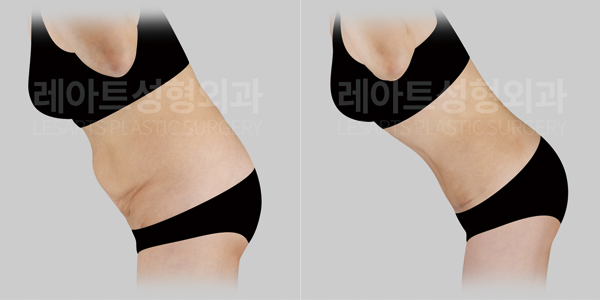
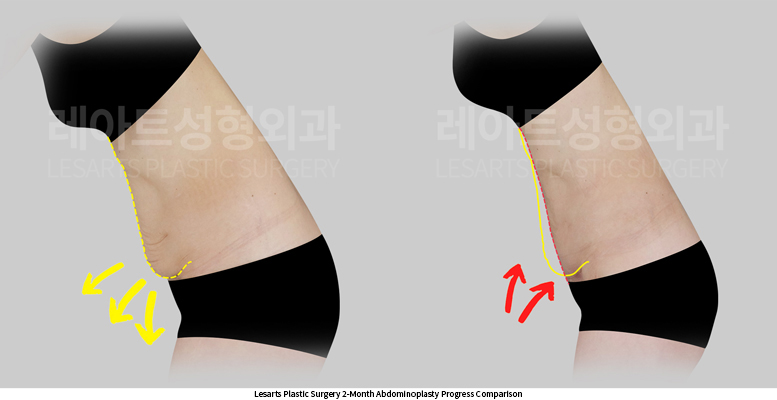
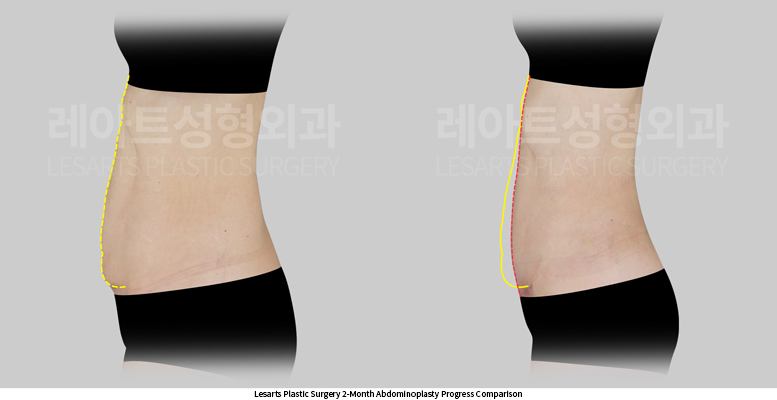
From the side view, the abdomen
appears uneven from the upper abdomen
down to the lower abdomen, with
bulging sagging tissue that stands out.
When the body bends forward,
the upper abdominal skin sags heavily,
making the lower belly look even
heavier and more prominent.
In this case, reduced skin elasticity
in thin abdominal skin, diastasis recti
(rectus muscle separation), and
tissue adhesions overlapped together,
so a complex, full abdominal correction
was required across the entire abdomen.
To improve this patient’s abdominal condition,
the following surgical plan
was established:
1. Abdominoplasty (S+M type, umbilical floating)
– Corrects skin sagging extending
from the upper to lower abdomen
– Uses an umbilical floating technique
to lift the abdomen without
separate umbilical reconstruction
2. Rectus muscle plication
– Repairs diastasis recti caused
by pregnancy and childbirth
– Restores a firm abdominal contour
with improved core support
3. Adhesiolysis (adhesion release)
– Removes tissue adhesions caused
by previous C-section and
prior abdominal surgery
4. Abdominal liposuction
– Performs liposuction together
with abdominal lifting to refine
the silhouette into a smooth line
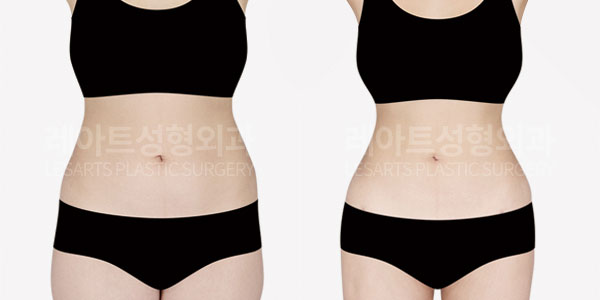
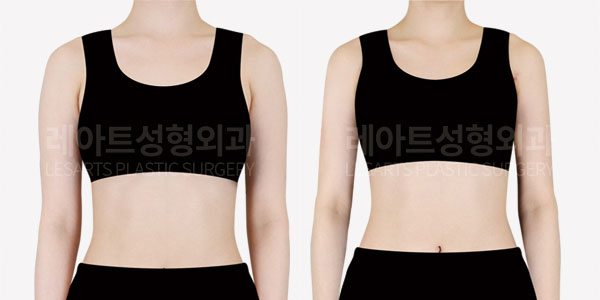
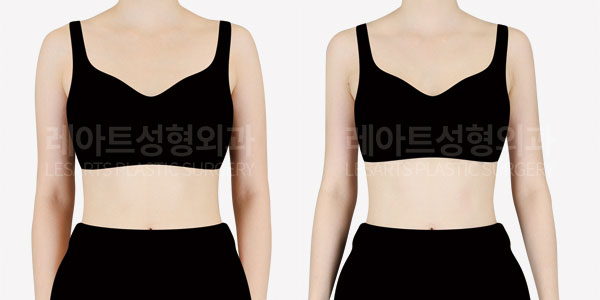
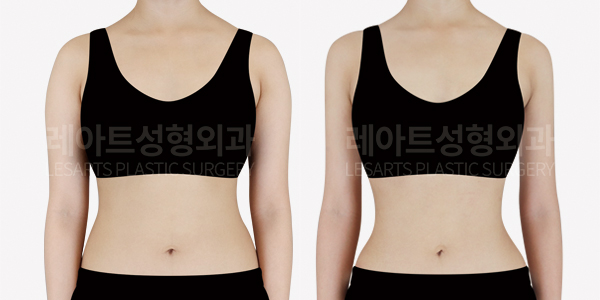
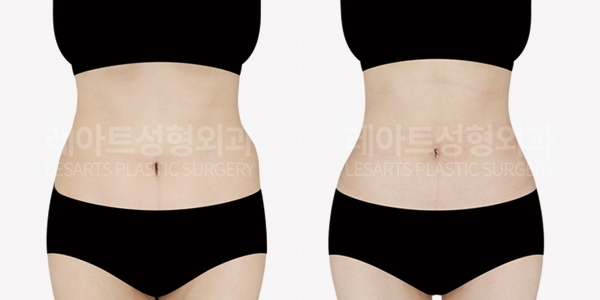
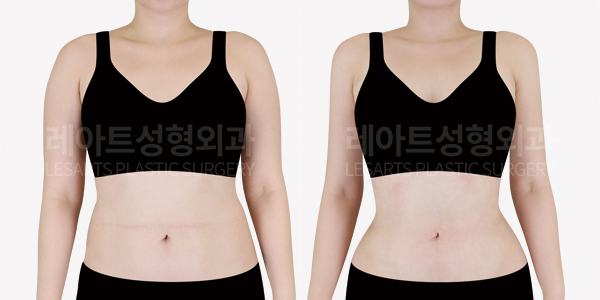
In the photos taken 2 months after
abdominoplasty in Korea, we will see
how the sagging abdominal skin and
previously uneven contour have been
corrected and improved.
[Surgical Areas and Suction Volume]
Surgical areas:
Abdominoplasty, abdominal wall plication, navel floating
Abdominal liposuction volume:
1,500 cc
The patient aimed to reduce
abdominal fat while improving
lower-abdominal skin laxity that
developed after childbirth.
She also wished to correct
wrinkles above the navel and
irregular adhesions that created
an uneven abdominal surface.
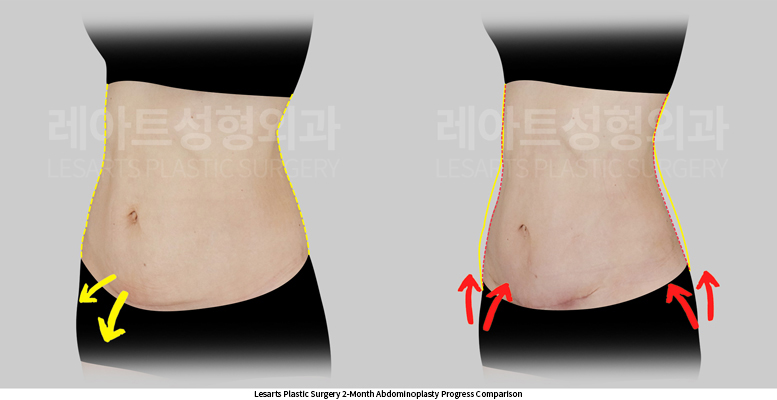
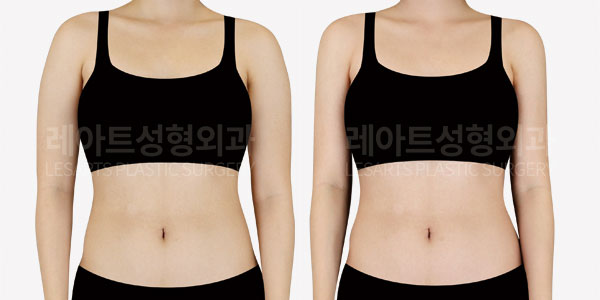
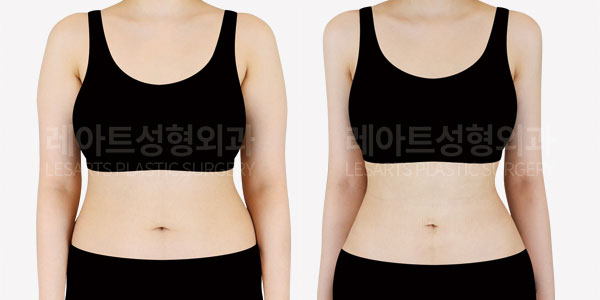
In the semi-oblique postoperative
photos, you can see that the
sagging skin folding over the
C-section scar was noticeably
tightened and corrected.
The irregular front-abdominal
contour caused by adhesions
was also smoothed out, resulting
in a cleaner, more refined shape.
You could also see
clear improvement in both
the forward-bending posture
and the side profile.
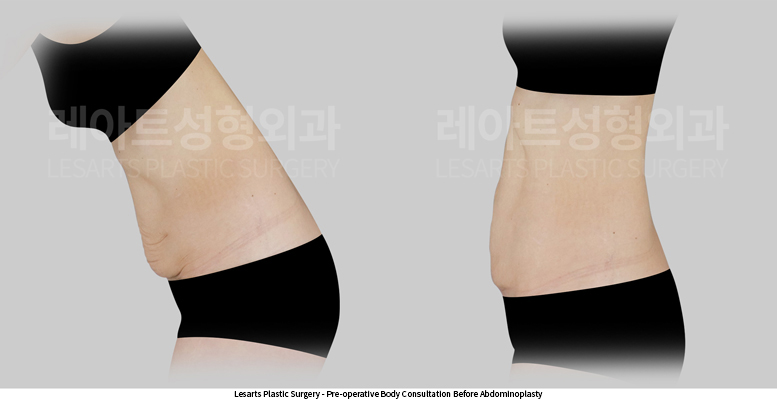
Before abdominoplasty, the
skin from the upper abdomen
shifted downward, making the
lower abdomen appear heavy.
From the side, sagging skin,
uneven adhesions, a bulging
abdominal wall, and the
overlapping C-section scar
created a pronounced protrusion.
However, at two months
after surgery, the skin
laxity had resolved, and
the rectus muscles were
firmly corrected, so the
abdomen no longer shifted
or wrinkled when bending
forward.
In the side view, the
abdominal wall protrusion
disappeared, adhesions were
improved, and a firm,
natural curve was restored.
At the two-month follow-up
after abdominoplasty, the
patient showed stable healing
at the incision site and no
issues with seroma formation.
Because this is still an
early stage of recovery,
the navel may look slightly
lower or feel firm around
the edges, which is
temporary.
With continued scar care
and steady postoperative
management, the abdominal
line is expected to settle
into a more natural and
stable contour.