Tummy tuck in Korea: why patients choose surgery after massive weight loss
Patient Registration Info
| Age | Weight | Height | BMI |
|---|---|---|---|
|
20s |
51kg |
159cm |
20 |
Surgical site
Surgical site : Abdomen, M-type abdominoplasty, muscle repair, umbilicus correction, adhesion release| liposuction aspirate volume : 800cc
Many people who achieved
successful and healthy weight loss
often emphasize the importance
of consistency and discipline.
Through balanced nutrition
and regular exercise habits,
they achieved significant changes
in body weight and health.
However, even after successful
massive weight reduction,
some patients face
a different concern.
This is the presence
of loose abdominal skin
and weakened abdominal wall support
caused by previous obesity.
The abdomen has
a wide surface area,
making sagging more noticeable
after fat loss.
Over time, deep folds
and visible wrinkles
can become more pronounced
without proper correction.
This concern is not limited
to older individuals
experiencing natural skin aging.
Even younger patients,
including those in their 20s,
visit Lesarts Plastic Surgery
for abdominoplasty surgery
due to persistent
post-weight loss skin laxity.
The patient presented
in this case
also experienced significant
weight loss,
but the abdominal skin elasticity
did not recover fully.
As a result, visible
abdominal sagging remained.
In addition to skin laxity,
the patient also had
rectus diastasis,
causing weakening
of the central abdominal contour,
along with visible wrinkling
around the umbilicus.
This required comprehensive
abdominoplasty correction
to restore a firmer,
more balanced abdominal contour.
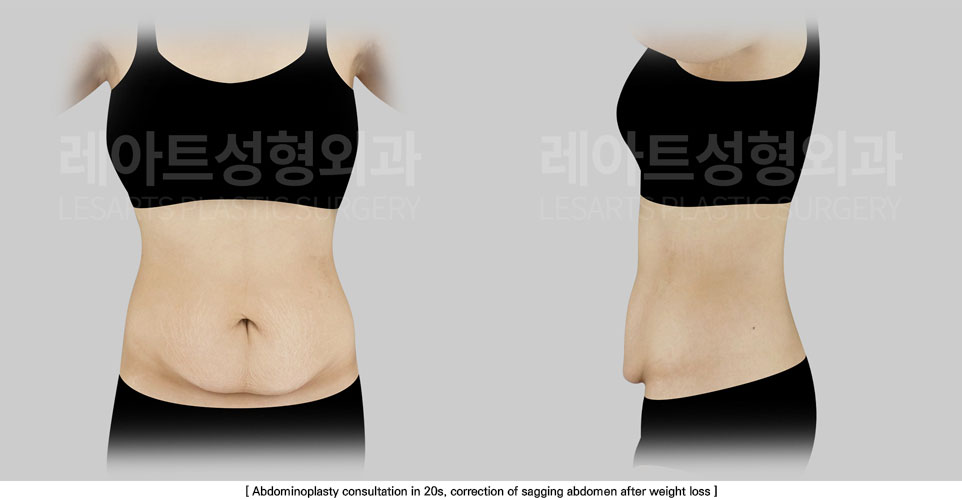
[Body Contour Consultation]
Age: Mid-20s
Height: 159 cm
Weight: 51 kg
BMI: 20
* Even with similar body conditions,
the abdominoplasty method and results
may vary depending on individual characteristics.
The patient had previously
experienced severe obesity,
and successfully achieved
over 50 kg weight loss.
However, due to
prolonged skin expansion,
the skin elasticity recovery
was significantly reduced.
Although the patient
achieved successful weight loss,
the remaining abdominal skin
was unable to adapt
to the reduced
abdominal volume.
As a result,
the excess skin
became severely sagging
and unstable.
In addition,
rectus diastasis
caused weakening
of the abdominal wall support,
allowing the abdominal contents
to protrude forward.
Through abdominoplasty surgery,
both the weakened abdominal wall
and excess skin
were planned to be corrected.
The surgical goal
was to restore
a smooth, firm,
and naturally contoured
abdominal profile.
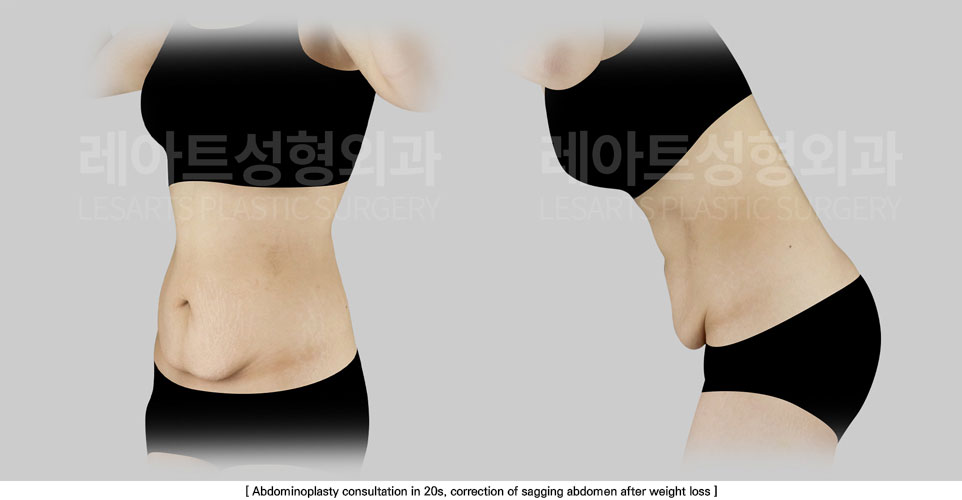
1. Abdominoplasty (M-type + umbilicus correction + adhesion release)
Following massive weight loss,
the abdominal skin
was severely stretched
across the entire abdomen,
with visible unevenness
in the lower abdomen
caused by tissue adhesions.
The adhered areas
were carefully released
and the stretched skin
from the upper abdomen
to the lower abdomen
was precisely lifted
to restore a firmer
and smoother contour.
In addition,
wrinkles around the umbilicus
were carefully corrected
to create a natural
and smooth
anterior abdominal profile.
2. Abdominal wall repair (rectus muscle repair)
Due to previous obesity,
the abdominal muscle layer
was weakened and separated,
affecting the central
abdominal structural support.
Through rectus muscle repair,
the abdominal wall
was securely reinforced
to restore functional
and aesthetic stability,
while carefully adjusting
the tension to avoid
excessive internal pressure.
3. Combined abdominal and flank liposuction
Abdominal liposuction
was performed simultaneously
to enhance
the waistline definition.
This provided additional synergy
to the lifted abdomen,
improving overall
contour balance
and enhancing
the firm abdominal appearance.
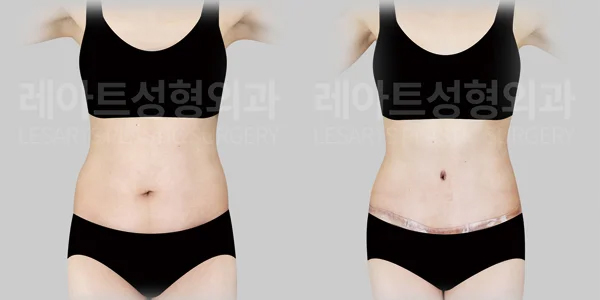
Through the photos taken
5.5 months after abdominoplasty,
we will now review
the visible improvements
in abdominal contour
and structural correction.
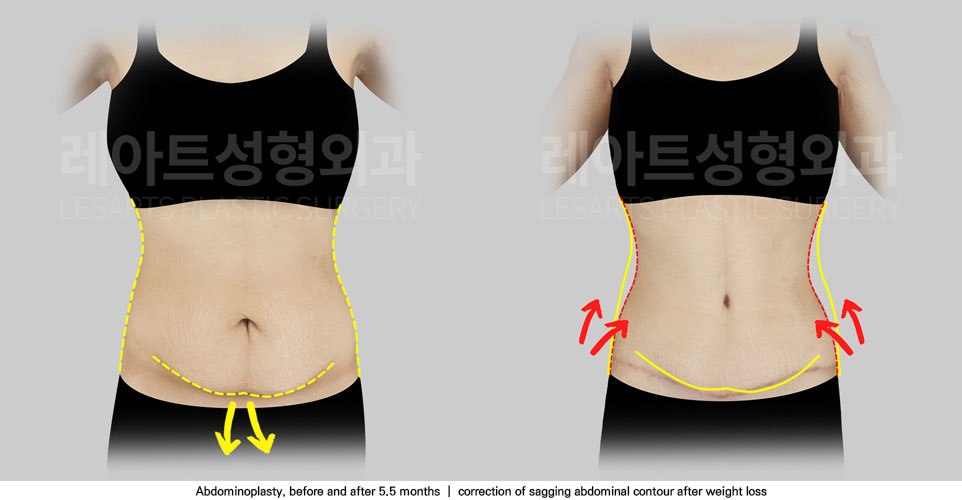
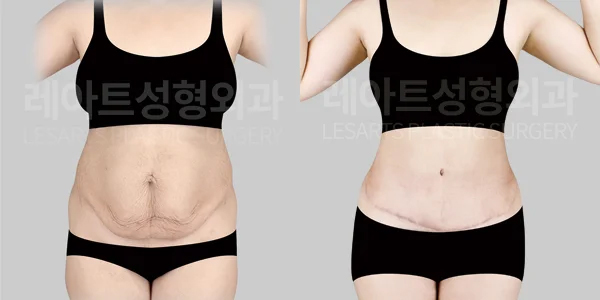
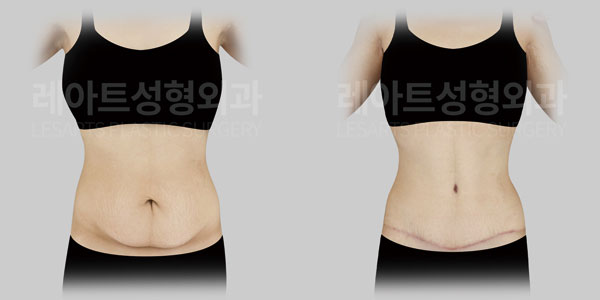
The patient had experienced
long-term severe obesity,
which caused significant
skin expansion over time.
After successful weight loss,
the stretched skin
was unable to fully recover,
resulting in severe
abdominal skin sagging.
Before abdominoplasty surgery,
the overall abdominal contour
was heavily pulled downward
due to gravity,
and the natural
waistline definition
was not clearly visible.
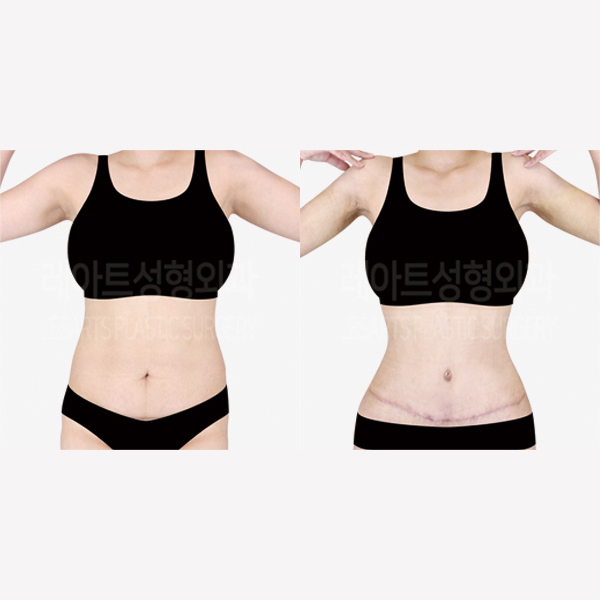
Through combined
abdominoplasty,
liposuction, and
abdominal wall repair,
the adhered tissues
were carefully released,
and the anterior abdomen
was firmly lifted
to restore structural support.
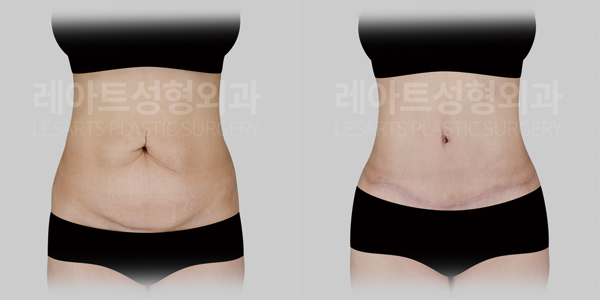
In addition, removal
of flank fat
eliminated visible sagging
and deep skin folds.
As the waistline position
was elevated,
the starting point
of the legs
appeared higher,
resulting in improved
overall body proportion
and abdominal contour balance.
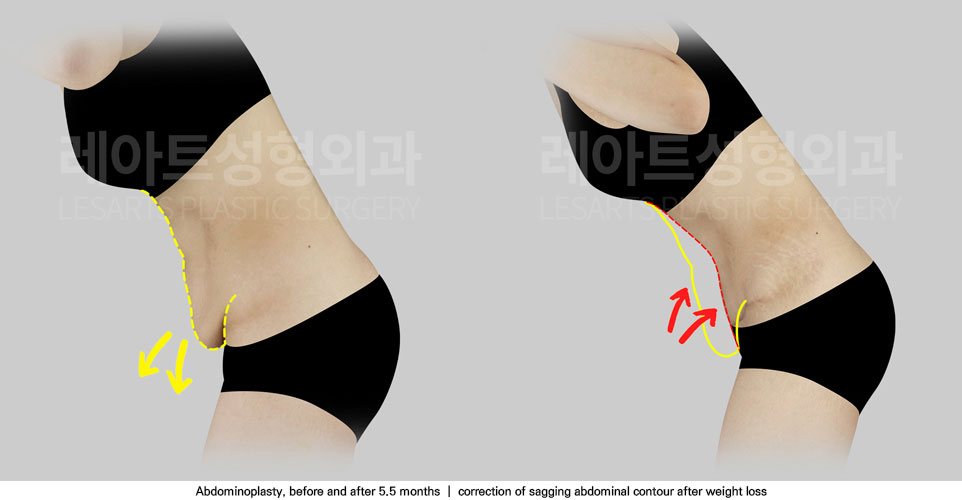
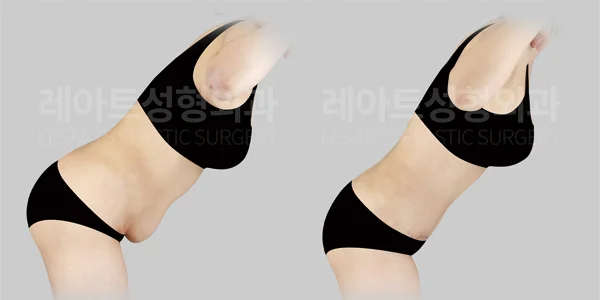
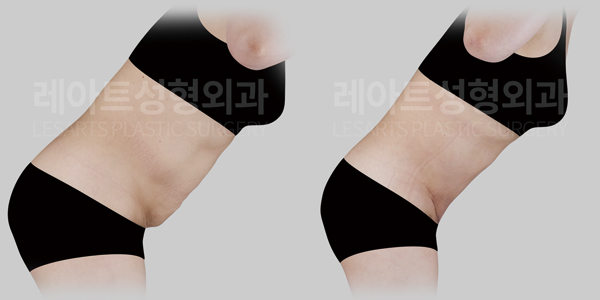
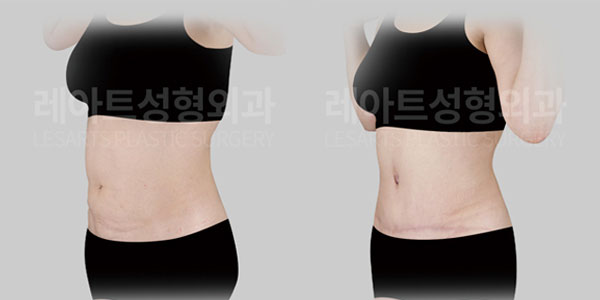
The before and after
bending posture comparison
clearly shows
how much the
sagging abdominal skin
was lifted
through abdominoplasty surgery.
Before surgery,
the visible skin laxity
and downward pulling
of the abdomen
demonstrated severely reduced
skin elasticity,
which was evident
even in photographs.
Through abdominoplasty,
the excess sagging skin
was completely removed,
and the weakened
abdominal wall
that had protruded
from the upper abdomen
was firmly repaired,
resulting in smooth
and even
abdominal skin lifting.
Previously, the patient
experienced limitations
when wearing clothing
and discomfort
even in simple
seated positions.
After surgery,
the patient was able
to maintain a stable
and firm
abdominal contour
without restrictions
or stress
during daily movement.
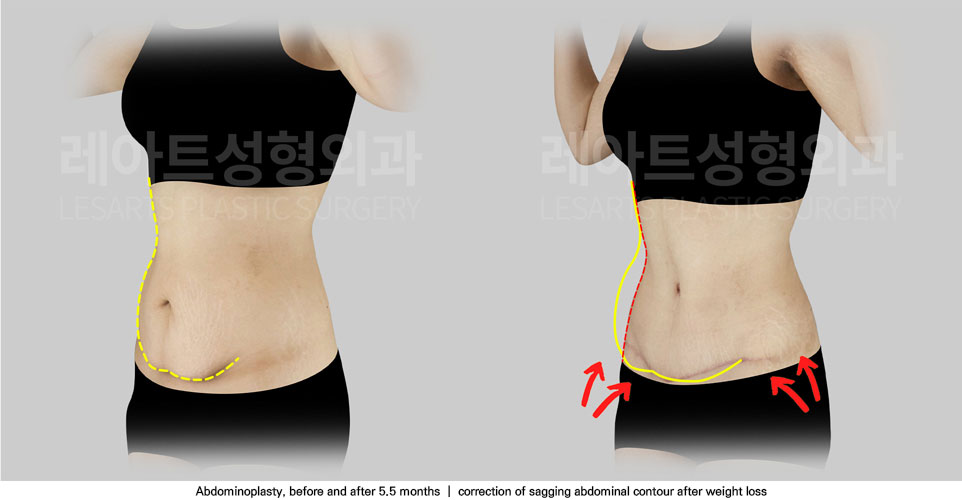
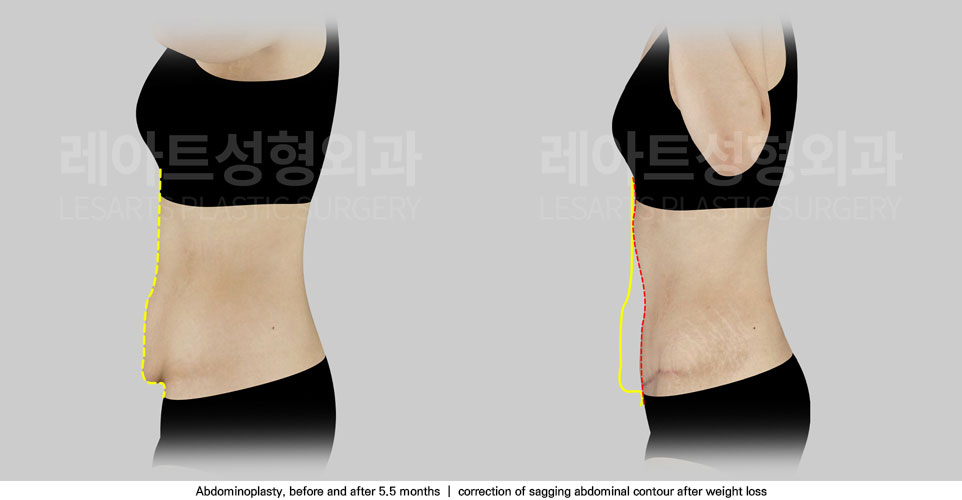
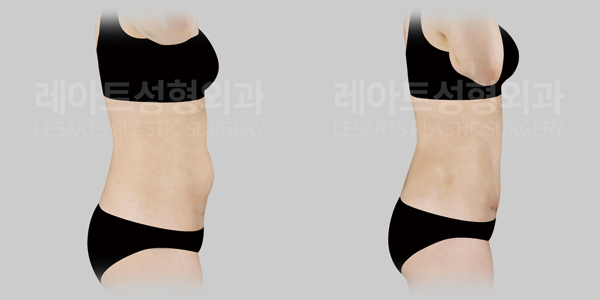
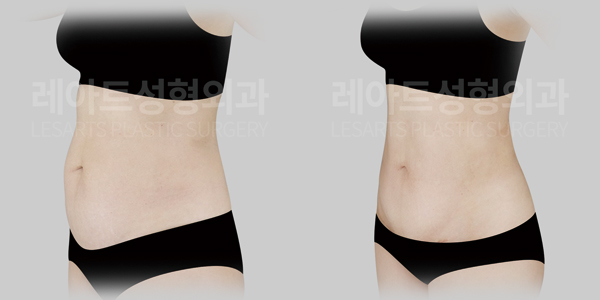
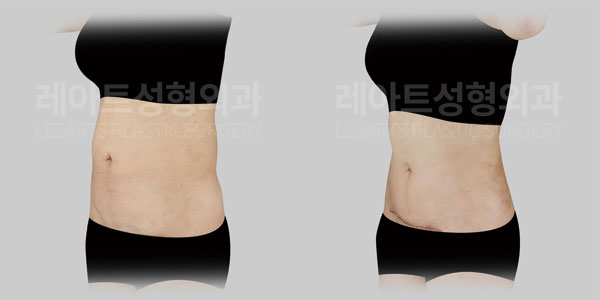
From the side profile,
the degree of
abdominal sagging improvement
is clearly visible.
Before abdominoplasty surgery,
the upper abdomen
showed visible protrusion,
and the lower abdomen
had severe
overlapping and sagging
excess skin.
After surgery,
the stretched skin
was completely corrected,
resulting in a flatter
and more stable
abdominal contour.
In addition, through
rectus muscle repair,
the central abdominal axis
was firmly reinforced,
eliminating the widened
and loose
flank contour appearance.
This created a more
dramatic and balanced
body contour transformation.
Due to the prolonged period
of severe obesity,
the patient’s skin
had become thinner
with significantly reduced
skin elasticity.
However, even at
5 months post-abdominoplasty,
the abdomen maintained
a smooth and firm
surgical result,
supported by consistent
post-operative care.
To achieve even greater
long-term satisfaction,
proper follow-up care,
scar management,
and continued attention
to diet and exercise
are essential.
Through this process,
the surgical outcome
is expected to settle
into a more natural
and aesthetically refined
waistline contour over time.
#Abdominoplasty
#TummyTuckSurgery
#AbdominoplastyKorea
#LooseSkinRemoval
#MassiveWeightLossTransformation
#RectusDiastasisRepair
#WaistlineContouring
#BodyContouringSurgery
#PostWeightLossSurgery
#LesartsPlasticSurgery
#KoreanTummyTuckClinic
#BestTummyTuckClinicInKorea