Tummy tuck in Korea: can loose abdominal skin after weight loss be corrected?
Patient Registration Info
| Age | Weight | Height | BMI |
|---|---|---|---|
|
30s |
69kg |
165cm |
26 |
Surgical site
Surgical site : Abdomen, Hip Contour, L-type Extended Abdominoplasty, Umbilicoplasty, Rectus Plication| liposuction aspirate volume : 3,400cc
Fat Grafting: Hips (Right: 190 cc / Left: 180 cc)
Can tummy tuck surgery improve loose abdominal skin after major weight loss?
Yes. When significant weight loss leaves behind excess skin,
deep folds, and abdominal wall laxity,
these changes usually cannot be corrected with
exercise or additional weight loss alone.
L-Type Extended Abdominoplasty can remove redundant skin,
repair rectus diastasis, reshape the umbilicus,
and improve overall abdominal contour, creating
a firmer, smoother, and more balanced silhouette.
→ Learn More About Lesarts Abdominoplasty
After experiencing significant weight gain followed by
substantial weight loss, many people feel satisfied
with the reduction in body weight.
However, unexpected concerns often remain.
One of the most common is loose abdominal skin
and persistent wrinkling.
The abdomen is particularly vulnerable to
changes associated with major weight fluctuations.
Even after successful weight loss,
skin that has been significantly stretched
often cannot fully contract on its own.
In addition, rectus diastasis and
fascial laxity may contribute to an irregular,
protruding abdominal contour.
These structural changes can weaken
abdominal support, increase the risk of
skin irritation within overlapping skin folds,
and make it difficult to achieve
the desired fit when wearing clothing,
resulting in everyday discomfort.
In this case, we present the 9.5-month postoperative outcome
of a patient who underwent L-Type Extended Abdominoplasty
after significant weight loss.
Her primary concerns included loose lower abdominal skin,
an irregular abdominal contour below the umbilicus,
and the appearance of the umbilicus itself.
[Patient Information]
Age: 30s
Preoperative Height / Weight: 165 cm / 69 kg
Procedures Performed:
L-Type Extended Abdominoplasty,
Abdominal Liposuction, and
Hip Fat Grafting
Before undergoing abdominoplasty,
the patient had no history of pregnancy,
childbirth, or previous abdominal surgery.
However, she had experienced a period of
significant weight gain in the past and had
successfully achieved long-term weight loss,
maintaining a stable body weight thereafter.
Despite the weight reduction,
the stretched abdominal skin failed to
fully retract, leaving persistent skin laxity
and deep skin folds, particularly in
the lower abdomen below the umbilicus.
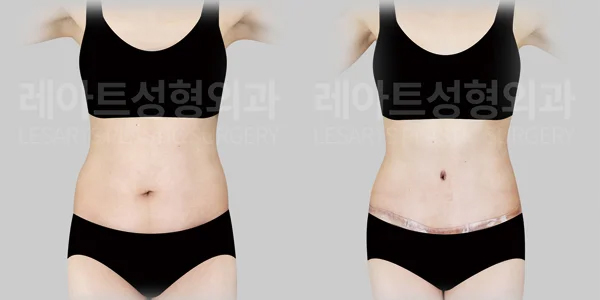
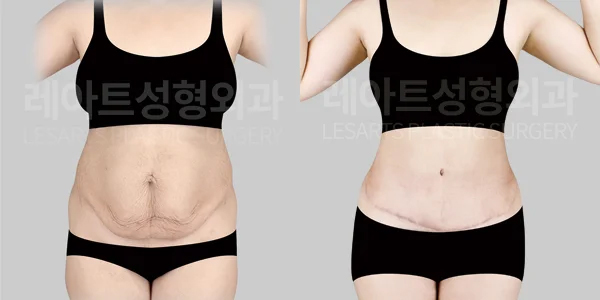
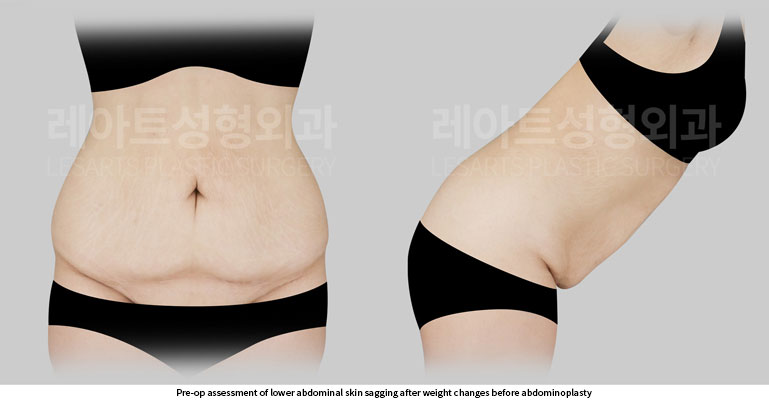
The preoperative photographs demonstrate
that reduced skin elasticity extending from
the upper abdomen caused the excess skin
to descend into the lower abdomen, resulting in
pronounced skin redundancy and deep folding
beneath the umbilicus.
Extensive stretch marks and wrinkling
were also present around the umbilical region.
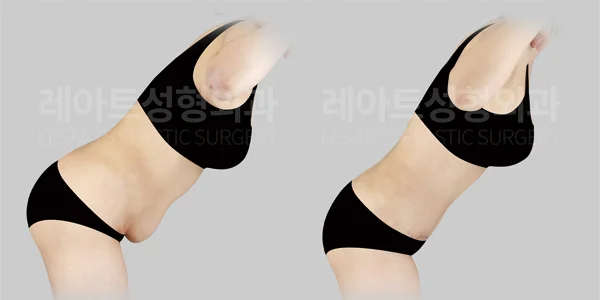
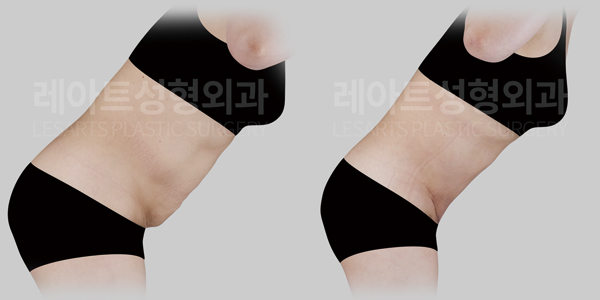
When bending forward,
the remaining redundant skin shifted anteriorly,
making the lower abdominal sagging
appear even more pronounced.
Although the patient’s body weight and
fat distribution were relatively well controlled,
the overlapping excess skin became increasingly
prominent toward the lower abdomen, creating
a heavy and bulky appearance that was
out of proportion to her overall physique.
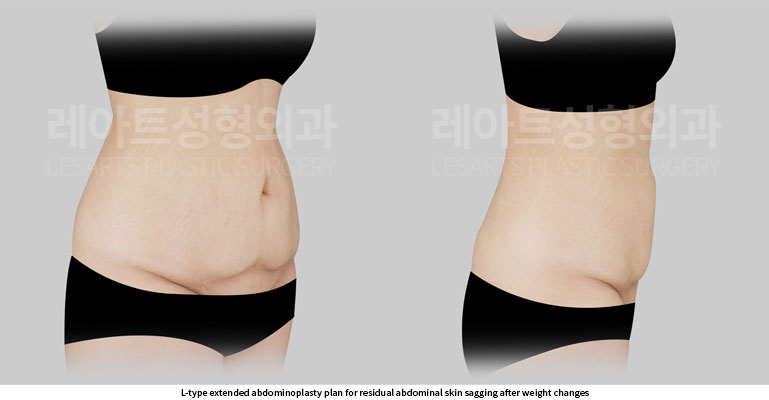
Based on these findings,
an L-Type Extended Abdominoplasty was recommended
to remove the excess lower abdominal skin
that had descended below the umbilicus.
Although this approach requires
a longer incision extending toward the pelvis,
the patient’s extensive skin laxity involving
the upper abdomen, flanks, and lower abdomen
made an extended procedure the most appropriate option.
It was explained that Extended Abdominoplasty
would provide a more comprehensive correction
while minimizing the risk of dog-ear deformities
at the ends of the incision.
In addition to excising the redundant skin,
rectus diastasis repair and umbilicoplasty
were planned to restore abdominal wall support,
improve the contour of the anterior abdomen,
and create a more natural umbilical shape and position.
To further enhance the surgical outcome,
abdominal liposuction was incorporated,
focusing on the flanks and love handles
to improve the overall abdominal contour
and maximize the aesthetic result.
Finally, hip fat grafting was included
to create a smoother transition between
the love handles and the lateral hips,
while enhancing the natural curve extending
from the waist to the pelvis.
However, because the patient had experienced
substantial weight fluctuations, the abdominal skin
had also stretched significantly in the horizontal direction.
Accordingly, she was advised that
minor wrinkling above the umbilicus or
a slight tendency for the skin to gather toward the midline
could remain even after abdominoplasty,
despite the overall improvement in abdominal contour.
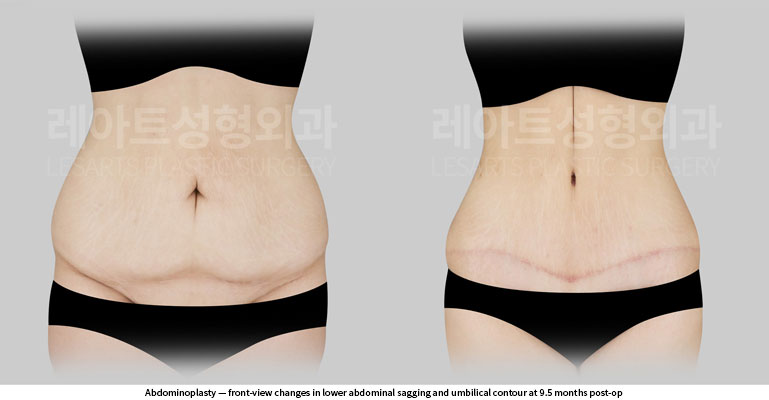
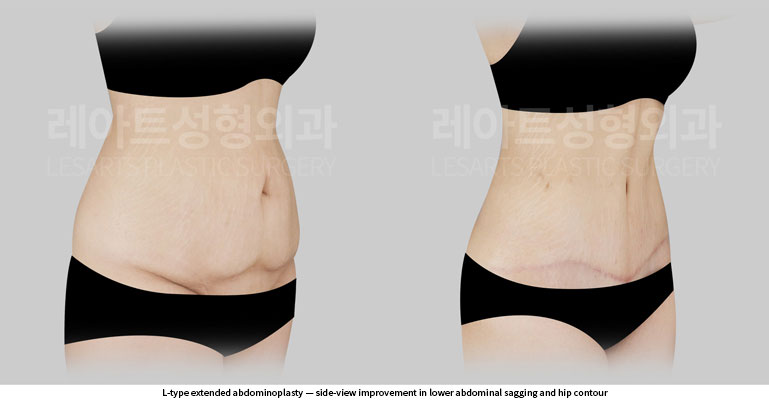
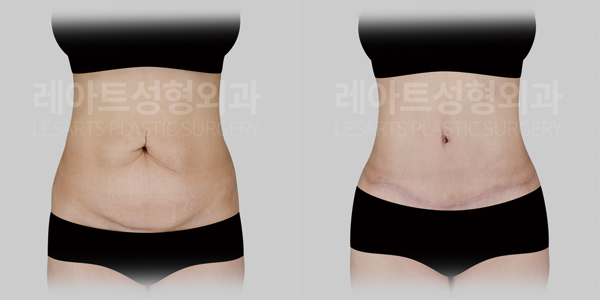
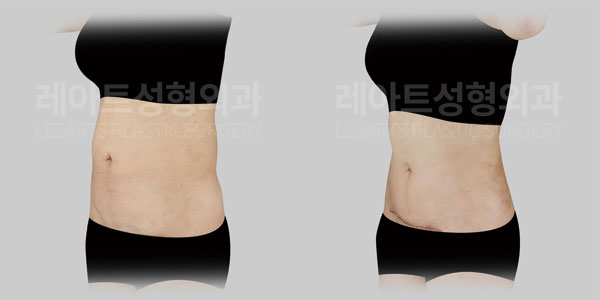
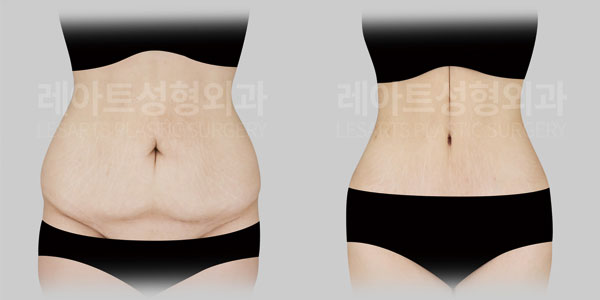
The following photographs compare
the patient’s appearance before surgery and
9.5 months after L-Type Extended Abdominoplasty.
The excess lower abdominal skin that had
previously sagged below the umbilicus
has been effectively removed, eliminating
the heavy, protruding appearance of the lower abdomen
and creating a noticeably lighter, firmer contour.
The stretch marks and fine wrinkles
that had been widely distributed around the umbilicus
have also been significantly reduced, while
the overall abdominal contour now appears
much smoother and more harmonious.
At the same time, umbilicoplasty was performed,
transforming the umbilicus from the rounded,
downward-pulled appearance caused by skin laxity
into a more natural vertical shape with
improved position and definition.
The combination of abdominal liposuction and
hip fat grafting further enhanced the overall body proportions.
Reduction of fullness in the flanks and love handles,
together with improved volume along the lateral hips,
created a smoother, more feminine transition
from the waist to the pelvis, contributing to
a more balanced and refined body contour.
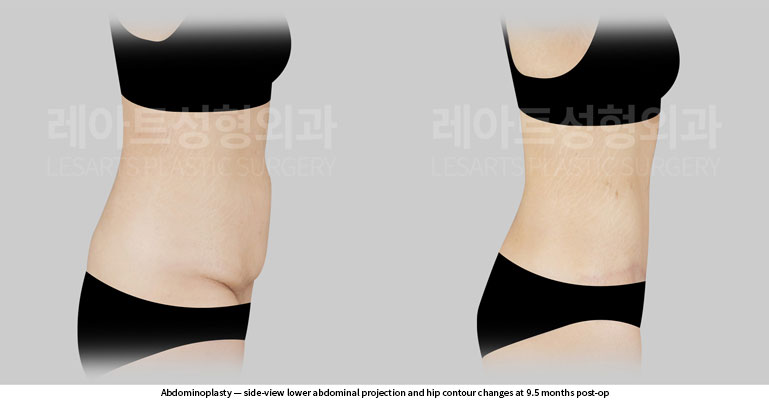
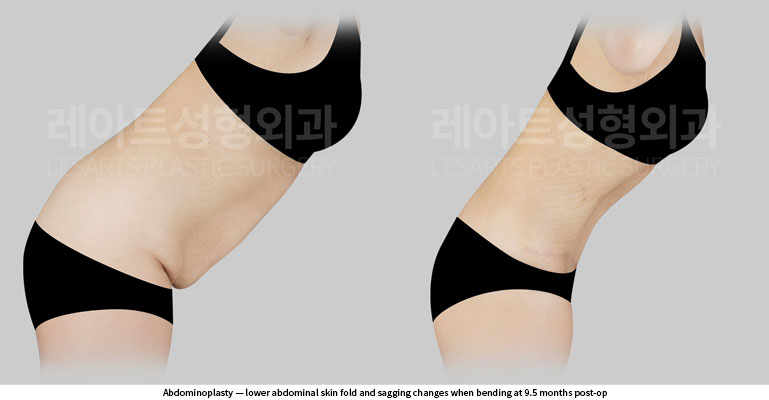
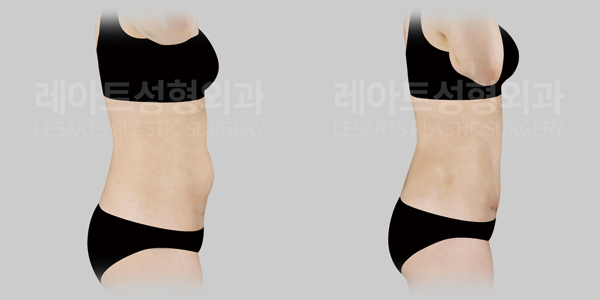
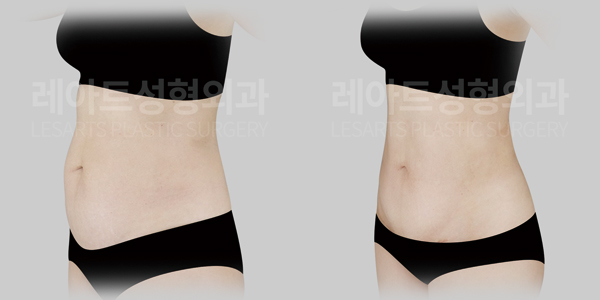
From the lateral view,
the abdomen that had previously
projected forward before abdominoplasty
has been effectively corrected, resulting in
a much firmer and flatter abdominal profile.
Even when bending forward,
the postoperative abdomen remains
firmly supported.
Unlike before surgery,
the abdominal skin and abdominal wall
no longer collapse or shift forward under gravity,
demonstrating improved structural support
and a stable, well-contoured abdominal silhouette.
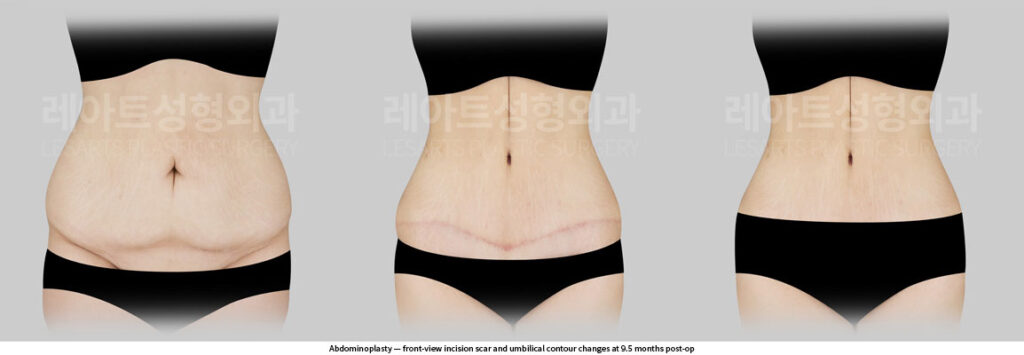
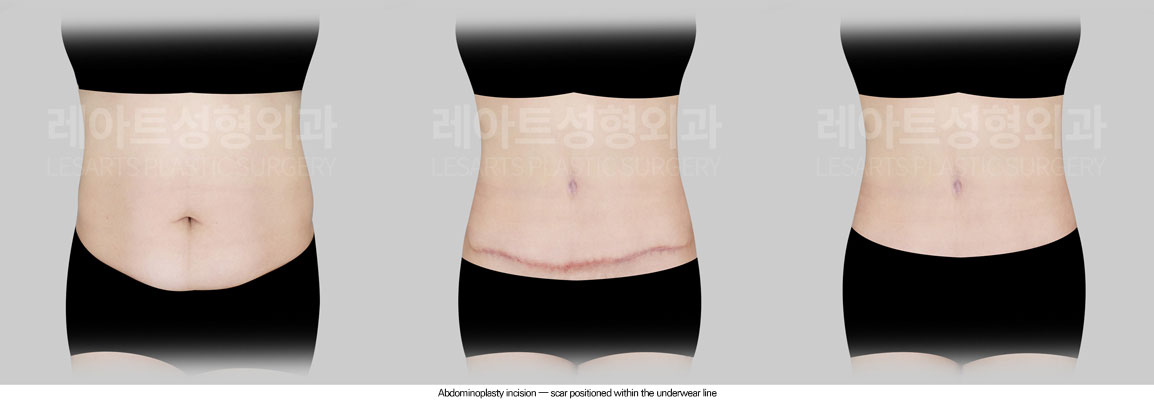
The abdominoplasty scar
still demonstrates a mild pink coloration.
However, it remains thin, well-healed,
and stable, with no evidence of
significant scar widening or hypertrophic scarring.
Overall, both the surgical outcome and
the patient’s recovery have progressed smoothly,
without any notable complications.
The patient was advised that
with continued scar management and
consistent postoperative care,
the scar is expected to mature further
and the overall aesthetic outcome
should continue to improve over time.
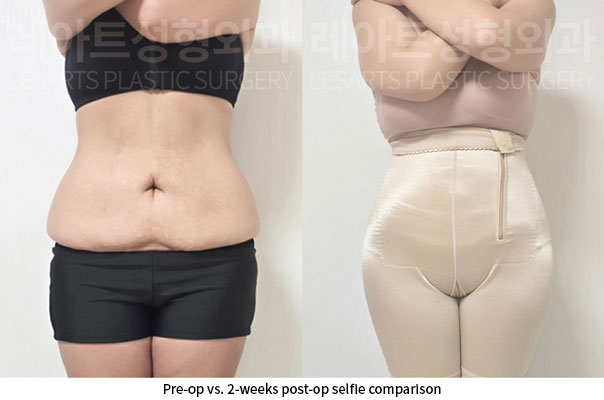
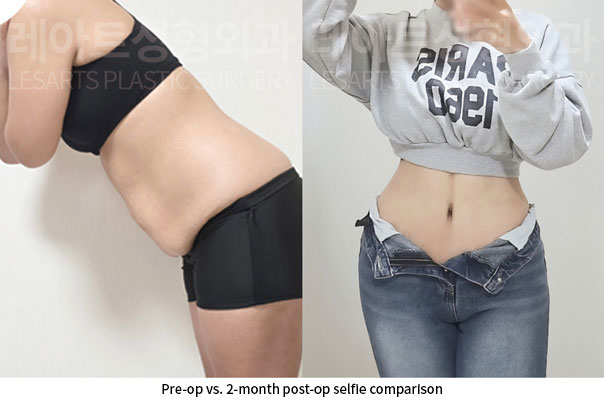
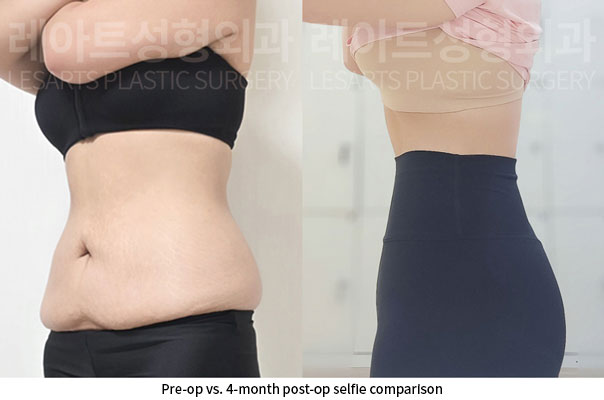
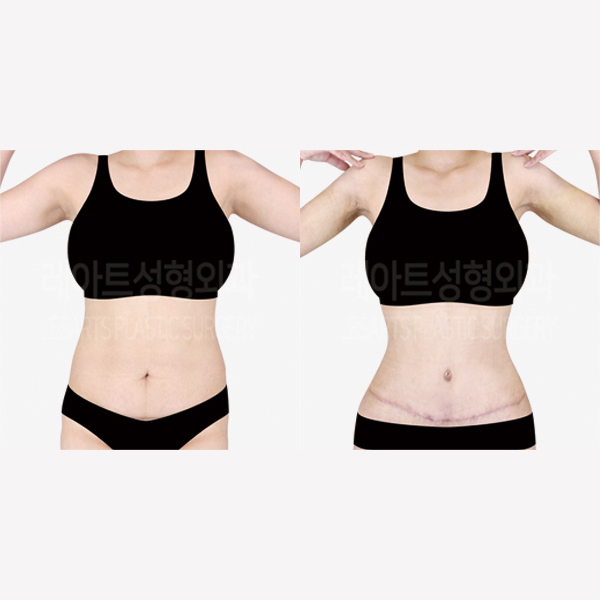
The following photographs demonstrate
the patient’s day-to-day changes
before and after L-Type Extended Abdominoplasty.
With the removal of the heavily sagging
lower abdominal skin, the previously prominent
lower abdominal bulge has been corrected,
creating a lighter, flatter contour that is
less noticeable even when wearing clothing.
The combination of abdominal liposuction and
hip fat grafting further enhanced the body proportions,
creating a smoother and more balanced transition
from the waist to the pelvis.
Many patients visit Lesarts Plastic Surgery
with concerns similar to this case,
having experienced significant weight loss
followed by persistent excess abdominal skin.
Although exercise, stretching, and
skin-tightening treatments may provide
some improvement, they often cannot correct
severe skin redundancy or structural changes.
At Lesarts Plastic Surgery,
we provide personalized treatment plans
based on each patient’s anatomy, concerns,
and surgical goals.
Rather than continuing to live with
the daily discomfort caused by excess skin,
we encourage you to schedule a consultation
to explore the treatment options that are
most appropriate for your condition.
#BestAbdominoplastyClinicSeoul
#AbdominoplastyKorea
#ExtendedAbdominoplasty
#TummyTuckBeforeAfter
#WeightLossSkinRemoval
#Umbilicoplasty
#LesartsPlasticSurgery
Q1. Can loose abdominal skin after major weight loss improve without surgery?
In many cases, no. Once the abdominal skin has been significantly stretched,
exercise and weight loss alone usually cannot restore
skin elasticity or remove excess skin folds.
Q2. What is L-Type Extended Abdominoplasty?
A. L-Type Extended Abdominoplasty removes excess abdominal skin
while extending the incision toward the flanks.
It is often recommended for patients with
extensive skin laxity after major weight loss.
Q3. Why is rectus diastasis repair performed during abdominoplasty?
Repairing rectus diastasis restores abdominal wall support,
reduces abdominal bulging, and helps create
a firmer, flatter, and more stable abdominal contour.
Q4. Can the belly button be reshaped during tummy tuck surgery?
Yes. Umbilicoplasty can improve both the shape and position
of the umbilicus, creating a more natural appearance
as part of the overall abdominal contour.
Q5. Is the scar from extended abdominoplasty very noticeable?
Although the incision is longer than a standard tummy tuck,
it is typically placed low enough to remain hidden
beneath underwear or swimwear, and gradually fades
with proper scar management.
▼ Visit Lesarts Plastic Surgery in Gangnam, Seoul, Korea ▼