Patient Registration Info
Surgical site
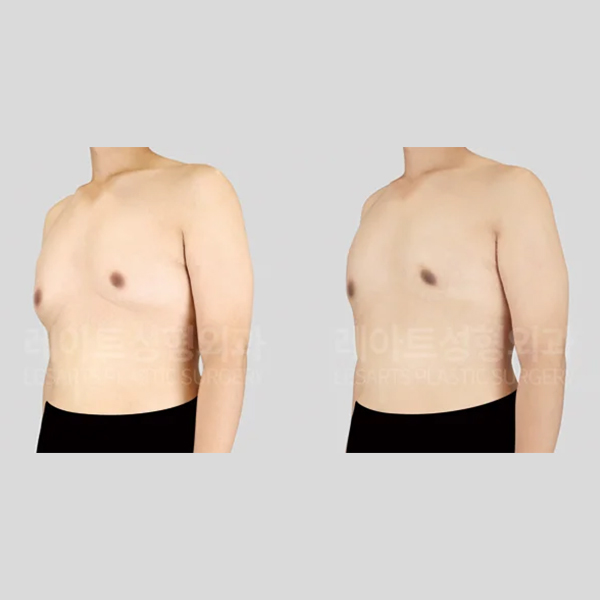
Surgical area: Gynecomastia | Grade 2-A
Gynecomastia surgery is a procedure
designed to reduce
enlarged chest volume
and create
a firmer, more defined
masculine chest contour.
To achieve optimal results,
it is essential
to remove the underlying
glandular tissue,
reduce excess chest fat,
and perform
precise chest contour correction,
addressing the structural
causes of chest enlargement.
In other words,
gynecomastia surgery
is not simply
about reducing size,
but restoring
the overall
chest shape
and improving
upper body
proportional balance.
Because the procedure
involves multiple layers
and various tissue structures,
the post-operative recovery process
and follow-up care
are extremely important
for optimal healing.
Immediately after surgery,
proper management
of swelling, bruising,
and discomfort
is essential.
In particular,
movements that involve
arm and chest muscle activation
should be limited
for a certain period
to ensure proper healing.
During early recovery,
proper timing
of cold and warm compress therapy
should be followed carefully
to support smooth
tissue recovery.
In addition,
correct use
of compression garments
and proper
wound care and hygiene
are critical components
of the recovery process.
Patients are strongly advised
to carefully follow
all post-operative guidelines
after gynecomastia surgery.
The patient presented
in today’s case analysis
developed noticeable
gynecomastia symptoms
after entering
his 20s.
Despite no significant
weight gain,
the patient experienced
visible chest enlargement
and prominent
nipple projection,
which caused discomfort
in daily life.
Even after attempting
cardio exercise
and strict
diet management,
there was no visible
reduction
in overall
chest volume,
leading the patient
to seek
professional
gynecomastia treatment
at Lesarts Plastic Surgery.
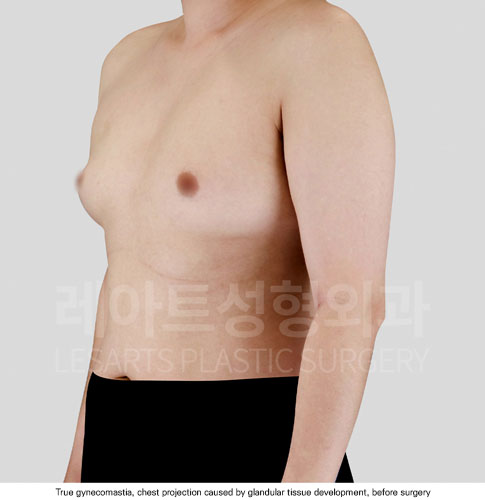
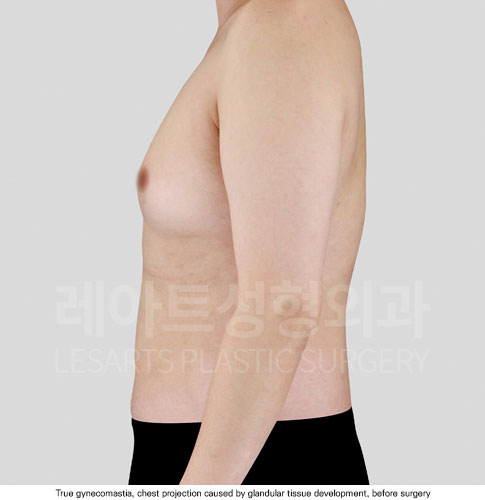
Clinical examination showed
clear bilateral chest enlargement,
and a firm
glandular mass
was palpable
beneath the nipple area.
Ultrasound evaluation
also confirmed
glandular tissue hypertrophy
centered
in the same region.
Although the patient
had mildly reduced
skin elasticity,
there were no signs
of significant
nipple sagging
or severe
chest ptosis.
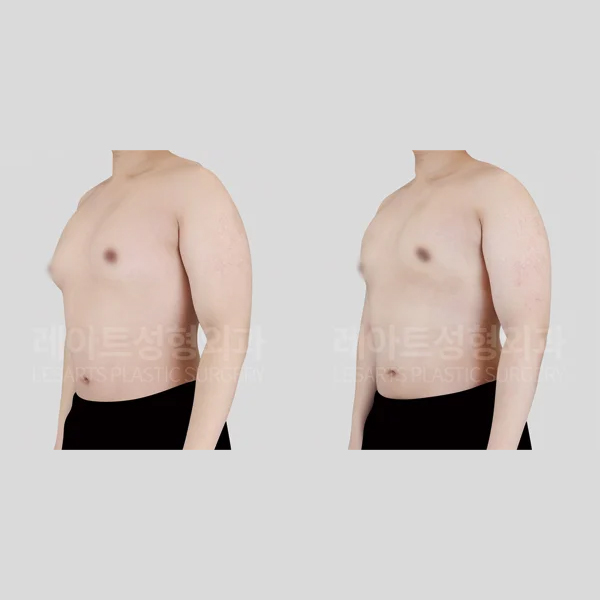
[Mid-30s patient, true gynecomastia, Simon Grade 2A]
To effectively treat
the patient’s gynecomastia,
the following
surgical plan
was carefully established.
1. Glandular tissue removal
The primary cause
of chest enlargement,
the excessive
glandular tissue,
was removed
to reduce
overall chest volume,
while also correcting
the protruding
nipple and areola contour.
2. Combined liposuction
of the lower and lateral chest
If only the gland
is removed,
the chest contour
may appear
unnatural
or uneven.
Therefore, liposuction
of the lower
and lateral chest areas
was performed
to create
a smoother
and more balanced
chest shape.
3. Tissue repositioning
for chest contour refinement
To ensure
a smooth
and firm
post-surgical chest contour,
tissue repositioning
was performed
to support
proper healing
and structural stability.
Through the following
2-month post-operative comparison,
we will review
the improvement
in chest size reduction
and overall
chest contour enhancement.
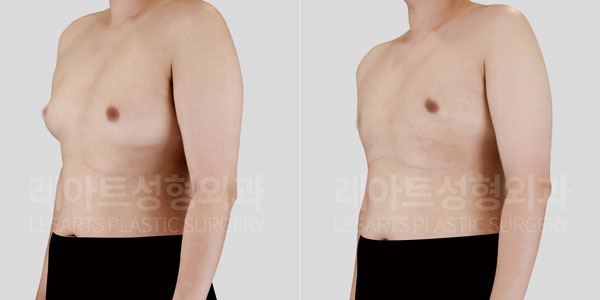
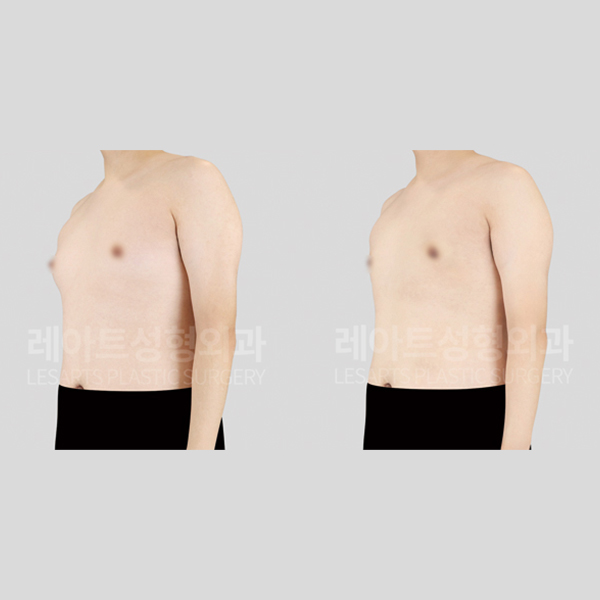
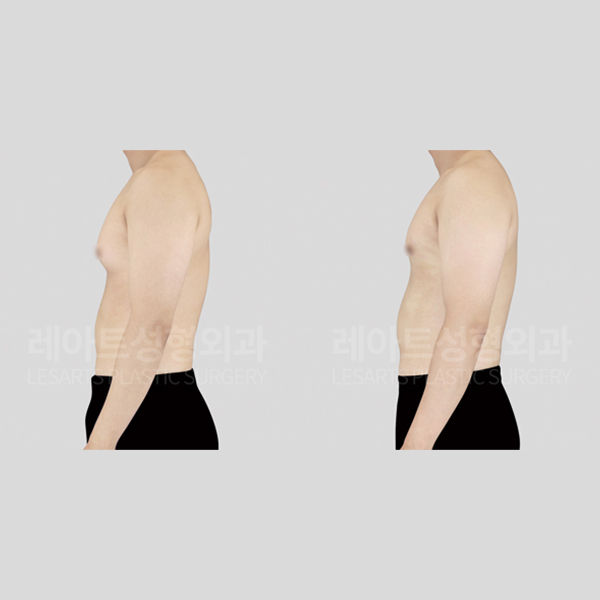
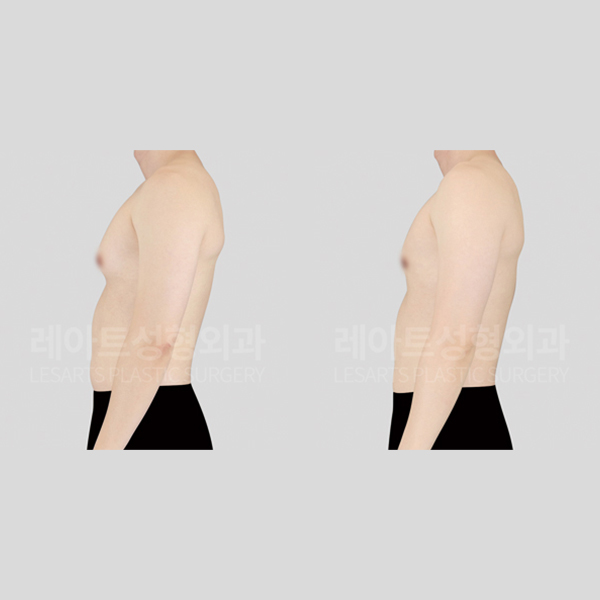
When comparing
the before and after photos
of gynecomastia surgery,
the previously protruding
chest contour,
centered around
the nipple,
and the enlarged chest
caused by both
glandular tissue
and fat,
were successfully corrected
into a natural
and balanced
masculine chest shape.
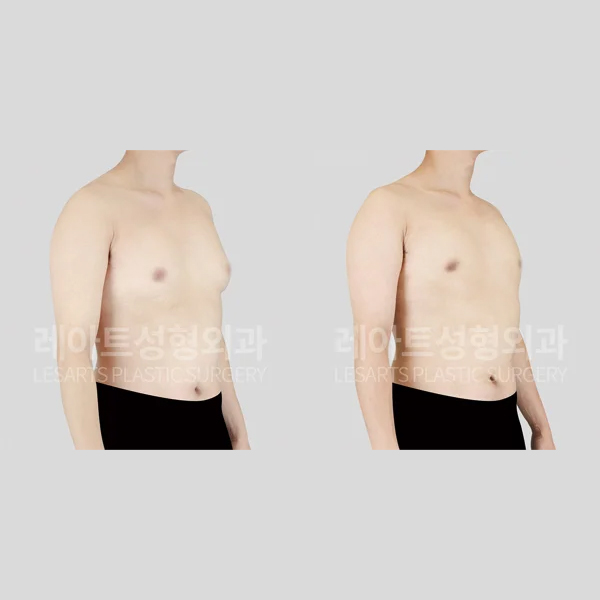
In particular,
excess lateral chest fat
not only increased
overall chest size,
but also created
a widened
and outward-spreading
appearance,
making the chest
look more prominent.
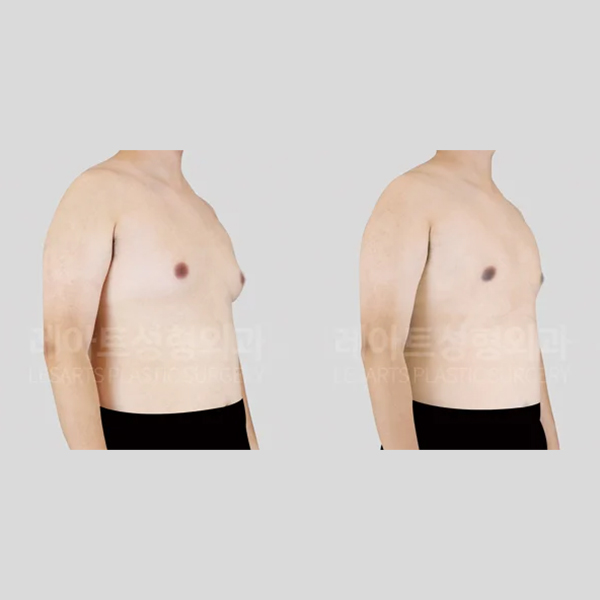
After surgery,
these structural concerns
were completely corrected,
and the previously
protruding
areola and nipple
settled into
a more natural
and proportionate position.
As a result,
the chest achieved
a firmer, more defined
athletic chest contour,
resembling the appearance
of a well-trained
male physique.
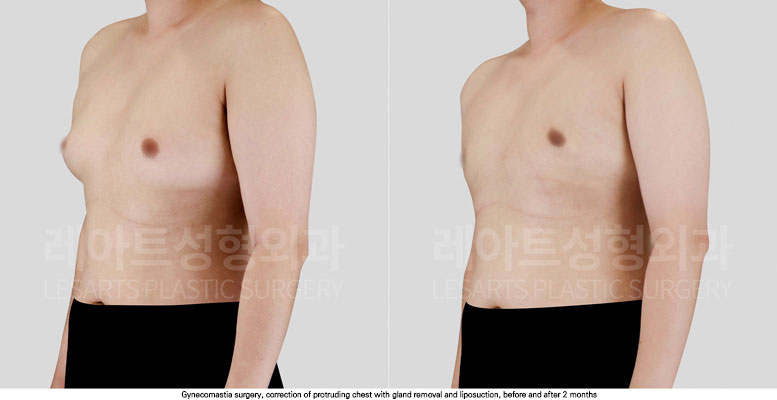
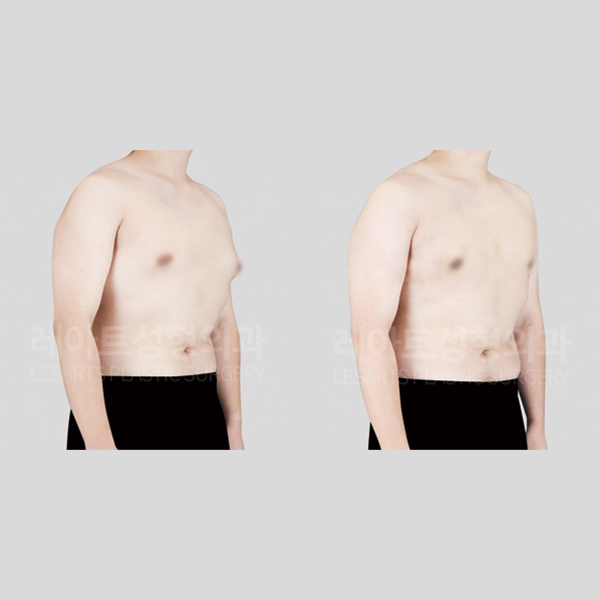
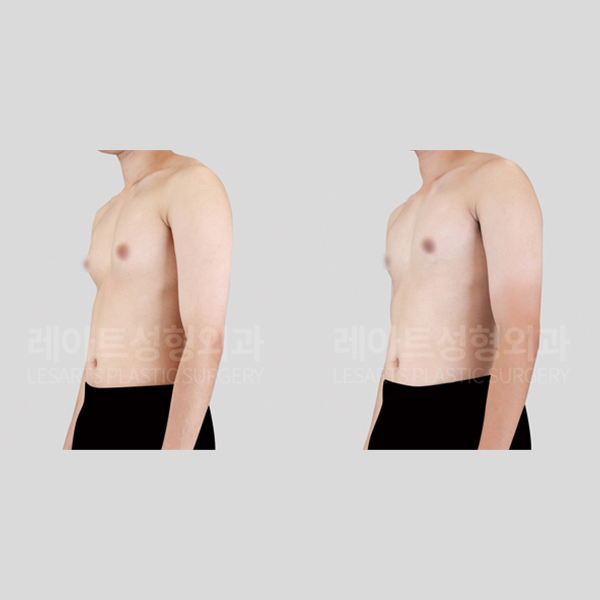
The difference in
everyday clothing
before and after
gynecomastia surgery
clearly demonstrates
the effectiveness
of the surgical correction.
The previously visible
central chest projection
was successfully eliminated,
and the sharp
appearance
of the nipple and areola
was corrected,
resulting in
a firmer and more stable
chest contour.
In particular,
before surgery,
visual attention
was drawn upward,
creating an unbalanced
upper body proportion.
After surgery,
the chest contour
was naturally refined,
forming a smooth
transition
from the upper chest,
creating a more
natural and composed
masculine chest appearance.
At 2 months post-surgery,
the patient reported
no discomfort
and maintained
a stable
and natural
chest shape.
The patient’s satisfaction
in daily life
also significantly improved.
By carefully following
all post-operative instructions,
and attending regular
follow-up evaluations,
the recovery process
progressed smoothly
without complications.
As residual swelling
continues to decrease,
and with proper
exercise and lifestyle management,
the improved
chest contour result
is expected
to be maintained
successfully
long-term.
#GynecomastiaSurgery
#GynecomastiaCorrection
#MaleChestContour
#ChestContouringSurgery
#GlandRemovalSurgery
#ChestLiposuction
#MasculineChestShape
#AthleticChestContour
#BodyContouringKorea
#LesartsPlasticSurgery
#KoreanGynecomastiaClinic
#BestGynecomastiaClinicInKorea