Patient Registration Info
Surgical site
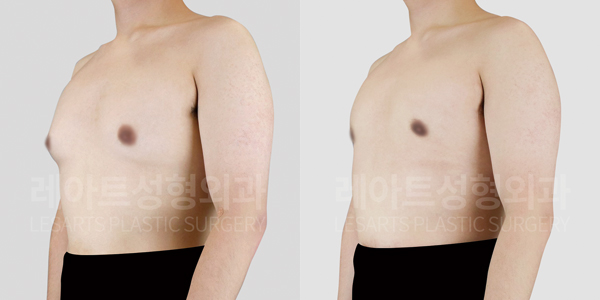
Surgical area: Gynecomastia | Grade 2-A
True gynecomastia is a condition
where the male chest enlarges
to resemble a female breast shape.
Although it causes visible discomfort,
it is usually classified as benign
and does not pose a direct
threat to overall health.
Rather than medical danger,
discomfort from lumps, pain,
and psychological stress caused
by appearance changes
often become the main reasons
patients decide on treatment.
True gynecomastia is not simply
a protrusion caused by body fat.
It occurs due to hormonal imbalance,
where excessive glandular tissue develops
under the influence of estrogen
that is also present in men.
Because this is not fat tissue,
exercise or weight control alone
rarely leads to improvement.
Therefore, treatment decisions
are often based on how much
discomfort the patient experiences
in daily life.
In this case, the patient
had experienced chest protrusion
since adolescence and lived
with long-term discomfort.
After evaluation, true gynecomastia
was diagnosed, leading him
to choose surgical correction.
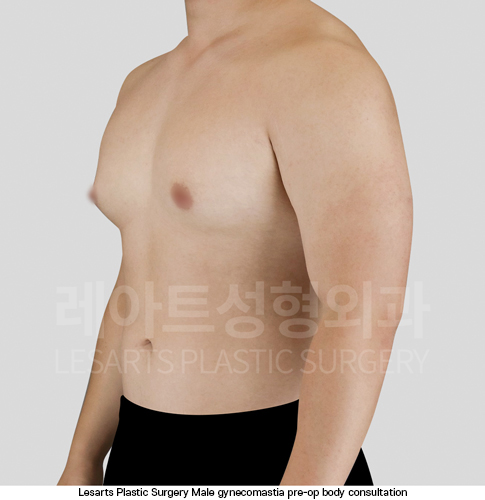
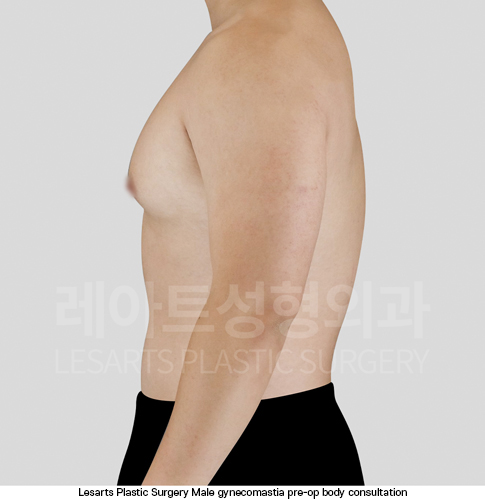
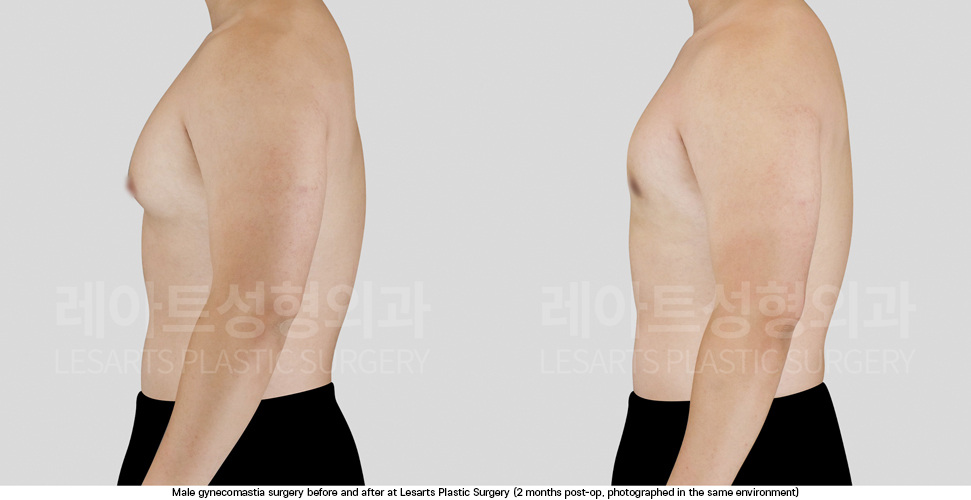
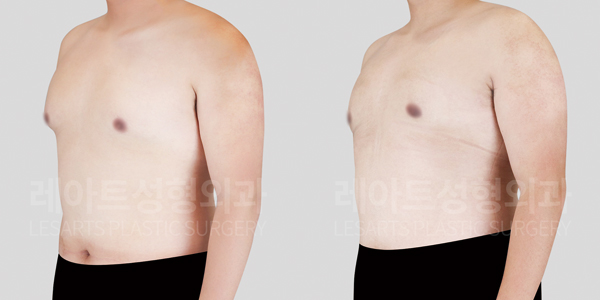
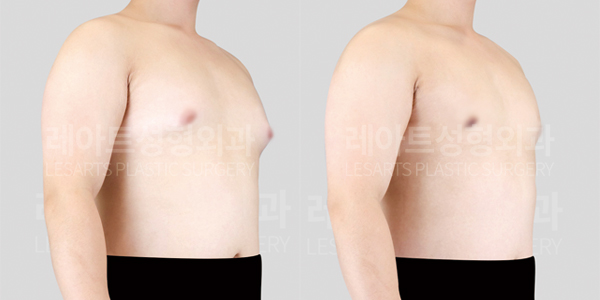
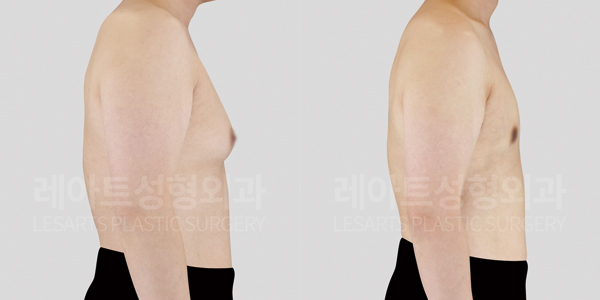
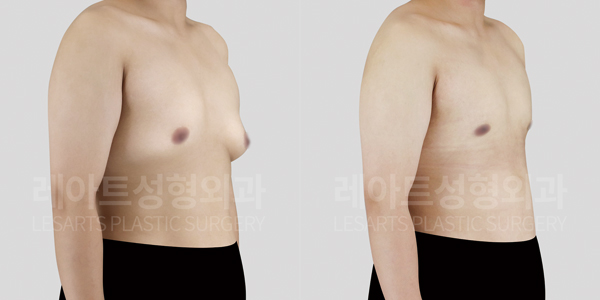
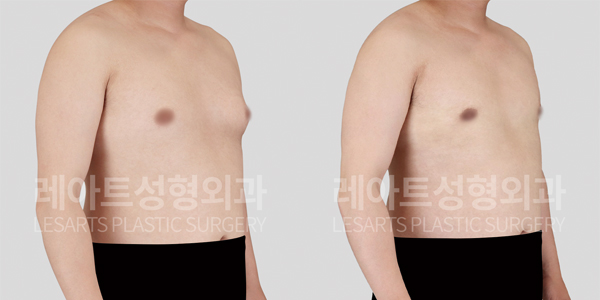
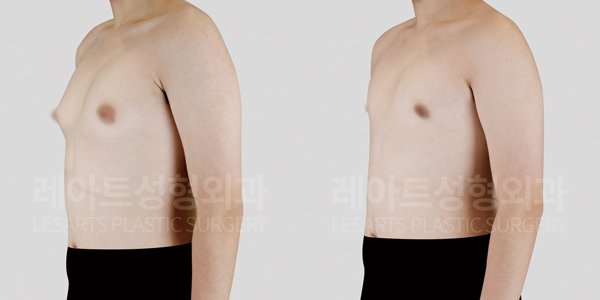
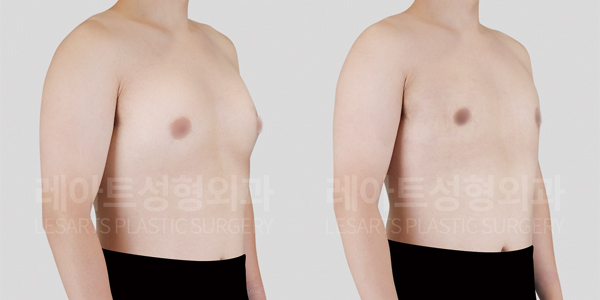
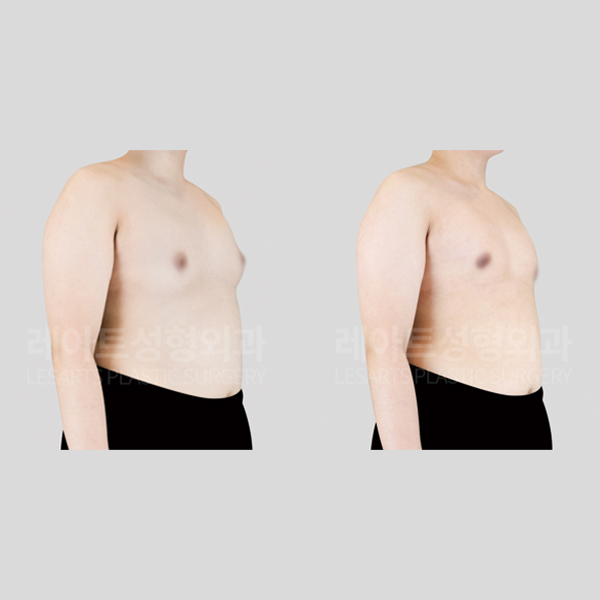
Before gynecomastia surgery,
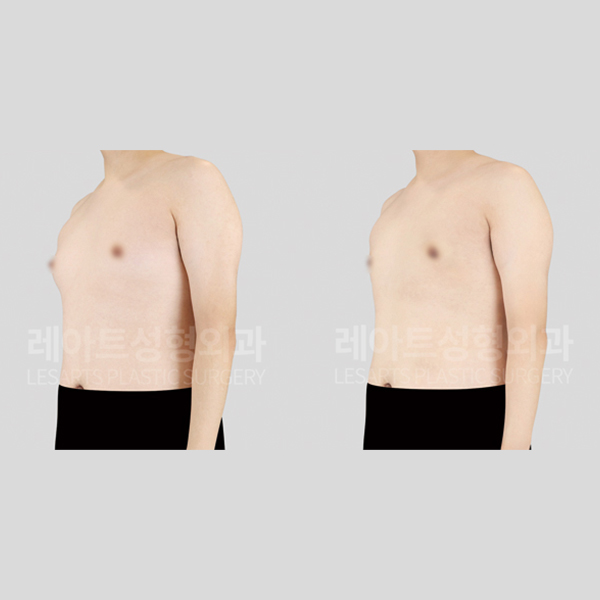
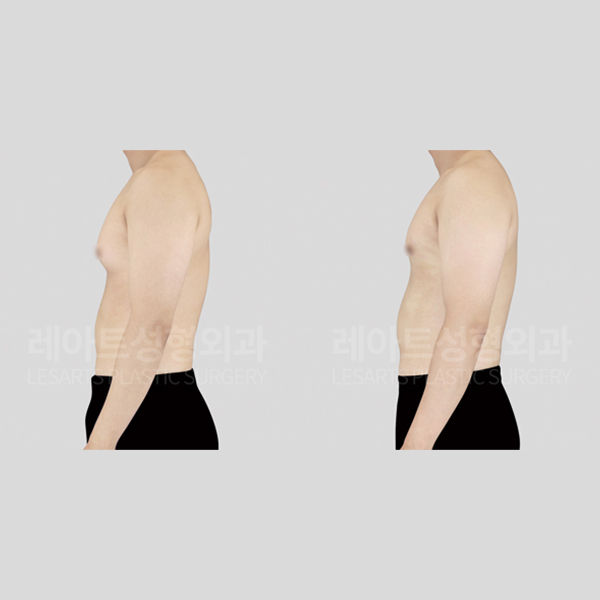
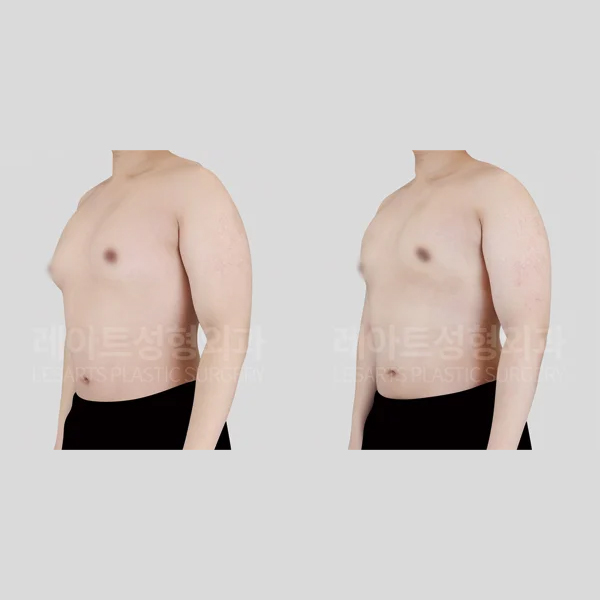
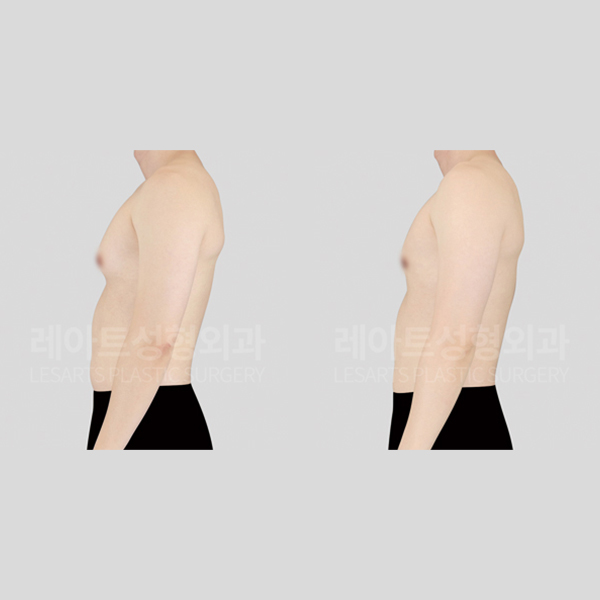
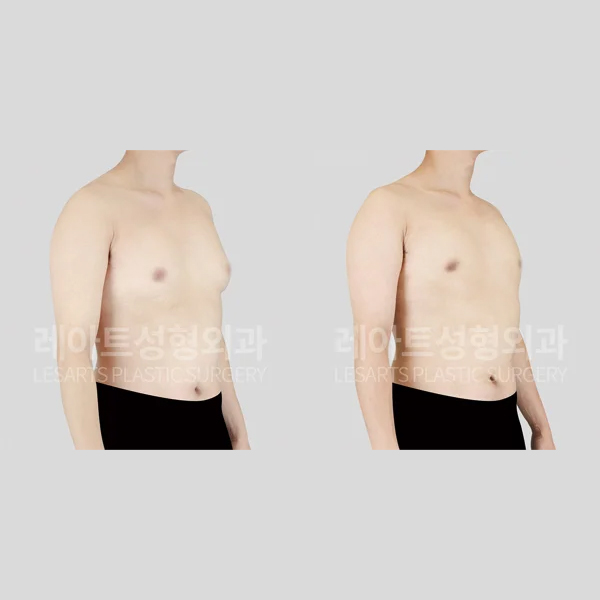
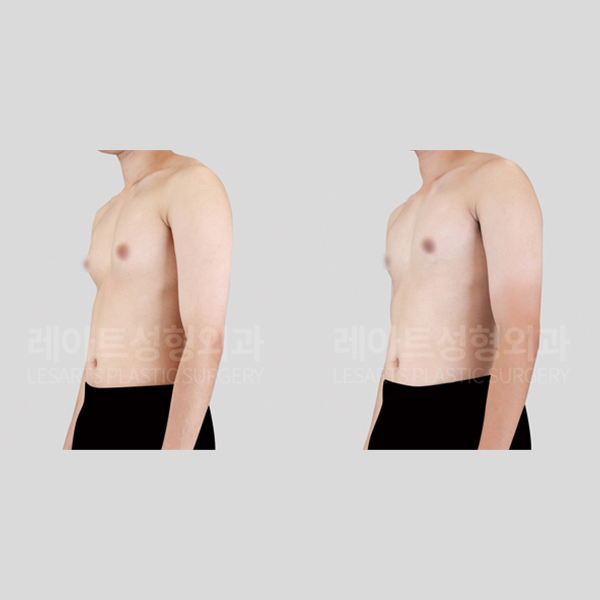
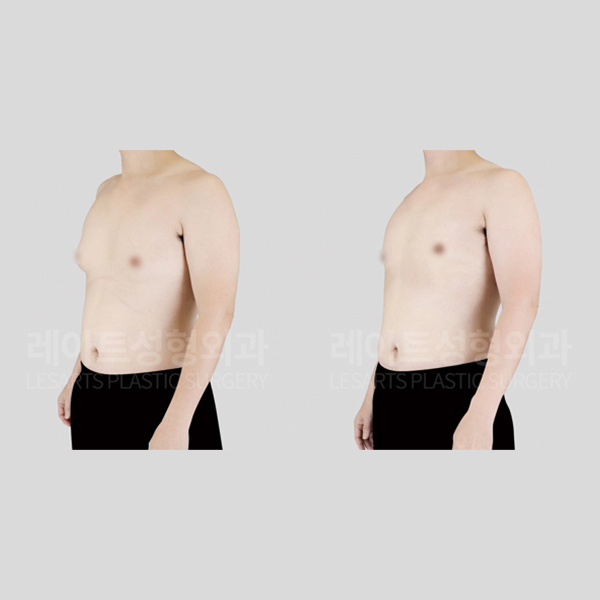
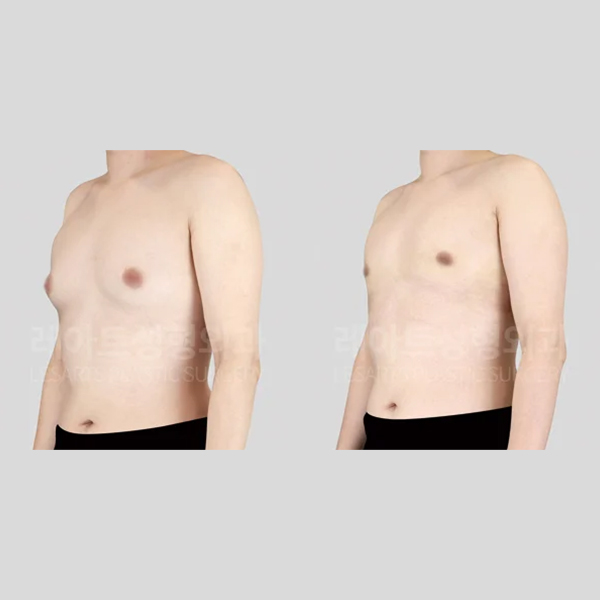
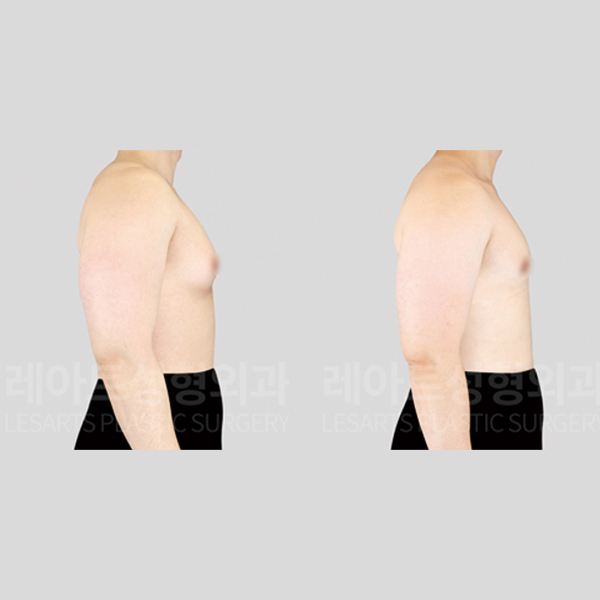
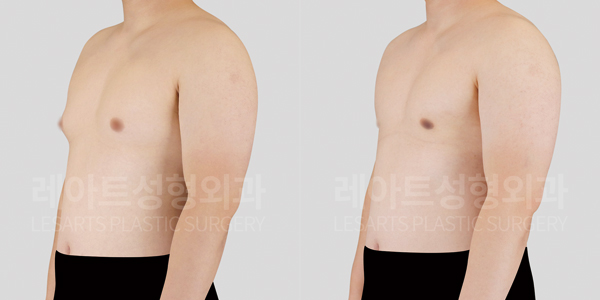
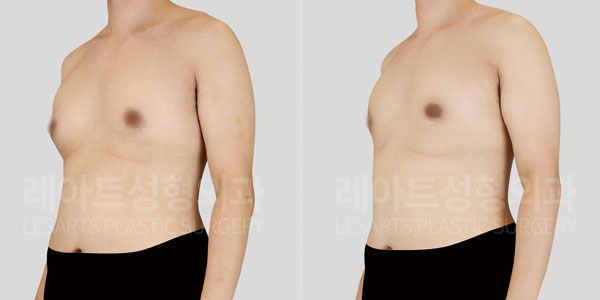
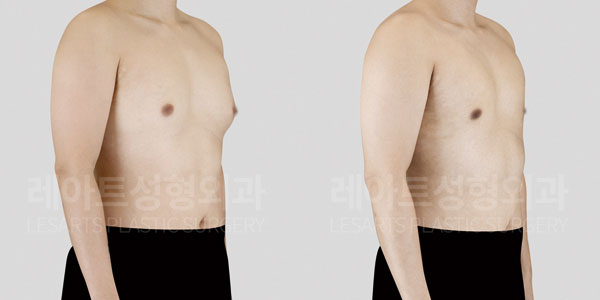
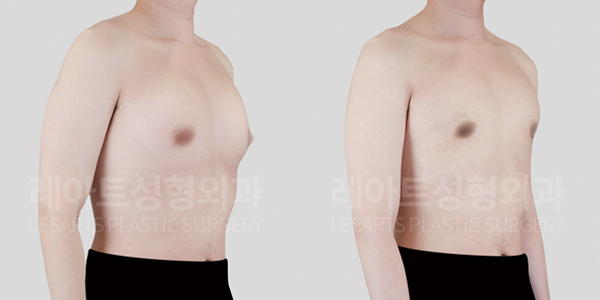
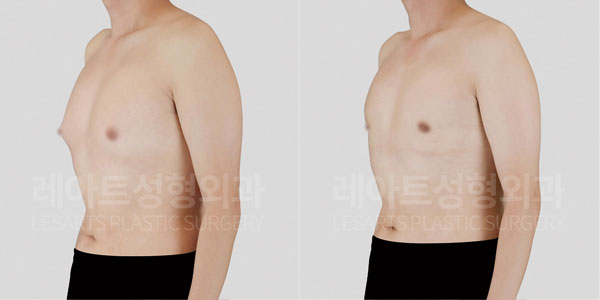
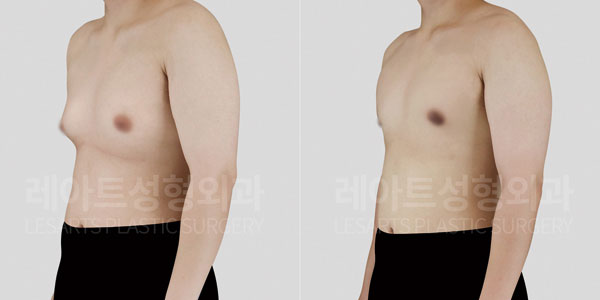
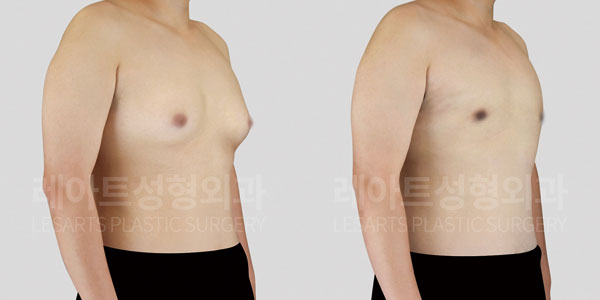
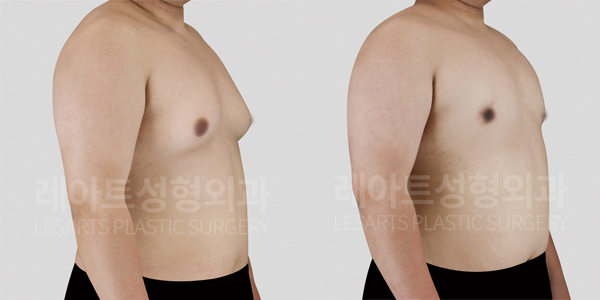
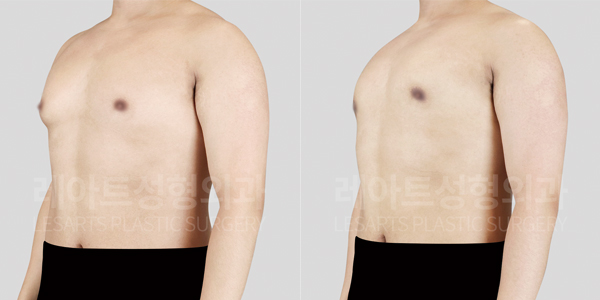
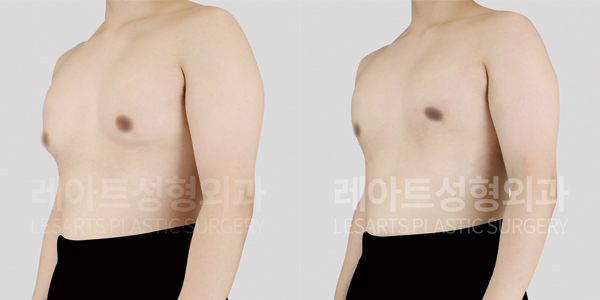
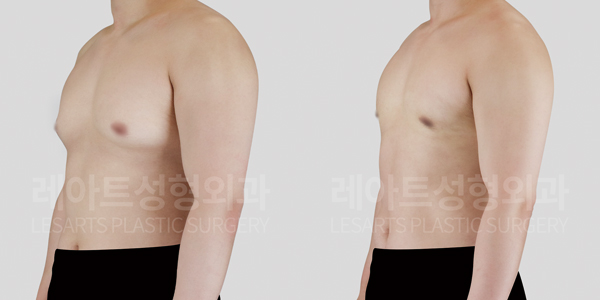
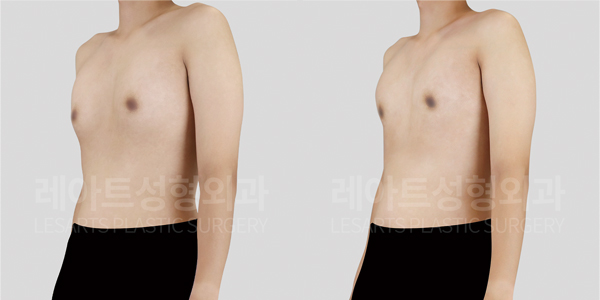
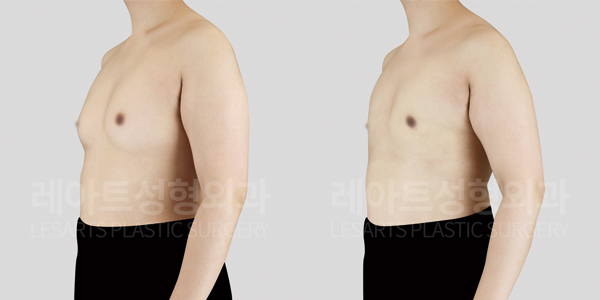
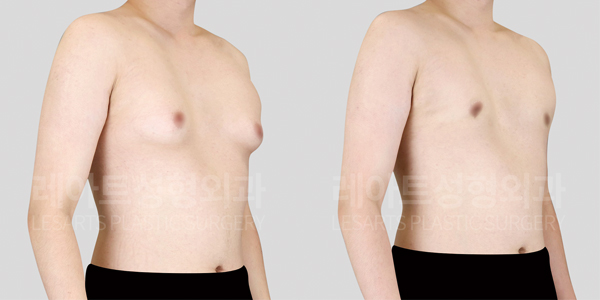
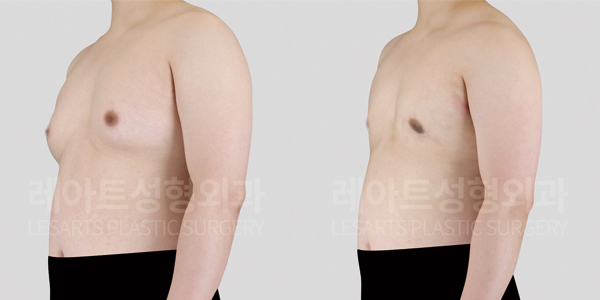
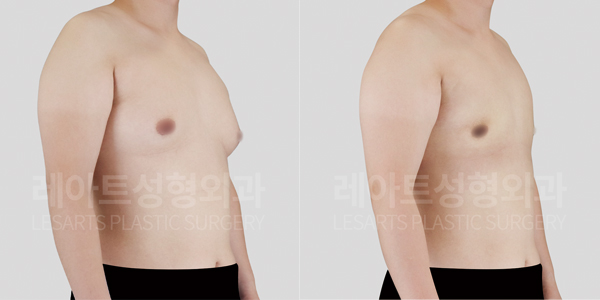
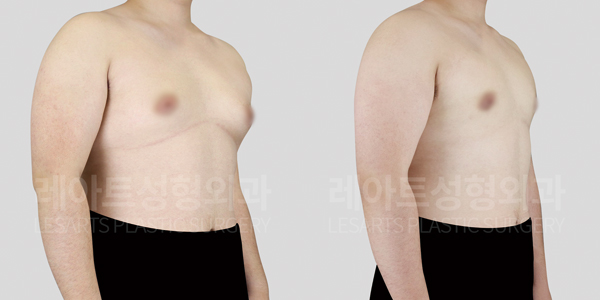
the patient’s chest showed
clear bilateral enlargement
and noticeable nipple protrusion.
In particular, the areola area
appeared expanded,
making the overall chest volume
look even larger.
On palpation, firm lumps
were felt in both sides
of the chest.
Ultrasound examination confirmed
that these tissues were
overgrown glandular tissue,
not simple fat accumulation.
Based on these findings,
the patient was diagnosed with
true gynecomastia,
classified as Simon grade 2A.
According to the evaluation,
effective treatment required
removal of the excessive glandular tissue
combined with liposuction of the lower
and lateral chest areas.
This combined approach was necessary
to correct protruding nipples and areolae,
reduce excessive chest volume,
and achieve a natural male chest contour.
[Late 20s, Simon grade 2A, male gynecomastia reduction surgery plan]
1. Gynecomastia surgery method – glandular tissue excision
Through a periareolar incision,
the overgrown glandular tissue
was directly removed to reduce
bilateral chest volume and protrusion,
while also correcting the
bulging nipple–areola complex.
2. Gynecomastia liposuction
Liposuction was performed on
the lower and lateral chest areas
to enhance volume reduction
beyond gland excision alone,
and to create a smooth transition line
from the chest to the flanks.
3. Anti-adhesion agent and tissue repositioning
After gland removal,
anti-adhesion treatment was applied
to prevent irregular adhesions
or surface depressions around
the nipple–areola area.
Tissue repositioning was performed
to maintain a flat, natural
upper chest contour.
Below, we will review the
2-month postoperative results
of gynecomastia reduction surgery,
including symptom improvement
and visible changes in t-shirt fit.
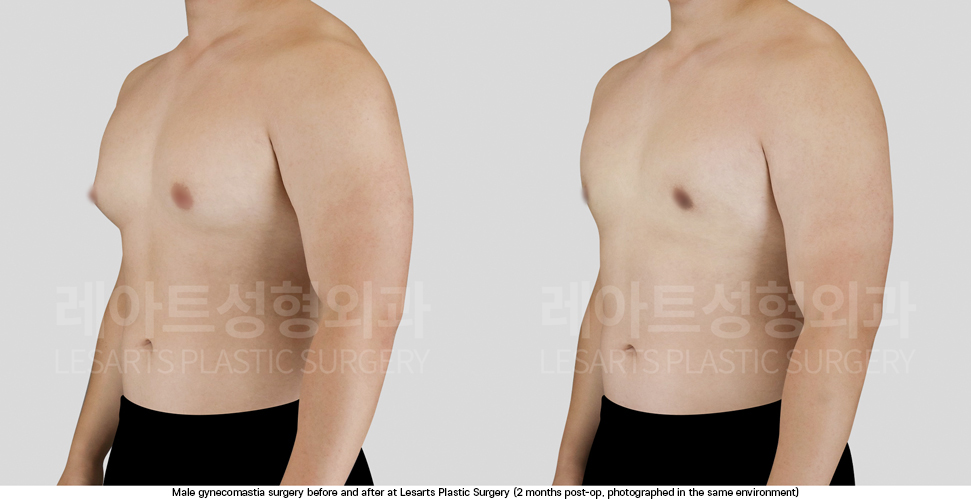
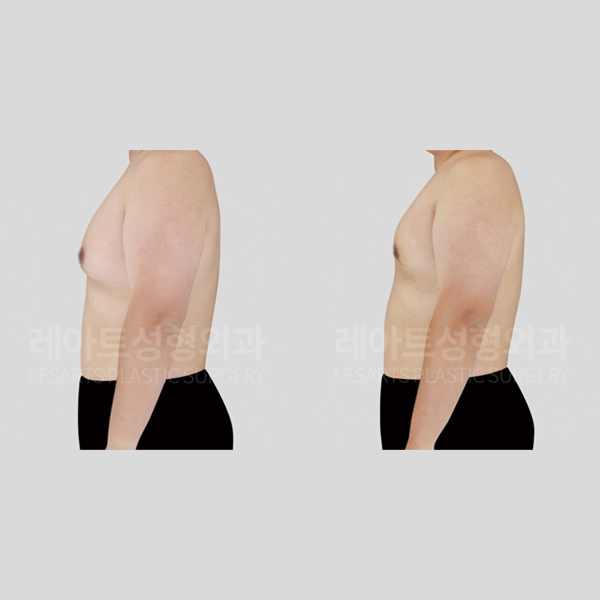
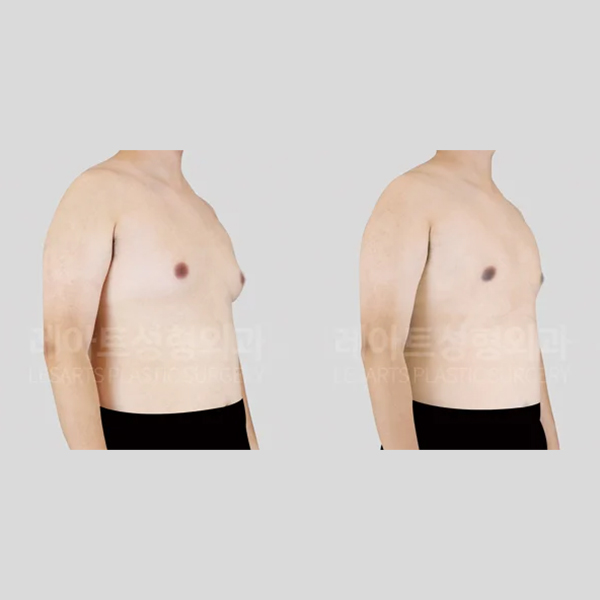
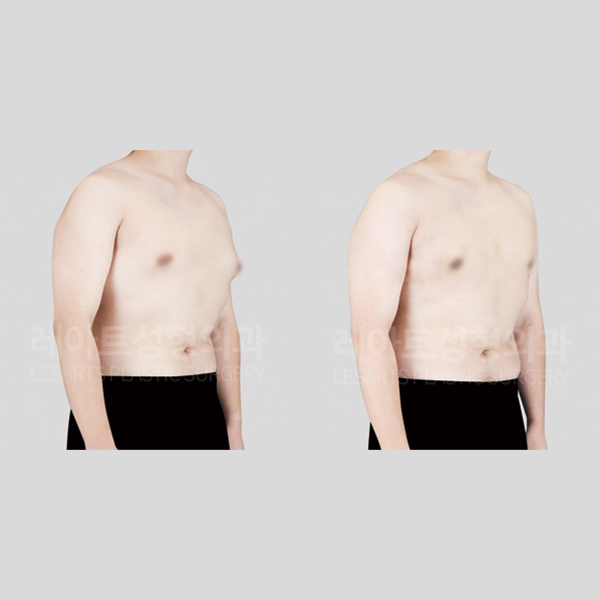
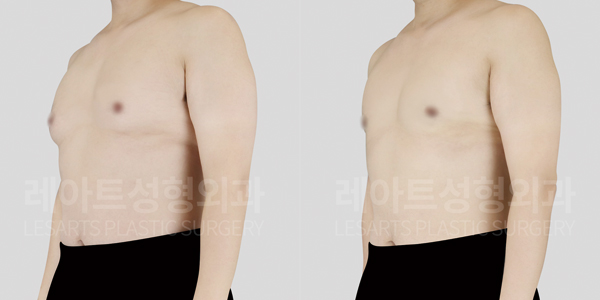
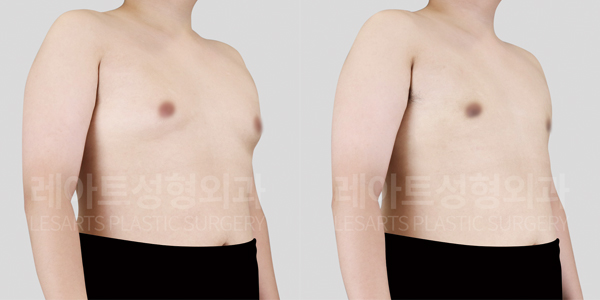
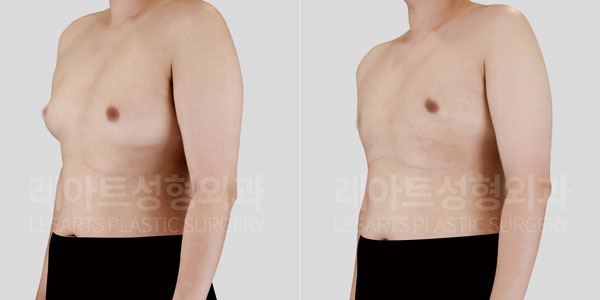
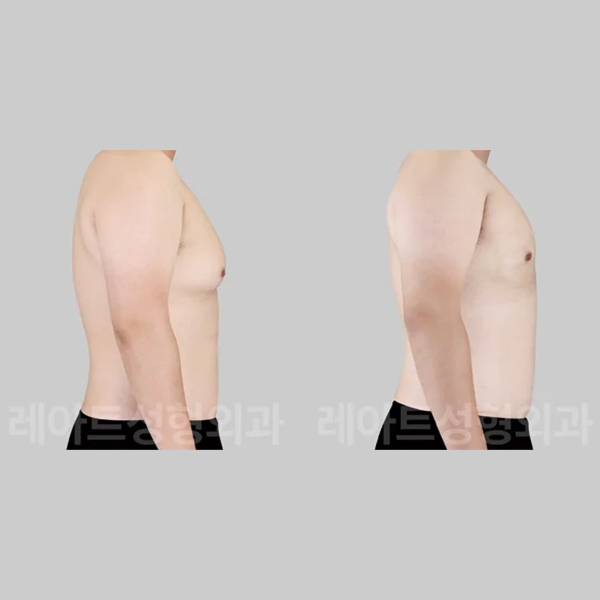
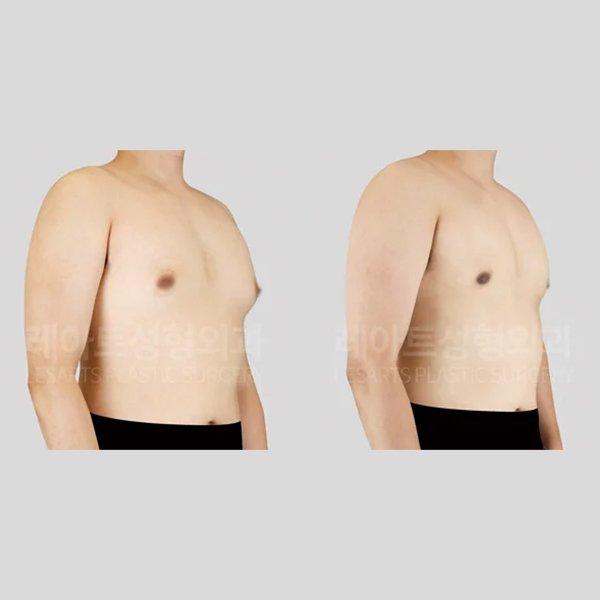
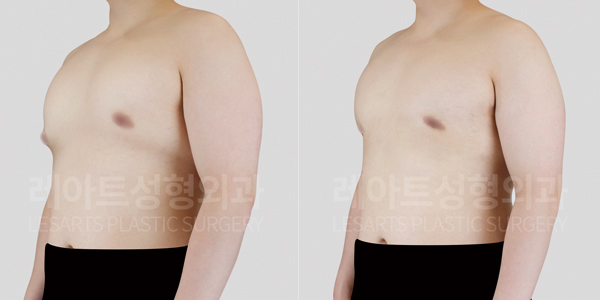
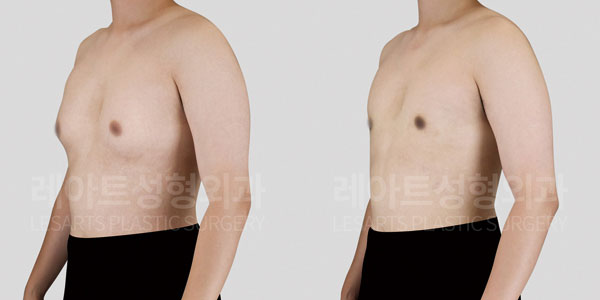
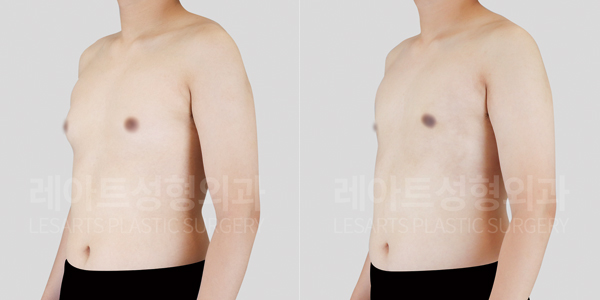
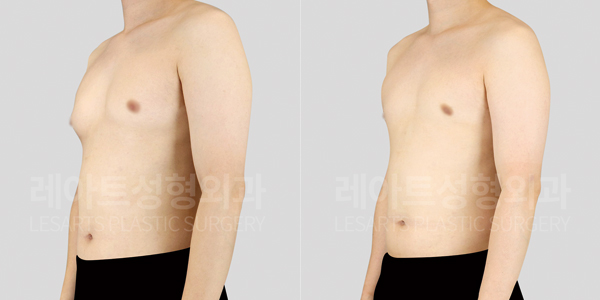
Two months after gynecomastia surgery,
the patient’s chest protrusion
was clearly corrected,
creating a flat and clean upper body
overall.
The previously prominent nipple protrusion
and expanded areola
were noticeably reduced,
so the chest no longer appeared
feminine when clothed.
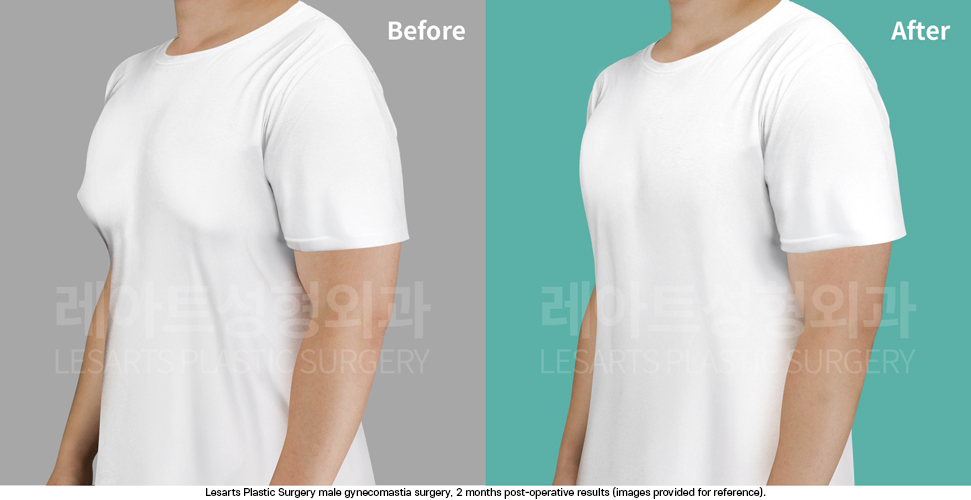
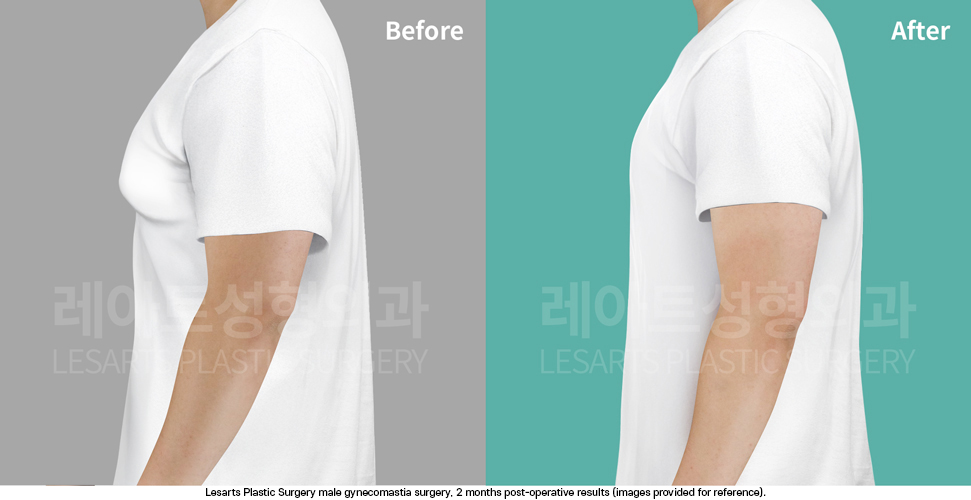
As a result, the t-shirt fit
was expected to look
more natural and refined.
Before surgery, chest bulging
and the protruding nipple–areola complex
were clearly visible through clothing,
causing significant discomfort
with outfit appearance.
After surgery, however,
the chest contour became
smooth and stable,
allowing the patient
to wear t-shirts
with renewed confidence.
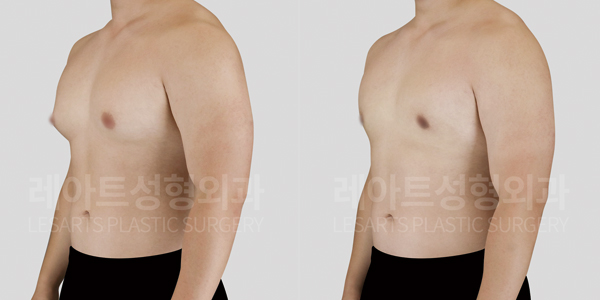
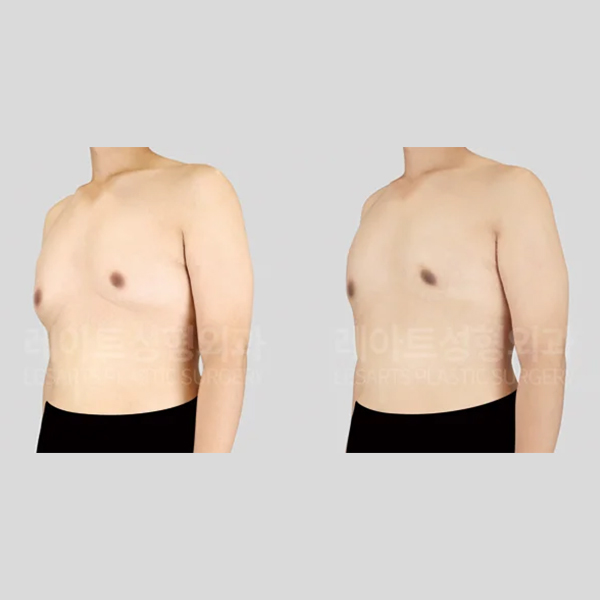
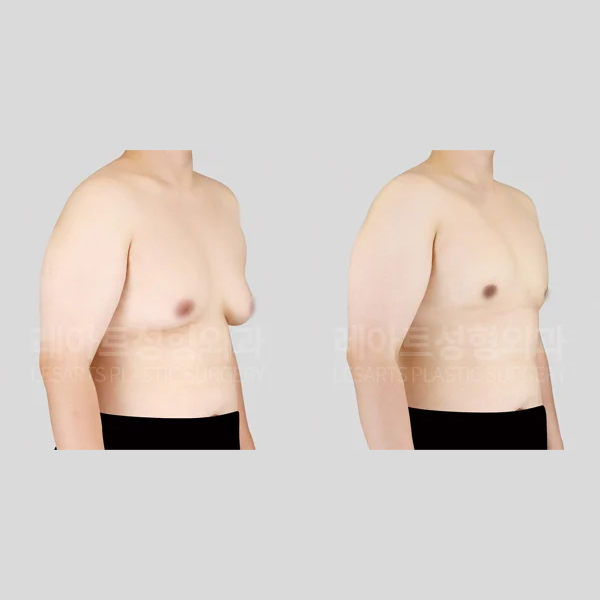
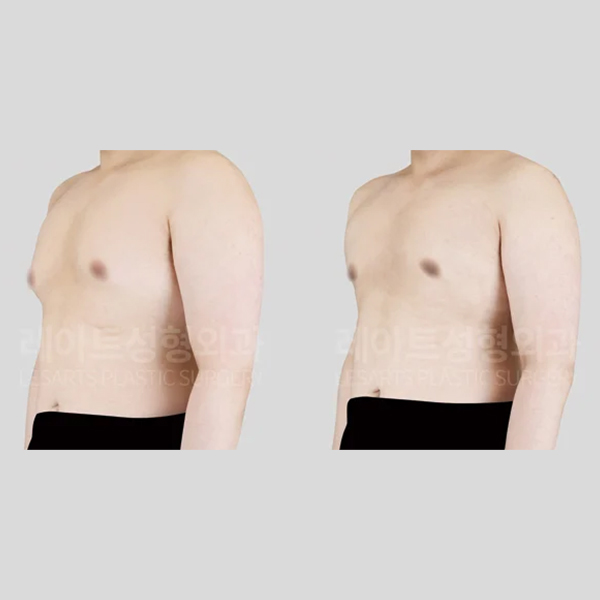
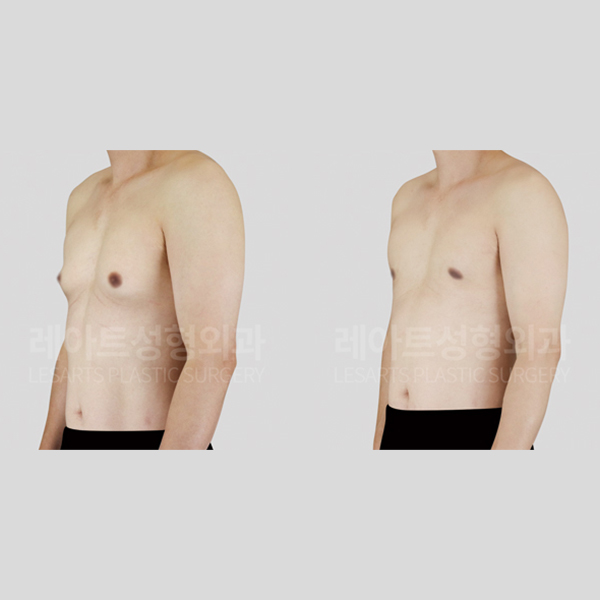
As seen in the before-and-after comparison,
the chest contour and the area
around the nipple–areola complex,
which had appeared bulging and raised,
were corrected into a smooth, clean line,
with a clear reduction in chest volume.
The upper chest remained firm,
while the overall t-shirt fit
changed into a much more
masculine silhouette.
In this patient’s case,
despite a relatively large body frame,
the condition was not due to
simple fat accumulation,
but to true glandular tissue overdevelopment,
diagnosed as true gynecomastia.
Because of this,
symptoms did not improve
even with consistent exercise.
Although the patient had
no significant medical history,
he was taking protein supplements,
which were reviewed in relation
to his symptoms,
and appropriate precautions
were explained.
While such supplements differ from
medications directly linked to
gynecomastia development,
they may still affect
hormonal metabolism or
fluid and electrolyte balance,
so potential side effects
must always be considered.
Therefore, when planning
gynecomastia surgery,
it is important to inform
the medical team not only about
current medications and conditions,
but also about supplements,
nutritional products, and
health functional foods,
to receive proper guidance.
The patient is currently
in a stable recovery phase,
and was informed that over time,
the scar will soften and fade,
while the chest shape
continues to settle into
a more natural contour.
#Gynecomastia
#TrueGynecomastia
#MaleGynecomastia
#GynecomastiaSurgery
#MaleBreastReduction
#GlandExcision
#AreolaCorrection
#ChestContouring
#BeforeAfterGynecomastia
#MensPlasticSurgery
#GynecomastiaRecovery
#BestGynecomastiaSurgeryClinicInKorea