Patient Registration Info
Surgical site
Surgical area: Gynecomastia | Grade 2A
Many people continue
strength training consistently
to achieve a firm
and muscular body shape.
A well-developed upper body
and defined chest contour
once described as
the “beast body” image,
is now often associated
with the modern
and athletic male physique.
However, maintaining consistent exercise
can be difficult
in a busy daily lifestyle.
Even with regular workouts,
achieving the ideal chest shape
is not always easy
through exercise alone.
In addition, when
the cause is structural,
it may not be fully corrected
through personal effort.
One representative condition
is gynecomastia,
caused by hormonal imbalance
and excessive glandular growth.
This leads to enlargement
of the male chest,
along with protrusion
of the areola and nipple.
In such cases,
chest exercise or dieting
cannot effectively reduce
the glandular tissue.
Similarly, liposuction alone
or injection treatments
may not provide
complete correction.
Through the case below,
combining gland removal,
liposuction, and
chest contouring surgery,
we will demonstrate
effective gynecomastia treatment
and restoration of
a naturally athletic
and masculine chest contour.
The patient had consistently
maintained regular physical activity
through running and futsal,
as part of ongoing exercise habits.
However, even after
reducing overall body fat,
the chest remained enlarged
and visibly protruded forward.
This caused the upper body contour
to appear unnatural,
and the patient experienced
visible discomfort during movement
and daily activities.
Through detailed ultrasound examination,
the primary cause
of chest enlargement
was confirmed as
excessive glandular tissue development.
Because glandular tissue
is structurally different
from normal body fat,
exercise or weight loss alone
cannot effectively reduce
gynecomastia-related chest projection.
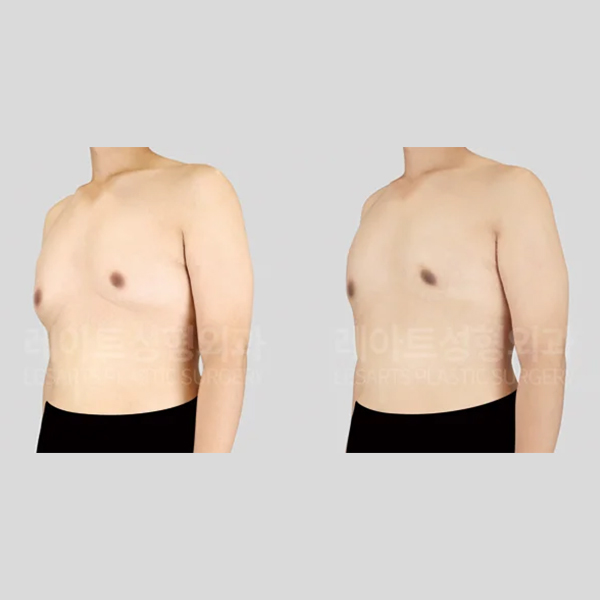
[Mid-20s patient, true gynecomastia, Simon Grade 2A]
1. Glandular tissue removal
The primary cause of gynecomastia,
the glandular tissue, was removed
to effectively reduce
overall chest volume,
while also correcting
the protruded nipple and areola contour.
2. Chest liposuction
After gland removal,
residual fat beneath the nipple
and along the lateral chest
can disrupt a smooth
and natural chest contour line.
Therefore, chest liposuction
was performed simultaneously
to refine and balance
the overall chest shape.
3. Chest contouring and tissue repositioning
Rather than simply flattening
the chest appearance,
tissue repositioning chest contouring
was performed
to improve the full transition
from the upper chest
down to the abdominal line.
This created a firmer,
more defined athletic chest contour,
similar to the appearance
of a well-developed chest
from consistent strength training.
Through this comprehensive
gynecomastia surgery approach,
we will now review
the structural improvement
and overall chest contour transformation
through before and after photos.
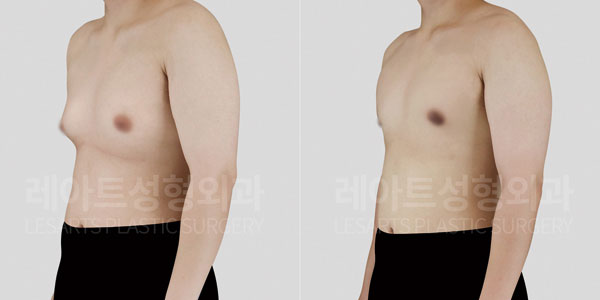
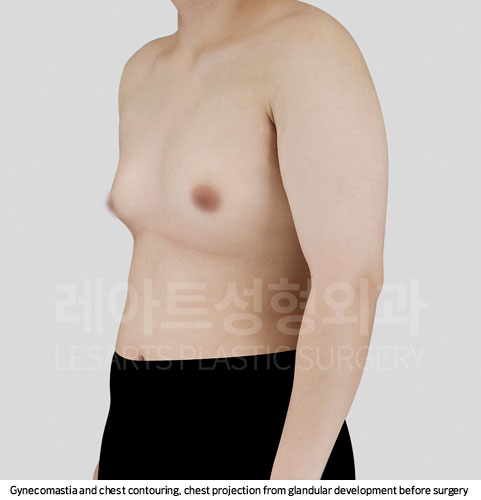
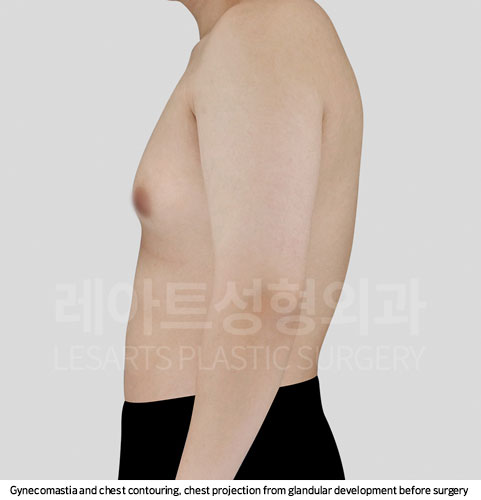
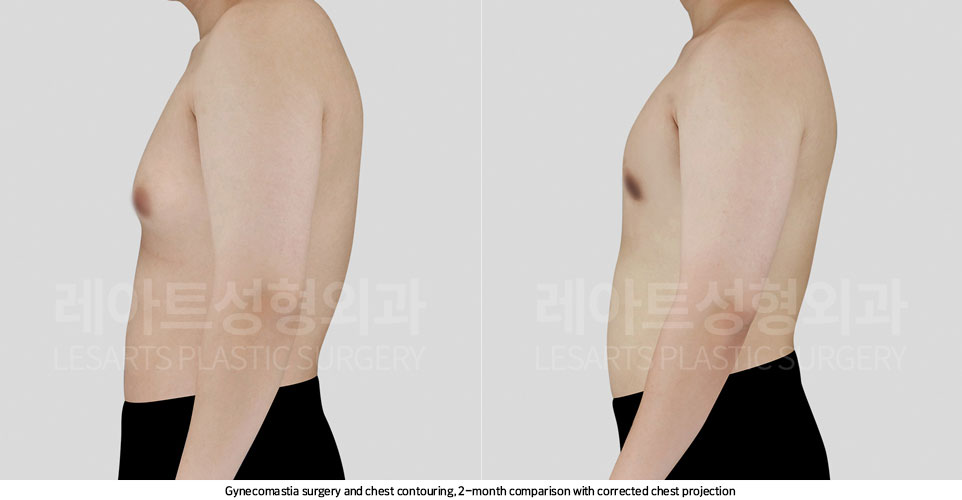
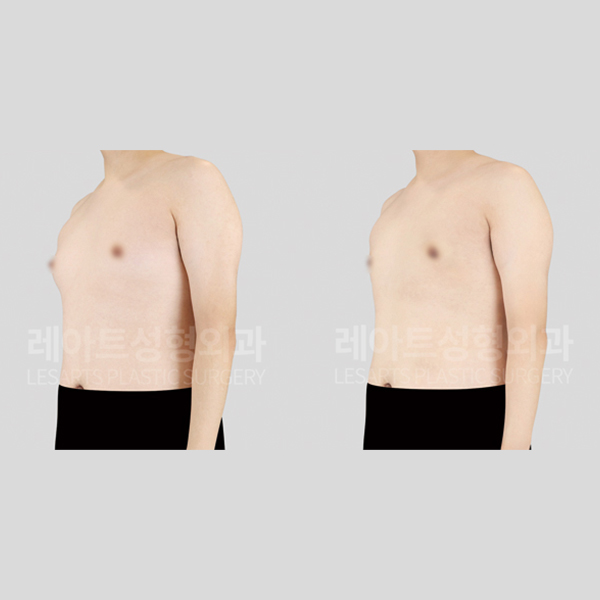
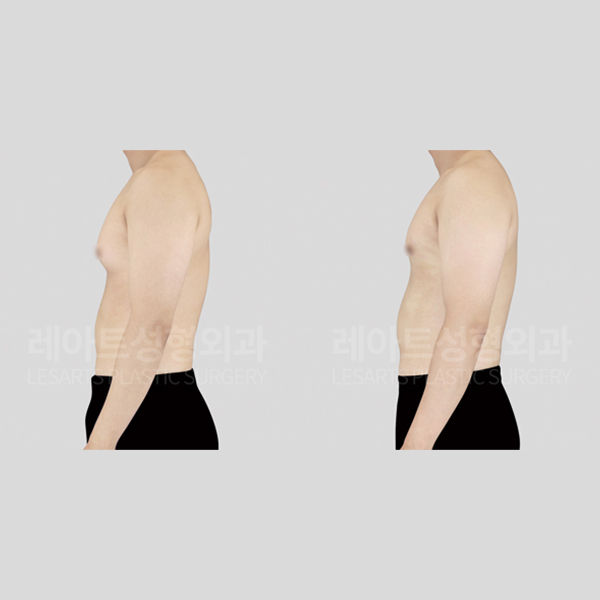
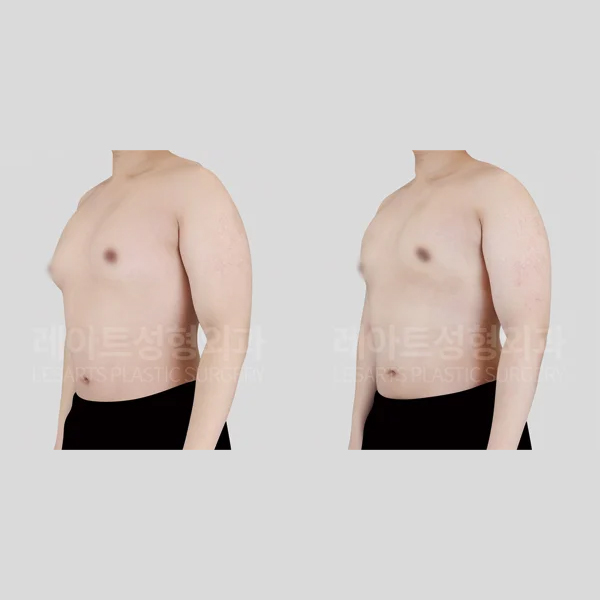
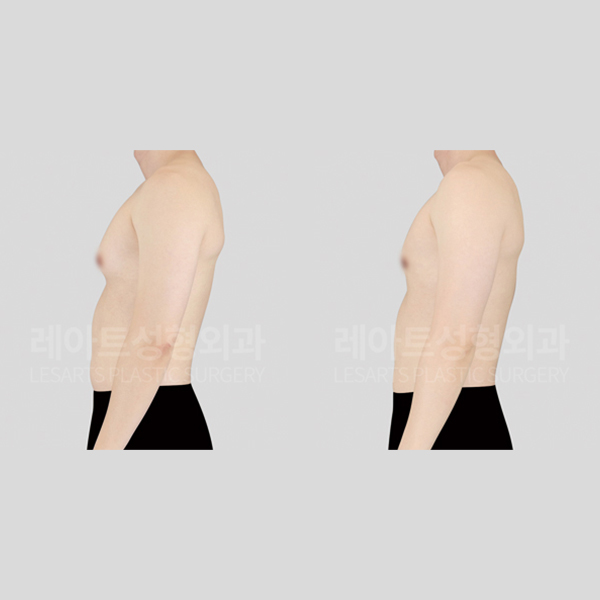
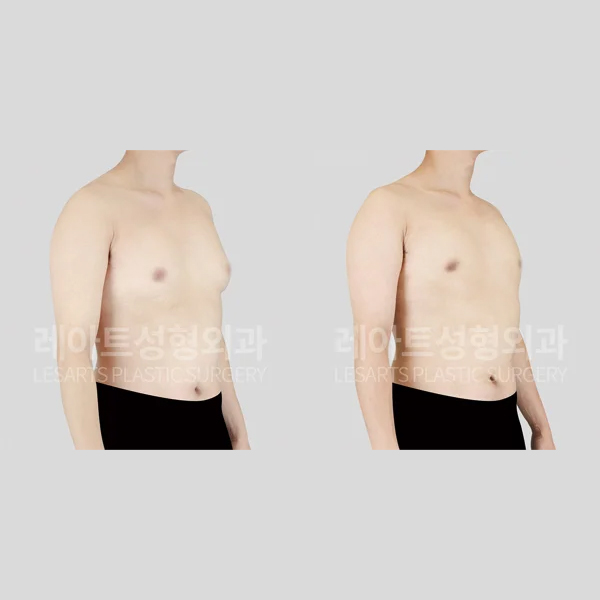
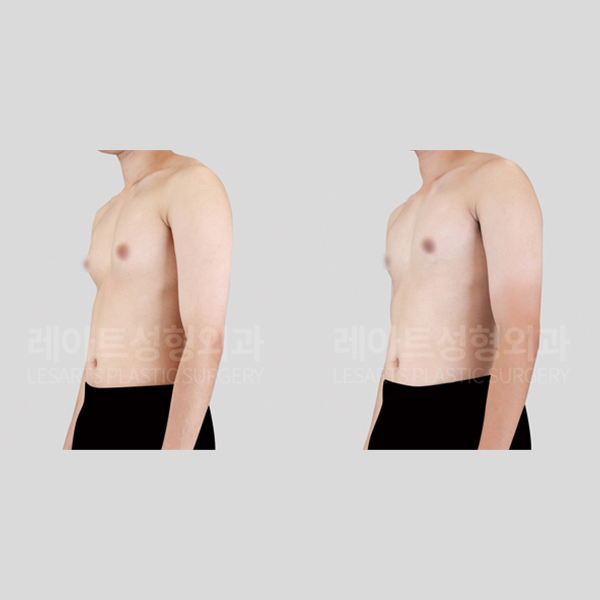
Before gynecomastia surgery,
the overall chest volume was enlarged,
and both sides showed
clear protrusion
of the areola and nipple,
located at the chest center.
Although the patient
had an average body frame,
these gynecomastia symptoms
created visible heaviness
in the upper body contour.
Therefore, gynecomastia surgery
was necessary
to fully correct
these structural concerns.
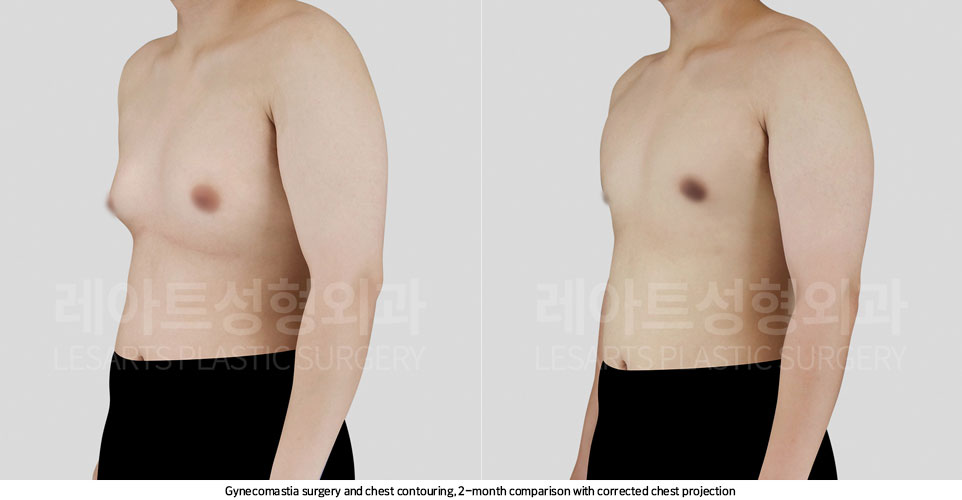
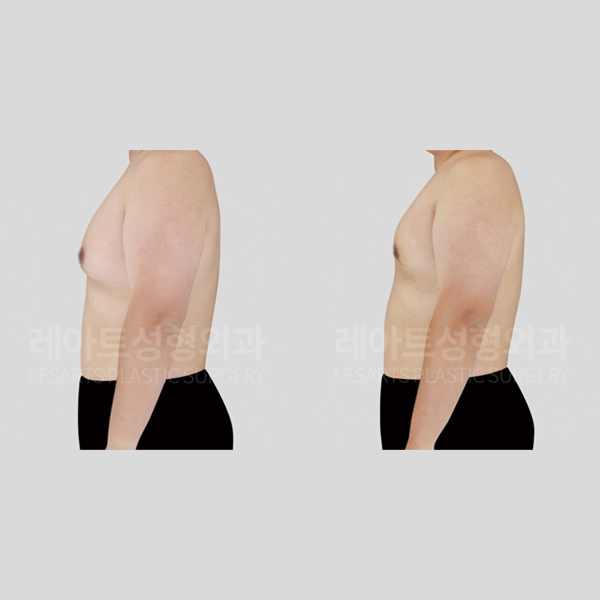
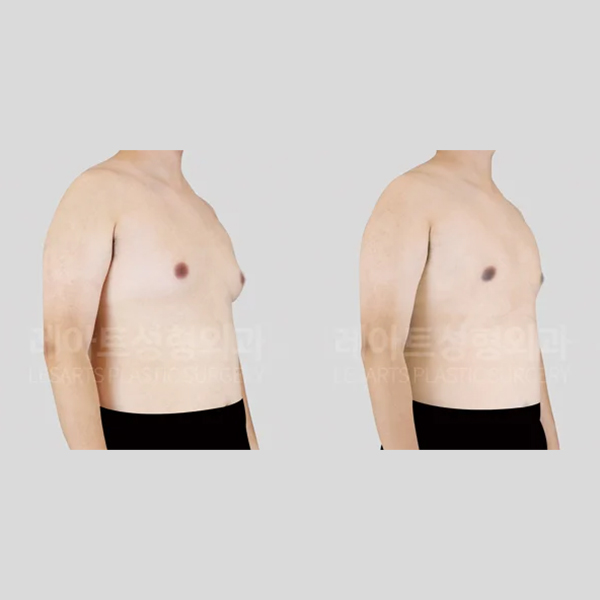
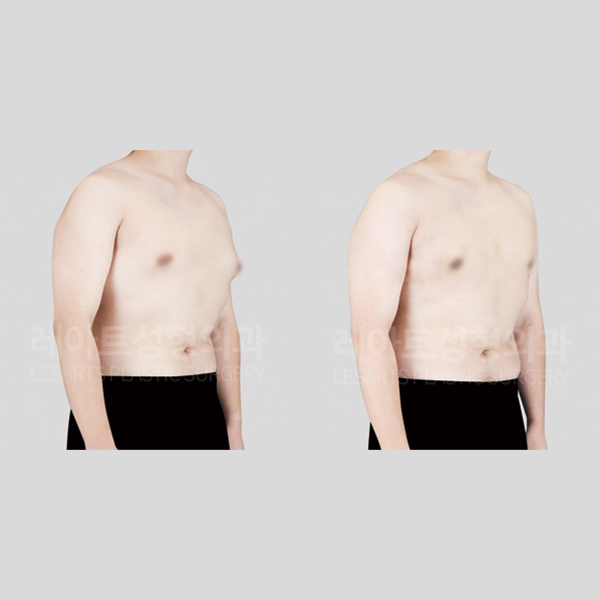
At the 2-month follow-up,
the results clearly showed
• Significant chest size reduction
• Correction of nipple projection
• Improved athletic chest contour effect
With the removal
of the glandular tissue,
and reduction
of surrounding chest fat,
both the projection
and overall chest size
were successfully corrected.
In addition, through
chest contouring with tissue repositioning,
a natural and defined
three-dimensional chest contour
was created, resembling
the results of consistent
chest strength training.
Many patients undergoing
gynecomastia surgery at Lesarts
expect not only
symptom correction,
but also the aesthetic benefits
of chest contouring surgery.
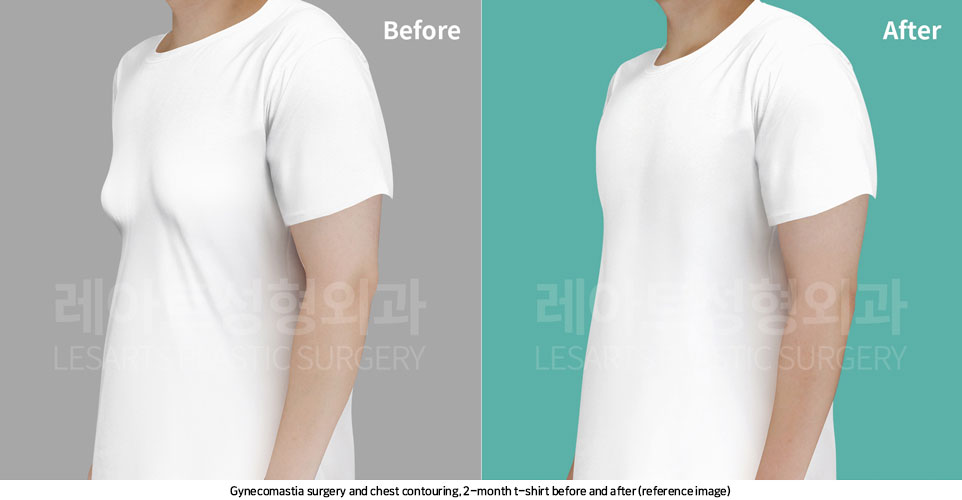
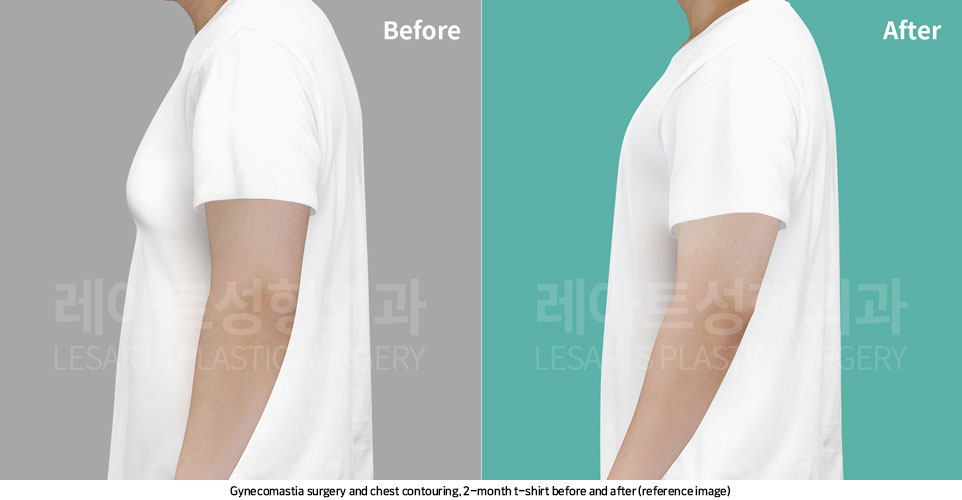
This patient also had
a visibly enlarged chest
and prominent projection
in the central chest area
before surgery.
After gynecomastia surgery
and chest contouring,
the chest was reshaped
into a firmer,
more defined contour,
similar to the results
of consistent
chest strength training.
The patient expressed
high satisfaction
with the improved
athletic chest appearance.
At around 2 months post-surgery,
post-operative firmness
and swelling, known as
bio-bonding,
gradually soften
and decrease,
allowing the chest
to settle into
a more stable
and natural shape.
Although upper body exercise
such as chest
and arm workouts
must be avoided
during early recovery,
the combination of
gynecomastia gland removal
and tissue repositioning chest contouring
allows the chest
to be carefully refined
and sculpted,
reducing chest volume
while enhancing
a natural and defined
masculine chest contour.
This case demonstrates
the unique strength
of Lesarts Plastic Surgery,
delivering both functional
and aesthetic improvement
with high patient satisfaction.
#GynecomastiaSurgery
#ChestContouring
#GynecomastiaCorrection
#MaleChestContour
#GlandRemovalSurgery
#ChestLiposuction
#AthleticChestContour
#MasculineChestShape
#LesartsPlasticSurgery
#KoreanGynecomastiaClinic
#MaleBodyContouring
#BestGynecomastiaClinicInKorea