Patient Registration Info
Surgical site
Surgical area: Gynecomastia | Grade 2-B
No one has a perfectly symmetrical body,
and many patients with gynecomastia
also experience noticeable left–right asymmetry.
From the patient’s perspective,
the stress caused by increased chest volume,
combined with uneven chest appearance,
can significantly heighten psychological discomfort.
Gynecomastia with asymmetry
in chest size and shape
requires a more meticulous, tailored approach.
During gynecomastia surgery,
the amount of glandular tissue removal
may differ between the left and right sides,
and additional techniques such as
liposuction, fat grafting, or tissue repositioning
may be required to correct the chest contour.
For this reason,
a carefully planned surgical strategy
focused on restoring balance
and achieving an ideal chest shape
is essential.
Through today’s asymmetric gynecomastia case,
we will review the surgical method and results,
so that patients with similar concerns
may find this information helpful and reassuring.
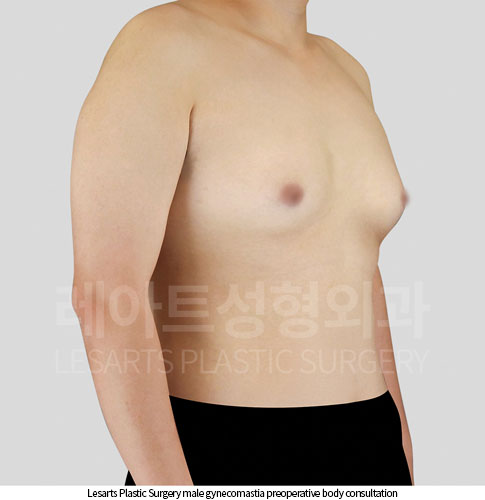
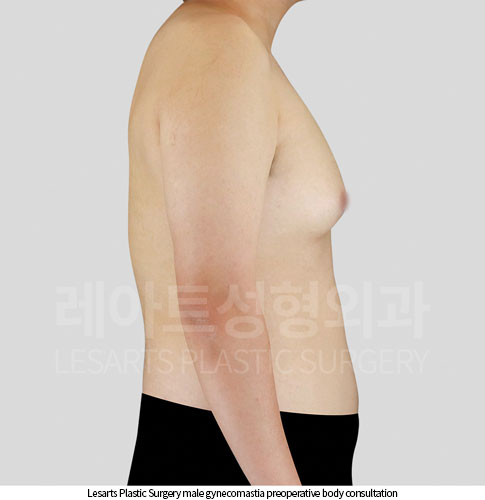
During the preoperative consultation,
the patient’s chest condition showed a clear increase in volume,
with one side noticeably larger than the other,
making the left–right asymmetry clearly visible.
In particular, the areolar area appeared expanded,
causing the chest to look larger than its actual size.
On one side, findings of an inverted nipple were also present,
making the external imbalance even more apparent.
On palpation, firm lumps were felt in both sides of the chest,
and ultrasound examination confirmed that these were
excessively developed glandular tissue.
Ultimately, the patient was diagnosed with
true gynecomastia with asymmetry,
classified as Simon grade 2B,
with the right chest more developed.
It was determined that excision of the hypertrophied glandular tissue,
along with removal of surrounding fat,
was necessary to address the condition.
In addition, we explained that
inverted nipple correction and
fat grafting to the areolar area
would be required as part of a surgical approach
to restore proper left–right balance.
[Early 30s, Simon grade 2B, asymmetric gynecomastia surgery plan]
1. Glandular tissue excision
– Through a periareolar incision, the hyperplastic glandular tissue was removed
to reduce chest volume and protrusion.
2. Liposuction
– Fat contributing to volume in the lower and lateral chest was aspirated,
helping correct any unnatural contour that could result from gland removal alone.
3. Tissue repositioning and fat grafting
– Tissue rearrangement was performed to prevent depression at the excision site
and to create a smooth chest contour.
– Fat grafting around the areola was added to correct sunken areas
and restore left–right symmetry.
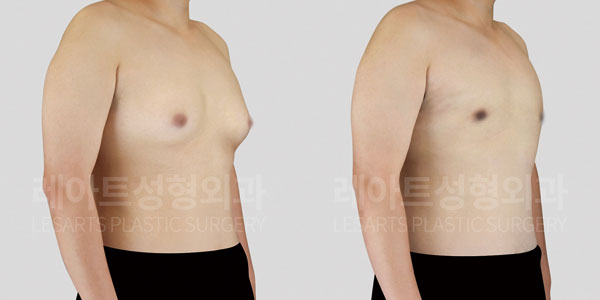
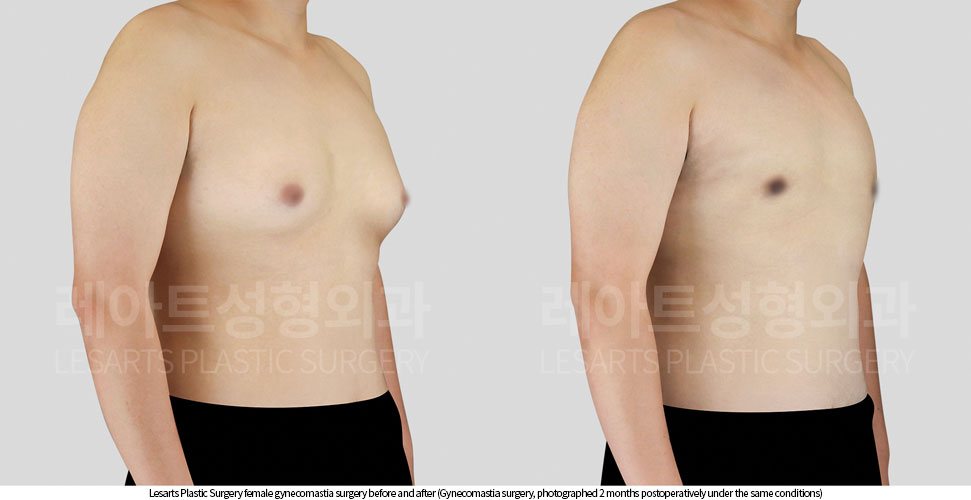
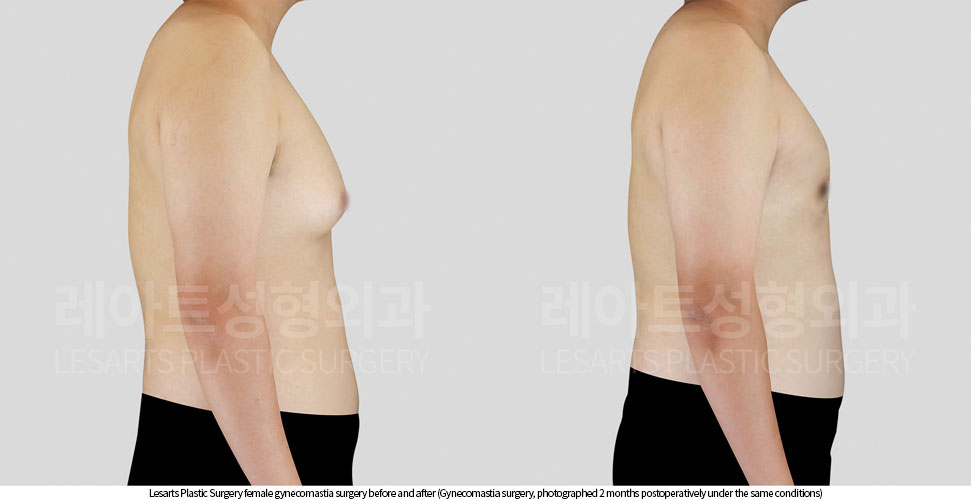
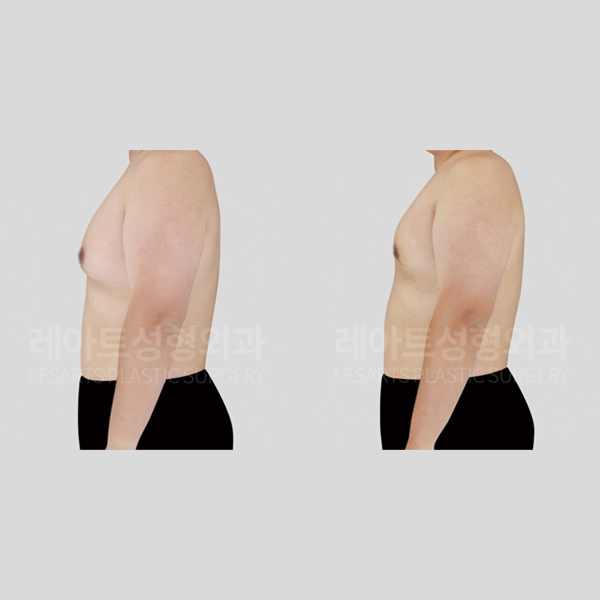
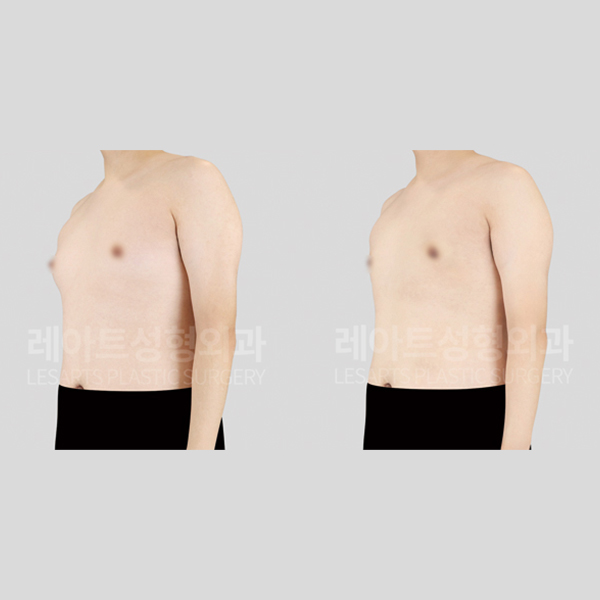
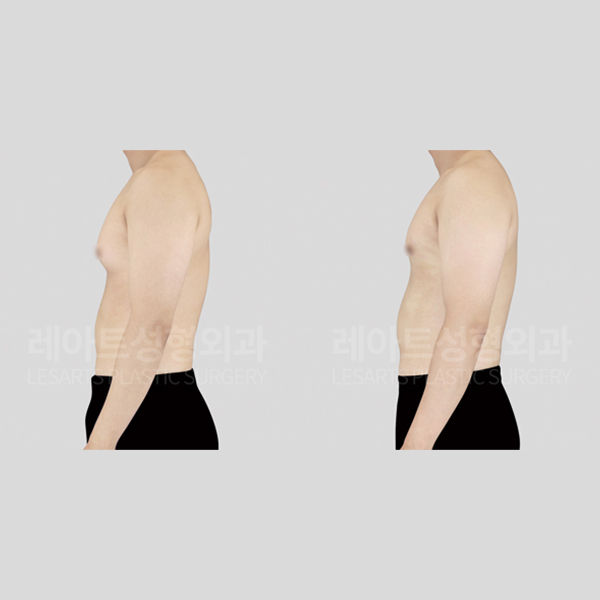
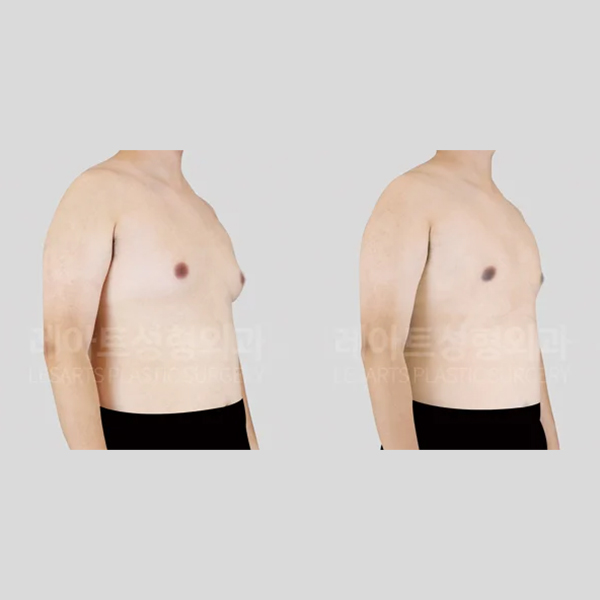
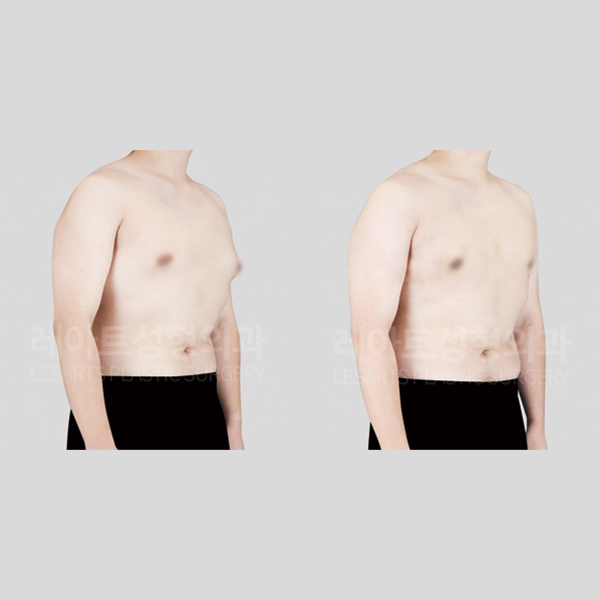
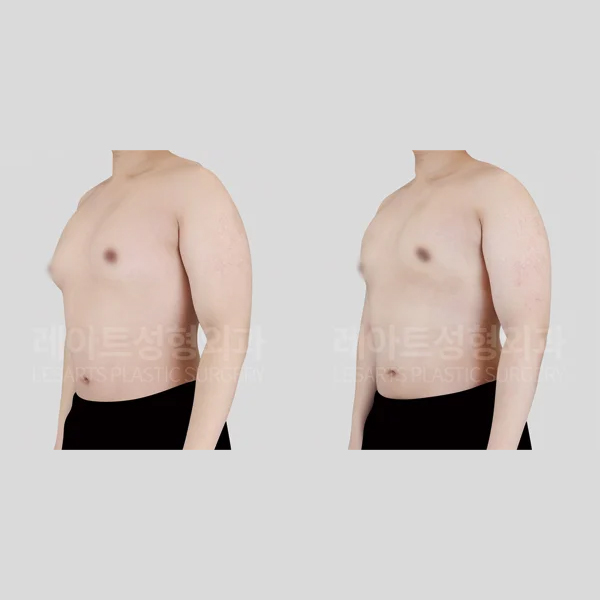
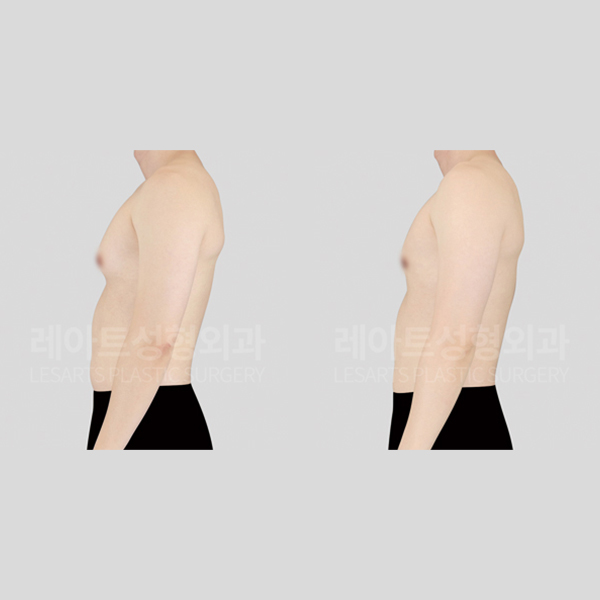
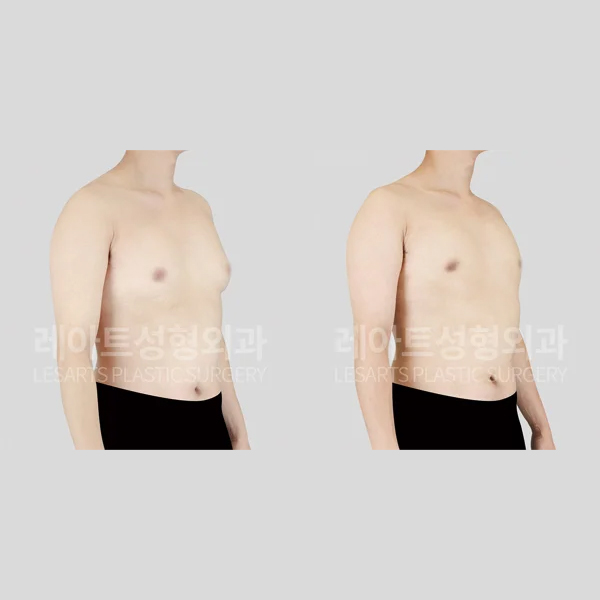
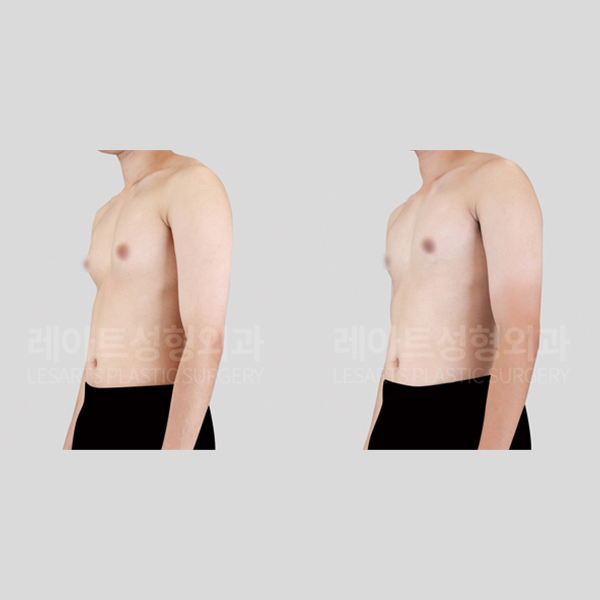
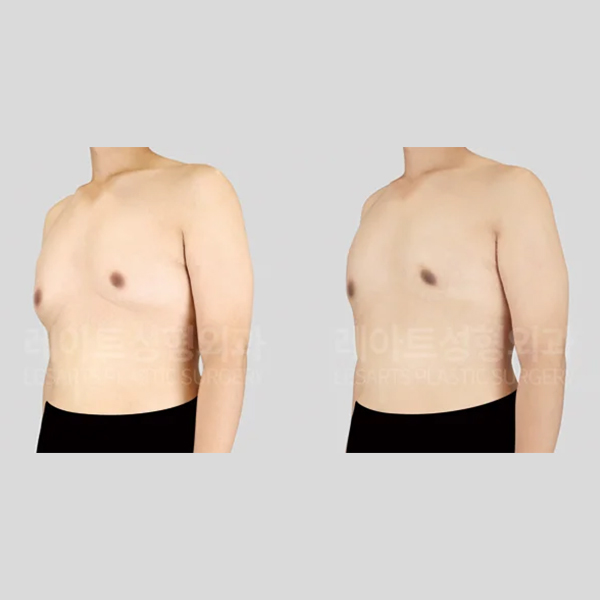
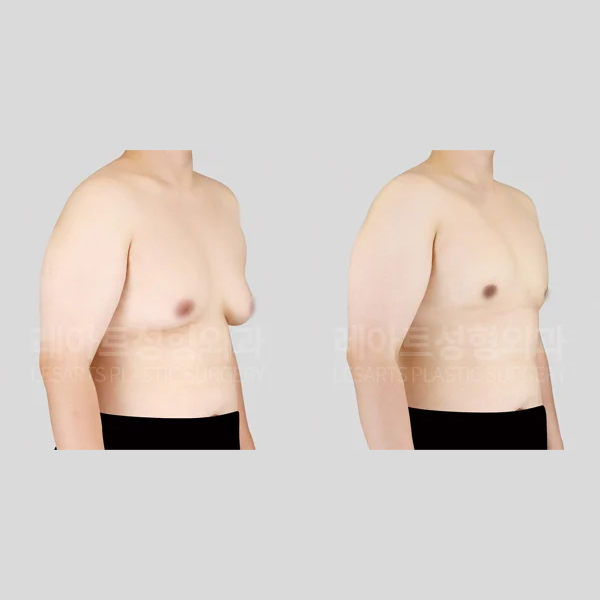
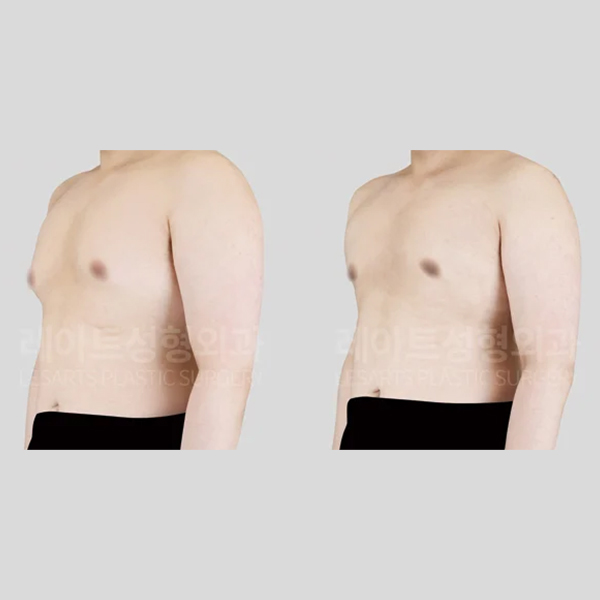
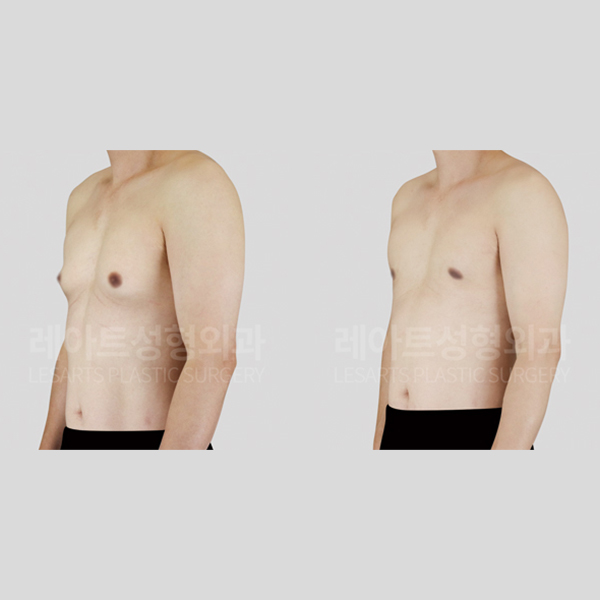
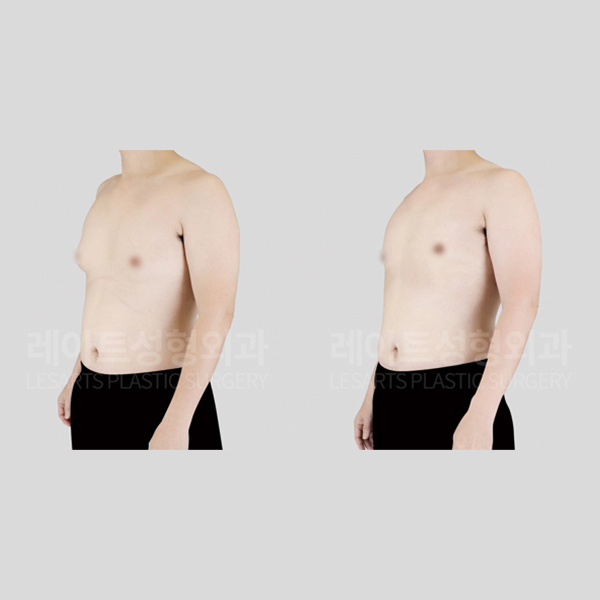
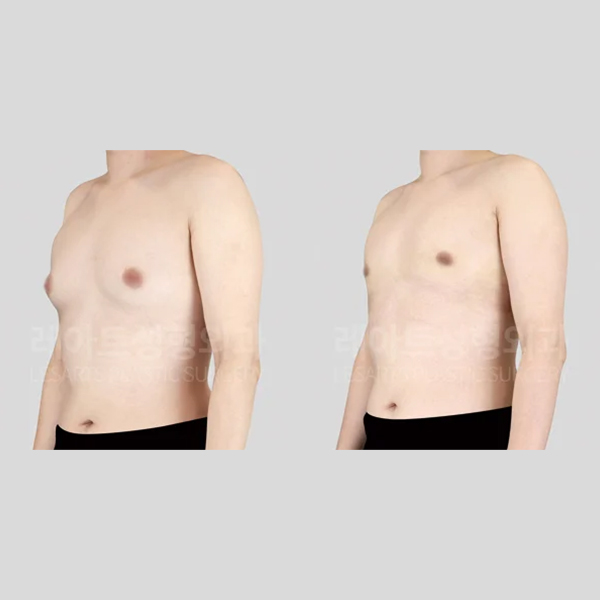
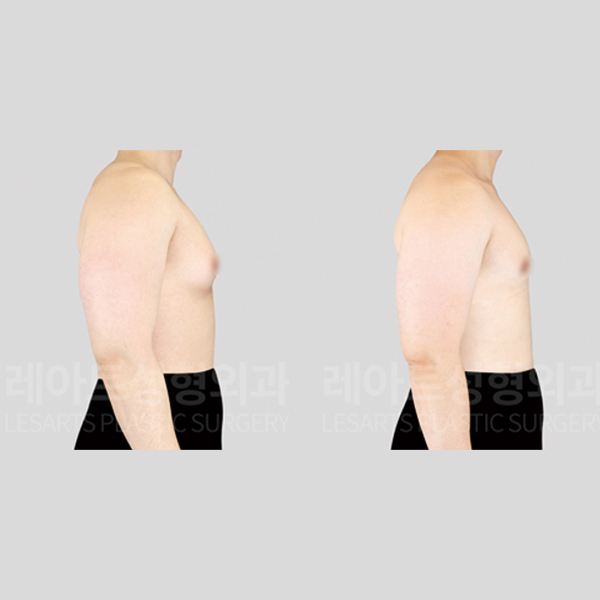
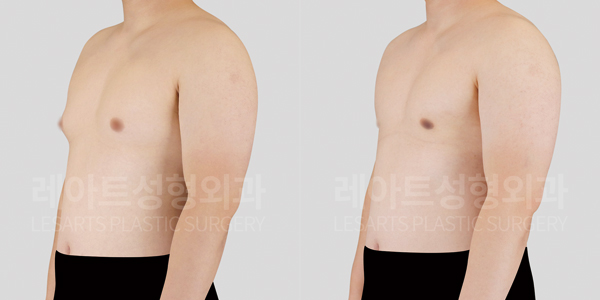
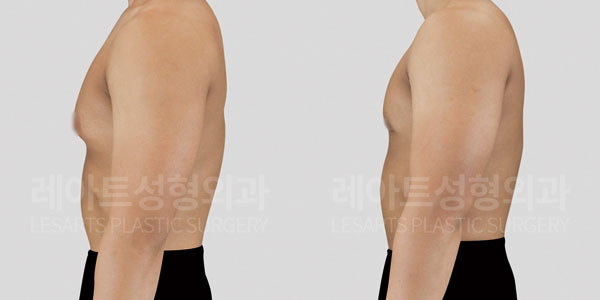
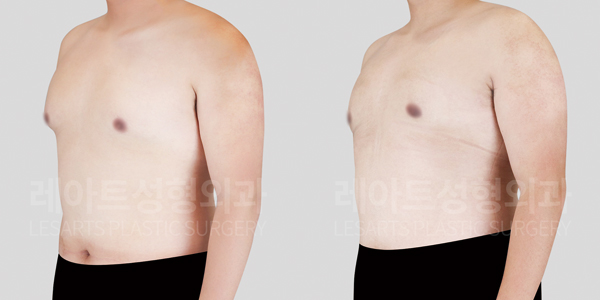
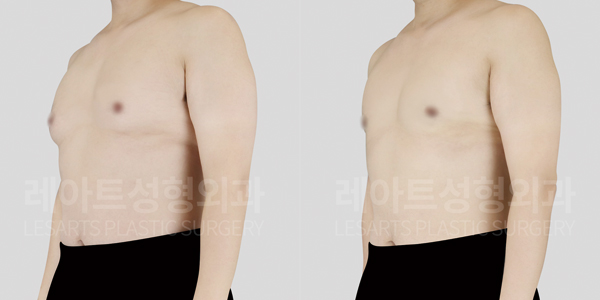
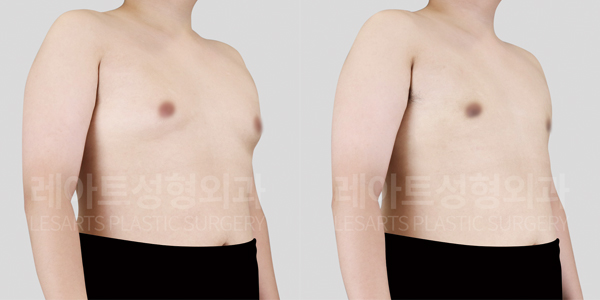
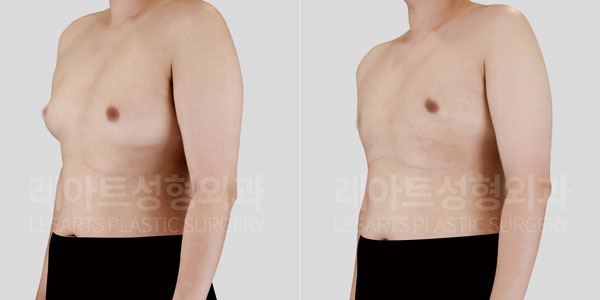
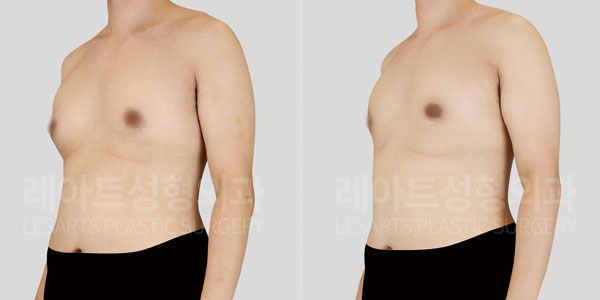
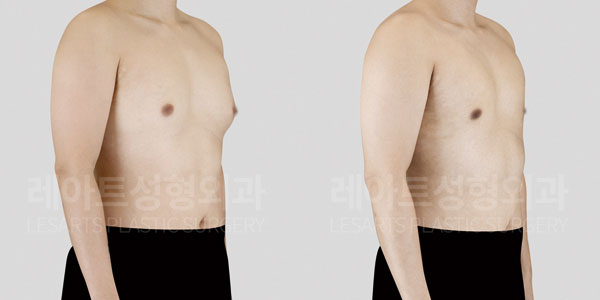
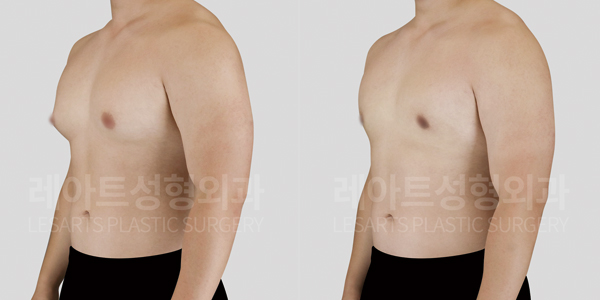
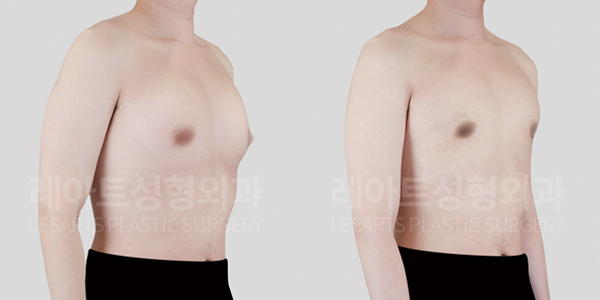
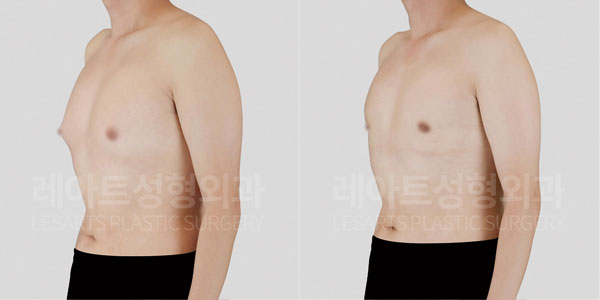
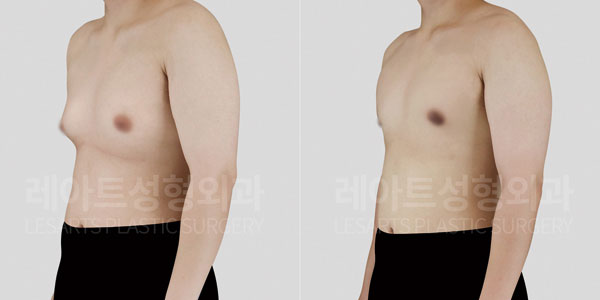
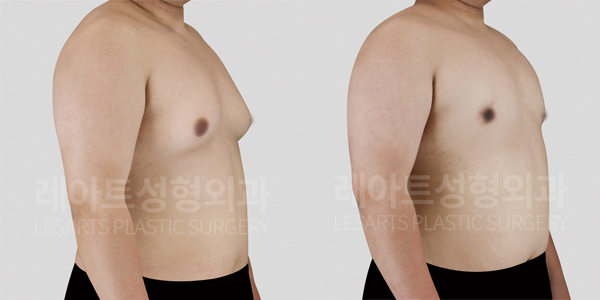
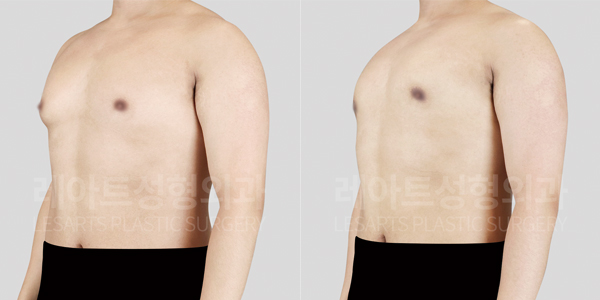
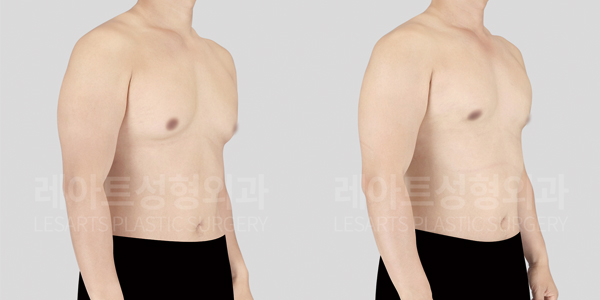
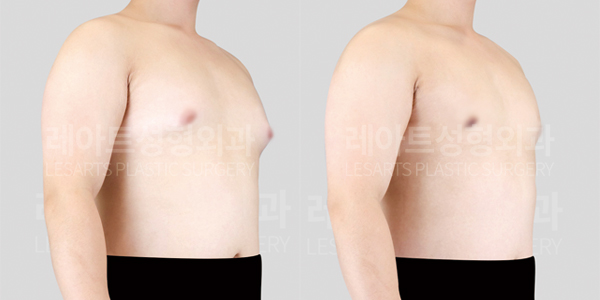
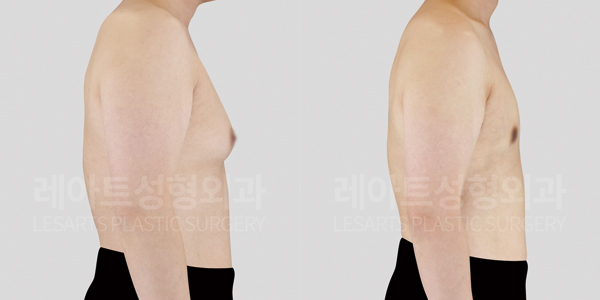
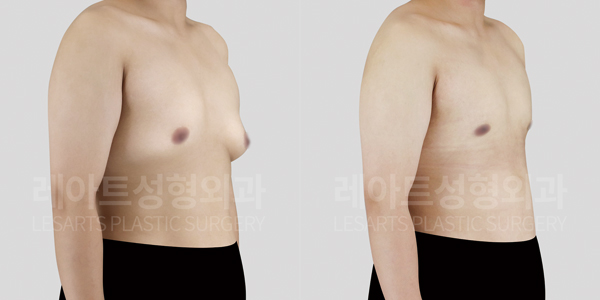
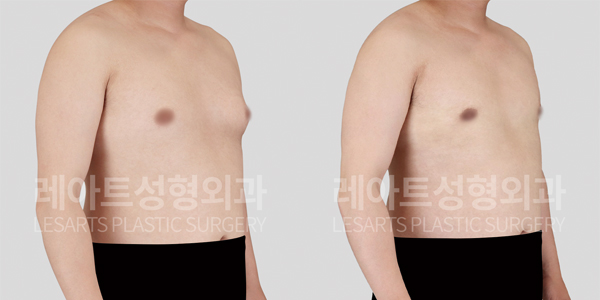
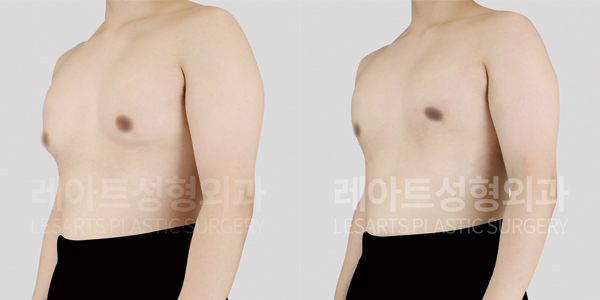
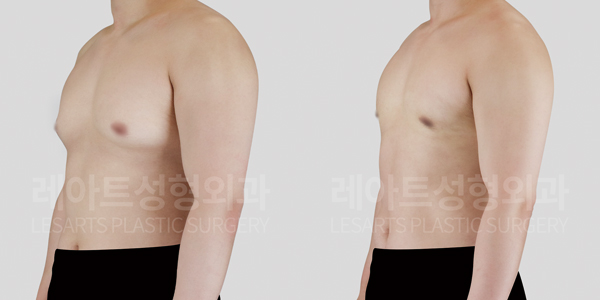
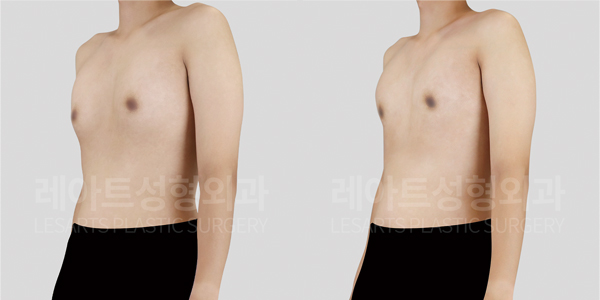
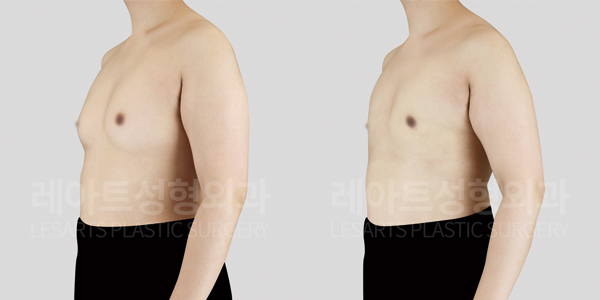
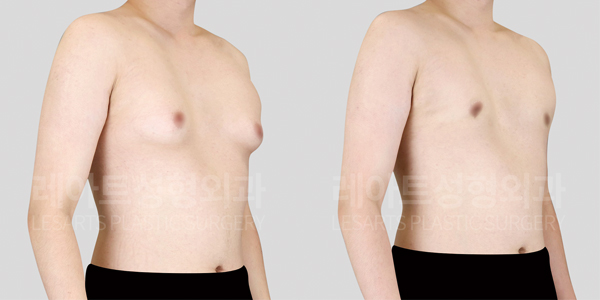
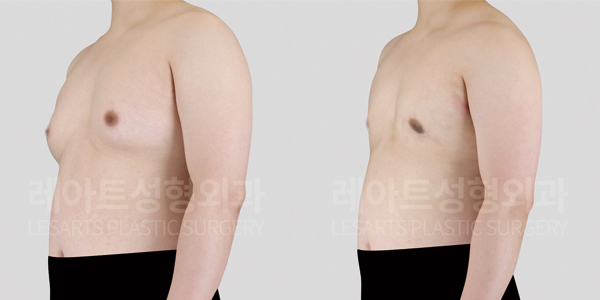
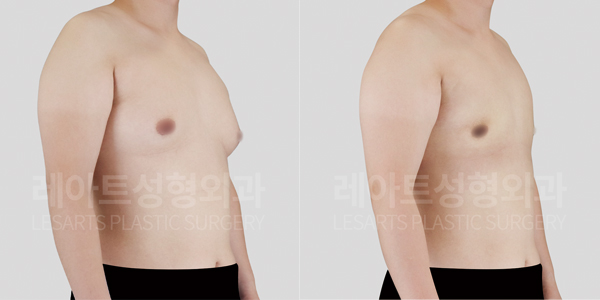
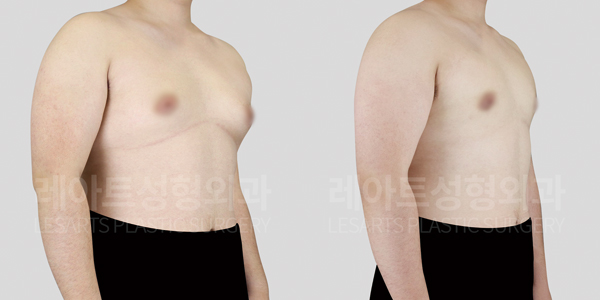
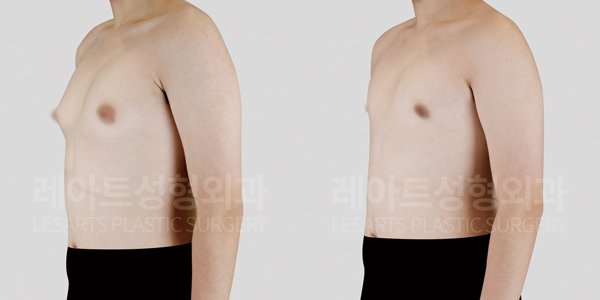
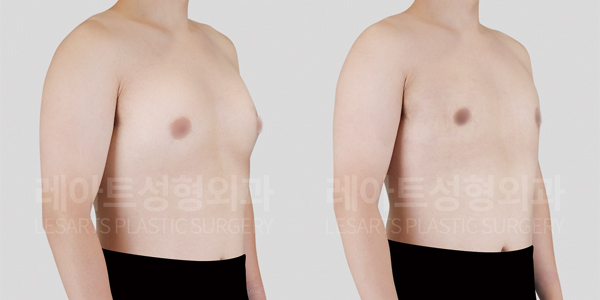
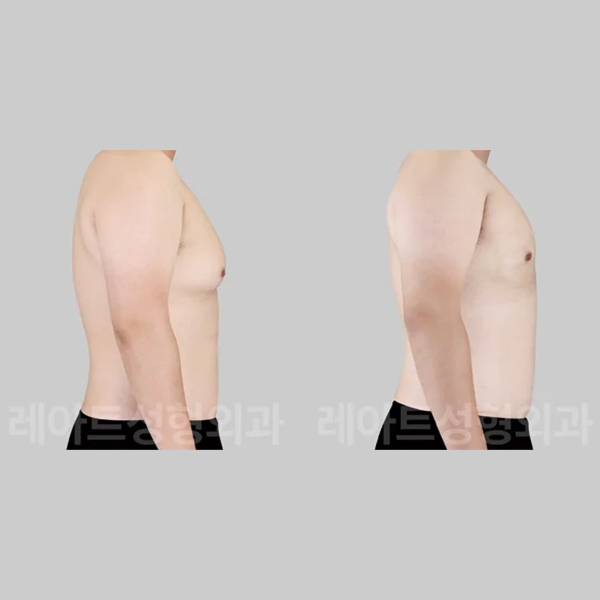
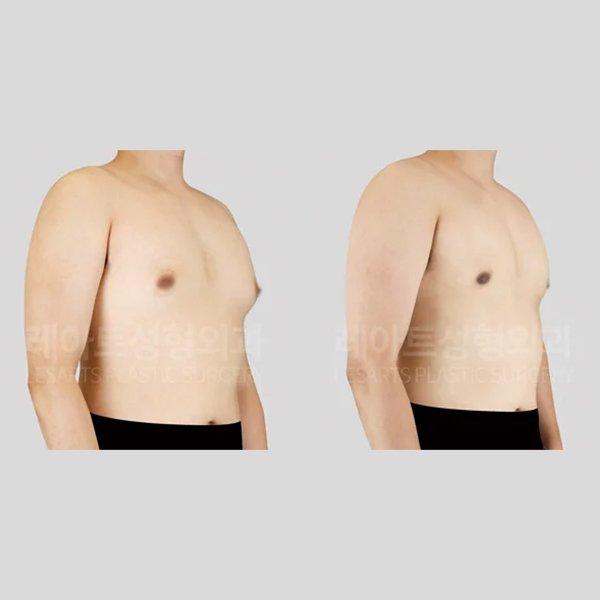
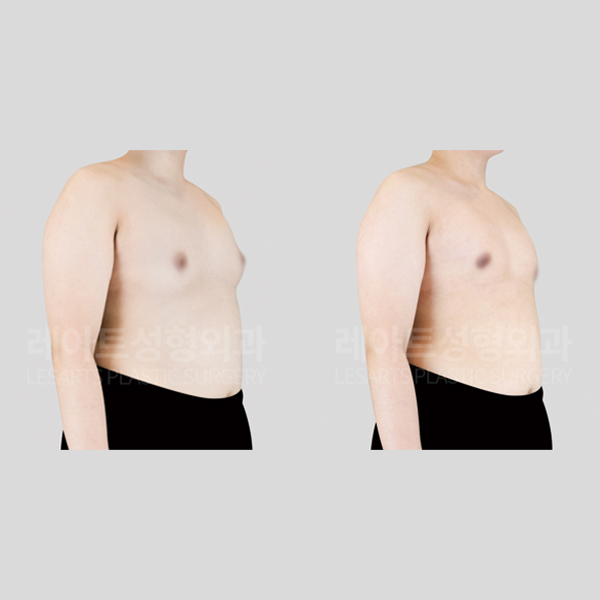
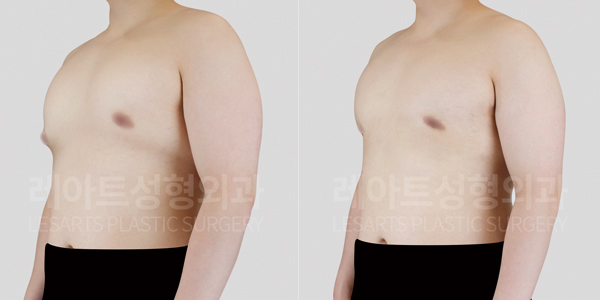
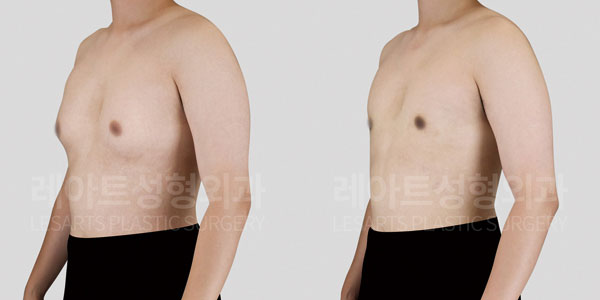
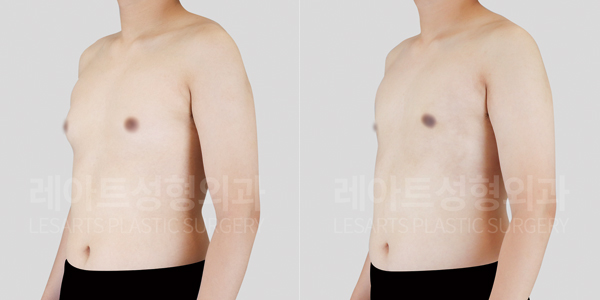
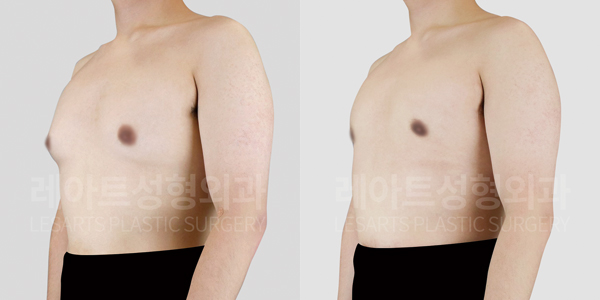
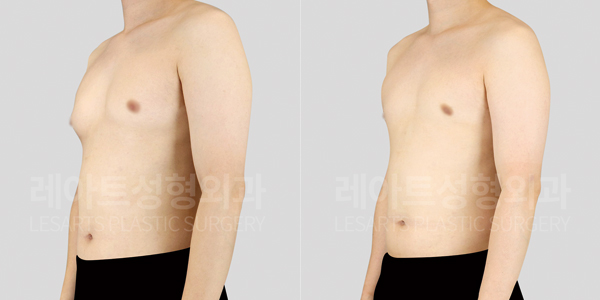
Below, through photos taken 2 months after asymmetric gynecomastia surgery,
we will review how the patient’s left–right imbalance was corrected
and how a more harmonious chest contour was achieved.
The patient was diagnosed with asymmetric true gynecomastia,
with more pronounced development on the right side.
Nipple and areola protrusion was clearly visible,
and the left–right imbalance could be confirmed even on visual inspection.
Surgery was performed with a focus on achieving symmetry
and a clean chest contour through
glandular excision, liposuction, inverted nipple correction,
fat grafting, and tissue repositioning.
At 2 months after gynecomastia surgery,
both the asymmetric chest appearance and overall chest volume
were effectively reduced,
with successful nipple shape correction as well.
As a result, the chest has settled into a
stable, balanced, and well-defined contour.
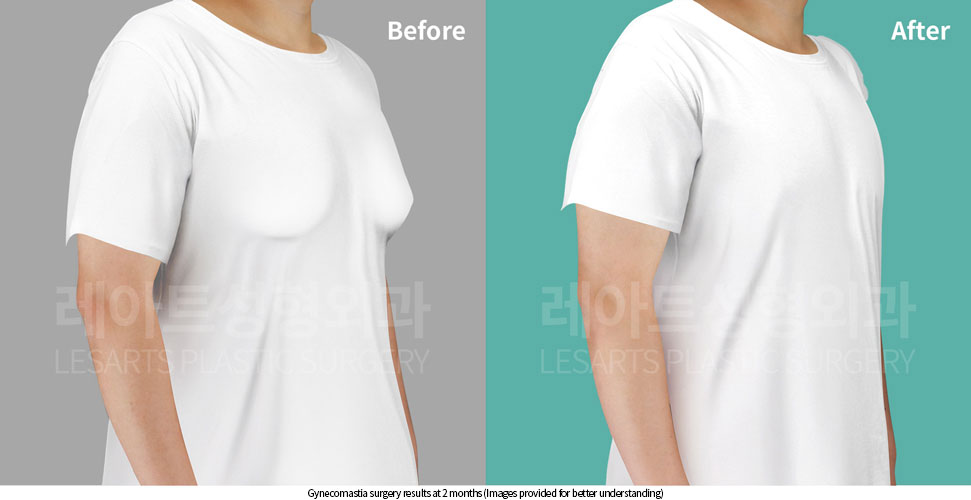
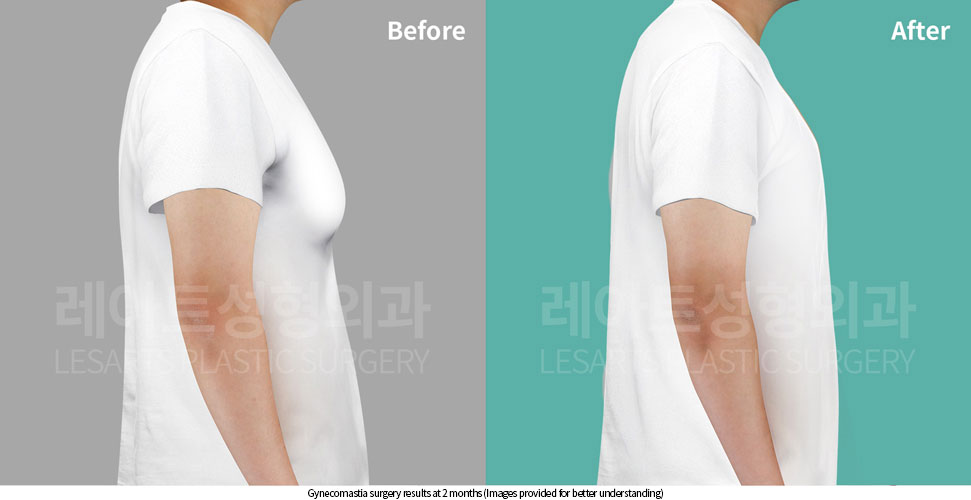
Before gynecomastia surgery,
when wearing a t-shirt,
the enlarged chest contour
was clearly visible,
along with noticeable left–right asymmetry.
This uneven, asymmetric chest shape
would understandably cause
significant daily discomfort and stress
for the patient.
Through gynecomastia surgery,
the asymmetry was corrected,
and excess volume was reduced
by glandular excision,
allowing the chest contour
to become flat and balanced.
Now, even when wearing a t-shirt,
there are no areas that stand out,
and a clean, natural fit
can be clearly seen.
The patient expressed
high satisfaction,
as all previously concerning points
were neatly resolved.
As with all gynecomastia surgery patients,
careful postoperative monitoring
and detailed aftercare guidance
were provided from the early stage.
Although multiple procedures
were performed together,
the patient has shown a stable recovery,
with only mild residual swelling remaining.
With continued exercise and long-term care,
an even more confident and refined appearance
is expected going forward.
#GynecomastiaSurgery
#AsymmetricGynecomastia
#MaleBreastReduction
#SimonGrade2B
#GynecomastiaBeforeAfter
#ChestContourCorrection
#NippleAreolaCorrection
#MaleBodyContouring
#PostGynecomastiaCare
#BestGynecomastiaClinicInKorea