
Facial fat transfer in Seoul: 7-week changes for a sagging and tired-looking face
Patient Registration Info
| Age | Weight | Height | BMI |
|---|---|---|---|
|
30s |
– |
– |
– |
Surgical site
Surgical site : Full Face (Forehead, Cheeks, Under-Eyes)
Can Facial Fat Grafting Help Improve a Hollow and Tired-Looking Appearance?
When areas of the face, such as the forehead or cheeks,
lack volume, facial contours may appear more pronounced,
creating an overall tired or sagging appearance.
When planning facial fat grafting, it is important
to evaluate the face from the front, oblique, and side views
to restore volume where needed and create
a naturally balanced overall facial contour.
Areas of the face that appear particularly hollow or flat
can affect the overall impression of the face.
For example, insufficient volume in the forehead and cheeks
can make the face appear flatter while emphasizing
the contours around the cheekbones.
This may also make the face appear larger than it actually is
or create the impression that the midface is positioned lower.
Some patients also visit the clinic after significant facial fat loss
during dieting, concerned that they look more tired
or older than they did before.
When volume loss creates uneven facial contours
or changes the overall facial impression,
facial fat grafting may be one option to consider.
However, rather than simply adding fat to every hollow area,
it is important to evaluate the facial contours
from the front, oblique, and side views to determine
where volume is needed and how much should be added.
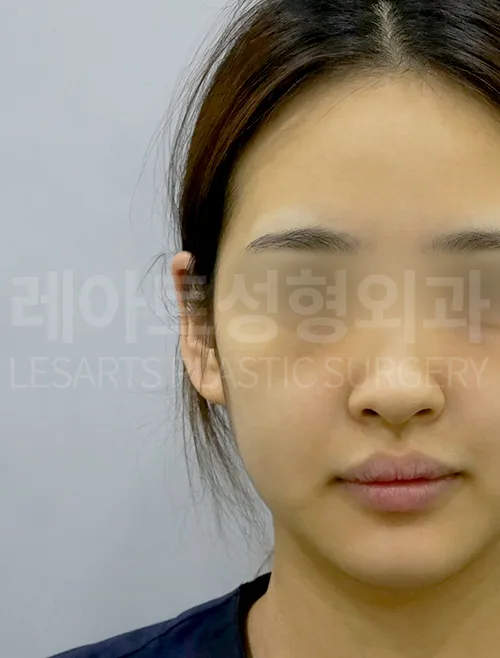
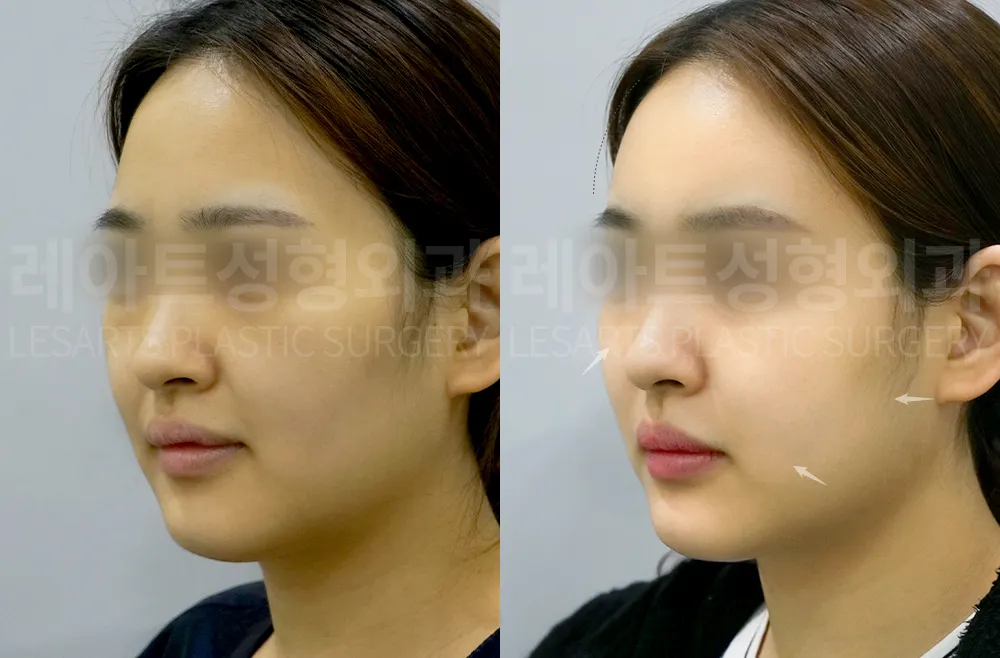
[Preoperative Planning for Facial Fat Grafting Considering Overall Facial Volume and Contours]
For this patient, full-face fat grafting was planned
to restore volume throughout the face.
Before surgery, the forehead lacked some volume,
giving it an overall flat appearance.
The area extending from under the eyes to the cheeks
also lacked sufficient volume, reducing facial dimension
and creating a somewhat tired appearance.
In particular, hollowing around the cheeks made
the cheekbone contours appear relatively prominent.
The lack of anterior cheek volume also made the midface
appear lower, creating a slightly sagging impression.
Rather than adding prominent volume to only specific areas,
the treatment range was planned to include the forehead,
under-eye areas, and anterior cheeks to create
a smooth and natural transition throughout the face.
[Why Overall Contour Continuity Matters in Full-Face Fat Grafting]
Facial fat grafting does not necessarily create
a natural result simply by adding more volume to one area.
When the forehead, under-eye areas, and cheeks
are all hollow, as in this patient, adding volume
to only one area may make the boundaries
between surrounding areas more noticeable.
Therefore, the surgical plan considered not only
the facial contour from the front but also the height
and curves visible from the oblique and side views.
The amount and placement of fat were planned
to create a natural transition in volume
between the different areas of the face.
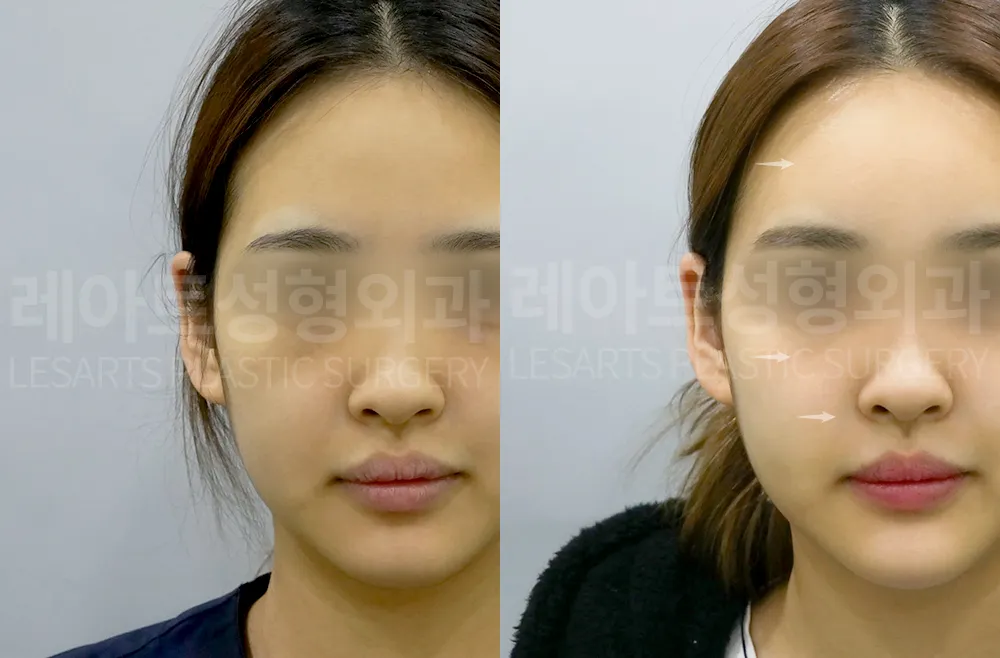
[Before-and-After Comparison 7 Weeks After Full-Face Fat Grafting – Lesarts Plastic Surgery]
*Photos taken under the same conditions 7 weeks after surgery
Let’s compare the results approximately 7 weeks after surgery.
Before surgery, the center of the forehead appeared relatively flat.
After fat grafting, natural volume was added to the areas
that previously lacked fullness, creating more dimension in the upper face.
The hollow area extending from below the eyes toward the mouth
was also gently filled, reducing the previously tired-looking appearance.
As volume around the cheeks was restored,
the previously prominent cheekbone contours
also appeared smoother and more naturally connected.
In particular, restoring volume to the anterior cheeks
from below the eyes toward the nasolabial area
helped the midface appear lighter and more refreshed
than it did before surgery.
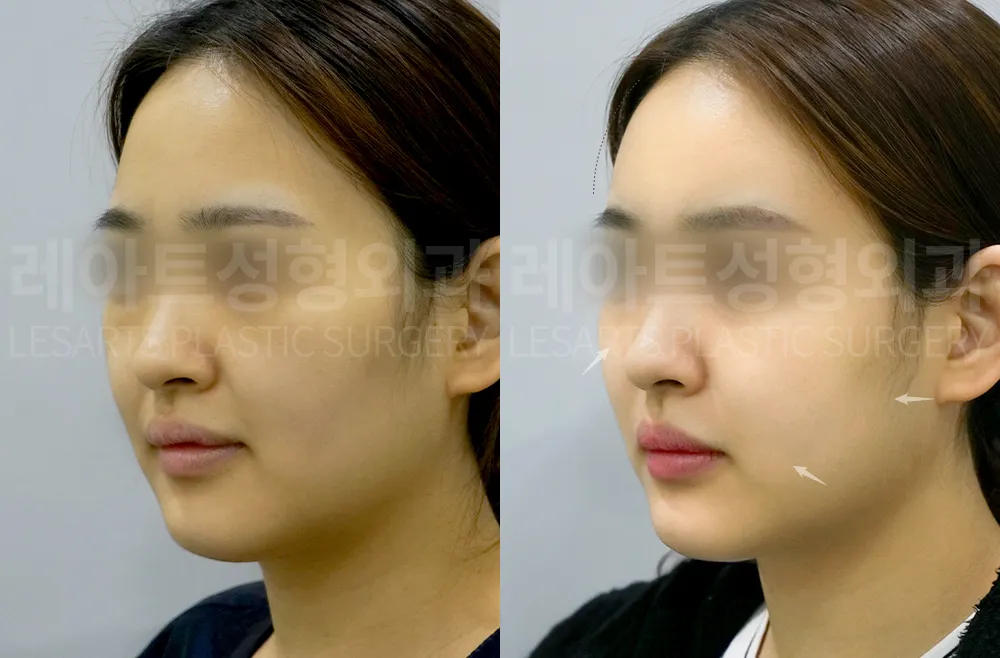
[Changes in Anterior Cheek Volume and Cheekbone Contours 7 Weeks After Facial Fat Grafting – Lesarts Plastic Surgery]
From the oblique view, changes in anterior cheek volume
and the contours around the cheekbones are more noticeable.
Before surgery, hollowing around the cheeks made
the cheekbones appear relatively prominent,
with noticeable shadowing extending from below the eyes toward the mouth.
After surgery, natural volume was restored to the anterior cheeks
and surrounding areas, reducing the previously prominent
appearance of the cheekbones and creating
a smoother overall facial contour.
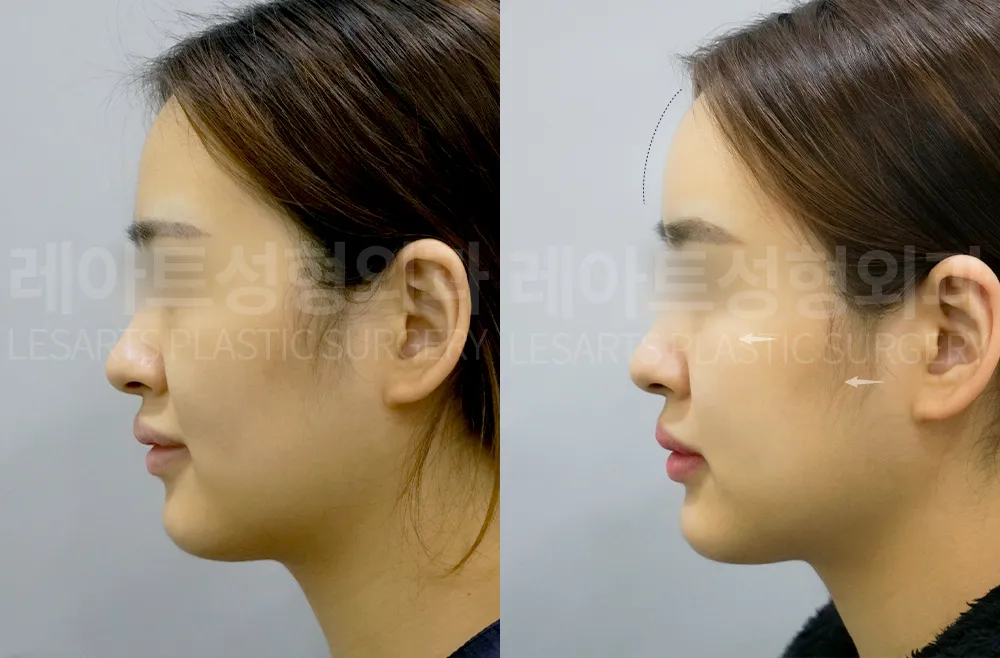
[Changes in Forehead Curvature and Volume 7 Weeks After Facial Fat Grafting – Lesarts Plastic Surgery]
From the side view, a natural curve can be seen
in the previously flat forehead, along with increased
dimension in the anterior cheeks.
Before surgery, the projection of the facial profile
appeared relatively flat and uniform.
After surgery, the necessary volume was added
to the forehead and anterior cheeks, creating
a more naturally connected overall facial contour.
As the lack of dimension was improved
from both the oblique and side views,
the facial contours appeared smoother
and the overall impression became more refreshed.
This patient initially lacked volume in the forehead,
under-eye areas, and around the cheeks,
which made the cheekbone contours appear more prominent
and gave the midface a slightly lower appearance.
With full-face fat grafting, the goal was not
to add excessive volume to any single area.
Instead, volume was restored where needed
while considering the overall continuity
and balance of the facial contours.
At 7 weeks after surgery, the previously flat forehead
showed a more natural curve, while the hollow anterior cheeks
appeared fuller and the contours around the cheekbones
were smoother than before.
The patient was also satisfied that restoring
the previously lacking facial volume naturally
created a softer and more refreshed overall appearance.
When considering facial fat grafting, it is important
not to focus solely on creating a fuller-looking face.
Instead, the areas that lack volume should first be identified,
along with which areas need additional volume
to create a naturally connected overall facial contour.
After carefully evaluating the face from the front,
oblique, and side views, the appropriate treatment areas
and amount of fat grafting should be discussed
based on the individual facial structure.
Facial Fat Grafting FAQ
Q1. Can I have facial fat grafting after losing facial fat from dieting?
If certain areas of the face appear hollow after dieting,
facial fat grafting may be considered after evaluating
the current fat distribution and facial contours.
Q2. Is the same amount of fat injected throughout the entire face during full-face fat grafting?
No. The degree of volume loss varies between areas
such as the forehead, anterior cheeks, and under-eye areas.
The treatment areas and amount of fat grafted are determined
after evaluating the overall balance of the face.
Q3. Can hollow cheeks make the cheekbones appear more prominent?
Yes. When there is insufficient volume around the cheeks,
the contours of the cheekbones may appear
relatively more prominent.
Q4. Can facial fat grafting improve a sagging appearance?
If volume loss makes the midface appear hollow
or positioned lower, restoring volume to the anterior cheeks
may create a visually lighter and more refreshed appearance.
Q5. Is 7 weeks after facial fat grafting the final result?
At 7 weeks, the changes after surgery are already visible,
but the grafted areas may continue to stabilize afterward.
Final volume and shape may vary between individuals.
▼ Visit Lesarts Plastic Surgery in Gangnam, Seoul, Korea ▼