[Abdominoplasty] Floating Abdominoplasty After Vaginal Delivery –6-Month Results and Umbilical Position Change
Hello, this is Dr. Kukhan Lee,
board-certified plastic surgeon at Lesarts Plastic Surgery.
When consulting patients
who visit due to
postpartum abdominal changes,
there are several concerns
commonly shared,
although the severity
may vary individually.
The most frequent concerns
include the following:
• The abdomen appears
generally protruded,
even after dieting
or maintaining an empty stomach
• Wrinkles and stretch marks
develop around
the umbilical area
• The lower abdomen sags,
causing visible skin folds
and wrinkling
Among these,
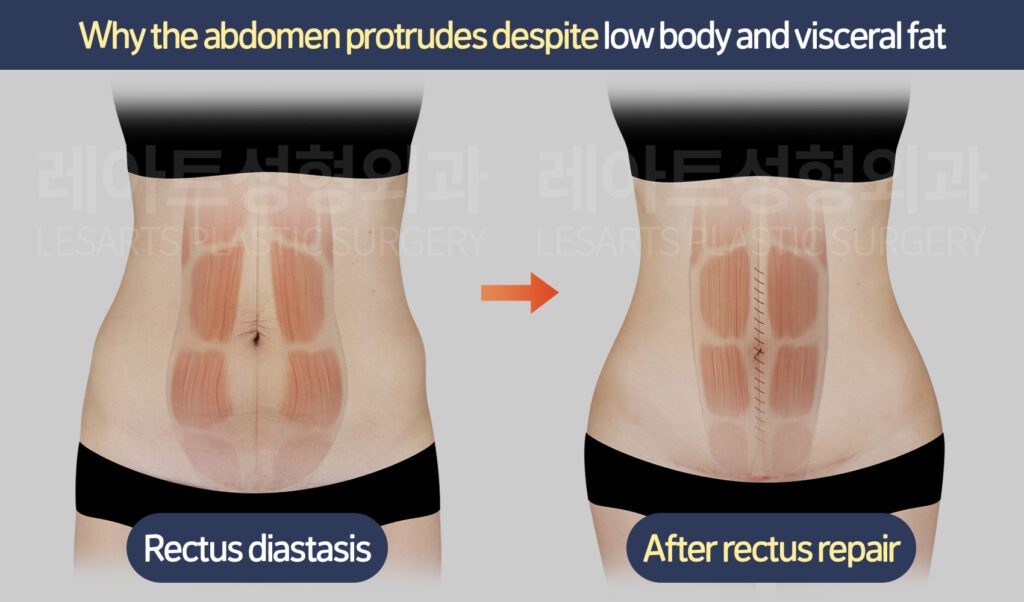
abdominal protrusion
despite low body fat
and visceral fat
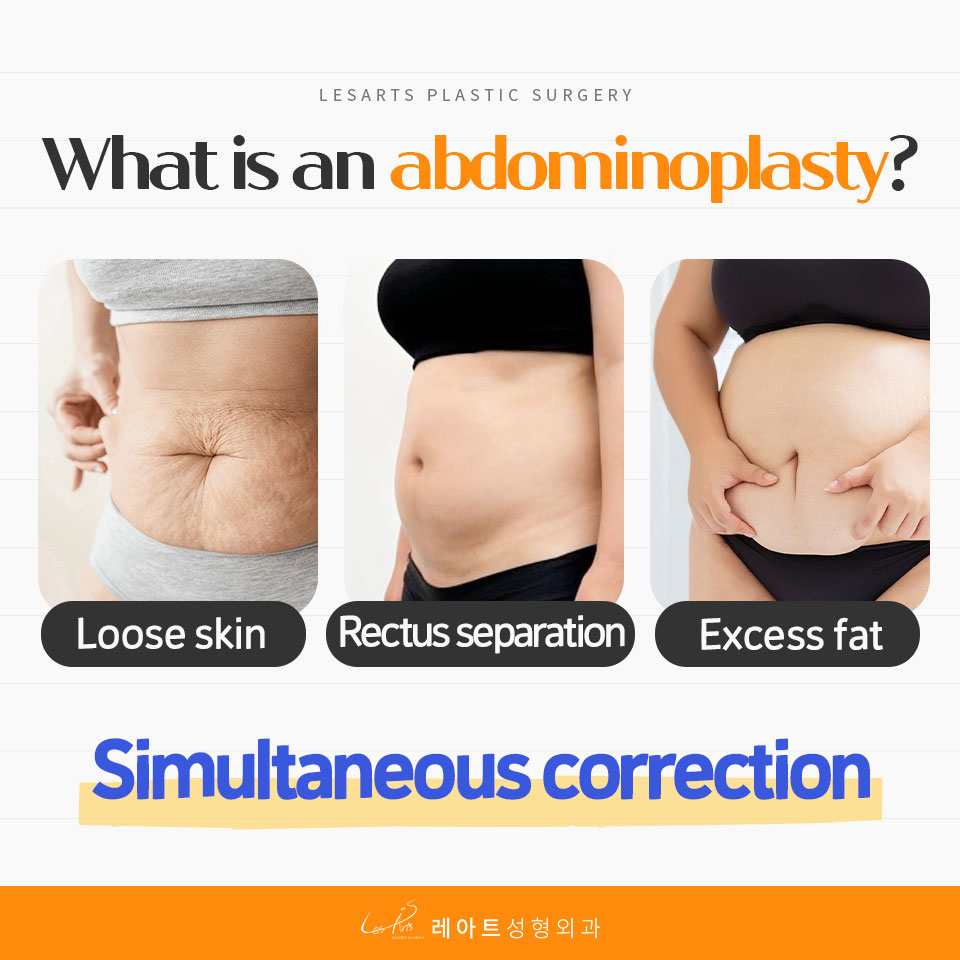
is most commonly caused
by rectus diastasis.
This condition develops
as the abdominal muscles
separate during
pregnancy and childbirth.
In particular, patients
with a smaller frame
who delivered a larger baby,
or gave birth
to twins,
or experienced
significant abdominal expansion
during pregnancy,
often develop more prominent
wrinkles and stretch marks
around the umbilicus.
When combined with
lower abdominal skin laxity,
these changes can significantly
affect the overall
abdominal contour.
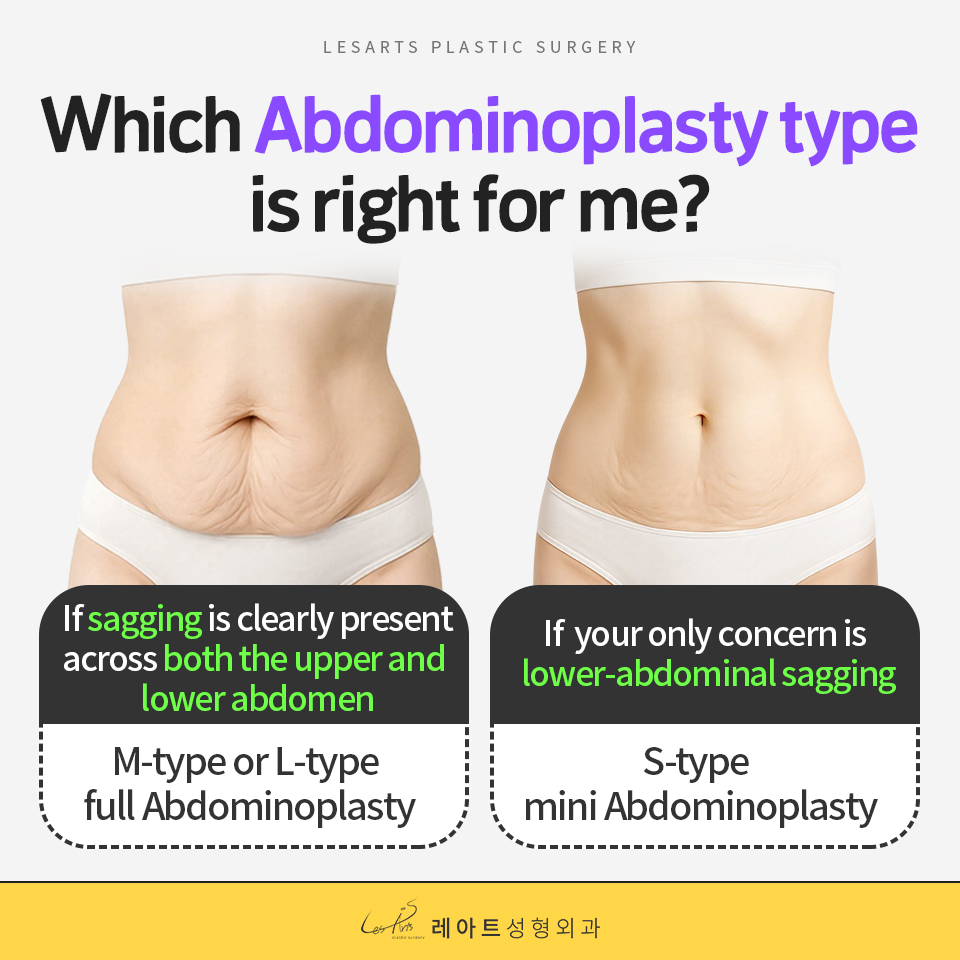
To correct these concerns,
abdominoplasty surgery
may be considered.
However, since each patient’s
abdominal condition differs,
selecting the most appropriate
surgical approach
based on individual anatomy
is essential.
Case Review
Today’s case involves
a patient with
similar concerns.
She delivered
two children
through vaginal delivery.
Despite childbirth,
her overall body shape
remained relatively stable.
She consistently maintained
exercise
and weight management.
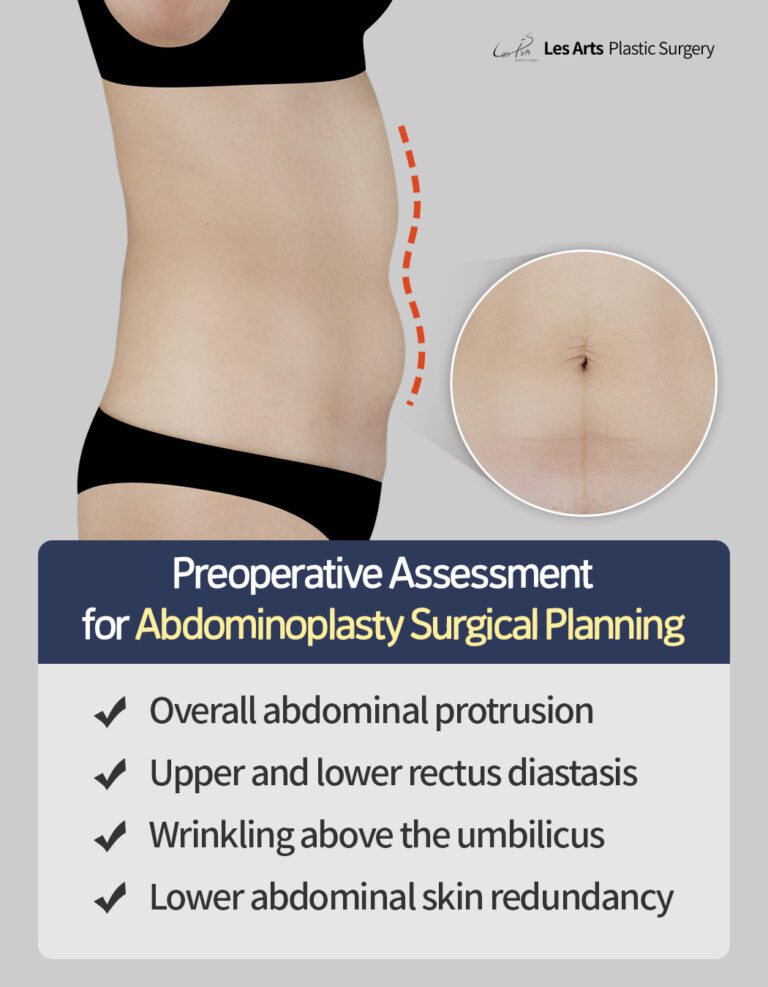
Nevertheless, she remained
concerned about persistent
abdominal protrusion,
wrinkling above
the umbilicus,
and excess skin folds
in the lower abdomen.
Upon examination,
rectus diastasis
was confirmed across
both upper
and lower abdomen.
Based on these findings,
two surgical options
were considered:
• M-type full abdominoplasty
• Floating abdominoplasty
Consultation and Preoperative Assessment for Abdominoplasty Surgery
When focusing solely
on improving
wrinkles above the umbilicus,
an M-type full abdominoplasty
may provide more
effective correction.
However, in this case,
the degree of
upper abdominal laxity
was not severe.
This meant the incision
would need to be placed
higher than necessary,
which created concern
for the patient.
Additionally, since she
had undergone
vaginal delivery,
she felt a significant burden
regarding a longer
surgical scar.
After considering
all clinical factors,
a floating abdominoplasty
was selected.
This technique allows
correction of
rectus diastasis
in both upper
and lower abdomen,
while positioning
the incision lower
on the abdominal wall.
This provides better control
over scar length
and placement.
However, compared
to the M-type procedure,
there are limitations
in achieving maximal
upper abdominal tightness.
To address this,
the umbilicus
was repositioned downward
by approximately
1.5 to 2 cm,
reducing deep wrinkles
above the navel
and creating
a smoother appearance.
Now, let us review
the results at
6 months postoperatively.
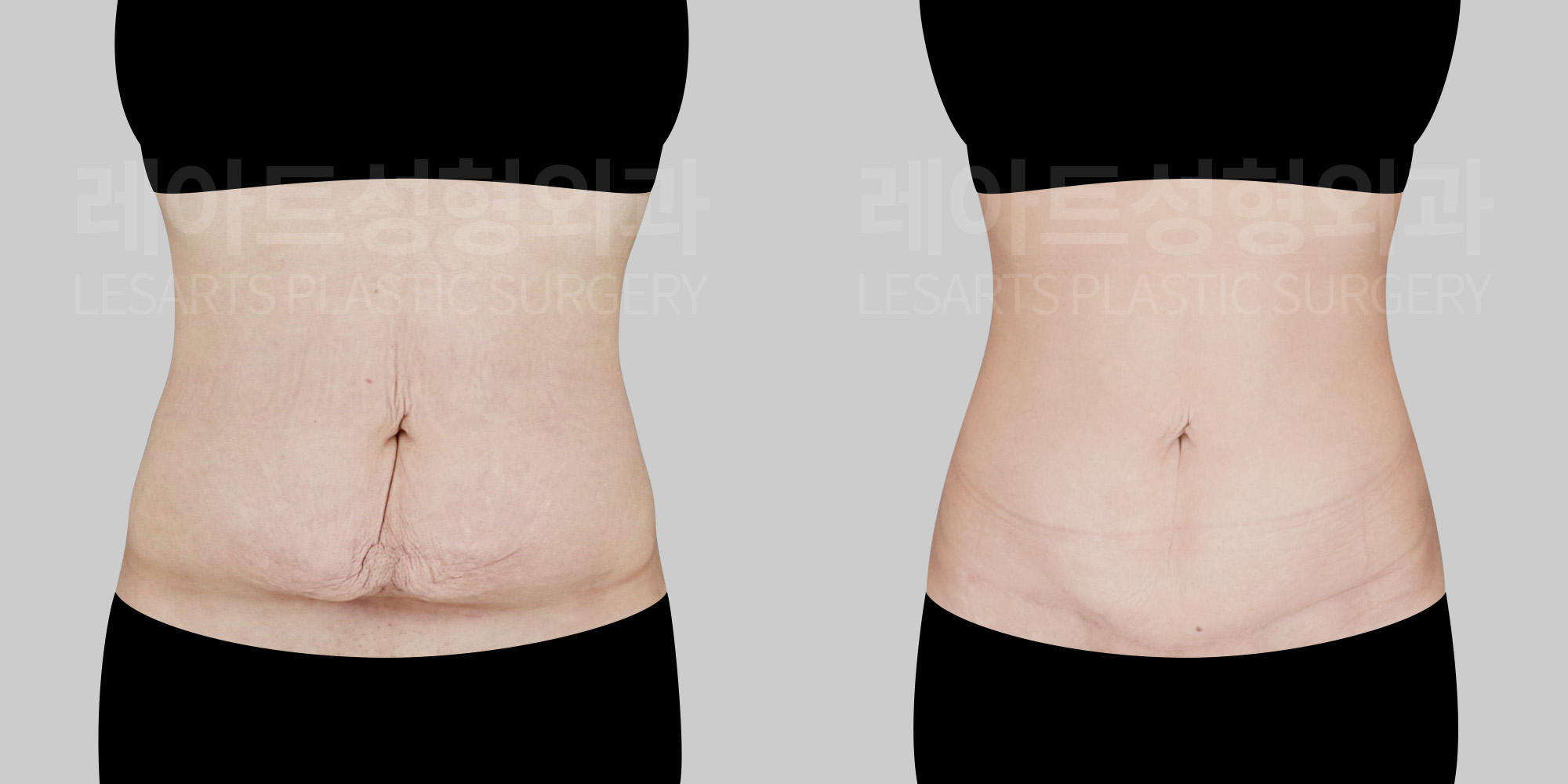
Before and After Floating Abdominoplasty After Vaginal Delivery – Lesarts Plastic Surgery – Dr. Kukhan Lee
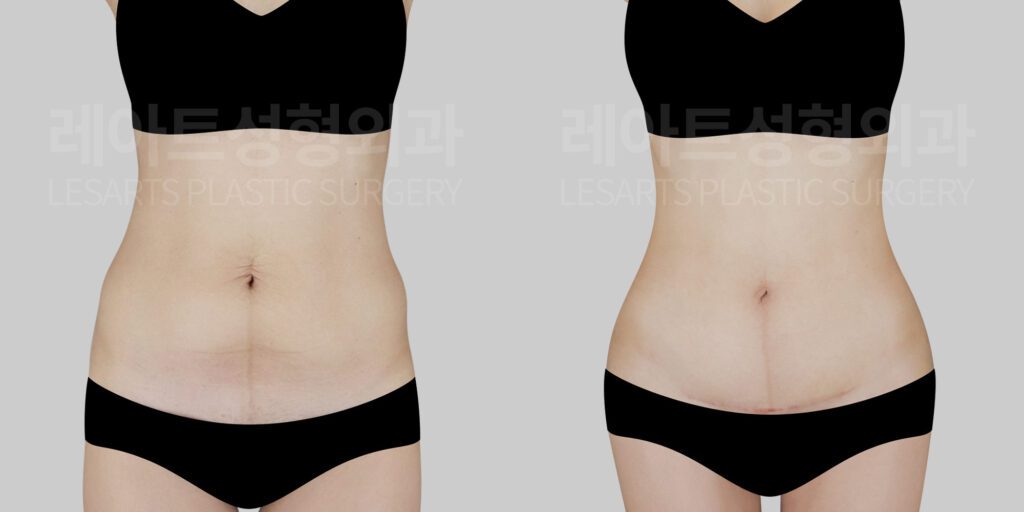
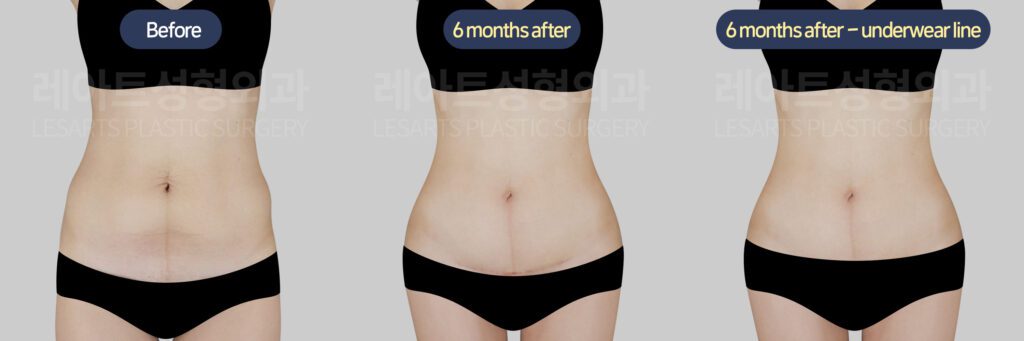
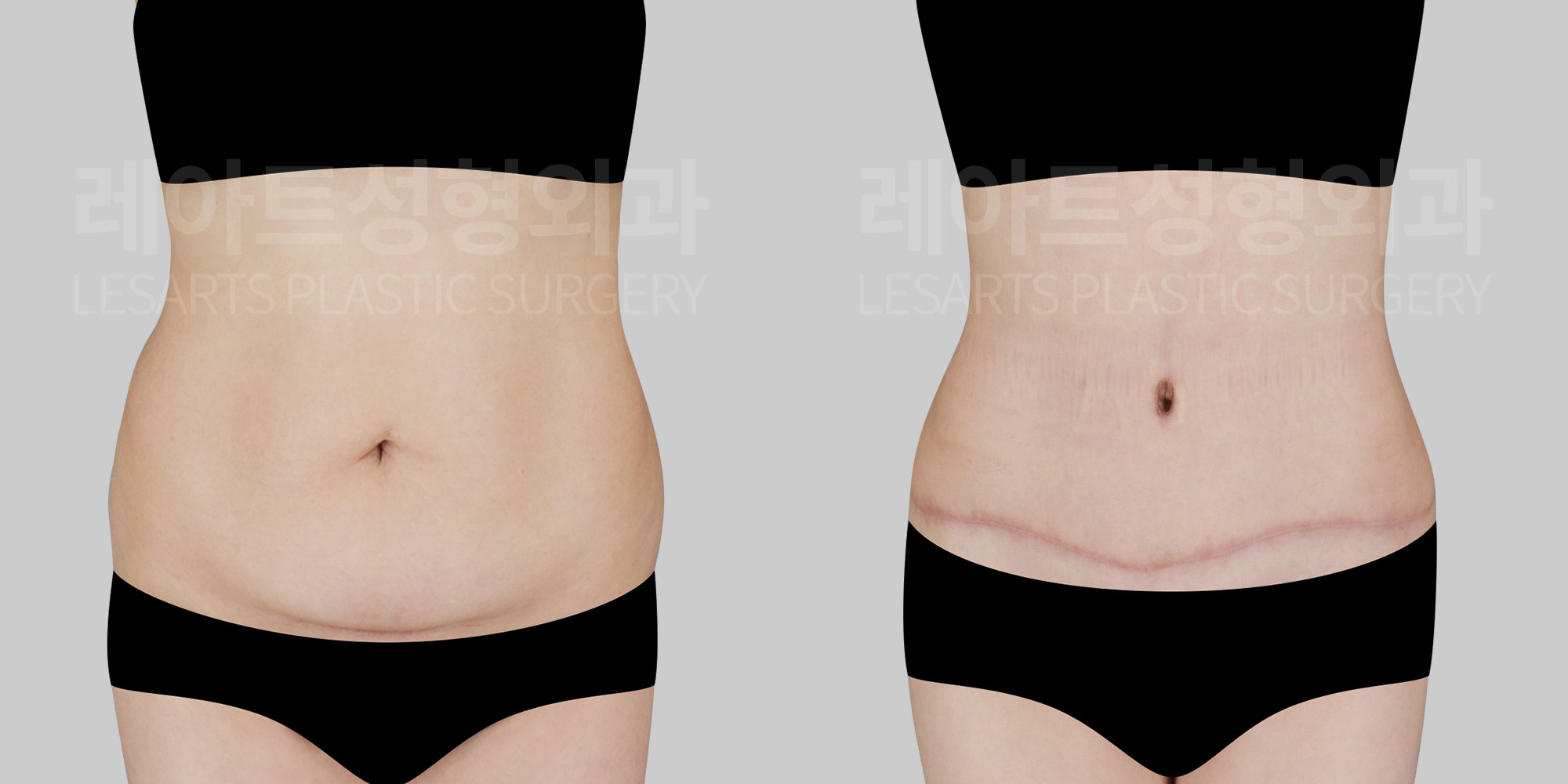
The umbilical position
was lowered by approximately
1.5 to 2 cm.
Despite this adjustment,
there is minimal
sense of unnatural appearance.
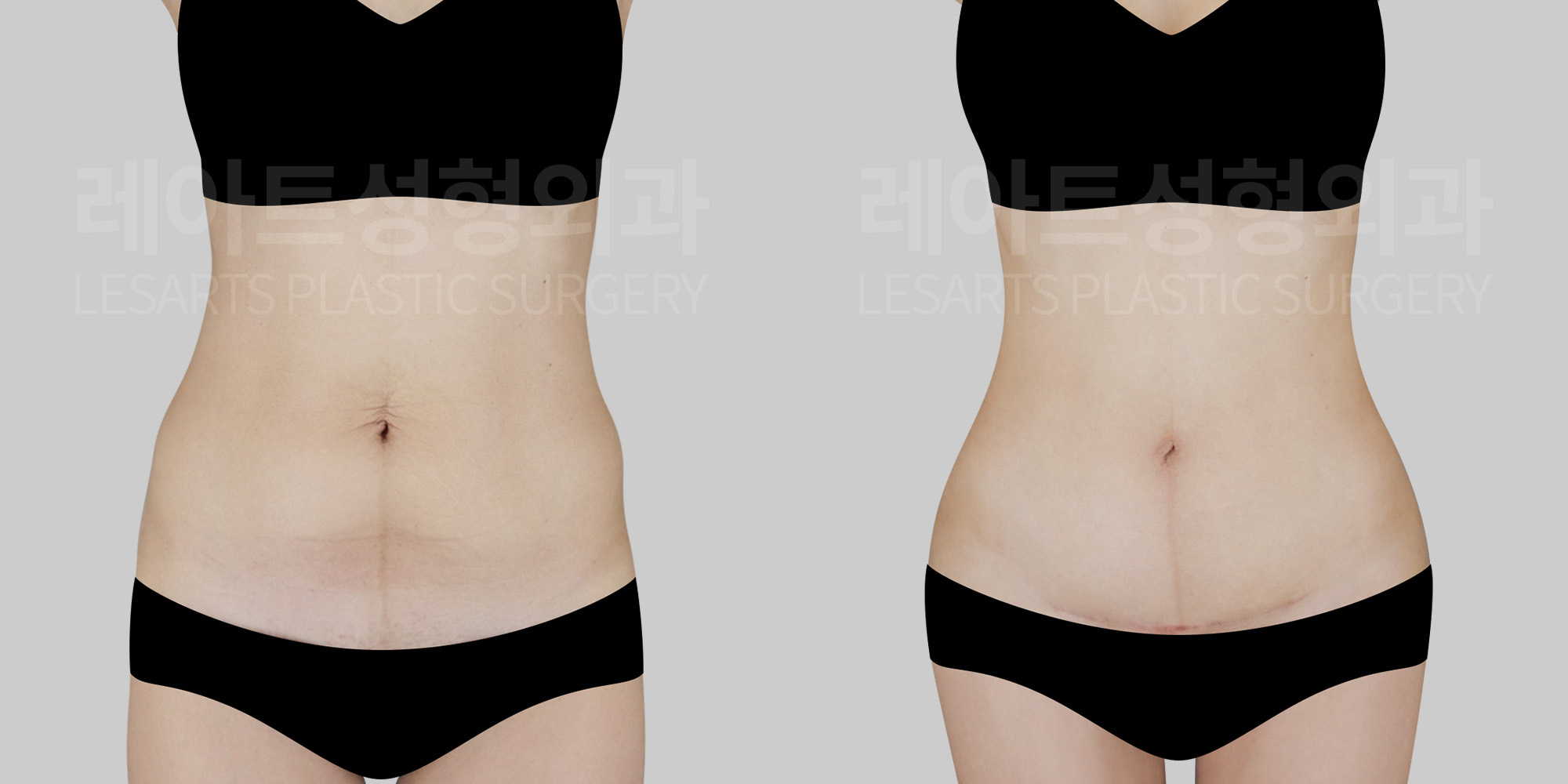
Removal of Periumbilical Wrinkles Through Abdominoplasty Surgery – Lesarts Plastic Surgery – Dr. Kukhan Lee
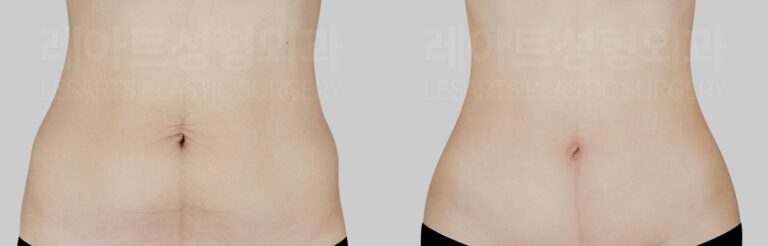
As the umbilicus
was repositioned downward,
the wrinkles above
the umbilical area
were naturally reduced
and visibly improved.
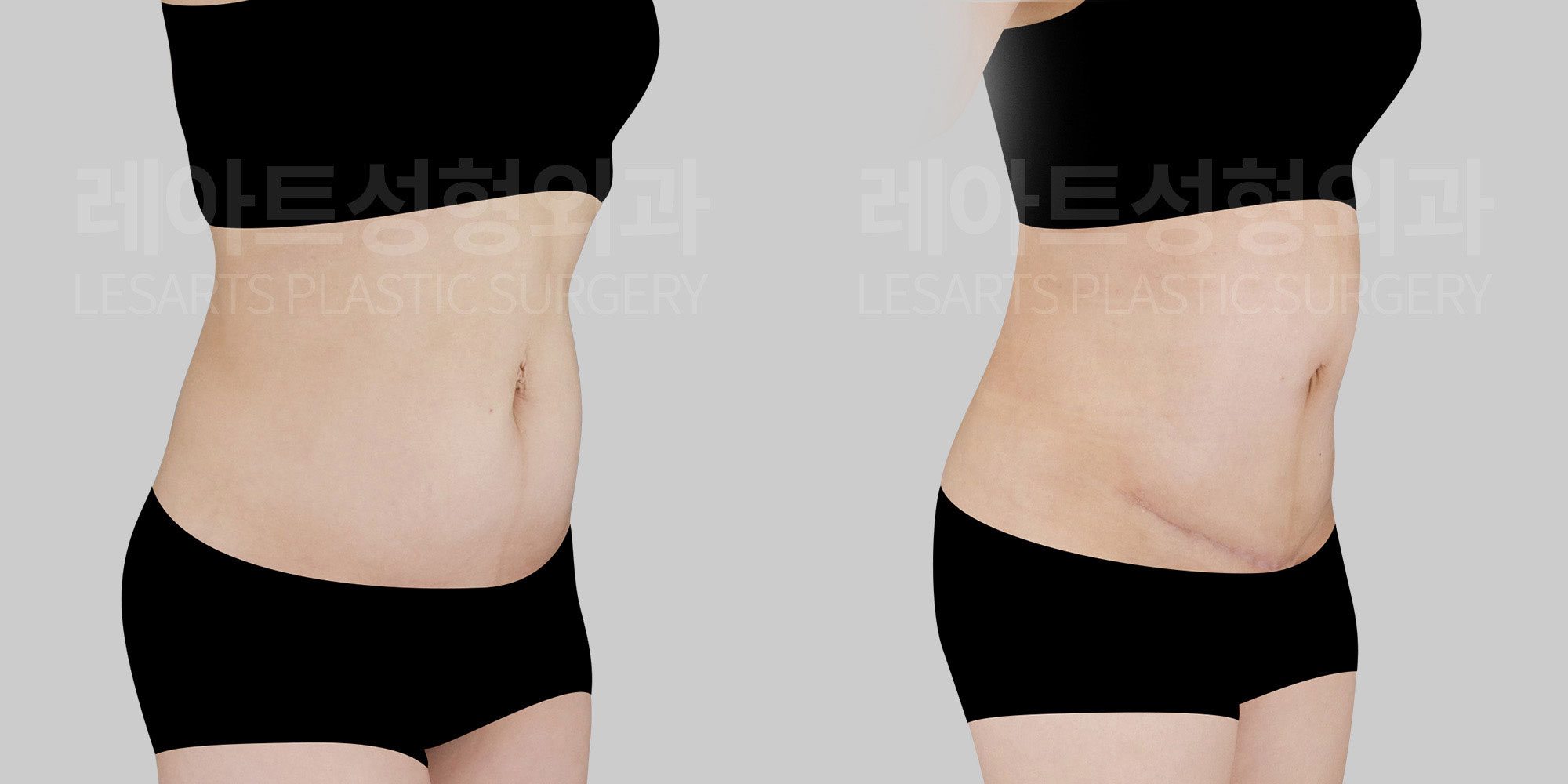
Umbilical Position Change After Floating Abdominoplasty – Lesarts Plastic Surgery – Dr. Kukhan Lee
The lower abdominal laxity
was fully corrected,
resulting in a smoother
and more refined contour.
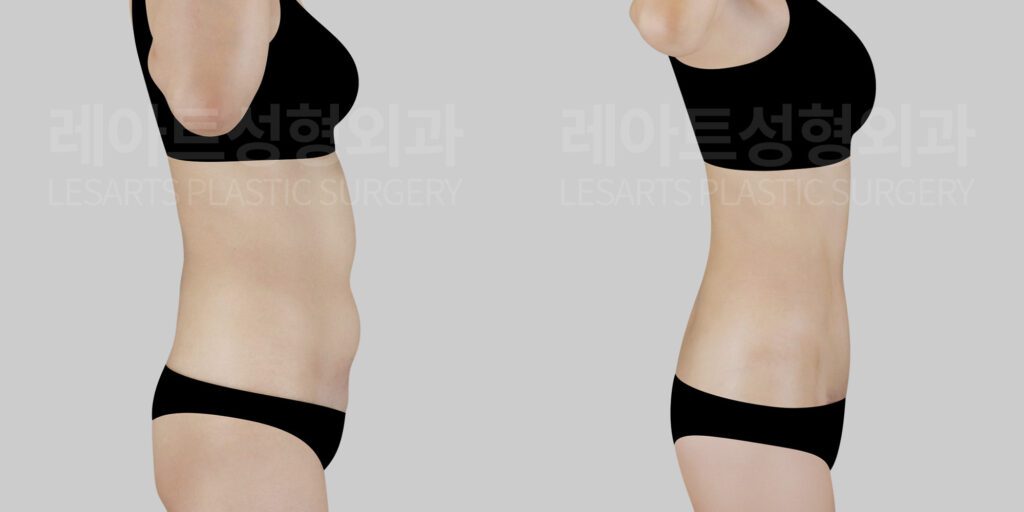
With liposuction performed concurrently,
the overall body line
was improved to achieve
better balance and proportion.
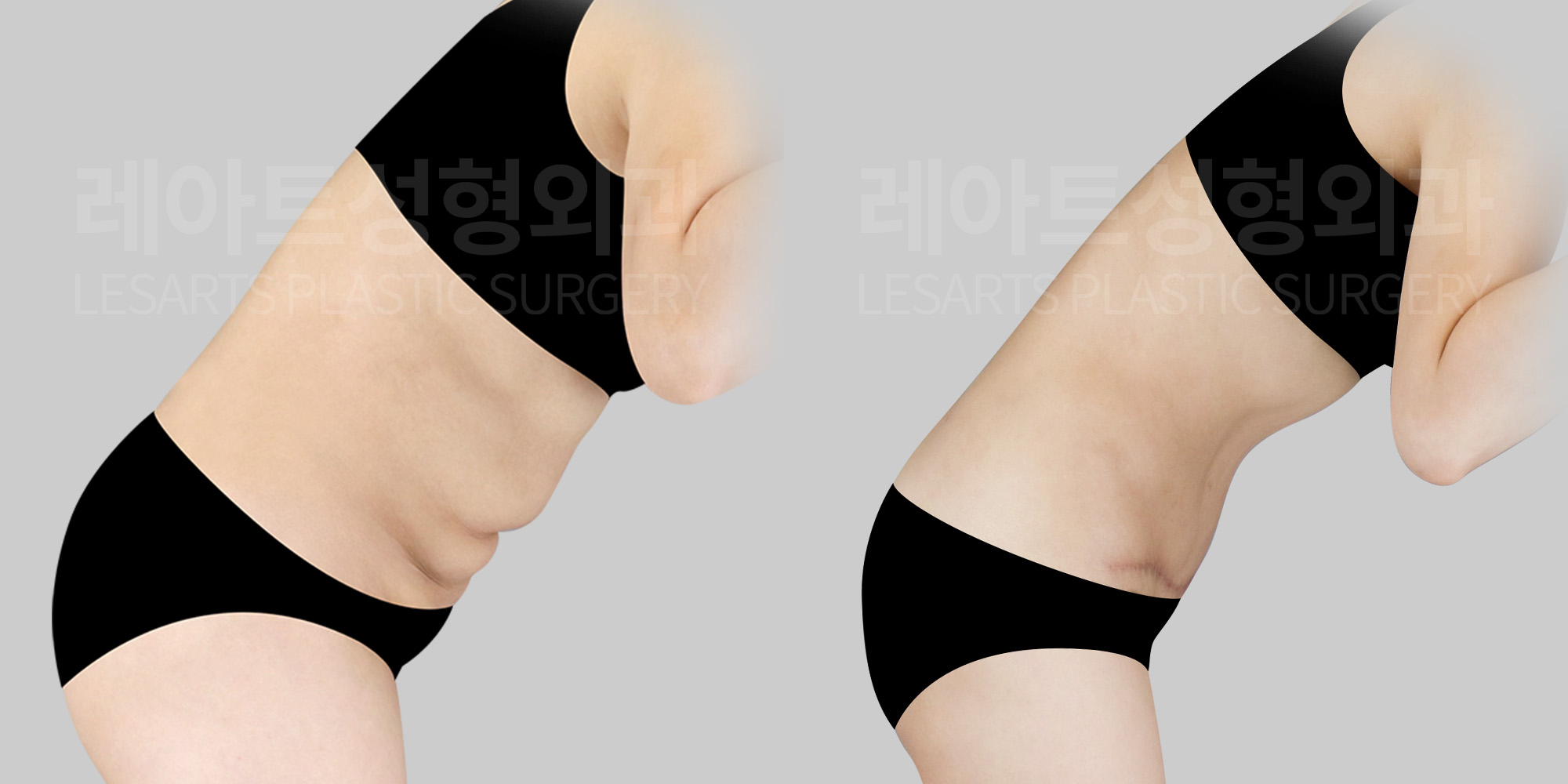
Before and After Correction of Abdominal Wrinkles and Protruding Abdominal Wall
Floating Abdominoplasty – Dr. Kukhan Lee
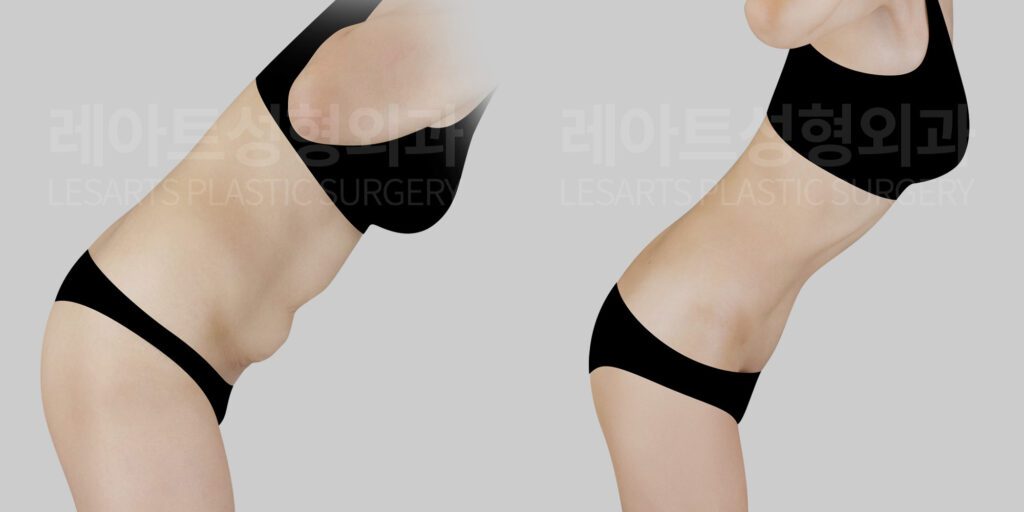
Abdominal Lifting and Rectus Repair Results – Lesarts Plastic Surgery – Dr. Kukhan Lee
The rectus diastasis
in both upper
and lower abdomen
was successfully corrected.
As a result,
the previously sagging
abdominal contour
when bending forward
has shown
clear and visible
improvement.
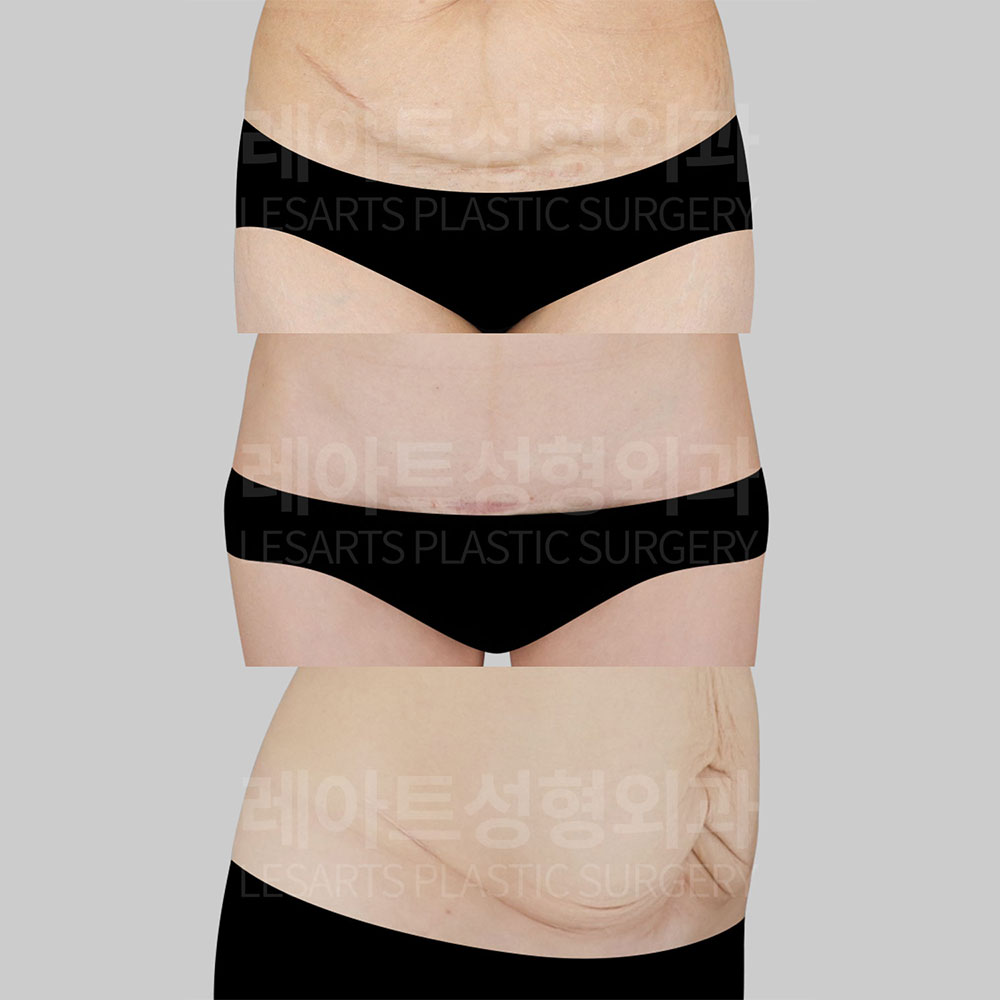
Incision Position After Floating Abdominoplasty – Lesarts Plastic Surgery – Dr. Kukhan Lee
At 6 months postoperatively,
the overall abdominoplasty scar
shows favorable healing progress.
There is mild
hypertrophic scarring
in the central area,
which is currently
being monitored
with ongoing scar management.
In most cases,
abdominoplasty scars
gradually fade
and become less noticeable
over time.
Therefore, the scar
is expected to appear
more natural long term.
Abdominoplasty is not simply
a procedure to tighten skin.
It requires selecting
the most appropriate technique
based on individual anatomy.
The surgical method chosen
plays a critical role
in determining overall
patient satisfaction.
Since each technique
has its own advantages
and limitations,
careful explanation
and thorough understanding
are essential.
If you have similar concerns,
a detailed in-person consultation
can help provide
an accurate evaluation
and a personalized
surgical treatment plan.