[Abdominoplasty] What Determines the Scar Position in Abdominoplasty?
Hello, this is Dr. Kukhan Lee,
board-certified plastic surgeon at Lesarts Plastic Surgery.
What determines
the final scar position
after abdominoplasty surgery?
This is one of
the most common questions.
During abdominoplasty consultations,
many patients share
a similar concern
regarding the
location of postoperative scars.
Abdominoplasty Scar Position Lesarts Plastic Surgery – Dr. Kukhan Lee
When upper abdominal sagging
or wrinkles above
the umbilicus
become a concern,
M-type full abdominoplasty
is often considered.
However, many patients
hesitate before surgery
because they worry
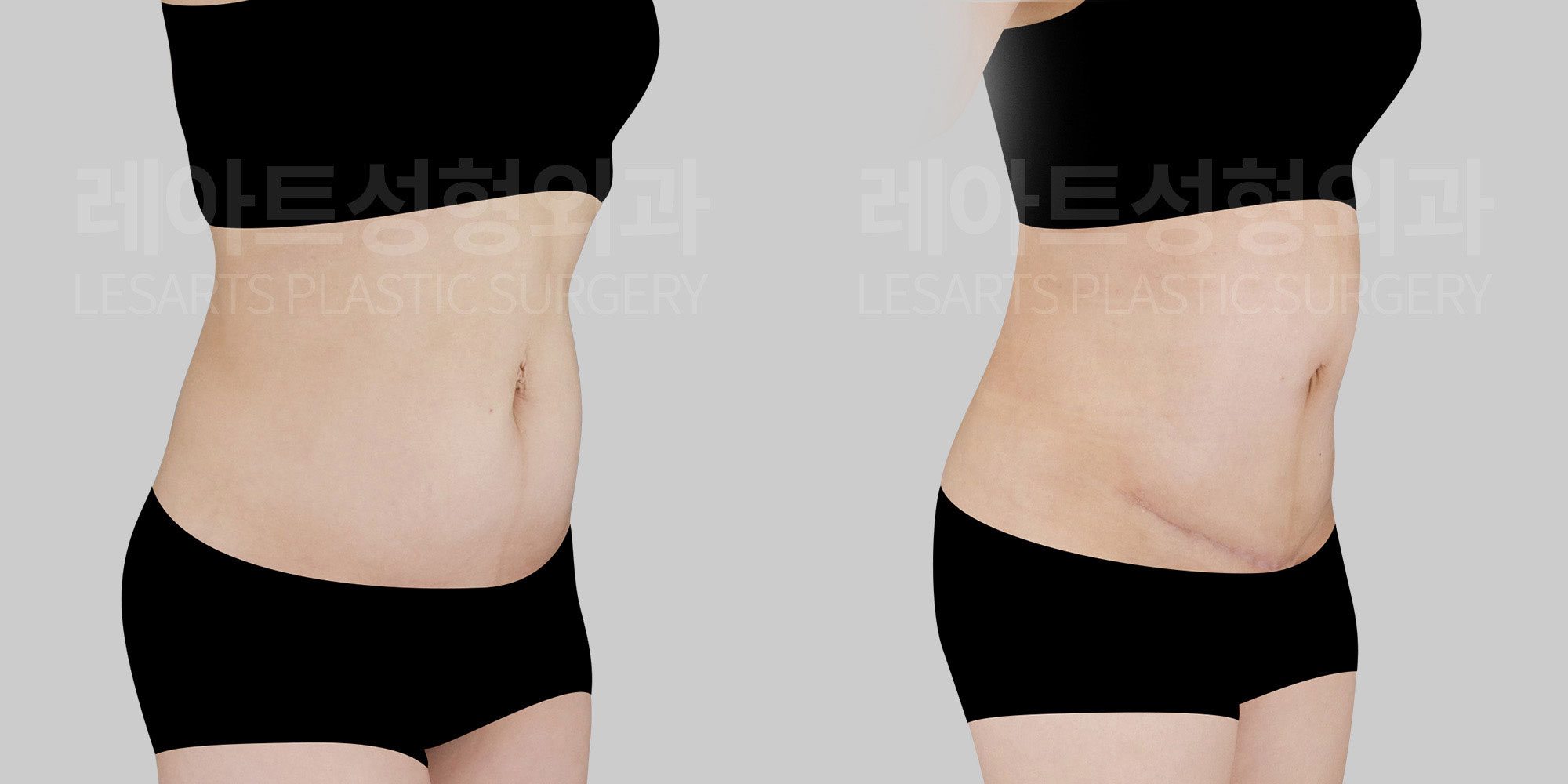
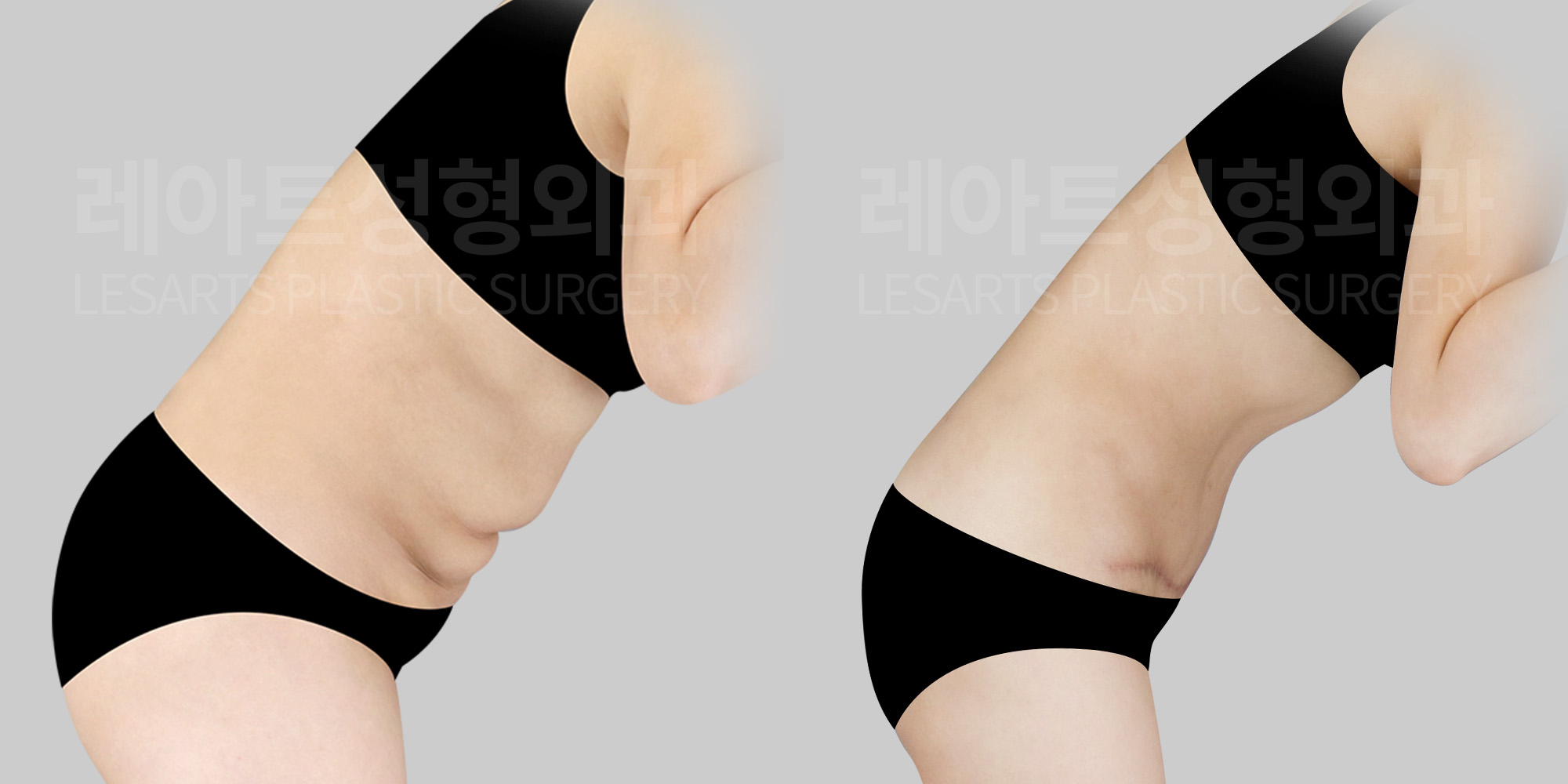
that the scar line
may end up positioned
too high on the abdomen.
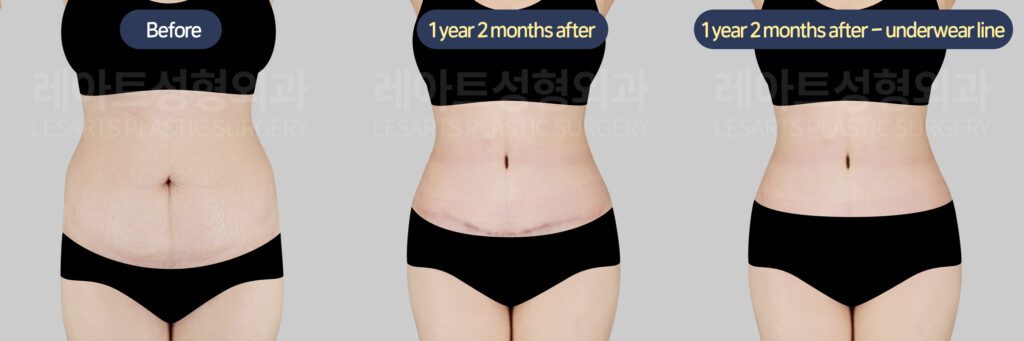
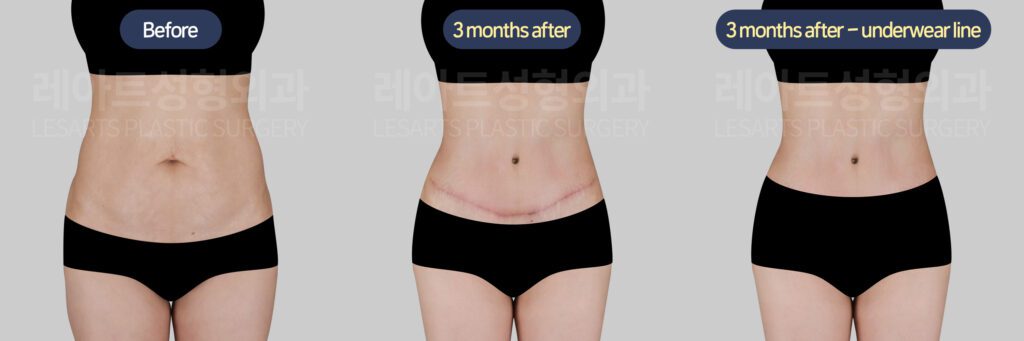
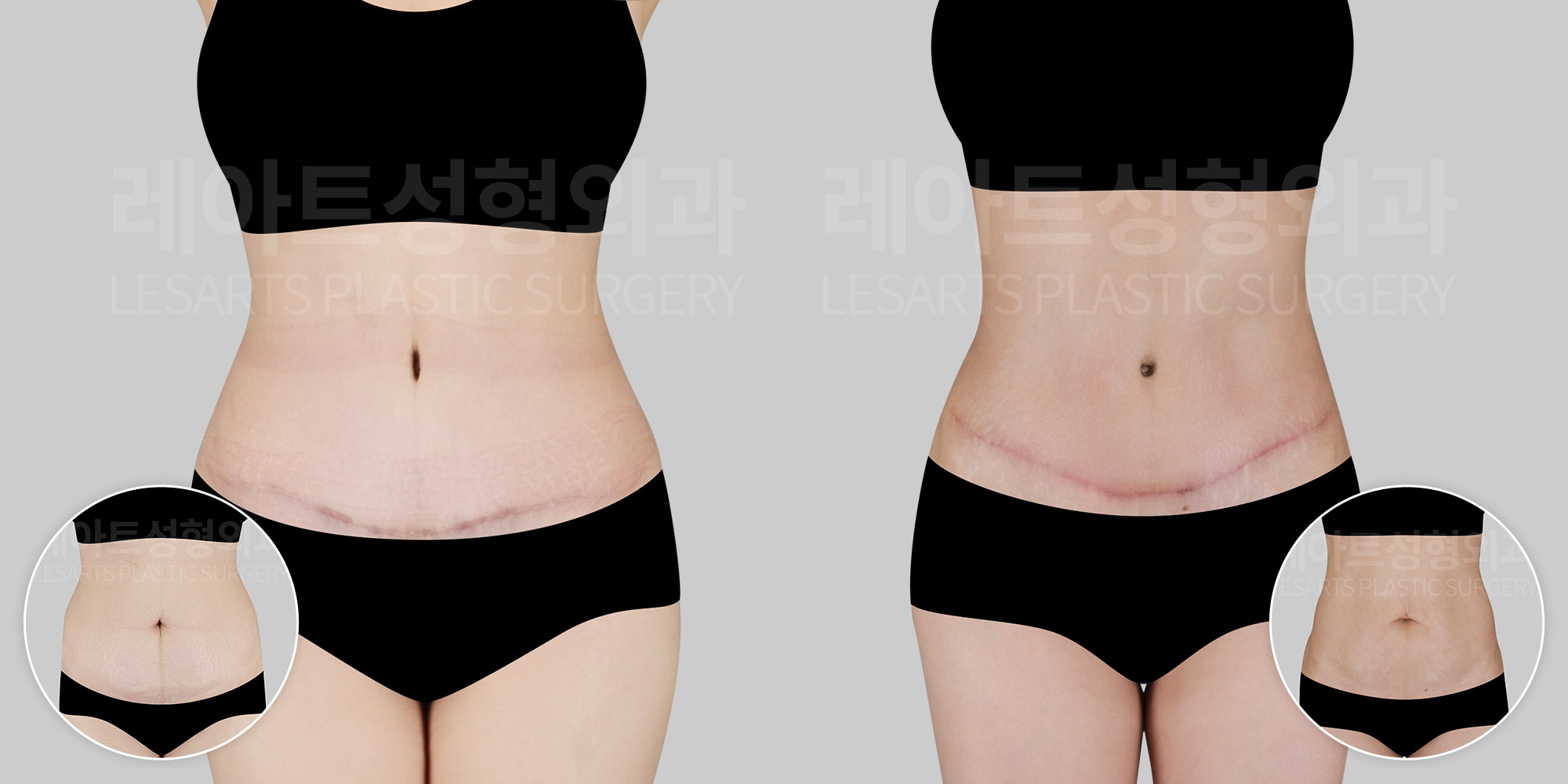
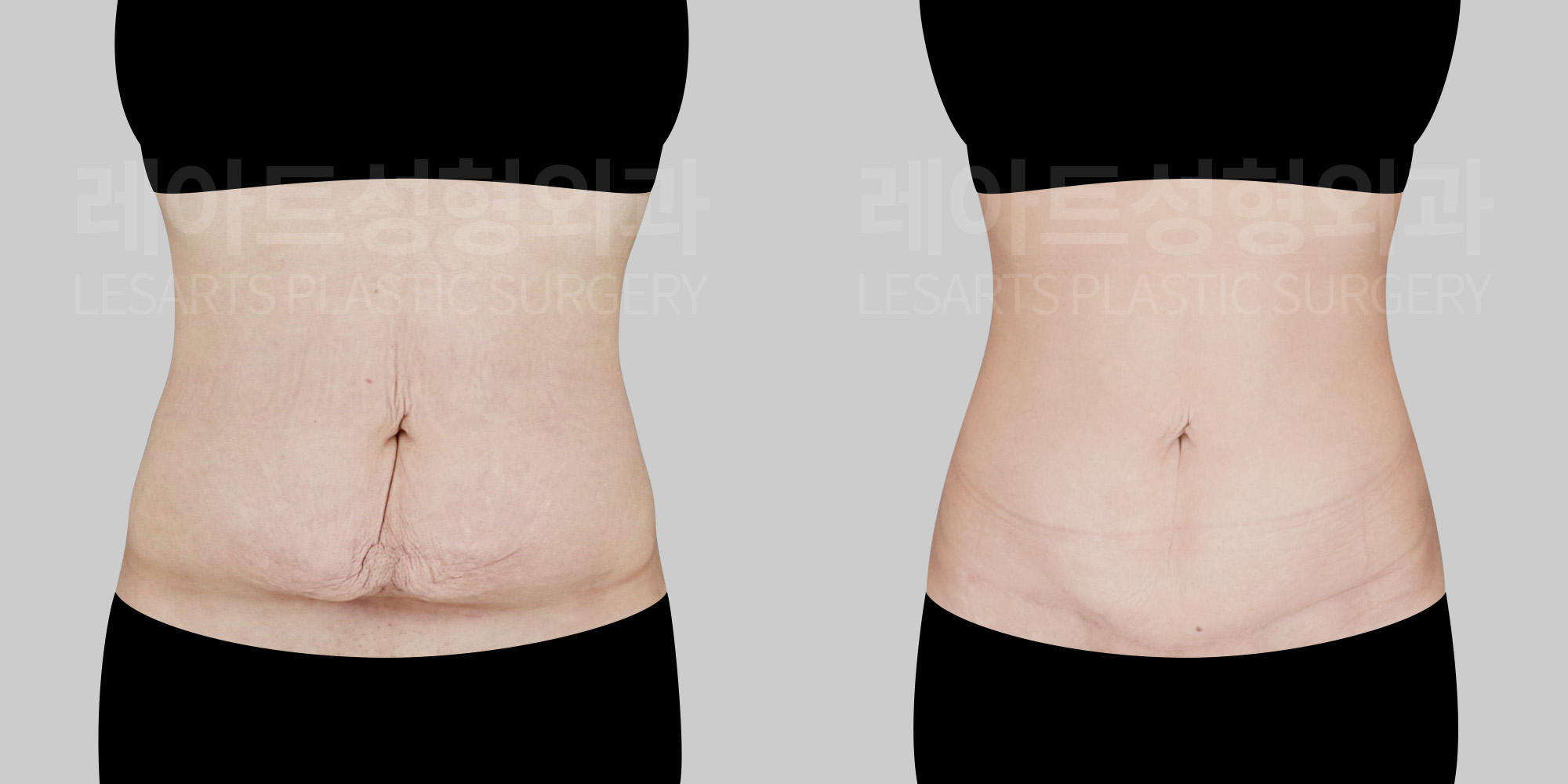
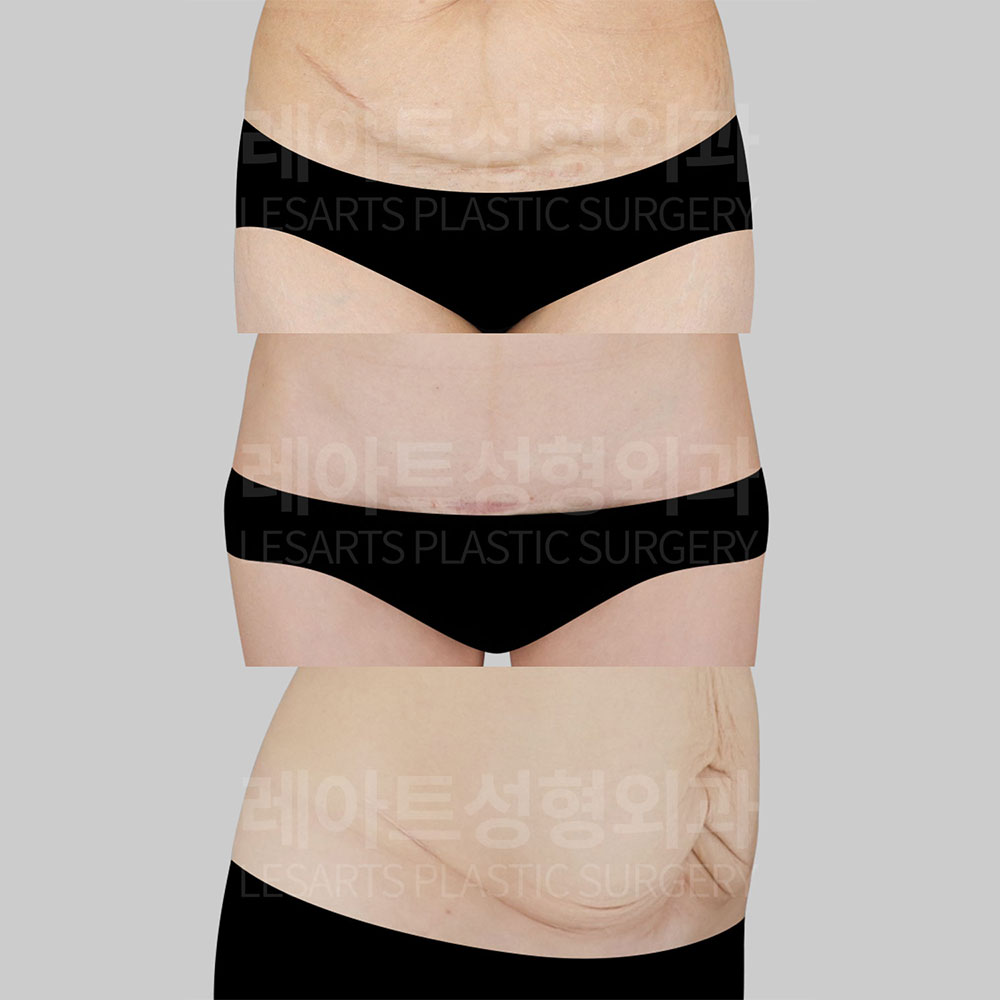
Abdominoplasty Before and After Incision Position and Underwear Line Lesarts Plastic Surgery – Dr. Kukhan Lee
However, simply requesting
“Please place
the scar
as low as possible”
does not always work.
In M-type full abdominoplasty,
the final scar position
cannot be placed
arbitrarily lower
upon request alone.
This is because
the incision location
must follow several
important medical criteria
during surgical planning.
Assessment to Predict Abdominoplasty Scar Position
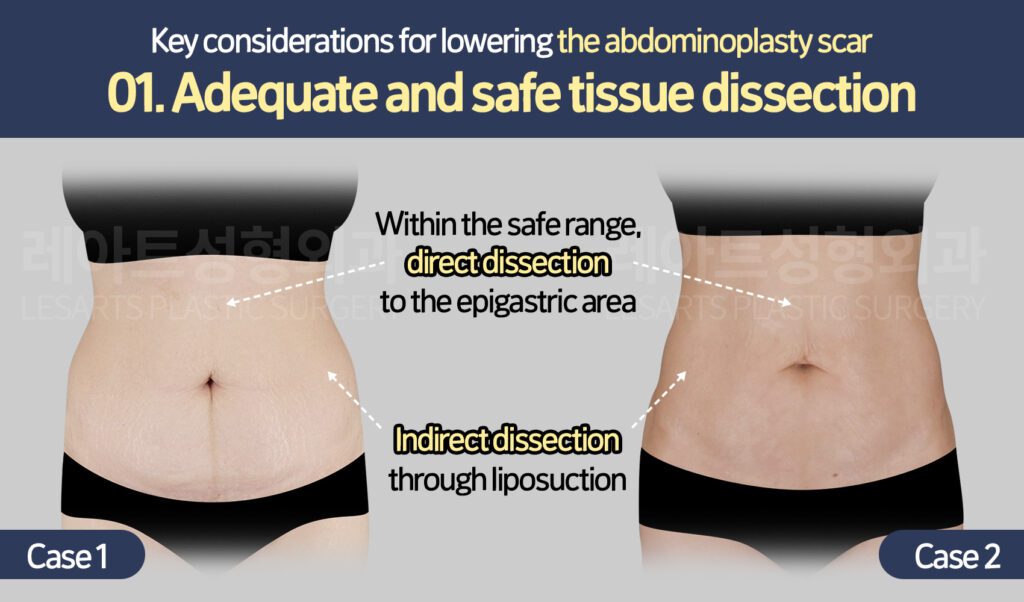
1. Sufficient and Safe Tissue Dissection
The first factor
to evaluate is
whether adequate tissue dissection
can be performed
within a safe surgical range.
Direct dissection
of the entire
upper abdomen
up to a very high level
is not recommended.
This approach may increase
the risk of
vascular injury
and other
surgical complications.
Therefore, direct dissection
is typically performed
only up to
the epigastric region
within safe limits.
In areas where
major blood vessels
are densely distributed,
liposuction-assisted dissection
is performed instead.
If this step
is not performed
sufficiently and safely,
the upper abdominal skin
cannot be pulled
downward adequately.
As a result,
the ability
to position the
abdominoplasty scar
lower on the abdomen
becomes limited.
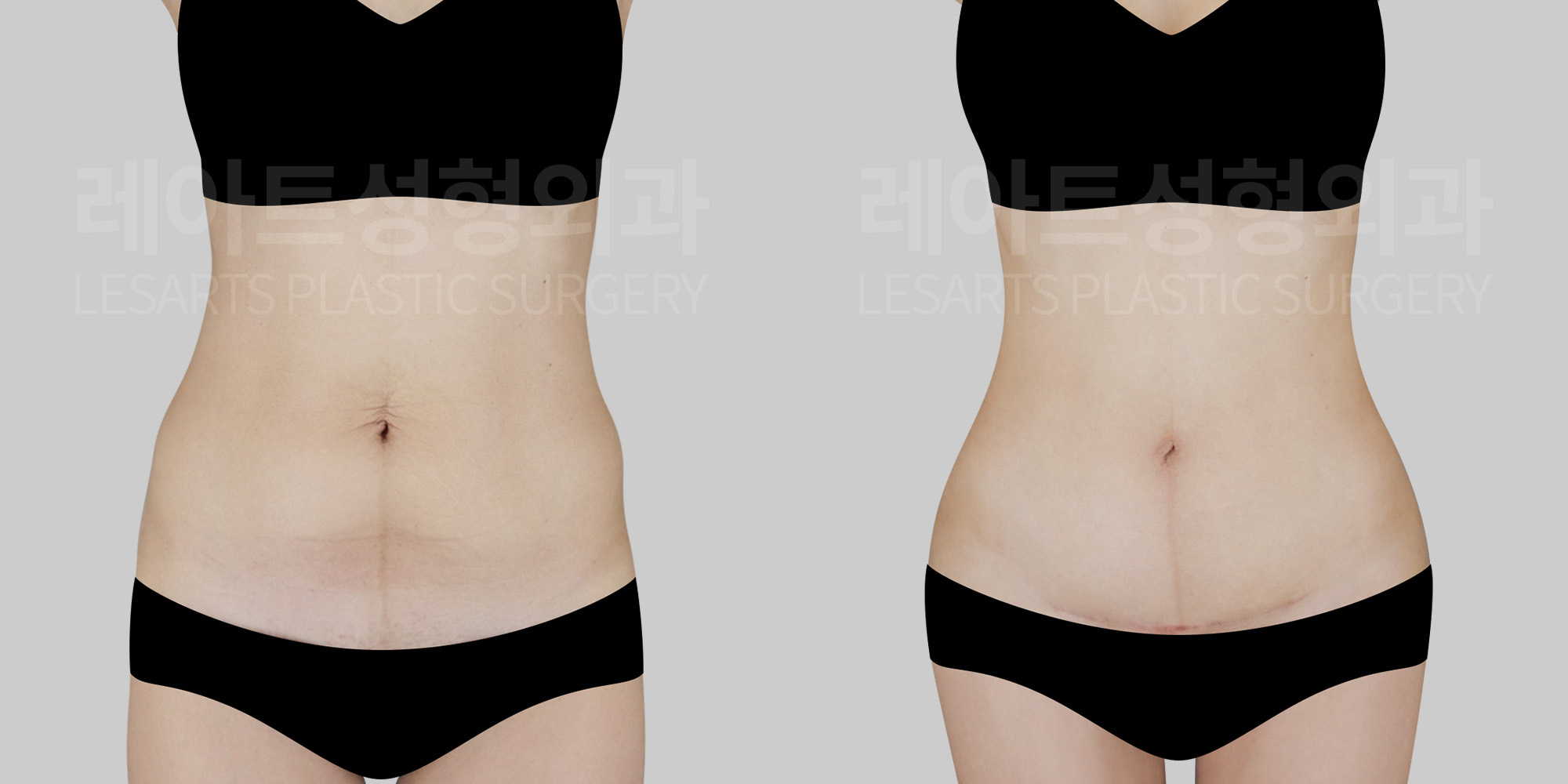
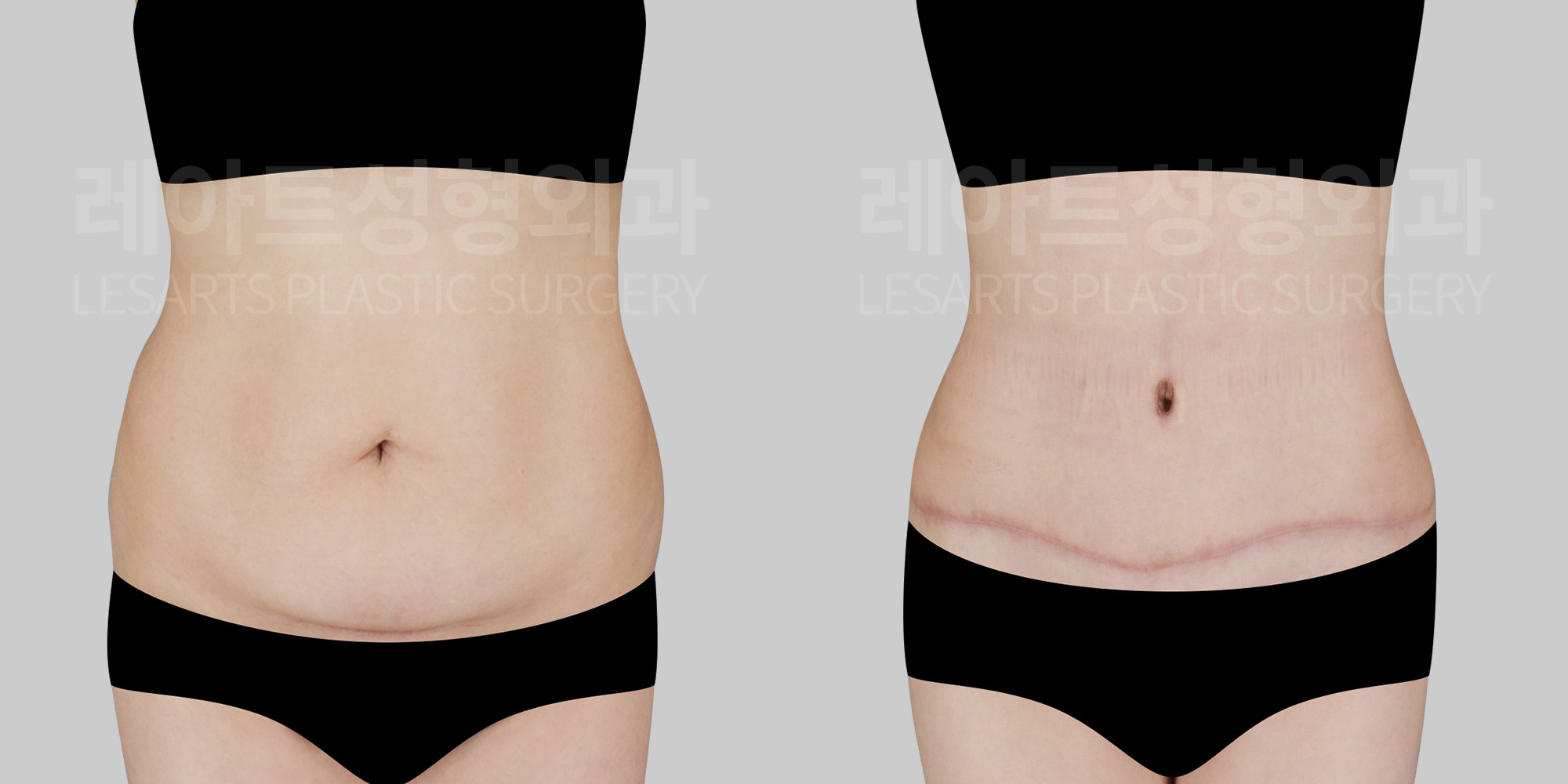
Abdominoplasty Incision Position and Length
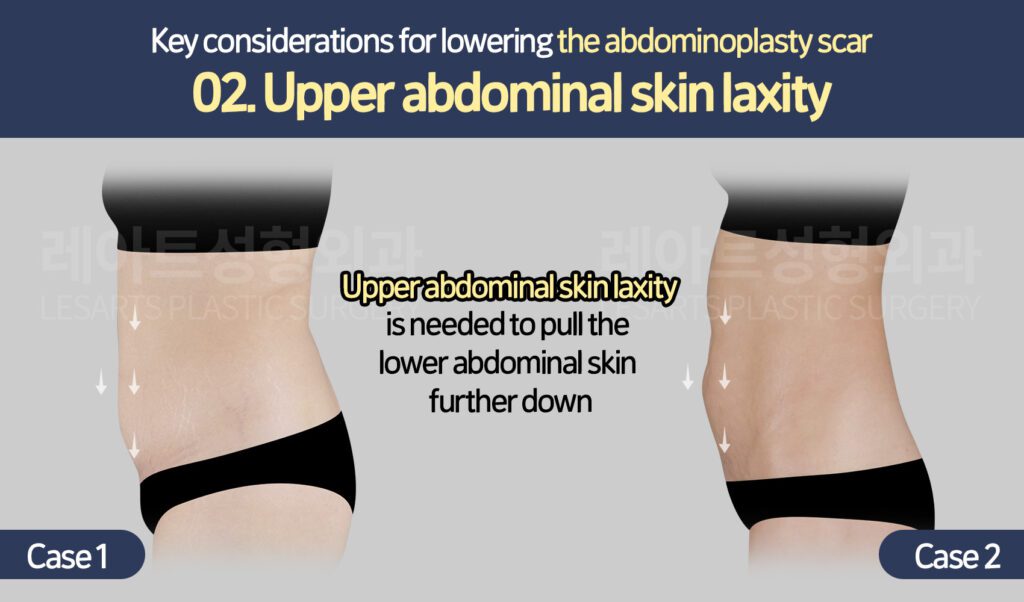
2. Amount of Upper Abdominal Skin Laxity
The second key factor
is how much
excess skin
is present
in the upper abdomen.
If sufficient
upper abdominal laxity
is available,
more lower abdominal skin
can be removed.
This allows
the remaining skin
to be pulled downward,
helping position
the scar line lower.
However, if the
upper abdominal skin
has limited laxity,
the situation changes.
When improvement
above the umbilicus
is still desired,
the scar may
inevitably sit higher.
In these cases,
a decision must
be made between
two surgical options.
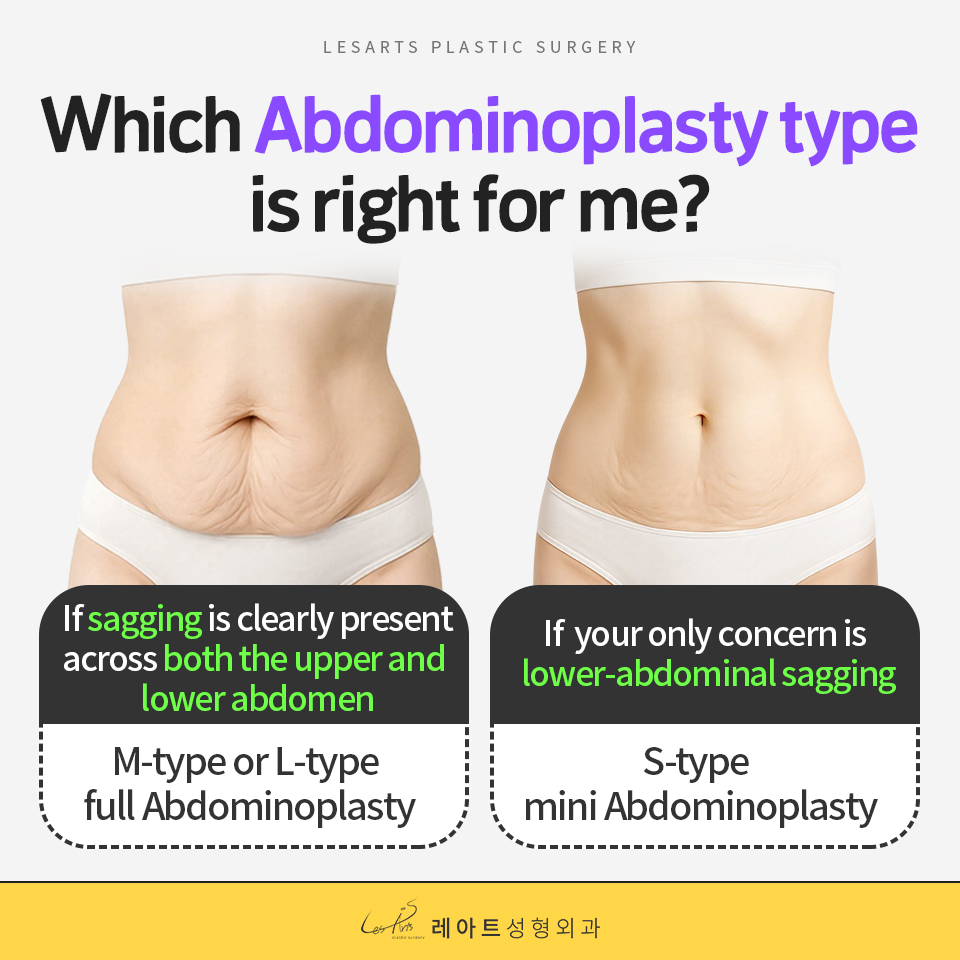
• M-type full abdominoplasty,
which improves
upper abdominal laxity
even if the scar
is slightly higher.
• S-type mini abdominoplasty,
which maintains
a lower scar position
but offers limited
upper abdominal improvement.
The final choice
depends largely on
which concern
the patient considers
most important.
Preoperative Checks to Maximize Abdominoplasty Results
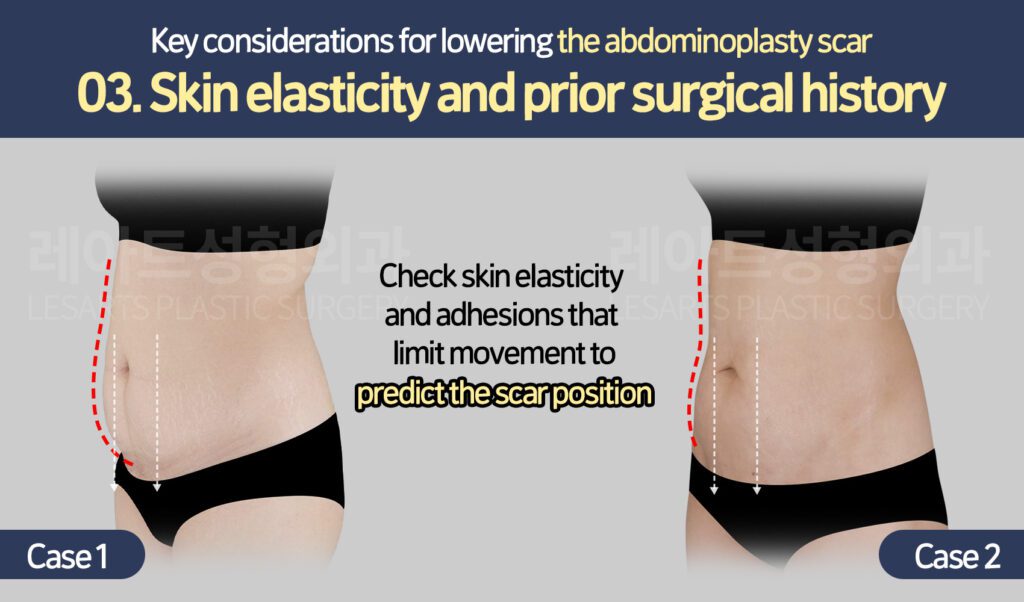
3. Skin Elasticity and Previous Surgical History
The third factor to consider is
the level of skin elasticity
in the abdomen.
Even with the same skin length,
the degree of stretch and mobility
varies significantly.
In some cases,
the actual skin movement
during surgery differs from
the preoperative expectation.
Skin that appears sufficiently mobile
externally may not move easily during surgery.
For this reason, the procedure
is always planned within a safe
surgical range.
If the skin descends more
than expected during the operation,
additional adjustment
may be performed.
This allows the scar position
to be placed slightly lower
when possible.
Another important factor
affecting skin mobility
is the patient’s
previous abdominal surgery.
• History of liposuction
• Revision abdominoplasty
• Other prior abdominal surgeries
If adhesions have formed
due to prior surgery,
skin movement
may become limited.
In Conclusion
So far, we have reviewed
the key factors
that determine the final
abdominoplasty scar position
after surgery.
Even with the same
abdominoplasty procedure,
some patients may have
scars positioned lower
than initially expected.
In other cases,
the scar line
may appear slightly
higher than
patients originally anticipated.
For this reason,
the most important step
is selecting the most
appropriate surgical method
for each individual patient.
This decision should
always be based on
each patient’s unique
body shape
and overall skin condition.
If you are considering
abdominoplasty surgery,
a thorough consultation
can help determine
the most suitable approach.
During your visit,
we will carefully evaluate
your current condition
and explain the expected
scar position after surgery.