[Abdominoplasty]Tummy tuck: S-type floating vs. M-type — which surgery do I need?
Hello, this is Dr. Kukhan Lee at Lesarts.
When consulting with patients who visit us
because of abdominal skin sagging,
I often hear the question,
“I want to have surgery,
but which method would be the most suitable for me?”
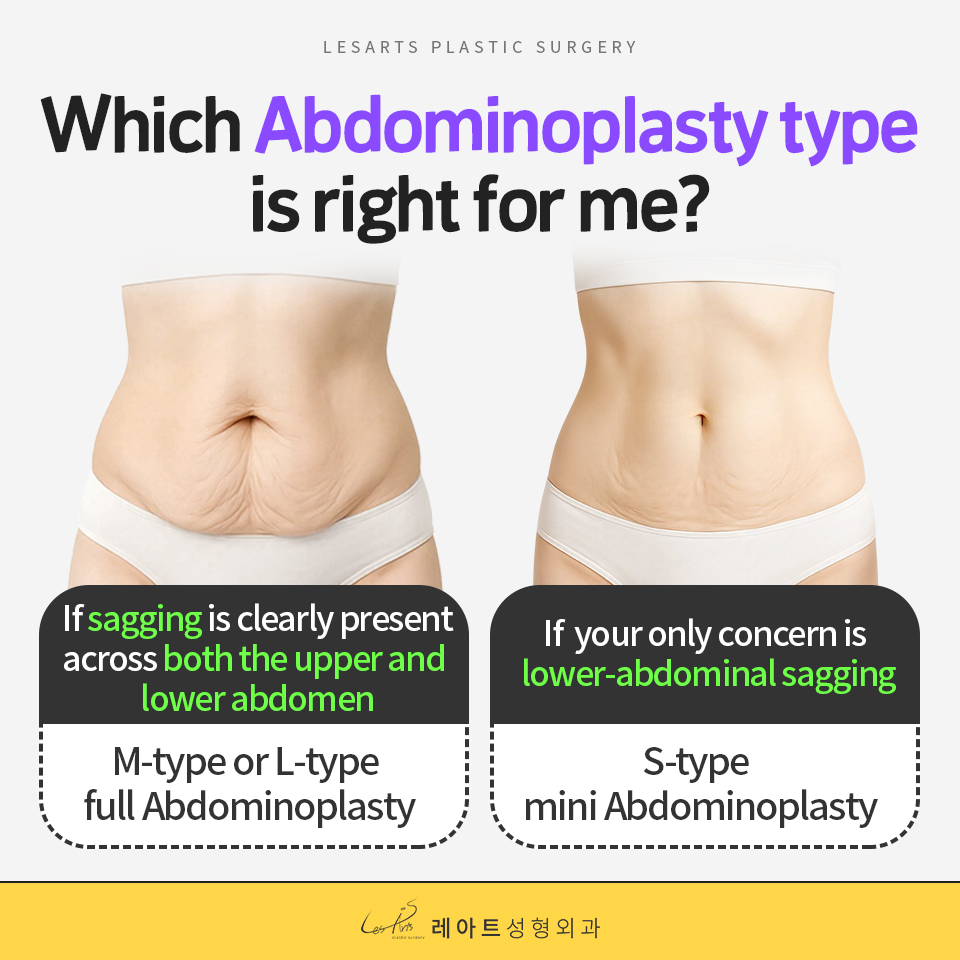
If sagging is clearly present
across both the upper and lower abdomen,
choosing a full tummy tuck
such as M-type or L-type
is relatively straightforward.
However, if the upper abdomen is hardly a concern
and your only worry is lower-abdominal sagging,
an S-type mini tummy tuck
may be recommended.
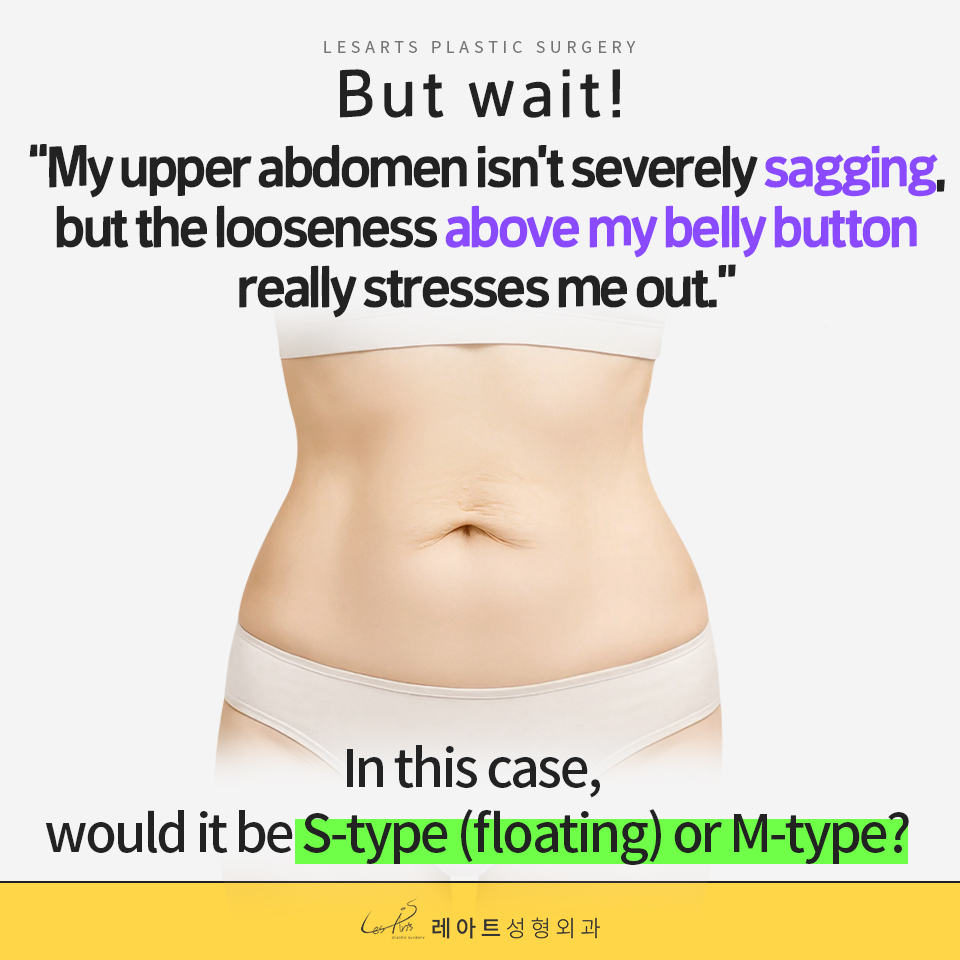
The situation that requires more careful consideration is for those who say,
“My upper abdomen isn’t severely sagging,
but the looseness above my belly button
is subtly stressful.”
In these cases,
it’s often difficult to definitively recommend
just one surgical method.
Today, using real patient cases,
we’ll take a closer look at
which option may be more appropriate—
S-type floating or M-type—
in situations like this.
Case introduction
These are two patients whose main concern
was lower-abdominal sagging,
while upper-abdominal sagging was not severe,
but who felt stressed by
a horizontally flattened-looking belly button
and wrinkles in the skin above it.
Preoperative evaluation for tummy tuck at Lesarts
or patients like this,
we usually explain two surgical options (S-type / M-type),
and help them choose the method that suits them best
by considering:
· the length and position of the scar,
· and their usual clothing style
(underwear, tops, bottoms, swimwear, etc.).
In both cases,
tummy tuck surgery was combined with abdominal liposuction.
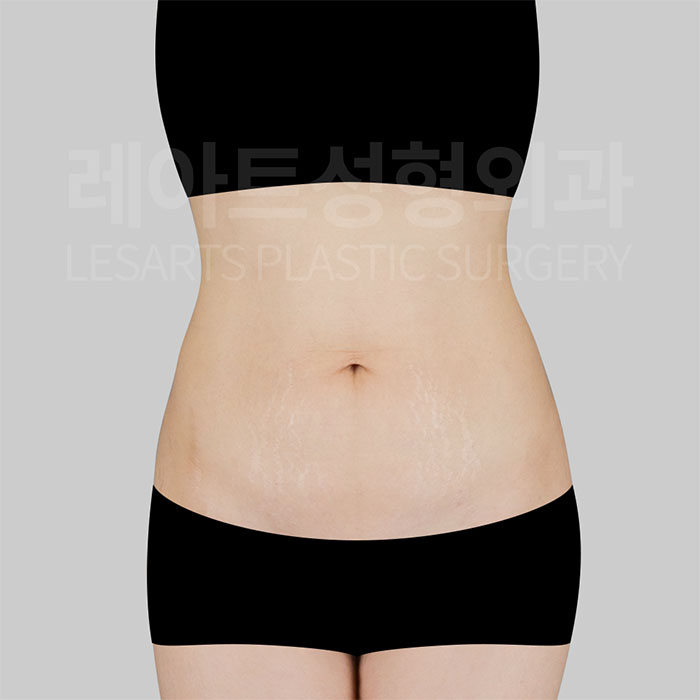
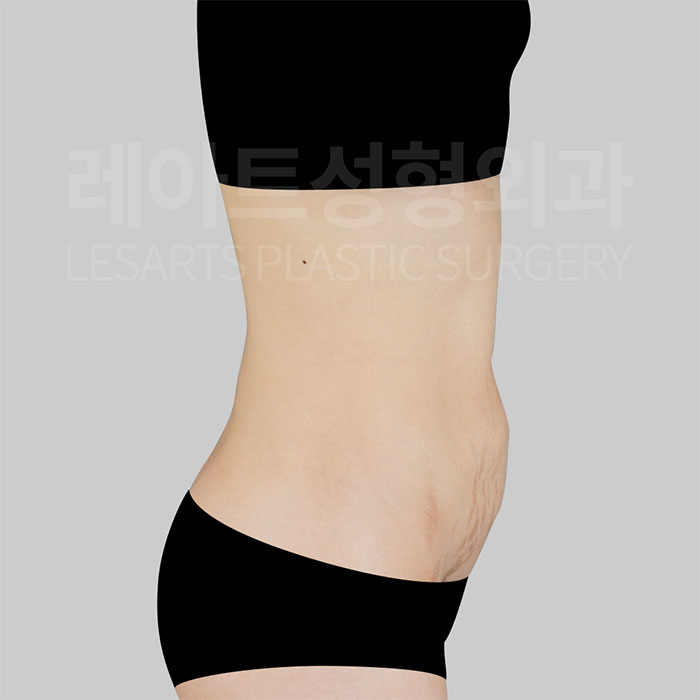
Case 1 — S-type floating tummy tuck
Preoperative evaluation for tummy tuck at Lesarts
This patient was most stressed by
lower-abdominal fullness after childbirth
and wrinkles above the belly button.
There was not much upper-abdominal sagging,
making it difficult to sufficiently pull the skin downward
with an M-type procedure,
and rectus diastasis was confirmed
in both the upper and lower abdomen.
Available surgical options
1) S-type floating tummy tuck
· As the belly button moves slightly downward,
upper-abdominal wrinkles may improve together,
but correction is limited compared to M-type
· Postoperatively, the belly button position shifts
about 1.5–2 cm downward from its original position
· The scar is positioned low enough
to be hidden by underwear
· Shorter scar compared to M-type
2) M-type tummy tuck
· Can more definitively correct sagging above the belly button
· Because upper-abdominal sagging is minimal,
the scar position may be slightly higher
than a typical M-type
· Longer incision range than S-type
After careful consideration,
this patient chose S-type floating tummy tuck
for the following reasons:
1. A slight downward shift of the belly button was acceptable
2. There was significant concern about a long scar,
and a preference for a scar hidden by underwear
Accordingly,
S-type floating tummy tuck was performed
together with abdominal liposuction.
Lesarts Plastic Surgery
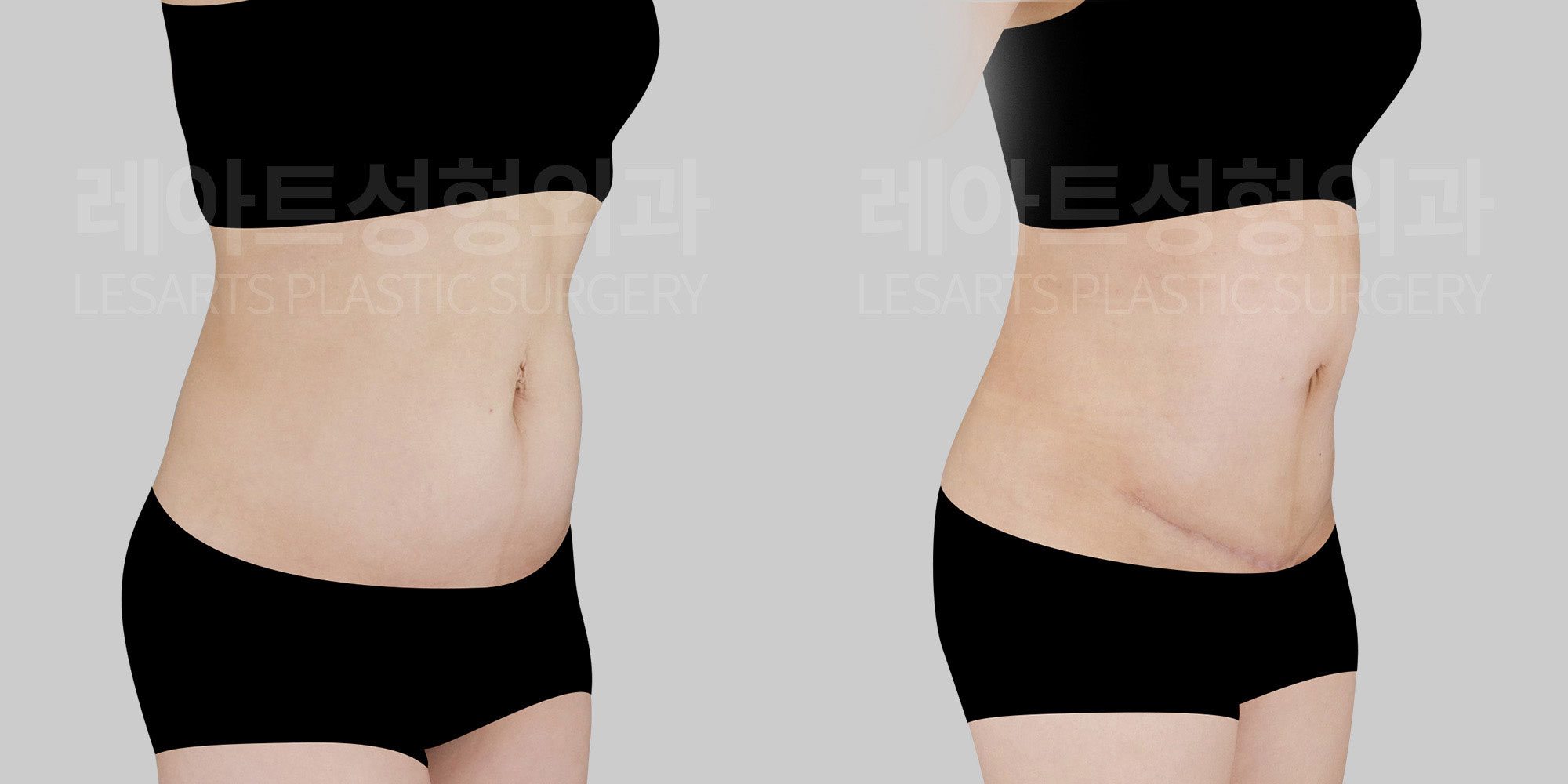
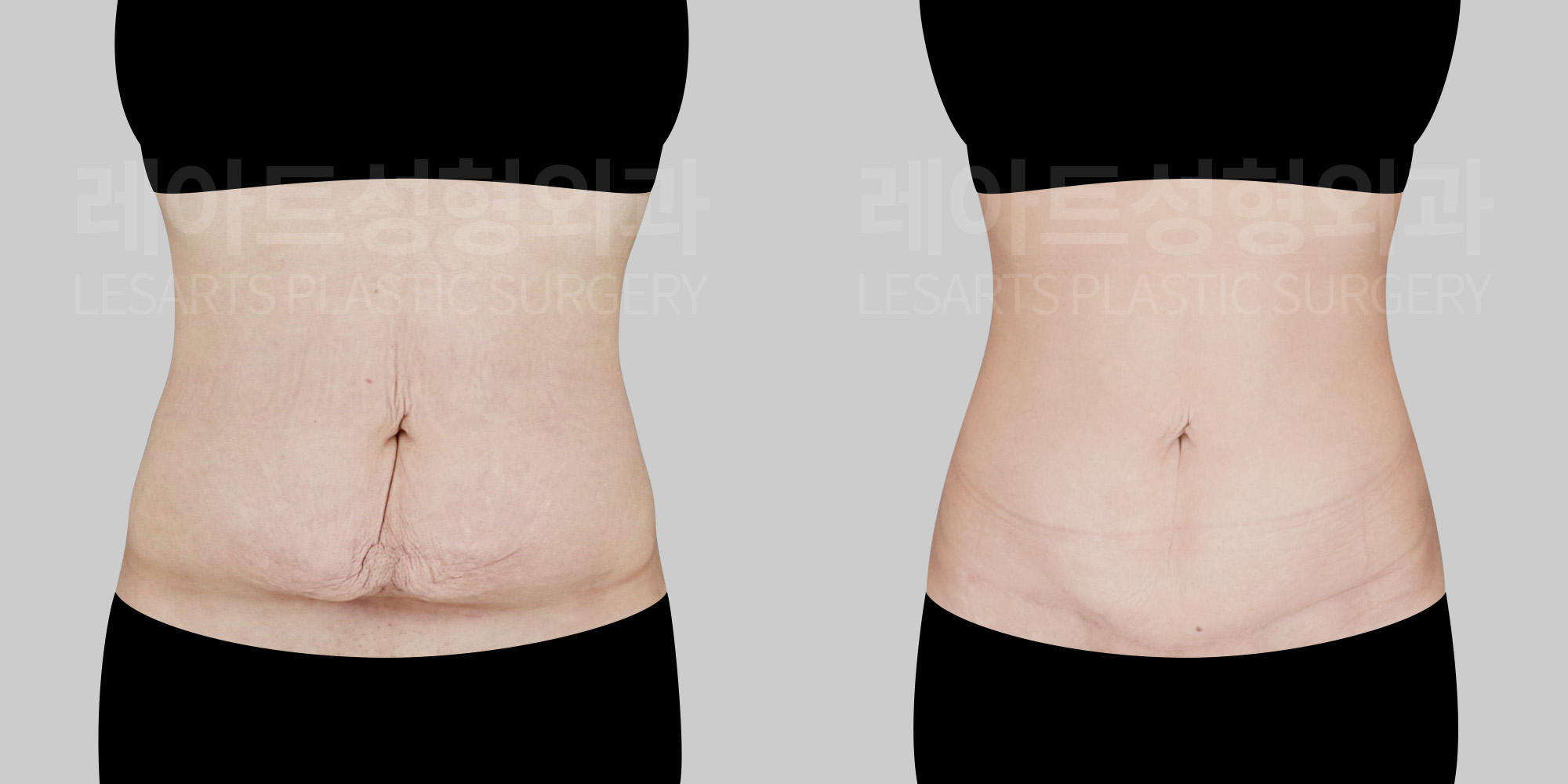
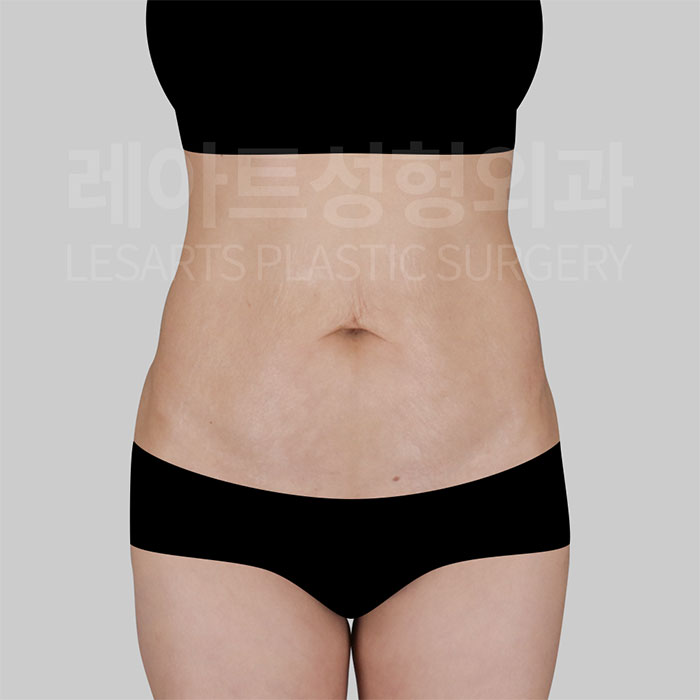
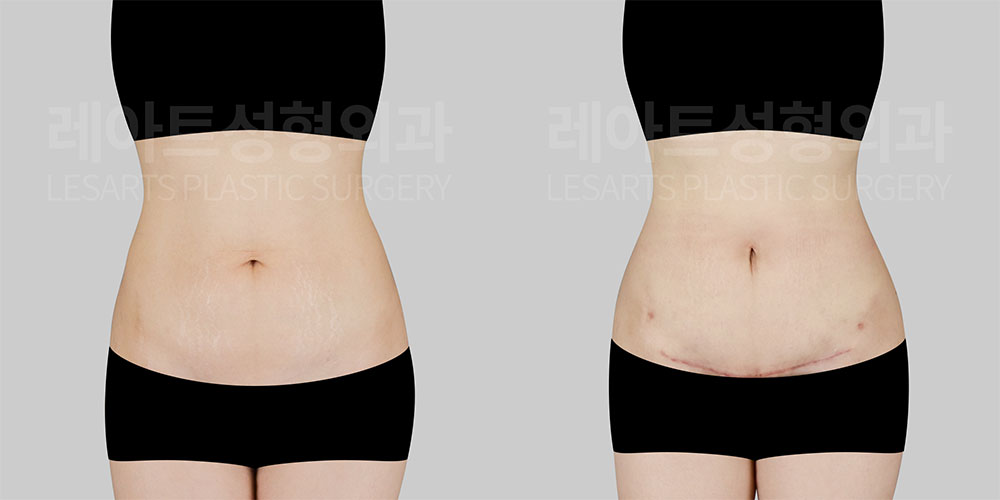
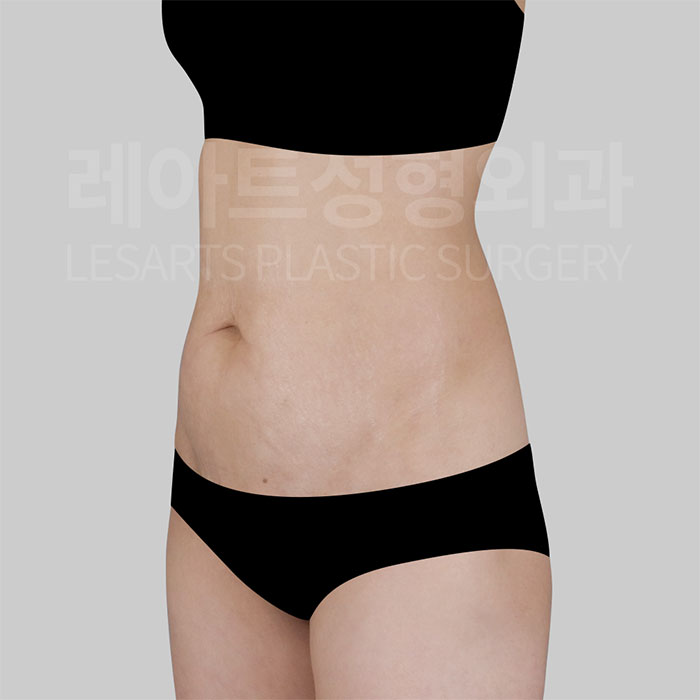
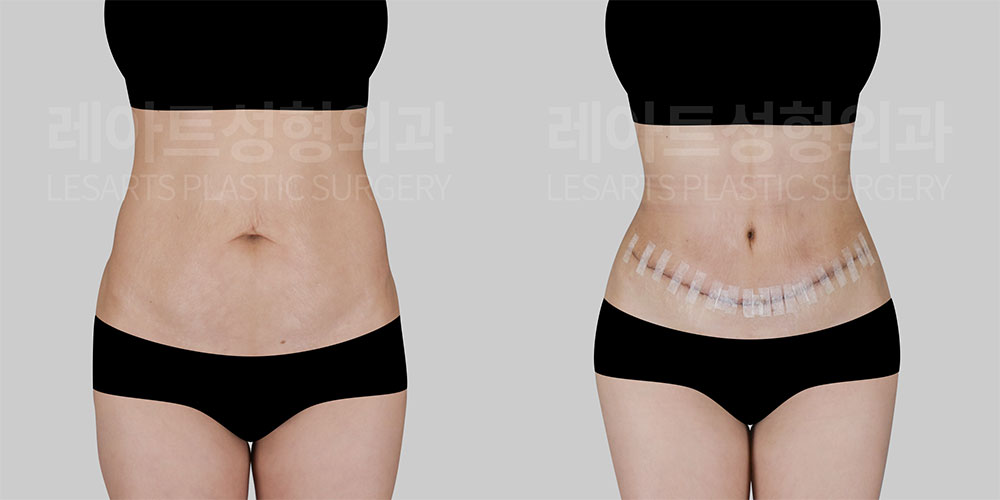
S-Type Floating Tummy Tuck Before & After (5 months) – Front view
Lesarts Plastic Surgery
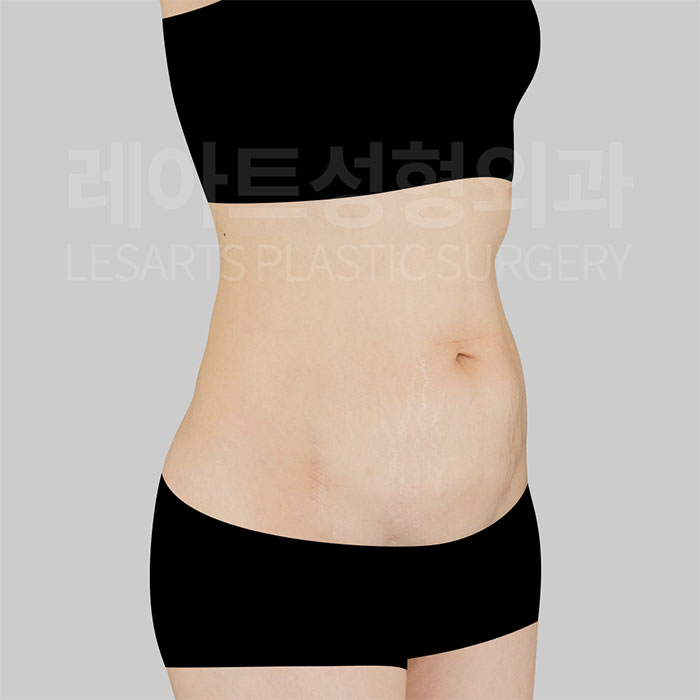
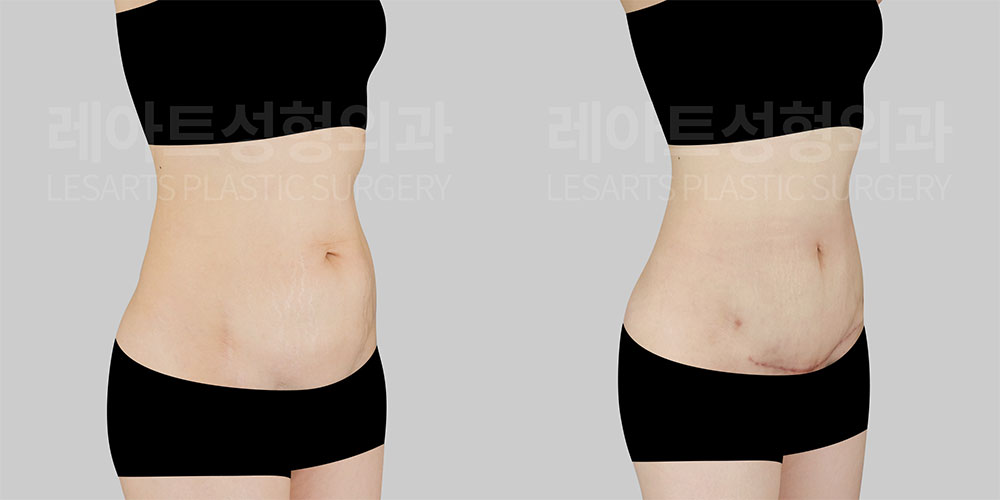
S-Type Floating Tummy Tuck Before & After (5 months) – 45° side view
Lesarts Plastic Surgery
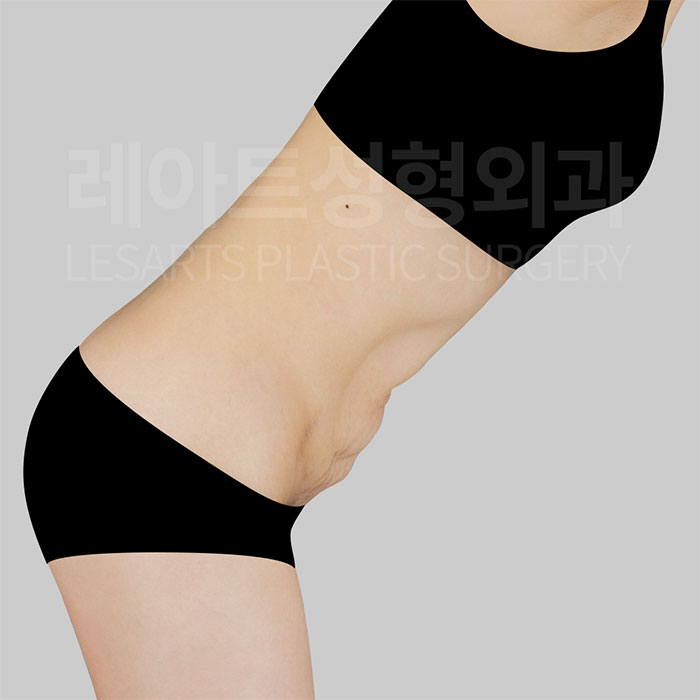
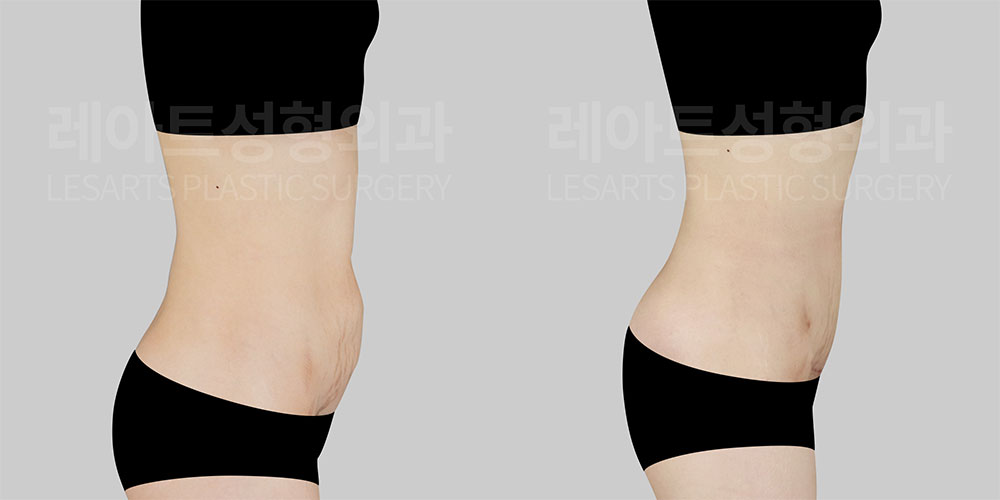
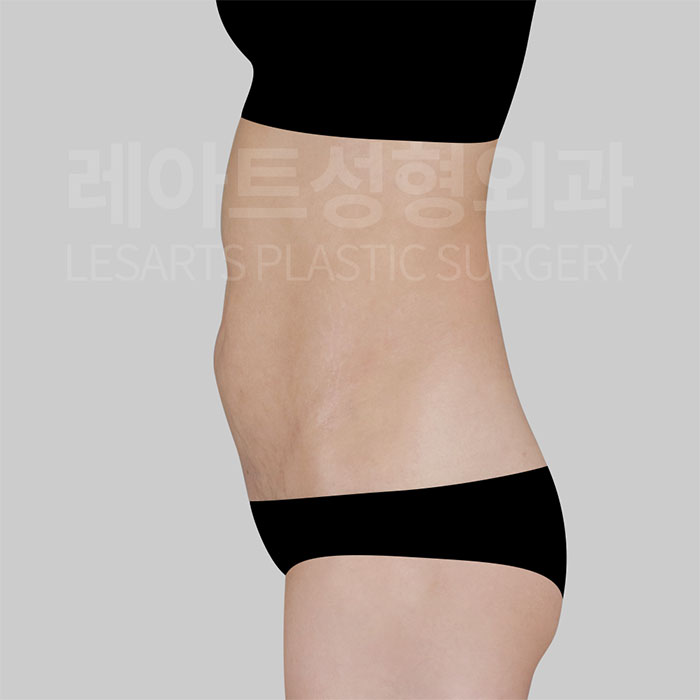
S-Type Floating Tummy Tuck Before & After (5 months) – 90° side view
Surgical outcome
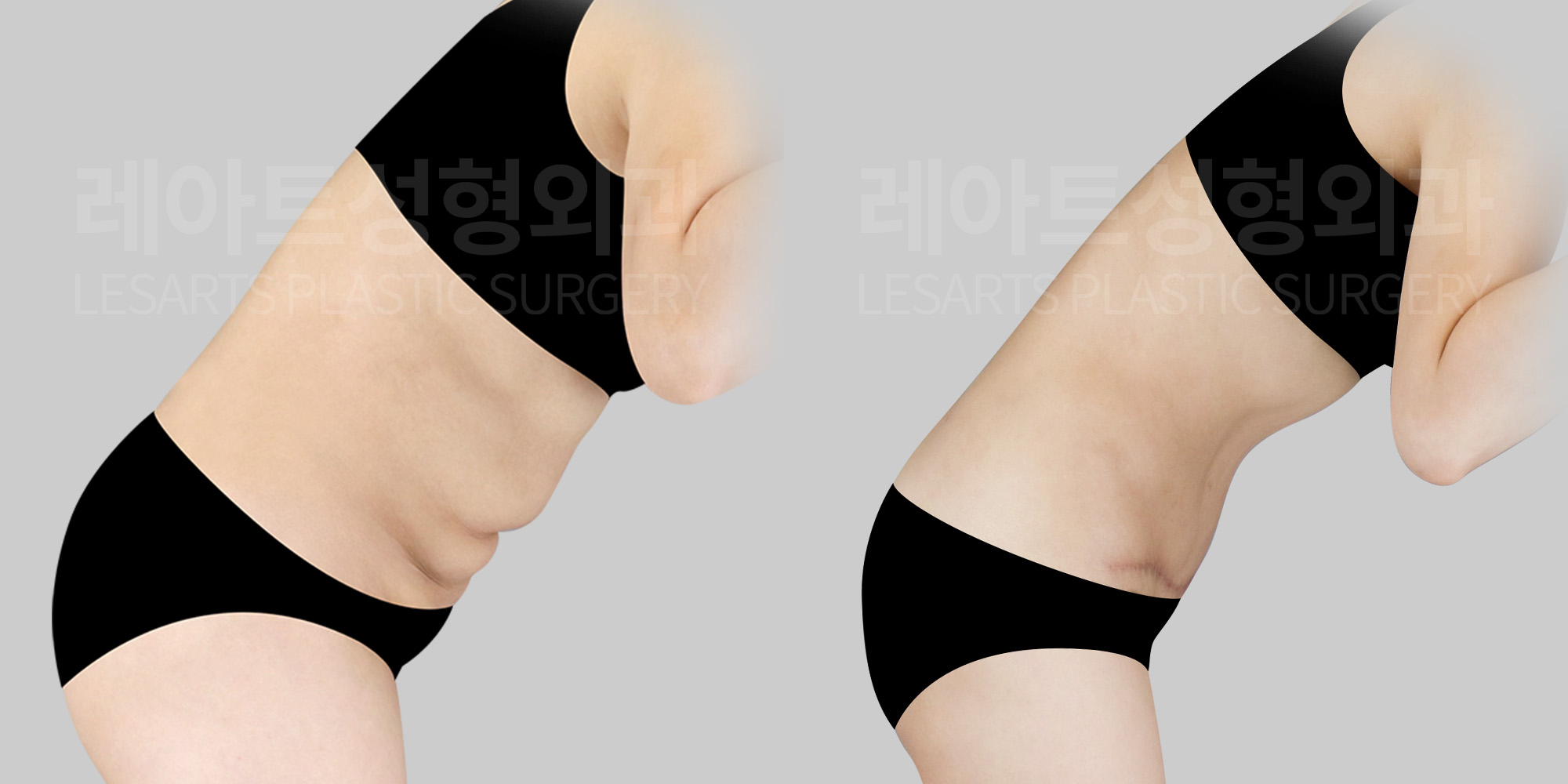
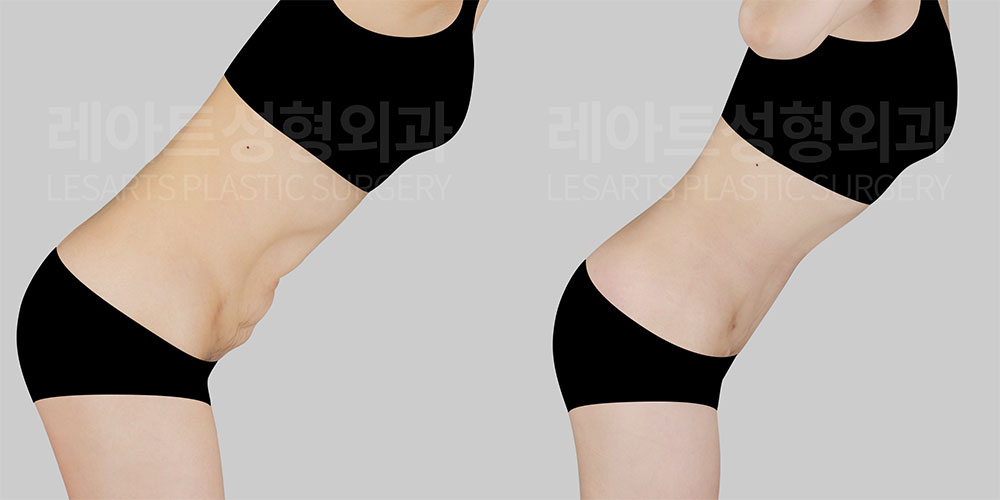
Rectus diastasis was well corrected
in both the upper and lower abdomen,
and skin sagging was also improved,
resulting in a smooth abdominal contour
even when bending forward.
Lesarts Plastic Surgery
S-Type Floating Tummy Tuck Before & After (5 months) – Bent-forward view
In addition, as the belly button moved slightly downward,
the sagging above the belly button
was also naturally improved.
In fact, S-type floating tummy tuck
is not a surgery primarily intended
to correct upper-abdominal sagging.
However, simply adjusting the belly button position slightly
can still provide a partial tightening effect
on the upper-abdominal skin.
Case 2 — M-type tummy tuck
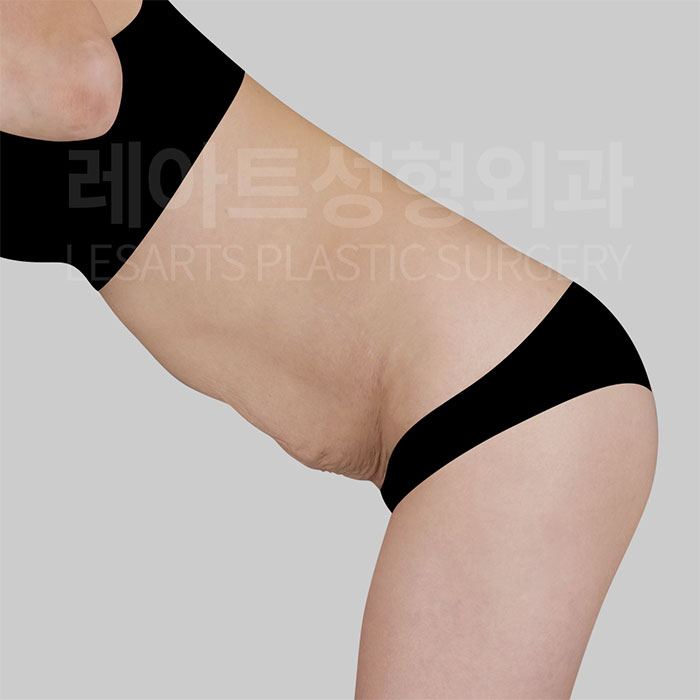
Preoperative Assessment – Lesarts Tummy Tuck
This patient’s main concerns were
lower abdominal bulging and skin laxity.
Because she often wears outfits that expose the navel,
she especially wanted clear improvement
in the skin laxity above the belly button.
Subcutaneous fat volume was not high,
and muscle tone was relatively good.
However, after childbirth, she experienced
overall skin laxity and rectus diastasis
in both the upper and lower abdomen,
which caused functional discomfort.
The navel appeared slightly horizontal,
but upper abdominal sagging was not severe.
Since the navel position was relatively high,
this was a case where surgical decision-making
required careful consideration.
Surgical Options Considered
1) S-type Floating Tummy Tuck
·Partial improvement of upper abdominal wrinkles
proportional to the amount of navel movement
·Navel moves downward approximately 1.5–2 cm
·Shorter incision, lower scar position
·Limited ability to fully correct upper abdominal laxity
2) M-type Tummy Tuck
·Reliable correction of skin laxity above the navel
·Scar line may be positioned relatively higher
due to minimal upper abdominal sagging
·Longer incision length required
The patient prioritized
“definite correction of laxity above the navel,”
and therefore chose the M-type tummy tuck.
Reasons for this decision:
1)Concern that insufficient correction would leave only a scar
2)Willingness to accept a longer scar
in exchange for a more definitive result
From a surgeon’s perspective,
the possibility of a higher scar position
is also a significant concern when performing an M-type tummy tuck.
However, forcibly pulling thin skin downward
just to lower the scar increases the risk of complications,
such as skin necrosis or hypertrophic scarring.
For this reason, the procedure was completed
within the safe limits of skin tension,
prioritizing tissue viability and surgical stability.
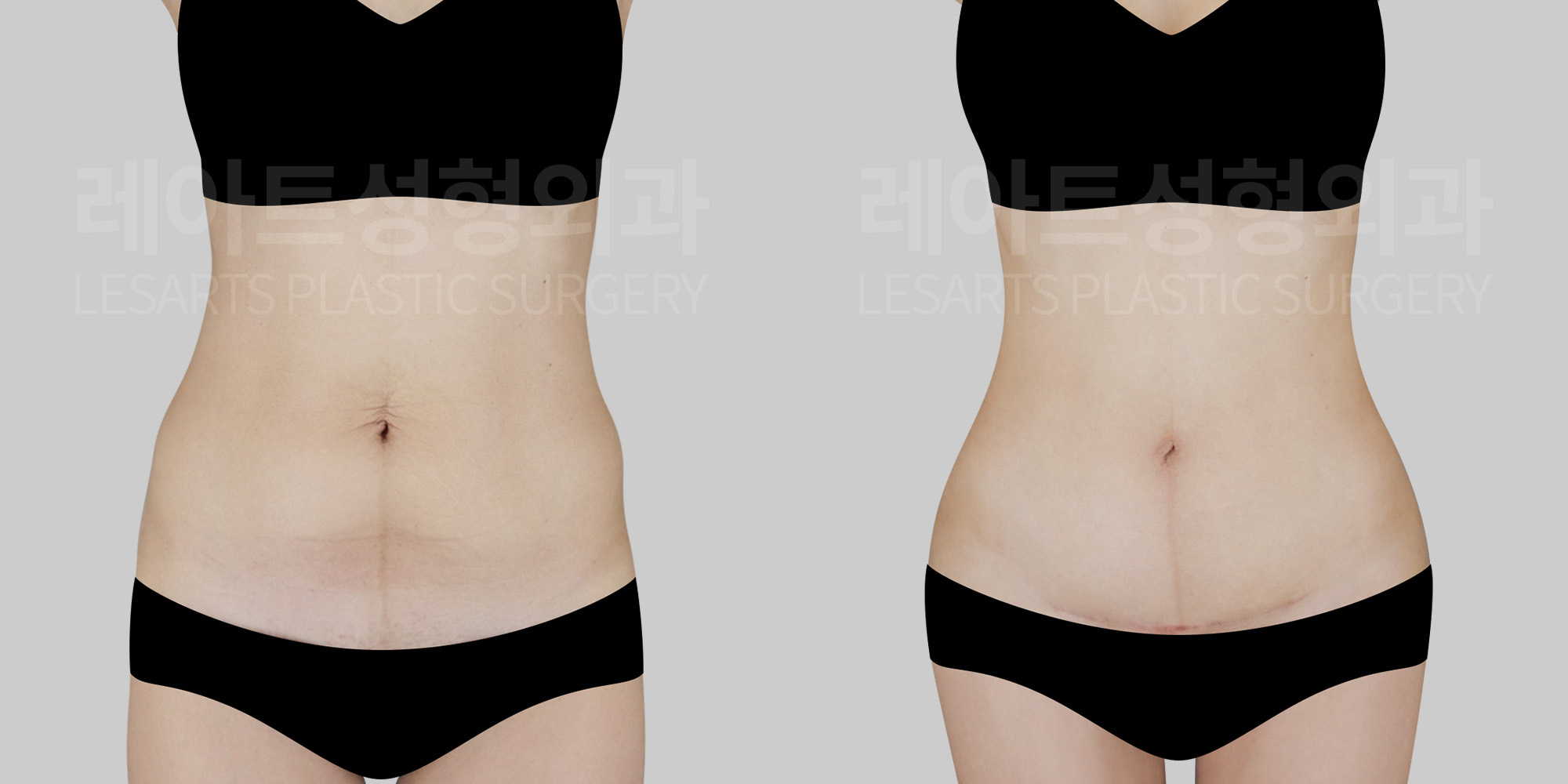
Lesarts Plastic Surgery –
S-Type Floating Tummy Tuck: Before & After (2 Weeks)
Surgical Outcome
Through an M-type tummy tuck,
the abdominal skin laxity was fully corrected.
The navel was redesigned and repositioned,
resulting in a more natural and balanced appearance.
Rectus diastasis in both the upper and lower abdomen
was successfully repaired, and with the addition of
liposuction and hip contour fat grafting,
the overall body line became smoother and more harmonious.
Although the scar was positioned slightly higher than a typical M-type,
the patient reported high satisfaction,
as the areas of greatest concern were effectively improved.
Conclusion
In tummy tuck surgery,
adapting the patient to a specific surgical method
is not the correct approach.
This is because each patient differs in
the degree of skin laxity, muscle condition, skin elasticity,
and—most importantly—
their lifestyle and personal tolerance toward scars.
If you are considering a tummy tuck,
rather than struggling alone in front of the mirror,
we recommend receiving an accurate assessment
of skin laxity and rectus muscle condition,
followed by a personalized consultation
to determine the most suitable surgical approach
for your body.

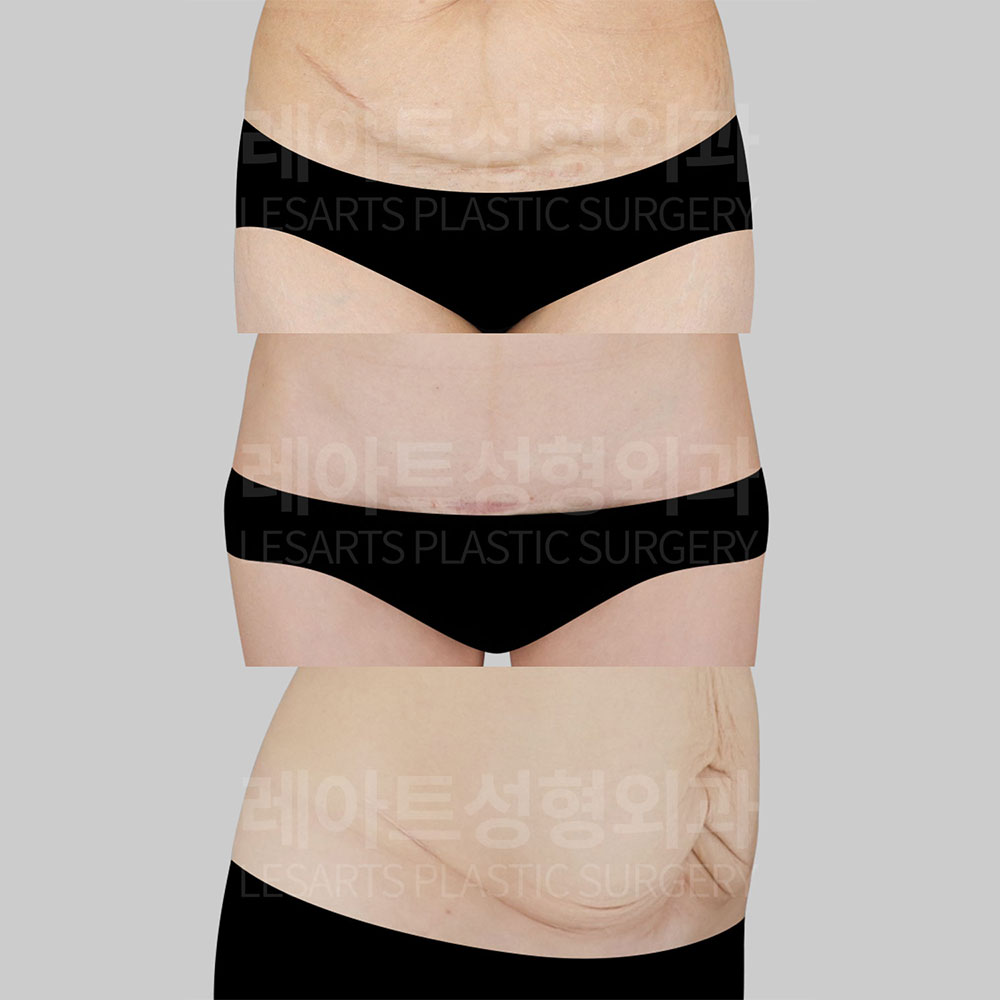
![[Abdominoplasty] Skin indentation from cesarean scar improved with abdominoplasty](https://lesartsps.com/wp-content/uploads/2026/02/abdominoplasty-29972-bna-front.jpg)
![[Gynecomastia] Changes in areolar size and color after gynecomastia surgery – 2 months post-op](https://lesartsps.com/wp-content/uploads/2026/02/gynecomastia-29747-bna-45degree.jpg)