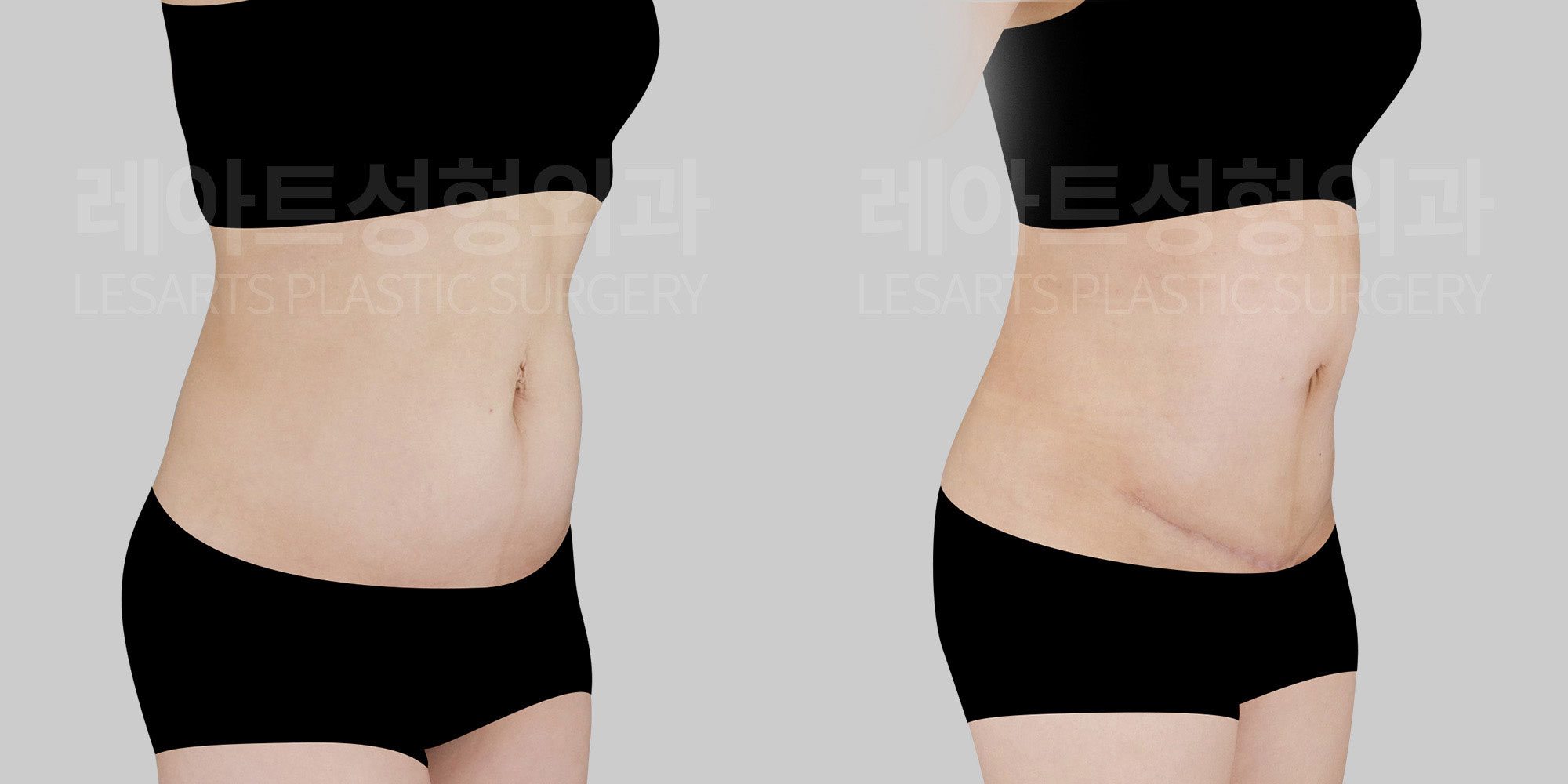
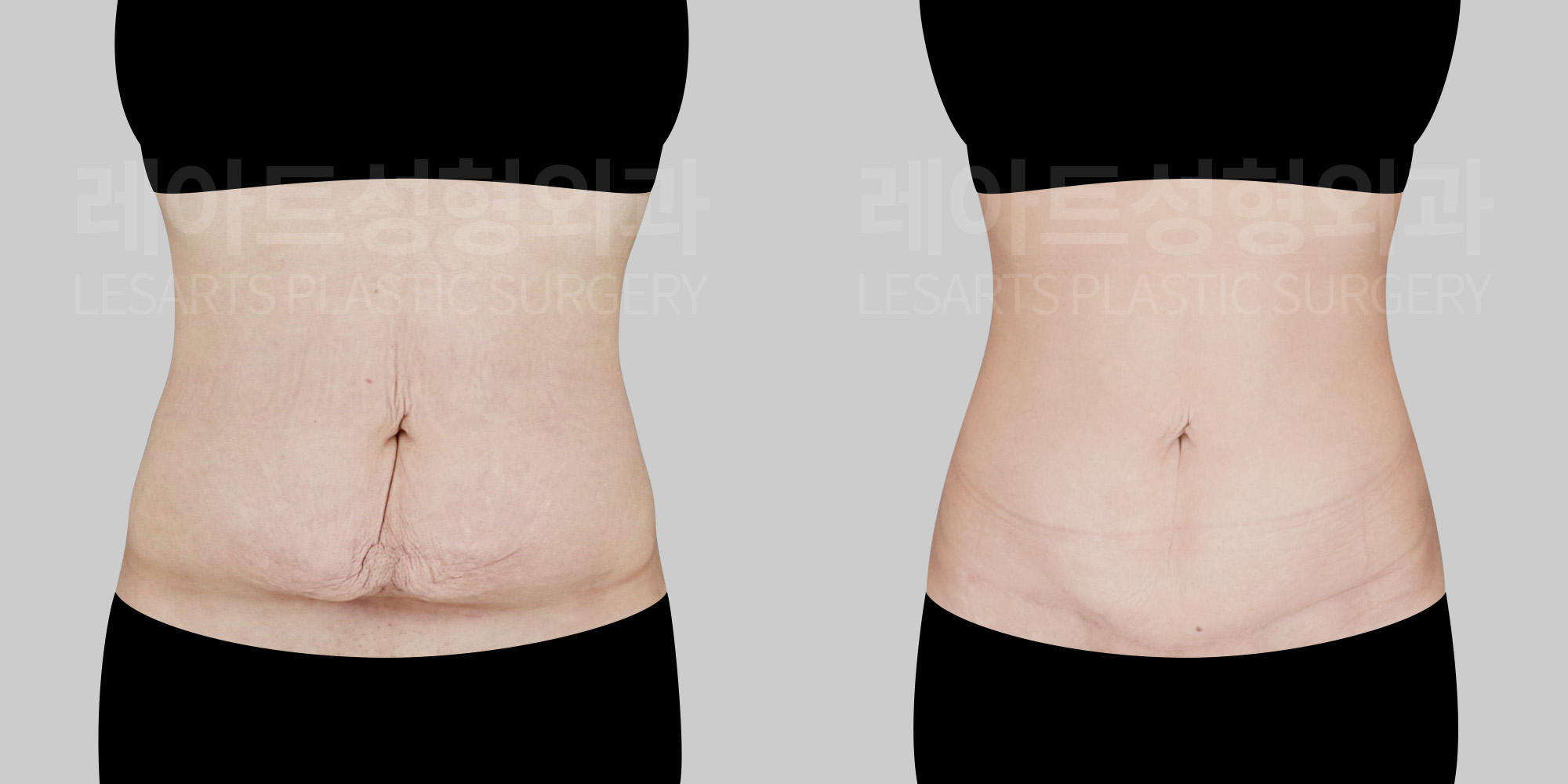
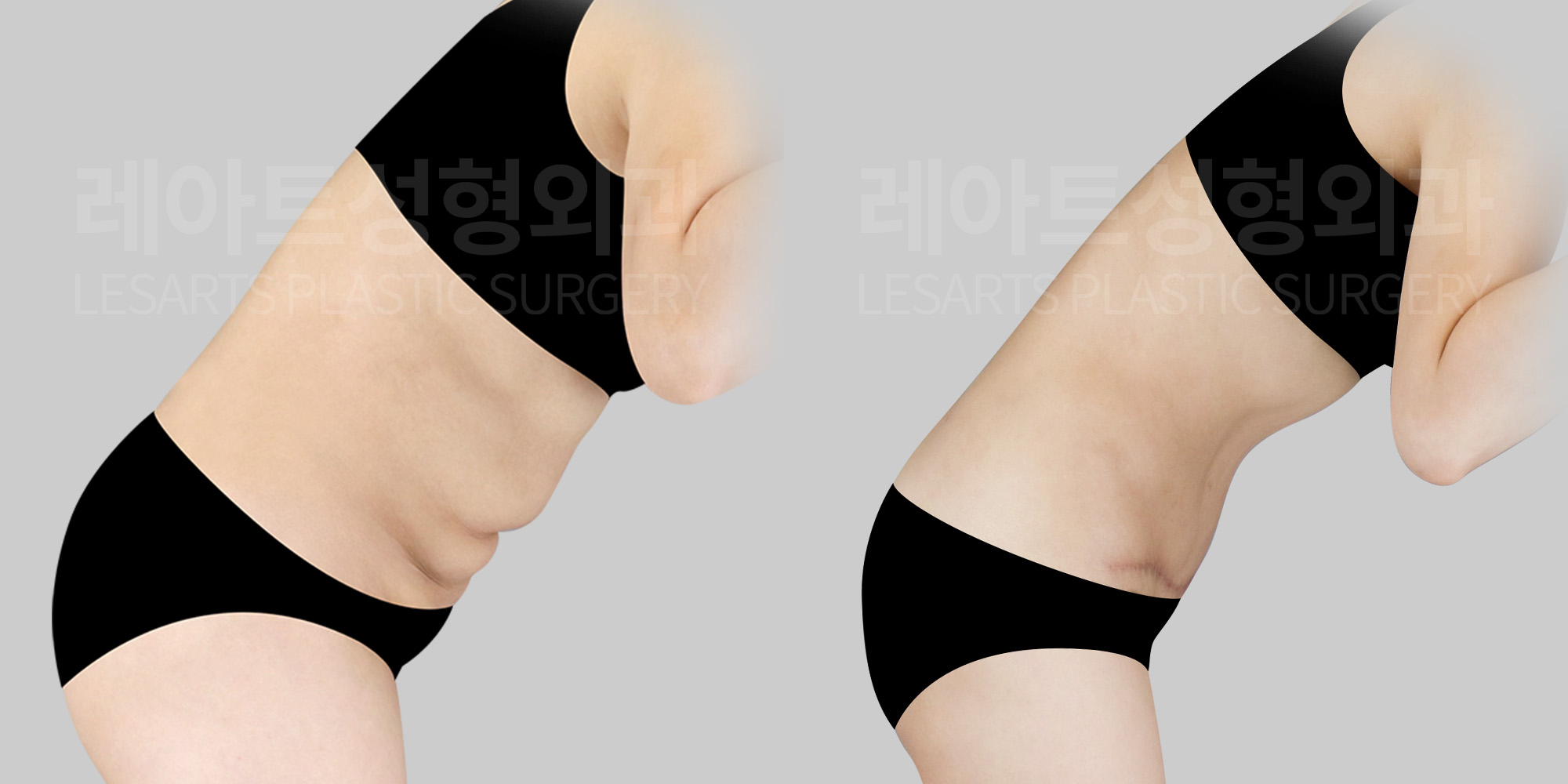
[Abdominoplasty]Why do scars appear, and how can they heal?
Hello, I’m Dr. Kukhan Lee,
a board-certified plastic surgeon.
After cosmetic or medical surgeries,
scars appear once wounds heal.
These are not just simple marks;
they are signs our body leaves
to protect and repair damaged tissue.
However, this process does not
always end neatly or minimally.
Today, I will explain easily
how scars form and mature,
and how to manage them
at each stage.
The timing and methods of scar care
may vary slightly among doctors.
So my opinion is not absolute.
But what I will explain now
is generally what I tell
my patients about scars.
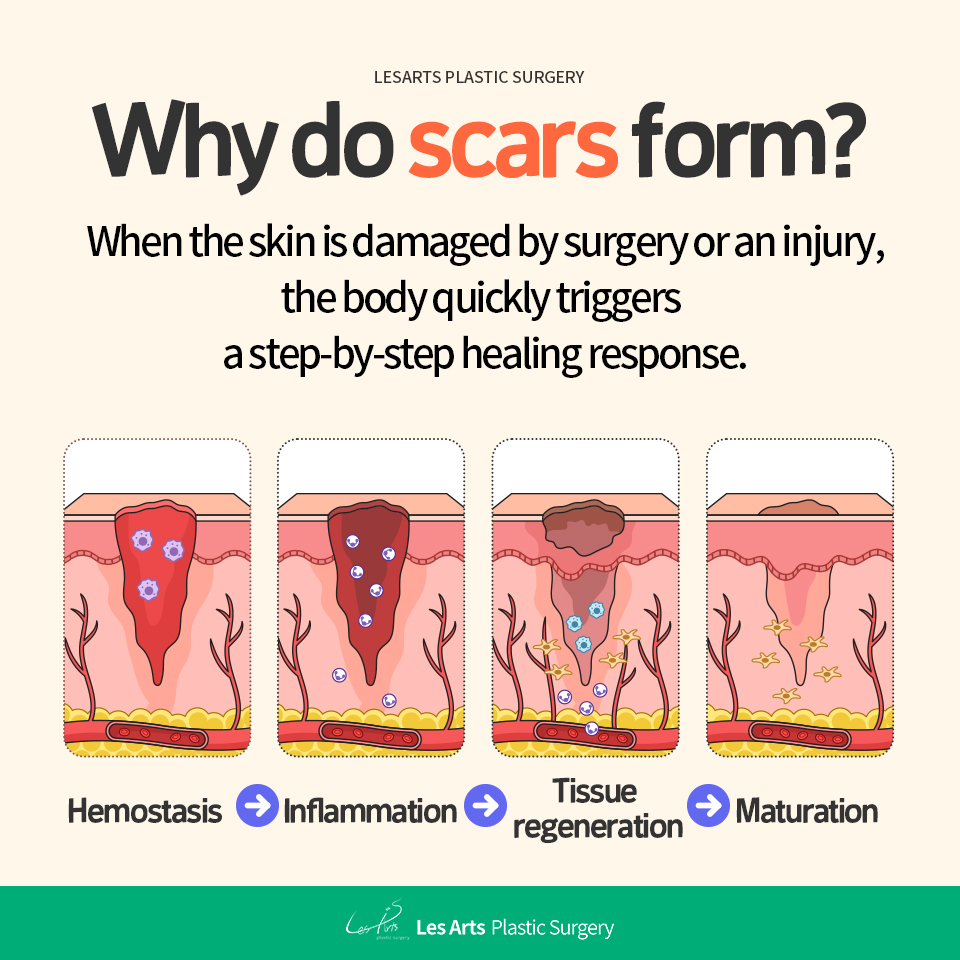
1. Why do scars form?
When the skin is injured
by surgery or trauma,
the body starts a rapid
step-by-step response:
Hemostasis → Inflammation →
Tissue regeneration → Maturation
During this process,
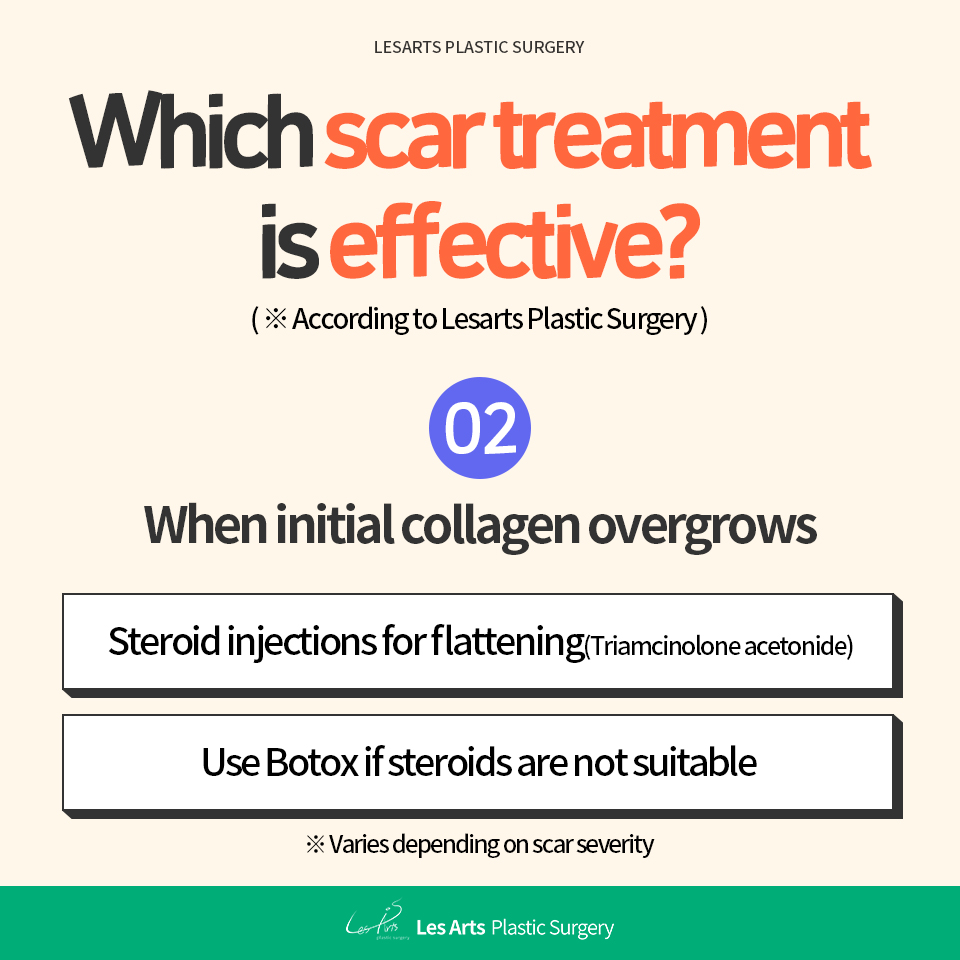
excess collagen may form,
and areas under high tension
tend to leave more noticeable scars.
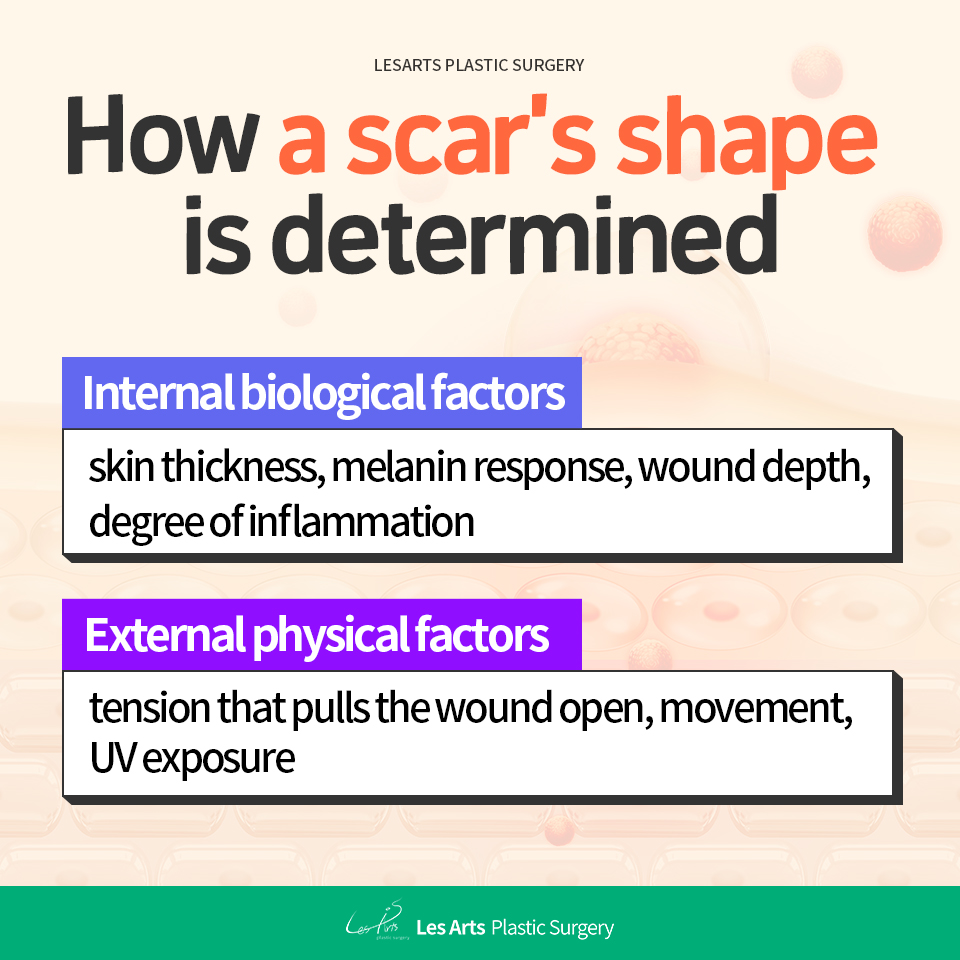
The shape of scars is largely
influenced by two forces.
• Internal biological factors:
Skin thickness, melanin response,
wound depth, and inflammation level
• External physical factors:
Wound tension, movement,
and UV exposure
In short, scars are the result
of skin regeneration,
but also structures shaped
by environment and forces.
2.Why do scars differ between people and body areas?
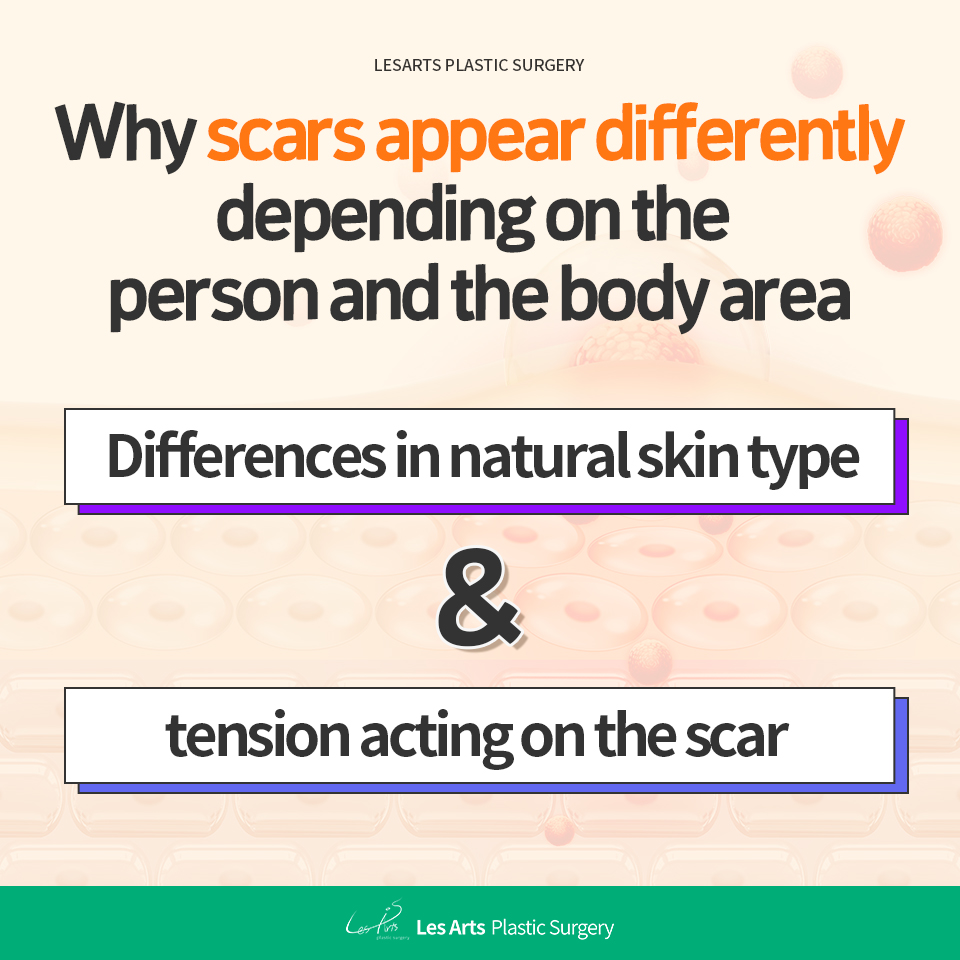
The main reasons for individual
differences in scars are
innate skin characteristics
and the tension applied to the scar.
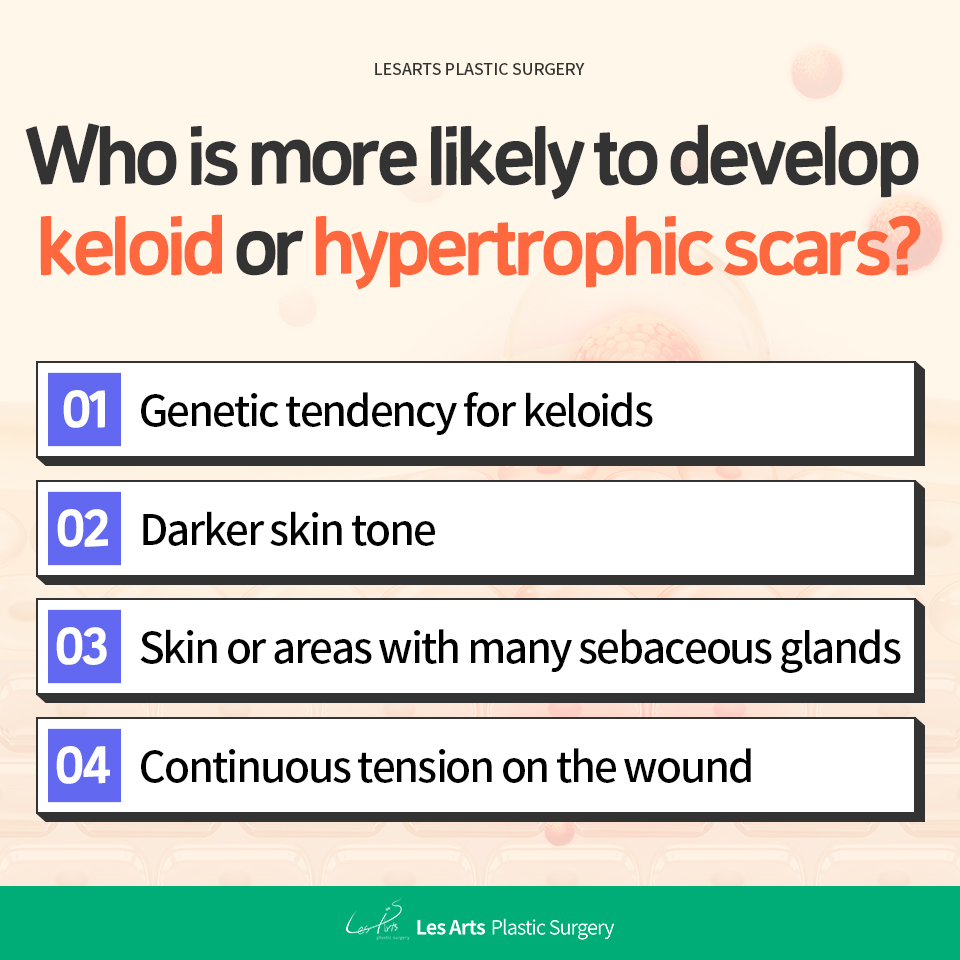
People genetically prone to keloids
tend to develop more raised scars.
There are also racial differences:
Caucasians, Africans, and Asians
have different scar maturation patterns.
Darker skin increases the likelihood
of keloids or hypertrophic scars.
Areas with many sebaceous glands
also have a higher risk
of raised scars, and skin thickness
significantly affects scar formation.
The location of the wound matters too.
Areas under continuous tension,
where the scar is constantly pulled,
are much more likely
to develop raised scars.
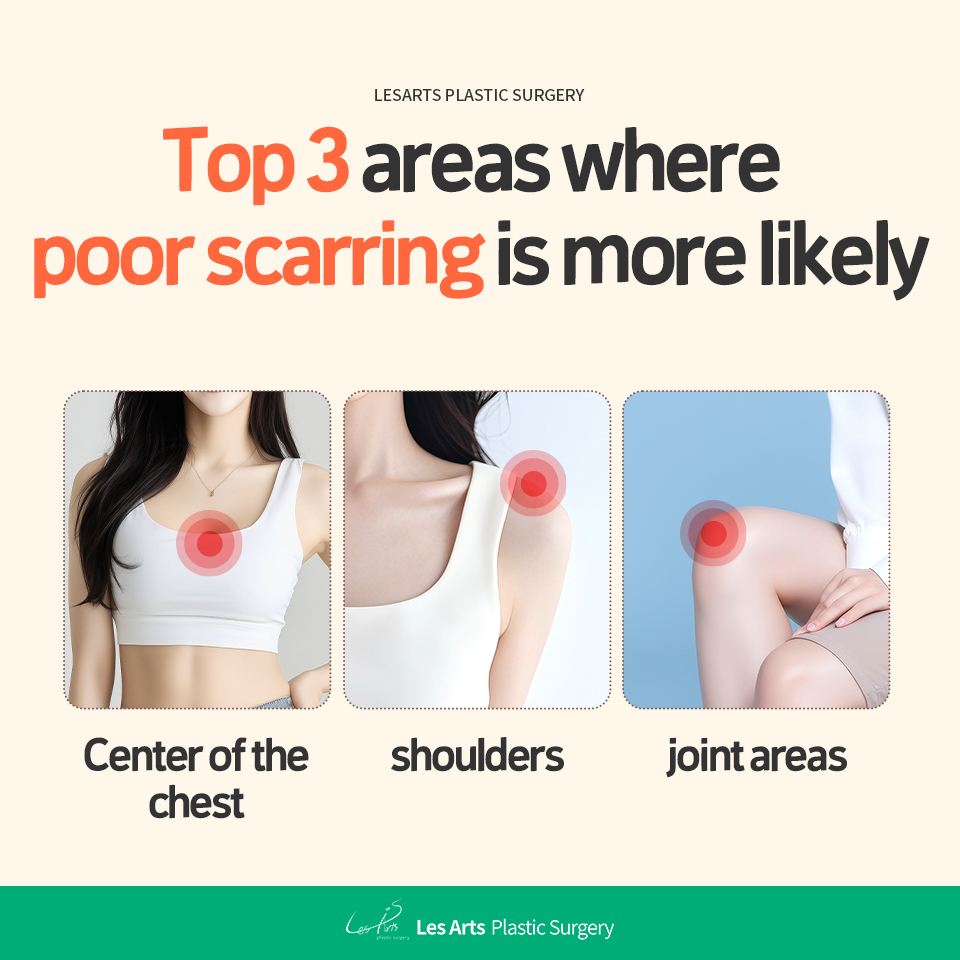
Typical areas include the center of the chest,
shoulders, and joints.
These areas move a lot
and are under high tension,
so they generally tend to
develop less favorable scars.
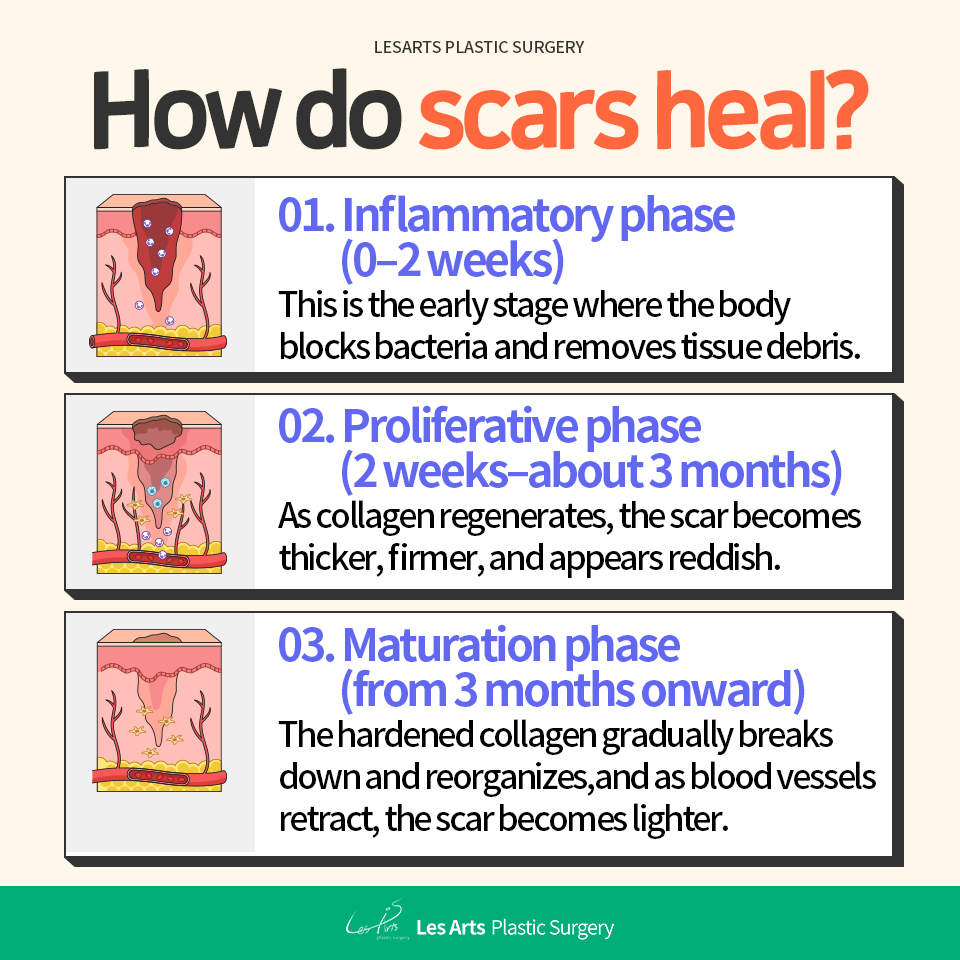
3. Scar maturation process
Once a scar forms,
it does not heal overnight.
Generally, it stabilizes and fades
slowly over 18–24 months.
The maturation process can
be divided into three main stages.
1) Inflammatory phase (0–2 weeks)
This is the stage after injury
where bacteria are blocked
and tissue waste is removed.
The surrounding area is red,
warm, and swollen—
a natural part of healing.
2) Proliferative phase (2 weeks–3 months)
New collagen is rapidly produced.
The scar appears thick and firm,
with many blood vessels
giving it a reddish color.
The scar looks worse than before
and is more noticeable.
3) Maturation phase (from 3 months)
Collagen that was firm breaks down
and organizes itself.
Blood vessels shrink,
and the scar softens.
Its color gradually fades,
and the surface becomes smoother.
Since scars go through these stages,
the way to care for them
differs slightly at each stage.
4. Timing of scar care
Using scar care products
too early does not always help.
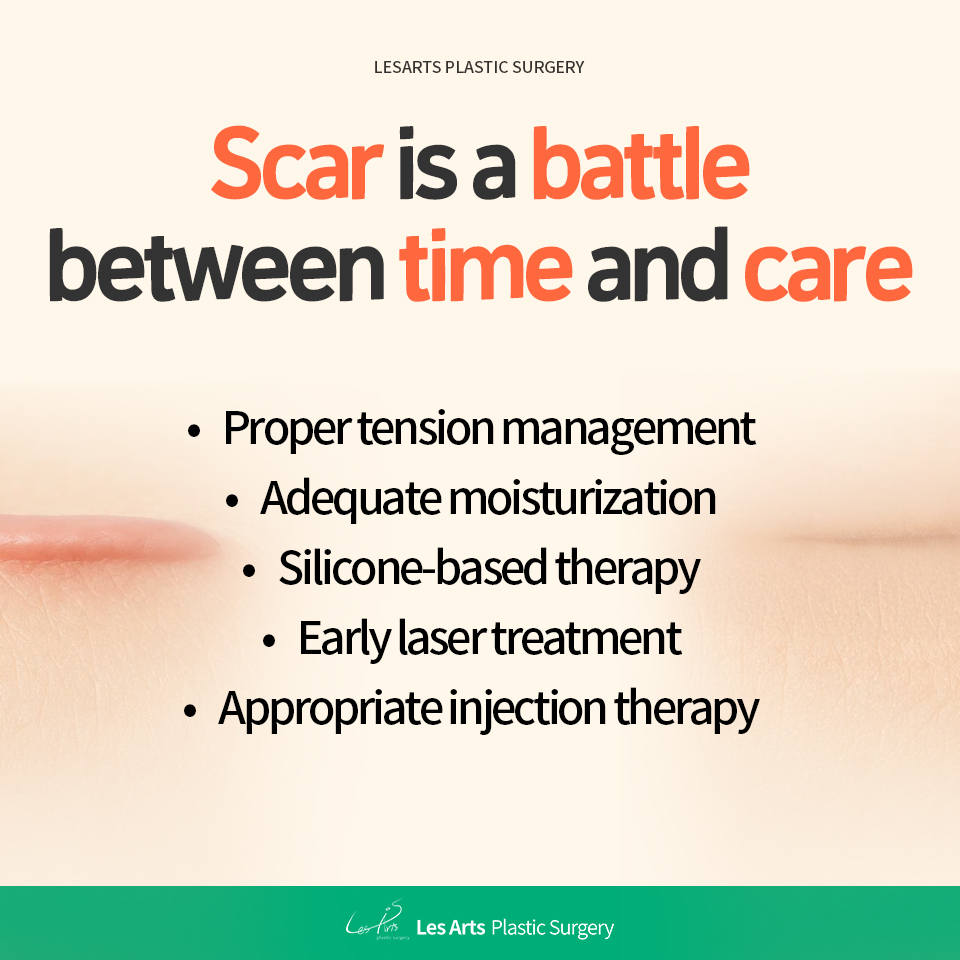
Scar management should match
the stage and condition of the scar.
This gives the best chance
for a thin, fine scar.
There may be small differences
depending on the area or surgery.
Today, I will explain care
after an abdominoplasty.
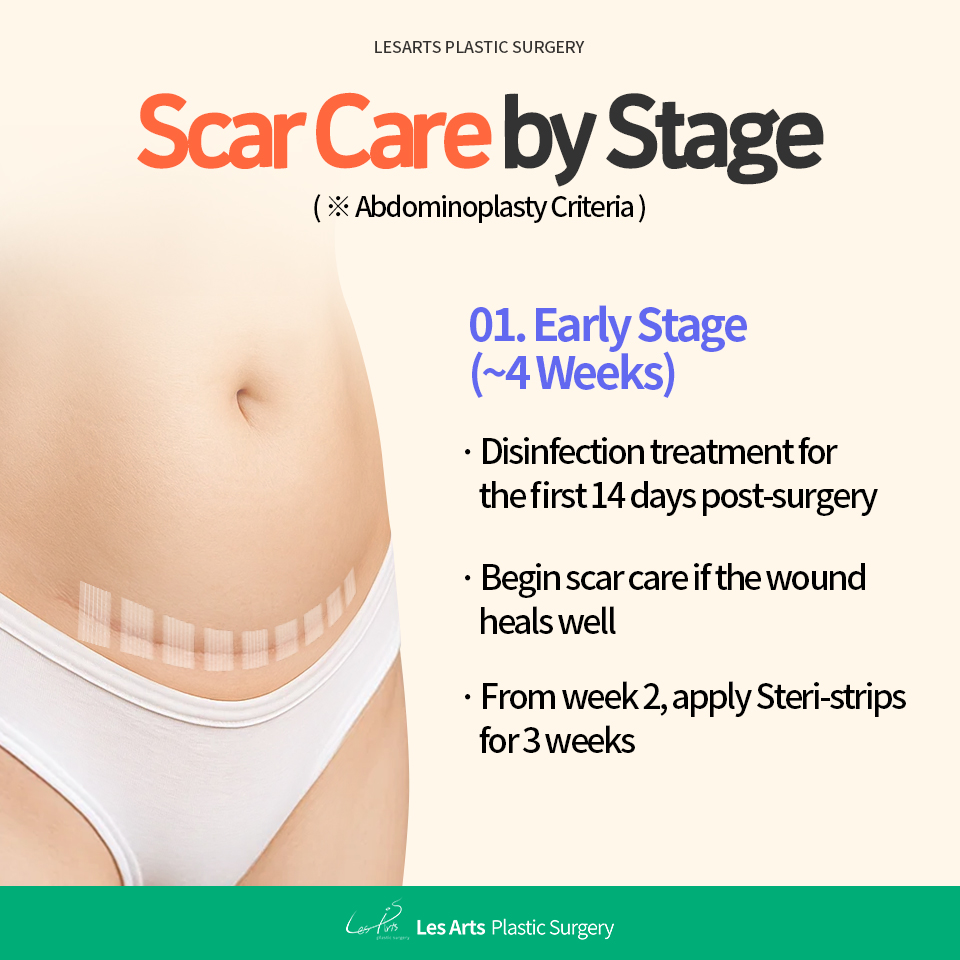
1) Early stage (after suture removal ~4 weeks)
In most body contouring surgeries,
sutures are removed between 10–14 days.
If the wound is unstable
within the first 14 days,
disinfection is extended
to focus on wound healing.
Once the wound heals well,
scar care begins.
From day 14, we recommend
taping with Steri-strips for 3 weeks.
Reducing tension on the scar
prevents it from widening.
Using scar products too early,
before inflammation subsides,
can irritate the scar
and delay maturation.
After about 3 weeks of Steri-strip taping,
moisturize the incision for 1 week.
This helps dermabond or scabs
to detach naturally,
preparing the scar for the next stage of care.
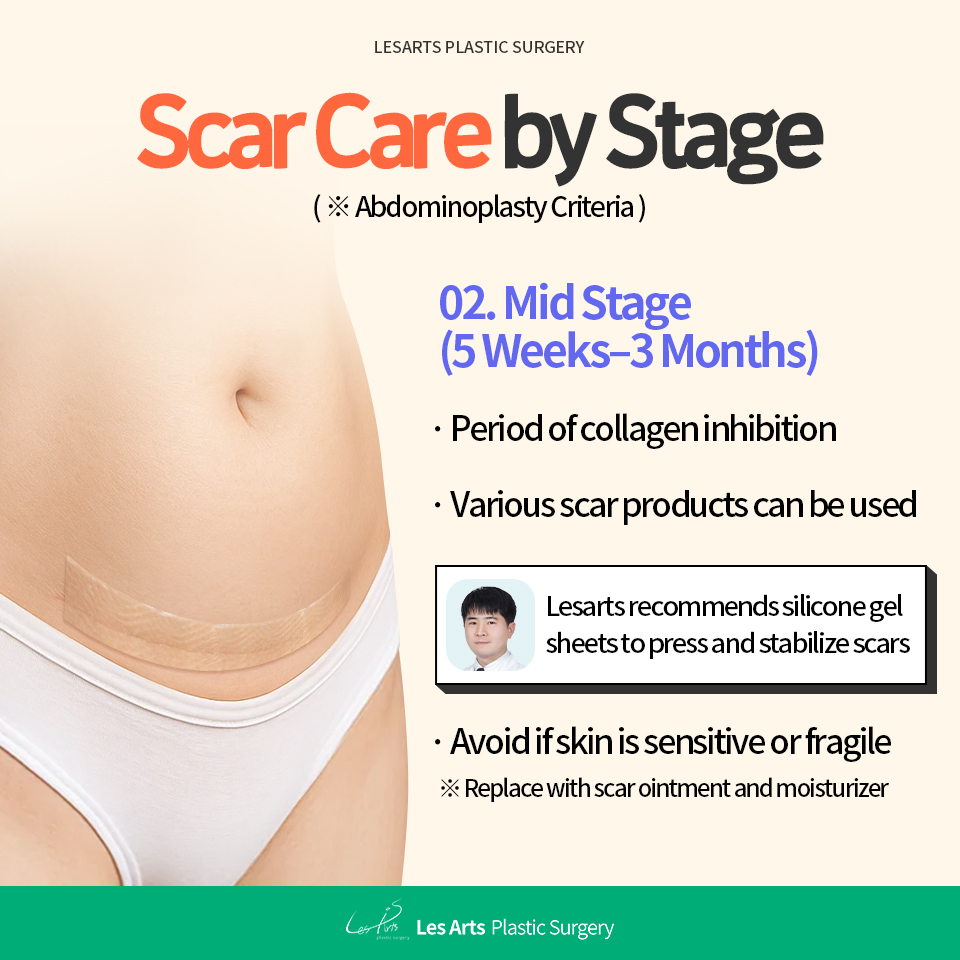
2) Mid stage (5 weeks–3 months)
While the early stage focuses
on preventing scar widening,
the mid stage aims to
suppress excessive collagen formation.
This is the stage
when various scar products can be used.
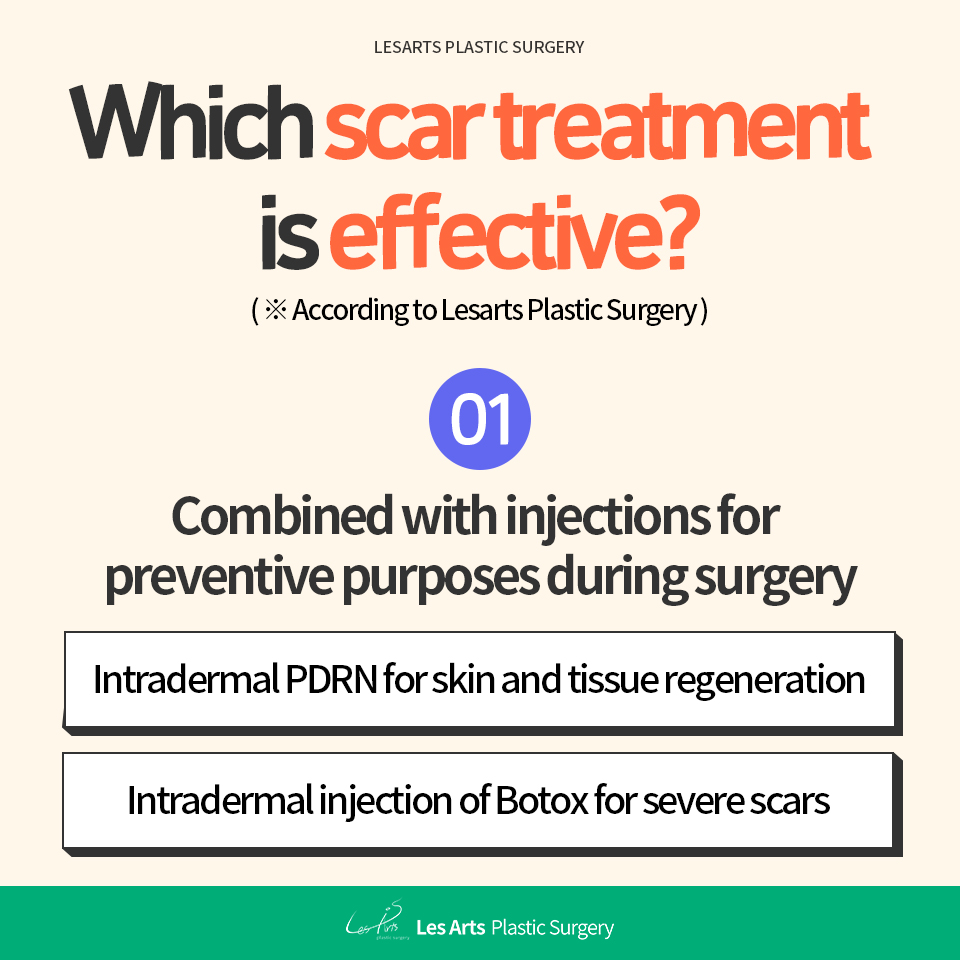
In my practice,
I recommend silicone gel sheets.
They apply gentle pressure
and help stabilize the scar,
making them one of
the most effective scar care methods.
If used for long periods initially,
they may cause redness or irritation.
So gradually increase
the application time.
For people with sensitive or fragile skin,
sheet-type products may be difficult to use.
As an alternative,
scar creams and moisturizers are recommended.
Consistent care with products
that suit your skin type
and sensitivity is the key
to effective scar management.
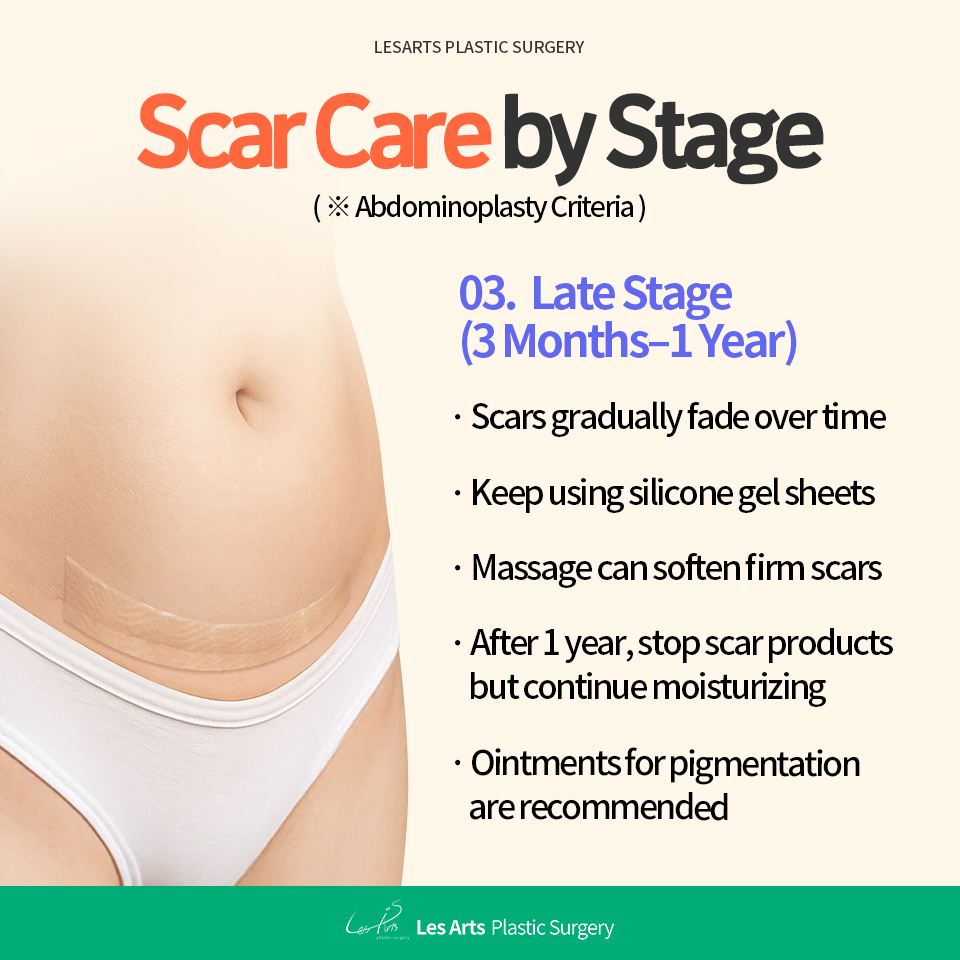
3) Late stage (3 months–1 year)
Scars are most noticeable
and red until around 3 months.
After that, they gradually fade.
This is the time to continue
using silicone gel sheets.
Firm scars can improve
with consistent massage.
Up to 6 months,
scar maturation progresses rapidly,
so using scar products
is strongly recommended.
By 1 year,
you can see full results
from your efforts.
After 1 year,
the effectiveness of products
gradually decreases.
Even if scar products stop,
consistent moisturizing is still needed.
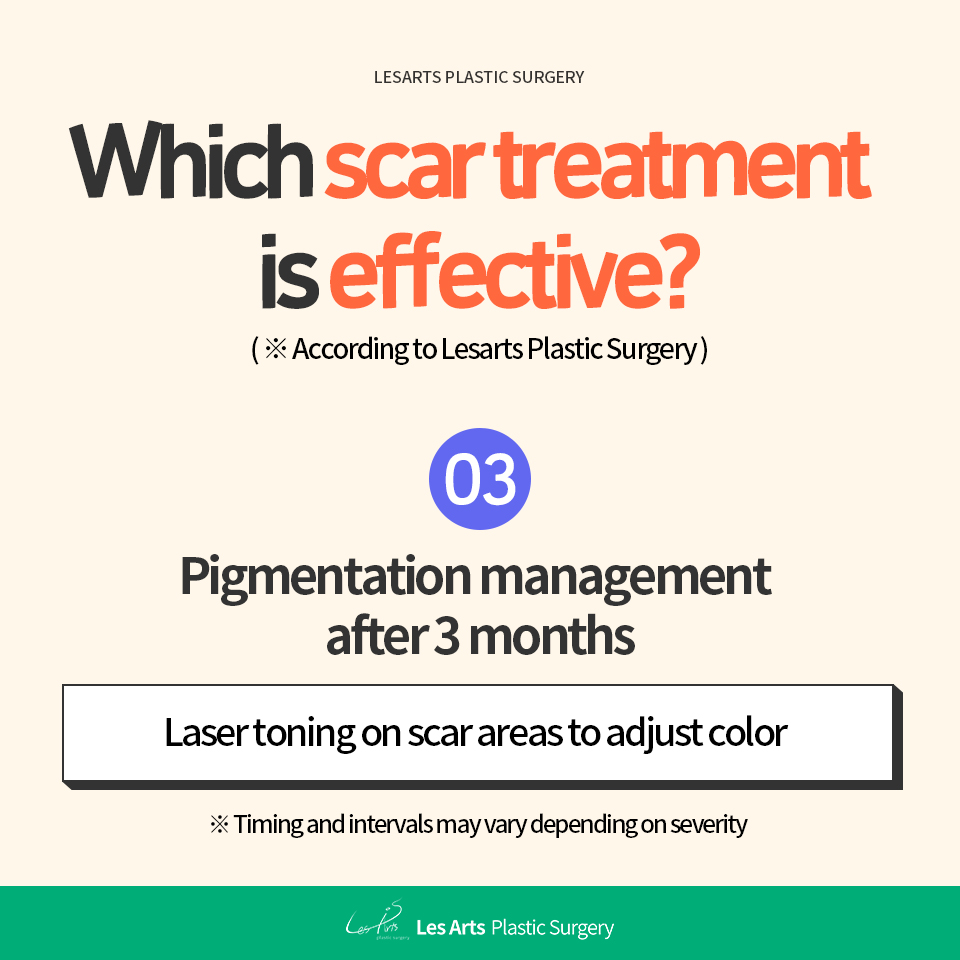
Hyperpigmentation may persist
during scar maturation.
Using creams that control pigmentation
can also help improve the scar.


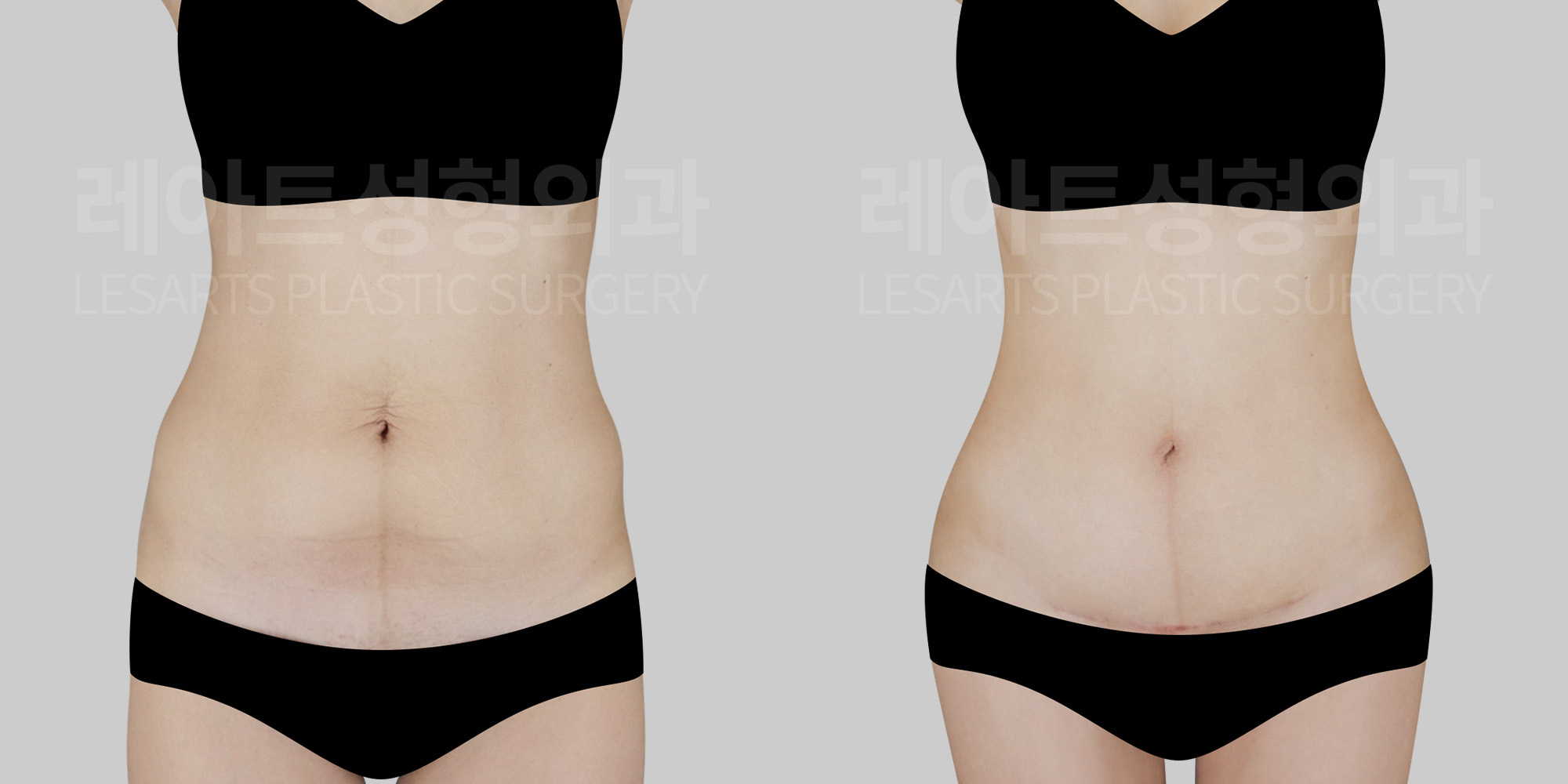
![[Abdominoplasty] Skin indentation from cesarean scar improved with abdominoplasty](https://lesartsps.com/wp-content/uploads/2026/02/abdominoplasty-29972-bna-front.jpg)
![[Gynecomastia] Changes in areolar size and color after gynecomastia surgery – 2 months post-op](https://lesartsps.com/wp-content/uploads/2026/02/gynecomastia-29747-bna-45degree.jpg)