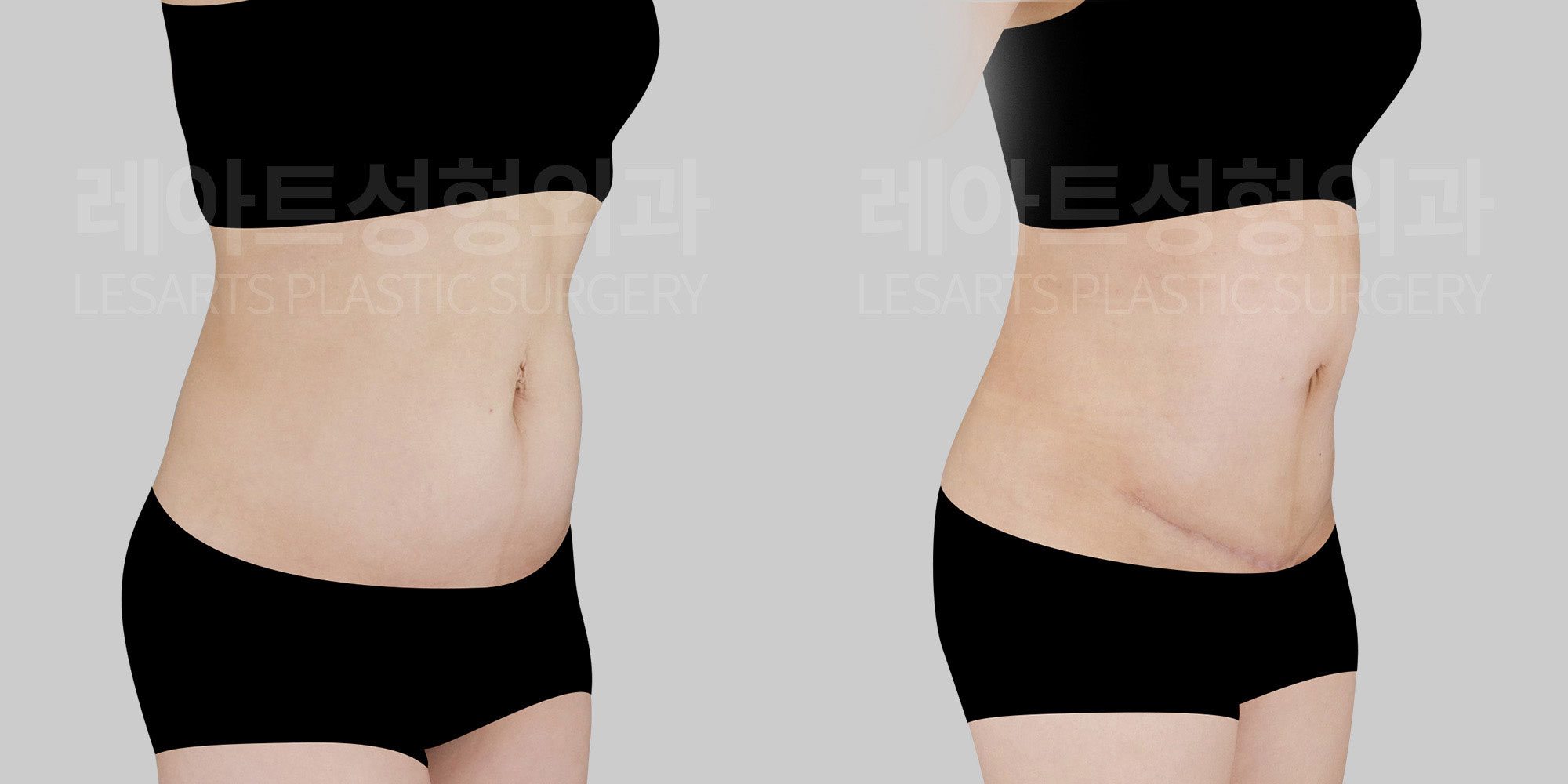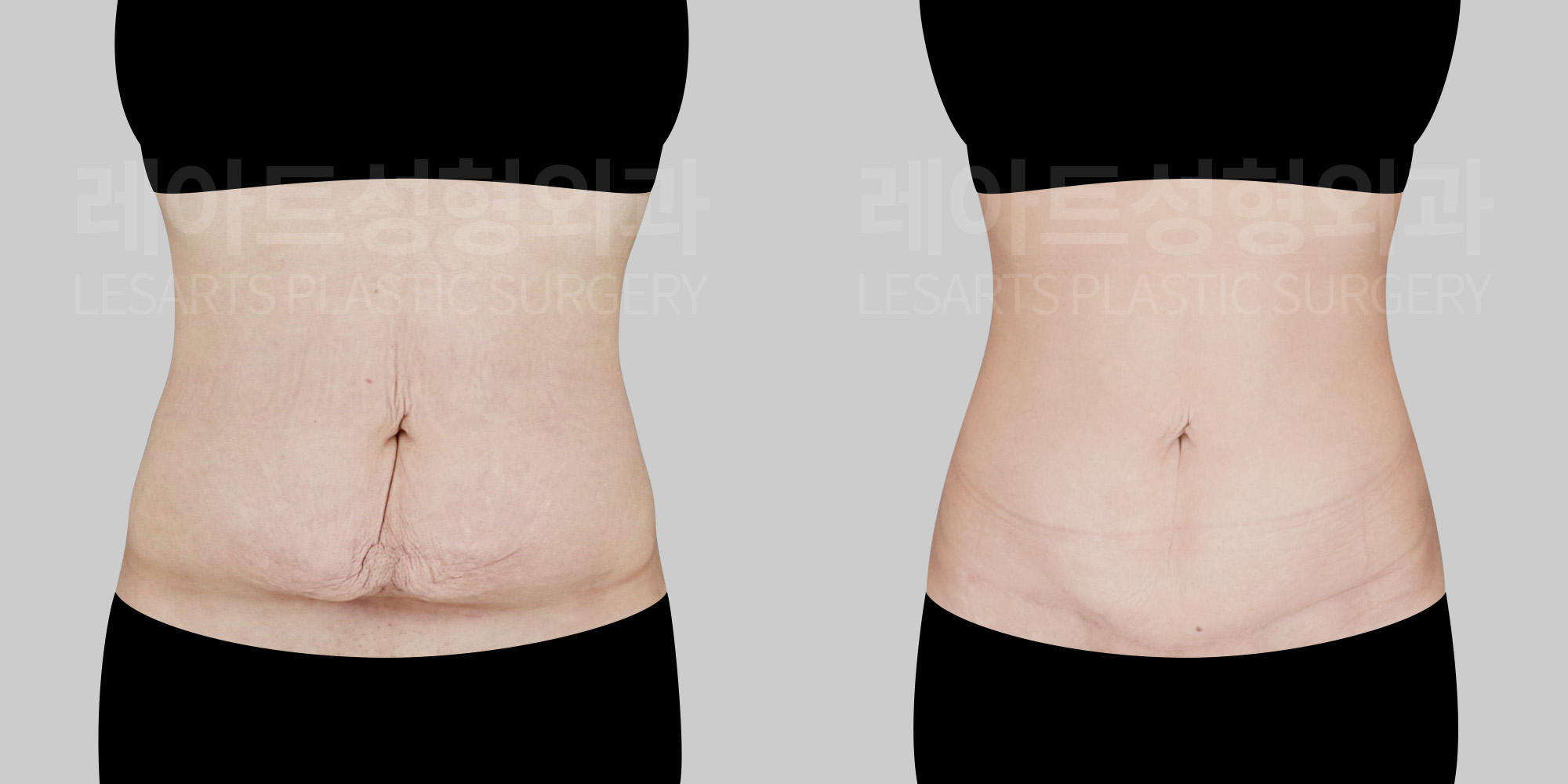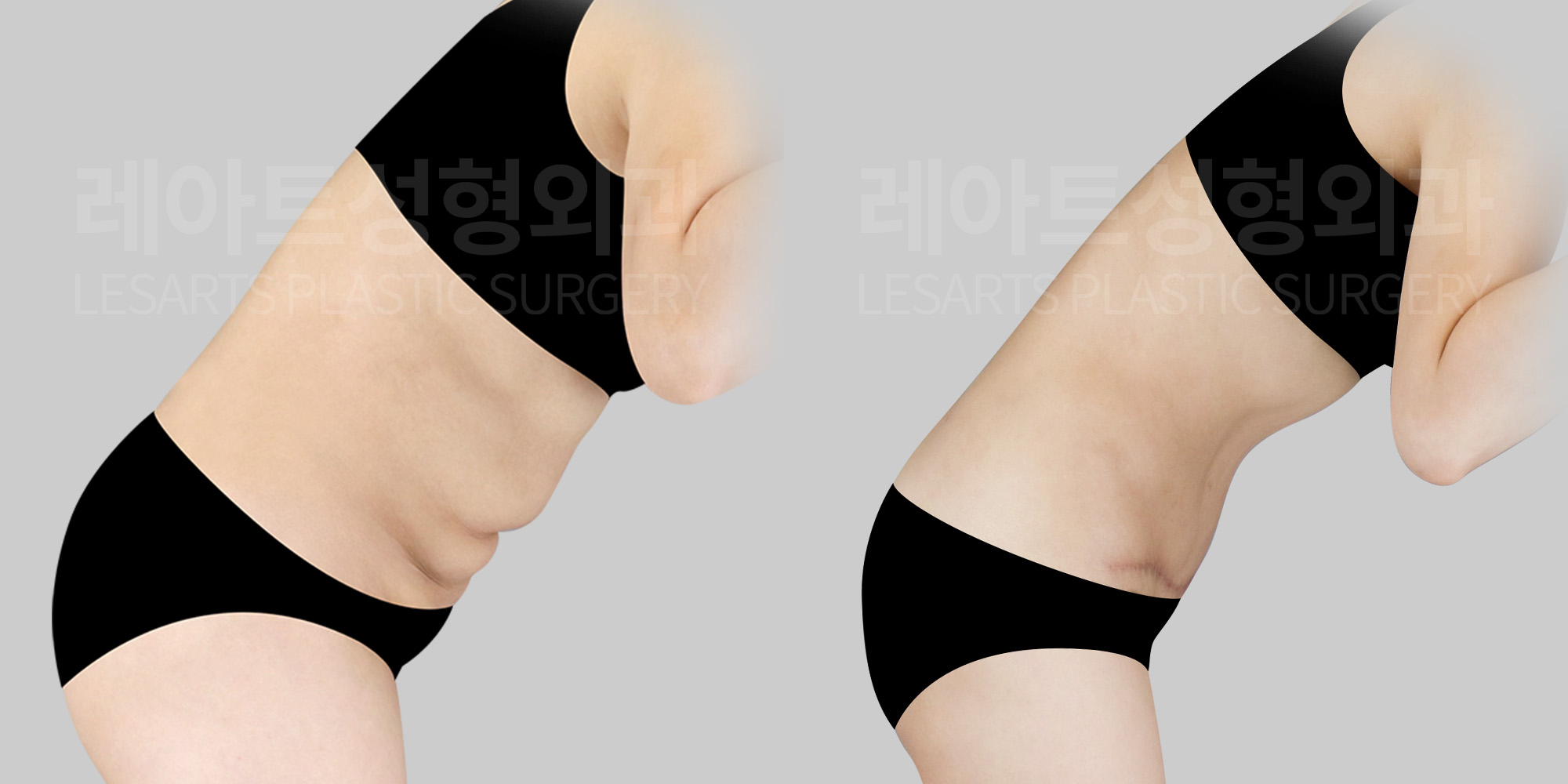

[Abdominoplasty]Why does a tummy tuck inevitably leave a long scar?
Hello, I’m Dr. Kukhan Lee,
a board-certified plastic surgeon.
Today, I’ll clearly summarize
how to predict the length of tummy tuck scars,
and what problems can occur
when the scar is forced shorter.
If you’re considering a tummy tuck,
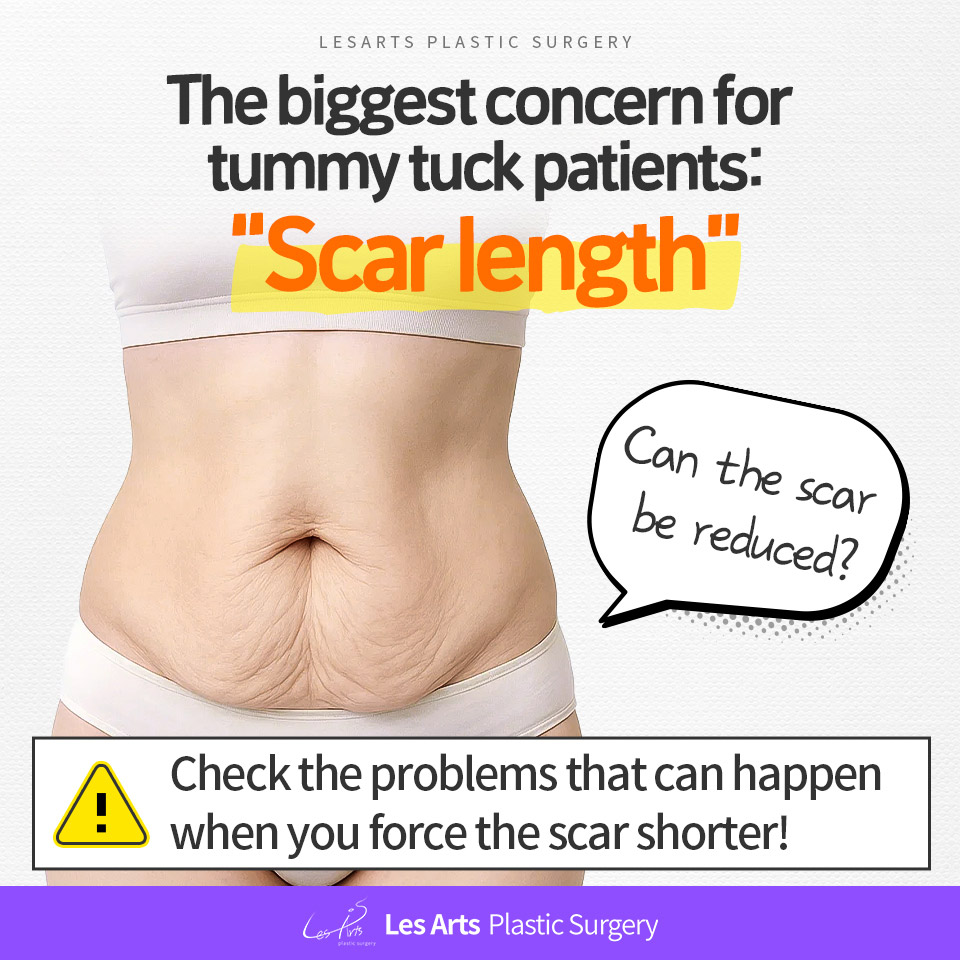
the biggest concern for most people
is the length of the scar.
As a surgeon, I also strongly want
to make the scar as short as possible,
but in real surgical design,
there are many limitations.
The basic incision design for a tummy tuck:
fusiform excision.
To remove skin and close it smoothly,
a fusiform (spindle-shaped) incision
is the standard approach.
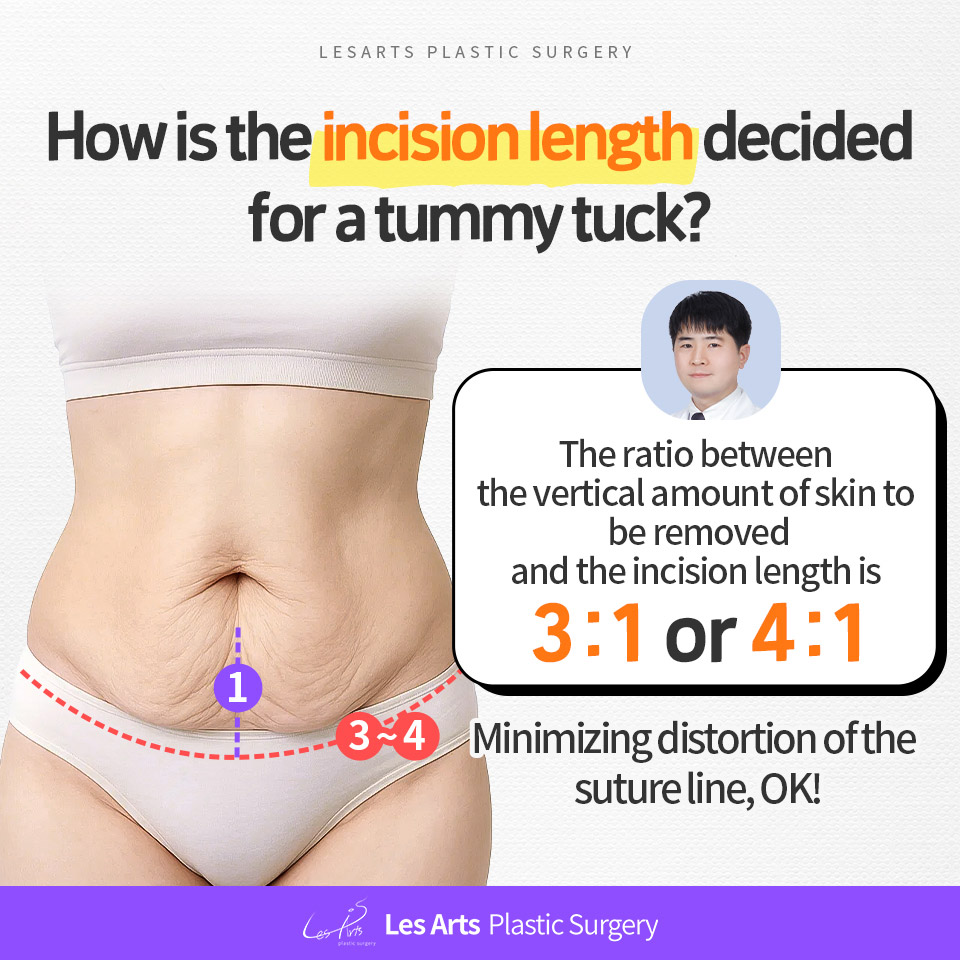
At this point, the ratio between
the horizontal incision length
and the vertical amount of skin removed
needs to be about 3:1 or 4:1
for the suture line to stay natural
without distortion.
For example, if the vertical amount of skin
that needs to be corrected is 7 cm,
the horizontal incision length
must be at least about 21–28 cm.
So the more severe the sagging is,
the longer the horizontal incision line
inevitably becomes.
Then how much does the incision length differ
by surgery type?
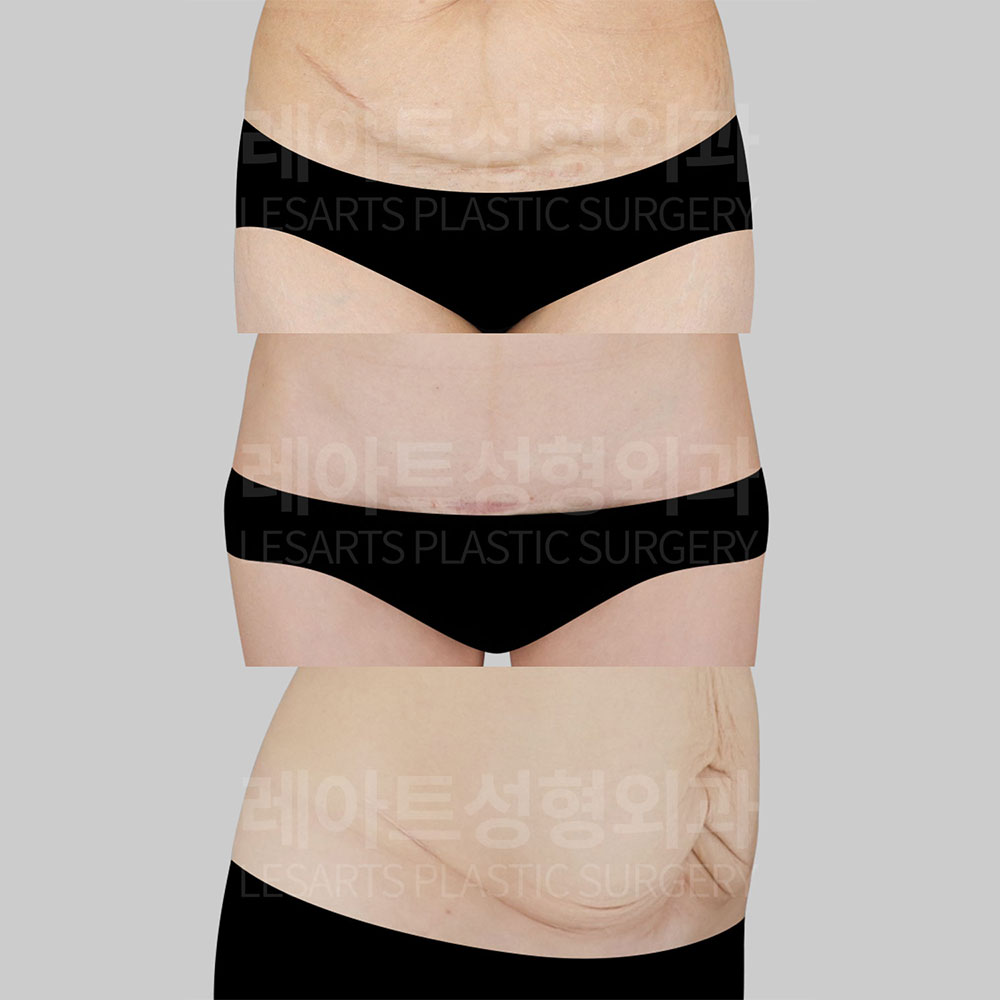
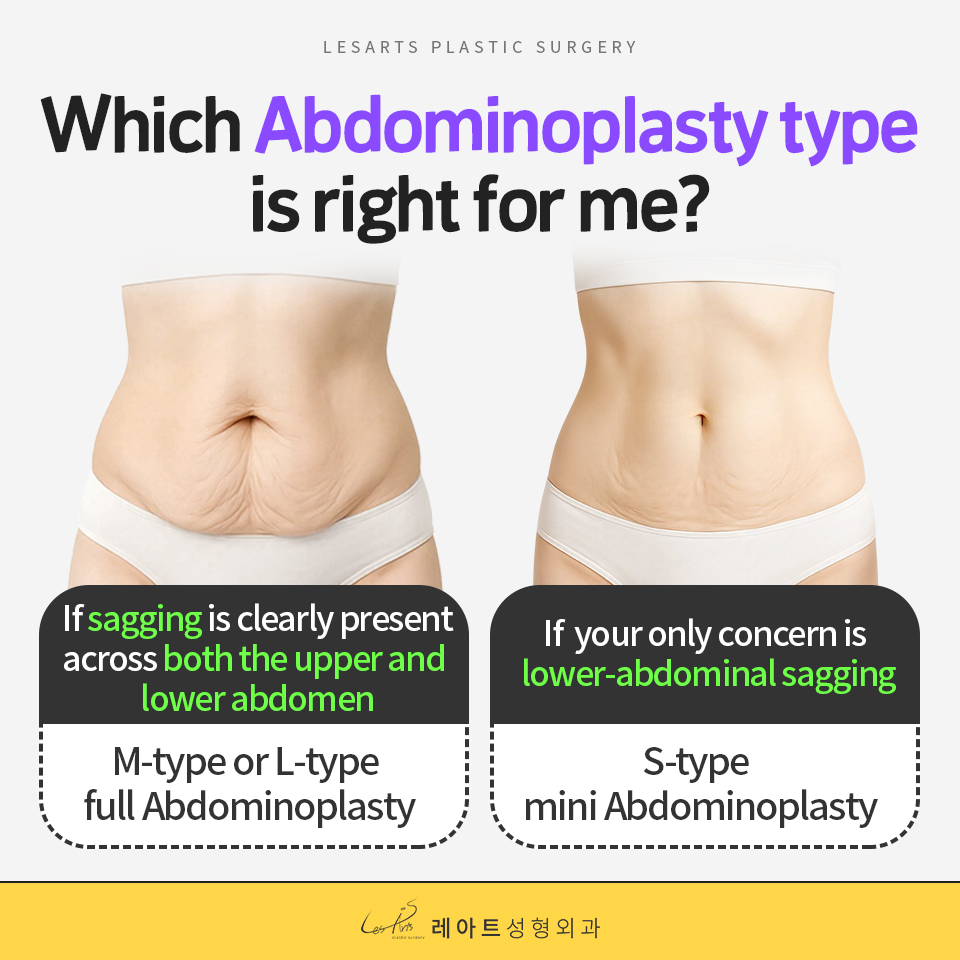
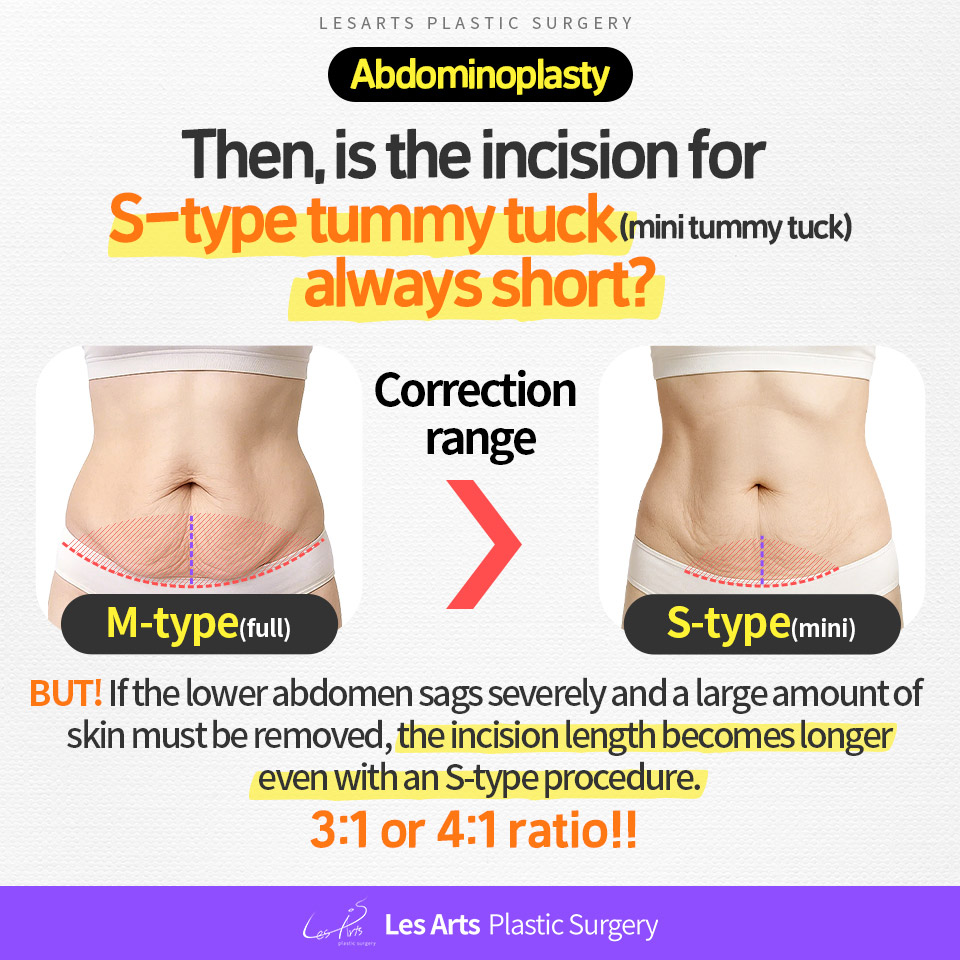
Mini tummy tuck (S-type) vs full tummy tuck (M-type)
Because a full tummy tuck corrects
a much wider area,
its scar inevitably becomes longer
than that of a mini tummy tuck.
However, even if S-type is chosen,
when lower-abdominal sagging is severe,
there are quite a few cases
where a scar similar in length
to an M-type procedure
is still needed.
Then what happens if we force the scar shorter?
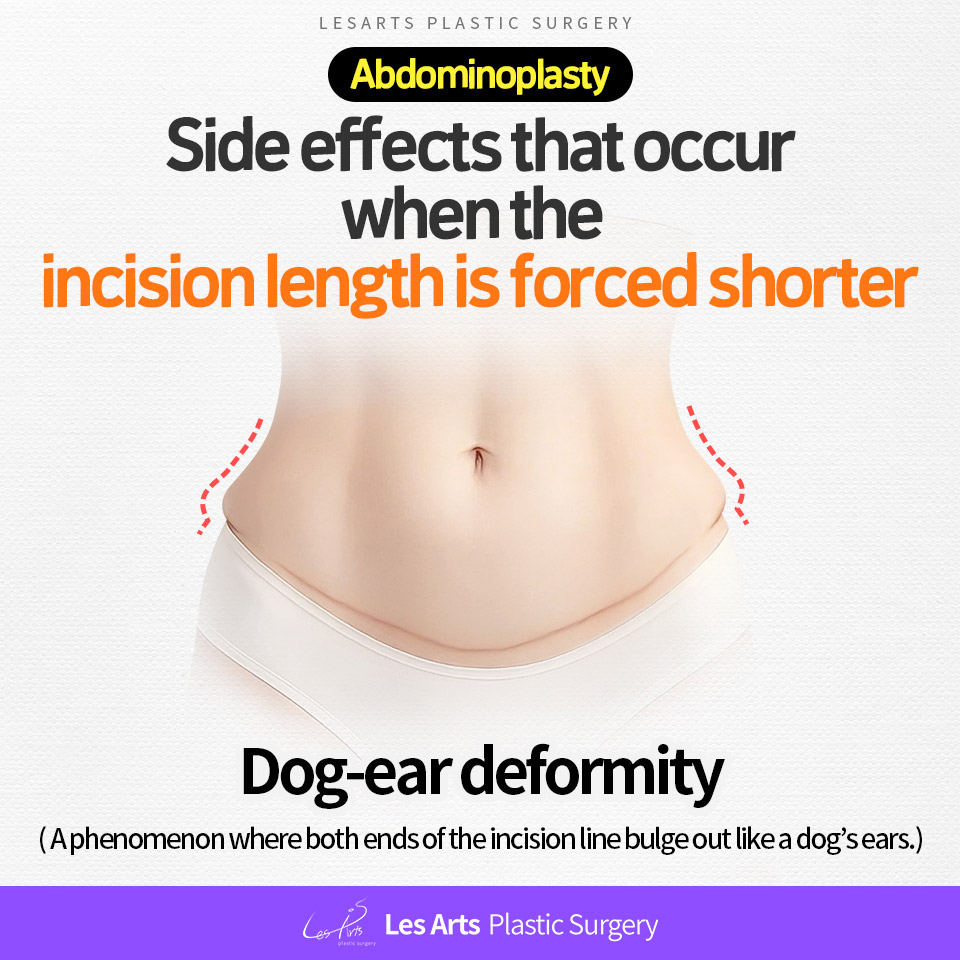
The most common and most representative side effect is
Dog ear deformity (Standing cone deformity).
● What is a dog ear?
It refers to a bulging appearance at both ends of the incision line,
like a dog’s ears sticking out.
This can occur not only after a tummy tuck,
but also after any procedure involving skin excision,
such as breast lift, breast reduction, facelift, and more.
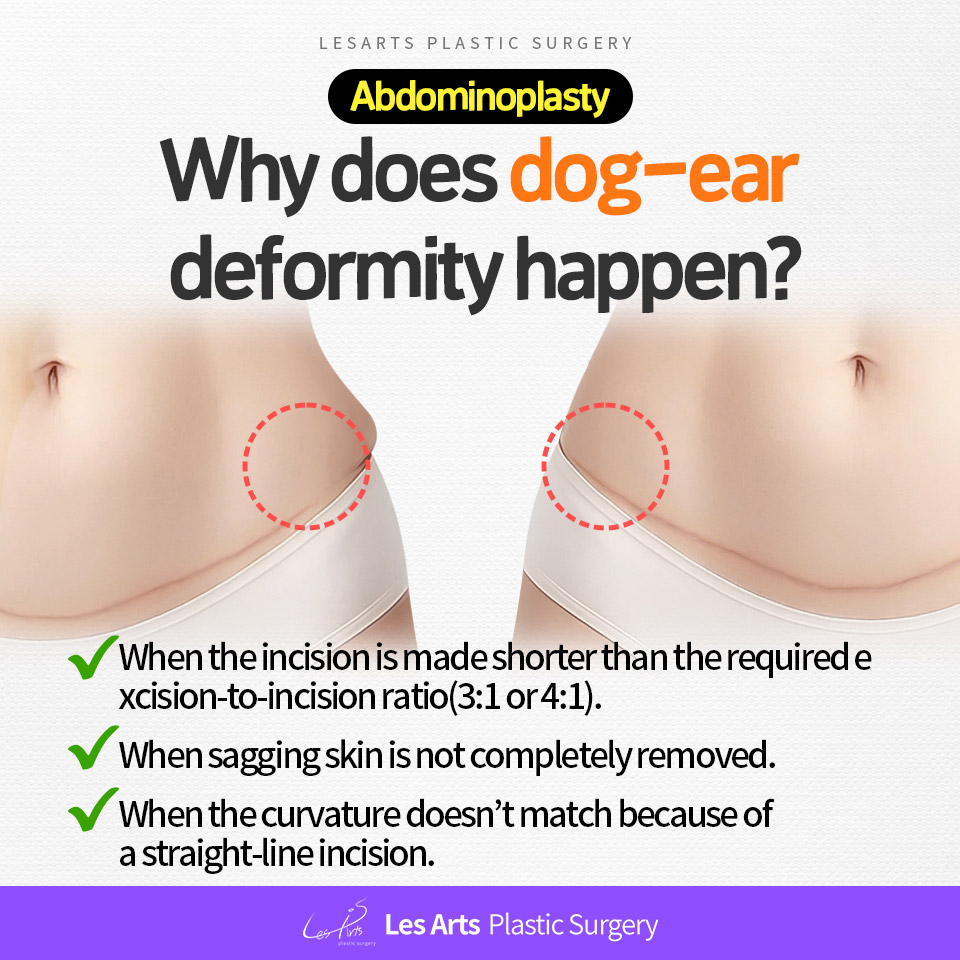
● Causes of dog-ear deformity can be considered as follows:
• When the incision line is made shorter than the vertical sagging width that needs correction
(less than a 3:1 or 4:1 ratio)
• When excess remaining skin is not properly smoothed out
• When the incision is designed as a straight line and the curvature does not match
In other words, if the vertical length that needs correction is 7 cm,
but the horizontal incision is only 14 cm,
dog-ear formation is almost inevitable.
Another reason tummy tuck scars are designed in a curved line rather than a straight line
is to naturally match the skin tension lines and body contour,
and at the same time to reduce the risk of dog-ear deformity.
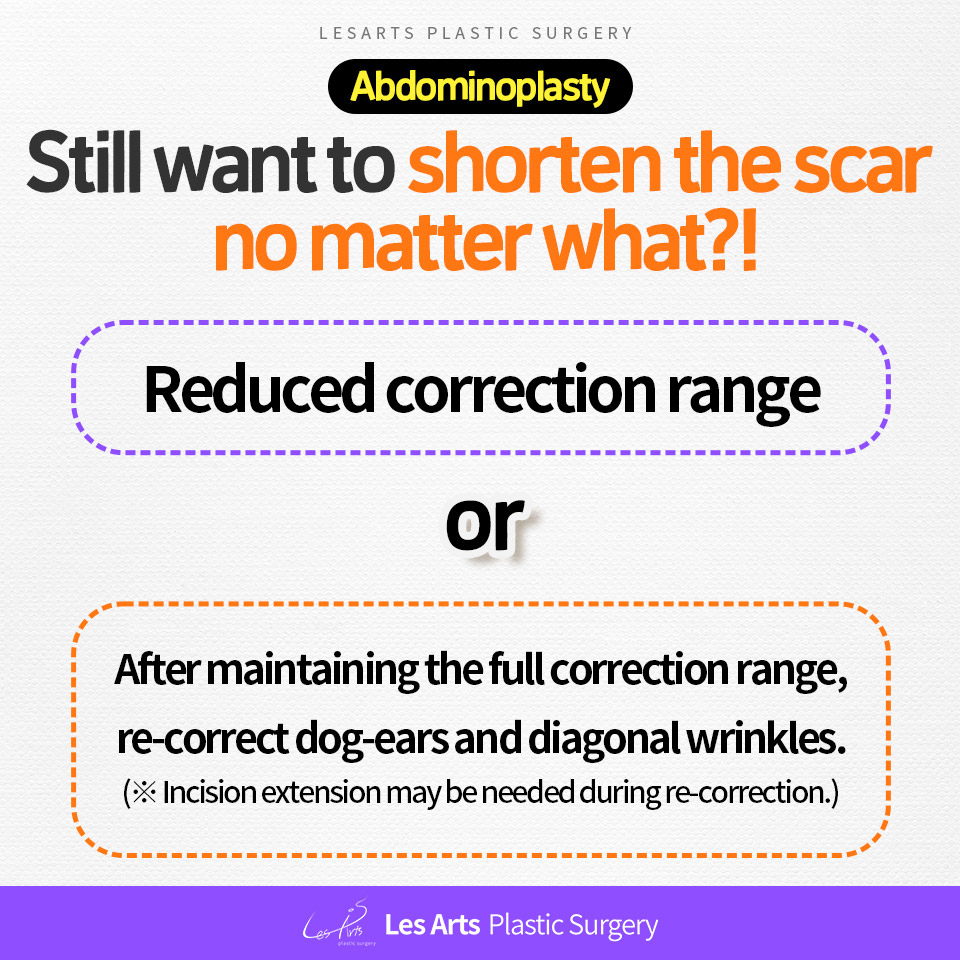
Even after explaining this,
some patients still request,
“I really want the scar to be short no matter what!”
In that case, we will shorten it as much as possible within a safe range,
but you should understand that this will ultimately create limitations
in correcting sagging,
which is the original goal of a tummy tuck.
Also, if you try to force the scar shorter,
• Dog-ear deformities at both ends of the incision
• Diagonal, slanted wrinkles above the incision
become much more likely,
and re-correction may be needed
after at least six months of follow-up.
In many re-correction cases,
the incision ends up being extended
to the scar length that was originally predicted
during the first diagnosis and consultation.
In other words, designing the incision from the start
at a length suitable for sagging correction
is the most efficient and safest approach.
Please keep that in mind.
Because I truly understand your concerns,
I also put great effort into
incision planning, suturing, and recovery care.
In fact, the part that takes the most time
during tummy tuck surgery
is the suturing process.
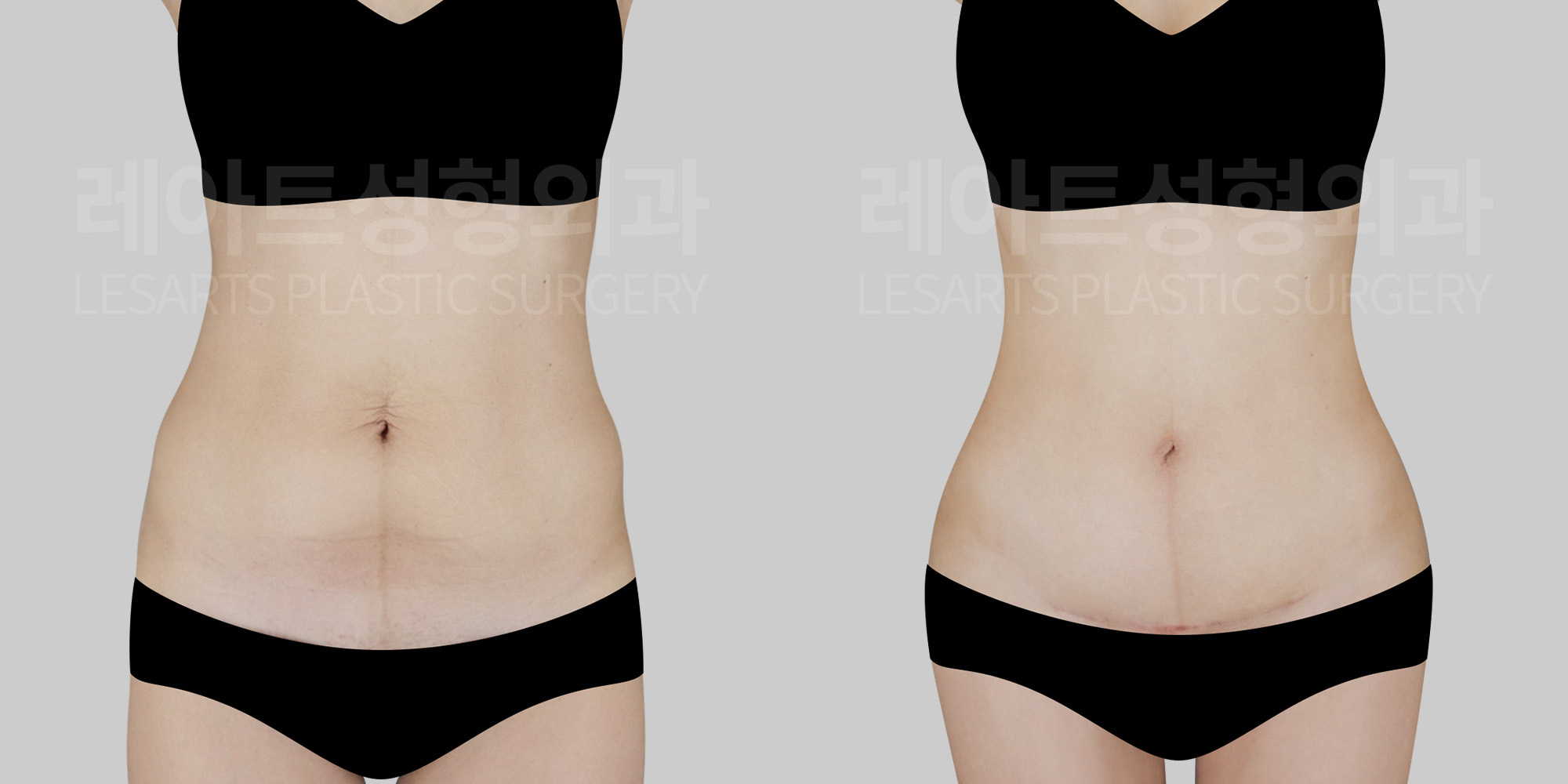
Although the scar length is inevitably determined
by the degree of sagging,
during surgery we adjust the scar position
so it is as discreet as possible,
and perform layer-by-layer, precise micro-suturing
to minimize how noticeable it becomes.
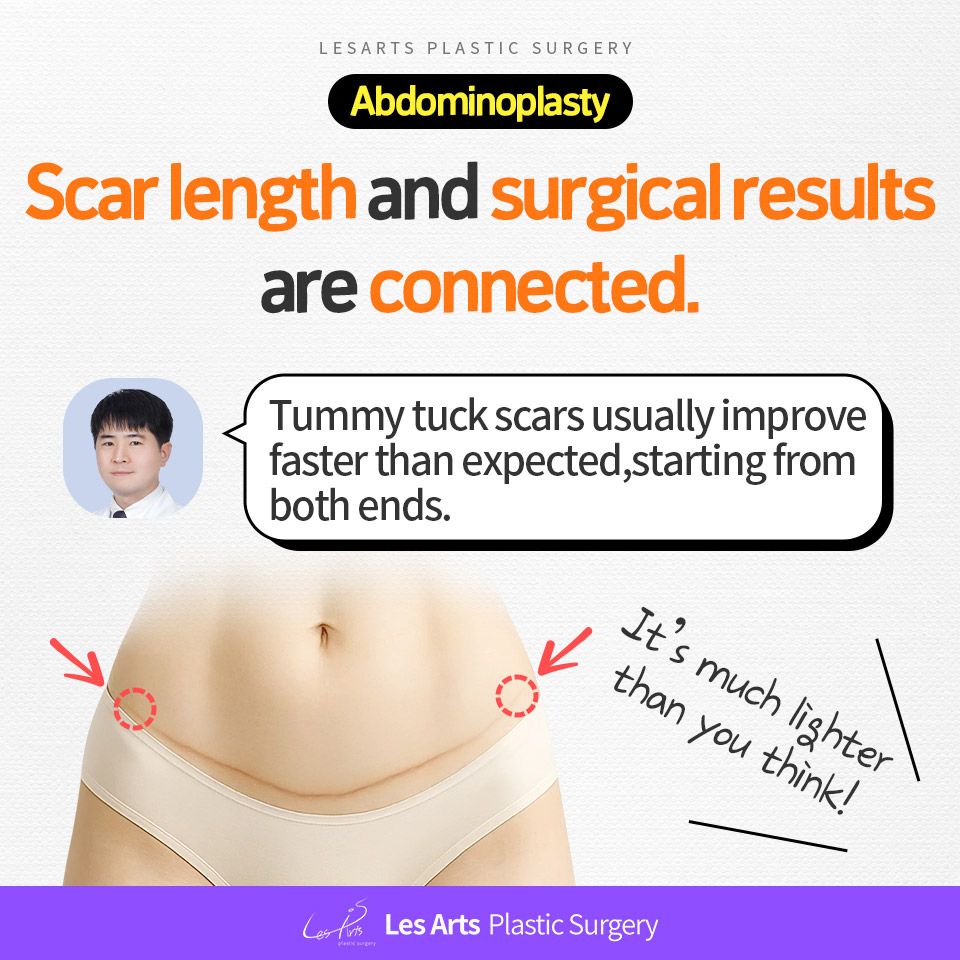
Also, because scars tend to fade starting from both ends,
even if the scar looks long at first,
as time passes many patients say,
“It’s much lighter than I expected.”
It may help to keep this in mind.
People who visit us with concerns
about tummy tuck scars
often can’t help but feel vague anxiety.
and clearly explain the expected scar location, length,
and the appropriate surgery type,
most patients tell us,
“It was easier to understand than I thought,
and I feel less worried now.”
Surgery choices should be made carefully,
but through precise diagnosis,
a customized plan,
and accurate surgical execution,
we are doing our best
to achieve highly satisfying results.