[Abdominoplasty] Why do cesarean section scars feel especially concerning?
Hello, this is Dr. Kukhan Lee,
the surgeon in charge of abdominoplasty and scar reconstruction
at Lesarts Plastic Surgery.
The journey of welcoming a new life
holds a unique story for every mother.
Every birth is a blessing,
but at times, an unplanned and unavoidable choice arises,
making a cesarean section necessary.
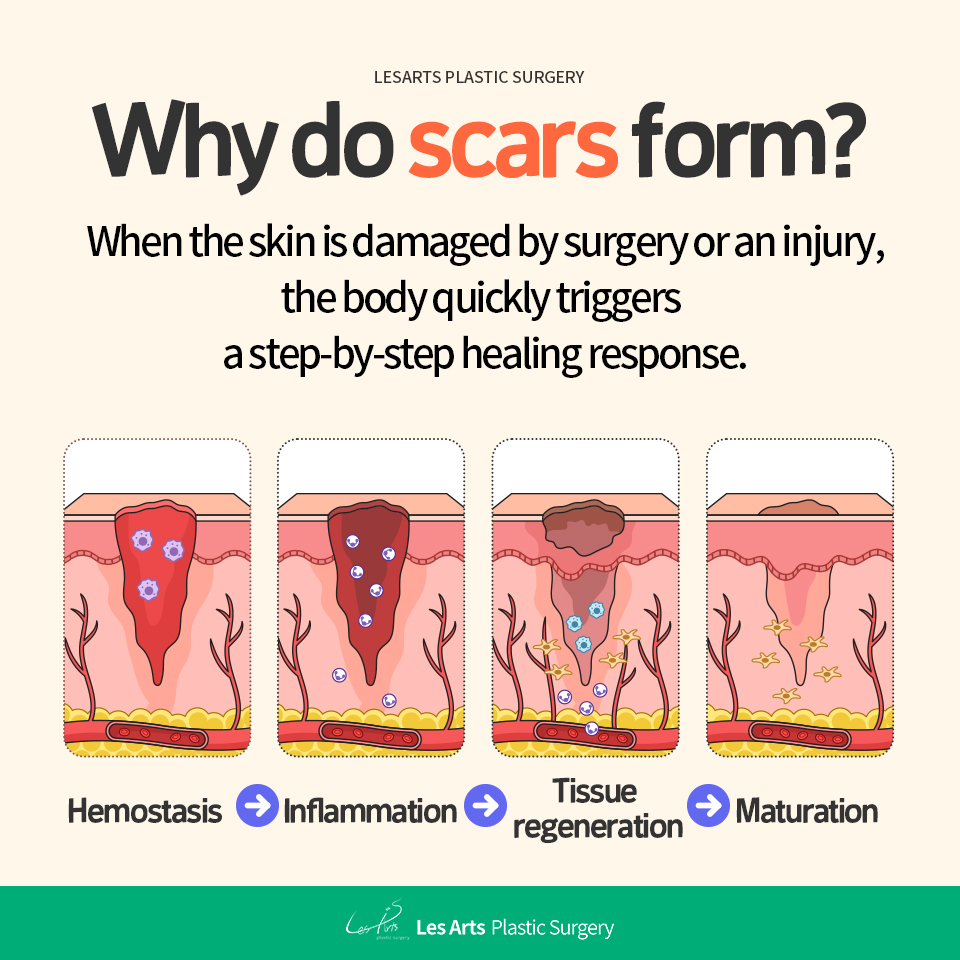
A cesarean section scar is not merely a surgical mark.
It is also a trace of a mother’s courage and dedication,
endured to protect the safety of both her baby and herself.
However, even as time passes,
• The scar may spread widely
• Become raised and firm
• Retain a dark, reddish color for a long time
When a scar becomes aesthetically concerning in this way,
it is natural to begin looking for possible solutions.
Today, I will walk you through
both non-surgical and surgical treatment options
for cesarean section scars, step by step.
————————————————————————————————————
Why do cesarean section scars differ
from person to person?
The appearance and severity of cesarean section scars
vary greatly between individuals,
and the main reasons can be summarized as follows.
 Individual predisposition (keloid tendency)
The most important factor
is an individual’s inherent scar tendency,
also known as a keloid predisposition.
In patients with a keloid tendency,
wounds caused by trauma or surgery
can progress into excessive scar formation
on any part of the body.
Tension applied to the scar area
Even without a keloid predisposition,
some incision scars become red, firm, and raised.
These are classified as hypertrophic scars.
The central portion of a cesarean section incision
is subjected to the greatest tension,
making the middle of the scar
more likely to become thickened.
Postoperative scar management
After surgery, factors such as:
• Consistent moisturizing
• Use of scar care products
• Appropriate scar treatments
(such as injections or laser therapy)
can significantly influence
the scar maturation process
and the final outcome.
For a more detailed understanding of scar care,
I recommend referring to the previously discussed
guide on scar management according to
each stage of scar maturation.
————————————————————————————————————
Non-surgical treatment options for cesarean section scars
The choice of treatment depends on
the type and severity of the scar.
Steroid injections (triamcinolone acetonide)
This is the most commonly used treatment
for firm, raised scars.
The medication is injected directly into the scar tissue
through an intralesional injection,
helping the scar become softer and flatter.
• Some patients show improvement after a single session
• Others may require multiple treatments,
depending on individual responses to the medication
One drawback is discomfort during the procedure.
However, as the scar gradually softens,
the level of pain tends to decrease over time.
In rare cases, side effects may occur, including:
• Skin indentation
• Changes in skin color
• Abnormal bleeding due to endocrine effects
For this reason, close communication with your physician
after treatment is essential.
————————————————————————————————————
Botulinum toxin (Botox) injections
For patients who have experienced side effects from steroid injections
or feel uncomfortable with injection-based treatments,
botulinum toxin may be considered as an alternative option.
Recent studies have reported
its effectiveness in reducing scar tension
and improving overall scar appearance,
and its clinical use is gradually expanding in practice.
————————————————————————————————————
Laser treatment
Laser therapy is effective for scars accompanied by:
• Hyperpigmentation
• Redness
• Increased vascularity
Although multiple treatment sessions are usually required,
laser therapy has relatively well-established effects
in controlling pigmentation and vascular changes within scars.
————————————————————————————————————
Surgical treatment options for cesarean section scars
When satisfactory improvement is not achieved
despite various non-surgical treatments,
surgical intervention may be considered as a final option.
Scar revision
If there is minimal abdominal laxity
and the primary concern is the cesarean section scar itself,
scar revision can be performed by excising the existing scar
and re-suturing the area.
This procedure involves a relatively limited surgical scope
and typically causes little disruption to daily life.
However, proper postoperative scar management
is essential to achieve optimal results.
————————————————————————————————————
However, in many cases,
the issue extends beyond the scar itself.
In clinical practice,
many patients visiting the clinic
for cesarean section scar treatment
also report the following concerns:
• Keloid or hypertrophic scars
• Skin depression or contour irregularities around the scar
• A step-like bulge above the scar caused by localized fat accumulation
• Postpartum abdominal skin laxity and rectus muscle separation
In such cases,
rather than correcting the scar alone,
an approach that considers
the overall abdominal structure
can lead to more satisfactory outcomes.
————————————————————————————————————
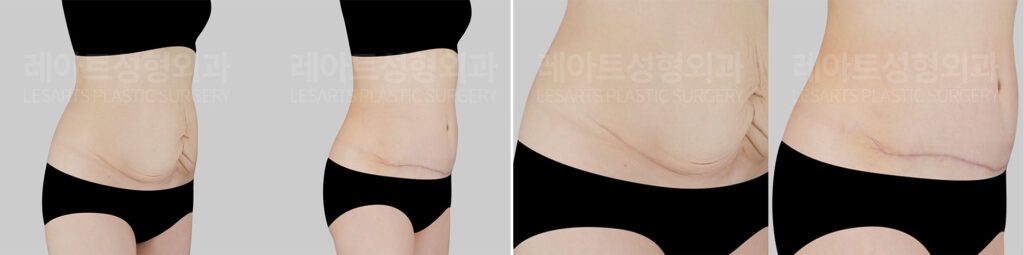
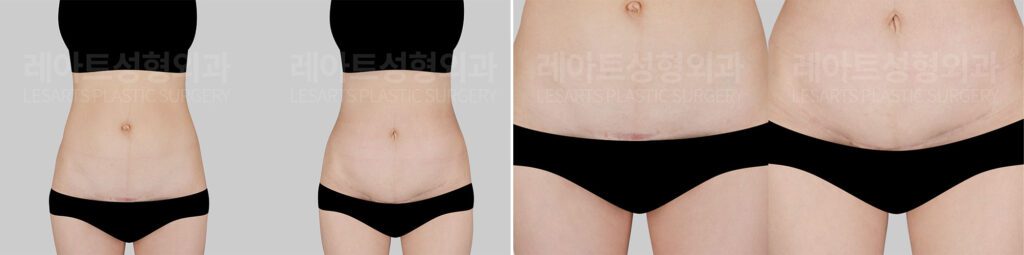
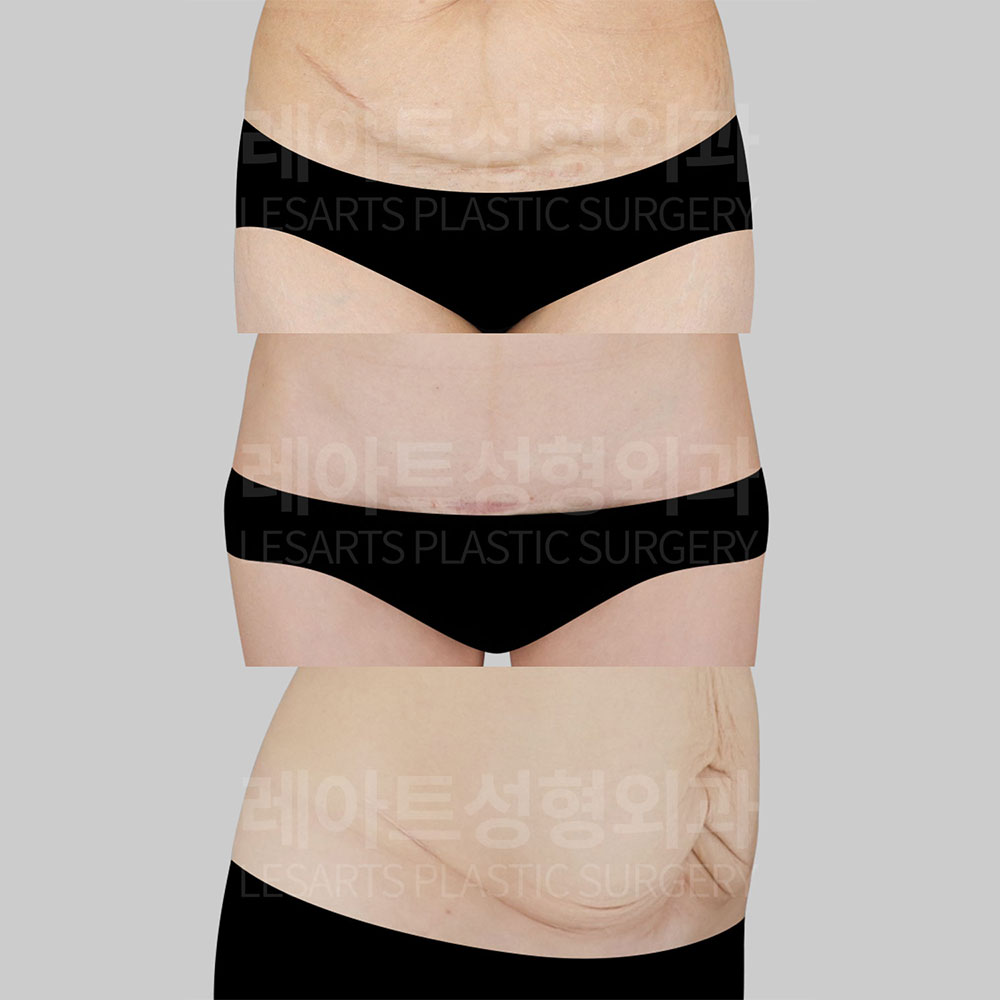
[Combined abdominoplasty and cesarean section scar revision]
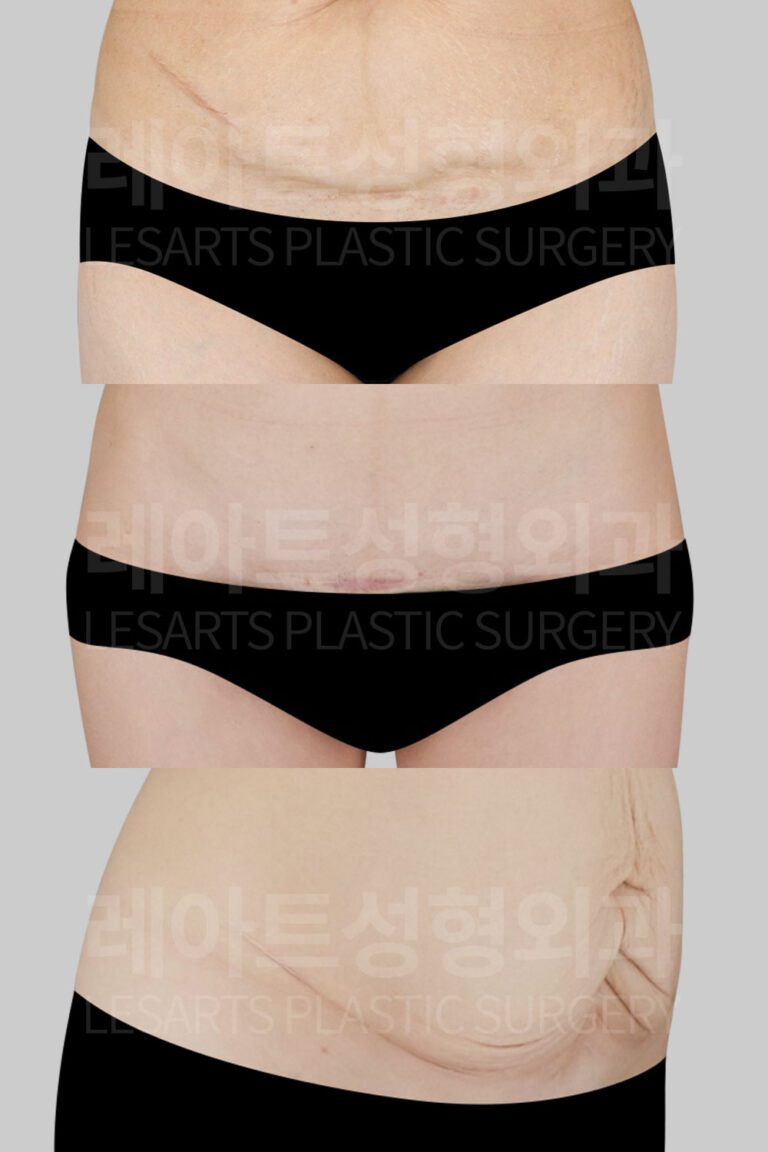
M-type abdominoplasty, before and after cesarean section scar removal – Dr. Kukhan Lee, Lesarts Plastic SurgeryLesarts Gynecomastia Surgery
M-type abdominoplasty, before and after removal of cesarean section scars (vertical line scars) – Dr. Kukhan Lee, Lesarts Plastic Surgery
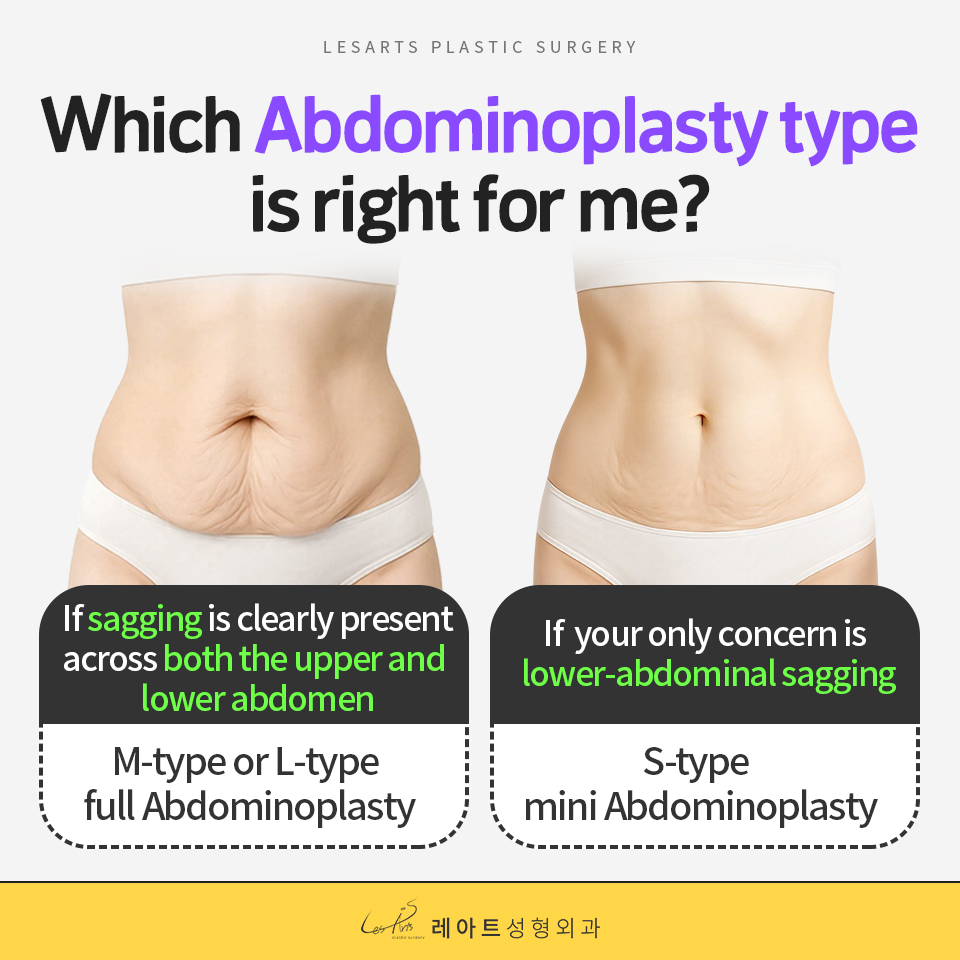
Abdominoplasty (M-type) + Cesarean section scar revision
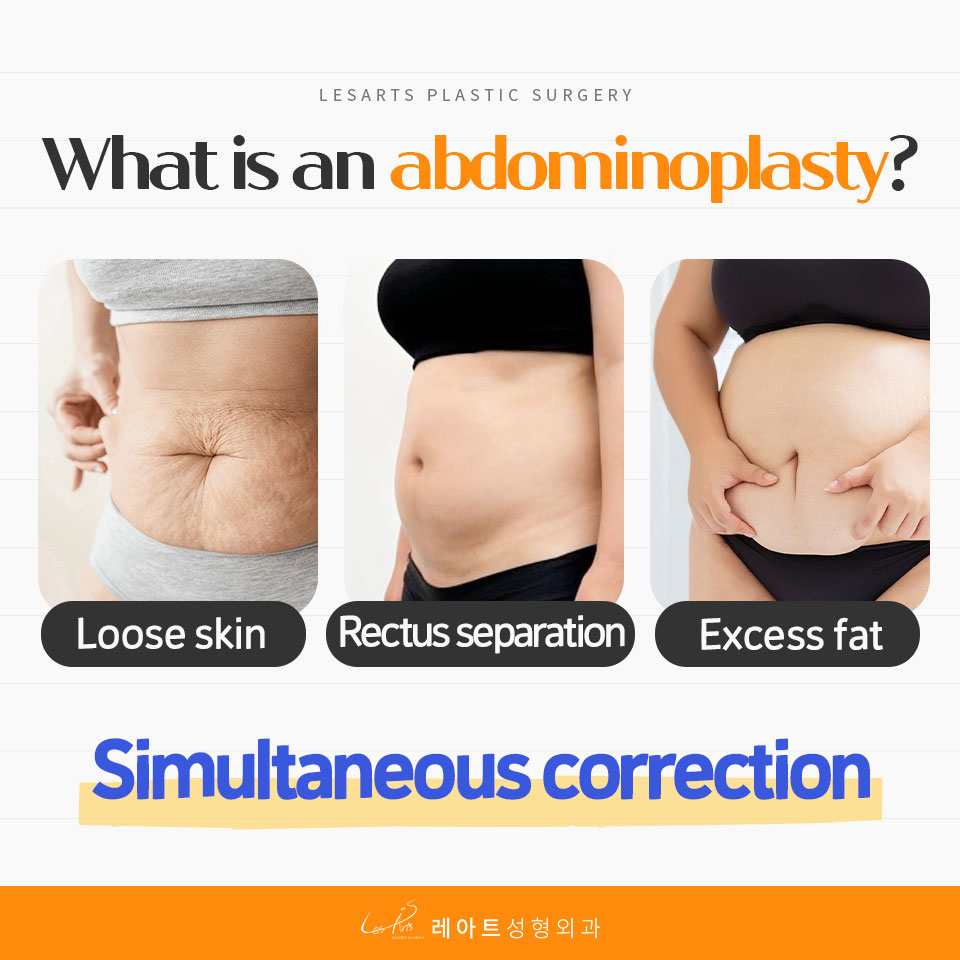
Abdominoplasty is a surgical procedure
that removes excess skin and fat,
and reinforces relaxed rectus muscles
to improve the abdominal contour.
• When the cesarean section scar is positioned relatively high
• When there is significant overall abdominal laxity
• When a vertical cesarean section scar is present
The existing scar and surrounding step-off
can be removed together,
and the scar can be repositioned
to a lower, more concealed location.
Because rectus diastasis correction
can be performed at the same time,
this approach may be a suitable option
for those concerned about both
their scar and abdominal contour.
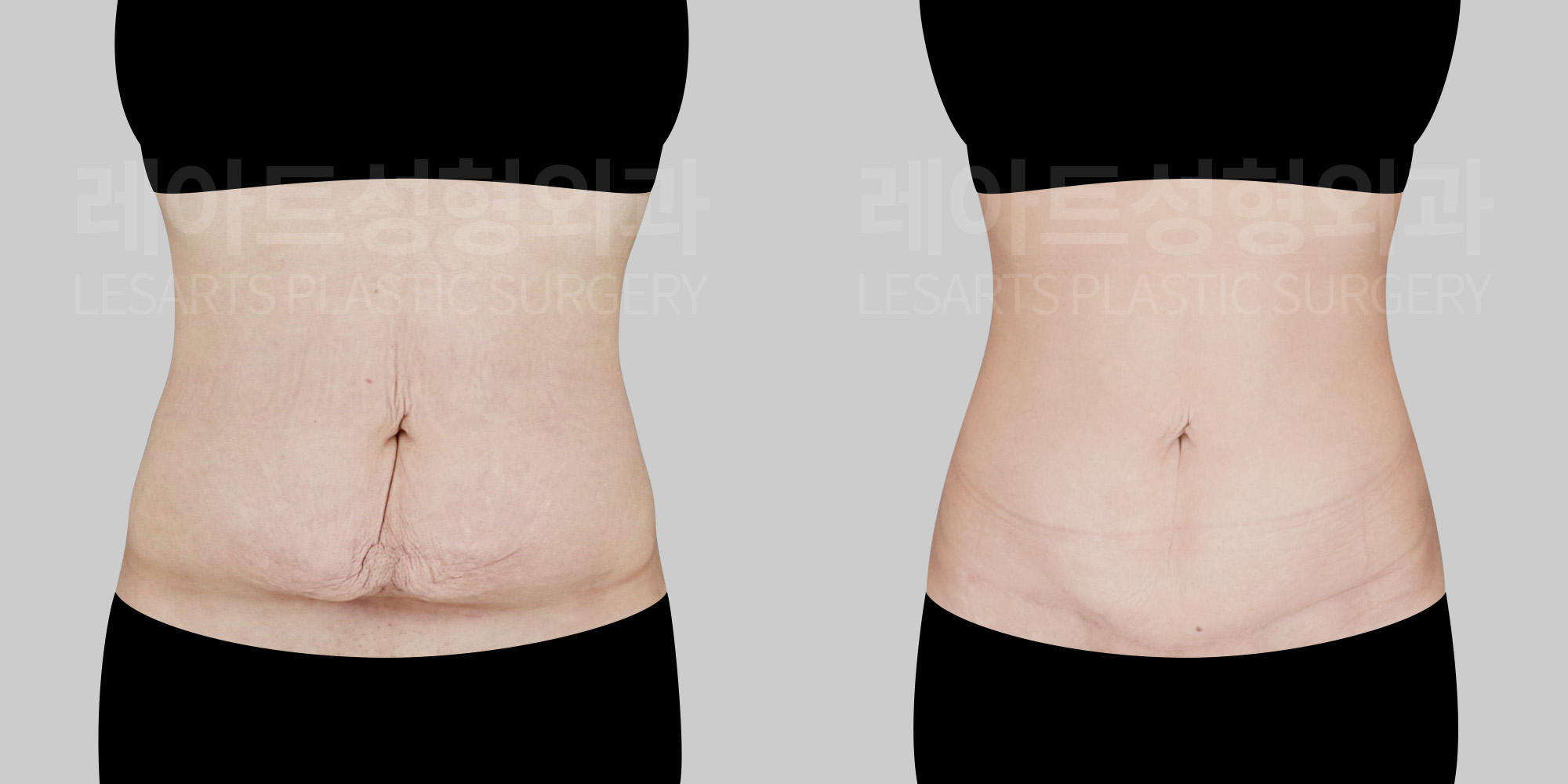
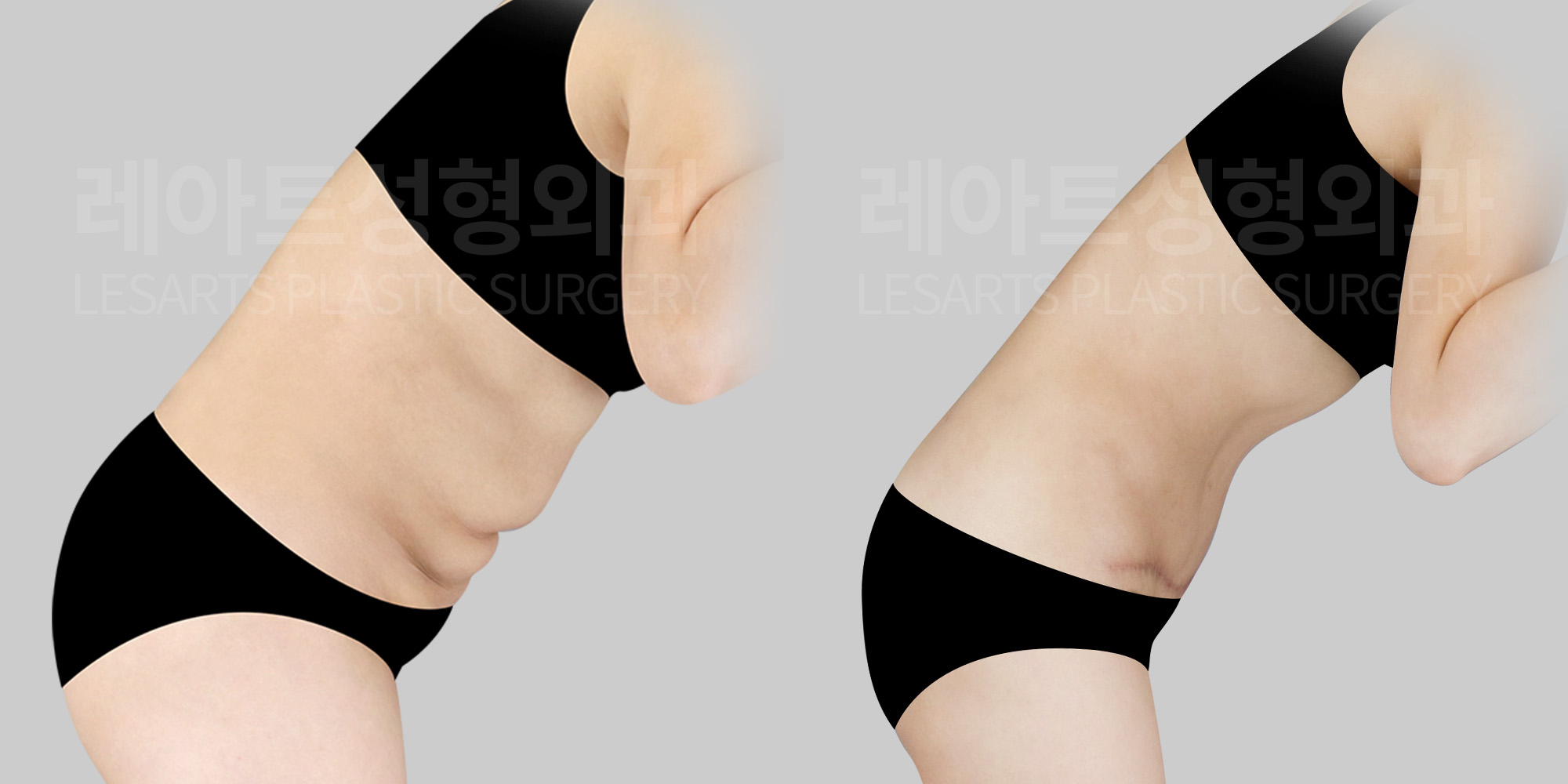
Mini abdominoplasty, cesarean section scar (keloid) surgery – Dr. Kukhan Lee, Lesarts Plastic Surgery
Mini abdominoplasty (S-type) + Cesarean section scar revision
Mini abdominoplasty is a procedure
that selectively corrects the lower abdomen
without extensive dissection
extending above the navel.
• When the cesarean section scar
is the primary concern
• When mild lower abdominal laxity
is present
By removing the existing scar,
lower abdominal skin refinement
and improvement in scar position
and shape can be achieved simultaneously.
————————————————————————————————————
In closing,
Abdominoplasty or mini abdominoplasty
is not a procedure that simply
“removes” a scar,
but a process of redesigning
the scar in a more natural
and harmonious way.
The most appropriate treatment approach
should vary depending on
individual body shape, skin condition,
and scar characteristics,
making a personalized plan
through thorough consultation
essential above all.
If you are concerned about
cesarean section scars
and abdominal changes after childbirth,
I encourage you to look beyond
scar treatment alone
and consult a specialist
about a treatment plan
that considers the entire abdomen.

 Individual predisposition (keloid tendency)
 Tension applied to the scar area
 Postoperative scar management
 Steroid injections (triamcinolone acetonide)
 In rare cases, side effects may occur, including: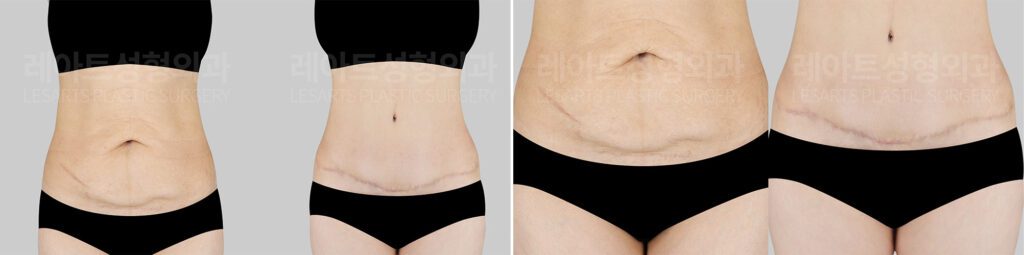
![[Abdominoplasty]Why does a tummy tuck inevitably leave a long scar?](https://lesartsps.com/wp-content/uploads/2025/12/251204_abdominoplasty_post_01.jpg)