Abdominoplasty revision in Gangnam: when and why secondary abdominoplasty is needed

Patient Registration Info
| Age | Weight | Height | BMI |
|---|---|---|---|
|
50s |
55kg |
158cm |
22 |
Surgical site
Surgical site : Abdomen, accessory breast, hip, S-type, muscle repair, umbilicus floating| liposuction aspirate volume : 2,600cc
Hip dip fat transfer : Hip fat transfer (Right: 140 cc, Left: 150 cc)
Abdominoplasty surgery is commonly
known as a procedure
for correcting sagging
abdominal skin appearance.
However, patients requiring
abdominoplasty correction often present
not only skin laxity,
but deeper structural issues.
These include increased
fat layer thickness and
separation of the
rectus abdominal muscles.
This condition leads
to weakened abdominal wall function
and compromised structural
support of the abdomen.
In addition, previous
liposuction surgery or
cesarean section scars may
cause internal tissue adhesions.
These adhesions can result
in hardened tissue areas
and irregular abdominal contour deformity.
When these complex issues
are not fully diagnosed,
or surgical correction
is incomplete or insufficient,
the likelihood of
revision abdominoplasty surgery
may significantly increase
over time.
This is because
structural abdominal deformities
cannot be fully corrected
through lifestyle management alone.
Therefore, accurate diagnosis
and comprehensive surgical planning
during the initial procedure
are critically important.
Careful execution based
on patient-specific analysis
ensures stable, long-term
abdominoplasty results.
[Patient Information]
Age: Early 50s
Height: 158 cm
Weight: 55 kg
BMI: 22
Even with similar
physical characteristics,
abdominoplasty results may vary
depending on individual conditions.
The patient previously
underwent two cesarean deliveries,
after which abdominal
skin elasticity did not fully recover.
This resulted in
visible lower abdominal wrinkles
and progressive
skin sagging deformity.
Over time, protrusion
extended from the
upper abdomen toward
the central abdominal area.
This caused overall
abdominal contour distortion,
affecting structural balance
and natural abdominal shape.
To correct post-pregnancy
body contour changes,
the patient previously
underwent mini abdominoplasty surgery.
However, during
the initial procedure,
rectus muscle repair
was not performed.
As a result,
the weakened abdominal wall
remained unsupported,
causing persistent abdominal protrusion.
With time, both
abdominal sagging and
structural deformity
progressively worsened.
Wrinkles developed
around the umbilicus,
and overall skin firmness
continued to decline.
Therefore, accurate evaluation
of the skin, fat, and
muscle layers was essential.
A comprehensive
revision abdominoplasty plan
was established to restore
proper abdominal structure.
Surgical Plan
1. Abdominoplasty (S-type) and adhesion release
– Careful adhesion release was performed
to correct irregular
and hardened tissue areas.
– Through precise
abdominal skin lifting,
lower abdominal sagging
and fine wrinkles were removed.
– In addition, the previous
cesarean section scar
was surgically removed
during the procedure.
– The abdominoplasty incision scar
was planned for continuous
professional scar management care
to optimize healing outcomes.
2. Abdominal wall repair (rectus muscle correction)
– Because rectus muscle repair
was not performed
during the previous surgery,
structural correction was required.
– The rectus muscles were
carefully repaired and reinforced
from the upper abdomen
to restore core stability.
– This helped recover proper
abdominal wall support
and improve structural
abdominal contour balance.
3. Umbilicus floating and repositioning
– The existing umbilicus position
was located higher
than ideal anatomical alignment.
– Through umbilicus floating technique,
the navel was repositioned
based on lifting direction
and skin tension balance.
– This ensured a natural,
proportionate, and aesthetically
balanced umbilical position.
4. Combined abdominal liposuction
– To enhance overall
abdominoplasty results,
abdominal liposuction was
performed simultaneously.
– This helped reduce
overall abdominal circumference
while improving natural
waistline contour definition.
– The combined approach
created synergistic improvement
in abdominal contour
and overall body proportions.
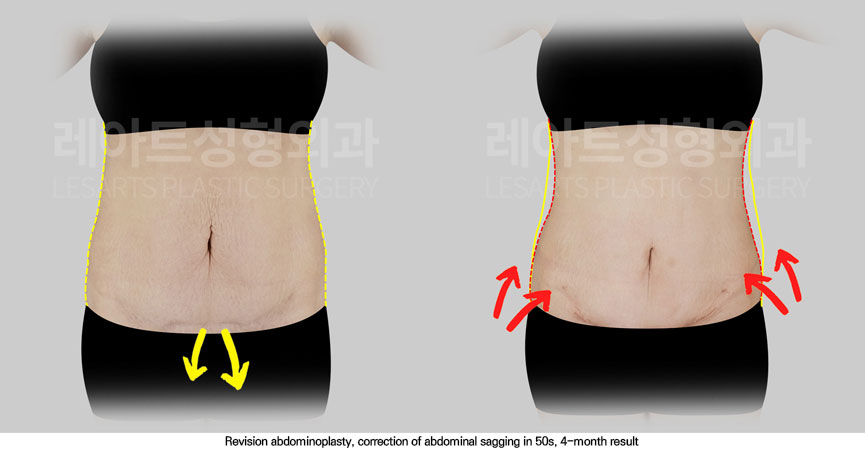
We will now review
the revision abdominoplasty results
through detailed
before and after comparison.
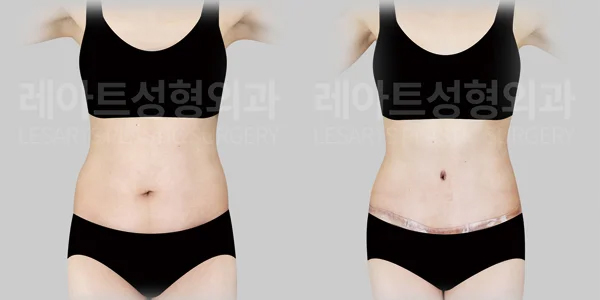
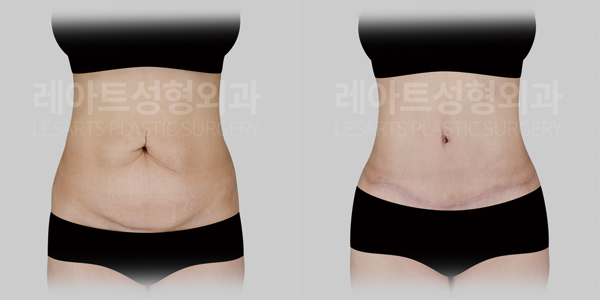
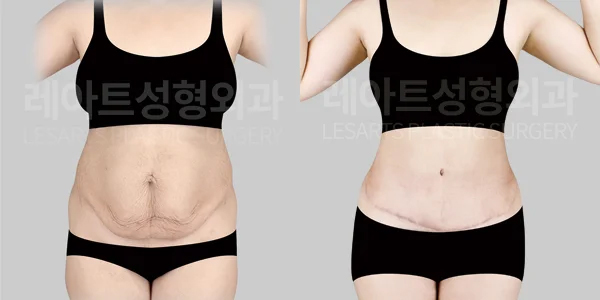
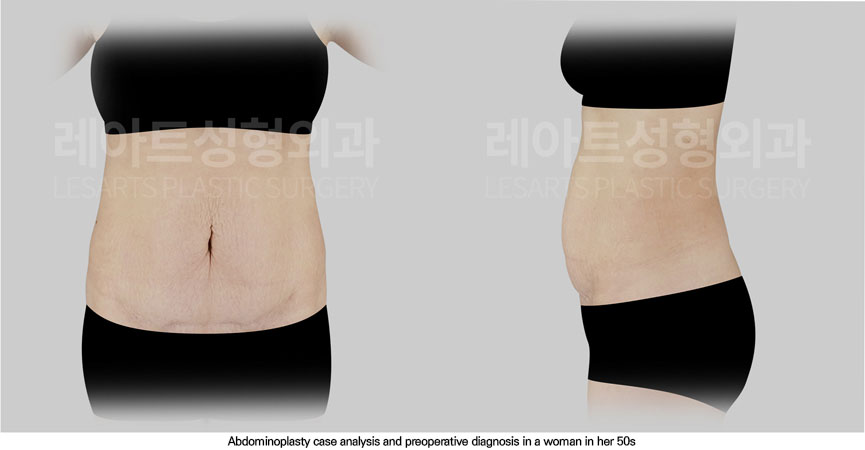
Before revision abdominoplasty surgery,
severe lower abdominal sagging
and visible wrinkle formation
were clearly present.
The previous cesarean scar
remained highly visible,
and right-sided adhesions
caused asymmetrical tension.
This resulted in
a slightly shifted
abdominal center axis,
creating contour imbalance.
To correct these issues,
revision abdominoplasty surgery
and combined liposuction
were carefully performed.
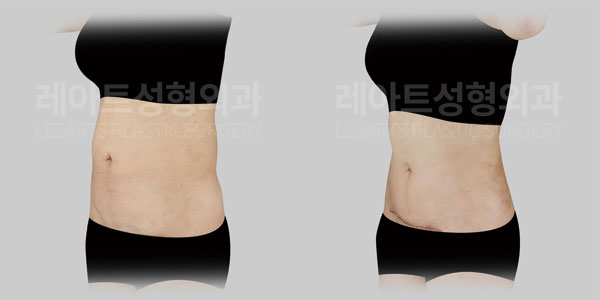
After surgery,
excess skin sagging
and periumbilical wrinkles
were smoothly corrected.
The umbilicus position
was also stabilized,
aligned naturally with
the lifted abdominal contour.
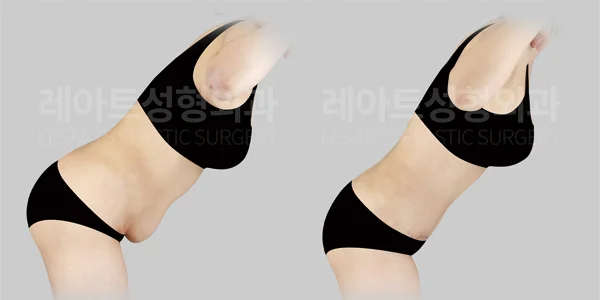
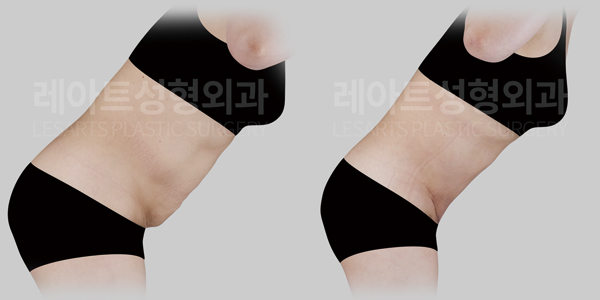
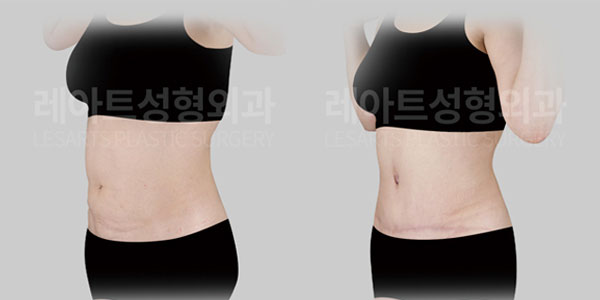
Before revision surgery,
the abdominal skin
showed downward folding
and structural collapse.
Following surgery,
excess skin was removed,
restoring firm, stable
abdominal skin elasticity.
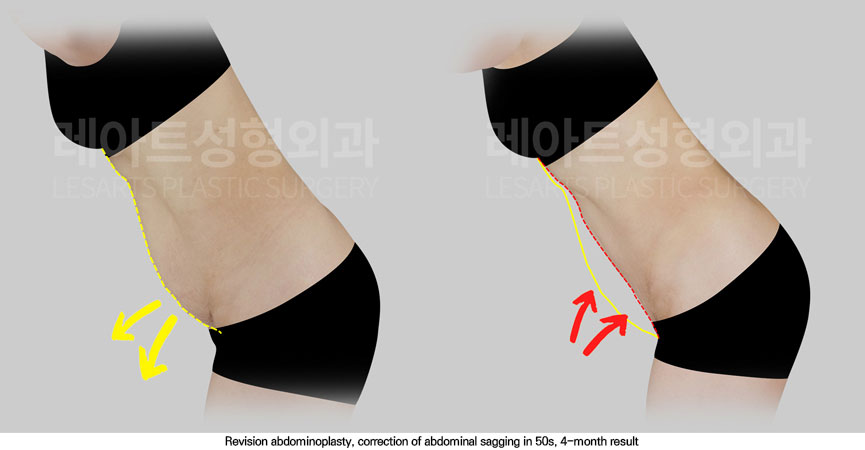
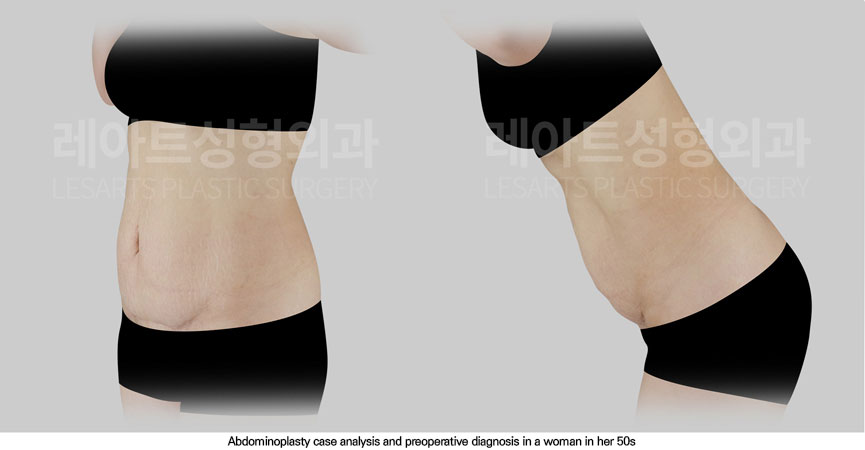
In the forward bending position,
both skin sagging correction
and improved abdominal wall support
are clearly visible.
The previous abdominoplasty surgery
focused primarily on
skin removal, without proper
rectus muscle correction.
This resulted in
persistent structural weakness
and unresolved abdominal wall protrusion
over time.
During this revision abdominoplasty,
comprehensive abdominal wall repair
was performed from
the upper abdominal region.
This restored the structural
support function of
the abdominal wall muscles,
which stabilize internal organs.
As a result, even
in forward bending positions,
the abdomen maintains
a firm, lifted contour.
The improved structure
prevents downward collapse,
demonstrating a stable
and effective abdominoplasty outcome.
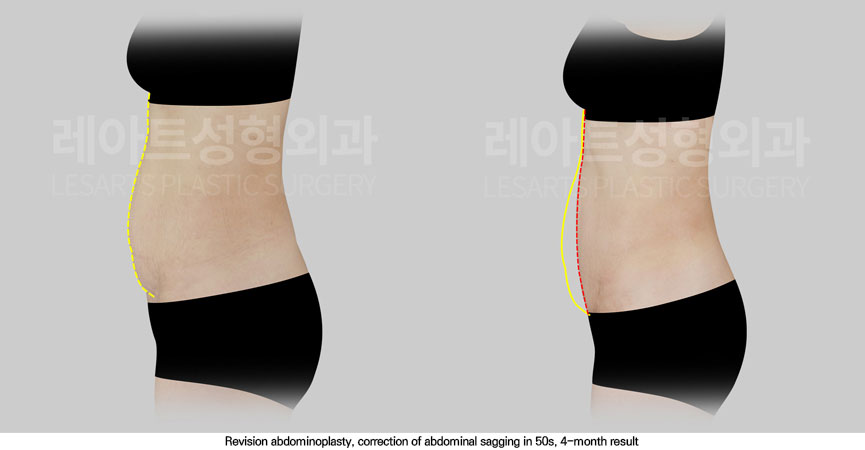
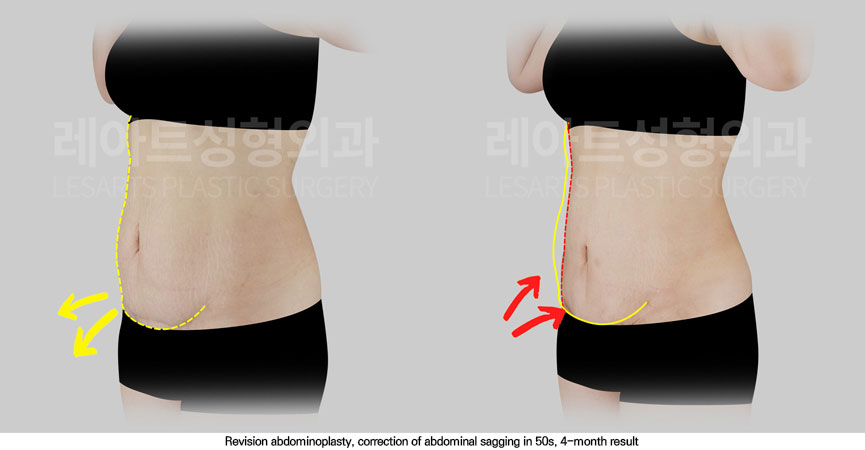
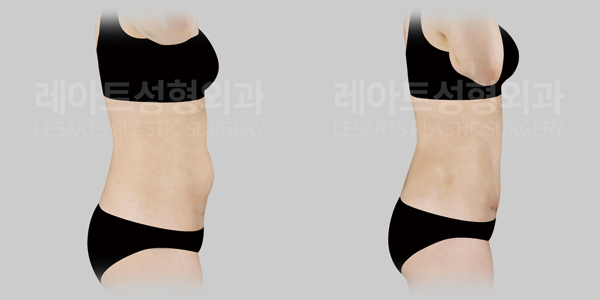
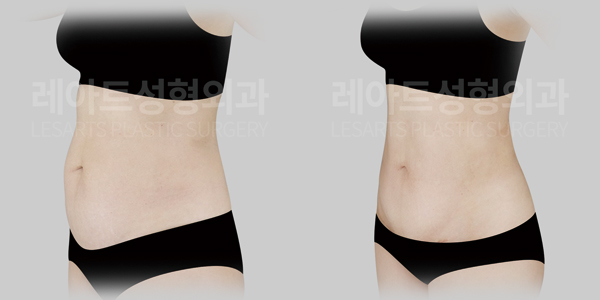
From the side profile,
both abdominal skin sagging
and weakened abdominal wall protrusion
were clearly visible.
These conditions added
visible heaviness
to the overall
waistline contour.
Multiple structural issues,
including rectus diastasis,
excess abdominal fat,
and skin laxity were present.
These combined factors
caused forward displacement
of the central
abdominal contour axis.
At 4 months after revision abdominoplasty,
all previously identified
structural and contour
issues were corrected.
The displaced abdominal
center was restored
to its natural
and stable position.
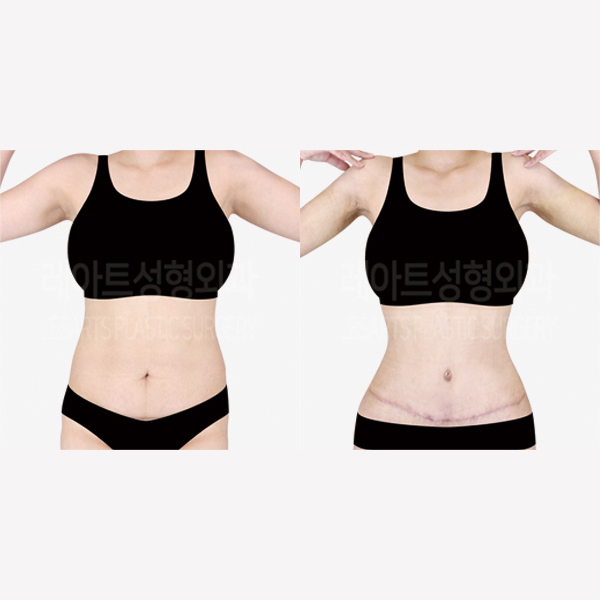
Previously sagging
and wrinkled skin
was smoothed, restoring
firm abdominal contour definition.
Through combined
abdominal liposuction,
the anterior abdominal thickness
was significantly reduced.
This created smoother
transition between
the upper and lower
abdominal contour regions.
As a result,
the waist circumference
improved, restoring balanced
abdominal proportions.
At this stage,
some residual bio-bond firmness
remained during
the healing process.
The incision scar
requires continued
laser toning treatment
for optimal scar refinement.
With consistent
massage and skin care,
and proper follow-up
management schedule,
the final revision abdominoplasty result
is expected to stabilize
and further improve
over time.
#RevisionAbdominoplasty
#AbdominoplastyKorea
#TummyTuckRevision
#LooseAbdominalSkinCorrection
#RectusDiastasisRepair
#AbdominalWallRepair
#PostPregnancyBodyContouring
#AbdominalLiposuction
#WaistlineContouring
#LesartsPlasticSurgery
#KoreanTummyTuckClinic
#BestTummyTuckClinicInKorea