
Abdominal liposuction in Seoul: 2-month waistline changes for stubborn lower belly fat after childbirth
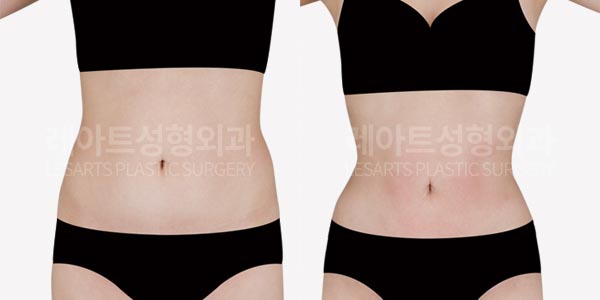
Patient Registration Info
| Age | Weight | Height | BMI |
|---|---|---|---|
|
40s |
49kg |
160m |
19 |
Surgical site
Surgical site : Abdomen|liposuction volume : 2,600 cc
Can Abdominal Liposuction Help If Lower Belly Fat Remains After Childbirth Even After Returning to Your Previous Weight?
If post-pregnancy abdominal changes are mainly caused
by subcutaneous fat, abdominal liposuction can help reduce
lower abdominal thickness and improve the flanks.
However, if skin laxity, visceral fat, or rectus diastasis
are also present, there are limits to what liposuction alone
can improve. Therefore, it is important to first evaluate
the current condition of the abdomen.
Some women continue dieting after childbirth
because the lower abdomen remains prominent
even after they have lost a significant amount of weight.
Even after returning close to their pre-pregnancy weight,
the area below the belly button may still protrude,
or the flanks may remain full, making the waistline less defined.
Rather than simply assuming that more weight needs to be lost,
it is important to determine what is actually contributing
to the thickness of the abdomen.
After childbirth, changes may involve not only increased fat
but also reduced skin elasticity or stretching of the abdominal wall,
which can create a different abdominal shape than before pregnancy.
Therefore, when planning abdominal liposuction, it is important
to evaluate not only the amount of lower abdominal fat
but also fat distribution around the flanks, skin condition,
rectus diastasis, and the influence of visceral fat.
This patient also planned abdominal liposuction
to improve the remaining lower abdominal fullness
and waistline after two pregnancies.
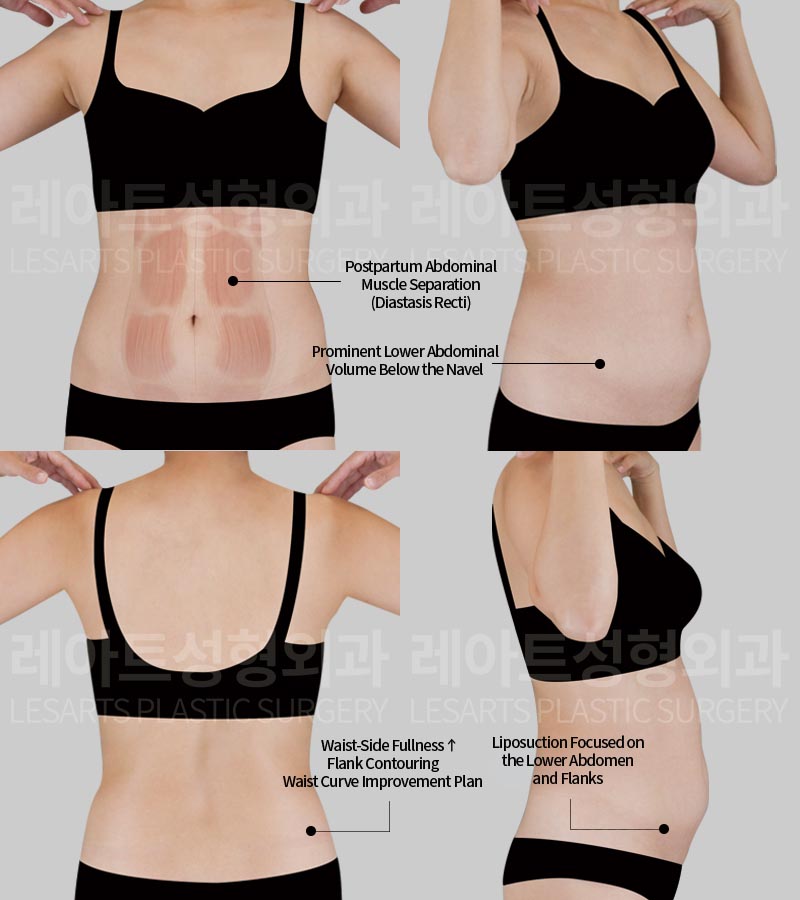
[Preoperative Analysis of Lower Abdominal Fullness and Waistline After Childbirth]
The patient was 160 cm tall, weighed 49.3 kg,
and had a BMI of 19.3. She had a relatively slim overall build
and had experienced two pregnancies.
Although her body weight was not high, her main concerns
were the lower abdominal fullness and flank fat
that remained after childbirth.
From the front, the lower abdomen projected forward,
while residual fat around the flanks made the waistline
appear relatively straight.
As a result, the midsection appeared heavier
than expected for her height and weight,
making the overall body contour look less defined.
[Why the Lower Abdomen and Flanks Were Treated Together]
The patient wanted more than simply
a reduction in abdominal circumference.
It was important to reduce the thickness of the projecting lower abdomen
while also removing residual fat from the flanks,
so the waistline would appear naturally more defined from the front.
If only the central abdomen were treated while leaving
the flank volume unchanged, the lower abdomen could appear slimmer
while the waistline might still remain relatively straight.
Therefore, the distribution of fat in both the lower abdomen
and flanks was evaluated, with the goal of reducing central abdominal volume
while creating a more naturally defined waistline.
[Some Areas Could Not Be Fully Improved with Liposuction Alone]
The preoperative evaluation also identified visceral fat
and rectus diastasis after childbirth, in addition to subcutaneous fat.
Because visceral fat is located inside the abdominal cavity,
it cannot be directly removed through liposuction.
Abdominal wall projection caused by rectus diastasis
is also difficult to correct with liposuction alone.
The patient was therefore informed in advance that abdominal liposuction
could reduce subcutaneous fat in the lower abdomen and flank thickness,
but there could be limitations in correcting all post-pregnancy
changes in abdominal shape with liposuction alone.
When considering abdominal liposuction after childbirth,
it is important to distinguish between the areas that can be improved
with liposuction and those that may require separate management,
rather than focusing only on how much fat can be removed.
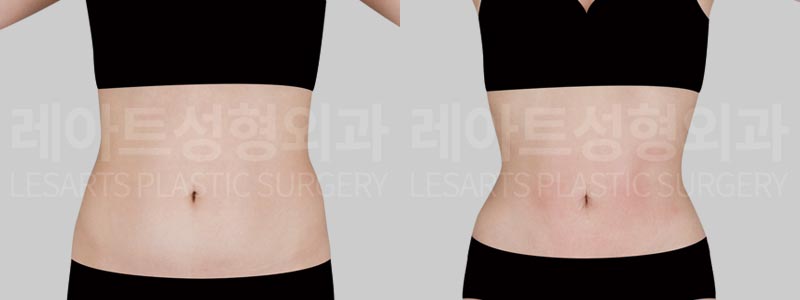
[Changes in Lower Abdominal Thickness and Waistline from the Front 2 Months After Abdominal Liposuction]
This photo was taken 2 months after surgery.
Before surgery, fullness around the flanks made
the waistline appear relatively straight.
After surgery, the reduction in fat on both sides
created a more naturally defined inward curve at the waist.
As the waist circumference decreased,
the heavy appearance concentrated around the central abdomen
also became noticeably lighter.
Since the patient already had a relatively slim overall build,
reducing the abdomen and flanks helped reveal a waistline
that appears more naturally balanced with her existing body shape.
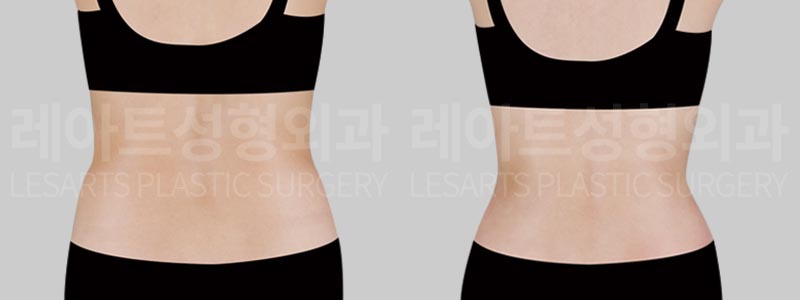
[Changes in Flanks and Waistline from the Back 2 Months After Abdominal Liposuction]
From the back view, the reduction in waist circumference
can also be clearly seen.
Before surgery, the line from the lower back to the flanks
appeared relatively straight, making the waist curve less defined.
After surgery, the flanks became slimmer, creating a more defined waist
and a smoother curve from the back down toward the pelvis.
As the abdominal fullness that had appeared relatively prominent
for the patient’s height and weight was reduced,
the overall upper body proportions also appear lighter and more balanced.

[Changes in Lower Abdomen and Flank Contours from an Oblique View 2 Months After Abdominal Liposuction]
From the oblique view, the change in abdominal width
can be seen as both the lower abdomen and flanks became slimmer.
Before surgery, the lower abdomen projected forward
and the fullness extended into the flanks,
making the central abdomen appear relatively heavy.
After surgery, the volume in both areas was reduced,
creating a more naturally defined transition
between the front abdomen and flanks.
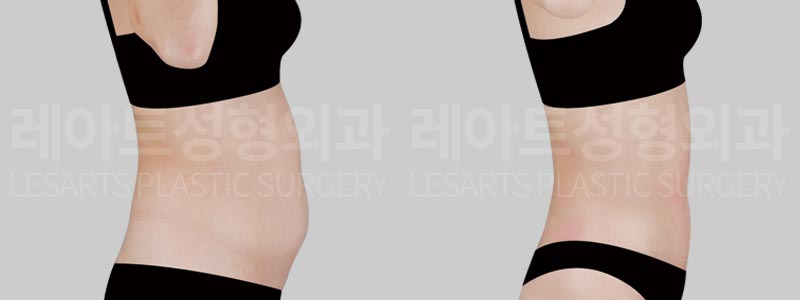
[Changes in Abdominal Projection and Lower Abdominal Thickness from the Side 2 Months After Abdominal Liposuction]
From the side view, the change in the lower abdomen,
which had been the patient’s main concern, is more noticeable.
Before surgery, the area below the belly button projected forward,
making the lower abdomen appear relatively thick
compared with the rest of the body.
After surgery, the protruding subcutaneous fat was reduced,
creating a flatter lower abdominal contour.
The thickness from the upper to lower abdomen also decreased,
resulting in a lighter and smoother overall front abdominal contour.

[Selfie Comparison Before and 3 Weeks After Abdominal Liposuction]
At 3 weeks after surgery, swelling and tissue firmness
may still remain as part of the early recovery process.
Even so, the patient’s own photos show a reduction
in lower abdominal volume compared with before surgery,
with the waistline gradually becoming more defined.
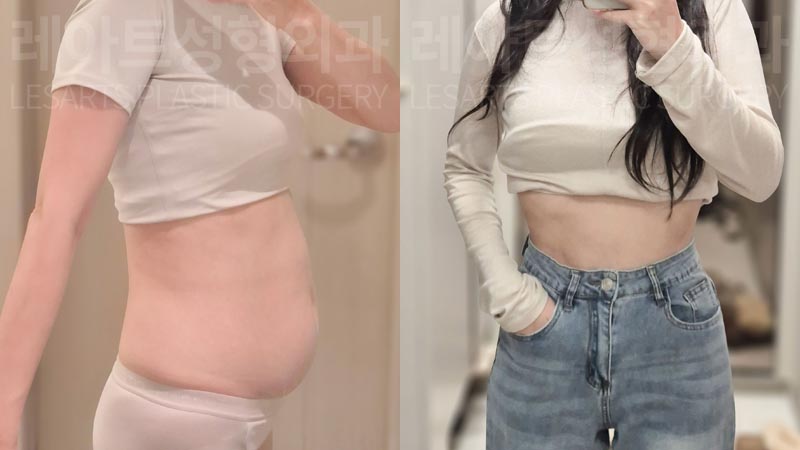
[Selfie Comparison Before and 2 Months After Abdominal Liposuction]
At 2 months after surgery, the reduced flank volume
reveals a more defined waistline, while the lower abdomen
appears slimmer and lighter.
The reduction in central abdominal volume can be seen
not only in standardized before-and-after photos,
but also in the patient’s everyday appearance.
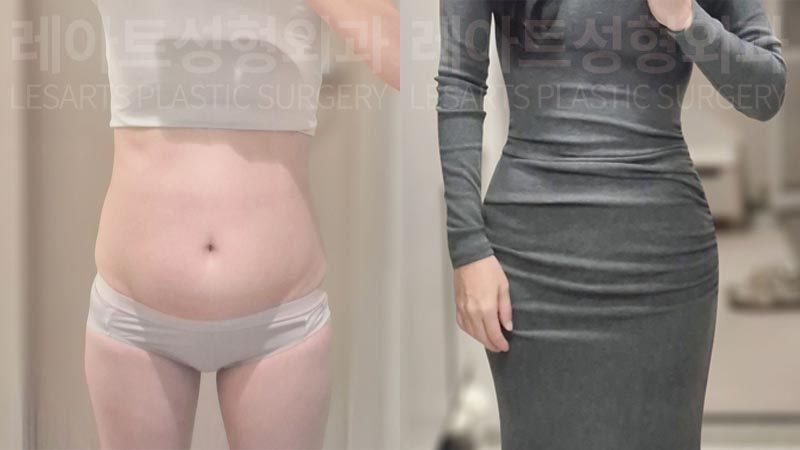
[Selfie Comparison Before and 5 Months After Abdominal Liposuction]
At 5 months after surgery, the abdomen had become more stable,
and the changes in the lower abdomen and waistline
appeared natural even in everyday postures.
The patient was also satisfied with the reduction
in the previously prominent lower abdomen
and the more clearly defined waistline.
She also noted that her body appeared lighter
and less heavy around the midsection than after childbirth,
with a more noticeable curve at the waist.
Although the patient had maintained a relatively stable weight
after two pregnancies, the lower abdomen and flanks
had not improved as much as she wanted.
After abdominal liposuction, the thickness of the projecting
lower abdomen decreased, while the flanks became slimmer,
revealing a waistline that had previously been less visible.
The patient was satisfied that the heavy appearance
of the abdomen was reduced and the waist became more defined
without having to lose additional weight.
However, rectus diastasis and visceral fat were also identified
after childbirth, so the patient was informed that areas
that could not be improved through liposuction would require
continued management afterward.
If you have successfully lost weight after childbirth
but the lower abdomen still projects forward or the flanks remain full,
further weight loss may not necessarily be the only approach.
It is important to determine whether abdominal thickness
is mainly caused by subcutaneous fat or whether visceral fat
and rectus diastasis are also contributing factors.
Based on this evaluation, a surgical plan should distinguish
between the changes that can reasonably be expected from liposuction
and the areas that may not be corrected through liposuction alone.
If repeated dieting has not produced the changes you want
in your lower abdomen and waistline, consider having your current
abdominal condition evaluated to determine a suitable approach.
Post-Pregnancy Abdominal Liposuction FAQ
Q1. Can lower belly fat after childbirth be difficult to lose through dieting alone?
If subcutaneous fat remains in the lower abdomen after childbirth,
the area may remain thick even after overall body weight decreases.
Skin elasticity and the condition of the abdominal wall
may also affect the abdominal contour, so it is important
to evaluate the underlying causes together.
Q2. Can abdominal liposuction improve rectus diastasis?
Abdominal liposuction is a procedure that removes subcutaneous fat,
so it does not directly repair separated rectus muscles.
Q3. Can visceral fat be removed with abdominal liposuction?
Liposuction removes subcutaneous fat located beneath the skin.
Visceral fat located inside the abdominal cavity
cannot be removed through liposuction.
Q4. Can abdominal liposuction improve a straight waistline after childbirth?
If sufficient subcutaneous fat is present around the flanks,
treating this area together can help create
a more naturally defined waistline.
The degree of change may vary depending
on the patient’s skeletal structure and abdominal wall condition.
Q5. Is 2 months after abdominal liposuction the final result?
Changes in the lower abdomen and waistline can be seen at 2 months,
but the recovery process is still ongoing.
As swelling decreases and the tissues continue to stabilize,
the abdominal contour may gradually become more natural.
▼ Visit Lesarts Plastic Surgery in Gangnam, Seoul, Korea ▼