Patient Registration Info
Surgical site
Surgical site : Abdomen and hip, M-type, muscle repair, umbilicus correction| liposuction aspirate volume : 4,400cc
Hip fat transfer : hip fat transfer (right: 160 cc / left: 160 cc)
After pregnancy and childbirth,
many patients experience
abdominal skin sagging and
a weakened, protruding abdominal wall.
For this reason, more patients are choosing
abdominoplasty for correction.
Abdominoplasty is not only
about removing excess skin.
It also involves fat removal
and abdominal muscle repair,
making it a complex procedure
that corrects multiple internal layers
at the same time.
Because of this, the surgery
has a relatively high level of difficulty,
and the recovery process is longer
and requires careful management.
The length of the incision
varies depending on
the extent of correction.
Additionally, individual factors such as
body condition and post-operative care
can influence both recovery speed
and final results.
Therefore, before surgery,
it is important to understand
the expected limitations,
recovery stages, and
overall surgical approach.
Planning daily routines and timing
around the procedure
is also essential.
This case was planned based on
a detailed preoperative diagnosis,
with a customized surgical approach
tailored to the patient’s goals.
[Patient Information]
Age: Mid-50s
Height: 158 cm
Weight: 61 kg
BMI: 25
Even with similar body conditions,
results may vary depending on
individual characteristics.
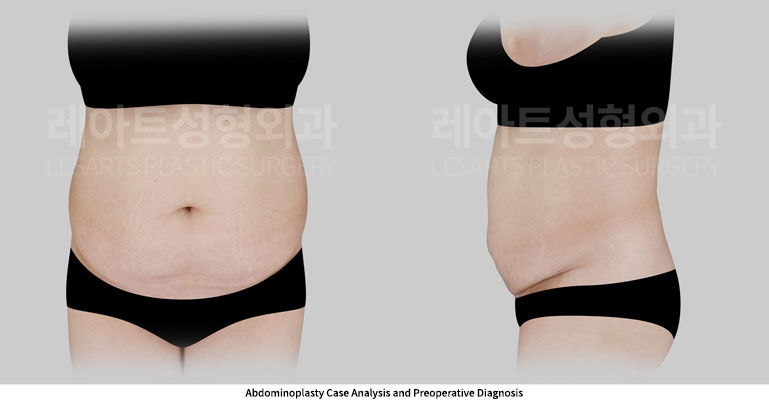
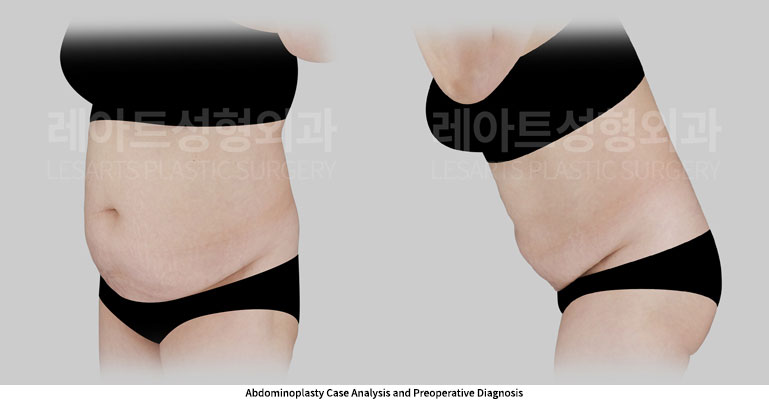
The patient visited the clinic
with significant abdominal sagging
and deep skin wrinkles
that did not recover after
natural childbirth.
Fat was distributed across
the lower abdomen, flanks,
and love handles,
creating a heavier appearance
focused on the lower abdominal area.
In addition, a higher level of
visceral fat weakened
the abdominal wall support,
which caused the abdomen
to protrude further forward.
To improve abdominal sagging,
a combination surgical approach
was carefully planned and performed.
1. Abdominoplasty (M-type)
– Lifted and removed excess skin
that had stretched and folded
in the lower abdomen area
2. Rectus muscle repair
– Tightened the abdominal muscles
to reinforce central core support
– Improved abdominal protrusion
through enhanced abdominal wall stability
3. Liposuction (abdomen, flanks, love handles)
– Reduced overall fat volume
across the entire abdominal area
– Created a smoother transition
between the tightened skin
and the waistline contour
These procedures were combined
to achieve a more balanced
and refined abdominal silhouette.
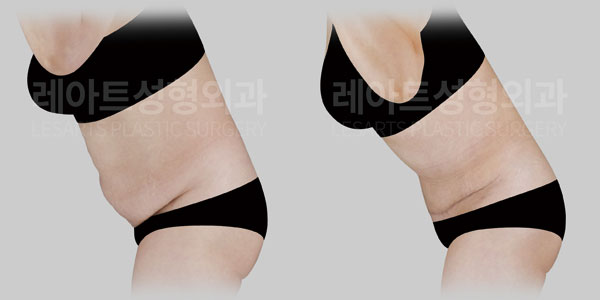
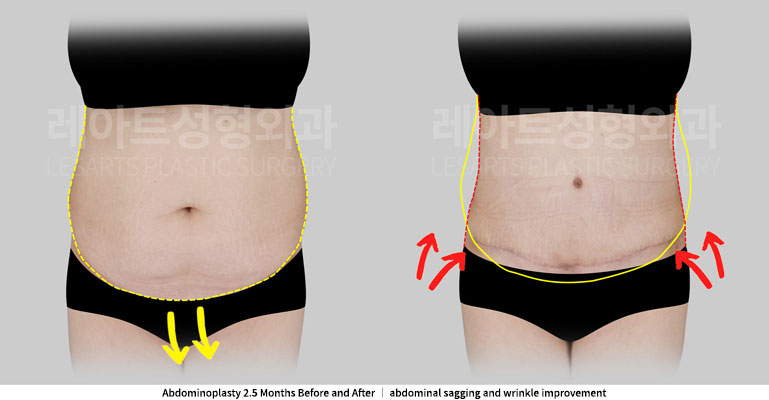
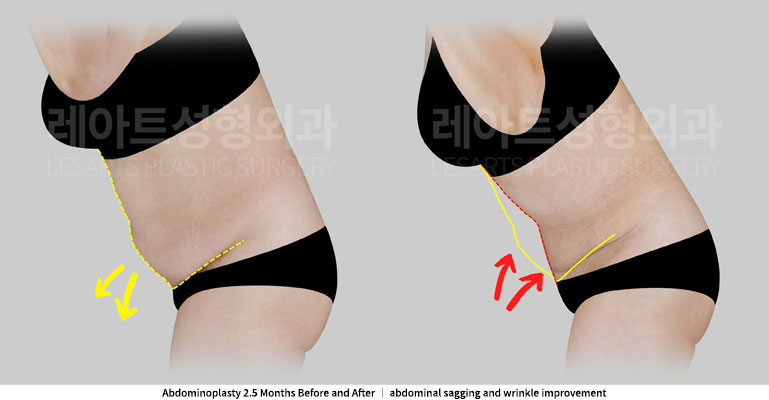
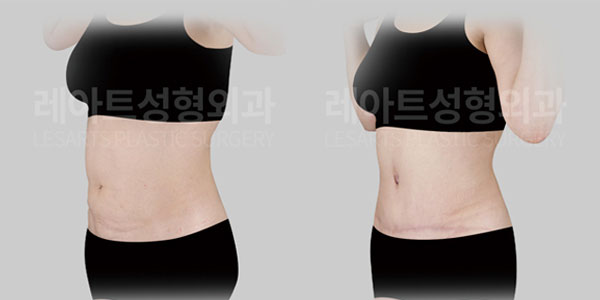
The following images were taken
at 2.5 months post-surgery,
allowing us to evaluate both
the effectiveness of abdominoplasty
and the recovery progress.
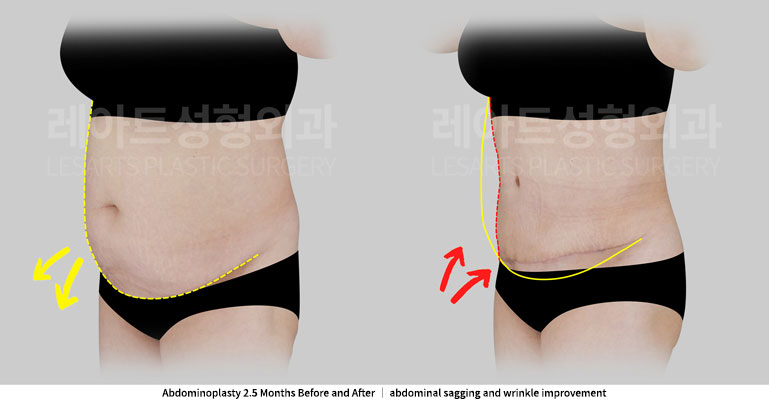
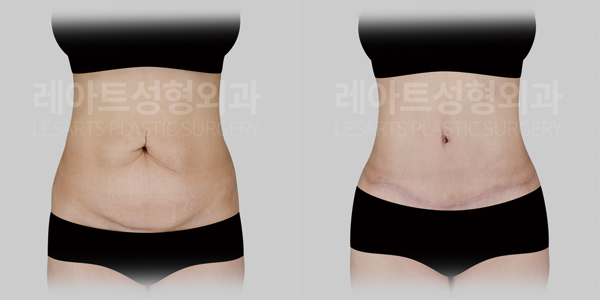
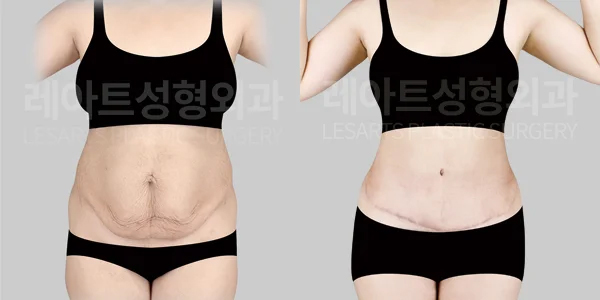
Before surgery,
skin laxity that began
from the upper abdomen
shifted downward,
causing deep folds
and wrinkles in the lower abdomen.
Combined with abdominal fat,
the area below the navel
appeared heavier and more pronounced.
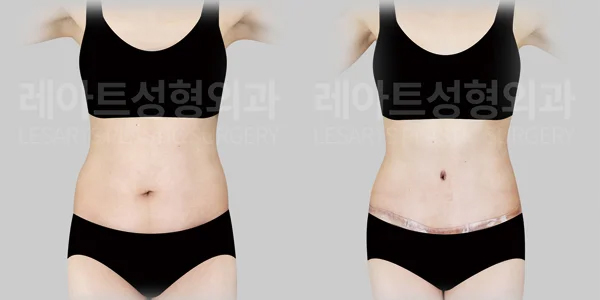
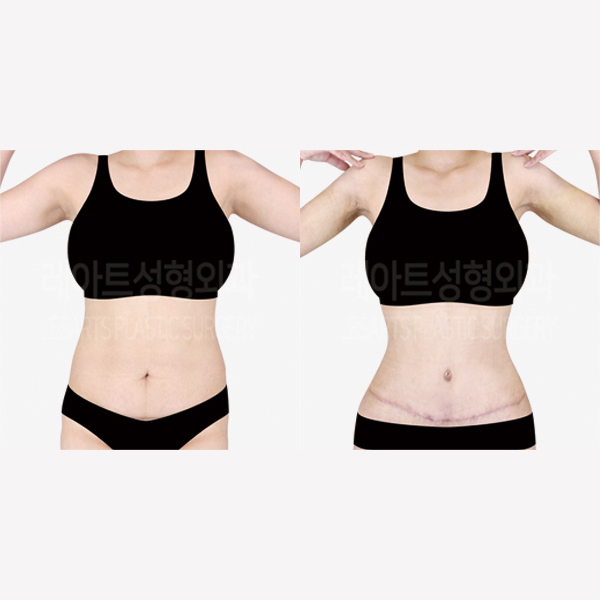
After abdominoplasty
and abdominal liposuction,
skin sagging, wrinkles,
and overall abdominal volume
were significantly improved.
A defined waistline was created,
and the abdomen now appears
firmer and more contoured.
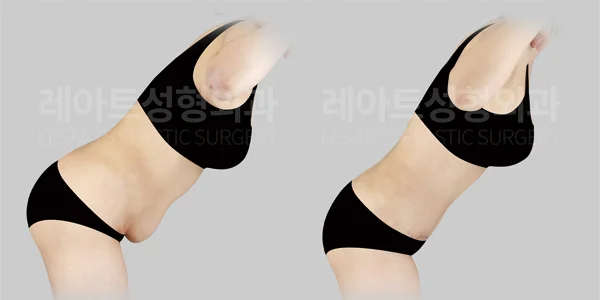
When bending forward,
the previously protruding
abdominal wall and
skin that sagged downward
due to gravity
have been fully corrected
through abdominoplasty.
Excess overlapping skin
and deep wrinkles
have been completely removed.
Even with posture changes,
the abdominal contour
remains stable, firm,
and well-maintained.
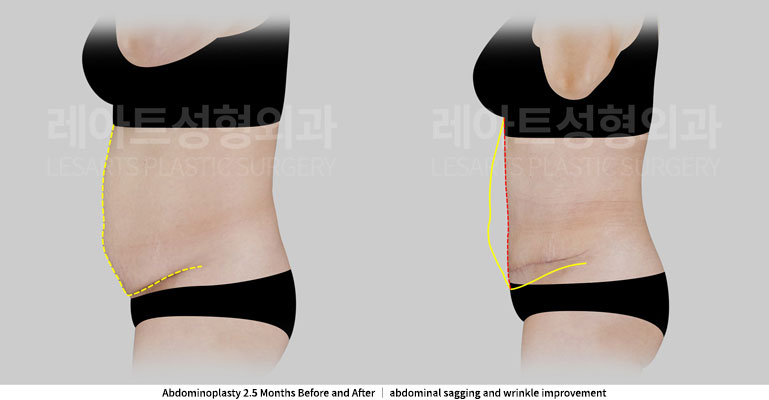
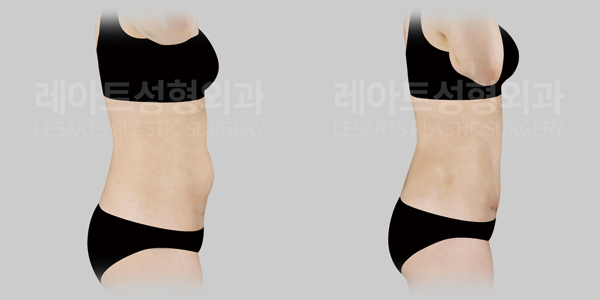
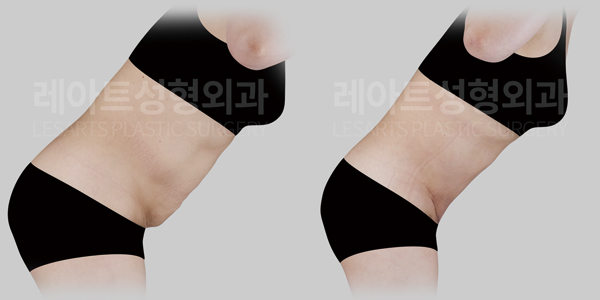
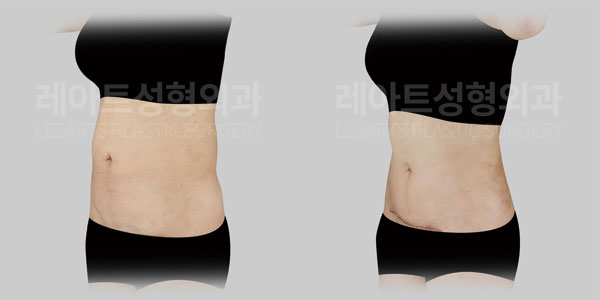
From the side view,
the previously downward-pulled
waistline has been smoothly lifted.
The uneven contour caused by
a protruding abdominal wall
from the upper abdomen
has also been clearly improved.
With the correction of
rectus diastasis,
the abdominal midline
is now more stable and
naturally positioned inward.
The previously protruding shape
is no longer visible.
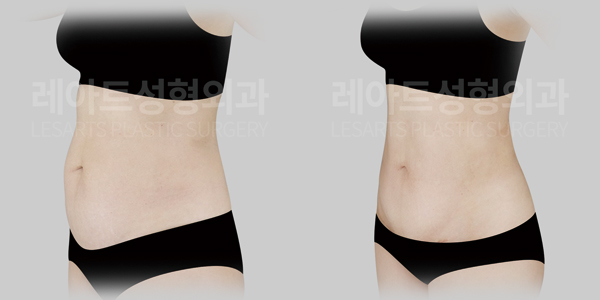
As abdominoplasty and
abdominal liposuction
were performed together,
this stage may still involve
swelling, fibrosis (bio-bond),
and temporary numbness.
Scar management will also
continue over time.
However, the primary concerns
of sagging, wrinkles, and protrusion
have been effectively resolved.
The overall abdominal contour
appears smooth and refined,
leading to high patient satisfaction.
At around 2 months post-surgery,
the patient was able to return
to daily activities
without significant limitations.
As recovery varies
from patient to patient,
regular follow-up care
is essential.
Since this procedure
requires a longer recovery period,
consistent care and patience
following medical guidance
will help achieve
even better long-term results.