Patient Registration Info
Surgical site
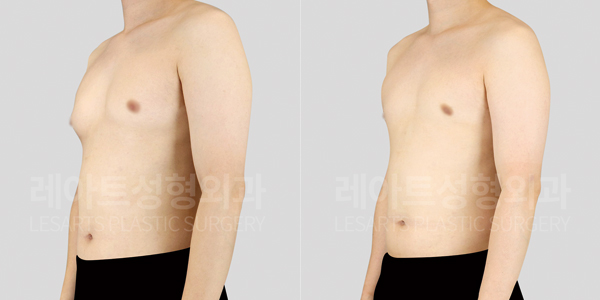
Surgical area: Gynecomastia | Grade 2-A
Some people assume
that an enlarged chest appearance
is simply caused by
weight gain or general obesity,
based only on
external body appearance.
However, in actual
clinical consultations,
many patients
with a normal build
or even a
slim body type
present with
noticeable chest enlargement
and related discomfort.
If there is
no improvement at all
despite consistent
exercise and diet management,
the underlying cause
may not be fat,
but rather
glandular tissue growth
within the chest area.
In such cases,
accurate evaluation
through proper
medical consultation
is necessary
to confirm
the exact cause
of gynecomastia symptoms
and condition.
The patient introduced
in this case
also had
a generally
slim body type,
but experienced
persistent gynecomastia symptoms
that began
during adolescence.
These symptoms included
visible chest protrusion
and a clearly
palpable firm lump,
which caused
both physical discomfort
and ongoing psychological
stress in
daily life situations.
Despite continuous efforts
with exercise routines
and weight control,
there was absolutely
no visible change
in overall chest size,
which ultimately led
the patient
to visit the clinic
for further evaluation
and proper
treatment planning.
Based on
clinical examination results,
the primary cause
of chest protrusion
was not fat accumulation,
but true gynecomastia
caused by excessive
glandular tissue development
within the chest.
The palpable lump
was also confirmed
to originate
from the same
glandular tissue structure
within the chest.
We will now
carefully review
the preoperative condition
through detailed
image-based analysis
and explanation.
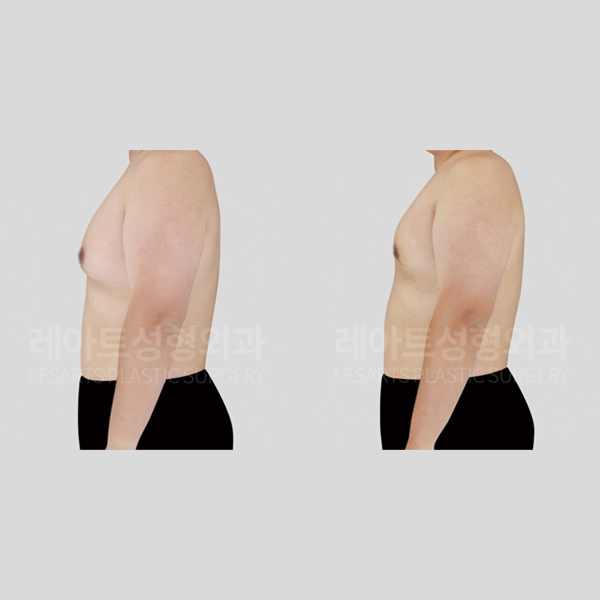
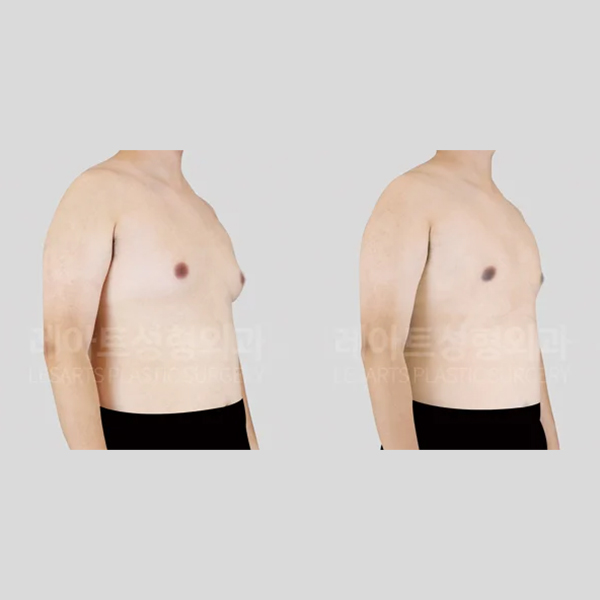
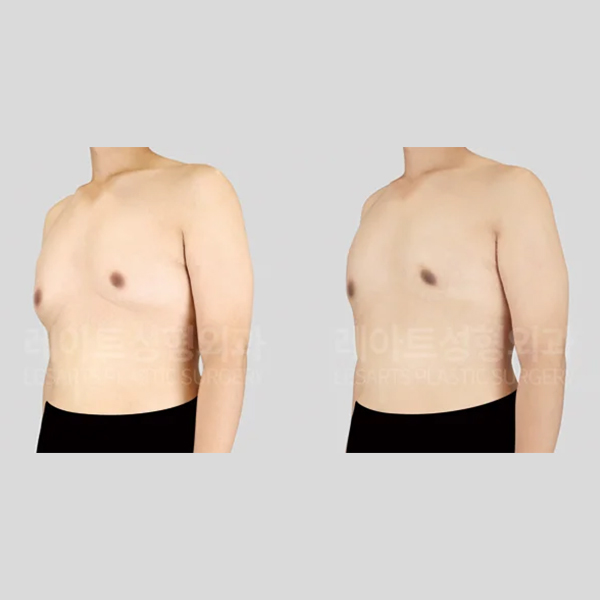
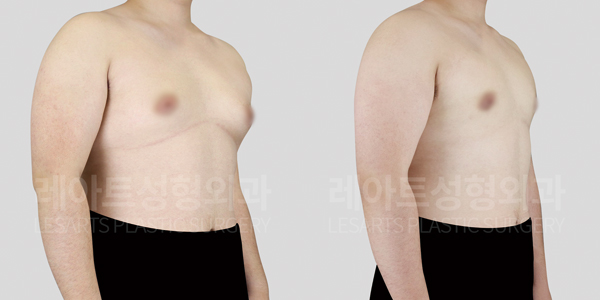
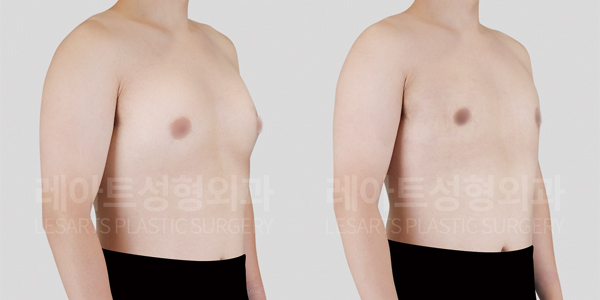
[Preoperative diagnosis of gynecomastia in 20s patient]
– Noticeable increase
in bilateral chest volume
was clearly observed.
– Ultrasound examination
confirmed the presence
of glandular tissue.
– The areola
appeared slightly
enlarged and protruded.
– No accompanying issues
such as chest sagging
or accessory breast were found.
Based on
these combined findings,
the condition
was diagnosed as
true gynecomastia
corresponding to
Simon Grade 2A.
[20s patient, Simon Grade 2A, gynecomastia surgery plan]
1. Glandular tissue removal
The glandular tissue,
which caused
the chest protrusion,
was carefully removed
to correct
the overall
chest projection
and improve
the appearance
of the nipple
and areola prominence.
2. Lower and lateral chest liposuction
If only
glandular removal
is performed,
the remaining
chest contour
may appear
unnatural
or uneven
in shape.
Therefore,
liposuction of the lower
and lateral chest areas
was performed
to create
a smoother
and more natural
chest contour line.
3. Tissue repositioning and adhesion prevention
After removing
the glandular tissue,
there is a risk
of depression
or irregular
contour formation.
To prevent this,
tissue repositioning
was carefully performed
along with
anti-adhesion treatment
to maintain
a stable
and naturally
masculine chest shape.
Through the following
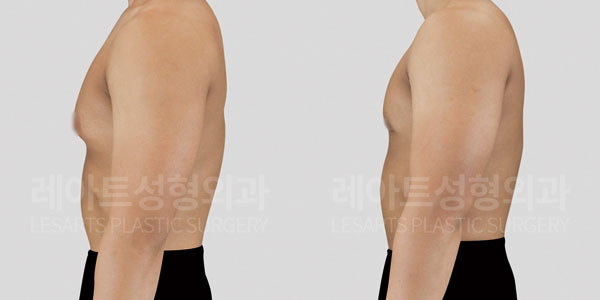
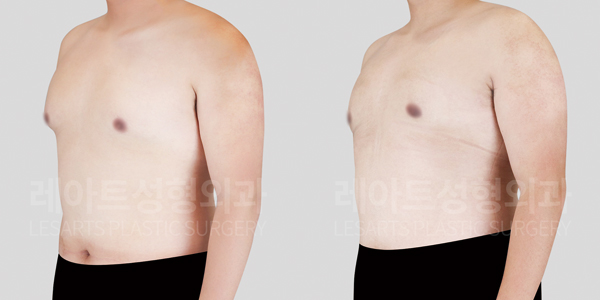
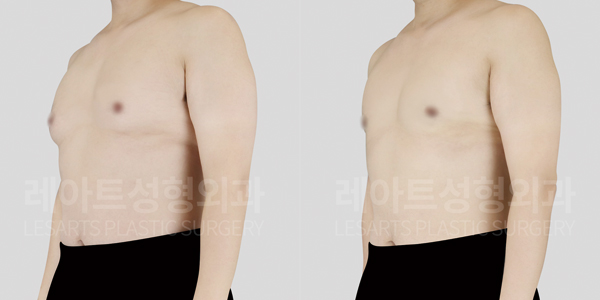
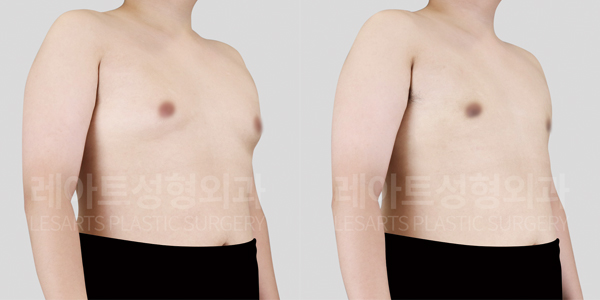
2.5-month post-operative photos,
we will review
the before and after differences
and overall
surgical outcomes.
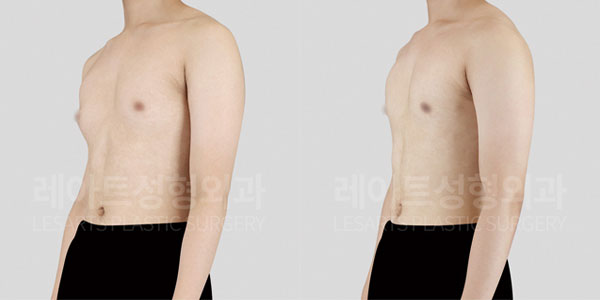
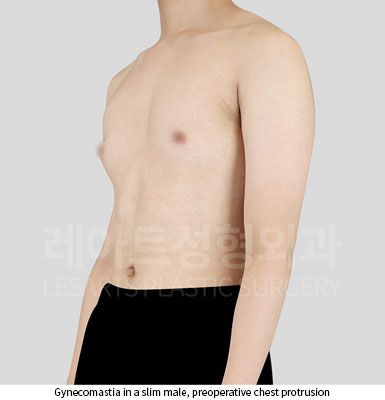
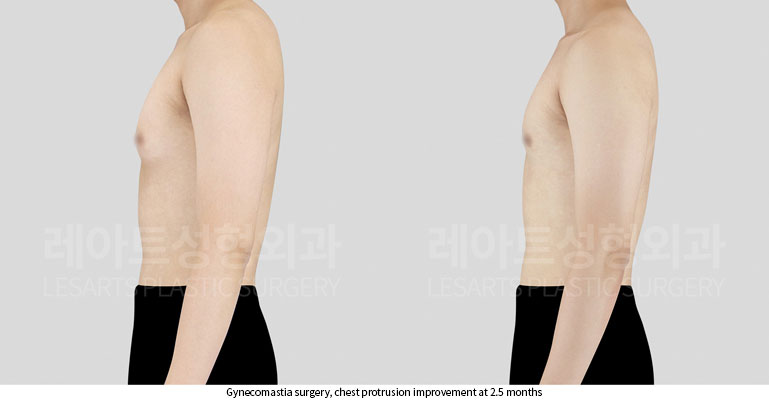
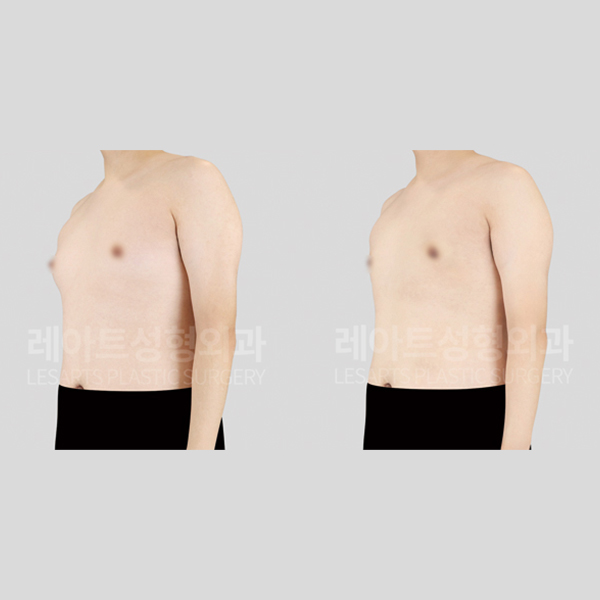
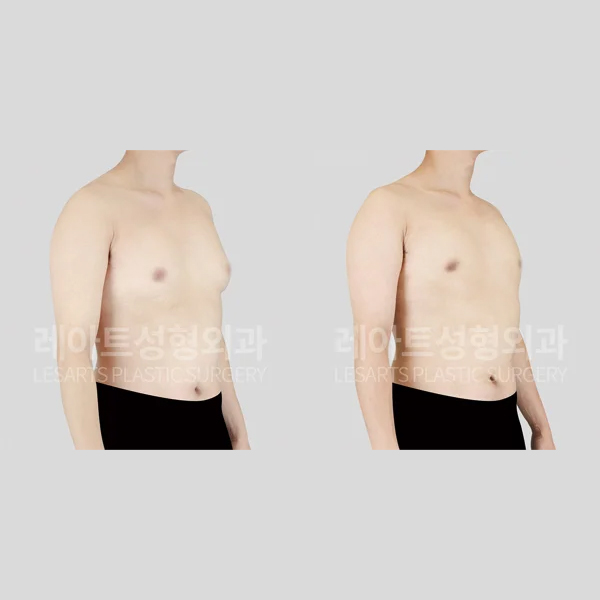
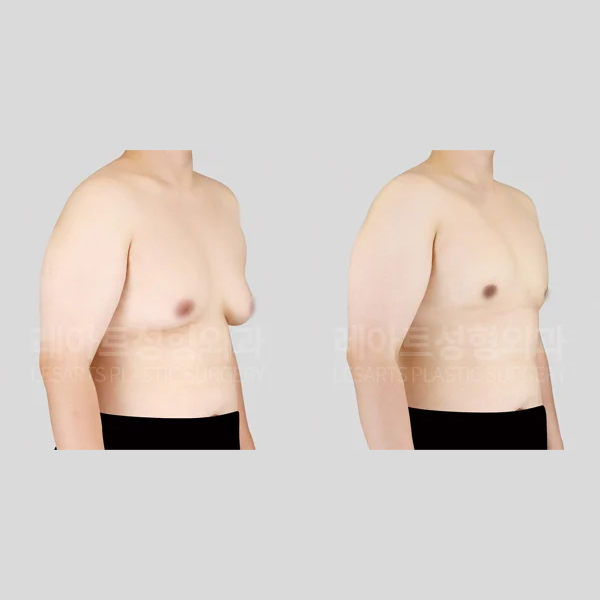
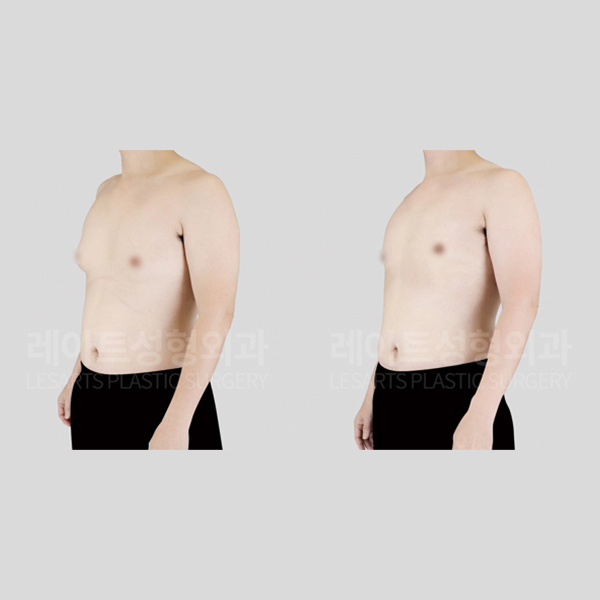
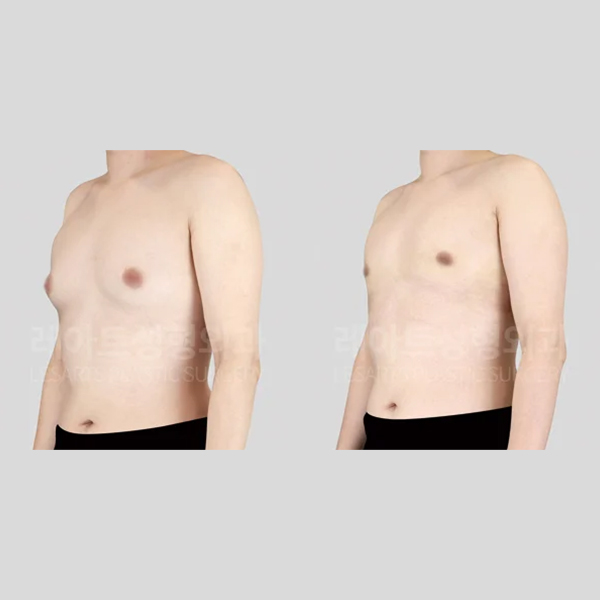
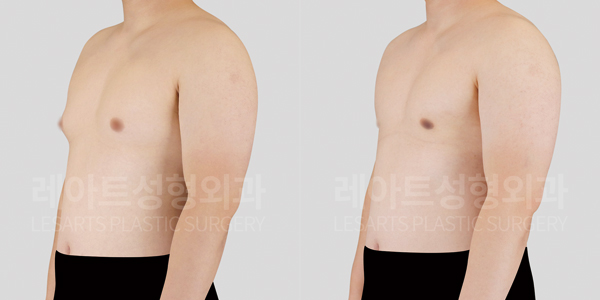
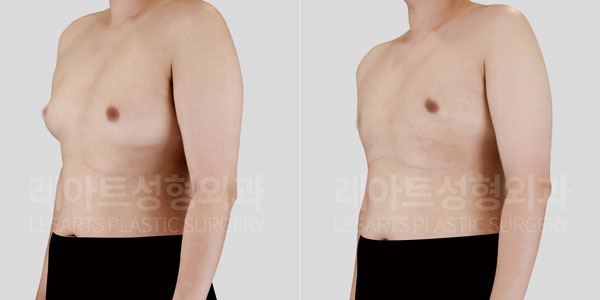
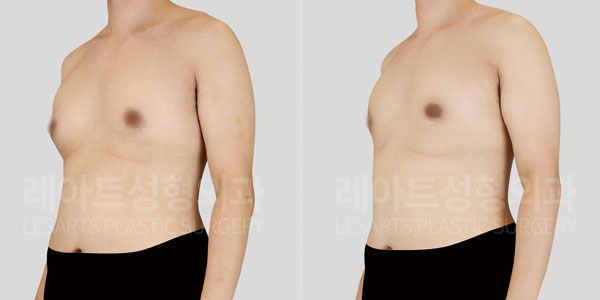
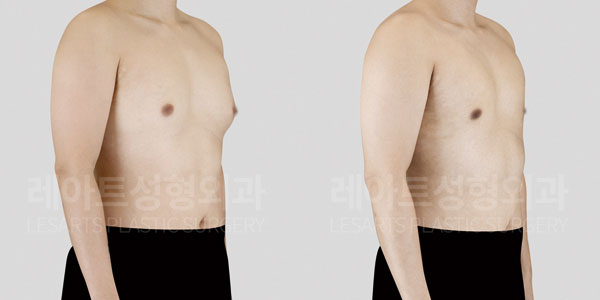
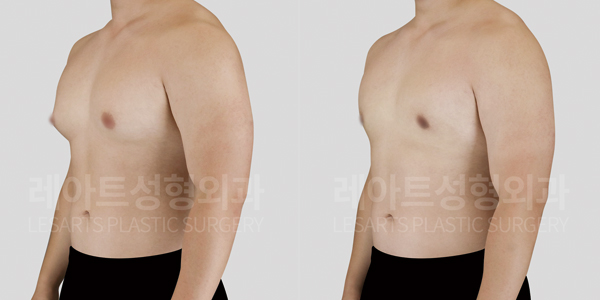
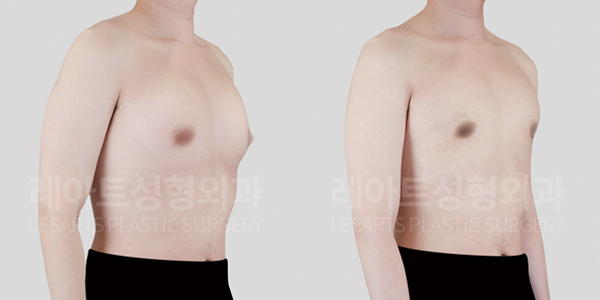
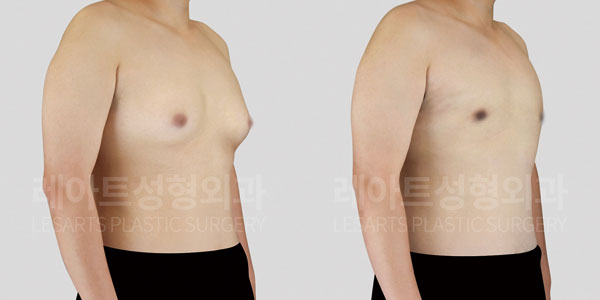
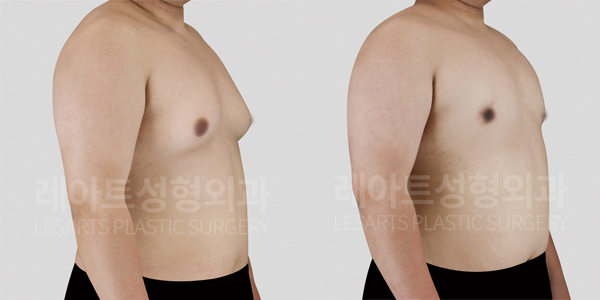
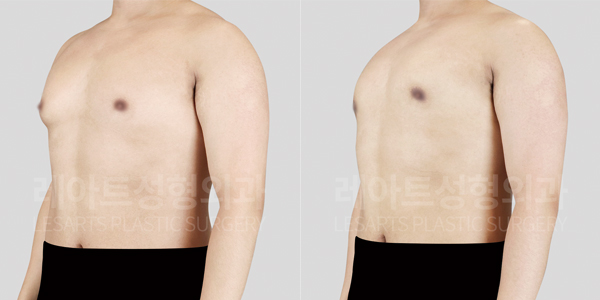
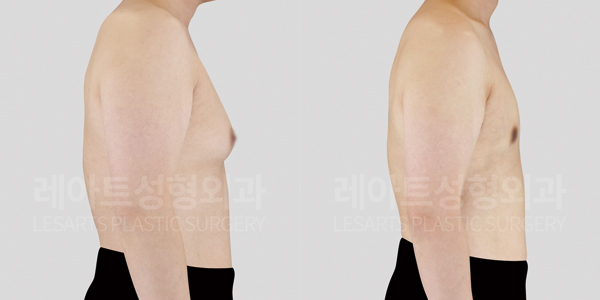
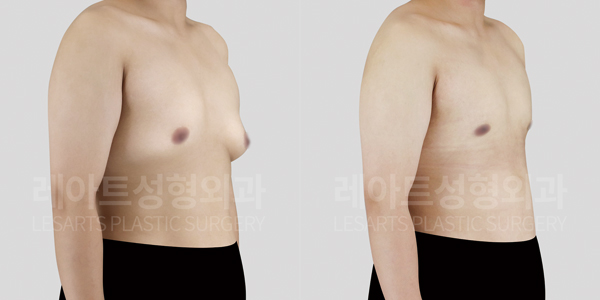
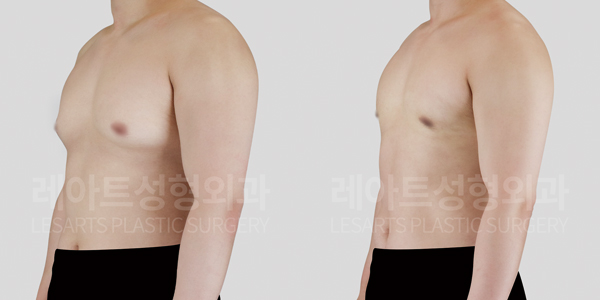
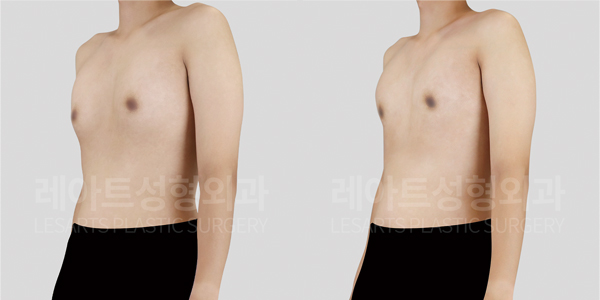
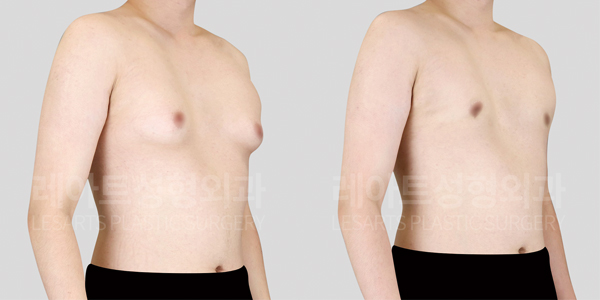
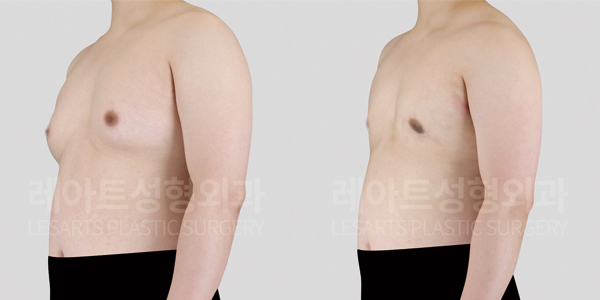
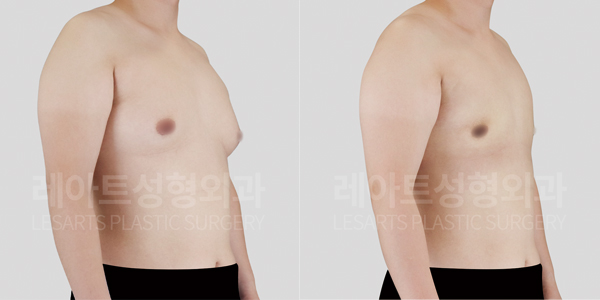
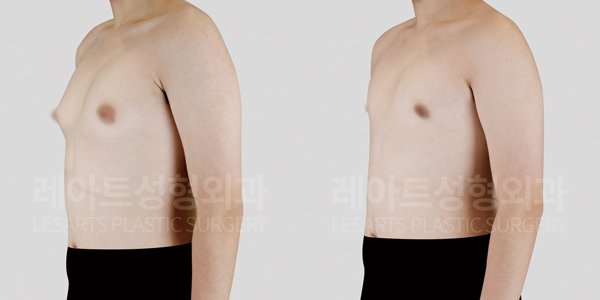
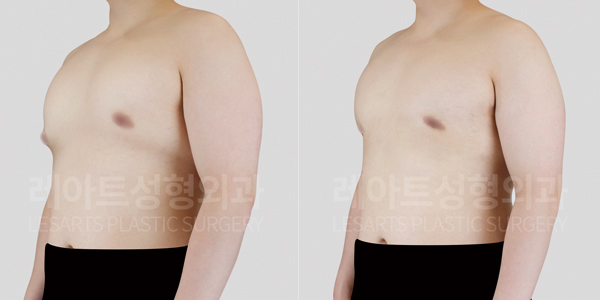
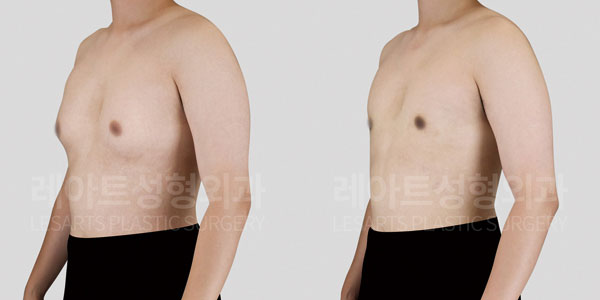
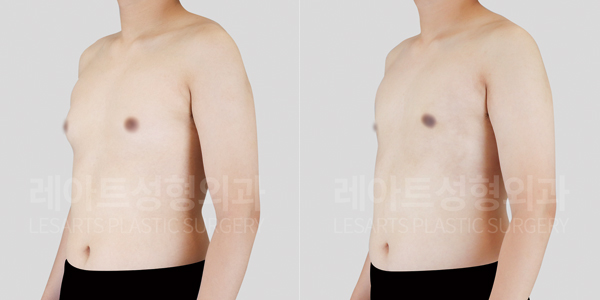
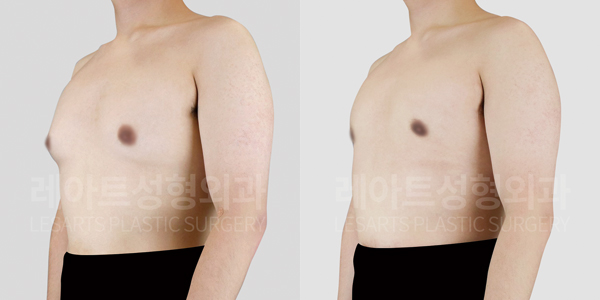
Before gynecomastia surgery,
the patient’s body
showed a
generally lean
and low body fat
composition overall.
However, the chest
appeared enlarged
and protruded
around the
nipple-centered area,
creating a
noticeable forward
chest projection
in contour.
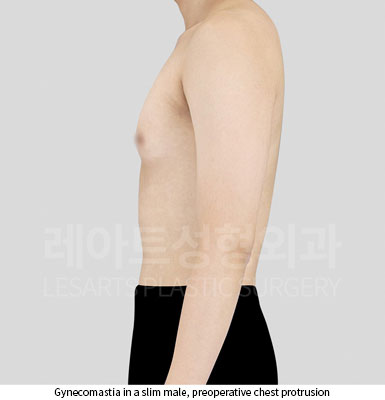
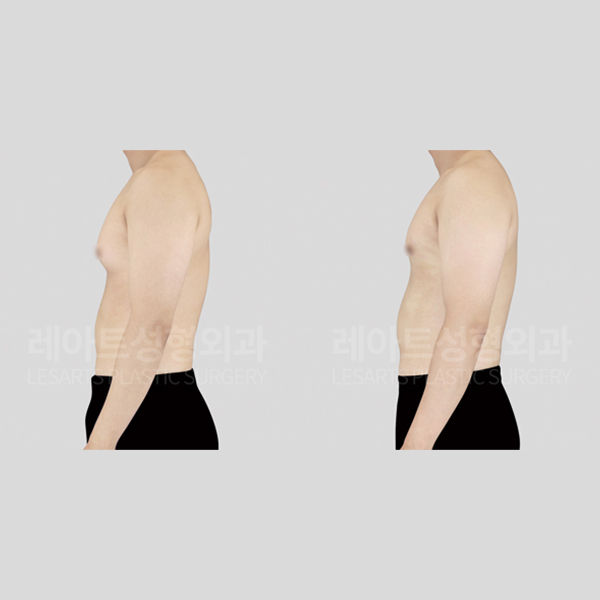
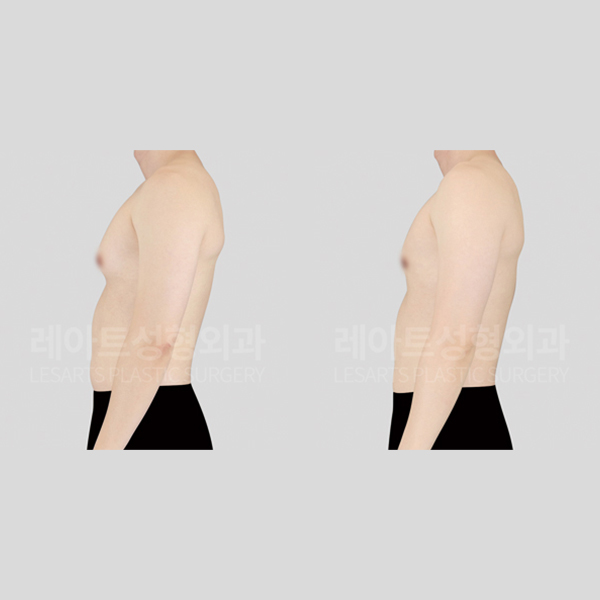
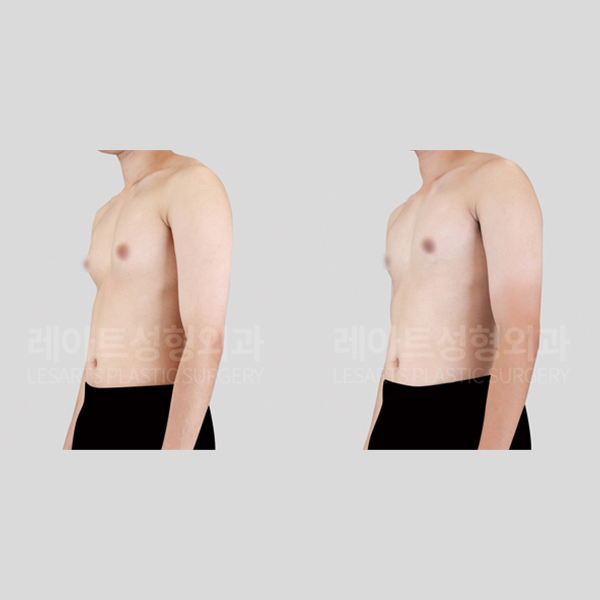
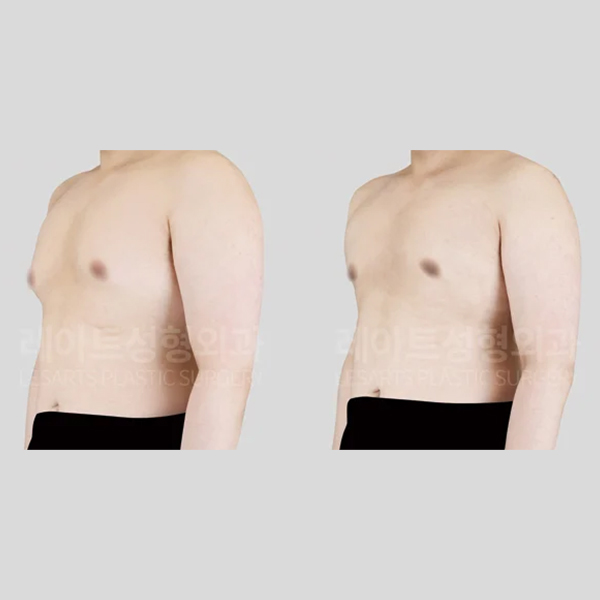
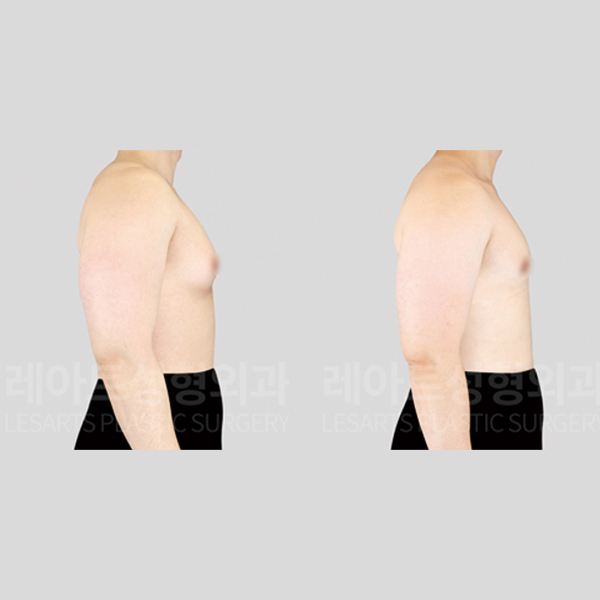
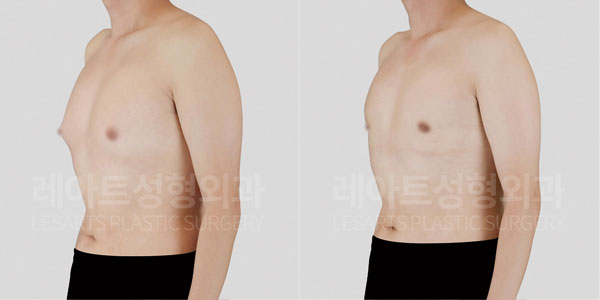
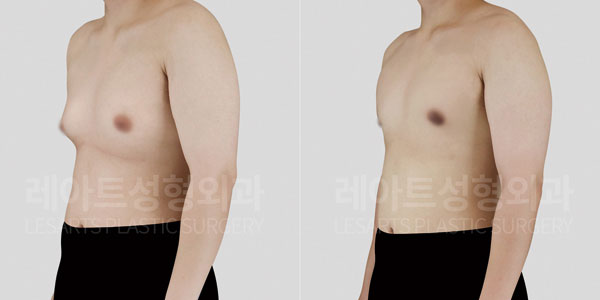
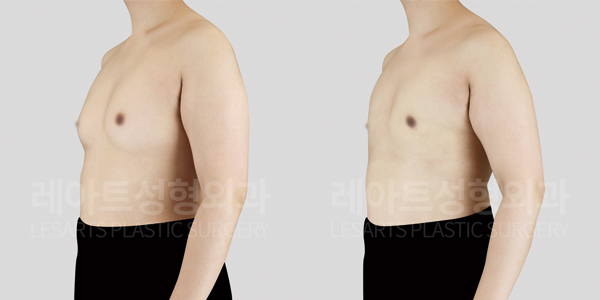
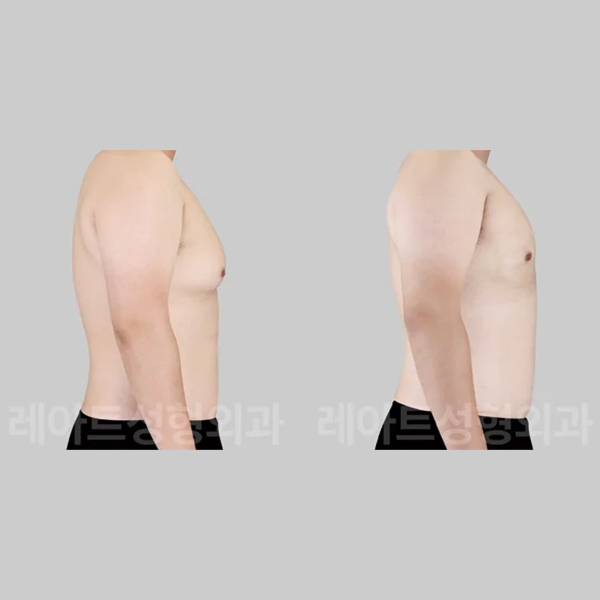
From the side view,
the chest line
also appeared
visibly pushed
forward, forming
a rounded
and bulging
upper body
silhouette.
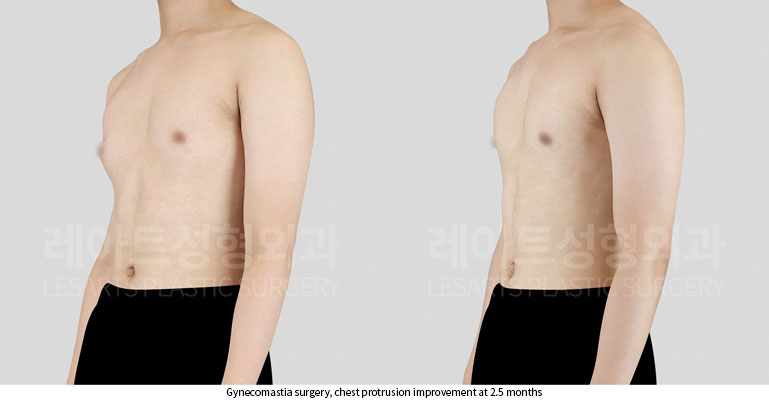
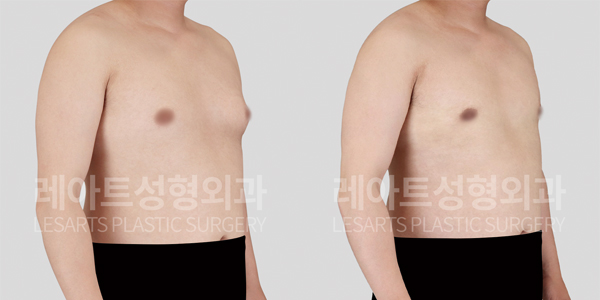
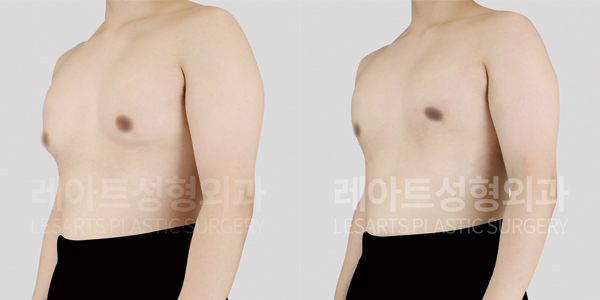
After gynecomastia surgery,
these structural
issues were
effectively corrected
through precise
surgical treatment.
The chest size
was reduced,
and the
previously protruding
areas became
more naturally
refined and
evenly contoured
overall.
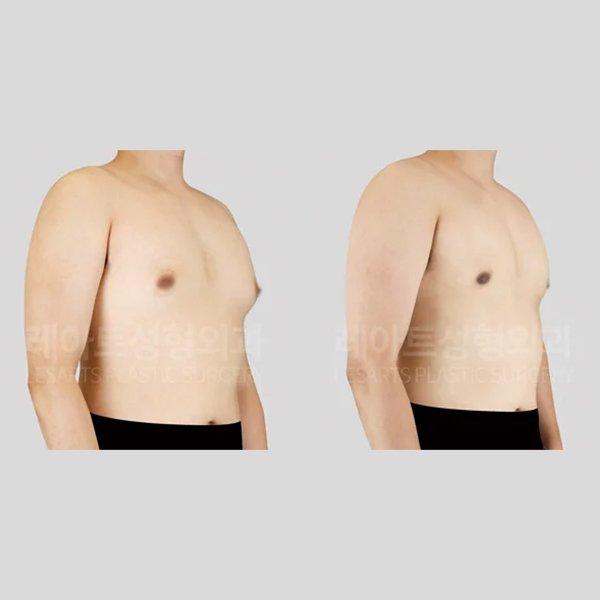
The chest line
also became
flatter,
creating a more
clean and
well-defined contour.
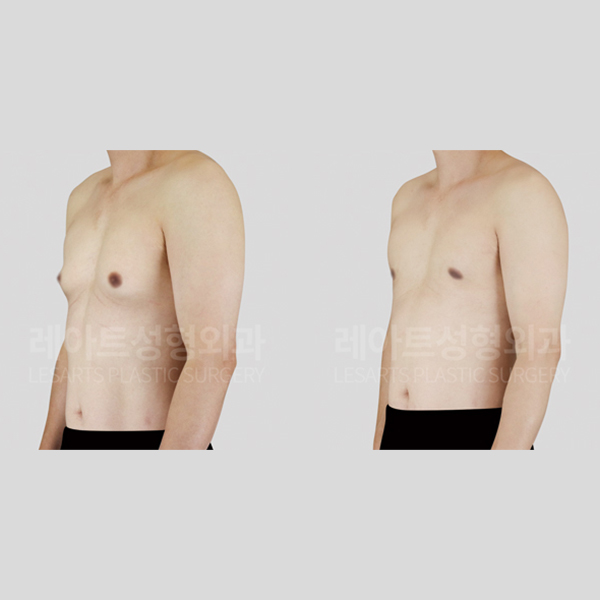
From the side view,
the excess volume
was removed,
resulting in a
much smoother
and more
natural chest contour
and improved
upper body balance.
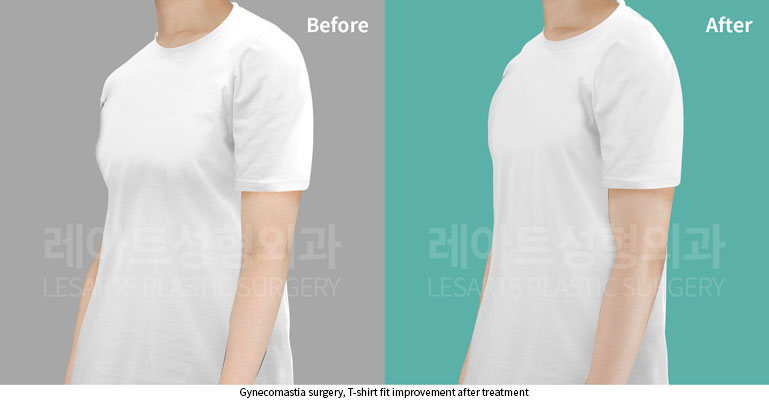
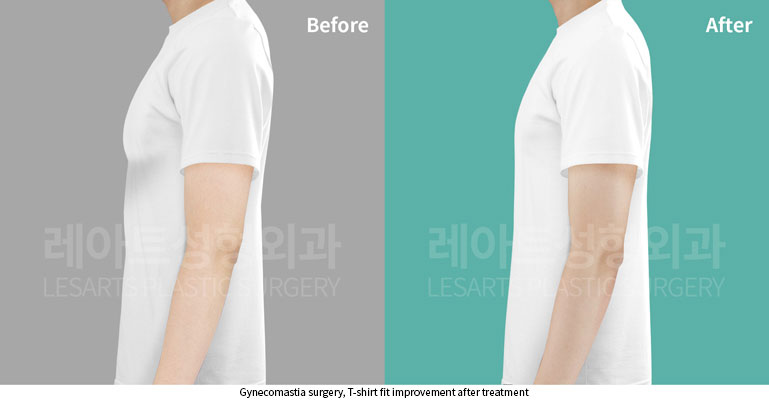
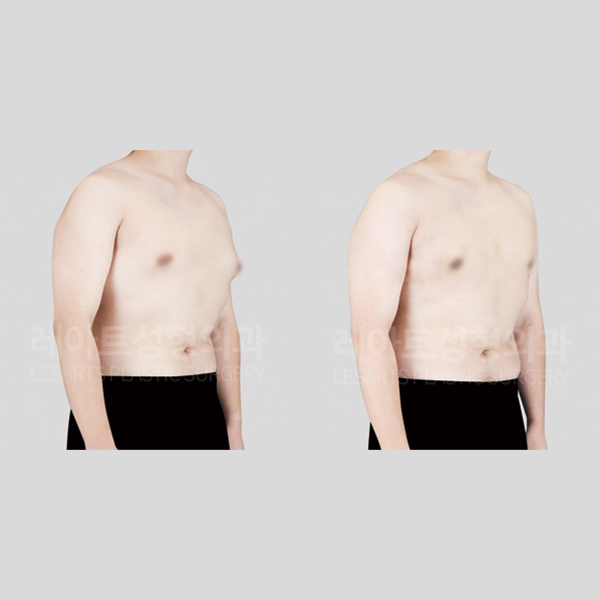
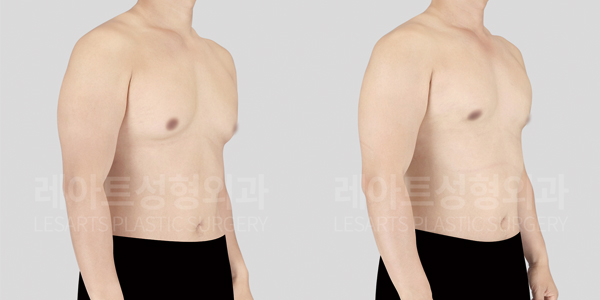
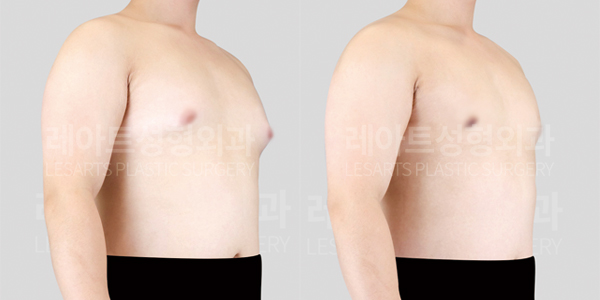
Even when comparing
only the T-shirt fit,
the difference
before and after
gynecomastia surgery
is clearly visible.
The previously prominent
central chest protrusion
on both sides
has been completely
refined and
corrected after surgery.
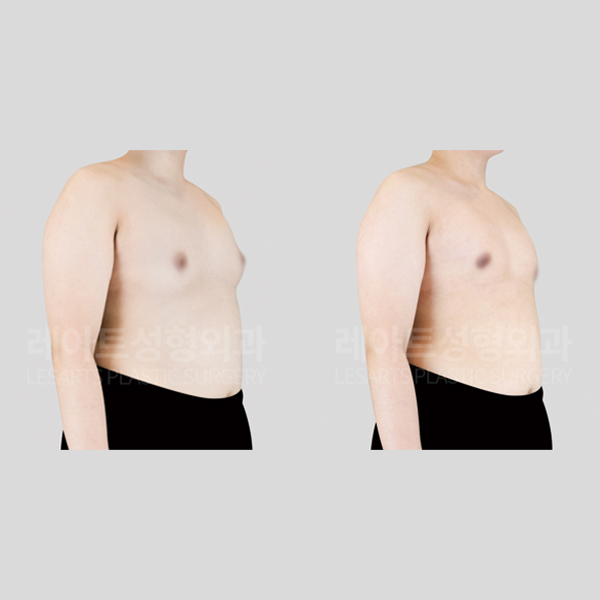
Before surgery,
the bulging
chest contour
was clearly visible
through clothing,
creating an
awkward and
noticeable appearance
in daily wear.
After surgery,
the T-shirt
naturally fits
along the upper body,
revealing a more
masculine chest line.
Because the patient
had a slim body type,
the chest protrusion
appeared even
more noticeable
before treatment.
This case clearly
demonstrates how
glandular removal
can effectively
and stably
correct
chest protrusion
in gynecomastia
patients.
Gynecomastia caused
by glandular hypertrophy
is fundamentally
related to
hormonal factors,
and therefore
does not resolve
naturally or
through
exercise and dieting
alone in
most cases.
For this reason,
surgical removal
of the cause
is required
for definitive
correction.
The patient
shared that
long-standing
concerns since
adolescence
were resolved,
and most importantly,
the previously
concerning
clothing fit
was significantly
improved.
As a result,
the patient reported
a very high
level of
overall satisfaction
after surgery.
Since gynecomastia
is relatively common
in men,
if symptoms persist
and do not
improve naturally,
receiving an
accurate diagnosis
and evaluation
can be the most
effective solution
for treatment.
#BestGynecomastiaClinicKorea
#GynecomastiaSurgeryKorea
#GynecomastiaTreatment
#MaleBreastReduction
#ChestProtrusionCorrection
#GlandRemovalSurgery
#TrueGynecomastia
#TShirtFitAfterSurgery
#SlimMaleChest
#ChestContourImprovement
#GynecomastiaBeforeAfter
#LesartsPlasticSurgery