Abdominoplasty in Seoul: postpartum abdominal sagging improvement at 2 months
Patient Registration Info
| Age | Weight | Height | BMI |
|---|---|---|---|
|
40s |
47kg |
158cm |
19 |
Surgical site
Surgical site : Abdomen, S-type, muscle repair, umbilical floating, adhesion release| liposuction aspirate volume : 500cc
After pregnancy and childbirth,
many patients experience
persistent abdominal sagging
and reduced skin elasticity.
When the abdominal wall
that supports internal organs
loses structural strength,
the abdomen may protrude forward.
This adds additional
weight to the skin,
making abdominal sagging
appear more severe.
If there is also
a history of abdominal surgery
or previous procedures,
internal tissue adhesions may remain.
These adhesions
between the skin, fat,
and fascia layers
can create uneven contours.
As a result,
the abdominal skin
may not settle
into a natural shape.
These complex conditions
cannot be fully corrected
by addressing skin laxity
alone.
Instead, it is important
to carefully evaluate
changes within the
skin, fat, and muscle layers.
Through accurate diagnosis,
an appropriate
treatment strategy
can be established.
This case was planned
based on this detailed
structural evaluation,
allowing a customized
abdominoplasty approach
that matched the
patient’s individual goals.
[Patient Information]
Age: Early 40s
Height: 158 cm
Weight: 47 kg
BMI: 19
Even with similar
body conditions,
surgical methods and results
may vary between individuals.
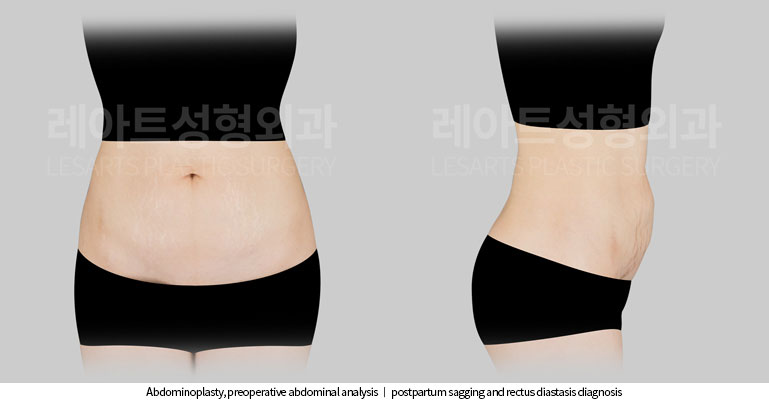
The patient experienced
persistent lower abdominal sagging
and fine wrinkles
after two natural childbirths.
Although the patient
maintained a slim body type,
rectus diastasis developed
during pregnancy.
This reduced the
abdominal wall support,
causing the abdomen
to protrude forward.
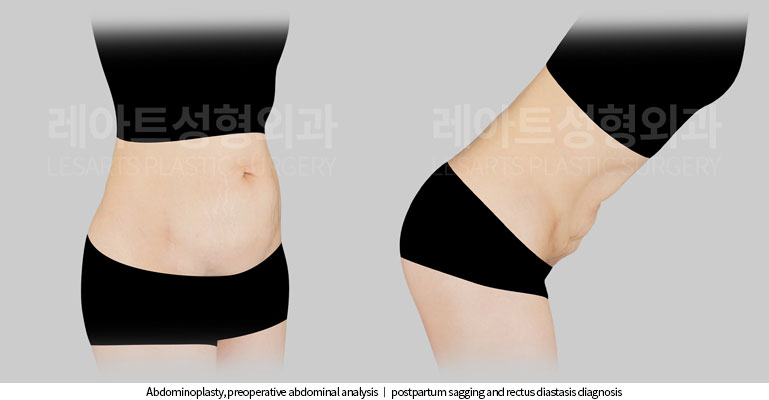
In addition,
irregular tissue adhesions
and pulling of internal
structures remained present.
These changes were observed
across multiple regions
from the upper abdomen
to the lower abdomen.
In particular,
the upper abdomen
had minimal fat volume,
but showed reduced elasticity.
Combined with
rectus diastasis
and tissue adhesions,
the abdominal surface
appeared uneven
and lacked a
smooth abdominal contour.
Surgical Plan
1. S-type abdominoplasty with umbilicus floating
– Adhesion release was performed
across both the upper
and lower abdomen.
– The procedure lifted
the sagging lower abdominal skin
and improved visible
wrinkles and laxity.
2. Rectus muscle repair (abdominal wall repair)
– Using the umbilicus floating technique,
rectus diastasis correction
was performed beginning
from the upper abdomen.
– This restored proper
abdominal wall support
and improved overall
core structural stability.
3. Abdominal liposuction
– Abdominal liposuction was performed
to refine the waist circumference
and create a smoother
waistline contour.
– This combined approach
enhanced the synergy effect
with abdominoplasty surgery,
improving overall body proportions.

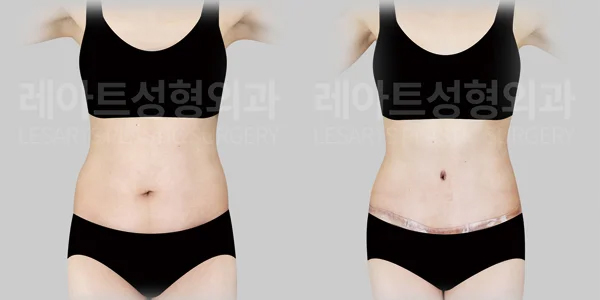
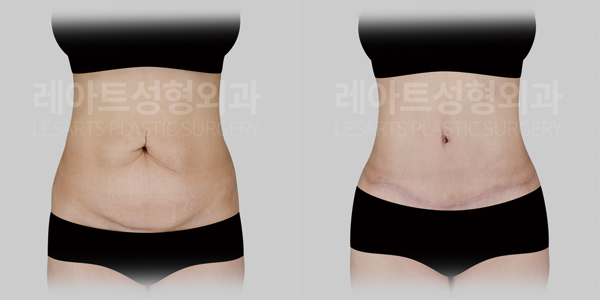
Before abdominoplasty surgery,
the pattern of
abdominal sagging
placed significant
weight on the
entire lower abdomen.
As a result,
the skin surface
appeared uneven
and poorly defined.
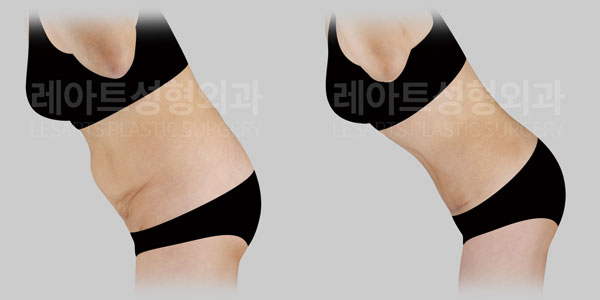
In the post-operative photo
after abdominoplasty
and abdominal liposuction,
the downward
skin laxity and
rectus diastasis effects
that previously
pulled the abdomen
downward have
been corrected.
The abdomen now
appears more
firm, lifted,
and lighter.
In addition,
the previously
protruding abdominal center
has been stabilized
inward, restoring
a more balanced
and well-defined
overall abdominal contour.

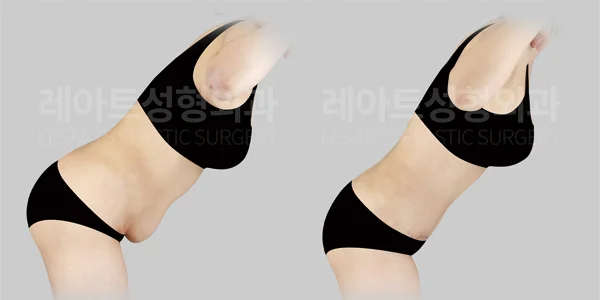
In the forward bending position,
the previously sagging
abdominal skin
and outward
abdominal wall protrusion
have been completely corrected.
The abdominal wall support
has been restored,
eliminating the
downward collapsing
appearance that was
present before surgery.
In addition,
the uneven skin surface
extending from the
upper abdomen
has been corrected
without overlapping
or protruding areas.
Compared to the
pre-abdominoplasty condition,
the abdomen now shows
a flatter and more
refined waistline.
The waist contour
remains smooth
and stable
in various
body positions
and movements.
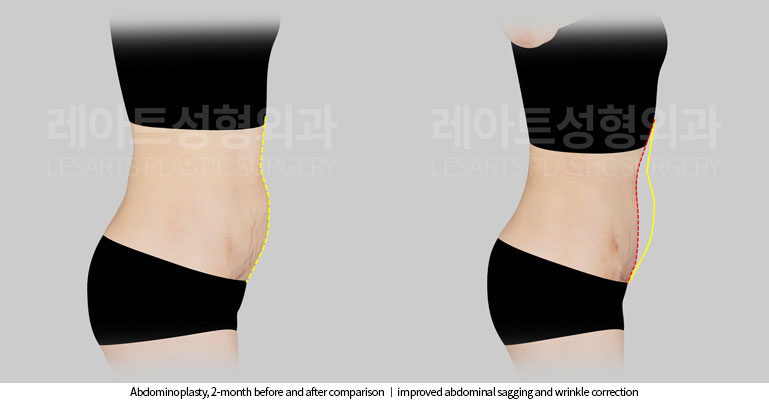
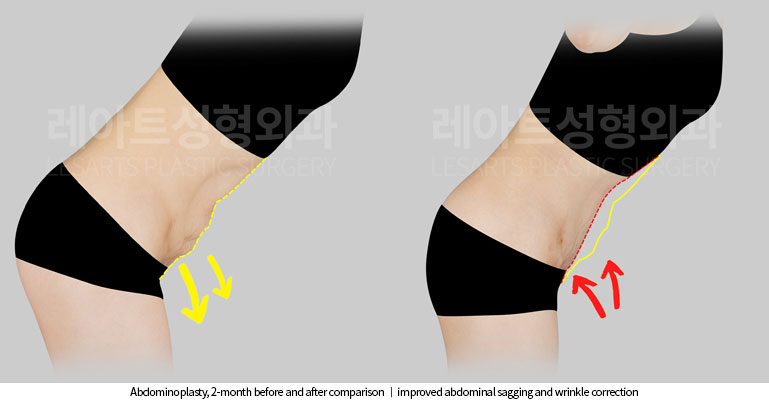
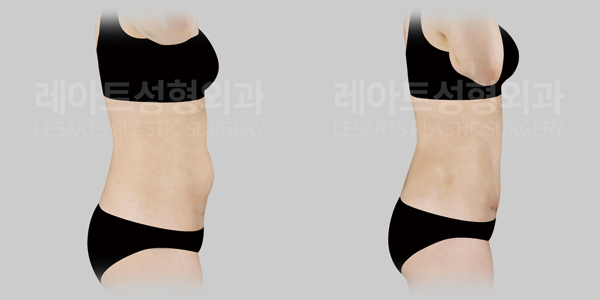
From the side profile,
the lower abdominal sagging
and abdominal protrusion
have been fully
corrected after
abdominoplasty surgery.
A visible
reduction in waist circumference
can also be
clearly observed.
The previously
uneven skin surface
caused by tissue adhesions
has been carefully
released and refined
from the upper abdomen.
As a result,
the abdominal contour
now appears flat
and smooth
even when viewed
from the
side angle.
Most importantly,
the previously
downward sagging skin
has been securely
lifted and stabilized,
creating a more
natural and balanced
curve from the waist
to the pelvis.
The post-operative
photos were taken
at 2 months after surgery,
so the incision scar color
may still appear
relatively dark.
However, with proper
post-operative scar care
and consistent
self-care management
as instructed,
the scar will
gradually fade
and continue to
improve over time.
#BestAbdominoplastyClinicKorea
#BestTummyTuckClinicKorea
#AbdominoplastyKorea
#TummyTuckKorea
#RectusDiastasisRepair
#PostPregnancyAbdominoplasty
#LooseAbdominalSkinCorrection
#AbdominalWallRepair
#WaistlineContouring
#LesartsPlasticSurgery
#Lesarts
#LesartsKorea