Patient Registration Info
Surgical site
Surgical area: Gynecomastia | Grade 2A
As men and women age,
basal metabolic rate and activity levels decrease,
often leading to increased abdominal fat—
commonly referred to as middle-age weight gain.
As a result, many people
feel that their upper body
is becoming larger.
However, if men in their mid-to-late 40s
notice that their chest size
is increasing or protruding,
it should not be dismissed
as simple weight gain.
It is important to check
current medications
or possible hormonal changes.
As we have mentioned previously,
hair loss medications, antihypertensive drugs,
and age-related hormonal changes
can contribute to
these body contour changes.
Gynecomastia is a condition
caused by hormonal imbalance,
leading to abnormal development
of glandular breast tissue.
If symptom improvement is desired,
an accurate diagnosis
and an appropriate treatment plan
are essential.
With aging, the skin’s structural support
gradually weakens,
causing the chest tissue
to sag or appear more prominent.
Prolonged hesitation
may allow symptoms to progress,
so timely evaluation is important.
Today, we will review
a gynecomastia surgery case
in a patient in his late 40s
to examine surgical outcomes
in middle-aged men.
At the time of consultation,
the patient reported discomfort
in daily life and clothing fit
due to chest protrusion.
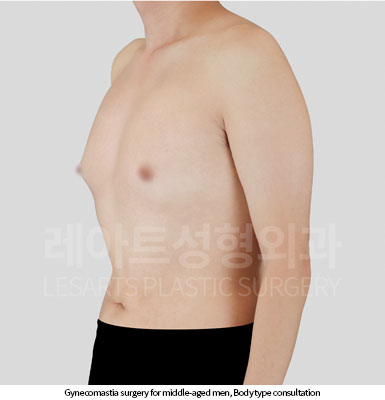
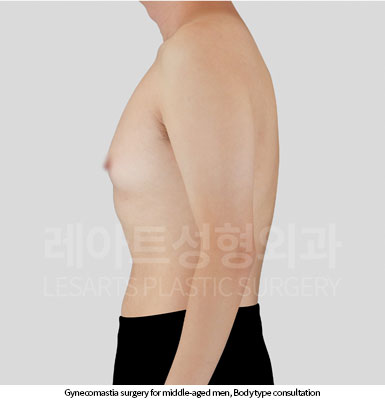
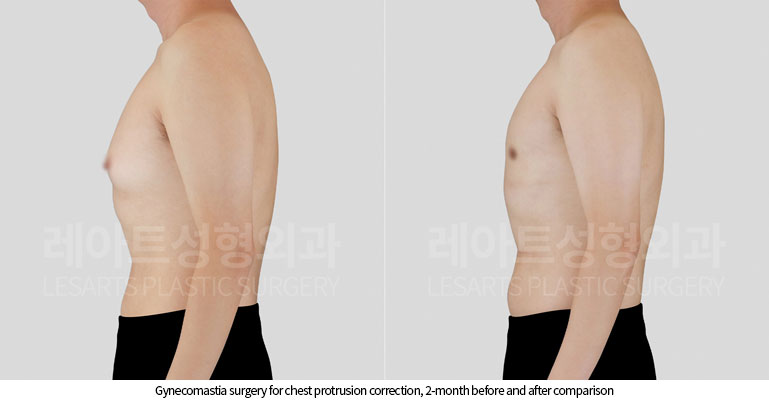
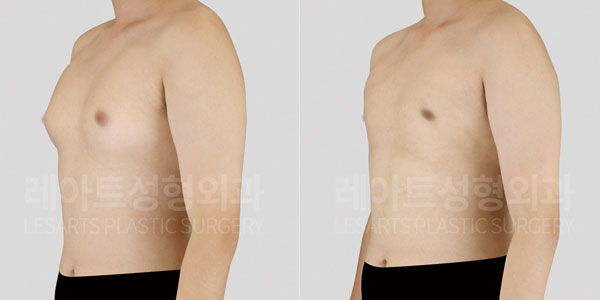
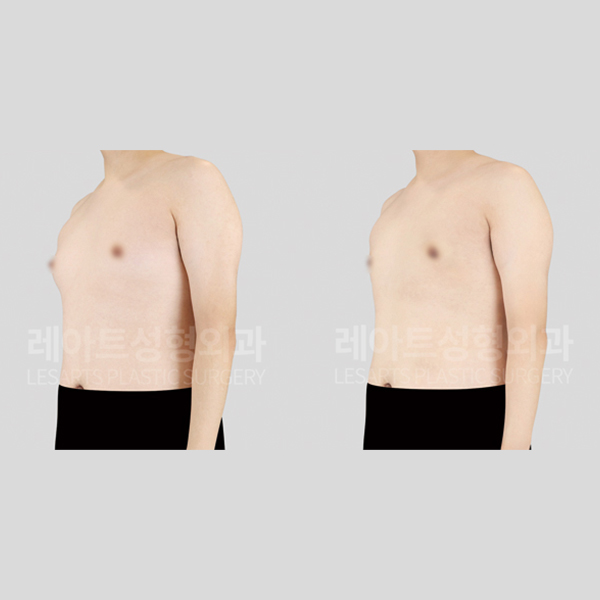
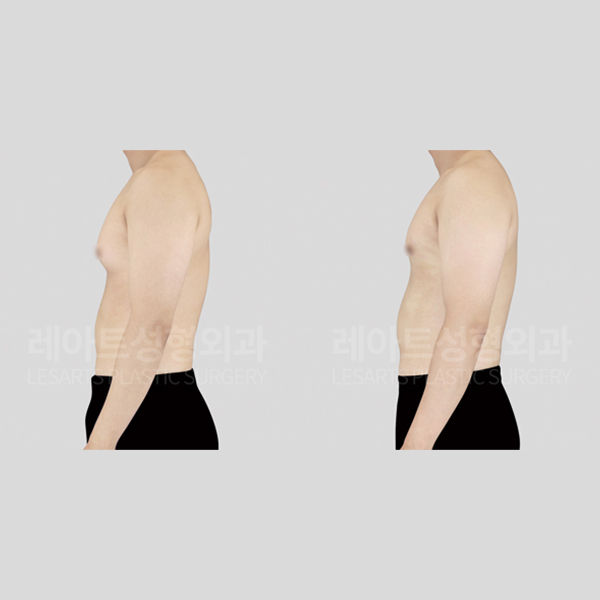
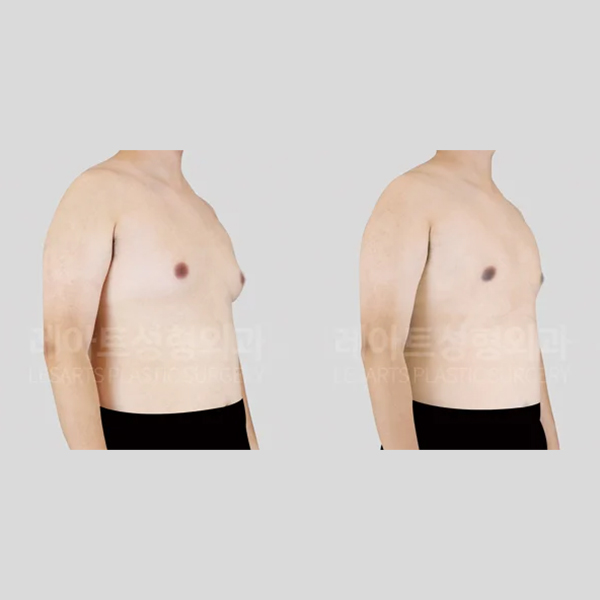
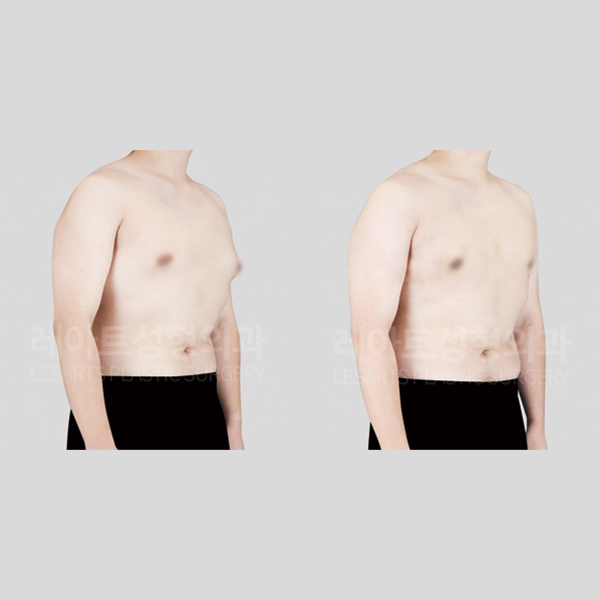
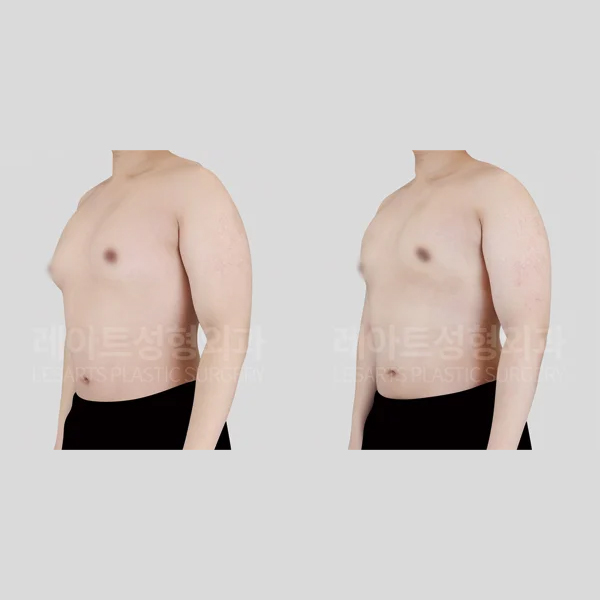
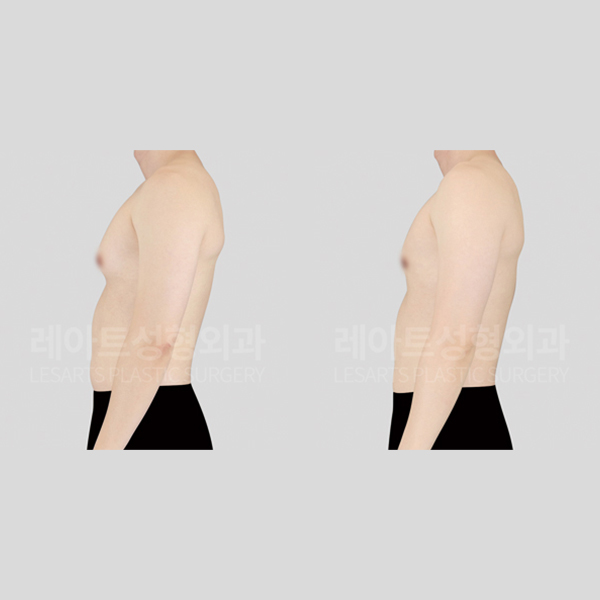
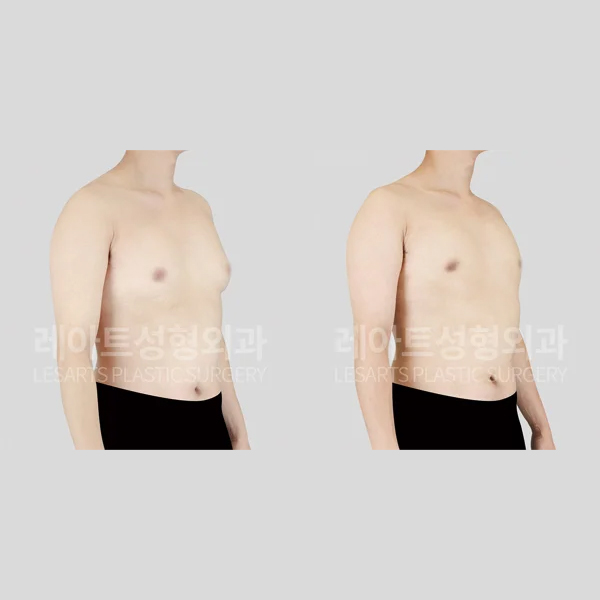
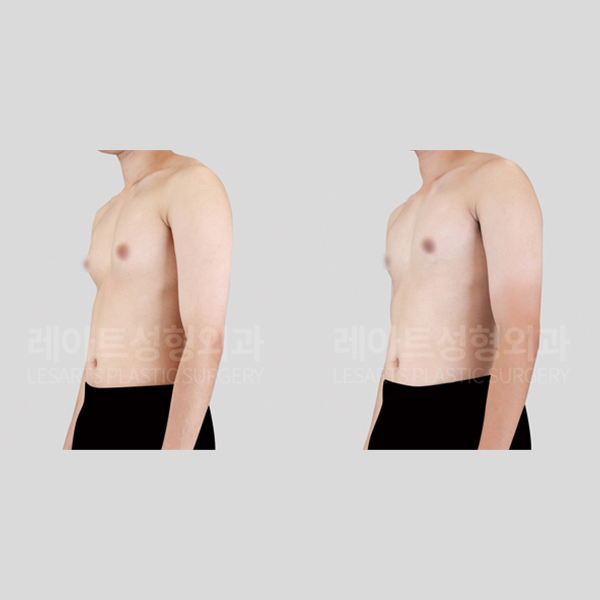
On visual examination,
both sides of the chest
were enlarged,
with the nipples appearing pointed and prominent,
drawing attention
to the central upper body.
On palpation,
a firm mass was felt
beneath the areola,
which was confirmed by ultrasound
to be glandular tissue.
Based on the size and depth
of the glandular component,
the patient was diagnosed with
true gynecomastia (Simon grade 2A).
Because the enlargement
was caused by glandular overgrowth,
rather than simple fat accumulation,
exercise or weight loss alone
would not sufficiently improve
the condition.
Skin elasticity was assessed as moderate.
However, due to age
and smoking habits,
the supportive strength
of the tissues had weakened.
Considering all these factors,
a surgical plan was established
to remove the glandular tissue
and simultaneously refine
the lower chest fat
for balanced contour correction.
[Late 40s, Middle-Aged Gynecomastia Surgery, Simon Grade 2A]
1. Glandular Tissue Removal (Periareolar Incision)
Overdeveloped glandular tissue was excised
to correct chest protrusion
and reduce overall chest size.
2. Lower Chest Liposuction
Fat accumulated in the lower and lateral chest
was removed to prevent
unnatural contour irregularities
and to create a smoother chest line.
3. Tissue Repositioning (Male Chest Contouring)
Tissue was rearranged to prevent
depression or hollowing,
maintaining a firm chest shape
with a defined, athletic contour effect.
Below, we will review the
before-and-after photos
taken 2 months after surgery
to assess the treatment results.
As the patient entered his 40s,
he noticed that chest protrusion
was becoming progressively more prominent.
Due to the development of glandular tissue,
the chest enlarged,
and decreased skin elasticity
caused mild sagging
in the lower chest area.
While treating these gynecomastia symptoms,
the overall chest shape
was also refined
into a more masculine contour.
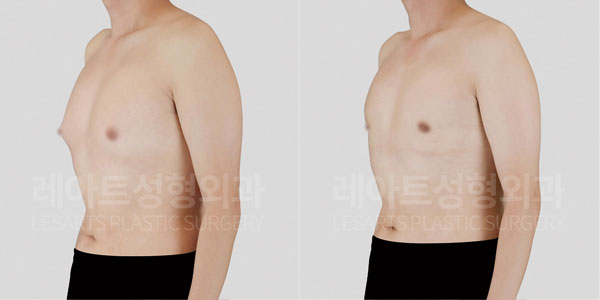
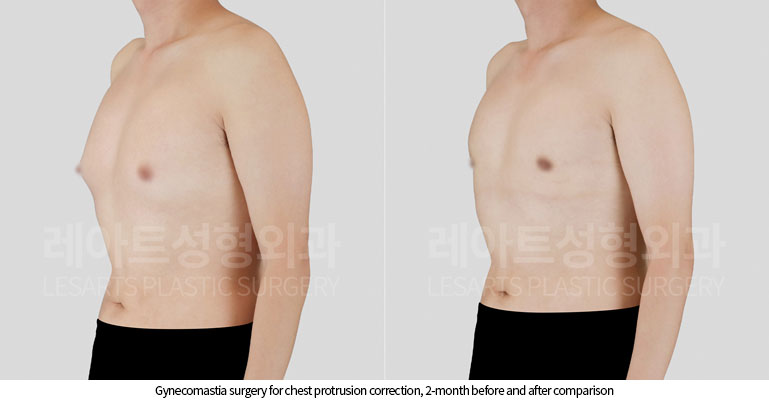
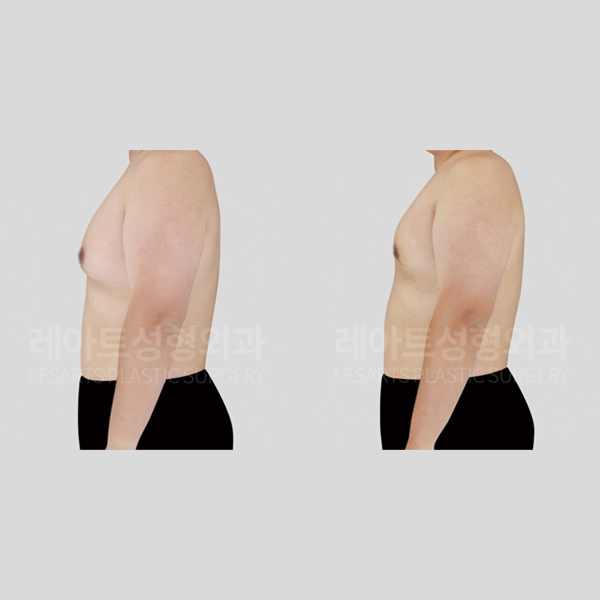
In the photos taken
2 months after gynecomastia surgery,
you can see that the chest size has reduced,
the skin has settled naturally
without sagging,
and the symptoms of gynecomastia
have clearly improved.
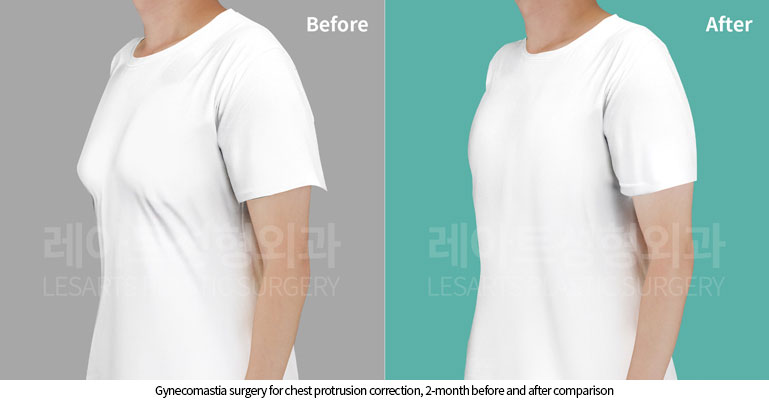
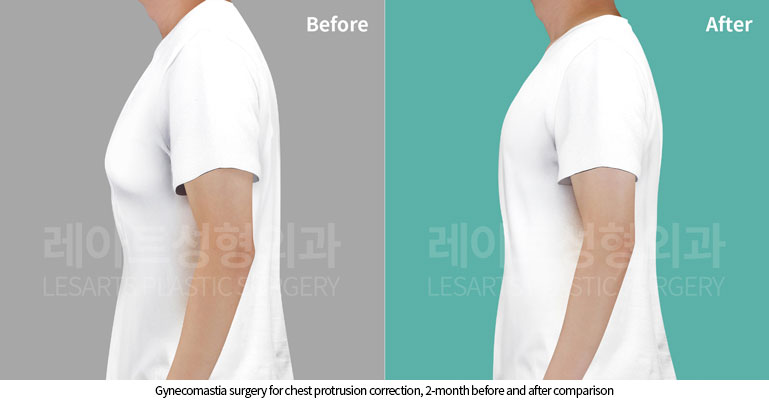
Even when wearing a T-shirt,
the previously noticeable nipple protrusion
and enlarged chest size
have been reduced,
resulting in a firmer,
more masculine chest contour.
As mentioned earlier,
middle-aged gynecomastia
should not be considered
simply as fat accumulation
from weight gain.
It is important to evaluate
whether hormonal imbalance
may be a contributing factor.
If treatment is desired,
accurately addressing the cause
while considering skin elasticity
and overall body balance
is key to achieving
stable and highly satisfying results.
#LesartsPlasticSurgery
#BestGynecomastiaClinicKorea
#GynecomastiaKorea
#MalePlasticSurgeryKorea
#MiddleAgedGynecomastia
#SimonGrade2A
#MaleChestReduction
#PeriareolarIncision
#ChestContouringSurgery
#HormonalGynecomastia
#GynecomastiaBeforeAfter
#MensBodyContour